Sunday, August 17, 2008

Half century Madonna: La Ciccone kicks on

“Some boys kiss me, some boys miss me
I think they’re ok
But it’s the boy with the cold hard cash
Who makes my rainy day”
(“Material girl” 1985).

Madonna Louise Ciccone Ritchie turned 50 yesterday. Though she celebrated her birthday with a private party in the UK, Madonna shows little sign of letting up. The pop icon will kick off her “Sticky & Sweet” world tour with the first of more than 40 dates next Saturday in Cardiff. Her most recent album “Hard Candy” (which featured collaborations with Timbaland, Justin Timberlake, Pharrell Williams, and Kanye West) debuted at number one in the UK albums chart, but was panned as mediocre by many reviewers including Pitchfork who said no-one involved in the project “is anywhere near their creative peak.”

Having sold 120 million albums and 40 million singles, Madonna can well afford to ignore the occasional poor review. Despite being the second top selling female artist of all time (only Barbra Streisand is ahead of her), it is likely she would perhaps now prefer to be known as much for her HIV activism, clothing line, children’s books, and acting and directing career. Madonna’s success over 25 years is based a refusal to rest on her laurels and the uncanny ability to periodically re-invent herself anew in a way that consistently connects with mass audiences.

She was born Madonna Louise Ciccone on 16 August 1958 in the small town of Bay City on Michigan’s Lake Huron. She was named for her mother Madonna Louise Fortin, of French-Canadian descent. Madonna snr married Silvio “Tony” Ciccone. Ciccone’s parents moved to the US from Italy's Abruzzi region in the 1920s to work in Pittsburgh’s steel mills. Ciccone was upwardly mobile and studied engineering at college. He moved to Detroit to work in the automotive industry and also served in the military. Madonna, the third of six children and the eldest daughter, would get much of her own ambition from her father.

Silvio ensured his children were brought up as Catholics and learned how to play a musical instrument. Tragedy struck when her mother died when Madonna was just six. Tony married his housekeeper and had two more children with her. After high school, Madonna won a dance scholarship to the University of Michigan. She left after a year and moved to New York. Madonna drifted from job to job, including serving donuts and nude modelling, until she joined the Alvin Ailey Dance Company.

After a couple of years learning the dance trade, she went to Europe in answer to French disco artist Patrick Hernandez's offer that she work as a back-up singer and dancer. In Paris she met Dan Gilroy who became her boyfriend and taught her how to play the guitar and drums. When the couple returned to New York, they put together the band, The Breakfast Club, where she played drums, wrote songs and sang. In 1980 she teamed up with Steve Bray to form the band Emmy and was eventually signed up as solo artist to the record label Sire.

In 1982 she recorded “Everybody” which was a club hit in the US. A year later she crossed over into mainstream pop when she worked with New York DJ John “Jellybean” Benitez. The pair struck up an important relationship, both personally and professionally. Together they released “Holiday” and “Borderline” and Madonna was on her way to becoming a star. The first three hits would appear on her eponymous debut album released in 1983.

Madonna released her second album, “Like A Virgin” in 1984, with the title track hitting the number one spot on the music charts. She was quickly renowned for her fashion as much as her music with her signature look of bleached hair, lace tops and short skirts over capri pants. As VintageBlues puts it, she “burst onto the scene clad in yards of lace, beads, crosses and the infamous Boy Toy belt, singing about such taboos as virginity and unwed mothers.”

But Madonna wasn't just content with being a star of music and fashion. A year later, in 1985, she made her first forays into the movie business. She landed her debut role as a nightclub singer in Vision Quest and followed it up as the lead in Desperately Seeking Susan. The singles from both of the films became hits and the filmmakers renamed Vision Quest in its European release to cash in on Madonna’s hit “Crazy for You”.

By then, the world was crazy for Madonna. Her third album “True Blue” took her into unprecedented territory being a smash hit with four top five single and also garnering critical acclaim. Madonna had a hand in writing or co-writing all songs on the album. It didn’t hurt album sales that “Papa Don’t Preach” caused huge controversy with its music video depicting a pregnant young teenage mother. Madonna dedicated the album to new husband actor Sean Penn whom she called in the liner notes “the coolest guy in the universe”. But Penn’s penchant for violence wasn’t so cool and the pair split up after he was charged with felony domestic assault.

Nevertheless, Madonna’s career continued to go from strength to strength. She riffed on her failed marriage in her fourth album “Like a Prayer.” It was hailed by Rolling Stone as “far and away the most self-consciously serious album she's made” and “more interested in exorcising demons than entertaining fans.” But the fans were entertained all the same, and the album sold seven million copies worldwide.

Her ability to subvert dominant gender codes to assert her own power and agency proved too much for many male-dominated organisations. In 1990, MTV banned the bondage-themed video for “Justify My Love” as being too sexually explicit. That same year, Pope John Paul II called on Romans to boycott Madonna’s “Blond Ambition” show. This was the tour that introduced Jean-Paul Gaultier's conical bra outfit and featured the singer simulating masturbation during Like a Virgin. The Vatican's newspaper, L'osservatore Romano, described the show as "a complete disgrace". Officials in Toronto also threatened to arrest her for her on-stage masturbation routine.

Madonna continued to make hit records in the 1990s, though she did not quite match the phenomenal success rate of the previous decade. In 1996, she underwent a serious image makeover when she was cast in the coveted role of Evita Peron in Alan Parker’s adaptation of the Lloyd Webber and Rice musical “Evita”. While the film was criticised for failing to accurately portray the Argentinean leader, Madonna was praised for her assured performance. The New York Times said her performance “which consists of cutting a glamorous swath through crowded settings and passionately feigning the emotions on the soundtrack, is legitimately stellar and full of fire.”

In real life, Madonna’s fire was taken on more spiritual dimensions. In a candid and wide ranging review of her career with Larry King in 1999, Madonna talked about her links with the Jewish mystical tradition of Kabala. Madonna first got into Kabala through a Jewish friend when she was heavily pregnant. Madonna hinted to King why she was attracted to it “It is considered traditionally the only people that are supposed to learn the Kabala are men, and they have to be over the age of 42,” she said. “Look, if this information is so enlightening and so important and can help other people, why are we limiting it to teaching it just to men, Jewish men who are passed the age of 42?”

Madonna herself passed the age of 42 as the new century approached. She celebrated Y2K by remarrying, this time to British film director Guy Ritchie whom she met through Sting. Ritchie became the step-father of Madonna’s daughter Lourdes who was born in 1996, and whose father was Madonna’s personal trainer Carlos Leon. Madonna and Ritchie’s attempt to adopt Malawian boy David Banda in 2006 was the subject of much controversy over allegations that the couple breached local adoption laws. There was also the accusation the boy's biological father merely thought he was being sent out for fostering. Madonna claimed it was an act of charity to “help one child escape an extreme life of…poverty”. However, academic Yvonne Roberts was one of many to question the move, saying Banda had become a public relations vehicle before he even learned to walk.

Meanwhile back in the recording studio, Madonna continued to pump out hit records showing little sign of slowing up. Her reputation as a shrewd businesswoman was recently enhanced when she severed ties with long-term record label Warner Brothers to sign up with Live Nation, a company that until recently specialised in music tours. As well as earning a reported $120 million over the life of the agreement, Madonna appears to be among the first to recognise which way the music industry was heading, meaning she will spend more time performing on stage rather than in the recording studio. And if the Rolling Stones are anything to go by, Madonna will be gracing the venues of the world for some time to come.

Friday, August 15, 2008

The revisionists and Keith Windschuttle: a history wars retrospective

This post will examine whether revisionist Aboriginal historiography is political, and whether it therefore shows disregard for the truth. It will examine these arguments in the light of recent debates between Keith Windschuttle and writers of revisionist Aboriginal historiography. Firstly, it will show how Windschuttle’s background was a crucial factor in sparking the debate. It will also show how his philosophy informs his writing, before discussing how Aboriginal historiography became politicised. The post will then consider the motivations ascribed to revisionist writers, the debate over whether the treatment of Aboriginals amounted to genocide, and how race became the central plank of the history wars. The post will conclude with some of the outcomes of these “wars” and will place the debate in an international context.

Keith Windschuttle has long been interested in the measure of truth, having a background in journalism. He started out as a copy boy on Sydney’s Daily Telegraph and was a journalist for many years before turning to academia. These journalism skills would serve him in good stead in the history wars that held the media in thrall in the early 2000s. Windschuttle’s sensational claims of revisionist fabrication were good copy and made him a media darling. Politically, Windschuttle called himself a “Vietnam leftist” before the murderous tendencies of Pol Pot and Louis Althusser turned him into an “ultra-conservative”. In his 1984 book The Media, Windschuttle claimed to reject the interpretations of both the political right and left, but he was noticeably more dogmatic in his opposition to the “elitist perspective of literary critics and the theoretical blindfolds that have stultified debate on the left”. Windschuttle’s media skills and strong right-wing political outlook would have a great bearing on his views of the revisionist historians.

Furthermore, Windschuttle was a firm believer that history writing should serve the nation. In his book The White Australia Policy, he proposed that the policy was not racist or a cause for national shame as revisionist historians claimed. Instead, he called it a natural response to the influence of Scottish enlightenment figures such as David Hume, Adam Smith, and Adam Ferguson on Australian political thinking at the start of the twentieth century. Reviewing the book in The Age, historian Marilyn Lake (herself a victim of Windschuttle’s contempt in the book) said he set up “false dichotomies” to prove his point. Lake also pointed out how dependent he was on the scholarship of the historians he was criticising. These tactics were similar to the ones he used in the debate over Aboriginal historiography.

This debate is a relatively recent phenomenon. Traditionally, Australian historians paid little attention to Aboriginal resistance to white settlement. Reynolds’ The Other Side of the Frontier (1981) was one of the first attempts to categorise the Aboriginal response. Before then, the question of how many Indigenous people were killed in the frontier conflict was rarely posed and never properly answered. His figure of 20,000 Aboriginal deaths was based on evidence he found “voluminous, various and incontrovertible”. Lyndall Ryan documented how Tasmanian Aboriginals were dispossessed and murdered by secret search-and-destroy mission beyond the scrutiny of governments or the press. Knightley, drawing on the work of Reynolds, Ryan and others, wrote how early settlers cleared Aboriginals from their land “as casually as kangaroos”. Such claims were anathema to those who saw history’s role in defending national honour. Windschuttle attacked the evidence of Aboriginal massacre as “flimsy” and “highly suspect”. He accused the revisionists of serious errors of fact and interpretation in describing Australian attitudes to race. Crucially, he claimed their scholarly consensus was merely a “shared ideological position” and a mythology designed to create a sense of black victimhood and white guilt. As Ron Brunton wrote in the Courier-Mail, Aboriginal death counts had become propaganda weapons in a battle fought by people less interested in discovering the truth about the past than in promoting a contemporary agenda.

One important aspect of that contemporary agenda was ascribing ulterior motives to historiographers. Windschuttle raised the stakes when he called the work of Reynolds and others a “fabrication” with its connotation of deliberately tampering with evidence to fake a conclusion. He claimed revisionists had inflated accounts of violence against Aboriginals to delegitimise the Australian state. One of those he accused of fabrication, Lyndall Ryan, said Windschuttle’s so-called “forensic” approach was an inappropriate tool for understanding the frontier as it wasn’t a battlefield where the rules of war were carefully followed. Reynolds said Windschuttle’s ambition was to bring back the discredited concept of terra nullius. With political accusations flying on both sides, neither side seemed to have a monopoly on truth.

Another key issue was whether or not the treatment of Aboriginals amounted to genocide. According to conservative British writer Theodore Dalrymple, Australia’s intelligentsia actually wanted there to be a genocide and reacted to Windschuttle’s thesis “like a child who has had a toy snatched from its hand”. While it seems absurd to suggest historians actually “wanted” genocide, some had alleged genocide had occurred. Reynolds quoted the Bringing Them Home report of 1997 saying Australian Governments continued to embody genocidal practices until the 1970s and 1980s with their preference for non-indigenous foster and adoptive parents for Aboriginal children. Reynolds also pointed out the difference between the way white Australia honours its war dead and the “forgetfulness” with which it deals with the Aboriginal conflict. This was revisionism about Australian sacred cows that was guaranteed to be politicised.

In the wake of Reynolds’ bold pronouncements and Windschuttle’s reaction, race became the central issue of Australia’s history wars. The stark differences in interpretation were between those who saw a cheerful and triumphal story of a pioneered Australia won by sweat and the fruits of industry, and those who said the country was invaded and the prize of a bloody war. Geoffrey Blainey characterised the two approaches as “Three Cheers” and “Black Armband”. Up to the 1980s, this divergence was not a problem as the Aboriginals tended to be written out of Australian history. However, with the 1980s Labor Government extension of land rights, encouragement of self-determination, and its inquiries into deaths in custody and the Stolen Generation, the bipartisan consensus on Aboriginal history broke down. The Howard era exacerbated the differences with the Prime Minister believing in “practical reconciliation” while ruling out an apology to the “Stolen Generation”. Howard was an active player in the history wars and openly sympathetic to the views of Blainey and Windschuttle. His 1998 “10-point plan” aimed to water down the Wik High Court judgement and he sacked the National Museum of Australia director in 2003 for being “too sympathetic to the so-called black armband view of Australian history”. These responses showed that truth wasn’t just the only casualty of the history wars.

But if there were casualties, there were winners too. Windschuttle received his political reward when the Howard administration appointed him to become an ABC board member in 2006. Labor communications spokesman Stephen Conroy protested the decision calling Windschuttle “extreme right wing”. Defending the appointment, Prime Minister Howard described Windschuttle as “a beacon of free and sceptical thought against fashionable leftists". But the “fashionable leftists” did not let up in their criticism. Windschuttle’s approach of confining history to written documentary evidence was derided as being incapable of dealing with ambiguity or discontinuity, and as being unable to encompass the bleaker moments of the past. Evans described Windschuttle’s work as “historiography as fatwa” launched against “an unclean orthodoxy”. Ryan called the wars a lamentable distraction from “History’s noble proper work and no credit to Australia’s intellectual standing”. Though the history wars have diminished in importance somewhat with Howard’s federal election defeat in 2007, the wars’ academic adherents continue to be intensely political and partisan. The fatwa has not yet been lifted.

But the history wars were not a uniquely Australian experience. Other nations have seen political debates born of clashes between established orthodoxy and revisionist research. Elizabeth Malcolm wrote how new Irish historiography has challenged readings of the republican struggle against colonialism as well as other established saws of Irish culture and identity. Meanwhile, South Korean historians demonstrated last year against their Chinese counterparts over their attempts to consider tombs belonging to the Koguryo Kingdom as artefacts of Chinese culture rather than Korean. And it was the storm of criticism that greeted the Smithsonian Institution’s 1994 decision to include the Enola Gay in an exhibition to mark the 50th anniversary of the end of World War II, which provided the template for Australia’s history wars. In both countries, revisionists were put on the defensive by accusations of class guilt and the use of political correctness. It was nothing less than a cultural clash between “the obligations of the historian and the demands of patriotism”. Worldwide, revisionists were straddling uncomfortable boundaries between the need to serve truth and politics.

In summary, Windschuttle’s views on the revisionists such as Reynolds (pictured) were informed by his journalist background and his political transformation from far left to far right. For him, history wasn’t merely a matter of presenting the facts but of nation building. When revisionist historiographers presented new claims about the massacres of Aboriginals and the possibility of genocide, Windschuttle was compelled to attack these claims head on. The personal nature of these attacks put the race debate at the centre of an intensely politicised history war. The government of the day rewarded Windschuttle for his efforts though his critics continued to question his methods and contest his findings. Despite all the heated politics, the fact remains that no-one knows the full truth of what happened when White Australians met Aboriginals on the frontier. Nevertheless, it is an important question that must continue to be posed.

Thursday, August 14, 2008

Move over, China: Australia presses on with net censorship plans

Mandatory ISP filtering is the main element of the Australian Government’s $125.8 million Plan for "Cyber-Safety". But anyone in Australia naive enough to believe this prurient and populist ISP filtering plan will work, should look carefully at what is happening in Europe with the Swedish bit torrent tracker site The Pirate Bay. Pirate Bay is a database of links to music and films offered on peer to peer networks without the copyright owners’ permission. Four days ago, Italian authorities attempted to block the site after an anti-piracy court ruling. Critics couldn’t help noticing that Prime Minister and media magnate Silvio Berlusconi owns a lot of the companies who stood to gain from banning the site. In any event, the ban was easily circumvented. Pirate Bay co-founder Peter Sunder said they implemented countermeasures to allow Italians to access their site. “We’re working on setting up a really annoying system for them to filter,” he said.

The move mirrors failed attempts elsewhere in Europe and only serves to strengthen the site. Australian Communications Minister Stephen Conroy would be well advised to pay close attention to the European experience as he blunders on with his local ISP filtering plan. Conroy claimed the initial Tasmanian-based trials, which concluded last month, were “successful” and saying the industry had made significant progress with ISP filtering products. The report is “Closed Environment Testing of ISP-Level Internet Content Filtering” (pdf) which was issued by the Australian Communications and Media Authority (ACMA). In a 28 July media release, Conroy hailed a report on the trial’s findings as assisting “the Government to deliver on its election commitment to create a safer online environment.”

However others say Conroy is being disingenuous and has not accurately relayed the report’s findings. The Someone Think of the Children (STOTC) blog parsed Conroy’s cherry picking of the results and found them wanting in most cases. The blog described the trial as a miserable failure and picked out five key deficiencies: low numbers of the test base, low numbers of filtered sites, the inability to filter ‘secure’ HTPPS traffic, no analysis of circumvention methods, and no analysis of cost. STOTC said it “looks like a failure dressed up by a Senator with an obsession on controlling what you can and can’t see.”

Labor’s mandatory ISP Internet blocking plan dates back to a pre-election commitment made in March 2006. The then-Beazley led party promised to give “peace of mind” to parents concerned by exposure to children of “violent and pornographic material on the internet.” The plan would force all ISPs to perform mandatory censorship in order to provide a so-called “clean feed” Internet service. This was populist policy on the run, guaranteed to win the support of the hysterical talk radio and tabloid current affairs media.

The then-Liberal Minister for Communications Helen Coonan sensibly retorted with the view that filtering software would be the worst of both worlds. It would slow down Internet traffic without providing effective protection to children. Coonan preferred PC level filtering and said the Coalition had a three-pronged approach that involved legislation, regulation and education of parents and of children. She said that ISP level filtering was an inadequate solution that misses content, does not block all kinds of content and was not adaptable. “For instance, what might be suitable for a 17-year-old is certainly not suitable for a five-year-old,” she told the Senate, “and there is no way with ISP filtering to be able to tailor-make the kind of internet experience that people wish to have.”

Nevertheless Stephen Conroy took the media-friendly “clean feed” policy to the election and retained it after Labor's victory. Conroy justified this stance based on a claim that two-thirds of parents couldn’t afford the PC level filter. However a 2005 ACMA survey (pdf - page 64) rebuffed this reasoning saying that just 3 users out of 281 surveyed did not install a filter because of cost concerns. Instead, half the respondents said they trusted their children and simply didn’t feel the need to do it. The same report said that almost all parents reported that they were involved in their child’s Internet use in some way. The report completely undermines Labor’s rationale for mandatory filtering.

There may be other nasty unintended consequences of mandatory filtering. Somebody Think of the Children warns that blogs could also be targeted. Because bloggers write diverse content often using swear words and slang, they could be a prime target for blunt filtering software. STOTC also believes that getting sites unbanned “may well be impossible”. The activist group Electronic Frontiers Australia have launched a campaign called “No Clean Feed” against Conroy’s Internet censorship. The Pirate Bay experience shows it can be circumvented anyway. The whole exercise is a colossal waste of time and money. It is far more about protecting electoral margins than it is about protecting children.

Wednesday, August 13, 2008

NASA at 50

Minnesota public radio is one of the many media currently celebrating this year’s fiftieth anniversary of NASA with a program yesterday on its history. The BBC also collected a series of videos of many of the space agency’s memorable moments, while Wired had an article about NASA’s half century of “towering achievements”. Kansas City Infozine interviewed several NASA veterans to talk about its accomplishments. The first of several 50th anniversary moments was last month with the signing of the act that brought NASA into existence.

The birth of NASA was the necessity of catching up with the Russians. On 4 October 1957, the Soviet news agency Tass announced to the world that the USSR had successfully placed Elementary Satellite 1 into an elliptical orbit about 900km above Earth. Elementary Satellite 1 became better known by its diminutive "Sputnik". It circled the globe every hour and a half and flew over America seven times a day, in almost taunting fashion. At the height of the Cold War, the Soviet Union had taken a giant technological leap ahead of the US.

When the general American public read about Sputnik, there was much predictable shock and surprise. The Space Age had begun, and it had nothing to do with American might. Many others felt that the oceans could no longer protect the mainland and the Russians had intercontinental warhead capability. The Eisenhower administration rushed to reassure the American people, but also offered their congratulations to Moscow for its achievement. US scientists were simply excited knowing that Sputnik was just the incentive needed to get their satellite program up and running.

Public opinion was now massive in favour of the creation of an aggressive exploration of space. And so, on 29 July 1958 US President Dwight Eisenhower signed the National Aeronautics and Space Act. The act would lead to the birth of National Aeronautics and Space Administration (NASA) on 1 October that year. The act provided for “research into problems of flight within and outside the earth's atmosphere, and for other purposes.” It declared that activities in space should be devoted to peaceful purposes for the benefit of all mankind and would require “adequate provision”. The act’s eight objectives were to expand knowledge of space, improve the quality of space vehicles, develop space travel for humans, establish long-range scientific studies, preserve the US role as leader in space, using military discoveries for civilian purposes, co-operation with other nations, and effective utilisation of US scientific and engineering know-how.

Since 1915, the field of aeronautic research had been the province of the National Advisory Commission for Aeronautics (NACA). NASA absorbed the NACA and kept the “Aeronautics” in its name. It also took NACA’s 8,000 employees, its $100 million annual budget, its three major research laboratories (Langley and Ames aeronautical laboratories and Lewis Flight Propulsion Laboratory) as well as two smaller test facilities.

The new organisation launched into space exploration programs with Project Mercury. With a well-honed media instinct, NASA decided from the outset its space program would need to be manned in order to keep the public onside. In 1961, Mercury began to pay dividends. In May, Alan Shepard became the first American in space, with a 15-minute suborbital mission. Eight months later, John Glenn became the first true US astronaut when he orbited the Earth. Project Mercury’s six flights achieved the goal of putting piloted spacecraft into Earth orbit and retrieving the astronauts safely.

Project Gemini built on the carefully-planned success of Mercury. Gemini had two-person missions, re-entry rockets within the capsule and the ability to alter its orbit. But on 25 May 1961, President Kennedy raised the stakes again with his “special message to the Congress on urgent national needs”. Given just a month after Yuri Gagarin became the first man in space, This famous speech called for America to take “longer strides” and take a leading role in space achievement. He committed the US to landing a man safely on the moon by the end of the 1960s and ten billion dollars to fund it.

Kennedy's speech was pure gold to NASA. His estimate as to the cost of the Apollo program was grossly inadequate and it had ballooned out to $25.4 billion by the time it ended. The program overcame the setback of the fire to the Apollo 1 capsule on the ground that killed three astronauts. For all future missions, most flammable items were replaced with self-extinguishing materials, pure oxygen was replaced by a nitrogen-oxygen mixture at launch and the hatch was redesigned to open outward and to be removed quickly.

NASA’s crowning moment came when Neil Armstrong carried out Kennedy’s goal, on time (though over budget) on 20 July 1969. The 17th mission brought an end to the Apollo program in 1972 and NASA looked to new challenges. In 1975, they docked in space with a Russia Soyuz craft in the world’s first international manned space flight. When US astronaut Thomas Stafford shook hands with Soviet Cosmonaut Alexei Leonov in the docking ring of joined Apollo and Soyuz spacecraft, it was an act that seemed to mark the end of the Space Race.

In the eighties, NASA returned to human spaceflight with the Space Shuttle program. The first flight of STS-1 (named “Columbia”) in 1981 demonstrated that it could take off vertically and glide to an unpowered airplane-like landing. But the 1986 Challenger disaster on take-off and the 2003 Columbia disaster on landing, seriously damaged NASA’s credibility and made it look for less awe-inspiring challenges. President Bush’s subsequent 25 year plan to return to the Moon and land on Mars has not met with the same enthusiasm as Kennedy’s earlier call.

But there have been many other successes in NASA’s unmanned program. The Hubble Space Telescope has greatly advanced cosmology and returned thousands of astonishing images after its mirror was fixed in 1993. NASA's scientific probes have explored the Moon and all the planets of the solar system except Pluto. Voyager 1 is now the further man-made object in space and is now in the heliosheath on the edge of interstellar space some 16 billion kms away from its home planet. And a new expanded space race is at hand with Japan, China and the EU joining the traditional players. American scientists now say they need the support of private enterprise to succeed in space. But despite concerns about its middle-aged spread, it is hard to imagine the future colonisation of space without some role for NASA.

Tuesday, August 12, 2008

Getup’s Tibet ad: Silence won’t save Seven

Advocacy group GetUp says it expects to get its money back for advertisements protesting human rights abuses in China that were stopped from going to air. Australian Olympics Games host network Channel Seven dumped an ad from the opening ceremony telecast for fear it would damage commercial arrangements with the International Olympic Committee and China. GetUp claims that a TV ad produced jointly with the Australia Tibet Council was dumped at the last minute. The ad (shown in the Youtube link below) depicts an Australian Tibetan woman making a plea to Prime Minister Kevin Rudd to speak out on human rights issues in Tibet before he leaves Beijing. Getup had paid more than $10,000 in advance to book ads in the prestigious opening ceremony slot.


Seven had accepted bookings to run an ad between 1 and 3am on Saturday, after the Olympic opening ceremony, in the five mainland state capitals. Last Wednesday Getup launched a campaign announcing the 30 second ads would run in those slots. After Seven failed to show the ads as expected, Getup director Brett Solomon told ABC that it was “the sort of behaviour that you might expect from a broadcaster in China, not what you'd expect from a broadcaster in Australia.”

Seven initially claimed the ads were for Getup’s “Fuel Watch” campaign and had to be pulled, along with the ads of 18 other clients, due to an overrun of the coverage. Seven spokesman Simon Francis then claimed that the network only became aware of the contents of the ads after Getup issued a press release as part of a public pressure campaign. “We have had no pressure from anyone,” said Francis. “We don't respond to pressure -- from anyone.” However Francis couldn’t explain why the ads did not run in Getup’s booked slots in regional NSW and Queensland. “Questions you will need to put to Prime Television,” he said. “Sorry. We don't speak for them.”

Whatever the reason for their removal, it smacked of censorship. Certainly that was the view of ABC Media Watch presenter Jonathon Holmes who said "If it looks like a duck, swims like a duck and quacks like a duck... It may well be a duck". Peter Lalor in The Australian called it craven self-censoring and a silent kow-towing to a murderous regime. “If you reckon the air is dirty in Beijing,” he said, “try watching the events through the moral smog and cultural static of the Seven network's coverage". Typing is not activism pointed out Seven “appeared to have misplaced the booking sheets”.

Writing in Crikey (subscription required) today, Getup’s Ed Coper says the expensive ads were paid for in “tens of thousands of dollars” in donations. He said the advertising spots were booked, paid for and confirmed to air on either side of the opening ceremony but were never showed. Coper said Seven CEO Kerry Stokes had attempted to intervene hours before the broadcast to save the ads in “a last minute intervention of common sense”. However even he was apparently powerless to prevent the black-out. GetUp wants to give Seven a second chance “by showing another ad during the closing ceremony, reinforcing the idea that once the Olympics finish the human rights issues remain,” said Coper. “That way Seven get a chance to set the record straight and sort the programming from the censorship.”

Whatever happens next, it seems safe to say the attempted censorship has fallen flat. Brett Solomon now says his organisation will buy time on Nine and Ten to air the ad over the next two weeks. "Our plan is to run the television ad on every other (major) station in the country but Seven," he said. More people will now pay attention to the ad because of the ham-fisted efforts to quash it, than those who might have watched in the early hours of Saturday. Getup will get all the PR it possibly could ask for out of the ad – and should still get their money back from Seven and Prime.

Monday, August 11, 2008

Stephanie Rice and South Ossetia: Of bread and circuses

Twenty-year old Stephanie Rice took out Australia’s first gold medal in the Beijing Olympics on the same day as Russia intensifies its war with Georgia. No connection really, though you’d have to ask which you’d rather read about if you didn’t have a dog in the fight. Rice has glamour in spades, while the South Ossetian conflict merely has spades.

Stephanie Rice is a full-on media figure, whose mistakes, or blessings, include publicly dating other high-profile swimmers and posting police uniform poses on her Facebook page. But yesterday, she swam a 400m individual medley in a time of just under four and a half minutes. It was the fastest ever at that event and won the gold medal. The silver went to Kirsty Coventry, a white girl from the stolen nation of Zimbabwe. Coventry not only did well for the pariah state, it was also the first medal of any colour in the Beijing Olympics for the entire continent of Africa.

But while most of the eyes of the world are on the various complexities of Beijing, elsewhere nations of the world are at war. Such war is in direct violation of the Olympic truce, the concept of ekecheiria (“holding of hands”) that was enforced during the ancient Olympics. Although some historians now say the idea that ancient Greeks stopped their wars for the Olympics is a nonsense, it hasn’t stopped aid agencies calling for a modern Olympic truce. In 2007 China sponsored UN Resolution G/A 62/L.2 "to promote peace, dialogue and reconciliation in areas of conflict during and beyond the Olympic Games period."

But the nations of Russia and Georgia are not interested at the moment in promoting peace, dialogue and reconciliation. Instead they are engaged in a slowly escalating and complex conflict that has the potential to drag in the wider international community. The war is not totally unexpected, though I got it wrong in May when I thought the flashpoint would be Abkhazia.

Instead the fight is happening several hundred kilometres inland. But South Ossetia is not too dissimilar from Abkhazia. Both are breakaway republics with leanings to Moscow, but for which the rest of the world still believes belongs to Georgia. The name "Georgia" itself is western European and of disputed heritage. The locals call themselves Kartvelebi and their country Sa-kartvel-o “the land of the Kartvelebi”.

Next to the Kartvelebi live the Ossetians. Ethnic Ossetians speak a language similar to Persian (Farsi). But in the Soviet Union 1991 divorce settlement, it was broken up into North and South with North Ossetia given to Russia and South Ossetia given to Sakartvelo. Ever sensitive to names, Georgian see the use of the word "north" in the title North Ossetia as misleading. In their eyes, the Russia owned North Ossetia is the only Ossetia. Georgia prefers to call South Ossetia by either the ancient name of Samachablo or, more recently, Tskhinvali region.

If given the choice, Ossetians would probably rather be free of both Russia and Georgia. But that is the least likely outcome. Georgia has sovereignty in its favour and the cosying up with NATO. But pro-Western Georgian President Saakashvili has overplayed his hand. An actual war in South Ossetia or Abkhazia would mean disaster for Georgia. Both republics have been defacto independent nations since the 1990s. Russia has more natural sympathy among the local population and is more powerful locally. In this new cold war theatre, Russia will now use the Ossetian excuse to dismiss Saakashvili as a bargaining chip to withdraw.

But the media’s attention will be more on Beijing than Tbilisi. Amusingly, one media may have given the impression the Georgia at risk was in the US’s deep south, though when I checked the source AFP story this evening, the Google map was even more bizarrely pointed to Brno in the Czech Republic. For now Saakashvili must cut his losses, consolidate his country's fragile growth, address local abuses such as police brutality, and hope his connections with NATO will stop Russia from invading. Meanwhile, back in Beijing, Stephanie Rice’s exploits will be honoured with an Australian postage stamp.

Sunday, August 10, 2008

Ben Chifley: Lights, camera and action on the Hill

One of the more endearing local products of the recent Brisbane International Film Festival was the documentary “The Chifleys of Busby Street”. The documentary was about wartime Labor Prime Minister Ben Chifley. In a review in The Australian last week, film director Andrew Pike told Michael Bodey that despite being a recognised figure, Australians don’t relate to Chifley because there are so few moving images of him. He said Menzies is better remembered as a statesman because of the accumulation of footage of him. “Consequently, Chifley has always been a bit of a misty figure for me personally and for others,” said Pike.

But Joseph Benedict Chifley had plenty of statesman-like qualities of his own. It was he who coined the phrase “the light on the hill” which for him, was the objective of the betterment of mankind. His Irish Catholic working class background informed his views. Chifley was an engine driver before he went into politics. He was a founder of the engine drivers’ union before teaching himself industrial law.

In 1928, he was elected to parliament at the second attempt, for the seat of Macquarie, in his home town of Bathurst, NSW. Though he lost the seat three years later, he won the seat back for Labor in 1940. While he was out of parliament the UAP Lyons government appointed him to a royal commission on banking. The commission did not act on his minority report that the banks be nationalised.

But because of his financial experience, he became Treasurer in the new Labor wartime Government under John Curtin. And while Curtin was preoccupied with the war and the defence of Australia, Chifley got on with the job of running the country. As Australia's equivalent of Speer, it was his responsibility to gear the economy to wartime production. Chifley also served as Minister for Post-war Reconstruction from 1942 to 1945 even though he never saw out the war in the role. When Curtin died suddenly in 1945, Chifley was the obvious choice to succeed. Chifley also retained the job of Treasurer so he could be fully responsible for accelerating post-war reconstruction.

Ever a modest man, he refused to live in the Lodge. Even as Prime Minister, his home in Canberra remained room 205 at the Kurrajong Hotel, with toilet and bath down the corridor. Phillip Knightley recounts how Chifley would take his home-grown onions down to the local café to be fried for his dinner. If there was no time to eat out, Chifley would make do with a meat pie at his desk. And the new Prime Minister had a lot of time for meat pie. With the war over and a shiver raised across the world, Chifley told Australia it would have to “populate or perish”. But with few candidates available from the traditional source of Britain, Australia had to tap into the waves of destitute and homeless European war refugees to get to its target of twenty million people.

With the aid of these New Australians, the energetic Chifley remodelled Australia and accelerated post-war reconstruction. His War Service Land Settlement scheme for returned soldiers won over potential enemies and created a new land class. In 1948, the first Australian car, the FX Holden, rolled off the production line, reaping a whirlwind Australia still struggles to contain. Chifley created Canberra's Australian National University (setting up a lifetime of experts for Australian media) and in 1949, set up the Snowy Mountains Authority to oversee the monumental hydro-electric scheme which would take 25 years to build.

But his impressive domestic record was not matched by his foreign relations. Chifley wasn’t trusted by the Americans. As the Western powers beefed up their security apparatus at the start of the Cold War, Chifley resisted the idea of a counter-espionage bureau. To him, it smacked too much of the Gestapo. But when Washington cut back on sharing intelligence information claiming Australia was a security risk, Chifley began to relent. The breaking point was the US refusal to support the British-Australian missile project at Woomera which depended on classified American technical information. In March 1949, Chifley gave the go-ahead to set up the Australian Security Intelligence Organisation (ASIO). Chifley’s reservations were well-founded; ASIO would go on to become the bane of Labor under Menzies with a massive database of "dangerous lefties".

It was to be the patrician Menzies who would finally end the reign of the proletarian Prime Minister. Chifley’s government was swept from office in an electoral landslide in December 1949. His achievements weren't enough to save him. The electorate had enough of wartime controls, and four years out from the end of the year wanted to be free of rationing, regulation and the problems caused by the Government’s nationalisation plans. Menzies was elected on a platform to “stop the socialising process”, ban the Communist Party and reduce taxation.

Ben Chifley would serve another two years as Opposition Leader. According to Manning Clark, Chifley was a much-loved Prime Minister who managed to put on the statute book, much of what Labor preached but had been unable to practice. Clark said he gave capitalism a human face, encouraged excellence in all things Australian and was faithful to the Labor belief that “creature comforts are the sine qua non of human wellbeing and happiness”. In 1949 Chifley summed up his own political ideas in his “light on the hill” speech:“I try to think of the Labor movement as…bringing something better to the people, better standards of living, greater happiness to the mass of the people". Within two years, he was dead. The lifelong smoker had died of a heart attack at his beloved Kurrajong hotel. The light had gone out. It would be another 21 years before another Labor Prime Minister could climb the hill and set it aflame again.

Saturday, August 09, 2008

Blue Mud Bay: Yolngu win takes Wik to the water

Today's Northern Territory election is proving a surprisingly tight contest with a wafer-thin majority in the former Labor leader’s seat now likely to decide the election. Labor were expected to win comfortably but have lost four seats already. They will retain government only if they can hang on in a close contest for the seat of Fannie Bay, formerly held by Clare Martin. With the highest participation of amateur fishing in Australia, Labor may have suffered a backlash in the wake of the Blue Mud Bay land rights case, despite fighting it in the courts. Labor lost that case to the Yolngu people. A landmark ruling in the High Court last month awarded them custody of 7,000 kms of lucrative coastline.

As Paul Toohey wrote in The Australian, neither major party congratulated the traditional owners for their historic court triumph last month. The angling industry is up in arms: the ruling means non-indigenous fishermen will probably have to pay a fee to fish for recreation and commercial purposes in Blue Mud Bay. Commercial fishers will need to apply to an Aboriginal land trust for licences to fish in tide-affected rivers, deltas and coastline. Amateurs will be relying on the Territory Government to do a deal with traditional owners and acquire free one-off permits on their behalf to enter Aboriginal owned inter-tidal zones.

Blue Mud Bay is Yolngu country in East Arnhem Land, a couple of hundred kilometres south of Yirrkala. Yirrkala is some 600km and a ten hour drive from Katherine in the dry season, and is cut off in the wet. Despite their remoteness, the Yolngu had encounters with non-Aboriginals well before the First Fleet arrived in Sydney. But the contact was with Islam not Christianity. The Muslims to the north knew about Australia as early as the year 820. Persian mathematician Muhammad ibn Musa al-Khwarizmi drew a map of the Sea of Java which showed Cape York Peninsula, a "V" shaped Gulf of Carpentaria and a curved Arnhem Land.

From the fifteenth century, trade grew rapidly in the Indonesian archipelago. Macassan sailors from the island of Sulawesi (Celebes) began trading with northern Aboriginal fishermen. The Macassans came in search of trepang. Otherwise known as bêche-de-mer, sea cucumber, or sea-slug, trepang was a delicacy in China, where it could be traded for profit. The Asian impact transformed the lives of the coastal Aborigines.

The language of the traders became the lingua franca for many tribes from the Gulf of Carpentaria to the Kimberley. Their own languages became dotted with Macassan words. In places like Groote Eylandt, Macassan elements became incorporated in local rituals. Aspects of Islam infiltrated Dreaming ceremonies. It is likely a few traders settled there intermingling their blood into local populations.

This neighbourly relationship was brought to a rude end by the colony, and then state, of South Australia which ruled the Northern Territories until 1911. The British first came to northern Australia with the establishment of Fort Dundas in 1824. Dundas was too remote and failed but other fortications followed. The new masters didn’t like the trade between the local blacks and the heathens across the sea. They eventually prohibited the selling of trepang in 1906 ostensibly because it encouraged smuggling. The real reason was to restrict Asian economic endeavours to protect new White capitalist initiatives in Adelaide and elsewhere in the south.

The loss of trade was devastating for the Yolngu. Already suffering from the occasional massacre and their lack of immunity to European diseases, they descended into poverty and became, like all other Aboriginals, “wards of the state”. They continued to fish, however, and in the early 1930s were party to an extraordinary encounter that would have significant reverberations still felt today.

Japanese fishermen also prized the bêche-de-mer and they entered Yolngu lands without a permit in 1932. Between three and five of them were speared to death by locals at Caledon Bay. Japan protested to Australia over the killings and a police party was sent from Darwin to look for suspects. They kidnapped four women all of whom disappeared. After one of the police party was speared in revenge along with two white trepangers, anger mounted in Darwin. There was a growing desire to “teach the uppity blacks a lesson”.

But coming shortly after the cover-up of the Coniston massacre, the idea of a punitive expedition was put down. Protest meetings in Sydney and Melbourne raised a collection to send missionaries to Woodah Island. There, they persuaded several Yolngu leaders to come to Darwin, where they were promptly arrested. One of their members, Dhakiyarr Wirrpanda, was charged with the murder of the policeman. The white jury found him guilty even though there was a glaring lack of evidence and no witnesses. Dhakiyarr (named “Tuckiar” by the court) was sentenced to hang. His defence appealed to the High Court which quashed the conviction. He was freed from Fannie Bay Gaol and was taken to Darwin. A missionary arranged to meet him but Dhakiyarr missed the appointment and was never seen again.

In 2003, Dhakiyarr’s family held a reconciliation ceremony in the presence of the Chief Justices of Australia and the Northern Territories. The ceremony began with a ritual symbolising the cleansing tides of a tidal surge, before moving inside the Darwin Supreme Court building to install ceremonial poles. The legal importance of the seawater symbolism would become more apparent in the years to come.

In 2005, the Federal Court of Australia ruled on the Blue Mud Bay case. The issue at stake was whether the Bay's traditional owners could exclude fishermen and others from tidal areas of the claim zone under the Native Title Acts. The court ruled in their favour on the grounds of their continuous association with the land. With 80 percent of their lands now off limits, the angling industry protested. On their behalf, the Territory government, supported by the Federal Government appealed to the High Court.

The Canberra court found in favour of the Yolngu. The High Court decision followed in the logical paths of the Mabo and Wik decisions on native title. The doctrine of “Terra Nullius”, the land without owners, was a myth. Despite the annexation of Australia in 1788, the Colonial Office clearly recognised the Aboriginals retained a proprietorial title to their land which had not been extinguished by the claim of sovereignty.

The court confirmed Aboriginals as legal owners of 7,000 kms of Yolngu country around the north-east Arnhem Land coastline. As a result, an estimated 45,000 anglers who use the bay will no longer be able to fish there for free. Local white conservatives are furious. Country Party Liberal leader and fisherman Terry Mills says his rights have been infringed and he won’t apply for a permit. "The freedoms Territorians enjoy have been challenged by this decision,” he said.

Mills was keen to make Blue Mud Bay an election issue. Meanwhile Labor, who took the Yolngu to court, wanted to be seen as practical peacemakers. Last week Chief Minister Paul Henderson said it would comply with the High Court ruling but also sought “the capacity for recreational fishermen to go fishing on affected waters without charge or need for an individual fishing permit”. With a narrow win, or a possible hung parliament on the cards, Henderson will need to place great store than ever on “the willingness of Territorians to resolve these matters.”

Friday, August 08, 2008

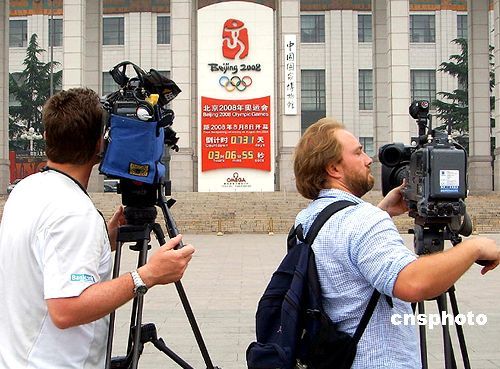
Pressure groups condemn Chinese media tactics on eve of Olympics

The French-based media watchdog Reporters Sans Frontieres (RSF) made an unauthorised radio broadcast into Beijing just hours before the Olympic opening ceremony. The activist group say they used miniaturised transmitters and a home-made antenna to broadcast on an unused FM frequency. They aired 20-minute program in Mandarin, English and French and listeners heard Chinese human rights activists urging government to relax state control of the media. RSF secretary-general Robert Ménard also spoke on the program which began at 8:08am local time exactly 12 hours before the opening ceremony.

In the broadcast Robert Ménard called on the Chinese Government to respect free speech. He said China refused to issue visas to ten RSF members but this has not stopped them from making themselves heard in Beijing. Menard claimed it was the first non-state radio station to broadcast in China since the Communist Party took power in 1949. "Reporters Without Borders devised and carried out this protest in a spirit of resistance against state control of the media,” he said.

Another journalist advocacy body, the Committee to Protect Journalists (CPJ) expressed their concern that China was refusing permission for an American-Tibetan journalist to attend the Games. They say Dhondup Gonsar, an American citizen of Tibetan ethnicity who works for the U.S. government-funded broadcaster Radio Free Asia (RFA), has not yet received press accreditation from Olympic organisers. Gonsar is currently in a hotel in Hong Kong, waiting for his papers to enter China. “The IOC (International Olympic Committee) has promised RFA that two of our reporters could cover the Games. I don’t understand why I have not gotten my IOC accreditation and am not allowed to cover the Games,” Gonsar told CPJ. “Maybe it has something to do with my ethnicity as a Tibetan.”

Their broadcast came as Human Rights Watch weighed in claiming a sharp increase in abuses in human rights and media freedom directly linked to China’s preparations for the games. They pointed to several examples including the intimidation and arrest of protesters against forced evictions, protesters against demolitions, harassment of foreign media in the wake of the Llasa riots, and a crackdown on Beijing’s “undesirables”. Sophie Richardson, Asia advocacy director for Human Rights Watch said China and the IOC have wasted a historic opportunity to use the Beijing Games to make progress on Chinese human rights. “That failure has damaged the prospects for a legacy of enhanced media freedom, greater tolerance for dissent, and respect for the rule of law,” she said.

Staffordshire University’s Professor John Herbert says that the media in China is a branch of government and that is how politicians see it. China’s newspapers are all state owned and virtually all printed material is first scrutinised by Communist Party officials. Prior to the handback of Hong Kong, the Xinhua news agency acted as a defacto Chinese embassy employing hundreds in news-gathering and intelligence functions. Herbert says China has a habit of increasing their grip on the media in times of sensitive anniversaries such as the founding of the People’s Republic, the Tibetan uprising and the Tiananmen Square massacre. The Olympics is no different. In these times, says Herbert, vigilance intensifies and journalists are ordered to pay particular attention to social order and political stability.

Thursday, August 07, 2008

Rwanda’s Mucyo Commission implicates France in 1994 genocide

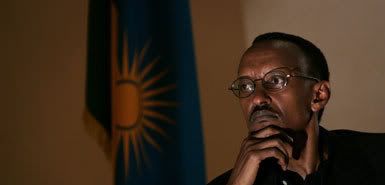
An 18 month Rwandan enquiry has implicated dozens of senior French political and military figures for their role in the 1994 genocide that killed up to 800,000 mainly Rwandan Tutsis. A 500 page report commissioned by Rwandan Prime Minister Paul Kagame named 33 senior French officials including the late President Francois Mitterrand and three former Prime Ministers including Dominique de Villepin. The report said French troops took direct part in the massacre and France provided political, military, diplomatic and logistic support. While Rwanda has no immediate plans to seek indictment, justice minister Tharcisse Karugarama said yesterday the report "could be the basis for potential charges against individuals or the state."

Karugarama also highlighted “the role played by France in the aftermath to protect the genocidal forces and make it very difficult for them to be apprehended and brought to justice". Karugarama was referring to Operation Turquoise (pdf), the so-called “humanitarian mission” France launched in the south of the country after most of the killing had ended, in a vain attempt to stop the Tutsi-dominated Rwandan Patriotic Front (RPF) from ousting the genocidal Hutu Power regime.

Mitterrand and de Villepin were among a dozen politicians named by the report along with twenty military officials. Mitterrand was French president at the time with very close links to President Juvenal Habyarimana whose assassination sparked the three-month genocide. De Villepin was the chief aide to then foreign minister Alain Juppé, who was also named in the report along with then-prime minister Edouard Balladur.

The report was the result of the 18 month long Mucyo Commission, named for its president and former justice minister Jean de Dieu Mucyo. Prime Minister Kagame commissioned the report as part of the tit-for-tat campaign which began in 2006 when a French judge issued a warrant for his arrest on charges related to Habyarimana’s plane crash (which also killed several French crew). Rwanda immediately cut diplomatic ties and ordered the French ambassador to leave Kigali within 24 hours. Kagame then asked Mucyo to investigate France’s role in the Habyarimana incident and expanded it to cover the whole genocide period.

The actual report is not yet readily available on the Internet, however the Rwandan New Times is serialising it, and released the first segment today. The report begins by documenting the French military operation in the immediate aftermath of Habyarimana’s death called Operation Amaryllis. While the official justification of Amaryllis was to rescue French citizens from Rwanda, the real reason was to send 464 elite soldiers to shore up the Hutu regime against the RPF (who now rule Rwanda).

France also made a deliberate decision not to interfere in the genocide itself. French senior ministers Alain Juppé and Michel Roussin explained the reasons why Amaryllis would not involve itself in the massacres. “It is not a question of intervening militarily in Rwanda,” said Roussin. “ It is clear that our mission is of a humanitarian nature whose aim is to repatriate our nationals and their families". On the same day, Juppé was more philosophical: "Can France keep order in the whole world?” he said. “Does she have the means and responsibility to stop, on the whole planet, people from killing each other?"

While the French government has not yet formally reacted to the report, Alain Juppé was quick to denounce Rwandan attempts to implicate him and France in the genocide. He called the report an unacceptable falsification and claimed that during his time as head of French diplomacy (April 1993 to May 1995), France did everything it could to help Rwanda reconciliation. "Did we, for example, systematically take the side of one camp against another, Hutu against Tutsi?” he asked. "Did we 'fail' to denounce the genocide committed by Hutu extremists starting in April 1994?” He said both questions were “untruths”. But with this report likely to have serious international repercussions, these untruths may yet be stranger than fiction.

Wednesday, August 06, 2008

The Internet in Australia: digital divide looming?

A comprehensive new study of Internet usage in Australia has found there is a growing digital divide between rich and poor. The study found that 20 percent of the people surveyed had never used the net, resulting in a gap between information haves and have-nots. Lead project investigator Julian Thomas said the divide reflects patterns of uptake that are repeated elsewhere in the western world. “If you're male, employed or studying, if you have a university degree and a higher than average income, you are more likely to be online,” he said.

The report entitled “The Internet in Australia” (pdf) also found that 80 percent of those that use the Internet have home broadband connection. It says broadband technology is changing what people do in fundamental ways. Users are consuming far less traditional media such as radio, television and newspapers and are also more likely to use the Internet as their primary source of news. As a result, broadband users value the Internet more highly and they use the internet for longer and for a greater variety of purposes.

The report says the Internet is now a mature technology in Australia. The majority of users have been online for over five years, with ten percent of early adopters online for over ten years. Only a very small proportion of respondents were new to the technology. There were significant differences in patterns of usage between life stages. While 86 percent of all employed users use the Internet regularly, over a quarter of all unemployed people do not use the net. Internet usage is lower still for homemakers and primary cares, over a third of whom are non-users. Retired people are the slowest adopters with just 38 percent penetration. This is also reflected in the use by age categories with a gradual reduction in usage as people get older, and then a dramatically falling off for those over 64.

Perhaps surprisingly, the study found no significant variation between the sexes. While more men use the Internet than women, the gap was not huge with a ratio of 74:71. This finding mirrors US trends showing that women are catching up in overall use. However, income and education were differentiating factors. The higher the income the more likely they had regular Internet access. While just four in ten respondents living in the lowest income households used the internet, that figure shot up to 93 percent for those in the highest income bracket. Similarly those with tertiary education were twice as likely to be connected as those who left school before Year 12.

The final major area of difference noted by the study was the urban-rural divide. 77 percent of those living in capital cities used the Internet compared to 65 per cent in regional areas. Big city dwellers were more likely to have broadband connections, accentuating the difference in connectivity between the bush and the Big Smoke. It could be a while yet before this gap is bridged. In April Labor Communications Minister Stephen Conroy scrapped the regional broadband contract it inherited from the previous government claiming it would only reach 72 percent coverage of regional areas rather than the 90 percent it was contracted to achieve.

The Digital Futures report is a product of the ARC Centre of Excellence for Creative Innovation at Swinburne University’s Institute for Social Research. According to Julian Thomas the study “is an ambitious, collaborative, world-wide attempt to map something that was until very recently unthinkable.” He believes it has the potential “to tell us a great deal about who we now are – or more precisely, who Australians are becoming in the new era of networks.” The large-scale study surveyed one thousand Australians in June and July 2007 for its research. The survey covered respondents from every state and territory and were mapped across five age groups as well as gender and location.

The study is the first survey undertaken by the Australian component of the World Internet Project (WIP). WIP is an international collaborative project which examines the social, political and economic impact of the Internet and other new technologies. Spread across 20 countries, it was conceived as the study of the Internet that should have been conducted of television in its early days. Now the WIP believes that the Internet's influence will ultimately be far greater than television. According to media writer Margaret Simons, “watching free-to-air television is something that old people do – and even they are slipping away”.

Tuesday, August 05, 2008

Report warns of mass primate extinction

Half of the world’s monkeys and apes are on the verge of extinction, according to a new report by the International Union for Conservation of Nature (ICUN). The Swiss-based conservation network conducted the first large-scale review in five years of the world’s 634 kinds of primates. They found that almost 50 percent are threatened to the point of being in danger of going extinct with another 20 percent considered vulnerable. The ICUN report identified habitat destruction, the hunting of primates for food and illegal wildlife trade as the major threats facing the mammals. We’ve raised concerns for years about primates being in peril,” said ICUN scientist Russell A. Mittermeier. “But now we have solid data to show the situation is far more severe than we imagined.”

Primate populations problems occur across the world. ICUN described the situation in South East Asia as “terrifying”. In Vietnam and Cambodia, approximately 90 percent of primate species are considered at risk of extinction. This represents a serious escalation of the problem in the last five years. In 2002, a previous ICUN survey found that “only” 20 percent of primates were then at risk. The numbers of gibbons, leaf monkeys, langurs and other species have dwindled due to rampant habitat loss to allow for rapidly increasing human population growth. The problems caused by the disappearance of rainforests are exacerbated by hunting for food and the wildlife trade for use as traditional Chinese medicine or pets.

Orang-utans on Sumatra and Borneo are also in grave peril. The two islands are the only natural habitat of the orang-utan. ICUN regards the Indonesian Sumatran orang-utan as “critically endangered” with five to seven thousand in the wild, while the Borneo (split between Malaysia and Indonesia) orang-utan is “endangered” with a population of 45,000 to 69,000. While habitat destruction is again the most significant threat to wild populations, the illegal domestic and international trade (especially to Thailand and Cambodia) in live animals is also significant. Many animals end up as “performers” in poorly managed theme parks and law enforcement is weak.

The problem in Africa was almost as bad with 37 percent of all African primate species considered at risk. Despite a recent small rise in numbers, the mountain gorilla remains on the critically endangered list. About 600 gorillas live in the Virunga Mountains which straddle the borders of Rwanda, Uganda and the DRC. While gorilla exportation is supposedly strictly controlled by international agreements such as CITES (Convention on International Trade in Endangered Species of Wild Fauna and Flora), there is still an active, lucrative market for endangered primates. Many animals end up in zoos and private collections. Hunting and poaching are also a big problem. Gorillas are shot, speared, and trapped for their meat as well as for trophies. They are also the unsuspecting victims of snares set for smaller animals and die of infected wounds. Logging and agriculture growth associated with a human population boom is also destroying the Virunga habitat.

The ICUN report warning is already too late for other African primates. Two of the 13 species of red colobus monkey may already be extinct. There have been no confirmed sightings of the DRC’s Bouvier’s red colobus or the Ghanaian Miss Waldron’s red colobus since 1978. Researchers believe that the red colobus monkeys are more threatened than any other group of primates in Africa due to the fact they are especially sensitive to habitat degradation as well as being easy prey for hunters.

ICUN identified the need for reforestation as the key to stopping primate extinction. Two threatened Brazilian breeds of lion tamarins are recovering after three decades of sustained conservation efforts. While they are no longer in immediate danger of extinction, their populations remain very small and they require new habitat for their long-term survival. Anthony Rylands, the deputy chair of the IUCN Primate Specialist Group said the lion tamarin projects show the value in conserving forest fragments and reforesting to create corridors that connect the populations. “If you have forests, you can save primates,” he said.

But this is a rare success. Human acquisitive instincts are causing an ever more rapid evolutionary holocaust. These instincts can’t tell humans when to stop, until something we never intended to harm is fatally deprived of something it needs. As Alan Weisman said, “We don’t actually have to shoot songbirds to remove them from the sky. Take away enough of their home or sustenance, and they fall dead on their own.”

Monday, August 04, 2008

Solzhenitsyn

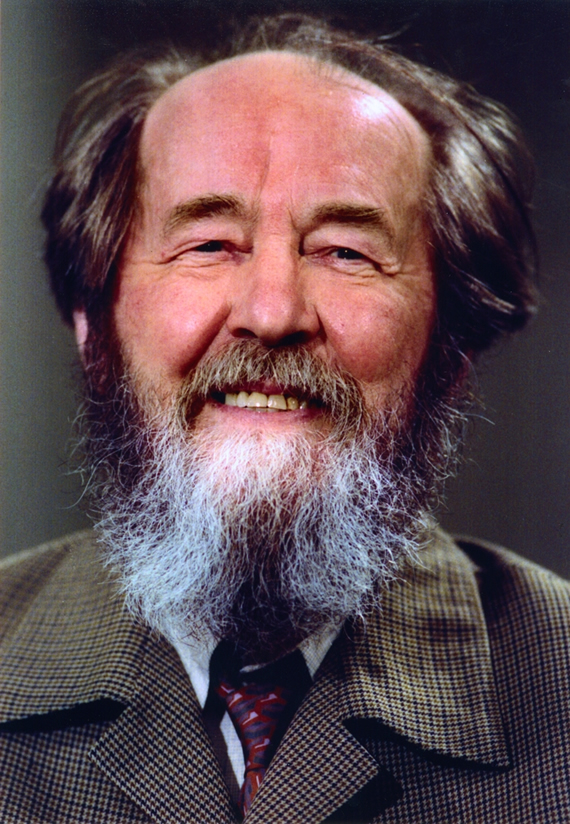
The great Russian writer Alexander Solzhenitsyn died of heart failure overnight, aged 89. The author of over 20 books, Solzhenitsyn was most famous in the West for his portrayal of the Soviet gulag system of which he had first hand experience. But he also won a Nobel Prize for Literature for both the power of his literature and his humanism. His books. translated into hundreds of languages, sold in millions; and his influence on twentieth century discourse is almost unrivalled among writers. Writing in Quadrant in 1998, Peter Coleman described Solzhenitsyn’s impact in the downfall of Soviet Communism as being on a par with Pope John Paul II and Mikhail Gorbachev. South African writer and fellow Nobel laureate J.M. Coetzee was probably more to the point when he described Solzhenitsyn “a man of immense personal courage, and, as a writer, the one indisputable heir of Tolstoy."

Indeed, Solzhenitsyn’s intellectual development followed a very similar path to the 19th century greats Tolstoy and Dostoyevsky. Living under intrusive and censorious regimes, they wanted to retain the best parts of Russian society as well as take in the best ideas of the West. But, they were eventually driven into some sort of exile and as Max Teichmann wrote in 2005 in National Observer, they became disillusioned and shocked to find that Western democracy was really a plutocracy, its intellectuals careerists and materialists. They eventually re-directed their gaze to Mother Russia to plan a new society that would combine the best of east and west.

This trajectory applies as much to the twentieth century great as his nineteenth century forebears. Alexandr Isayevich Solzhenitsyn was born into an intellectual Cossack family in 1918 in the North Caucasian city of Kislovodsk, which lies between the Black and Caspian Seas. World War I had ended disastrously for Tsarist Russia and the nation was plunged into civil war between white and red. Solzhenitsyn's family was white. But his father died in a hunting accident before he was born. His mother was the daughter of a wealthy landowner and was persecuted by the newly installed Soviet regime. She was denied permanent employment and labouring alone, her family was forced into poverty from most of the 1920s and 30s.

Solzhenitsyn harboured literary ambitions early in life, resolving before he was eighteen to write a major novel about the Bolshevik Revolution of 1918. He never realised this ambition. After earning degrees in philology, mathematics, and physics at Rostov University, Solzhenitsyn began teaching in 1941, aged 22. That same year Nazi Germany launched Operation Barbarossa and invaded the Soviet Union. Solzhenitsyn enlisted and rose to the rank of artillery captain. He was decorated twice for bravery. But it all counted for nothing when he was arrested for criticising Stalin. While serving on the German front in 1945, Solzhenitsyn wrote a letter to a friend, in which he described the Soviet leader as “the man with the moustache”. Such apparently innocuous disrespect could not be tolerated and he was sentenced to seven years in a labour camp in Kazakhstan and three more years in internal exile in Central Asia.

After he emerged from prison he was determined to fulfil his longstanding ambition to write a novel. He published One Day in the Life of Ivan Denisovich in 1962, roughly based on his own experiences. The novella describes the daily routine from dawn to lights out at a “special” prison camp in Siberia. The protagonist is Ivan Denisovich Shukhov, a former carpenter, who has been in several of these camps for eight years, serving a ten-year term for “treason.” It was published in the literary magazine Novy Mir whose editor A.T. Tvardoovsky advised him to lie low awhile after publication. Despite the author's absence, the response was electric and Denisovich caused a sensation in the USSR and the West.

Solzhenitsyn had taken advantage of the relative freedoms allowed in the Khrushchev era to publish his first book. But in 1964, Brezhnev came to power and the censorship returned. The KGB seized his papers and Solzhenitsyn was forced to go underground. Through the samizdat literature network, he managed to publish another gulag tale “The First Circle” in 1968. He was awarded the Nobel Prize for Literature in 1970. The Nobel foundation said the award was given for “the ethical force with which he has pursued the indispensable traditions of Russian literature”. Solzhenitsyn was unable to claim the award in person for fear of being deported.

His fears were warranted. Solzhenitsyn was stripped of his citizenship and sent into exile in 1974 after the publication of first part of The Gulag Archipelago, his monumental history of the Soviet police state. After moving to West Germany and Switzerland, he settled in the US, where he would live for the next 17 years. In his 1978 Harvard Lecture he delivered a savage denunciation not of Communism but of modernity and “man’s flight from spirituality”. Instead of blasting Russia, Solzhenitsyn saw a loss of courage in the West induced by materialism. A disappointed US media decried his “cranky Puritanism” as the reason he refused to outrightly condemn Communism.

But condemn it or not, Solzhenitsyn outlasted the Soviet Union and returned to his native Russia in 1994.In a 2003 interview for the Catholic St Austin review Solzhenitsyn acknowledged the spiritual dimension was more important in his writings than the political dimension. In April this year Solzhenitsyn was still active in the political dimension; writing a short op-ed for Izvestia. In it he claimed that the 1932-33 Ukraine famine (known by the Russian phrase “holodomor” which means “murder by hunger”) was not a genocide. He said the famine was caused by corrupt Communist officials but was not a deliberate assault by Russia against the people of Ukraine. But years of his own declining health finally took its toll yesterday.

His rehabilitation was complete when, in a rare moment of humility, Russian President Vladimir Putin paid a pilgrimage to the "conscience of Russia" in 2000. Solzhenitsyn's quotes were legion, but I will finish this article with two. In the Gulag Archipelago, he has one of his characters say “The line separating good and evil passes not through states, nor between classes, nor between political parties either – but right through every human heart”. The second quote is when he was asked how he would like to be remembered to posterity. Solzhenitsyn responded first by saying it was a complex question. But he gave a simple answer: “I would hope that all that has been said about me, slandered about me, in the course of decades, would, like mud, dry up and fall off,” he said “It is amazing how much gibberish has been talked about me, more so in the west than in the USSR.”

Sunday, August 03, 2008

Obamania: the making of a black president

Campaigning in Florida, Barack Obama refused to label John McCain’s new attack ads as racist, instead calling them cynical. McCain’s ad released earlier this week focussed on Obama’s celebrity status in Europe and compared him to Britney Spears and Paris Hilton. The ad got heavy airplay on the Internet and broadcast media. And as McCain struggles to get traction in opinion polls, there is little doubt that Obama’s background will play in an increasingly important in the campaign still to come.

There is also little doubt that Obama is the most “exotic” presidential candidate in living memory. Obama’s father, also called Barack Obama, was a Kenyan of the Luo tribe, born on the shores of Lake Victoria in the village of Alego. Obama senior was the son of a goat herder and attended the local school set up under the British colonial administration. The name Barack means “blessed” and the young man certainly seemed to live up to his name as he won a scholarship to study in Nairobi. On the eve of Kenyan independence, he was selected to study at a US university. In 1959, aged 23, he became the University of Hawaii’s first African student and emerged three years later top of the class with a degree in econometrics.

In a Russian language class at university, he met a shy 18 year-old American girl and they fell in love. The couple married and had a son Barack junior. But then Barack Obama snr won another scholarship to do a Ph D at Harvard. He was unable to take his young family with him. The separation became permanent as Obama went back to his native Kenya to fulfil his promise in the young black nation. Barack junior was just two years and he would see his father just once again in his life.

Obama’s mother Stanley Anne Dunham sought a divorce and stayed on in Hawaii with her son. She eventually met another foreign exchange student, Lolo Soetoro, an army geologist from Indonesia. Stanley Anne married Lolo and she followed him back to Djakarta with her young son a year after the brutal overthrow of the Sukarno regime. Under Lolo’s tutelage, young Barack learned the Indonesian language and the art of boxing. His local education was supplemented by a US correspondence course while his mother kept up his English lessons.

Stanley Anne decided it was time for her 10 year-old son to attend an American school. She sent Barack back to Hawaii to live with her parents. He was enrolled into the Punahou Academy, an elite school which traced its heritage to 1841 when it was started by missionaries. Meanwhile Barack’s mother had separated from Lolo and returned to Hawaii to pursue a master’s degree in anthropology. It was here also that Barack’s father paid him his one and only visit for a month. Barack snr returned to Kenya and was eventually killed in a car crash in 1982.

As a teenager, Barack Obama junior discovered black literature and began to read the works of Baldwin, Ellison, Hughes, Wright and DuBois. In his autobiography of his early years “Dreams from my Father”, Obama described these writers as “exhausted, bitter men, the devil at their heels”. Only Malcolm X’s biography appeared to offer a more positive message. The young Obama was impressed by his “repeated acts of self-creation” and was haunted by the similarities of their bloodline and the need to “expunge” his white heritage.

After high school, he moved to Los Angeles where he enrolled as “Barry Obama” at Occidental College near Pasadena. Here he fell in among the college’s large black population which was heavily politicised in an era when Ronald Reagan was about to inherit the US presidency. Obama joined a campaign to persuade African National Congress representatives to speak on campus. It quickly became apparent the young man was articulate and an excellent organiser.

But after two years, Obama had tired of L.A. When Barack learned about a transfer program with New York’s Columbia University, he quickly applied. Obama finished his studies here and emerged from Columbia clutching a degree in political science. In 1983 he decided his future lay in community organisation. In his own words he wanted to “organise black folks. At the grass roots. For change”. After applying to every civil rights organisation he could think of, he was eventually accepted by a consulting house on multinational corporations as a research assistant. He found the work boring and lasted only a few months. Obama drifted from job to job between being unemployed and broke.

In 1985, he was hired by an old friend Gerald Kellman (known as "Marty Kaufman" in Dreams of my Father) to come to Chicago to organise poor blacks save their manufacturing jobs. Although the city had a black mayor in Harold Washington, Chicago had the reputation of being the most segregated city in the US. With Kellman’s help, Obama began organising for a group called the Developing Communities Project (DCP) which was a church support group for blacks who were being squeezed out of their blue collar jobs and entitlements.

Obama started to interview his new constituents and began to understand their problems with unemployment, poor housing, police harassment and racism. He spoke to church groups and urged co-operation and the restoration of pride into battered communities. Obama recruited a team to help the DCP spread a message of hope. He found an issue he could tackle – the lack of training programs in the black suburbs – and formed alliances with local leaders, and lobbied the Chambers of Commerce and the Mayor’s office.

Gradually, Obama’s tireless energy turned the DCP into a superior lobbying organisation. His staff grew as more money entered the coffers and he was gaining a sense of political awareness. As well as setting up job programs, Obama started education programs for poor blacks and organised the tenants' rights group in the slum asbestos-ridden project of Altgeld Gardens. Here also he met the Reverend Jeremiah Wright who had similar ideas on community regeneration. Wright would become his mentor, marriage celebrant and a valued friend (until his comments in this year’s election campaign attracted the wrath of the right-wing media).

Barack Obama’s life-changing experience was his five-week visit to Kenya in 1988. There he met his father’s family including his own half brothers and sisters. He learned about his father’s role in KANU, the party run by the first Kenyan leader Jomo Kenyatta. Obama came away optimistic and convinced that the ties that bind wound prevail over expedience and greed. Crucially he also shed his belief in the importance of colour. On his return to the US, Obama went on to Harvard Law School where his glittering career really took off. He became president of the Law Review, published his memoir and taught law in Chicago. His election to the Illinois Senate in 1996 began a political career that, attack ads notwithstanding, appears to be taking him to the White House in November. As he wrote in “Dreams”, Obama still has the look of someone “mildly bewildered by the attention, and constantly aware of the gulf between the hard sheen of media reports and the messy, mundane realities of life as it is truly lived."