Showing posts with label Abkhazia. Show all posts

Friday, October 02, 2009

EU report hammers Russia and Georgia over South Ossetian war

A new report has blamed both sides for the war between Russia and Georgia last year over the breakaway province of South Ossetia. 800 people died, several thousand others were wounded and 100,000 people became refugees in the conflict. The report of the war in the Caucuses last year was commissioned by the Council of the European Union using 30 European military, legal and history experts. Sadly, it says, the fighting did not end the political conflict nor were any of the issues that lay beneath it resolved (photo of Russian-Georgian border by opendemocracy).

The report was the result of an independent EU fact finding mission undertaken three months after the war. Its terms of reference were to investigate the origins of the conflict particularly in regard to issues of international law, humanitarian law and human rights. The inquiry is the first of its kind under the auspices of the EU and was conducted by a core team of three led by Swiss Ambassador Heidi Tagliavini.

The conflict has deep roots in the region with a long history of hostility and suspicion between the different national traditions of the area. Soviet federalism hid the hatred for 70 years but the chaos that followed the break-up of the USSR added to the mistrust. Georgia grew in assertiveness after the Rose Revolution of 2003 displaced the rule of former Soviet foreign minister Eduard Shevardnadze Meanwhile Russia held a policy of a privileged “near abroad” where it did not easily accept events deemed detrimental to its interests.

International peacekeepers had patrolled the troubled autonomous provinces of South Ossetia and Abkhazia since the mid 1990s but a general lack of interest prevented these forces from being effective. Georgia inherited the two provinces as part of the old Soviet republic of Georgia but both felt alienated by nationalism in the new independent country.

In 2004 the newly elected Georgian President Mikheil Saakashvili requested to join NATO while increasing military spending from 1 percent of GDP to eight. The US gave its support with military aid and Bush’s “beacon of liberty” speech in 2005. These actions did not go down well in Moscow.

Russia supported the independence of the two republics but was not supported by international law. Recognition of breakaway entities by a third country is deemed unlawful interference in the sovereignty and territorial integrity of the affected country according to Principle I of the Helsinki Final Act. Russia added to the hostility by conferring mass citizenship on South Ossetian and Abkhazian citizens.

In 2008 tensions mounted further as both sides flew jet fighter and unmanned flights over the ceasefire lines. Russia brought more troops into the area and both sides exchanged fire on the South Ossetian border. In July-August both sides carried out large military exercises and South Ossetia started to withdraw its civilians to Russian territory. The stage was set for all-out war which began on 7 August when Georgia attacked the Ossetian town of Tskhinvali.

The official reason for the attack is confused. The military leader claimed it was aimed at restoring Georgia’s constitutional borders but this was later revoked by Tblisi as “unauthorised”. The real reason, said the government, was a “defensive operation” response to a Russian attack. However the Russian counter-attack did not begin until a day later.

But when it did arrive it was devastating. In the next five days, Russian ground troops supported by the Navy chased the Georgians out of South Ossetia and into Georgia proper. They set up military positions in a number of Georgian towns, including Gori, Zugdidi, Senaki and Poti. Hostilities concluded after Abkhaz units supported by Russian forces seized territory in the upper Kodori Valley.

Russia said its military actions in Georgia were a “peace enforcement operation” while Georgia called it an “aggression”. The international community refused to take sides other than call for an end to the fighting. On 12 August then-EU president Nicolas Sarkozy went to Moscow and Tblisi where he hammered out a six-point ceasefire plan. Russian forces ignored the ceasefire for several days before withdrawing into South Ossetia and Abkhazia after 22 August.

The EU report went on to lay blame for the conflict. It said the Georgian shelling of Tskhinvali on 7 August was unjustified but so was the South Ossetian response “outside of the purpose of repelling the Georgian armed attack.” The report also labelled the Georgian attack on Russian peacekeepers as unjustified. It said Russia had the right of defence to these attacks but said the Russian response was “disproportionate”.

The counter-attack on Georgia was not “remotely commensurate” with the original incident and had no humanitarian or genocide justification. Georgia had the right to act in legitimate self-defence under Article 51 of the UN Charter. In a matter of days, says the EU, the pattern of legitimate and illegitimate military action had been turned on its head.

The report recommended Georgian constitutional reform as a long-term solution to the problem. This would mean a meaningful degree of autonomy of Abkhazia and South Ossetia within a federal Georgia. Up to now such discussions have stalled on Georgia’s refusal to countenance secession powers for the federated states. The report also recommended the building of more mutual trust and bilateral co-operation and an end to the creeping Russification of the two breakaway provinces. Russia was no longer an honest broker, it said, but more concerned with its own strategic interests.

The report concluded that the situation is now even more difficult that it was before the war. There were no winners in this conflict and relations between Russia and Georgia are at an all-time low. Worse still, it threatens to destabilise the entire region. The international community could do more to get negotiations started but it requires a willingness of Russia and Georgia to solve the problem. “This needs to be done now,” ended the report.

Monday, August 11, 2008

Stephanie Rice and South Ossetia: Of bread and circuses

Twenty-year old Stephanie Rice took out Australia’s first gold medal in the Beijing Olympics on the same day as Russia intensifies its war with Georgia. No connection really, though you’d have to ask which you’d rather read about if you didn’t have a dog in the fight. Rice has glamour in spades, while the South Ossetian conflict merely has spades.

Stephanie Rice is a full-on media figure, whose mistakes, or blessings, include publicly dating other high-profile swimmers and posting police uniform poses on her Facebook page. But yesterday, she swam a 400m individual medley in a time of just under four and a half minutes. It was the fastest ever at that event and won the gold medal. The silver went to Kirsty Coventry, a white girl from the stolen nation of Zimbabwe. Coventry not only did well for the pariah state, it was also the first medal of any colour in the Beijing Olympics for the entire continent of Africa.

But while most of the eyes of the world are on the various complexities of Beijing, elsewhere nations of the world are at war. Such war is in direct violation of the Olympic truce, the concept of ekecheiria (“holding of hands”) that was enforced during the ancient Olympics. Although some historians now say the idea that ancient Greeks stopped their wars for the Olympics is a nonsense, it hasn’t stopped aid agencies calling for a modern Olympic truce. In 2007 China sponsored UN Resolution G/A 62/L.2 "to promote peace, dialogue and reconciliation in areas of conflict during and beyond the Olympic Games period."

But the nations of Russia and Georgia are not interested at the moment in promoting peace, dialogue and reconciliation. Instead they are engaged in a slowly escalating and complex conflict that has the potential to drag in the wider international community. The war is not totally unexpected, though I got it wrong in May when I thought the flashpoint would be Abkhazia.

Instead the fight is happening several hundred kilometres inland. But South Ossetia is not too dissimilar from Abkhazia. Both are breakaway republics with leanings to Moscow, but for which the rest of the world still believes belongs to Georgia. The name "Georgia" itself is western European and of disputed heritage. The locals call themselves Kartvelebi and their country Sa-kartvel-o “the land of the Kartvelebi”.

Next to the Kartvelebi live the Ossetians. Ethnic Ossetians speak a language similar to Persian (Farsi). But in the Soviet Union 1991 divorce settlement, it was broken up into North and South with North Ossetia given to Russia and South Ossetia given to Sakartvelo. Ever sensitive to names, Georgian see the use of the word "north" in the title North Ossetia as misleading. In their eyes, the Russia owned North Ossetia is the only Ossetia. Georgia prefers to call South Ossetia by either the ancient name of Samachablo or, more recently, Tskhinvali region.

If given the choice, Ossetians would probably rather be free of both Russia and Georgia. But that is the least likely outcome. Georgia has sovereignty in its favour and the cosying up with NATO. But pro-Western Georgian President Saakashvili has overplayed his hand. An actual war in South Ossetia or Abkhazia would mean disaster for Georgia. Both republics have been defacto independent nations since the 1990s. Russia has more natural sympathy among the local population and is more powerful locally. In this new cold war theatre, Russia will now use the Ossetian excuse to dismiss Saakashvili as a bargaining chip to withdraw.

But the media’s attention will be more on Beijing than Tbilisi. Amusingly, one media may have given the impression the Georgia at risk was in the US’s deep south, though when I checked the source AFP story this evening, the Google map was even more bizarrely pointed to Brno in the Czech Republic. For now Saakashvili must cut his losses, consolidate his country's fragile growth, address local abuses such as police brutality, and hope his connections with NATO will stop Russia from invading. Meanwhile, back in Beijing, Stephanie Rice’s exploits will be honoured with an Australian postage stamp.

Thursday, May 08, 2008

Battle for Abkhazia intensifies

Both Russia and Georgia have accused each other of escalating military tensions in the breakaway Caucasus republic of Abkhazia. Extra Russian troops began arriving in the republic last week taking the total number close or possibly beyond the 3,000 limit allowed under a UN-brokered ceasefire agreement signed in 1994. The Russians say their move is necessary to stop a planned Georgian military operation to regain control of the region it lost in the early 1990s. Georgia, in turn, has accused Russia of annexing the territory and plans to add to their own presence in Abkhazia. They point to a Russian defence spokesman who told Agence France Press on the weekend the number of Russian soldiers in Abkhazia is already greater than 3,000.

This was denied today by Russian Ministry of Defence (MOD) who said they remain well under the 3,000 troop limit with 2,542 “peacekeepers” in the region. They warned they would send more but would remain under the limit. The MOD released a statement overnight said the increase in troop numbers “has only one goal – to maintain peace and avoid bloodshed.” They claim the force has “an important stabilising role”. “Today Russian peacekeepers continue to fulfil their tasks, acting in accordance with the mandate of the CIS peacekeeping forces and international norms,” said the statement “They have proven the necessity of their presence in the conflict zone.”

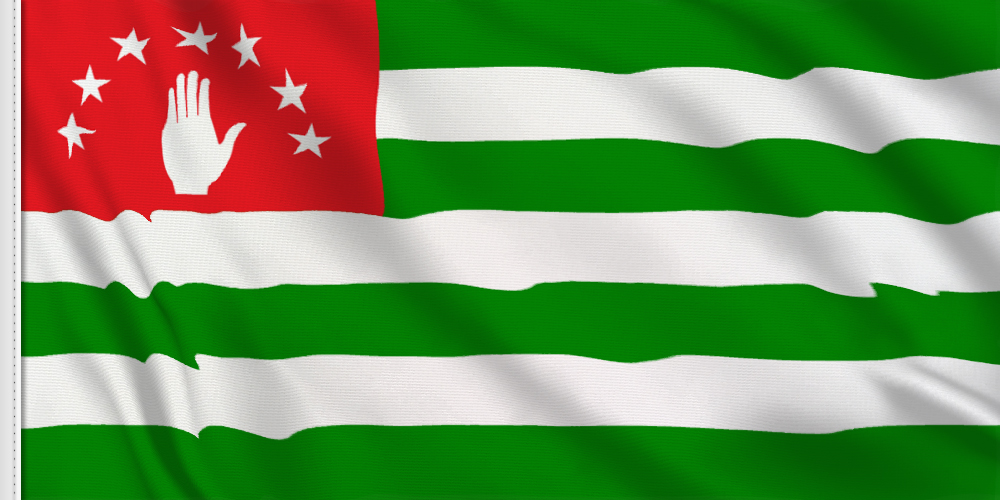
Abkhazia has long been a complex conflict zone. While international maps place Abkhazia within Georgia’s borders, it has been a de facto independent republic since it seceded from the newly created nation of Georgia in 1992. Abkhazia had been part of the Russian Empire since 1810. Originally a separate republic within the Soviet Union, it was forced to join the Georgian Socialist Soviet Republic in 1931 under the orders of Georgian-born Iosif Vissarionovich Dzhugashvili, better known as Stalin. Georgian became the official language and the Abkhaz language and cultural rights were repressed.

When the Soviet Union collapsed in 1991, an anti-Georgian resistance movement grew in the capital Sukhumi. Tbilisi sent in troops to enforce Georgian rule. In late 1993, they were driven out amidst fierce fighting in which several thousand people died and Sukhumi bombed. Abkhazia declared independence early in 1994. No other country has recognised Abkhazian independence and major international organisations such as the UN, EU and NATO recognize Abkhazia as an integral part of Georgia. An economic embargo remains in force crippling the local economy while Russia and Georgia nibble away at the edges each hoping to advance their own cause.

In the latest squabble, the US and EU have come down firmly on the side of Georgia. Both have sharply criticised Russia for its actions in bolstering its military force in the mountainous border region with Abkhazia. EU external relations commissioner Benita Ferrero-Waldner made a deliberate point that Russia should respect “Georgia’s borders”. Meanwhile White House spokeswoman Dana Perino said that the troop increase and the Russian downing of an unmanned, unarmed Georgian spy plane in Georgian air space have “significantly and unnecessarily heightened tensions in the region.”

US National Security Advisor Steve Hadley also weighed into the debate citing his concern about Russia’s growing support for Abkhazia. He said the Bush administration expects to have good relations with newly installed Russian president Dmitri Medvedev (who remains a probable puppet of Putin) but wants Russia “to stop interfering in the internal affairs of Georgia”.

However not everyone sees Abkhazia as an internal affair of Georgia. Abkhazian President Sergei Bagapsh told Spain’s El Pais yesterday he expects his country will eventually achieve international recognition of its independence the same way that Kosovo did in February. But Bagapsh doesn’t merely want the Russians to recognise the country in revenge for US support Kosovo. “We want independence because we have a right to it. Because we have deserved it," he said. He also added that an independent Abkhazia would be a demilitarised country with no weapons or military units, but it would need security guarantees from other countries to achieve this. This was a clear warning to Georgia whom Bagapsh said was "a very aggressive country armed to the teeth by Europe.”

Abkhazia is one of two breakaway republics from Georgia, the other being South Ossetia. Neither has international recognition but both have stepped up their campaigns since Kosovo's declaration of independence. Russia has backed both claims and are particularly interested in Abkhazia 240km shoreline on the Black Sea. But Abkhazia is actually a secondary issue for Russia. What Putin and Medvedev really want is an end to NATO expansion at the expense of Russia. The Kremlin is furious over Georgia’s bid to join NATO and caused the organisation to postpone a decision on Georgia’s membership last month. The New York Times said that Russia having seen the success of their “bullying” on that score, have now decided to up the ante further. As a result, Abkhazia trembles on the poker table.