Showing posts with label Uganda. Show all posts

Saturday, October 22, 2011

African Union's war with Al Shabaab intensifies

Somali Islamist group Al Shabaab has returned to Mogadishu where it has displayed the bodies of dozens of African Union and government soldiers in a show of strength. On Thursday they laid out bodies in military uniforms they said were Burundian soldiers with the AU force whom they had killed in an area they hold outside the capital. At least 70 bodies were laid out, though the Burundian army will admit to only 6 dead and 18 injured. (Photo: Feisal Omar / Reuters)

The attack on Burundian soldiers was not unexpected. Along with Kenyans and Ugandans, they make up the bulk of the AU force in Somalia. In July, al-Shabaab bombed bars and a stadium in Kampala, the Ugandan capital as thousands were watching the World Cup final. Over 70 people were killed in the attacks which came after repeated warnings to Uganda and Burundi for providing troops to the AU force in Somalia. The suitably named Al Shabaab spokesman Ali Mohamoud Rage said they were sending a message to every country that is willing to send troops to Somalia they will face attacks on their territory. “Burundi will face similar attacks soon, if they don’t withdraw,” Rage said.

Burundi itself has not yet been hit but Mogadishu continues to bear the brunt of the struggle. On Tuesday a suicide bomber blew up a car full of explosives near the foreign ministry. Four people were killed, including the bomber in an attack deliberately aimed to coincide with a visit from the Kenyan foreign and defence ministers.

Al Shabaab is particularly hostile to Kenya. Kenyan jets struck Al Shabaab positions in the border region a day after the suicide attack. They are targeting rebels they blame for abductions, including that of a French woman Marie Dedieu, 66, who was captured from her wheelchair at a beach resort in Kenya and who in captivity in Somalia. The air attacks are intended to soften the area up for an attack by Kenyan ground troops guided by pro-government Somali forces.

Meanwhile a new battlefield is emerging 70kms south of the capital with Kenyan forces. The fighting is at the coastal town of Kismayo, an Islamist stronghold. Kenyan military planners have targeted Kismayo and two nearby secondary ports to cut off the export earnings and taxes al Shabaab use to finance their war. Kenyan ground forces are attacking from the north and their navy from the south, leaving thousands of Somali refugees fleeing the area due to aerial bombardment. Somali traders prefer to use Kismayo because of its import duties –$1000 cheaper than Mogadishu – making it still profitable to enter goods at Kismayo and drive to Mogadishu.

Al Shabaab is Arabic for “the boys” but there is nothing lad-like about these Islamist hardliners who continue to make life a misery for the citizens of Somalia. Less than 40 percent of Somalis are literate, more than one in ten children dies before turning five, and a person born in Somalia today cannot assume with any confidence they will live to 50.

Al Shabaab emerged from the break-up of the Islamic Courts Union who were de facto rulers of Somalia from the mid 1990s to 2006 when Ethiopia-led forces invaded from the west. Ethiopia toppled the ICU but hardliners formed Al Shabaab which proved more difficult to dislodge. In 2009, By February 2009, they controlled most of southern Somalia where they imposed sharia law. They contributed to the famine in the region by banning international aid agencies, including the UN World Food Program. Despite only having a few thousand fighters they have been able to expand due to the lack of a central government and co-operation from clan warlords.

Al Shabaab’s continued support relies on hatred of invaders. A March 2010 report said US support of the transitional government was “proving ineffective and costly”. The Government was is unable to improve security, deliver basic services, or move toward an agreement with Somalia's clans and opposition groups to provide a stronger basis for governance. The report recommends a strategy of "constructive disengagement." This calls for the US to accept an Islamist authority in Somalia—including al-Shabaab - as long as it does not impede international humanitarian activities and refrains from both regional aggression and support for international jihad. While the report has merit, it seems naive to think Al-Shabaab will abandon its most fundamental philosophy.

Sunday, March 28, 2010

HRW uncovers LRA massacre in Congo

A new Human Rights Watch report has given details of a large scale massacre of civilians in north-eastern Congo by the Ugandan rebel group the Lords Resistance Army in December last year. In a well-planned operation, the LRA killed more than 321 civilians and abducted more than 250 others, including at least 80 children in northeastern DRC near the border with Sudan. The attack was one of the largest single massacres in the LRA’s 23-year history and witnesses said for days afterwards the remote area was filled with the “stench of death.” (photo © 2009 Reuters)

The horrific nature of the attack is outlined in HRW 67-page report “Trail of Death: LRA atrocities in Northeastern Congo” (pdf version).It was one of a series of assaults in the Haut-Uele and Makombo regions of DRC late last year during a vicious four-day operation to abduct child soldiers for their operations. In each town they arrived in, the LRA pretended to be Congolese and Ugandan army soldiers on patrol, and spoke in broken Lingala (the common language of northern Congo) to reassure locals. Then they tied them up with ropes or metal wire at the waist, often in human chains of five to 15 people and dragged them away. The victims included many children aged 10 to 15 years old who were made to carry pillaged goods. Anyone who refused, or who walked too slowly, or who tried to escape was killed. Hundreds were hacked to death with machetes or had their skulls crushed with axes and heavy wooden sticks.

Both the Congolese and Ugandan governments had previously claimed the LRA was no longer a threat to the DRC. HRW says embarrassment over these claims contributed to the lack of news of the massacre reaching the outside world. A DRC army investigation unit arrived in the area a week later and concluded the LRA had carried out the attacks but no further action was taken. Ugandan soldiers attempted to pursue the assailants but without success.

It wasn’t until the end of December that news filtered through to MONUC, the UN peacekeeping mission in Congo. Though it regarded the LRA as the enemy, MONUC did not have the resources to investigate. Its priorities were to defend the district capital Dungu from LRA attack, and attend to the long-running crisis in Kivu. However after a HRW briefing in March, MONUC sent a team of human-rights specialists to the area to investigate.

The attack was coordinated by General Dominic Ongwen, commander of LRA forces in northeastern Congo. Ongwen is wanted by the International Criminal Court for crimes committed in Uganda and he divvied up the abductees among the LRA commanders and separated into multiple smaller groups, each heading in a different direction. HRW has now called on the ICC and the DRC to investigate Ongwen and his two most senior commanders for their role in the massacre.

It will be a task easier to ask than answer. Originally restricted to Uganda, the LRA has now evolved into a regional power causing deadly mayhem in Uganda, southern Sudan, CAR, and Congo. They were pushed out of Uganda in 2005 and now operate in the remote border areas between southern Sudan, Congo and CAR. Despite continual attacks from multiple directions, including the 2008 US-logistics backed Operation Lightning Thunder, the LRA has proven remarkably resilient and able to regroup to continue their attacks against and abductions of civilians. In retaliation for Operation Lightning Thunder the LRA attacked numerous Congolese villages around the end of 2008 killing almost a thousand civilians and abducting hundreds more.

HRW says one hope of defeating the LRA comes from the US government. On 24 February, US Secretary of State Hillary Clinton Senate told the Foreign Relations Committee “I have been following the Lord’s Resistance Army for more than 15 years. I just don’t understand why we cannot end this scourge. And we [the US government] are going to do everything we can to provide support we believe will enable us to do that.” Three weeks ago the Senate unanimously passed the Lord’s Resistance Army Disarmament and Northern Uganda Recovery Act. The bill is now before the US House of Representatives and if enacted into law requires the Obama administration to develop a regional strategy to stop LRA attacks, LRA, work to apprehend their leadership, and support economic recovery for northern Uganda.

HRW says the people of northeastern Congo and other LRA-affected areas across the central African region have suffered for far too long. “They are waiting for strong, effective action to end the LRA’s atrocities,” said the report. “[And also] to see the safe return of their children and other loved ones who remain with the LRA, and to let them know they are not forgotten.”

Monday, December 07, 2009

Uganda anti-gay laws linked to fringe US fundamentalist group

Britain and Canada have joined the international chorus of disapproval of Uganda’s proposed anti-homosexual law. The bill, sponsored by a secretive right-wing American Christian fundamentalist group, would give Uganda the most draconian anti-gay legislation in the world on the specious grounds that "same sex attraction is not an innate and immutable characteristic". Gay sex is already illegal in Uganda but under the proposed law, a person convicted of homosexual acts is liable to life imprisonment, and if HIV positive the penalty is execution.

Britain and Canada’s prime ministers have told Ugandan President Yoweri Museveni the bill needs to be withdrawn. Gordon Brown and Stephen Harper told Museveni the proposal was unacceptable during a private breakfast meeting at the Commonwealth Heads of Government summit in Trinidad & Tobago last week. Sweden also threatened to cut aid if the bill is passed.

The Anti-Homosexuality Bill 2009 is going through Uganda’s Parliament after receiving its first reading last month. The draft was introduced into parliament on 14 October. According to Clause 2, a person who is convicted of gay sex is liable to life imprisonment. There is also an “aggravated homosexuality” component which means if they are also HIV positive, the penalty is death. It was introduced by Ugandan MP David Bahati, a low ranking member of the ruling party. Bahati said the legislation promotes family values. "Homosexuality is not part of the human rights we believe in," he said. Many top government officials support the bill.

President Museveni is among them and has long claimed homosexuality is a ‘disease” imported from the West. In 1998 he said “When I was in America, sometime ago, I saw a rally of 300,000 homosexuals. If you had a rally of 20 homosexuals here, I would disperse it.” Last month he urged Ugandan youth to abhor “divergent sexual orientation” and stand firm against European homosexuals who were on “a recruitment drive”. Museveni claimed Uganda had very few homosexuals. “They were not persecuted but were not encouraged either because it was clear that is not how God arranged things to be."

God is now arranging things differently in Uganda. The bill contains provisions to forbid the "promotion of homosexuality" including publishing information or providing funds, premises for activities, or other resources. Conviction could result in seven years in prison. The Bill also proposes a three-year prison sentence for anyone who is aware of evidence of homosexuality and fails to report it to the police within 24 hours. Ugandan parliamentary Speaker, Edward Sekandi, said it was necessary “to do whatever we can to stop” homosexual liaisons in Uganda.

The legislation was immediately condemned by human rights groups. US-based Human Rights Watch and Amnesty International joined a group of 17 local and international groups saying the bill would violate human rights and should be withdrawn immediately. Amnesty said the bill would criminalise the work of organisations working for the defense and promotion of human rights in Uganda. It would also stymie effective HIV/AIDS prevention efforts.

Writing in The Ugandan Independent, blogger Anne Mugisha said Museveni was behind the bill. Mugisha said the bill was designed to distract attention from economic failings. She said his links with the US far right ideology became evident when he favoured the Bush administration approach on HIV AIDS with its emphasis on abstinence and faithfulness rather than condoms. Mugisha’s position is supported by NowPublic which says David Bahati is a member of a secretive fundamentalist Christian organisation called The Family. They quote writer Jeff Sharlet who said Bahati received millions of dollars in funding through the organisation’s African outreach programs. Sharlet also said The Family has cultivated a "deep relationship" with Museveni.

Sharlet is the author of the book “The Family: The Secret Fundamentalism at the Heart of American Power” and he recently named Museveni and Bahati as members of the group. The shadowy group is led by Douglas Coe in Arlington, Virginia and Museveni has visited the group’s compound. Sharlet said one of The Family’s central ideas was that Jesus Christ’s message was not about love, mercy, justice or forgiveness. Rather, it was about power. "Jesus didn’t come to take sides, he came to take over". The group's agenda includes fighting homosexuality and abortion, promoting free-market economics and dictatorship, an idea they called “totalitarianism for Christ”. Yoweri Museveni is taking this totalitarianism to new levels in Uganda.

Thursday, September 17, 2009

Uganda calm after a weekend of riots

Uganda appears to be calm again after weekend riots that killed at least 21 people, injured 100 and saw 560 people arrested. The riots broke out after a row between the central government in Kampala and Buganda, one of Uganda’s four traditional kingdoms. The clashes took place mainly in and near the capital Kampala. While unexpected, they were spurred by long-simmering rows over land, power and corruption. Human rights groups said the Ugandan military response was heavy-handed. They used live ammunition on crowds, beat and arrested journalists and shut down five radio stations (photo credit: AFP/Getty Images).

According to London-based media writer Roy Greenslade, a photographer with Kampala’s Observer newspaper named Edward Echwalu was detained and beaten yesterday by security forces for taking pictures during a riot. Echwalu said he was arrested after he "took pictures of military men passing near a dead boy". He then suffered beatings after he rang his boss to complain. Greenslade also said that a Buganda radio station, CBS, went off the air.

Uganda’s four kingdoms, (Buganda, Busoga, Bunyoro and Toro) enjoyed a level of autonomy under British colonial rule but were abolished in 1966 by then-national leader Milton Obote. However, in a move to gain popular support, current President Yoweri Museveni restored the cultural and ceremonial powers of the traditional leaders, who were still revered by their subjects. The kings are constitutional barred from playing an active role in national politics but the law remains vague on many points. Government officials and the Buganda kingdom remain at odds over land, sovereignty and political power.

The latest trouble erupted after the Bugandan monarch, known as the Kabaka was banned from visiting a disputed part of his kingdom to celebrate National Youth Day. The Kabaka had attempted to visit the flashpoint town of Kayunga north-east of the capital on territory claimed by his kingdom. Kayunga is an area where a small tribe called the Banyala has for years agitated to be recognised separately from Buganda. However the central government has been keen to keep a lid on the problem as other tribal areas might follow suit and the system of kingdoms could unravel and with them, Museveni’s support base. Museveni could not guarantee the Kabaka’s security in Kayunga and banned the visit.

But when the Kabaka announced that the trip had been cancelled it triggered angry riots in Kampala and several central towns among Baganda youths, which are Uganda’s largest ethnic group. The riots escalated after local radio stations announced rumours that Buganda leaders were arrested. Rioters burned tyres and cars, set buildings afire and looted stores. They then strewed the streets with the debris of torched cars and burned tyres. Police reacted by firing tear gas and live ammunition. Human Rights Watch’s Africa director Georgette Gagnon said the available evidence raised serious concerns that police used excessive force in confronting demonstrators. "A thorough investigation is needed to find out who is responsible for yesterday's violence,” she said.

Museveni blamed former ally and now opposition leader Kizza Besigye for inciting the riots. The president claimed Besigye, head of the Forum for Democratic Change (FDC) wanted to see more bloodshed. Besigye rejected the accusation and said the protests were triggered by the government's actions. The opposition said major reforms were essential if the next election in 2011 was to be free and fair. While multi-party elections have only been in place since 2005, Uganda has made a remarkable transition to political and macroeconomic stability after years of civil war during the 1970s and 80s.

Uganda’s economic prospects received another boost last month when the US-based Tullow Oil company announced a major oil find. Tullow said its drilling site in the Congolese border town of Ngassa may contain significant oil resources. It and partner Heritage Oil have so far discovered 700 million barrels of oil in the Lake Albert region of Uganda with estimates that Ngassa could contain three times as much. The oil lies within the boundaries of Bunyoro which could become the epicentre of economic power further fuelling tensions between Kampala and the kingdoms.

Yet Uganda has been relatively stable since Museveni grabbed power in 1986. He won an election in 1996 and two more in 2001 and 2006. He faces re-election again in 2011. Analysts say the president is trying to build tribal alliances and weaken rivals through divide-and-rule ahead of that election. But he is risking a growing underclass of angry, unemployed youth in Buganda or Bunyoro will be alienated. As the country’s Daily Monitor said, "nothing unites them more than poverty and a sense of disenfranchisement -- and that is one war that cannot be fought with bullets.”

Saturday, September 12, 2009

Hopes rise for Irish and Ugandan aid workers kidnapped in Darfur

A kidnapped Irish aid worker spoke to her family for the first time in two months raising hopes of her release in Sudan’s troubled Darfur region. 32-year-old Sharon Commins was one of two employees of Irish aid agency Goal who was kidnapped on 3 July when six armed men stormed their building in the North Darfur town of Kutum. The attackers grabbed Commins and 42-year-old Ugandan co-worker Hilda Kawuki. Commins spoke to her mother in Dublin yesterday though the family have asked that the details of the conversation remain private (Photo of Sharon Commins by Goal / Press Association).

The concession from the kidnappers came after Irish Foreign Minister, Micheál Martin made a two day visit to the Sudanese capital Khartoum last weekend. Sudanese authorities say they know who the kidnappers are and are negotiating with tribal elders. The kidnappers want two million dollars in ransom, however Khartoum is refusing to pay a ransom for fear it will result in further kidnappings. Sudanese minister for humanitarian affairs Abdul Bagi al-Jailani has been trying to negotiate the release of the two aid workers and he said he is heartened by the phone call. He believes the women will be freed around 19 September to mark the end of Ramadan, a month of worship and forgiveness.

Last month, North Darfur state humanitarian affairs minister Abdel Baqi Al-Gilani said the kidnappers are members of a nomadic tribe in north Darfur. He said Sudan would forgive them if they gave up the woman and would also provide legal immunity. He also dismissed a report published by the Khartoum based Al Ray Al-Aam which claimed Commins had married one of her kidnappers.

Meanwhile a spokesman for a rebel movement in the Kutum area said their group was not involved in the kidnapping. Ibrahim al-Hillu from the Sudan Liberation Army (SLA) faction blamed Arab tribal gunmen “supported by the government”. And al-Hillu may have some justification for his accusation. In March the International Criminal Court issued an arrest warrant for President Omar al-Bashir for war crimes in Darfur which triggered a downturn in Sudan's relations with foreign relief organisations. SLA’s leader Abdel Wahid al-Nur says Khartoum’s greatest international misinformation success is that the Darfuri conflict is the notion that it is the result of ethnic or economic rivalries that are too complex and too entrenched to solve.

Irish authorities are becoming aware of the complexities of the region but remain confident of getting a positive outcome. Commins was an experienced campaigner with four years experience with Goal and 18 months in Darfur. Ireland sent two teams to Sudan ahead of Foreign Minister Martin’s visit; one to Khartoum and the other to the Darfuri capital El Fasher. The teams were charged with reporting to Martin on a daily basis, while other staff kept close contact with the Commins family. According to the Irish Times, the women were in good health and have spoken to Sudanese Government officials several times since they were captured.

GOAL director John O'Shea also says his organisation are “working around the clock” to ensure the women’s release. In a press statement on the Goal website last week O’Shea said he was pleased that Ireland had acceded to their request that a senior minister become involved and said the best chance of success lay with “the Irish Government impressing upon their Sudanese counterparts the absolute seriousness of this situation”. He also pleaded with the kidnappers. “Hilda and Sharon have given much to alleviate the suffering of the Sudanese people,” he said. “They want only to be allowed continue their lifesaving work”.

Friday, February 06, 2009

Andrew Mwenda and Impunity: The hazards of East African journalism

Renowned economist William Easterly has spoken out this week in support of independent Ugandan journalist Andrew Mwenda. In his excellent new blog Aid Watch, Easterly called Mwenda courageous and said he (Mwenda) was finally getting well-deserved recognition. Easterly said the editor of Uganda’s The Independent was a frequent critic of the corruption and poor results of African aid agencies. He also made a broader point about the quality of African media. “A free press is an important way in which we hold our governments accountable in rich democratic countries,” said Easterly. “Why shouldn’t Africans have the right to freedom of the press as well?”

Easterly’s call is valid, though there is a strong and robust press in East Africa. Paris-based Reporters Without Borders (known by their French initials RSF) has called Uganda’s press “pluralist and serious.” Certainly, Mwenda has proven a serious thorn in the side of his own government. The Independent focuses on uncovering official corruption and human rights abuses in Uganda. Since he established the bi-monthly magazine in December 2007, he has faced 20 criminal charges, including sedition, libel, and annoying the person of the president.

He and his staff have been arrested or detained more than a dozen times. In the most extreme event in March 2008, Ugandan military intelligence service raided his offices and threatened to shoot him. Mwenda braved out that threat and later told Parade, “The government can jail me or even kill me, but it cannot jail or kill the values and ideas for which we stand.”

But other journalists in the region have paid the highest price for those values and ideas. Last week police found the body of Kenyan journalist Francis Kainda Nyaruri in woods near Lake Victoria. He was tortured and then decapitated. Police say they are still looking for a motive but perhaps they know more than they are letting on. RSF said Nyaruri was recently threatened by police officers. Nyaruri had written a series of articles for a local weekly newspaper that exposed financial scams and other malpractice by the local police department.

The manner of his death bore similarities to that of New Zealand photographer Trent Keegan. Keegan was found dead in a trench in Nairobi with injuries to the back of the head. Police initially claimed he was killed in a robbery. However suspicions were raised when it was revealed that his laptop was stolen but his wallet containing US$60 was not. Keegan was investigating a land dispute in northern Tanzania between local Masai and a US based safari company at the time of his death. He had told colleagues he was concerned for his safety after the safari company had questioned him about his investigation.

Despite these incidents, Kenya is haven of safety compared to Somalia. Somalia is the deadliest country in Africa for journalists (only Iraq is more dangerous worldwide). This morning Roy Greenslade reported that Said Tahliil Ahmed was the latest Somali journalist to be shot dead. Ahmed was the director of HornAfrik, a radio and television station in Mogadishu, and his Islamist attackers killed him for reporting on the Somali presidential election (which is being held in neighbouring Djibouti for security reasons.) Ahmed is the second Somali journalist to die this year after Hassan Mayow Hassan was gunned down on New Year’s Day. Hassan was covering the conflict between the transitional federal government policy and insurgents in the region.

RSF have charted the grim death toll of Somali journalists. In 2008, eight were killed, four injured, some 50 journalists in exile, 53 arrested and others were force to hide at home after abandoning their work in fear. The press freedom body says the journalists were not only victims of political violence, but also “favourite targets for the transitional authorities, who see them as inconvenient witnesses of the chaos which they are unable to control.” Unfortunately, very little is done to protect them. As RSF said in their continental review in 2006: “In Africa, impunity is not a matter of bad luck, it is the general rule.”

Monday, July 14, 2008

Outbreak of deadly Marburg virus in Uganda

(cc photo by Shek Graham) The World Health Organisation (WHO) has warned people against visiting the bat caves in western Uganda after a tourist suspected to have contracted the Marburg virus died on Friday. The Ugandan Wildlife Authority (UWA) has temporarily stopped visits to the caves in Maramagambo forest while they investigate the link to the deadly virus, which is related to Ebola. Experts are now in the area to confirm that Maramagambo is the source of the Marburg disease which killed the Dutch woman last week.

The unidentified 40 year old women died in Leiden University Medical Centre on Friday. Because the disease is highly infectious, doctors are now monitoring the health on a daily basis of people who were in close contact with the victim. No-one else has shown any symptoms. The women visited two caves during a three-week trip to Uganda and suffered fever and chills four days after her return home. She was admitted to Leiden hospital on 2 July.

The Dutch Government notified WHO after a lab test confirmed a tourist had contracted the virus. The Hamburg based Bernhard Nocht Institute isolated the virus in the women who was in Uganda between 5-28 June and entered caves on two occasions. On her second visit, she went to the popular Maramagambo Forest between Queen Elisabeth Park and Kabale. There she had contact with a fruit bat species known to carry filoviruses. Filoviruses cause two types of viral haemorrhagic fever: Marburg and Ebola.

WHO spokesman Gregory Hartl played down the outbreak saying it was an isolated case of “imported Marburg." He advised people should not think about amending their travel plans to Uganda but should not go into caves with bats. His advice was reiterated by the Ugandan Health Ministry. They advised people who have to enter caves in Uganda that they should exercise "maximum precaution not to get into close contact with the bats and non-human primates in the nearby forests".

Marburg is an acute, infectious, hemorrhagic viral fever which affects both human and nonhuman primates. Marburg is a contagious disease that causes sudden bleeding and high fever. Other early symptoms include severe diarrhoea, abdominal pain, nausea and vomiting, severe chest pain, and sometimes sore throat and coughing. The incubation period is 3 to 9 days. Contact with bodily fluids of infected people is the main risk factor for infection. There is no treatment or vaccine. The natural source of the virus remains unknown.

Although endemic to Central and East Africa, the virus is named after the German town in which some of the first cases were described when local workers were exposed to green monkeys imported from Uganda. It is spread through contact with blood, semen or other bodily fluids. The Marburg virus is identical to Ebola in most respects, differing only in that it stimulates the production of different antibodies. Death rates are currently 80 to 90 percent of sufferers. At least 220 people died in the largest ever Marburg epidemic in Angola in 2004 and 2005, which followed an outbreak in the Democratic Republic of Congo which cost 128 lives between 1998 and 2000.

While no cure is yet available, North American scientists have successfully demonstrated an experimental Marburg vaccine in monkeys. Researchers from Maryland's Army Medical Research Institute of Infectious Diseases and Winnipeg's National Microbiology Laboratory injected eight monkeys with an extremely high dose of the virus. After half an hour, five of the eight were given the vaccine. The vaccinated animals all survived for at least 80 days, but the others died within 12 days. The vaccine is not yet ready for human testing but researchers are hopeful it may eventually be possible to immunise researchers infected in laboratory accidents. "Quite honestly, we were astonished," said Dr Thomas Geisbert, a senior US army virologist involved in the test. "We never thought it would work that well for something acute like Marburg, where the infection happens so fast that you don't have time to intervene."

Sunday, February 24, 2008

Uganda signs permanent ceasefire with LRA

After 18 months of discussion, the Ugandan government has signed a permanent ceasefire with the rebel Lord’s Resistance Army (LRA). The two sides signed the agreement on Friday at talks in Juba, Southern Sudan. The Ugandan government has described it as a “major breakthrough” and former President of Mozambique, Joachim Chissano, who is mediating the talks called it “the end of the war”. The deal will come into effect 24 hours after both sides sign a comprehensive peace deal, which Chissano hopes will be achieved later this week.

The ceasefire terms prohibit LRA recruitment or rearmament and movement beyond the Southern Sudanese assembly area. It also creates a 10km buffer-zone around the assembly area, guarded by southern Sudanese troops. The last remaining issue to be dealt with is the demobilisation of LRA fighters and their integration into the Ugandan army. This may still be tricky as LRA leaders walked out of the talks just a day before signing the agreement after the Ugandans turned down their request for monetary compensation.

In August 2006, Uganda signed a truce with the LRA. That truce committed both sides to end the bloodshed and cease hostile propaganda. The rebels were given three weeks to leave their hideouts in Uganda and northern Congo and assemble at two south Sudanese camps. Though the ceasefire was later renewed, negotiations brokered by south Sudanese mediators frequently stalled.

The 20-year rebellion by the LRA in northern Uganda left tens of thousands of people dead and nearly two million displaced. The LRA became infamous for their brutal methods, killing of civilians, kidnapping children for use as soldiers and porters, and their mutilation of victims. Leader and self proclaimed mystic Joseph Kony began one of a series of initially popular uprisings in northern Uganda after President Yoweri Museveni seized power in 1986.

Kony claimed the Lord's Resistance Army was fighting to defend the Biblical Ten Commandments, although they also had more prosaic demands such as stopping the looting of cattle by Museveni’s troops and wanting a greater share of political power for his Acholi people. Kony was originally supported by the Sudanese (Khartoum) government though they cut ties with the LRA in 1999 in exchange for Uganda dropping support for Southern Sudanese rebels. Since then Kony has been on the run in the DRC and desperate to sign a deal.

One sticking point in the current deal is the outstanding matter of international warrants for Kony’s arrest. The LRA has said it will never sign a final peace deal unless the International Criminal Court (ICC) drops indictments against its leaders for atrocities. They have now been supported by Uganda which has agreed to set up a special division of the Ugandan High Court. The LRA is now relying on Uganda’s ability to persuade the ICC to drop the charges. Kony and two of his commanders are wanted by the ICC for war crimes and crimes against humanity.

Last week, the ICC issued a statement saying that the arrest warrants still stand. The office of the prosecutor is not a party to the peace process," it said. "The arrest warrants against the LRA commanders were issued by the court and remain in effect.” However the statement did offer a way forward by saying the indictments could be lifted if the ICC judges decide whether national trials are an adequate alternative to prosecution. "A challenge to the admissibility of the case remains hypothetical and, in any event, would be a matter for the judges of the court to decide upon,” said the ICC. Some difficult negotiation remains ahead to prove Chissano’s optimism that the war is indeed, ended.

Sunday, January 13, 2008

Uganda bears the brunt of Kenyan crisis

Uganda is losing over a million dollars a day in revenues and exports as a result of the post-election violence in Kenya. The Uganda government and its farmers and traders are suffering as the landlocked country is unable to get its products out. Uganda is heavily reliant on the Kenyan port of Mombasa for the import of fuel and heavy goods, such as machinery, cars and generators, and also for the export of coffee, tea and tobacco.

In the fortnight since the violence began Ugandan government revenues have dropped by 78 per cent in the three border points with Kenya. Exporters too are feeling the pinch. "We have not been able to deliver our goods to the port since December 27 because of the violence", says David Barry of Kyagulanyi Coffee. "It is definitely a big loss for us, also in terms of fines and penalties for late delivery." Ugandan hopes of an early end to the Kenyan impasse following the collapse of efforts by Ghanaian president and AU mediator John Kufuor to secure a deal between President Mwai Kibaki and his opposition rival Raila Odinga.

Ugandan President Yoweri Museveni may now be regretting his early endorsement of a Kibaki victory. There have been allegations that the Ugandan government may have had a hand in securing the contested win. One week after the election on 2 January Museveni, in his capacity as current chairman of the East African Community, offered congratulations to Kibaki on his re-election. Other than Uganda, only Somalia, Kuwait and Swaziland have so far recognised the election result. Museveni was criticised internally for this move on the basis that his message could provoke attacks on Ugandans and Ugandan interests in Kenya. Others say he was “forced” to recognise the result to facilitate the movement of Ugandan goods in and out of the country.

If that was Museveni's plan, it has not proved successful. The only traffic coming into Uganda at the moment is a human one. According to the UN over 6,000 Kenyans have fled to eastern Uganda to flee the violence. They are finding shelter in school buildings, hospitals and in open places and UN agencies, government and the Uganda Red Cross are providing them food and other relief items. Over 500 have been registered at Bukwo and Kapchorwa districts. The Ugandan Red Cross has assessed another 3,500 refugees camped at the border towns of at Malaba, Busia and Lwakahkah. Red Cross official Alice Uwase Anukur said sanitation was the major challenge at the camps. "The only pit latrine at St. Jude Malaba Primary School is filled up," she said. She also said there was an urgent need for sanitary towels.

The general population is also suffering. Uganda continues to face shortages, and fuel prices have more than doubled since last week. In the longer term Uganda is hoping to reduce its dependency on road and rail for importing fuel products from Kenya by building an oil pipeline. The project will initially involve a $110 million 340-kilometer pipeline from Eldoret in western Kenya to the Uganda capital Kampala. The pipeline would subsequently be extended to Kigali and Bujumbura, the capitals of Rwanda and Burundi, respectively. Fuel supplies to all three countries have been erratic since the violence started.

But matters are unlikely to improve in the short term with Kenyan opposition forces planning further rounds of protest next week. The impact on the surrounding region is potentially devastating with the agricultural economies of Uganda, Rwanda, and Burundi all “throttled” by the violence. A quarter of the gross domestic product of Uganda and Rwanda and a third of Burundi's pass through Kenya. None of them have found a suitable alternative to the bottleneck port of Mombasa. According to Robert Shaw, a businessman and economic analyst, "If Kenya has got a cold, these countries get pneumonia.”

Monday, September 17, 2007

African floods affect 17 countries

Two months of constant rain has caused severe flooding across the Sahel region of northern Africa which has wrecked hundreds of thousands of homes and left many people vulnerable to water-borne diseases. Over 150 people have died and 17 countries have been affected in West, Central and East Africa. Entire villages have been washed away by torrential rains along with crops critical to some of the world's poorest nations. "The rains are set to continue, and we are really concerned, because a lot of people are homeless, and infectious diseases could emerge”, said UN spokeswoman Elisabeth Byrs. “Some of the poorest countries, like Mali, Burkina Faso, and Niger… are badly affected”.

In Sudan, the worst floods in living memory have left 64 people dead and displaced and affected several hundred thousand, mainly in the troubled south, according to the UN. The World Health Organisation are reporting a cholera epidemic spread by floods which has killed at least 49 Sudanese in recent weeks. "The response is still ongoing,” said Maurizio Giuliano, spokesman for the UN's Office for the Coordination of Humanitarian Affairs (OCHA).”Most of the 200,000 plus people who were homeless at the end of August have by now been given shelter.”

In neighbouring eastern Uganda, nine people have died and 150,000 have been made homeless since early August. Another 400,000 subsistence farmers have lost their livelihoods after their fields were flooded or roads washed away. The rains are forecast to worsen in the next month. Uganda's Minister for Relief and Disaster Preparedness Musa Ecweru spent Saturday viewing the affected areas by plane. "The problem is getting worse by the hour," he said. “Access to some communities is almost impossible."

While heavy rains are not rare in eastern Africa at this time of year, it is more unusual in West Africa where contingency plans are not as well developed. The UN said severe floods across West Africa had affected 500,000 people in 12 countries, wiping out crops and homes there as well. Ghana has been hit badly by the flooding, with three northern regions being declared an official disaster zone after several towns and villages were submerged. Ghanaian Information Minister Oboshie-Sai Cofie said it was a humanitarian disaster. “People have nowhere to go,” she said, “Some of them are just hanging out there waiting for help to come."

French military helicopters were helping relief efforts in nearby Ivory Coast, while officials in Togo were dealing with more than 60,000 displaced people and wrecked infrastructure. At least 17 people have been killed in the Savanes region of northeastern Togo. Una McCauley, UNICEF’s representative in Togo, said the death toll is likely to rise in the coming days as the rains continue. “About 60 thousand people still haven’t been accessed because their areas have been cut off,” she said. “The situation is quite poor because these are the same communities which have been touched by severe malnutrition.”

While African web sites and newspapers and the UN Information Network are filled with stories about the floods, the major English-language media in the West have mostly ignored this tragedy. But western disinterest in Africa’s problems is not new. When Mozambique suffered catastrophic flooded in 2000, Time reporter Tony Karon lambasted the lack of the interest in the west saying “forget about ‘ask not for whom the bell tolls…’ when it comes to a natural disaster in an impoverished African country, it takes some pretty gruesome images and a dramatic death toll before the industrial west even hears the bell”.

Friday, August 17, 2007

Will Rukwanzi lead to oil war between Congo and Uganda?

An obscure tiny island is threatening to become a flashpoint between African neighbours Uganda and the Democratic Republic of Congo. The Ugandan-Congo border bisects Lake Albert, the northernmost of the Great Rift Lakes. But the 160km watery frontier it is difficult to demarcate and police. Border tensions at the lake have been exacerbated as Congo and Uganda tussle for ownership of the tiny island of Rukwanzi which lies at the southern tip of the lake. Although the island is barely three kilometres wide, Rukwanzi is seen as a strategic location for oil exploration which has been going on in the area for several years.

Rukwanzi Island is claimed by both Uganda and the Democratic Republic of Congo. Congo’s claim is based on its fishermen who live on the island. Uganda’s claim is based on a 1971 map by its Department of Lands and Surveys indicates that the island is in Uganda, three and a half kilometres away from the boundary line with the Democratic Republic of Congo. In the local language Rutoro, Rukwanzi means ‘shiny bead’. “We were told that it was named that because it hangs on the water and swings like a bead on a person’s chest. It was named at the time when our great-grand-parents were trading in beads,” said local fishmonger Mukirane. “As a child, my mother cautioned me to always take care while fishing at Rukwanzi. Fishermen would fight for fishing space around that place.”

Tensions exacerbated on 4 August when gunmen on Lake Albert attacked a barge operated by Canada's Heritage Oil Corp killing a British geologist. The Briton worked for IMC, the company doing the seismic studies for Heritage Oil. Ugandan troops blamed Congo. "Congolese soldiers crossed into Uganda and attacked the boat between 1:00am and 3:00am," western Uganda army spokesman Lt. Tabaro Kiconco told The New Vision. Our troops also came in and responded. One Congolese soldier was killed in the fire-fight and one was injured."

In the past two weeks, Uganda's western border suffered three cross-border attacks that left three others dead. Now the Ugandan army has threatened to re-enter the Congo to quieten its western border if incursions do not stop and diplomatic efforts fail. "We are using incremental reactions, softer means, talking to each other, trying to persuade [the Congolese government] to see reason," Defence Minister Crispus Kiyonga said at the weekend. "If these soft measures do not work, we will take harder options including re-entering Congo."

However not all diplomatic efforts are failing. The two countries announced last week they would re-survey their common border to establish ownership of Rukwanzi in order to end growing border tensions between the two countries. “There is no cause for alarm and the situation is under control,” said Ugandan Defence Minister Crispus Kiyonga. “We have agreed to form a joint commission involving officials from Uganda and Congo side to re-survey our borders. This was part of the agreement with DRC President [Joseph Kabila] and we are committed to it.”

Now Congo’s troops have occupied the island. Congolese troops first set up a military detachment on the island in 1993 and have recently beefed up their contingent. They now join the 1,000 residents, mainly Congolese fishermen. Fishermen on the Ugandan side claimed that Congolese armed personnel were routinely harassing them on the lake. "They are ruthless," said a Ugandan fisherman Deo Mugisa. "They will arrest you at gun point, take your boat and fishing net and sometimes fishermen completely disappear."

As well as they oil concerns, border tensions have been increased by a leaked Congolese external security report which notes that Kinshasa is worried that Congo's exiled former Vice President Jean Pierre Bemba might be plotting to resume insurgency against his country from Uganda. Bemba was the leader of the rebel Movement for the Liberation of Congo (MLC), which was supported by Uganda during the Congolese civil war of 1998-2003. Bemba went into exile in Europe when he refused to disband his security force after his defeat in the 2006 election by President Kabila. Bemba now plans to return to the Congo and some diplomats believe Uganda may continue to support him. The statement of one elder from North Kivu area of Congo after the discovery of oil in 2003 remains prophetic: "We can see war coming on the horizon".

Saturday, June 23, 2007

Uganda child slave trade on the rise

Ugandan police have announced a probe into child trafficking from orphanages. Police Inspector General Kale Kayihura made the announcement during a conference on human trafficking in East Africa. Meanwhile fellow Ugandan Moses Okello, of the Refugee Law Project at Makerere University, told the BBC that a spate of recent cases showed the scale child trafficking in Uganda "could get out of hand". The conference is hoping to develop an action plan to address the lack of information on the problem and find ways to curb it

The discussions are occurring at the “First Regional Anti-Human Trafficking Conference in Eastern Africa” at Speke Resort Munyonyo in Kampala. Held for three days between 20 and 22 June, the conference was organised by the United Nations Office on Drugs and Crime (UNODC). UNODC was established in 1997 and has approximately 500 staff members worldwide. Headquartered in Vienna, it has 20 field offices as well as liaison offices in New York and Brussels. UNODC relies on voluntary contributions, mainly from governments, for 90 per cent of its budget. UNDOC mandate is to assist Member States in their struggle against illicit drugs, crime and terrorism.

However human trafficking is a $32b global industry that is on a similar scale to the drug and arms trafficking industry. UNODC launched the trafficking conference on 20 June with a press conference. UNODC stated that post-conflict societies, such as Uganda appear to be particularly vulnerable to human trafficking. The problems caused by war means that often the infrastructure is not in place to protect the most vulnerable members of society. It also creates an environment ripe for organised criminal organisations, which seek to exploit illegal markets.

The conference brought together authorities from the eleven countries of the Eastern African Police Chiefs Cooperation Organization (EAPCCO) region. A subsidiary of Interpol, the 11 member EAPCCO (Burundi, Djibouti, Ethiopia, Eritrea, Kenya, Rwanda, Seychelles, Somalia, Sudan, Tanzania, and Uganda) was founded in Kampala in 1998 and is now based in Nairobi. The major seven types of crimes investigated by EAPCCO are firearms, narcotic drugs, motor vehicle theft, economic crime and corruption, terrorism, environmental crime and cattle rustling.

However EAPCCO also recognises human trafficking as a major problem. Interpol has been involved in the investigation of offences against children since 1989. It has a specialist group on crimes against children which focuses on four different arenas; commercial exploitation and trafficking; sex offenders; serious violent crimes against children and child pornography. Operationally, it supports member states in carrying out large operations investigating the commercial exploitation of children.

The Kampala conference was told that Asian children mainly from India, Pakistan and China are being trafficked into Uganda. The International Labour Organisation (ILO) has released a rapid assessment report on trafficking of children in Uganda. The ILO said the Asian children are trafficked into Uganda disguised as cultural dancers on short- term visits while some Somalis are brought in as refugees. ILO said the trade was organised by “well coordinated networks of individuals and groups” across all stratas of society including pimps, employment bureaus, churches, transport agents, NGOs, peers, and fishermen.

The ILO findings were corroborated by Ugandan Inspector General of Police, Maj. Gen. Kale Kayihura. Kayihura said the country was a transit route in the multi-billion dollar human trafficking trade. He said Police are investigating two local orphanages involved in child trafficking. He also said that although the trade looks un-coordinated because of the small numbers moved at a given time, there is a huge worldwide network behind it.

Jeffrey Avina, director for operations at UNODC, told the conference that child trafficking was on the rise in East Africa. Avina cited the conflict in northern Uganda, where Lord's Resistance Army rebels have been widely accused of abducting thousands of children for over two decades which made the country stand out as the state worst affected by trafficking in eastern Africa. 30,000 rebel-recruited children have ended up in Sudan and the Democratic Republic of Congo. Boys end up working in commercial farms, mines and quarries and girls are forced into prostitution and other forms of sexual exploitation. “This is not about individuals; we are talking about organised crime," said Avina.

Trafficking in humans is outlawed under the UN Protocol Against Trafficking in Persons, which has been in effect since December 2003. Covered under the protocols are "the recruitment, transportation, transfer, harbouring or receipt of persons, by means of the threat or use of force or other forms of coercion, of abduction, of fraud, of deception, of the abuse of power or of a position of vulnerability or of the giving or receiving of payments or benefits to achieve the consent of a person having control over another person, for the purpose of exploitation". Like the law itself, human trafficking is a global issue that remains little understood.

Friday, April 27, 2007

Uganda ready to drop ICC warrant to make peace with Kony

After three months of stalled talks, the Lord's Resistance Army (LRA) has re-opened negotiations to end its 20 year war with Uganda. The LRA agreed to come back to the talks under the auspices of UN Special Envoy Joaquim Chissano, ex-president of Mozambique. Discussions resumed yesterday in Juba, the capital of Southern Sudan. Chissano pleaded with the LRA to make a go of it saying it was a last chance.

Both sides seem to be keen to make the most of the opportunity with conciliatory gestures apparent prior to the talks. Peace negotiations began in the middle of last year but broke down after three months because the rebels feared for their safety. The problem was caused by International Criminal Court warrants issued against several senior LRA leaders including Joseph Kony. Those warrants remain a sticking point. The LRA are demanding they be dropped as a precursor to any settlement while Uganda will only agree to an amnesty if a peace deal is signed.

The host of the current talks, South Sudan president Salva Kiir, has urged both sides to put aside their differences. At the opening of the talks at Juba Raha Hotel he said “The problems you are attempting to solve are not so deep rooted as we had in Sudan”. Kiir has vested interests in the settlement of the dispute as the battlefield has spread across his border into the newly autonomous South Sudan.

A report published by USAID’s Famine Early Warning System Network stated LRA attacks on civilian populations in southern Sudan pose a significant threat to food security and overall stability in the Equatoria states. After the last peace talks broke down, the LRA retreated to the Central African Republic (CAR), attacking and looting South Sudanese communities on their way. LRA activity is also hampering the return of 250,000 Sudanese refugees who fled into northern Uganda to escape the Sudanese civil war.

In October, the ICC issued a warrant against five LRA leaders including Joseph Kony. The arrest warrants of arrest are historic as they are the first to be issued by the ICC since its creation by the Rome Statute in 1998. According to the warrants, the LRA has established a pattern of brutalisation of the civilian population “by acts including murder, abduction, sexual enslavement, mutilation, as well as mass burnings of houses and looting of camp settlements”. Kony is wanted for the most serious charges, 33 counts in all including 12 crimes against humanity and 21 charges of murder. His deputy Vincent Otti is also wanted on 33 similar charges. Otti is believed to be hiding in the Democratic Republic of Congo.

Because the ICC does not have its own military or police force, it relies on support from the Ugandan government and the international community at large for assistance with arrest and evidence proceedings. Before the meeting Ugandan defence minister Amama Mbabazi said the warrants had been passed on to the country’s Director of Public Prosecutions in accordance with procedure. He also said
believes that one of the other men charged Dominic Ongwen was killed by Ugandan troops in September during an LRA incursion.

Kony, meanwhile, remains in hiding in Sudan, while the ICC warrant stands. He is represented in Jube by Martin Ojul. Captain Barigye Bakoku, the spokesman for the Ugandan delegation has described the start of the meeting as "cordial and brotherly”. He told AFP “I hope we are going to move smoothly up to the end because I saw seriousness in both delegations." But human rights bodies are watching Uganda carefully and are fearful Uganda will drop the criminal charges. HRW estimate Kony’s group has kidnapped 25,000 children.

But President Museveni will face pressure to come to a deal with Kony. A coalition of more than 40 local and international non-governmental organisations known as Civil Society Organisations for Peace in Northern Uganda (CSOPNU) has estimated the persistent conflict in the North has constrained economic and social development across the whole of Uganda. CSOPNU estimated the conflict has cost at least US$1.33 billion over the last 16 years - 3% of Uganda’s GDP over the period. The war has displaced half a million people, schooling is rare in the north, and HIV is rampant. The country desperately needs peace, and Museveni may be ready to pay a high price for it.

Wednesday, February 07, 2007

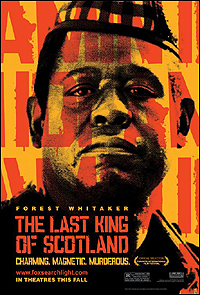
Whitaker outlasts the King of Scotland

After a clean sweep of the all the lead-up awards, Forrest Whitaker is odds on favourite to claim the Best Actor Oscar for his bravura performance as former Uganda dictator Idi Amin in Kevin McDonald’s film “The Last King of Scotland”. It would be a highly deserved victory. For the role Whitaker spent many months learning to speak Swahili, studying the East African accent and immersing himself in recordings, books, tapes and documentaries about one of Africa's most infamous and bloody tyrants.

And yet despite his astonishingly accurate and virtuoso performance, played with verve and conviction as a cross between Othello and Titus Andronicus, the Last King of Scotland remains a curiously dissatisfying film. And although it strays considerably from the Giles Foden book of the same name, it is probably the book’s fault that the movie fails to totally convince. The problem is that Foden tells the story of Amin through the eyes of a fictional young Scottish doctor Nicholas Garrigan (played by James McAvoy in the movie) whose becomes Amin’s personal physician by chance. Although the Garrigan is partially based on a real character and Amin definitely played favourites, the doctor’s story only serves to distract attention from the real meat of the tale – Amin’s complex personality and despotic rule.

Amin was born in either 1924 or 1925 in Koboko in the north west of Uganda. His father was a Muslim convert and Idi was sent to an Islamic school where he excelled in reciting the Koran from memory. Uganda was still a British colony in these times and Idi joined the British colonial army towards the end of World War II. He first saw action in 1949 in Somalia where troops were deployed to stop Ethiopian bandits from stealing cattle. He also served against the Kenyan Mau-Mau insurgency in 1952 where he gained his bloodthirsty reputation. Amin was good at sport, became heavyweight boxing champion of Uganda and rose slowly through the colour-biased ranks to become one of the army’s first two black lieutenants in 1961.

Uganda became an independent nation in 1962 and Milton Obote was appointed the country’s first Prime Minister. Although Obote distrusted Amin, he could not afford to antagonise the powerful military man. Obote sent Amin to Zaire to help the rebels fighting against President Mobutu. In return the rebels gave Amin gold and ivory, riches that Amin and the Premier shared, and their friendship blossomed. Amin was appointed army chief. The Ugandan President Mutesa found out about the deal, he tried to sack Obote and institute a parliamentary inquiry. Obote responded by suspending the constitution and giving himself unlimited powers. He promoted Amin to general and commander of the Ugandan army.

Despite this apparent friendship, the two men still heavily distrusted each other. In 1971, Obote planned to arrest Amin on a charge of misappropriating millions of dollars of army funds. Amin found out about the plan. While Obote was out of the country attending the Commonwealth conference in Singapore, Amin staged a military coup.

Obote took refuge in Tanzania where he led a resistance movement and was still considered head of Uganda. Meanwhile, Amin moved to shore up his power going a killing rampage of enemies, real and perceived. Despite the killing spree, most Ugandans initially support the coup, with the charismatic Amin promising to abolish Obote's secret police, free all political prisoners, introduce economic reforms, and return the country to civilian rule.

In 1972, Amin gave the country's 80,000 Asians (mostly Indians and Pakistanis) 90 days to leave the country after receiving a message from God during a dream. According to Amin he was determined to make Uganda "a black man's country". Amin distributed the wealth they left behind to his military favourites. Britain was appalled by his move and immediately stopped aid. Amin looked to Gaddafy’s Libya for help by claiming to turn Uganda into an Islamic state.

The Asian expulsion and lack of aid caused the Ugandan economy to collapse. By 1975 he had killed up to 500,000 people whose misfortune was to belong to the wrong tribe or supported Obote. Amin personally ordered the execution of the Anglican Archbishop of Uganda, Janani Luwum, the chief justice, the chancellor of Makerere College, governor of the Bank of Uganda, and several of his own parliamentary ministers. He launched a huge personality cult around himself and pronounced himself King of Scotland.

Back in the real world, things were starting to get ugly. In 1976, the PLO hijacked an Air France flight that originated in Tel-Aviv. Amin was sympathetic and personally invited them to bring their cargo to Uganda. They landed at Entebbe international airport where the hijackers and hostages were addressed by Amin and where they had the co-operation of the Ugandan army. After negotiations broke down to release the Israeli hostages, the Israelis launched an airborne assault on the airport to free the hostages as well as killing the hijackers and 27 Ugandan troops at the cost of one dead Israeli. This successful attack on home soil was a serious embarrassment to Amin.

But it didn’t stop his expansionist aims. In October 1978 Amin attempted to annex Kagera, the northern province of neighbouring Tanzania. Tanzanian president Julius Nyerere mobilised his army reserves and counterattacked. They were helped by a united Ugandan opposition group in exile called the Uganda National Liberation Army (UNLA). Despite aid and 3,000 troops from Gaddafy’s Libya, Amin’s troops were beaten back. The Ugandan army finally fled leaving the Libyans ward off the attack. Tanzanian and UNLA forces met little resistance, and invaded Uganda, taking Kampala in April 1979. Amin fled to Libya leaving the UNLA to unravel as it fought among themselves to take control of the country. In 1980 the new leaders held an election and Milton Obote was returned to power.

Meanwhile Amin stayed as a guest of Gaddafy for almost ten years, before finally relocating to Saudi Arabia. On 16 August 2003 Idi Amin died in Jeddah, Saudi Arabia. The cause of death was 'multiple organ failure'. Although the Ugandan government gave permission for burial in Uganda, he was quickly and quietly buried in Saudi Arabia. He was never tried for gross abuse of human rights.

In the Last King of Scotland, the story ends well before Amin’s death and the climax is more about the escape of Dr Garrigan. The closest thing Amin had to a real British friend and adviser was Bob Astles. Astles was English and about the same age as Amin. Like Amin, he served in the British army. Aged 21, he came to Uganda seeking adventure and wealth. He set up the first airline to employ Ugandans and married twice, the second time to local royalty. Although initially an Obote supporter, he changed allegiances to Amin after he was arrested and tortured. In 1975 Bob Astles formally joined Amin's service, becoming the head of the anti-corruption squad and an advisor on British affairs. Known as “the white rat” he was a feared man until the Tanzanian invasion. The invaders charged him with murder and corruption and he served six years jail. He returned to Britain in 1985 and now lives in the genteel surrounds of Wimbledon.

Giles Foden interviewed Astles for the book of the Last King of Scotland and used much of his back-story to fill in the details of the fictional Garrigan. But the decision to turn Astles into a young Scottish doctor is not entirely successful. As Kam Williams says “the novel is narrated by a fictitious character purely a creation of Foden’s imagination, a naive Scottish doctor with an uncanny, Forrest Gump-like knack for appearing at memorable moments in Ugandan history.”

Thursday, August 31, 2006

Uganda signs truce with LRA

On Saturday, there was a breakthrough in one of Africa’s most intractable and bizarre wars. Uganda’s government signed a deal with the Lord's Resistance Army (LRA) that commits both sides to end the bloodshed and cease hostile propaganda. The LRA rebels have now three weeks to leave their hideouts in Uganda and northern Congo and assemble at two south Sudanese camps. The deal offers the best chance yet of ending the 20 year old war.

Thousands have died during the conflict in northern Uganda, and more than one million have fled their homes. The chief mediator, southern Sudan's Vice-President Riek Machar said he hoped the two principals will take action so that the guns can go silent. The two principals that Machar is referring to are the two towering figures of Ugandan politics, President Yoweri Museveni and LRA commander Joseph Kony.

The conflict in Northern Uganda began shortly after Museveni took power in 1986. Remnants of the previous government fled north and formed the Ugandan People’s Democratic Army (UPDA). The UPDA were routed but formed several splinter groups. One of these groups was led by the ‘spirit moved’ Alice Lakwena. Her 3,000 strong army was defeated and she fled to Kenya. But her nephew Joseph Kony re-mobilised the Acholi opposition and renamed the movement the Lord’s Resistance Army. Kony also claims to be a “spirit lead”. His apocalyptic spiritualism gives him Stockholm Syndrome powers over the young boys he has abducted into his army. He also claimed clairvoyant powers that allowed him to predict attacks, or detect attempts by abductees to escape. Former fighters describe how he would appear in a blue cassock or white robe to conduct nocturnal rituals by the light of flickering charcoal fires, or speak in tongues in a special yard reserved for communion with the spirits. The LRA rebels say they are fighting for the establishment of a government based on the biblical Ten Commandments. Kony practices a strategically syncretic religion and celebrates the Islamic holy day of Friday as well as the Christian Sunday. Many believe this is deliberate to broaden his appeal to the Islamists in Sudan as well as the Christians in Uganda.

The LRA is notorious for targeting civilians, mutilating survivors -- often by cutting off their lips or ears -- and for kidnapping over 30,000 children to serve the cult-like movement as fighters, porters or sex slaves. Kony is an Acholi tribesman who was born in 1962 in a small village near the town of Gulu. The town of Gulu is now the site of a major child refugee crisis. He has been supported by the Arab Sudanese government in Khartoum who used him to fight their own southern rebels, the Sudan People's Liberation Army (SPLA). This was in revenge for the Ugandan support of the SPLA. Sudan equipped Kony with Soviet-made anti-tank weapons, machine-guns and mines and his fighters engaged both the south Sudanese rebels and the Ugandan army. But it was civilians in northern Uganda who bore the brunt of their attacks. There are signs that the LRA may now be moving away from their call to overthrow the Kampala government. Their demands now include a negotiated solution to the conflict, an end to Acholi marginalisation, and reparations for cattle rustled by pro-government factions shortly after Museveni took power. There is an another external stumbling block to peace. Kony and his senior leaders were indicted by the International Criminal Court in October 2005. Kony told reporters on 1 August this year that he would not be willing to stand trial at the ICC because he had not done anything wrong.

The 62-year old Ugandan president Yoweri Museveni is a member of the south-western Ugandan ethnic group the Banyankole. His surname Museveni means "Son of a man of the Seventh" in honour of the Seventh Battalion of the King's African Rifles, the British colonial army in which many Ugandans served during World War II. In the 1960s, he studied economics and political science in Tanzania where he embraced Marxism and Pan-Africanism. After a stint with a guerrilla movement in Portuguese Mozambique, he returned home in 1970 and worked for the intelligence service of then-president Milton Obote. When Idi Amin seized power a year later, Museveni fled to Tanzania. Amin attacked Tanzania in 1978 and Museveni led a force of exiles which worked with the Tanzanian army to launch a counter-attack. As a result the Amin regime was toppled in April 1979. Museveni was named Defence Minister in a new national government. He formed a political party which was defeated by ex-PM Obote in a disputed poll in 1980. As a result, the losing parties refused to recognise the new regime. Museveni cobbled together a new army which fought a 5 year campaign from their rural Western stronghold.

By 1986, his forces were strong enough to take Kampala and that same year Museveni was sworn in as president. At the time, he argued that political party activity splits underdeveloped countries like Uganda along ethnic, tribal and religious lines. He brought in a new system which he described as a broad based, alternate system of democracy in which people compete for political office on individual merit. The downside meant political party activity was restricted. Over the next 10 years Mr Museveni became a favourite African leader of the West. US President Bill Clinton visited Uganda in 1998 and described him as the head of a new breed of African leaders. Uganda's economy began to grow steadily and poverty levels dropped by 20% through the 1990s. He doubled primary school enrolment, and controlled HIV levels with a concerted anti-AIDS campaign.

However dissatisfaction is now growing within Uganda over his long-term leadership. Despite saying that his 2001 election victory would be his last, Museveni nominated again in February 2006 and won another bitterly disputed election which was narrowly upheld by the Supreme Court of Uganda. His reputation has also suffered due to Uganda’s involvement in the long running Congo Wars when Uganda and Rwanda united to overthrow long-term dictator Mobutu and then his replacement Laurent Kabila. With Uganda now extricated from Congo, Museveni has been able to concentrate on halting the LRA offensive in the north.

The ceasefire between the Ugandan army and the LRA appears to be holding. Saturday’s truce has furthered hopes that the end may be in sight. On Sunday LRA second-in-command Vincent Otti called on all rebels and officers to assemble to the meeting camp and said “LRA rebels who harass people during this time of the peace struggle would be punished accordingly”.

Wednesday, August 02, 2006

Entebbe

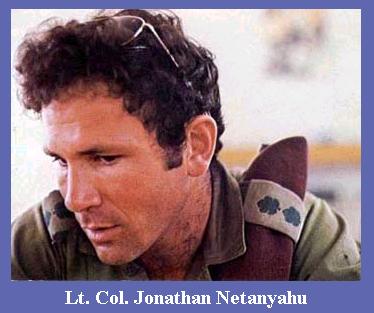
July 3 was the 30th anniversary of Operation Entebbe, the Israeli rescue mission to free hostages at Uganda's Entebbe Airport. It remains possibly the most recent occasion when Israel held the sympathy of the world. The Israeli army remembers the raid as Operation Yonatan to commemorate the raid leader and the only Israeli soldier to die in the action. He was Colonel Yonatan Nehenyatu, the brother of Likud leader and ex-Israeli Prime Minister Benjamin Nehenyatu.

The cause of Operation Entebbe was the hijack of an aeroplane one week earlier. On 27 June 1976, Air France Flight 139 to Paris was hijacked shortly after take-off from the notoriously lax security Athens airport. Athens was a stopover; the flight had originated in Tel-Aviv. On board were 12 crew and 248 passengers. Ten minutes out of Athens, a group of three men and a woman took control of the plane. They were two male PLO operatives and two members of the German Baader-Meinhof gang. They ordered the pilots to immediate divert the plane to Benghazi in Libya. They spent seven hours on the ground at Benghazi where they refuelled and released a female hostage. The women had convinced the hijackers and a hastily summoned Libyan doctor that she was pregnant. The woman, who was in fact on her way to her mother's funeral in Manchester, spent an anxious few hours in the airport terminal, and was then put on a plane to England.

The hijacked flight left Libya in the early hours of 28 June and flew to Uganda. Ugandan leader Idi Amin had strong ties with the PLO. Amin had expelled the Israelis from Uganda after they refused to sell him Phantom jets. The Israeli embassy in Kampala was then offered to the PLO as headquarters. Amin invited the hijackers of Flight 139 to come to Uganda. At Entebbe airport, the hijackers were joined by three newcomers under the command of Wilfried Böse. Böse was well known in German far-left intellectual circles but he had a serious anti-Semitic side. Once Böse took over the operation, it was time to begin making demands. They began by releasing all the non-Jewish hostages. They demanded the release of 40 Palestinians held in Israeli prisons and 13 other detainees held in Kenya, France, Switzerland, and Germany, or they would begin killing the remaining hostages on 1 July.

Under an armed guard of Ugandan soldiers, the passengers were transferred to the transit hall of Entebbe Airport's old terminal. Amin paid a visit to the terminal and made a speech in support of the liberation of Palestine. Another Air France airliner was flown in to retrieve the crew and non-Jewish passengers. But Flight 139's Captain Michel Bacos told the hijackers that all passengers were his responsibility, and that he would not leave any of them behind. Bacos' entire crew, down to the most junior flight attendant, followed suit. A French nun also refused to leave, and insisted one of the remaining hostages take her place, but Ugandan soldiers froced her at gunpoint to join the 46 other non-Jewish passengers in the waiting Air France plane. The crew remained and Bacos would be reprimanded for his actions by his Air France superiors after the rescue mission. The freed passengers were questioned on arrival home by Mossad operatives who learned that Ugandan soldiers were co-operating with the hijackers. They also got clues to the layout of the Terminal building. A day after releasing the first batch of passengers, the hostage-takers freed 101 more passengers leaving only the crew and the Jewish passengers in Uganda.

On the 1 July deadline, the government of Israel offered to negotiate with the hijackers in order to extend the deadline to 4 July. Israeli General Chaim Bar-Lev, a close personal friend of Amin, telephoned him on a number of occasions to negotiate but achieved nothing. On 3 July, the Israeli cabinet approved Operation Entebbe under the command of Brigadier General Dan Shomron. Planning for the raid had taken several days. The terminal had been built by an Israeli construction company (common in Africa at the time). The company gave the building blueprints to the Army and they build a partial replica of the transit hall. The builders were kept under supervision during this phase so Israel would not lose the advantage of surprise.

The plan called for the troops to fly into Entebbe airport and drive to the Old Terminal in a black Mercedes with Land Rover escorts. This would fool the Ugandan guards into believing Idi Amin was paying a visit. Backup aeroplanes with medical facilities were sent to Kenya who as an implacable enemy of Amin was more than happy to assist the rescue. The aircrafts took off from Israel on the 4,000km journey in separate directions so as not to arouse suspicion, and flew at less than 30 metres over the Red Sea to avoid Egyptian and Saudi radar. At 11pm, they touched down at Entebbe and the Mercedes and Land Rovers - packed with elite Israeli commandos in Ugandan army uniforms - rolled out.

The raid lasted three minutes. An initial confrontation occurred near the control tower, when two Ugandan sentries who stopped the convoy were shot dead. With the element of surprise gone, the troops raced on foot to the Old Terminal; where at some point Netanyahu was fatally wounded. In the ensuing firefight, all seven hijackers were killed as well as 24 Ugandan soldiers. Three hostages were also killed in the crossfire. The 75 year old hostage Dora Bloch missed out on the rescue because she had earlier been released to hospital in Kampala due to a choking fit. On the day after the raid, she was murdered on Amin's orders.

The survivors were herded onto the transport planes and took off at 11.52pm to Nairobi. An infantry team sprayed machinegun fire at seven Ugandan MIG fighters to ensure they would not take off in pursuit. The last of the fighters left Entebbe at 12.40am. The mission returned to an air force base on Israeli soil on 4 July with 98 freed hostages. They were fed and given medical checks before flying on to Tel-Aviv. There the planes released its celebrated cargo of men, women and children into the outstretched arms of their relatives and friends and an appreciative crowd of thousands of wellwishers.

Uganda later convened a session of the United Nations Security Council to seek official condemnation of the Israeli raid as a violation of Ugandan sovereignty. Many countries agreed with the Ugandan resolution. However, the Security Council ultimately declined to pass any resolution on the matter.