Showing posts with label Darfur. Show all posts

Tuesday, February 23, 2010

Sudan about to sign Darfur agreement with Jem

The Sudanese Government is about to sign a peace treaty with Darfur’s largest opposition group the Justice Equality Movement (Jem). Sudanese President Omar Hassan al-Bashir arrived in Doha, Qatar to sign a ceasefire and "framework" deal, listing agreements to be fleshed out in further negotiation, with Jem leader Khalil Ibrahim. The deal follows a preliminary framework agreement which both parties signed in Ndjamena in Chad. According to a French draft of the document seen by Reuters the deal involves Jem members taking positions in the Sudanese Government. It also includes humanitarian issues, Internally Displaced Persons, wealth and power sharing, and release of Darfuri war prisoners. (photo of Jem fighter by Gallo/Getty)

If the deal holds it will be a major breakthrough in one of the world’s most intractable conflicts of the 21st century. Over 300,000 people have died in genocidal fighting and almost three million people displaced with both parties guilty of war crimes. The Sudanese Government has inflicted the most casualties with its superior firepower and its co-opting of Janjaweed militias. However the deal with Jem does not guarantee the bloodshed will stop.

There are two other major groups in Darfur not covered by the agreement: Abdelwahid Sudan Liberation Army (mainly composed of Fur tribespeople) and Minni Minnawi Sudan Liberation Army (Zahawa people). The Minnawi faction signed a separate deal with Khartoum in 2006 however the hardline Abdelwahid faction has yet to come to terms with al-Bashir’s administration.

But Jem is by far the largest of the anti Khartoum forces in Darfur. Its leaders claim they have as many as 35,000 well-armed fighters in the region. The group was founded in 2000 following the publication of The Black Book: Imbalance of Power and Wealth in the Sudan. Jem members say northern Sudanese Arabs are disproportionately represented within the Khartoum government and political elite, leaving southern Africans and western Arabs disenfranchised and impoverished.

Two years ago Jem fighters launched the first rebel attack on the Sudanese capital itself. They intended to topple the government and were only defeated once they had already reached the outskirts of Omdurman, near Khartoum. Omar al-Bashir, Sudan's president was sufficiently unnerved by the attack to instigate peace talks with Jem. On the weekend he cancelled death sentences handed out to more than 100 men accused of taking part in the Khartoum attack and promised to free 30 percent of them "immediately".

He will be hoping that an agreement will come in time for elections in April - the country's first multiparty elections in 24 years. He is also facing a referendum next year on independence for South Sudan. However the Sudan Tribune is reporting that Egypt is asking the two major partners in Sudan’s national unity government to delay both the elections and the referendum until the North-South disputed items are resolved and there is a peaceful settlement in Darfur. It is unlikely Khartoum will agree to these demands but the Tribune says Jem may make it a pre-condition of the Doha signing.

The other tricky issue for al-Bashir is how it will affect his status at the International Criminal Court. The ICC chief prosecutor issued a warrant for al-Bashir’s arrest in 2009 on crimes of genocide and crimes against humanity. However the court ruled the Sudanese president could not be prosecuted for genocide, saying the prosecutor failed to reasonably prove al-Bashir had genocidal intent. Prosecutor Luis Moreno-Ocampo appealed the ruling and earlier this month the ICC's appeals chamber ordered the court to reconsider its decision to omit genocide from al-Bashir's list of charges, saying the initial ruling had been affected by "an error of law" for setting the threshold of evidence too high. This means the court's pre-trial judges will have to rule again on the matter.

Saturday, September 12, 2009

Hopes rise for Irish and Ugandan aid workers kidnapped in Darfur

A kidnapped Irish aid worker spoke to her family for the first time in two months raising hopes of her release in Sudan’s troubled Darfur region. 32-year-old Sharon Commins was one of two employees of Irish aid agency Goal who was kidnapped on 3 July when six armed men stormed their building in the North Darfur town of Kutum. The attackers grabbed Commins and 42-year-old Ugandan co-worker Hilda Kawuki. Commins spoke to her mother in Dublin yesterday though the family have asked that the details of the conversation remain private (Photo of Sharon Commins by Goal / Press Association).

The concession from the kidnappers came after Irish Foreign Minister, Micheál Martin made a two day visit to the Sudanese capital Khartoum last weekend. Sudanese authorities say they know who the kidnappers are and are negotiating with tribal elders. The kidnappers want two million dollars in ransom, however Khartoum is refusing to pay a ransom for fear it will result in further kidnappings. Sudanese minister for humanitarian affairs Abdul Bagi al-Jailani has been trying to negotiate the release of the two aid workers and he said he is heartened by the phone call. He believes the women will be freed around 19 September to mark the end of Ramadan, a month of worship and forgiveness.

Last month, North Darfur state humanitarian affairs minister Abdel Baqi Al-Gilani said the kidnappers are members of a nomadic tribe in north Darfur. He said Sudan would forgive them if they gave up the woman and would also provide legal immunity. He also dismissed a report published by the Khartoum based Al Ray Al-Aam which claimed Commins had married one of her kidnappers.

Meanwhile a spokesman for a rebel movement in the Kutum area said their group was not involved in the kidnapping. Ibrahim al-Hillu from the Sudan Liberation Army (SLA) faction blamed Arab tribal gunmen “supported by the government”. And al-Hillu may have some justification for his accusation. In March the International Criminal Court issued an arrest warrant for President Omar al-Bashir for war crimes in Darfur which triggered a downturn in Sudan's relations with foreign relief organisations. SLA’s leader Abdel Wahid al-Nur says Khartoum’s greatest international misinformation success is that the Darfuri conflict is the notion that it is the result of ethnic or economic rivalries that are too complex and too entrenched to solve.

Irish authorities are becoming aware of the complexities of the region but remain confident of getting a positive outcome. Commins was an experienced campaigner with four years experience with Goal and 18 months in Darfur. Ireland sent two teams to Sudan ahead of Foreign Minister Martin’s visit; one to Khartoum and the other to the Darfuri capital El Fasher. The teams were charged with reporting to Martin on a daily basis, while other staff kept close contact with the Commins family. According to the Irish Times, the women were in good health and have spoken to Sudanese Government officials several times since they were captured.

GOAL director John O'Shea also says his organisation are “working around the clock” to ensure the women’s release. In a press statement on the Goal website last week O’Shea said he was pleased that Ireland had acceded to their request that a senior minister become involved and said the best chance of success lay with “the Irish Government impressing upon their Sudanese counterparts the absolute seriousness of this situation”. He also pleaded with the kidnappers. “Hilda and Sharon have given much to alleviate the suffering of the Sudanese people,” he said. “They want only to be allowed continue their lifesaving work”.

Saturday, December 29, 2007

Darfur: Genocide by other means

While the white world frets over the fate of a few white people getting released from Chad, the killing fields next door in Darfur continues to quietly bury the victims of its casual genocide. Death by war and violence has already claimed a quarter of a million people this century and now malnutrition threatens thousands more. A new UN World Food Programme survey shows the malnutrition rate has actually increased in Darfur since the height of the fighting in 2004. But while the story of the six members of Zoe’s Ark has been reported by over 1,300 news articles, the UN report on Darfur attracted just 117.

It doesn’t help that the Darfur Emergency Food Security and Nutrition Assessment (pdf) is not very sexily named. But the basic fact is that no white people are affected by this assessment. The victims are all, depending on labelling, either “Arab” or “African” or “Darfuri” or “Sudanese”. But what ever they are called, the numbers involved are staggering. Last year, it was estimated that some 3.74 million people were affected by the situation in Darfur.

Other key findings in the report are that the food and security outlook in all three Darfur provinces remains poor for the majority of the population, over two million people. Remote West Darfur (pdf), with no direct border to non-Darfuri Sudan, remains most at risk. 3.7 million out of Darfur’s total of 6.7 million rely on some sort of “humanitarian” assistance. Food production remains scanty, livestock is rare, and markets don’t function due to insecurity and poverty. And the world at large remains, generally, disinterested.

Darfur is well used to the lack of attention. The region was almost unheard of outside Sudan before 2003. Within Sudan it has been mostly neglected since its 19th century colonisation. And even when people started dying in sufficiently large numbers to attract the attention of the media and NGOs, the Americans and their allies were too tied up in Iraq to do anything about it, the UN was hamstrung by lack of funding, and the EU conveniently bickered and contrived to look the other way, like it always does. In the end it was decided it was “African problem” that needed an “African solution” and so the new constituted African Union (AU) had responsibility to solve it.

But this conveniently overlooks history and economics and the very obvious culpability of the West in the tragedy of Darfur. Gerard Prunier entitled his book on Darfur “The Ambiguous Genocide”. By that, Prunier was not trying to claim mass killing did not exist, but rather that the labelling of who did it and who they did it to, and indeed the label of “genocide” itself, have twisted the meaning of what happened in Darfur and how it is generally understood. The west’s quest for pithy explanations of news does not suit Darfur’s complex ethnography and history.

The conventional shorthand explanation is that an “Arab” militia supported by the government in Khartoum, carried out mass atrocities on native “African” tribespeople in a land grab. This explanation overlooks deeper motives and trivialises the ethnic make-up of Central African peoples. It also gives the impression it is violence by Muslim peoples on non-Muslim peoples. However the fact is that almost all Darfuris are Muslims. Unlike the colonial war that the Khartoum government fought against the Christian and animist provinces of the south, the conflict in Darfur had no religious connotation at all. It also overlooked the role played by neighbouring Libya and Chad in the region’s destabilisation.

The population of Darfur is an ethnic mosaic but in skin colour everyone is “black”. Language is often similar too with “African” tribes speaking Arabic. The differences therefore come from Sudanese cultural racism which distinguishes between “Arab” and “zurug” (the local pejorative word for blacks) which may hinge on such factors as the shape of the nose, or the thickness of lips. Intertribal marriages and slave concubines have further muddied the racial waters. And what Sudan considers to be “Arab” would not necessarily be so accepted in the rest of the Arab world. The name Sudan itself derives from Arabic Bilad-al-sudan, "country of the blacks”.

This lack of Arab acceptance makes the Sudanese “Arabs” even more sensitive to its labelling within Sudan. Being described as Arab was a token of civilisation as opposed to African “savagery” and marked out a general change from nomad to agricultural life. This ethnic construction was very much a product of the 20th century. Prior to then, Darfur was the home of migratory peoples south of the forbidding Sahara. Between the 13th and 16th century it was the scene of three major migrations. From the north-west came Nilo-Saharans, from southern Egypt came Nubians and from the north-east came Arab groups. Later, more people arrived from Sudan itself. The last group to arrive were the most powerful. They were the awlad al-Bahar “sons of the river”. The river was the Nile and these riverine Arabs from Khartoum were the most powerful people in the land. They were traders and imams who settled in the towns of Darfur and turned it into a Sudanese province in the 19th century.

Prior to that, Darfur was an independent sultanate dating back to the 14th century, initially led by African tribes. In the 17th century we first hear of the “Fur” people. The Fur had descended from the mountains and overran the plains. Sultan Suleiman “Solungdungo” (the pale man) was the son of a Fur father and Arab mother. The Fur assimilated other tribes to maintain their hegemony and the land became Dar Fur (land of the Fur). At the start of the 19th century, Darfur was a respected political entity, while “Sudan” did not exist as such. The Arabic “land of the blacks” was an arbitrary name that covered many jurisdictions. In colonial times the French also called what is now Mali “Le Soudan”. In the 1821 the then stateless entity to the east of Darfur was invaded by Muhammad Ali, the Ottoman viceroy of Egypt. They defeated the Darfuri who had similar designs and who fled back home to their province.

The Turco-Egyptians gradually extended their colonisation of Sudan, south from Khartoum along the Nile. In 1873 they moved against the sultanate of Darfur and easily conquered it. But in 1881 a quasi-religious organisation known as the “mahdi” under the banner of a mixture of Islamist and Christian Revelatory practices rebelled against the Turkish administration. The Mahdist state then collapsed under an onslaught from the British and they lost control of Darfur back to the sultanate. The British were content to rule with the “lightest of threads” and let the sultan rule as de facto leader of Darfur until 1916.

The fate of Darfur was sealed by World War I. Britain was worried about Turkish propaganda and feared Darfur could become a tool of the Central Powers. Looking beyond the war, they also feared the French influence from Chad in the west. The British invaded Darfur. The sultan resisted and he and his sons were shot dead in an ambush as they tried to flee on horseback. The tragedy of Darfur can be dated to the British occupation. From 1916 onwards, Darfur would only be an appendage of some bigger entity, never an object of attention in itself.
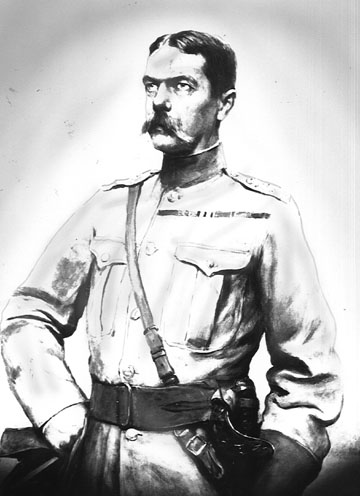
For the next 40 years Darfur was part of the grandly named Anglo-Egyptian Condominium. Although the Egyptians shared naming rights, this was just a clever move by the British to assuage Egyptian ego – the Brits were the real power. A handful of colonists ran the Sudan Political Service and its territory of 2.5 million sq kms. These men included author Wilfred Thesiger who served in Darfur in 1935. But Thesiger was the exception, what little power there was, was isolated in Khartoum. Darfur did not get any attention except when it caused trouble. Rebel Mahdists launched a rebellion from the Darfuri capital Nyala in 1921 and was brutally put down with 800 deaths. But Darfur was mostly ignored, and services including schools and hospitals were non-existent.

In the 1950s, the British were fighting a rearguard action to delay Sudanese independence. Darfur was not considered a threat because of its “backwardness”. Darfur became part of the new nation of Sudan in 1956 and participated in the first elections two years later. The “Umma” party won that election with a significant vote from Darfur. But the region got no thanks from their new political masters and continued to be ignored. The military then took over, with no change for Darfur. In 1964, the Umma won another political victory, again with help from Darfur. Once again however, this carried no clout in Khartoum.

In 1965 neighbouring Chad descended into what was to be a decades-long civil war. Darfur would become central to the conflict with the Chadian guerrilla group Frolinat based in Nyala. The war spilled across the border. In 1969, newly installed Libyan leader Muammar Gaddafy came into the war in support of Frolinat. A brief attack by Gaddafy on Khartoum caused the lasting enmity of the Sudanese government, who in retaliation supported an anti-Libyan, Hissen Habre, as new leader of Chad. Darfur was transformed into a three-way battleground between Libya, Chad and Sudan.

In 1984, famine struck the Sahel and Darfur was devastated. Almost 100,000 people died of starvation in the next 12 months. 80,000 people walked across the country to food camps in Khartoum. The Gaafar Nimeiry regime, in power since 1971, was destabilised and the army took control. The army showed little inclination to solve the food problems of the west and Libya took advantage to invade Darfur. Sudan tacitly accepted the temporary Libyan presence on “their” soil. But Chad did not and fought Darfuri and Libyan troops they accused of supporting Chadian rebel forces.

In 1988 Sudan underwent another army coup. Colonel Omar Hassan al-Bashir came to power in protest at the peace settlement with rebel Southern Sudan. The reality on the ground in Darfur continued to be bleak: the ravages of drought, war and lack of government interest left it on the brink of starvation. Slowly but surely, rebel groups began to form dedicated to the fight against Khartoum. A low intensity civil war began. As the Cold War ended, new cultural labels rose which gave a political identity to the concept of “Arabism”. It was to those that defined themselves as “native Arabs” that Khartoum would look to, to carry out the violence to come.

A hitherto unknown Islamist group known as Justice and Equality Movement (JEM) claimed credit for starting a revolt within Darfur. They issued a “Black Book” which outlined the discrimination that Darfuris encountered in their relations with Khartoum. In 2003 rebels occupied El-Fashir airport in a major victory over government forces. Sudanese hardliners opted for a strong response. The army was not deemed up to the job. Instead they recruited “Arab” militiamen known as Janjaweed (“evil horsemen”). First used in the 1980s, the Janjaweed were paid a good salary and given access to Sudanese armoury. It was to be “counter-insurgency on the cheap”.

Russian Antonov airplanes bombed Darfuri cities targeting civilians. After the air attacks finished, the Janjaweed arrived to finish the job. An orgy of killing, destroying, raping and looting followed. They hurled insults at the “Africans” and herded them into camps. The government issued propaganda that the rebels had demanded independence and a share in Sudan’s growing oil revenues. Neither accusation was true. Masses of refuges fled towards Chad or the centre. Aid was not getting through to the neediest areas.

News began to escape about how bad things were in Darfur. In 2004 the Red Cross spoke of an “agricultural collapse”. Khartoum prevaricated and found continual excuses to delay foreign intervention. The west was more interested in the fate of the peace talks between North and South Sudan. But Amnesty International and the International Crisis Group began to give Darfur the media attention it needed.

When the UN spoke of “genocide” the world’s press began its feeding frenzy. Now there was an angle to the story that would sell newspapers: the first genocide of the 21st century. Moral indignation lasted much of the next 12 months. Deaths continued and Sudan refused to admit culpability and talked of “bandits” and “rebels”. After concerted international pressure, the Janjaweed were forced to stop their killing. But peace remains elusive for Darfuris. Conflicts in Chad continue to have reverberations. Government disinterest continues. The world does not have the stomach to help. None of the "humanitarian" solutions address the political inequity at the heart of the problem. Now malnutrition is about to draw its weapons against the stomachs of an already battered people. But the world’s media have moved on elsewhere, unable to turn this grotty complex tale into a simple and compelling narrative.

Thursday, December 06, 2007

War escalates in Chad

Chad’s army has launched a major offensive against two of the rebel groups massed in the east of the country close to the border with Darfur. For the last two days government troops have attacked fighters of the Rally of Forces for Change (RFC), a fact confirmed by an RFC spokesman. The fighting comes barely a week after government forces fought several major battles with the Union of Forces for Democracy and Development (UFDD) that left hundreds dead.

The RFC said its positions had been bombed by Chadian helicopters on Saturday. That same day Chadian Foreign Minister Ahmat Allami said RFC rebel forces had clashed with government forces around Kalait, about 200km north of regional capital Abeche. Meanwhile 100km east of Abeche at Abougouleigne, military sources said battles between the government and the UFDD left "several hundred (rebels) dead, several injured and several prisoners of war" in military custody.

Hostilities have broken out after the collapse of a Libyan brokered ceasefire in October between Chad and four rebel groups (including the RFC and the UFDD). N'Djamena blames Sudan for backing the UFDD. The conflict is intertwined with the one in Darfur. Chad's president is from the same ethnic group as some of Darfuri rebels who oppose Sudan’s Arab-dominated government, and each country accuses the other of supporting rebel groups on their soil. London based African analyst Rolake Akinola said the peace deal was not well respected and was very complex to begin with. "Commitment from both groups and both sides has been very shaky," he said. "On the one hand, the rebels have accused N'Djamena and the government of failing to attend Sudan for peace talks. The government itself is not entirely sure how it is going to accommodate the various ethno-regional interests into one political dispensation.

The fighting could push back the deployment of a planned European force to the region until January. On 1 December the UFDD declared war against the French and other foreign military forces involved in the EU mission. They released a statement saying it "considers itself to be in a state of war against the French army or against any other foreign forces on national territory". France already has troops in the country and the UFDD said French warplanes had overflown rebel positions. “Providing diplomatic, strategic and logistical support to the tyrant Idriss Deby (Chad’s president) is an act of hostility and will be treated as such," the UFDD said.

French President Sarkozy said the declaration of war would have no effect on the planned EU mission to Chad. France will make up half of the 3,500 force, with Ireland, Austria, Netherlands, Poland and Sweden also contributing. The operation will go ahead," said Sarkozy. "If we decided to send a European force to one side of the border and a mixed force on the other side it is because there are problems, conflicts, difficulties.”

There is no doubt this is a complex war. Initially a fight between nomadic Arab tribes and settled African farmers, the conflicts in Chad and Darfur have grown increasingly complicated as rebel groups splintered and formed new alliances. Anarchic bandits have taken advantage of the lawlessness to attack civilians, and local politicians do what they do everywhere and used ethnic rivalries to fan the violence. According to the UN High Commissioner for Refugees an estimated 180,000 Chadians have been internally displaced by the wars which erupted in 2005 and again in 2006 and 2007.

The proposed EU force is widely recognised as strengthening Chadian President Deby's regime. Idriss Deby has been in power since 1990 when he seized power from former dictator Hissène Habré. Before being overthrown in Habré unleashed his troops on a killing spree in the capital N’Djamena. Thousands died. Habré drained the treasury of millions, fled the country and left much of the capital in ruins. Deby was treated as the country’s liberator. But many observers believe he has now stayed in power for too long. He won his third election victory in 2006. Outsiders declared the election fair but opposition parties boycotted the ballot denouncing the process as a sham.

While Deby's shenanigans in Chad were neglected for many years, that has all changed with a new and thriving export market in oil. It was discovered in the Doba Basin in the south of the country in 1974 and established in commercial quantities in 1996. A consortium of Shell, Exxon-Mobil and Elf relied on a 1070km oil pipeline between Doba and Cameroon’s coast to be financed by a $3.6 billion loan from the World Bank. The project was delayed by fights between the multinationals and local environment groups who accused the World Bank of ‘corporate welfare’. The project was delayed by Shell and Elf pulling out and the difficulties of laying the pipe through heavily populated areas in Cameroon.

When the project was finally completed in 2003, Chad began exporting oil on a significant basis. But Chad’s government reneged on the World Bank conditions that profits would go to poverty alleviation programs and gave itself more discretion to spend the oil revenue as it pleased. At least $30 million was diverted to President Deby’s military programs. In response the World Bank froze large sums of development aid and suspended its loan programme to Chad over the government's breech of the agreement.

The problem as Asuman Bisiika reports is one common to many African countries: where there are no strong national institutions, it is very difficult to stop a small group of political elite from "eating" public funds under their trust. Deby has shown he has a big appetite. The question is who is prepared to clean up after him.

Wednesday, November 07, 2007

Zoe's Ark group tried for kidnapping children in Chad

Ten French and Spanish citizens appeared in court today in Chad charged for their role in a mass child kidnapping case. Six of the ten are members of the organisation Zoe's Ark, which was attempting to transfer 103 orphaned children from Darfur to France for foster care. They claimed they had the right to do so under international law. That claim is refuted by UN and Chadian officials say most of the 103 children (all under ten years old) were neither orphans nor Sudanese. Most have at least one living parent on the Chadian side of the crisis-ridden Sudanese border area.

Three French journalists working with Zoe’s Ark were released on Sunday. Journalist Marc Garmirian, who works for French news agency CAPA, said the group had lied about their plans and released film footage showing they had put bandages on the children to feign injury. The footage shows the convoy heading to Abeche airport in eastern Chad. Zoe’s Ark staff can be seen putting fake wounds on the children to convince officials they are evacuating them for health reasons. "You could say that they are lunatics,” Garmirian said. “Up until the moment I left the prison, [Zoe’s Ark] remained convinced that their mission was legitimate.”

Zoe’s Ark (L'Arche de Zoe) was formed by members of the French four-wheel-drive community to aid victims of the December 2004 Indian Ocean tsunami. They set up four temporary camps in Banda Aceh in Sumatra in the wake of the tsunami. The group has about 50 volunteers. Its founder, Eric Breteau, is a volunteer fireman and Zoe's Ark says it is motivated by the firefighter's spirit and sense of duty. In April, Zoe's Ark announced a campaign to evacuate 10,000 orphans from Darfur.

Its plan was to place young orphaned children from Darfur in foster care with French families, invoking its right to do so under international law. They sent a seven person team, including a doctor, a nurse and fire-fighters, to Chad. There the group sought authorisation from France to grant safe passage to the children. In August however, the French Foreign Ministry issued a warning saying there was no guarantee the children were orphans and also cast doubt on the project's legality.

On Tuesday last week, local authorities arrested 17 Europeans and 4 Chadians on charges of kidnapping and complicity. Those arrested included Zoe’s Ark head Eric Breteau. In the first hearing Breteau claimed the children were from Sudan not Chad. He also spoke in support of the journalists and aircrew arrested with him, saying only he and his fellow charity workers were responsible for the operation. The main accused face possible forced labour terms of five to 20 years.

The stakes were raised dramatically on the weekend when French President Nicolas Sarkozy became involved. He flew to Chad on Sunday and arranged to free the three French journalists and four Spanish flight attendants. But Chad’s president Idriss Deby ruled out a French demand to extradite the remaining ten accused to France for trial. Deby said justice would be done in Chad. “It is out of the question for the Chadian judiciary to abandon the case,” he said. “On the contrary, the Chadian judiciary will get to the bottom of it”.

Deby has ruled Chad since 1990 but the floods of refugees crossing the border from Darfur have destabilised his regime. Over 200,000 refugees have crammed into the town of Abeche where the Zoe’s Ark group were based. Deby has tried to maintain a neutral stance in the conflict but he has faced internal criticism for lack of support for his Zagawa kinsmen slaughtered across the border in Sudan by the pro-government Janjaweed militia. Deby survived a mutiny in 2004 and an undeclared war has existed between the two countries since 2005.

Chad claims Sudan is trying to destroy his regime by allowing Sudanese militia make daily incursions across the border. Although the two sides signed the Tripoli Agreement in 2006 to end the conflict, rebel groups inside Chad have continued their attacks on government forces. A European peace force is expected to be deployed early next year in eastern Chad to protect Sudanese and Chadian refugees. Meanwhile the war is a humanitarian crisis that Zoe’s Ark wanted to exploit. They lined up 300 families in France who paid between €2,000 and €6,000 for an orphaned child from the region. While the French families feel conned, there is also great anger in Chad. Several hundred locals gathered outside the governor's office in Abeche, where the Europeans were being held and chanted: "No to the slave trade, no to child trafficking."

Thursday, May 31, 2007

US slaps more sanctions on Sudan over Darfur

The US has unilaterally imposed new sanctions on Sudan, despite resistance from the United Nations. The sanctions are aimed at pressuring Sudan into carrying out the UN peace plan in Darfur. President Bush ordered the sanctions in a brief speech on Tuesday. The economic sanctions target three high-ranking Sudanese individuals and 31 Sudanese companies including state-run oil companies. They have all been banned from the US financial system.

However the UN has so far declined to endorse the stronger US measures. The UN Security Council has already imposed an arms ban on rebels and government-aided militias alike and has a no-fly zone in the region. There are also travel sanctions on Sudanese officials. However Secretary-General Ban Ki-Moon remains cool about the latest developments. "This is a decision of the US government," he said. "And I hope the international community can work in a mutually reinforcing way to bring resolution to this matter as soon as possible."

The three individuals targeted in the American sanctions are a) Ahmad Muhammed Harun, the state minister for humanitarian affairs who planned military operations in Darfur between 2003 and 2005 b) Awad Ibn Auf, Sudan's head of military intelligence and security who acted as a liaison between the Sudanese army and the Janjaweed militia and c) Khalil Ibrahim, leader of the Justice and Equality Movement (JEM) a rebel group that has refused to sign the Darfur Peace Agreement.

Human rights groups such as Human Rights Watch and the Save Darfur Coalition have welcomed the US announcement. David Rubenstein, executive director of the Save Darfur Coalition praised President Bush’s decision to finally impose stronger targeted sanctions on the al-Bashir regime but stated these measures are “too late and too little”. David Rubenstein, the Coalition’s executive director, said the US should now act quickly to implement the measures. “President Bush must not give further months to determine whether these outlined measures work, “ he said, “the Darfuri people don’t have that much time”.

However Sudanese President Omar Hassan al-Bashir is unlikely to change his position despite the new sanctions. Al-Bashir, who has led Sudan since 1989, has consistently opposed a UN peacekeeping force in Darfur. Sudanese Presidential advisor, Ahmed Bilal Osman has said Sudan will consider any army entering Sudan as an invading army, even if it happens on the orders of the UN.

IN 2006, then UN boss Kofi Annan described Darfur as the world's worst humanitarian crisis. The crisis began in 2002 when ethnic African rebels rose against the Arab central government in Khartoum. In response, the Sudanese Government unleashed militia groups to quell the rebellion. A flimsy peace accord has been in place since 2006. The UN say at least 200,000 people have been killed and another two million displaced in Sudan’s westernmost region. Sudan rejects these figures and say only there have been only 9,000 deaths. The Sudanese government supported and armed the Janjaweed militia group who have done most of the killing.

In addition to the new sanctions, the US will also press the UN Security Council to agree to new international penalties against Sudan. Although the EU is open to the idea, it is likely the other two permanent Security Council members will veto the idea. China buys two-thirds of Sudan's multi-billion dollar oil exports and both China and Russia also sell arms to Sudan. Earlier this week Liu Guijin, China's special envoy on Darfur, said Chinese investment helps stop the bloodshed while sanctions were counter-productive. "The Darfur issue and issues in eastern Sudan and southern Sudan are caused by poverty and underdevelopment,” he said. “"Only when poverty and underdevelopment are addressed will peace be there in Sudan”.

But US Special Envoy to Sudan, Andrew Natsios remains optimistic the Chinese will back the sanctions plan. “(China has) done a number of things in the last few months that go far beyond what they're typically disposed to do on a diplomatic issue of this sort, “ he said. “So I think the Chinese position is actually more forthcoming that it may be apparently publicly”.

Thursday, March 01, 2007

Sudan condemns Darfur genocide trial

Sudan said this week the International Criminal Court (ICC) has no jurisdiction over its nationals and the government would not allow any of its citizens to be tried outside Sudan. The statement rules out Sudanese support for any international trials of Janjaweed or Darfur rebels under the auspices of the ICC. The statement was significant in that it came a day before the ICC's chief prosecutor's office was due to name the first war crimes suspects for Darfur.

On the following day, the Chief Prosecutor Luis Moreno Ocampo named the two men wanted by the ICC. He announced charges of war crimes and crimes against humanity against the Sudanese minister for Humanitarian Affairs Ahmed Muhammed Harun and Janjaweed militia leader Ali Mohamed Ali Abd al-Rahman (also known as Ali Kosheib). The court said the two were suspected of war crimes and crimes against humanity including rape and murder. Moreno Ocampo said Haroun and Abd al-Rahman were part of a conspiracy to "persecute civilians they associated with rebels".

But Sudan has repeatedly said it will not respect any judgements handed down by the ICC, and it is not a signatory to the convention that created the court. Al-Rahman is currently under investigation for actions in Darfur and has been in detention in Khartoum since November on suspicion of violating Sudanese laws. The other man wanted by the tribunal, Ahmed Haroun, told Al Jazeera the ruling was politically motivated. “The ICC had no jurisdiction to take action on this issue for the simple reason that the government of Sudan did not approve the ICC basic law,” he said.

In the four years of conflict, most NGOs estimate at least 200,000 people have been killed and more than two million people turned into refugees. However the Khartoum Government denies these figures and says only 9,000 have died. Sudan's Justice Minister Mohamed Ali al-Mardi has repeatedly denied that any genocide or ethnic cleansing has occurred in its troubled western province. Al-Mardi has painted his government as peace-keepers and claimed regional and international organisations should respect his government's efforts to restore peace in Darfur. The two sides announced a ceasefire in January 2007.

However the ICC's chief prosecutor said in December his investigators had found evidence of rape, torture, murder and sexual violence in Darfur. 54-year old Argentinean Luis Moreno-Ocampo was elected unopposed as the first ICC Chief Prosecutor in 2003. Moreno-Ocampo established a reputation as an independent human-rights lawyer and prosecutor who fought corruption. He rose to prominence as an assistant prosecutor during the 1985 trials of former officers of Argentina's military junta. In 1992, Moreno-Ocampo quit as Main Prosecutor of the federal court and started his own law firm specialising in corruption control, criminal law and human rights law.

Moreno-Ocampo made a statement on 27 February about the current status of the Darfur trial. It stated Harun and Al-Rahman bore criminal responsibility in relation to 51 counts of alleged crimes against humanity and war crimes committed during attacks on villages in West Darfur between August 2003 and March 2004. It stated the attacks were carried out by the Janjaweed militia and the Sudanese armed forces and targeted civilians on the rationale that they were supporters of the rebel forces. Moreno-Ocampo went on to say “This strategy became the justification for the mass murder, summary execution, and mass rape of civilians who were known not to be participants in any armed conflict”.

Harun and Kosheib are the first to face trial since the Darfur conflict flared up in 2003. It represents a major test for the power of the ICC. The world's first permanent war crimes court started work in 2002 and is now supported by 104 nations, although still not by Russia, China and the US. The court can only prosecute crimes committed after 1 July 2002, the date its founding treaty, the Rome Statute of the International Criminal Court, entered into force. Although the Americans have often stated their objections to the ICC on grounds it may be used for politically motivated prosecutions of its citizens, it has raised no objections to the Darfur trials.

Friday, January 12, 2007

Ceasefire in Darfur

The government of Sudan has agreed a sixty day ceasefire with the troubled rebel province of Darfur. The news was announced by a US politician visiting the country. Governor of New Mexico Bill Richardson said Sudan President Omar Hassan al-Bashir had agreed to the start of a peace process. Richardson and al-Bashir issued a joint statement on Wednesday saying both sides in the Darfur conflict had agreed to a 60-day cessation of hostilities.

Richardson also announced that both sides had agreed to attend a peace summit to be sponsored by the African Union (AU). While it is not yet clear when the ceasefire will commence, the joint statement represents success for Richardson’s mission. He won other concessions too from the central government such as allowing the rebels to call a conference in the field under the jurisdiction of the AU, allowing foreign journalists visit Darfur after a two-month ban and removing the requirement for exit visas for aid workers.

The next thorny issue to resolve is putting a peacekeeping force into Darfur. UN Special envoy Jan Eliasson is also in Sudan and he held talks with the president to discuss a way forward. Eliasson is trying to get commitment from the various parties for the deployment of a hybrid UN and AU peacekeeping force. He has already travelled to AU headquarters in the Ethiopian capital Addis Ababa and will meet Darfur rebel leaders next. He said President al-Bashir had agreed with him that the conflict could only have a political solution and not a military one. Last month al-Bashir told the UN Sudan supported the plan to eventually replace an understaffed AU mission with a joint UN-AU force of about 17,000 troops and 3,000 police officers, though subsequent reports say he may have backed away from this position.

Darfur is an arid and impoverished area in the far west of Sudan. Rebels from the region's ethnic African community took up arms against the Arab-dominated government in Khartoum in February 2003. The rebels accused the government of oppressing non-Arabs in favour of Arabs. In revenge for rebel attacks, the Government armed a counter-insurgency force of itinerant Arab-speaking tribes who became known as the Janjaweed. The word Janjaweed is an Arabic colloquialism which means "a man with a gun on a horse”. With the support of the Sudanese army, these men with guns on horses became a fearsome militia and launched reprisals against Darfur farmers. The US has accused Janjaweed of genocidal atrocities and over 200,000 people have died while another 2.5 million have fled their homes in the last four years.

Yesterday’s joint announcement has yet to be confirmed by the rebels themselves but Richardson said he had been to Darfur earlier and met rebel commanders who have agreed to the ceasefire. There are two main rebel groups, the Sudan Liberation Army (SLA) and the smaller Justice for Equality Movement (Jem). Both groups, like the Government they are fighting, are Muslim. The SLA was established after a 1987 famine when the central Government armed an Arab alliance to oppose African farming communities. The SLA united the farmers of Fur, Zagawa and Masalit against the Government. Jem have their roots in the black Islamist community of western Sudan. Jem leaders were originally part of a government faction but lost their place at the seat of power after their sponsor Hassan al-Turabi was sacked by President Al-Bashir. Though SLA and Jem are ideologically different they have co-operated in the fight against the government and Janjaweed.

The war in Darfur has spilled over the border into Chad and the Central African Republic. Civilians fled across the border into refugee camps already crowded from earlier fighting in the area. In June 2006, the UN Security Council asked the U.N. Peacekeeping Department to explore protection of the camps, and an initial assessment mission was sent in late November. The situation in Chad was deemed too dangerous for the UN with fighting on the ground stopping the mission from visiting the border camps. The report recommended against a peacekeeping force in Chad until rebel groups stop cross-border incursions. The UN is now reassessing the report.

Thursday, October 05, 2006

The battle for Chad's oil

The Central African country of Chad is the scene of an intriguing battle of wills involving a corrupt local government, big oil, Darfur and the World Bank. Chad is one of the world’s newest oil exporters and produces 160,000 barrels of crude oil a day which amounts to 6.7 million gallons of oil (there are 42 gallons to the barrel according to BP.) That’s a lot of oil but nowhere near the big league players. In 2004 middle ranking countries such as the UK and Venezuela both produced over two million barrels a day and top-dog Saudi Arabia produced ten million a day. Nonetheless Chad’s oil industry is a significant part of the economy of the 5th poorest country in the world. The landlocked former French colony in the “dead heart of Africa” is now looking to take more control of its oil industry.

On 26 August, President Idriss Déby announced he was kicking the US oil company Chevron and Malaysian-owned Petronas out of the country for non-payment of taxes. Together these two companies own 60% of the consortium running Chad's $4bn oil pipeline. In a statement on state radio he gave the companies a deadline of 24 hours to start making its exit plans. Deby claimed the international companies had avoided paying tax and Chad would now take over the running of its own oil fields.

Chad is one of the newest oil exporting countries in the world, first coming online in 2003. It is not a member of OPEC and uses its oil revenues to subsidise its most poor agricultural economy. Chad has long been handicapped by its landlocked position, poor communication networks, high energy costs, scarce water and a history of political instability. The oil finds are starting to transform a country that previously relied on foreign aid and capital for public and private sector projects. Exxon-Mobil led the consortium that included Chevron and Petronas. The 1000 km oil pipeline was partially funded by the World Bank and links its southern oilfields to terminals on the Atlantic Ocean via Cameroon. In the two years from 2003-2005 Chad earned $US 307 million in oil revenues which amounts to 12.5% on each barrel exported.

However, at least $30 million of this was diverted to buy arms to keep Deby in power. This has placed them directly in conflict with the World Bank and its new President ex-Bush staffer Paul Wolfowitz. According to Forbes, Chad is now the most corrupt country in the world. Idriss Deby has been in power since a coup in 1990. He graduated from the army where he was Commander-in-Chief in the 1980s. He was forced to flee to Libya and Sudan after being accused by then-president Hissène Habré, but organised an insurgent group which eventually took the capital, N'Djaména in December 1990. He has since been elected three times as president in 1996, 2001 and May this year. Each victory occurred under a cloud of electoral irregularity and the opposition boycotted the latest May poll.

Chad fought a costly war with its western neighbour Sudan between 2005 and early this year which was an overflow from the catastrophic Darfur conflict. The conflict started with a border incursion by Sudan which killed 100 people in the Chadian town of Adre. It escalated to involve troops from countries, as well as France and independent military groups such as the notorious Janjaweed group responsible for many of the atrocities in Darfur. In February the two sides signed a peace agreement in Libya. The accord lasted just two months until rebel forces attacked the Chad capital N'Djamena. Deby kept control but was forced to dig deep into his oil reserves to finance his campaigns.

In July, Chad and the World Bank signed a Memorandum of Understanding under which the Government of Chad has committed 70 percent of its budget spending to priority poverty reduction programs, and provided for long-term growth and opportunity by creating a stabilization fund. In September Chevron announced they would pay an unspecified amount of additional taxes in return for being allowed to stay in the country. Though Deby has declared Chad's newly created oil company, Société des Hydrocarbures du Tchad (SHT), should have a 60% stake in the oil pipeline, the country does not yet have the capacity to run its own industry.

What Chad desperately needs now is a lasting peace so that the agreement hammered out with the World Bank can be honoured for its long suffering people. With Darfur still in turmoil, it looks a doubtful prospect.

Monday, February 13, 2006

I think Darfur I am

12 of the 15 current members of the UN security council voted last year to refer Darfur crimes to the International Criminal Court.

The US was not one of the dozen. This is due to American ideological aversion to the ICC.

According to US policy, no American is ever going to stand trial for war crimes in The Hague. So they won't support calls for other citizens to be sent there either. Instead they propose an adhoc tribunal to be based in conjunction with the Rwandan genocide trials in Arusha, Tanzania. They claim this would represent African as opposed to European justice.

This is a spurious claim. Most OAU (Organisation of African Unity) countries are totally behind the ICC and in any case the Arusha set-up is struggling to hold the existing Rwandan workload let alone add the Sudanese cases.

The infrastructure is simply not there to support it. America needs to get over its ideological problems and at the very least abstain from the security council vote on the matter so that the ICC can immediately get to work to investigate Janjaweed atrocities.

Holus Bolus
Why can’t a woman ascend to the Chrysanthemum Throne?
Where does a bird learn to sing on its own?
Bad cess to you, boy
Plumage unearned, ragtailed bobble-bottomed rammed hard into gaps in entrails
Little by little big smoke
Peacefire, chicken wire, gun for hire, congenital liar
Shangri-la douche bag raises the flag
On a dirty little jungle island
Wispy rivers, cottonmouths with pints of stout
Standing fast in your underwear
Looking for someone to punish me
Kicks back from what went wrong
Nomina patria, Big Dominatrix
Bags of cats in the river
Silt in the delta and the sky’s abloom with Cepheids
Planets a-plenty, stars and cars
The Texan is bandaged up on the road to Damascus
New Jerusalem in England’s green unpleasant land
As I understand the filth within me
I fertilise it and give it a name
Henry the Fourth parts with one
Happy Hal in muftiprince
The Hotspur proxy
Delivering Dad from all evil
Pains with pawns
And a note left in the soil for grasshoppers
Gnomes that will never hurt me
That old schticky stick-and-so
I renege myself from all poorly understood ritual
Monkeys will stop themselves
But know not what they fear
I will land softly on a rock
between the pleasure and the peter principles
God aims high, I’ve found out after I die
The odds are stacked in my flavours
Bookmakers, bribetakers and orgasm fakers
The mind in the trees brought to my knees
A bimbo akimbo in limbo
Laryngitis legs
Spancilled in the grease of a mother’s apron
Largesse in the bush
Love ya, Dubya
Twang upstairs, cash on delivery
Subscribers to the same idea
God bless all who live here
Humidity rising, kamekaze isobars
Hectopascals, camelopards in cami-knickers
White chamois waving not blinking
Straight from the glass
A yardarm of aliens
Roadhouse blues
In a segue from Ivan Ivanich Ivanov
White Russian, unknown soulmate
Best we forget