Tucked away at
the bottom end of the Sahara, Timbuktu has long been the perfect metaphor for a
mythological exotic other. In 1510 Moorish
author Leo Africanus saw Timbuktu’s fabulous wealth at the height of the Songhai Empire – one of the largest Islamic
kingdoms in history. In The History and Description of Africa, Africanus said
the ritual in the court in Timbuktu was “exact and magnificent”. The city's wealth and power came from its position as the
southern terminus of a key trans-Saharan trade route. Merchants sold slaves and
bought gold and the city was far enough away from everywhere to maintain
autonomy. Some 333 Sufi saints are said to be buried in tombs and
mausoleums across the city.
If ancient
Timbuktu was a fabled place, the reality of modern Timbuktu is more prosaic.
Over the centuries, its trade diminished as Atlantic vessels replaced the ships of
the desert. It became more isolated due to local squabbles and changed hands many times. In 1884 a decision in faraway Berlin brought Timbuktu under colonial ownership.Sited north of a line between Say in Niger to Barou on Lake Chad, European bureaucrats deemed Timbuktu French territory not British. Locals were
oblivious to the line on the map until nine years later when a small group of French soldiers annexed
the city to the new French Sudan.
Timbuktu was
bequeathed to the newly independent state of Mali in 1968. The corruption of
Mali’s one party state coincided with the desertification
and drought of Timbuktu.Northern Mali
was dying while government in far-away capital Bamako did nothing to avert the crisis. Tuareg
independence fighters from the north had long been active in the region and
many returned to Mali this year battle-hardened after the Libyan civil war to
depose Gadafi.
They were behind the National Movement for the Liberation of Azawad to liberate northern Mali. Helped
by a coup d’etat in Bamako in March , the NMLA combined with an Islamist group
called Ansar Dine to quickly took over the three biggest cities in the region –
including Timbuktu. Ideological differences quickly spread between the two factions. While
NMLA was Tuareg nationalist, Ansar Dine was Islamist with links to Mauretanian-based Al Qaeda in
the Islamic Maghreb (AQIM).
It was Ansar Dine who wanted to impose Sharia Law on
Timbuktu. The former allies clashed at the battle of Gao
in June.The Islamist faction won a decisive victory and took revenge on recalcitrant locals by
destroying Timbuktu’s World Heritage listed old city.On June 30, the BBC reported Islamist fighters damaged the shrines in the city including
the mausoleum of Sidi Mahmoud, one of the revered 333 Sufi saints. While UNESCO
hissed over the destruction of one its treasures, an Ansar Dine spokesman unapologetically
said all the shrines would be destroyed. "God is unique,” he said. “All of
this is haram (forbidden in Islam). We are all Muslims. Unesco is what?"
This
sweeping certainty of the Islamists is in stark contrast to the views of most
Muslims. Ansar Dine enjoys little support among locals and rules by fear. Mali is 97 percent Islamic but the
vast majority want nothing to do with the cult of Islamism. Ansar Dine follows not in the path
of Mohammed but invented traditions of the twentieth century drawing on fundamentalist icon Sayyid Qutb. Their spokesman was wrong: nothing in the magnificent mausoleums of
Timbuktu are haram.
Where this
leaves the city and the rest of Northern Mali, depends on the strength of the
new unity governmentin Bamako, announced overnight. Imposed by the Economic Community of West
African States (ECOWAS) it relies on army and civilian leaders to overcome
their suspicion of each other and work together. Next door Niger is alarmed about the dangers of Islamic radicalism in northern Mali. Ansar
Dine’s links to AQIM will ensure Western support for the new government. Financial support for a desperately poor city is imperative. But the fate of Timbuktu and its 333 Sufi
saints will ultimately rely on the solidarity of its people to resist the
medieval modernist barbarism
of the Islamists.
Prime Minister Julia Gillard gave Australia’s annual justification (hansard transcript) for the Afghanistan war to parliament yesterday. Since last year's speech, 11 Australian soldiers have been killed bringing the 10 year death toll to 32. Almost 3,000 coalition troops have died in that time as well as countless thousand Afghans. Gillard admitted it was a long and difficult war that with Iraq has cost Australia $4 billion (it costs Americans that every two weeks). But she said it a “just cause” – with a time limit. By end 2014, international forces will hand over security to local forces when Gillard expects Australia’a aim for Afghanisation will be realised: “a functioning state able to assume responsibility for preventing the country from being a safe haven for terrorists.”
Australia’s mission was clear, the PM said. Protecting Afghans, training security forces and building the capacity of the Afghan Government. She said there was progress and the sight of “ramp ceremonies overseas and funerals at home” were only part of the story. Australia has 1,550 troops on the ground, two thirds in Oruzgan Province. Troops rotate every nine months with many on second and third deployments. Aussies patrol Oruzgan with US troops with contingents also from Slovakia and Singapore.
They are training the Afghan 4th Brigade to remove explosive devices and search for components. They maintain patrols up to 75km from Tarin Kowt and join operations in other provinces to cut out “rat runs” to Oruzgan. The Special Forces units target rebel leaders, bombmakers and the heroin trade. In the last year the Afghans have been taking the lead while Australians provide mentoring and support. Gillard said Australia was one of the top 10 aid bilateral donators to Afghanistan spending $125m in 2010-11. Programs include primary schooling, agricultural training, small business loans and mines removal. Australian Police are offering training too as are civilian administration. In Oruzgan they are setting up basic infrastructure in health, education and rural development.
Gillard said 2011 was a good year which brought the death of Osama but it also showed the complexity of the war. She said it has claimed 35,000 Pakistani lives, mostly civilians, but Pakistan needed to do more against extremists. After 10 years, the Taliban have not been defeated though the Afghan National Army is improving. She said Afghanistan’s wealth went backwards from 1960 to 2002 but is climbing again. Education is up from 1 million to 7 million students including access for 2.5m girls. Access to basic health reach has climbed from 10 percent to 85 percent of the population. The economy has grown 11 percent each year since 2002, she said (though that statistic is debatable.)
Gillard admitted the rogue army attacks on Australians (and others) had “grave significance”. She said they killed Afghans and Aussies alike and they are a small number in a force that was now 300,000. She said the attacks did not represent a pattern and the 4th brigade was on track to take the lead role in Oruzgan security in 2014, or possibly earlier. The US will reduce its number by a third to 68,000 in 2012 but the shape of the US commitment beyond 2014 was not known. The Afghan presidential election that year will also be a big test.
Gillard said the new Australian embassy in Kabul was a “bricks and mortar” symbol of investment in the region (though information on the embassy remains scanty). She said vigilance was still needed against al Qaeda and the groups it has inspired though she could not confirm if Australia would play a longer term counter-terrorism role. She did say a continued Special Forces presence beyond 2014 was “under consideration”.
Gillard thanked the ADF for the burden they had endured since 1999. As well as the dead, over 200 Australians have been wounded including 18 this year. She said the best tribute to those who died was to “live by their example”. Gillard said Australia would defend its national interests. “We will deny terrorism a safe haven in Afghanistan. We will stand by our ally, the United States. We will complete our mission of training and transition in Afghanistan,” she concluded.
There is a scene in the excellent Australian film “Beneath Hill 60” where two German soldiers are talking about the consequences after they have realised the enemy is about to blow their position sky high. “Why don’t we just move back,” said one, reasonably. “After all Europe is a big place, one hill is not going to make any difference.” The other is mortally offended. “Our High Command would never consider it. The place is filled with German blood. You simply don’t understand war,” he concluded imperiously.
Understanding war is indeed a difficult task, particularly something as nasty, brutish and long as the First World War. The anonymous and unimpressive Hill 60 (deserving only of a number) was a particularly senseless battlefield in an extremely senseless war. The hill changed hands several times both before and after the events depicted in the film. The objective became meaningless over time and took millions of lives in the process. In some ways WW1 was the ultimate salute to the absurdity of modernism.
Tho events beneath Hill 60 are a little known adjunct to the 1917 Battle of Messines near Ypres in Flanders, Belgium. Based on the diaries of Captain Oliver Woodward, David Roach’s screenplay tells the stories of the 1st Australian Tunnelling Company a group of miners and engineers cobbled together for the task of digging passages under enemy lines. Woodward was a Queensland miner brought in specially for the task. The plan at Messines was to lay 21 mines with almost 500 tonnes of ammonal explosives underneath German lines deep in the blue clay 25 metres below the soggy upper-level soil.
The plan was the brainchild of Viscount and Field Marshal Herbert Charles Onslow Plumer. Despite the toffish name and the Blimp-like reputation of many fellow World War I generals, Plumer was one of the finest army commanders on the Western Front. It helped he had an infantry background not cavalry and was not addicted to the grand but futile charges so beloved of many of his peers.
The idea for tunnels (attachment is a rich text file) came from the Germans. When the trench warfare was deadlocked in 1915 German Engineers realised the possibilities of literally undermining British morale by building a system of tunnels under their lines and detonating large charges of explosives. The British retaliated and began a rapid recruitment program of English and Welsh miners. The Government and mine owners objected and the net was cast further wide to Canada and Australia.
For almost 12 months ahead of the Messines battle, Plumer organised the digging of the mines which would be detonated prior to a ground assault. The evening before the attack, he told his staff, "Gentlemen, we may not make history tomorrow, but we shall certainly change the geography.”
19 of the 21 mines laid exploded and according to the British newspapers, Londoners were startled out of their sleep at 3.10am by the sound of the huge explosion. German positions were shattered and their menacing high ground defence disappeared in an instance. The British advanced a few miles but the poor condition of the shell-torn terrain prevented them from following up the advantage.
In the end Hill 60 was just another death-ridden postscript to a vengeful war of attrition that destroyed a generation of young men across the "big place" of Europe and its imperial outposts. As ominously foreshadowed by the equally vicious American Civil War 50 years earlier, here were industrialised nations fighting with technologically advanced, mass-produced weapons which enabled killing and wounding on an unprecedented scale. 20 million people died and 20 million more were injured. The callous lack of regard for life it showed up led to the real war to end all wars 20 years later.
Jeremy Sims’ film Beneath Hill 60 gives us a window into that world. It is a below-basement level window and the claustrophobia of the Australian tunnellers it depicts is deftly handled. Though set in the months leading to June 1917, the weather is invariably cruel, wet and miserable. It is truly T.S. Eliot’s The Waste Land April is the cruellest month, breeding Lilacs out of the dead land, mixing Memory and desire, stirring Dull roots with spring rain.
Sims takes us under the dull roots of the waste land to confront a human-engineered hell. The story contrasts springtime fertility with the black and muddy stench of death. The Australian flashback scenes invert the seasons as well as tone of the film. But as the only Australian scene in the film that is not a flashback shows, there is little chance for redemption for those who have visited the circles of hell under Hill 60; the best anyone can hope for is a painful and memory-scarred survival.
No wonder so many survivors don’t like talking of their war experiences. War is the very antithesis of life. That's why so few people understand it.
My first Anzac Day in Australia was in 1989 and it brings back happy memories purely because it was an unexpected long weekend and a first chance to visit Adelaide. When in the city of churches I paid no attention to whatever Anzac Day ceremonies were in place and probably spent the day either on Glenelg beach or in the Barossa wineries. Even when I got Australian citizenship a few years later, I didn’t think my love for living in Australia would ever cover its military history or traditions. (picture: 2010 dawn service at Muckadilla, Western Queensland)
The first twenty years of my life spent in Ireland left a strong legacy of distrusting any institutions that had strong links to British imperialism and the culture around Anzac Day fitted that bill. I was also naturally inclined to view it through the prism of the senseless slaughter of the First World War. Its religious overtones held little appeal too. My anti Anzac Day sentiments were shored up by Peter Weir’s Gallipoli and the angry lament of the Pogues’ version of “The Band Played Waltzing Matilda”.
Anzac Day would eventually prove Eric Bogle wrong. Although the numbers of the original diggers had shrunk to nothing by the time Bogle wrote the song in 1971, there were more than enough veterans of other military conflicts and overseas engagements prepared to take their places. The size of the march began to increase again and so did the audience for the services and parade. The young people stopped asking “what are they marching for” and began to wear their grandparents medals with pride. Gelibolu Yarımadası became a compulsory stop on any European tour.
Thanks to the attention it got from the Hawke and Keating governments, Anzac Day was well on the mend in Australia by 1996. Through a collection of circumstances I was awake and in the centre of Melbourne for that year’s Anzac Day dawn service. I shivered through a crisp autumn morning at the city’s massive war memorial on St Kilda road but was fascinated by the formal solemnity of the ritual I was watching. Lit by fires under the dramatic dawn skies, the ceremony expertly fused elements from church services, funerals, concerts, orations and military display in pervasive sombreness.
About a month earlier, John Howard was elected Prime Minister. Eight long years after he said it, the times finally suited him. The invented tradition of Anzac Day chimed in perfectly with his more strident view of Australian white history and the British tradition it sprung from. He also tapped into a growing nationalism based on “Aussie, Aussie” culture and the primacy of the flag. Anzac Day became bigger than ever.
I resisted most of these strains. Yet Gallipoli was growing on me. I read Les Carlyon’s wonderful history of the campaign and what struck me most, apart from the inevitable catalog of errors, was the number of Australian deaths. 643 in the first week, 1,805 through May, 265 in June, 143 in July, 2,054 in the August offensive with another 572 in the last four months. All through southern winter, people would have heard about the death of a father, brother, son, cousin or friend. This was Australia's first major national tragedy since Federation in 1901 and it was communal grief the ANZAC committees tapped into as early as 25 April 1916.
The Anzac experience was compounded by events in Western Europe. Thousands more Australians would die in the hell holes of Ypres and the Somme. Over 400,000 Australians enlisted in the First World War – almost two in five of the adult population between 18 and 44. 61,513 of them died (easily the largest of any conflict) and another 170,000 were injured or taken POW. In a country of four million people, it would be difficult to imagine anyone who wasn’t somehow affected by this catastrophe. Anzac Day was as good a way as any of honouring the memory of this harrowing experience.
This year, my job as a country reporter took me to two dawn services, the first in Roma and the second 40km away in the tiny town of Muckadilla. I hadn’t been to a dawn service since Melbourne in 1996 though I had attended a few parades. The formal part of the Roma and Muckadilla proceedings had not changed. “Shortly after 2am, three battleships, the Queen, the Prince of Wales and London reached their sea rendezvous off Gaba Tebe and stopped to lower their boats,” began the narrative of 95 years ago. The flag was lower and raised, the Ode was recited followed by a minute's silence, the last post and the national anthem.
Beyond effigies of symbolism lay the meeting of real people. 250 people turned up in Roma, 42 in tiny Muckadilla, easily doubling its population. A bigger crowd still congregated back in Roma for the parade and another service. It wasn’t the ritual that was important, it was what those people did and said to each other before and after the ceremonies that gave the day its power. It brought people together for a common theme if not a common purpose. I asked various people what Anzac Day meant to them. Almost all the answers were thoughtful and complex. Most remembered the deaths of family members or friends or people they knew about. If nothing else the Anzac tradition concentrates the mind wonderfully about mortality, and that for a day is no harm.
A new report has blamed both sides for the war between Russia and Georgia last year over the breakaway province of South Ossetia. 800 people died, several thousand others were wounded and 100,000 people became refugees in the conflict. The report of the war in the Caucuses last year was commissioned by the Council of the European Union using 30 European military, legal and history experts. Sadly, it says, the fighting did not end the political conflict nor were any of the issues that lay beneath it resolved (photo of Russian-Georgian border by opendemocracy).
The report was the result of an independent EU fact finding mission undertaken three months after the war. Its terms of reference were to investigate the origins of the conflict particularly in regard to issues of international law, humanitarian law and human rights. The inquiry is the first of its kind under the auspices of the EU and was conducted by a core team of three led by Swiss Ambassador Heidi Tagliavini.
The conflict has deep roots in the region with a long history of hostility and suspicion between the different national traditions of the area. Soviet federalism hid the hatred for 70 years but the chaos that followed the break-up of the USSR added to the mistrust. Georgia grew in assertiveness after the Rose Revolution of 2003 displaced the rule of former Soviet foreign minister Eduard Shevardnadze Meanwhile Russia held a policy of a privileged “near abroad” where it did not easily accept events deemed detrimental to its interests.
International peacekeepers had patrolled the troubled autonomous provinces of South Ossetia and Abkhazia since the mid 1990s but a general lack of interest prevented these forces from being effective. Georgia inherited the two provinces as part of the old Soviet republic of Georgia but both felt alienated by nationalism in the new independent country.
In 2004 the newly elected Georgian President Mikheil Saakashvili requested to join NATO while increasing military spending from 1 percent of GDP to eight. The US gave its support with military aid and Bush’s “beacon of liberty” speech in 2005. These actions did not go down well in Moscow.
Russia supported the independence of the two republics but was not supported by international law. Recognition of breakaway entities by a third country is deemed unlawful interference in the sovereignty and territorial integrity of the affected country according to Principle I of the Helsinki Final Act. Russia added to the hostility by conferring mass citizenship on South Ossetian and Abkhazian citizens.
In 2008 tensions mounted further as both sides flew jet fighter and unmanned flights over the ceasefire lines. Russia brought more troops into the area and both sides exchanged fire on the South Ossetian border. In July-August both sides carried out large military exercises and South Ossetia started to withdraw its civilians to Russian territory. The stage was set for all-out war which began on 7 August when Georgia attacked the Ossetian town of Tskhinvali.
The official reason for the attack is confused. The military leader claimed it was aimed at restoring Georgia’s constitutional borders but this was later revoked by Tblisi as “unauthorised”. The real reason, said the government, was a “defensive operation” response to a Russian attack. However the Russian counter-attack did not begin until a day later.
But when it did arrive it was devastating. In the next five days, Russian ground troops supported by the Navy chased the Georgians out of South Ossetia and into Georgia proper. They set up military positions in a number of Georgian towns, including Gori, Zugdidi, Senaki and Poti. Hostilities concluded after Abkhaz units supported by Russian forces seized territory in the upper Kodori Valley.
Russia said its military actions in Georgia were a “peace enforcement operation” while Georgia called it an “aggression”. The international community refused to take sides other than call for an end to the fighting. On 12 August then-EU president Nicolas Sarkozy went to Moscow and Tblisi where he hammered out a six-point ceasefire plan. Russian forces ignored the ceasefire for several days before withdrawing into South Ossetia and Abkhazia after 22 August.
The EU report went on to lay blame for the conflict. It said the Georgian shelling of Tskhinvali on 7 August was unjustified but so was the South Ossetian response “outside of the purpose of repelling the Georgian armed attack.” The report also labelled the Georgian attack on Russian peacekeepers as unjustified. It said Russia had the right of defence to these attacks but said the Russian response was “disproportionate”.
The counter-attack on Georgia was not “remotely commensurate” with the original incident and had no humanitarian or genocide justification. Georgia had the right to act in legitimate self-defence under Article 51 of the UN Charter. In a matter of days, says the EU, the pattern of legitimate and illegitimate military action had been turned on its head.
The report recommended Georgian constitutional reform as a long-term solution to the problem. This would mean a meaningful degree of autonomy of Abkhazia and South Ossetia within a federal Georgia. Up to now such discussions have stalled on Georgia’s refusal to countenance secession powers for the federated states. The report also recommended the building of more mutual trust and bilateral co-operation and an end to the creeping Russification of the two breakaway provinces. Russia was no longer an honest broker, it said, but more concerned with its own strategic interests.
The report concluded that the situation is now even more difficult that it was before the war. There were no winners in this conflict and relations between Russia and Georgia are at an all-time low. Worse still, it threatens to destabilise the entire region. The international community could do more to get negotiations started but it requires a willingness of Russia and Georgia to solve the problem. “This needs to be done now,” ended the report.
The Taliban leader says the West lacks the will to fight in Afghanistan and he may be right. Mullah Omar has issued a statement from his hiding place in Pakistan warning of huge casualties and said the West does not have the stomach for the war. Omar said that the more forces the US deploys in the country, the more they will face “unequivocal defeat”. He referred to history when he described the country as a “graveyard for colonial troops”. His statement came as Taliban-linked rebels have intensified use of roadside bombs, particularly in the south. This year more than 350 foreign troops have been killed, making it the deadliest year since fighting began. (picture credit: daviza)
Italy is the latest western country to question its commitment to Afghanistan after six of its troops were killed alongside ten Afghan civilians in a Kabul bomb blast on Thursday. The European nation has 2,800 soldiers in Afghanistan and had already started bringing some home before the latest attack which brought its death toll to 20. Now Prime Minister Silvio Berlusconi is publicly questioning the mission. "We are all convinced it's best for everybody to get out soon," he said.
Berlusconi’s statement will not be welcomed by the White House which provides two-thirds of the 100,000 troops in the Nato-led occupation force. With a new administration in the White House, the US has re-examined their motives for fighting the eight-year war. In March President Obama made a pledge to expand the US military presence in Afghanistan. But as the World Politics Review puts it, the essential question now is not whether the war is winnable, but whether the mission is vital to American national security interests. And from this perspective, says the review, the open-ended strategy fails.
The US administration has acknowledged the new policy raises the stakes by transforming the Afghan War from a limited intervention into a more ambitious and potentially risky counter-insurgency. The statement was made in a Senate Report to the Committee on Foreign Relations which was released last month. The report stressed the importance of a counter-narcotics policy in winning the war. For years commanders on the ground said that going after drug lords was not part of their mandate. But now the US has targeted drug traffickers who help finance the Taliban as a major priority. The report said tens of millions of drug dollars are helping the Taliban and other insurgent groups to “buy arms, build deadlier roadside bombs and pay fighters.”
Afghanistan’s opium industry supplies 90 percent of the world’s heroin and generates $3 billion in profits. But the UN says production is on the decline for the second year in a row. The Americans have targeted 50 of the major drug traffickers on a military hit list to be “killed or captured”. It has also set up an intelligence centre to analyse the flow of drug money to the Taliban and corrupt Afghan officials, and an international task force to pursue drug networks in southern Afghanistan. But stopping the flow of drug money will not be easy. Most transactions are conducted in cash and are concealed by an ancient and secretive money transfer system. The strategy acknowledges that counter-narcotics will not be enough to win the war. The other major aspect of the change of direction relates to the activities of farmers. The Obama administration has admitted a program to eradicate poppies is a failure and emphasis will now be on promoting legal alternative crops.
The report did not dodge two important questions that will impact the success of the change of direction. It asked whether the US Government has the capacity and the will to provide the hundreds more civilians to transform a poppy-dominated economy into one where legitimate agriculture can thrive. It also wondered whether Nato allies be counted on to step up their contributions on the military and civilian sides at a time when support is waning across the Western world. It also asks the questions that Obama’s team will need to honestly answer if the president is to avoid Afghanistan becoming his Vietnam: Does the American public understand and support the sacrifices that will be required to finish the job? And what is the job anyway? Obama and the other western leaders cannot use the hoary “terrorist safe havens” argument forever. And as Mullah Omar reminds us, forever is likely to be a very long time.
Sri Lanka is reaching an endgame in the conventional stage of the war between the central government and the Liberation Tigers of Tamil Eelam (LTTE). After a campaign of several months, the Tigers were pushed out of their last remaining urban stronghold when the garrison town of Mullaitivu fell on Sunday. The loss of Mullaitivu was significant as it means the LTTE lost their use of heavy artillery and rebel forces retreated to the jungle after the fall of the town. But Colombo has not been able to bomb the idea of Tamil independence into submission. The cornered Tigers remain dangerous opponents and are likely to resort back to guerrilla tactics and asymmetric warfare.
Nonetheless, January has been a good month from the government’s perspective. The capture of the town of Kilinochchi followed by the fall of the Elephant Pass earlier this month were two devastating blows to the LTTE. The pass is the strategic causeway linking the northern Jaffna peninsula with the mainland. The BBC called its capture “arguably one of the military's greatest successes over the past two decades of war.”
Army chief Lieutenant-General Sarath Fonseka touted the official line that a victory for the army would mean that “the end of terrorism is near”. He also expressed confidence that “95% of the work” had been done in clearing the Tigers from the north of the island. But not only does his statement conveniently overlook his own side’s terrorism, it also fails to consider that the final five percent may not be as easy to win. Al Jazeera's Colombo correspondent Tony Birtley believes the Tigers will be familiar with the terrain having started out in the jungle 25 years ago. “It's going to be a much harder job to clear them out than it was out of Mullaitivu town,” he said today.
And on Monday, a Tigers’ spokesman B Nadesan told the BBC the rebels would fight on. The spokesman also denied local rumours that their chief military officer Velupillai Prabhakaran had fled the country. Nadesan explained that despite recent reverses the war will not be ending any time soon. “We took up arms to safeguard our people,” he said. “We need a guarantee of living with freedom and dignity and sovereignty... until that, we will not come to that point."
That point seems as far away as ever. Meanwhile there seems no end to the casualties coming out of this long and brutal war. At least 67 civilians have been killed in the latest fighting this week. 30 people were killed on Thursday when soldiers shelled a village and makeshift hospital. The village lies in a supposed "safe zone" demarcated by the military to allow civilians behind Tiger lines to take shelter and avoid getting caught in the crossfire. Another 37 civilians died in the fighting that took place on the road to Mullaitivu. Aid agencies say that another quarter of a million people are sandwiched between the two opposing armies.
UN Secretary-General Ban Ki Moon issued a press release today which expressed his fears for civilians caught in the crossfire. He called on the government and the LTTE to give priority to the protection of civilians and humanitarian aid workers in the area. He said both sides must ensure all people are treated in accordance with international humanitarian law. He called for respect of “no fire zones,” “safe areas,” and civilian infrastructure and also expressed concern about attacks on members of the media and urges all parties to demonstrate respect for the freedom of the press.
There have been three attacks on the media this month. The most well known media victim of the violence is the Sunday Leader editor Lasantha Wickrematunge who was murdered by unknown assailants three weeks ago. Wickrematunge was a harsh critic of the government’s push to destroy the Tamil rebel movement and said it was merely an excuse to cement the power of hardline Prime Minister Mahinda Rajapaksa. It is extremely likely that Rajapaksa authorised Wickrematunge’s death to remove an inconvenient voice of moderation. In his final, remarkable editorial published after his death, Wickrematunge issued a plague on both sides’ houses. He offered a third way that, in the end, is the only hope of peace in Sri Lanka:
Our commitment is to see Sri Lanka as a transparent, secular, liberal democracy. Think about those words, for they each has profound meaning. Transparent because government must be openly accountable to the people and never abuse their trust. Secular because in a multi-ethnic and multi-cultural society such as ours, secularism offers the only common ground by which we might all be united.
Russian troops remain stationed in the eastern Georgian city of Gori despite agreeing to a ceasefire on the weekend. Russia seems in no hurry to carry out its part of the bargain and leave. Gori is not Ossetian territory, it is Georgian. Nevertheless the Russians don’t appear to be in a hurry to leave the town of 60,000 people. Russia is ignoring the protests of NATO as “biased” saying they won’t withdraw, at least back to Ossetia, until Georgia fulfils its commitments in the ceasefire plan.
But with the ceasefire terms favouring Russia, Georgia will baulk at fulfilling its commitments first, ensuring a continuation of this game of ‘chicken’. The short term six-point plan brokered by French President Sarkozy involves Russia ending its military operations, returning behind the line where the war started and not using force again in Georgia. In return, Georgia would return its armed forces to their permanent locations. The plan doesn’t address the longer-term issue of Georgia’s sovereignty and territorial integrity. But it is unlikely that Ossetia will be part of Georgia in any longer-term plan.
Gori should be safely Georgian under such a plan though it doesn’t seem that way at the moment. Situated just 75km upstream of the capital Tblisi on the Mtkvari River, Gori is Georgian heartland. It is also the birthplace of Joseph Stalin. The town is home to one of the few remaining extant monuments to the 20th century Soviet dictator. The number of visitors to its Stalin museum was recently on the rise, though the museum gave a carefully edited account of his life omitting such events as the Great Terror that killed millions. The museum is closed at the moment as a new terror of sorts surrounds Gori.
Journalists from the British newspaper The Independent reached the city on Monday by taking back roads. They say Russian soldiers gathered outside the front of the badly damaged Stalin museum and took cell phone pictures of each other. Underneath Stalin’s statue in the town square was where Georgian troops mustered before attacking the South Ossetian capital Tskhinvali. Now the Georgian troops have fled, leaving only Russians and the world’s media to freely roam the streets.
Al Jazeera’s Alan Fisher is also in Gori at the moment. Like the team from the Independent, Fisher sees little sign of a Russian withdrawal in the wings. On the contrary, he says more men and machines are heading further into Georgia than those coming out and sees Gori as a Russian base for further action. He says the Russians are laying out defensive positions to the road to Tbilisi. Fisher quotes Alexander Lomaia, a Georgian national security adviser who has been in the town since the Russians arrive. “Last night the Russian general promised that they will start pulling out at 10 this morning,” said Lomaia. “But I've just seen him again [and] he said that the pullout is not a major issue he is dealing [with], right now".
But while journalists flock to the danger zone, locals have fled. Four out of every five people in Gori fled the city when it came under Russian land and air attack. Some have drifted back but food is scarce. The town is physically dominated by the medieval fortress of Goris-Tsikhe, which was greatly damaged in a 1920 earthquake. But it has not, to my knowledge, been further damaged in this conflict.
Some say it likely the Russians may now stay in Gori until at least 26 August. On that date, the Russian parliament is set to meet to discuss the South Ossetian and Abkhazian independence recognition requests. Some analysts think that the emboldened Russians may simply ignore these requests and annex the two states, though it is possible that could create a rod for their own back. However Radio Netherlands has also reported Russian puppet President Dmitry Medvedev saying all Russian soldiers will have left Georgia by Friday at the latest. How true that statement will turn out, depends on whether it has been cleared by the real Russian power: Prime Minister Vladimir Putin.
Two former American Secretaries of State from opposite sides of politics have joined forces to recommend US Congress replace the controversial 1973 War Powers Act. Republican James Baker and Democrat Warren Christopher recommended this week that the Act be replaced by a new law that would provide for more meaningful consultation between the president and Congress. The original act was put in place over the veto of Richard Nixon and stated the President could only send troops in action abroad by authorisation of Congress or else if the US is already under attack or serious threat.
According to the Act, the president is required to report to both Houses of Congress within 48 hours of having taken such action. Congress may then restrict the continuation of troop deployment despite any presidential veto. The act was aimed at restricting the president's introduction of US forces into potentially hostile situations without Congressional declaration of war. However it has been considered unconstitutional by each president since its passage, and its provisions generally have been ignored by both Congress and presidents. The resolution has never been formally invoked despite numerous armed conflicts ranging from US invasions of Grenada and Panama to military action in the Balkans and the 1991 Persian Gulf War.
Baker and Christopher were co-chairs of the National War Powers Commission which released their report (pdf) after 13 months of study this week. The report prefaced its remarks by noting that the war powers of Congress and the president have been a thorny issue since independence. The Constitution provides both parties with explicit war powers, as well as a host of arguments for implied powers. Article I of the Constitution gives Congress the exclusive right to declare war, but Article II makes the president the commander in chief and nowhere does it say where one jurisdiction ends and the other begins. The only law on the books relating to war power – the 1973 act – is impractical and more often breached than followed. The War Powers Act was a poorly thought-out response to the use Lyndon Johnson made of the Gulf of Tonkin Resolution in 1964.
The commission report said that consistent poll data showed that the President and Congress should consult each other before going to war. However this has not always happened and there is no clear mechanism for it to happen. The War Powers Resolution of 1973 contains only vague consultation requirements and if Congress fails to act on a presidential report, all hostilities must cease within 60 to 90 days. In practicality Presidents have gotten around this requirement merely by failing to issue a report. The commission acknowledges this is “unhealthy” and a failure of law.
They proposed instead a new War Powers Consultation Act of 2009 to be signed by the incoming President. The new act requires consultation between the arms of government before the US engages in combat operations expected to last more than a week (what it calls “significant armed conflict”). Once Congress is consulted and fails to immediately support the war resolution, it must hold a vote within 30 days calling for its approval. If both houses support a joint resolution of disapproval, it has the force of law overriding presidential veto.
The commission was averse to getting the Supreme Court to decide the issue which generally has steered clear of arbitrating a "political question" arising from a conflict between the elected branches. Speaking from Capitol Hill on Tuesday Baker and Christopher said their recommendation was not a response to the Iraq war which was authorised by a vote of Congress. Nor would they provide any examples where US military action did not exhibit consultation between the executive and legislative branches. "We have tried very hard not to call balls and strikes on past history," said Christopher.
Federal defence minister Joel Fitzgibbon has called for the states to be abolished and said Australia is still paying for the compromises made before Federation in 1901. Fitzgibbon told the inaugural Edmund Barton lecture at Newcastle University that Australia was the most over-governed nation in the world with 14 houses of parliament for just 22 million people. "I'm sure the current model frustrates even the most patient in our society whether it be the individual trying to secure an answer to a health policy issue or a business trying to work across state borders and facing six to eight regulatory frameworks, he said. ''The duplication, the inefficiencies, the buck-passing and blame-shifting cost our economy billions.”
Federation snuck up on most Australians. It wasn’t even the most important matter on the nation’s mind as the nineteenth century ended. In 1900, bubonic plague was raging throughout the country. It started in Adelaide the year before when the city’s harbour was declared “an infected place”. It spread to Sydney where xenophobic locals blamed it on rats from a French Caledonian ship. By August over a hundred people had died of the plague in a city with the poorest sanitation in the country. But locals were loath to blame poor hygiene, it was more likely to be the fault of “the Queen’s Nigger Empire” which brought plague and pestilence to Sydney’s “British” shores.
These illogical views reflected the fact that jealous Australians felt they deserved more attention and respect from the Mother Country. They resented the fact that despite Australians modelling themselves on Britain, the British regarded India as the jewel in the crown. It was reflected in two of the earliest acts of Federation, the Immigration Restriction Act of 1901, (the basis of what became known as the White Australia Policy) and the lesser known 1908 Quarantine Act. While both laws were designed to keep Australia ‘white and pure’, it was this latter piece of law that first encouraged Australians to see themselves as an integral whole, a new island-nation.
This was a new concept. Before federation, the continent was dominated by colonial practices that did not take any national interest into account. For instance, travelling to Australia was unnecessarily difficult because the six colonies did not have a co-ordinated policy on navigation in dangerous waters. Politicians had been talking about a national federation since the 1840s but whenever the six Premiers would get together, the proposal would be buried in yet another committee to examine it in detail. Each colony was too keen to protect its own interests and there were sharp differences between the two major colonies - NSW was predominantly freemarket while Victoria was implacably protectionist.
The other states had their gripes too. South Australia saw itself as a cut above because it was never a convict colony. Western Australia resented its distance from the others which meant it was more or less totally ignored. Queensland had delusions of empire of its own, wanting to gobble up eastern New Guinea, New Hebrides and Samoa. It was the NSW Premier Henry Parkes who talked up the future of “Australia.” He made a powerful case for Federation at Tenterfield in 1889 where he said the population of Australia was similar to that of the US at the time it was formed. “Surely what the Americans have done by war,” he said, “Australia can bring about in peace”.
Two years later Parkes drafted up a constitution for “the United States of Australia”. The motion was sent to the individual parliaments for approval and another four years ticked away in inaction. Parkes died aged 80 in 1896 with his dream still unfulfilled. But in Adelaide one year later, delegates from all states met to hammer out the disagreements in the draft. The key question was whether power should reside with the people or some elite minority group.
Edmund Barton (who would become the nation’s first Prime Minister) convinced the delegates they had to choose a middle way. He proposed a referendum in each of the colonies to agree to a Federation with a Governor-General appointed by the Queen, who would have vested in him (not till 2008 would that person be a ‘her’) all the powers of the Crown. But the referendum failed in NSW and the Melbourne Age blamed the free-trade premier of that state for “striking a blow below the belt at the federal cause”.
The states tried another referendum in 1899 after negotiations with NSW. There was a decisive yes vote in NSW, Victoria, South Australia and Tasmania. The ‘yes’ vote barely made it in Queensland and Western Australia held out until July 1900. As the only colony to avoid the depression of the 1890s, they had serious concerns about effect of Federation on the West, but eventually signed up to make it a continent-wide affair.
But as Fitzgibbon noted yesterday, Federation was a botched affair. Its leaders were unable to fully break with their colonial mentality. Instead of a lean and efficient system of government, As Phillip Knightley points out in his “Australia: Biography of a nation”, the nation ended up with three tiers and 15 governments as well as a Governor-General, six state Governors, overlapping bureaucracies, and “a tangle of disparate laws, taxes, railway gauges, land titles and education systems.” One hundred years later states still compete against each other for foreign trade contracts allowing Australian states to be played off against each other in a bidding war that is detrimental to the nation as a whole.
The problem with Federation is that at no stage did it succeed in capturing the imagination of the people. There was never a widespread determination among ordinary Australians to forge their own path in history. They were all too busy being British, and Australia, united or not, was merely a part of the Greatest Empire on Earth. When on the eve of Federation, Britain declared war on the Boer states of South Africa, 16,000 Australians troops volunteered to serve. That service did engender the first feelings of nationalism. Despite the nastiness of that war, there was a feeling that Australian troops were invincible, helping the British out of their troubles. NSW Premier William Lyne welcomed home the first troops by saying: We will shortly have a federation of the colonies and this is a forerunner of when we will find Australian contingents going to the front, fighting together, shoulder to shoulder”. Lyne was uncommonly prescient. That bloody fighting in World War I would do more to encourage a sense of nationhood than Federation ever could.
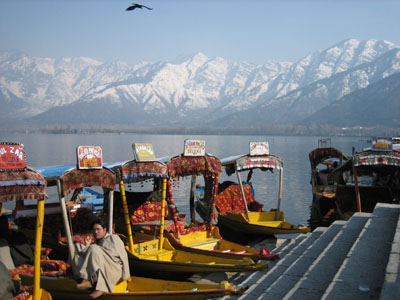
Kashmir is one of the most beautiful places on Earth and also one of the most dangerous. Located in the shadows of Himalaya where three nuclear powers meet, parts of the ancient kingdom of Kashmir are claimed by all three. The provincial war of control between India and Pakistan erupted again this week. India’s Economic Times reporting that six members of the Islamabad-backed Jaish-e-Muhammad in a gun battle it described as between “terrorists” and “security forces”. Earlier this week. Pakistan’s Dawn also reported deaths in gun battles between the Indian military and “suspected Muslim militants” infiltrating the Line of Control that separates the two nations.
Violence in the Indian state of Jammu and Kashmir is nothing new; it has long been this way. Writing about Kashmir in 2002, Pakistani-born writer Tariq Ali describes the area as “trapped in [a] Neither-Nor predicament”. Home of the Nila Naga (the earliest Kashmiris) and ruled in turn by Shahs, Moghuls, Afghan and Sikhs it was acquired by the British East India company and was sold at profit to corrupt local warlords. It was split between India and Pakistan in 1947 and remains an open sore for both countries today. According to the Nilamata Purana, (the Nila Naga Myth of the Indigo Goddess) the name Kashmir is a corruption of words that mean ‘ a land desiccated from water’. But Kashmir has truly been desiccated more by blood than water.
Islam first arrived in Kashmir in the eight century. But the prophet’s armies that had carried all before them for the last hundred years were defeated here finding it impossible to penetrate the great mountains’ southern slopes. It would take another 500 years to establish Muslim rule. It occurred fortuitously; a Buddhist chief named Rinchana from a neighbouring area fell under the influence of a Sufi teacher and began to practice Islam. The Kashmir rulers’ Turkish missionary army gladly switched sides to their new co-religionist and then took over themselves when Rinchana died. The army’s leader Shah Mir established a dynasty that lasted to the twentieth century.
Though Shah Mir and his descendants did not entirely suppress the Indian religions, they did practice forced conversions. Slowly the population embraced Islam. By the time Zain-al-Abidin became Sultan of Kashmir in the late fifteenth century the population ratio of Muslims to non-Muslims was 85 to 15. It remains roughly that ratio in modern times. Zain-al-Abidin takes a lot of credit for this stabilisation. It was he who ended the practice of forced conversion and who rebuilt Hindu temples his father had destroyed. He visited Iran and Central Asia and brought back the arts of book-binding, wood-carving and the making of carpets and shawls. The word ‘shawl’ is Persian in origin but the costume would soon become the uniform of Kashmiri men.
Kashmiri fortunes declined after Zain-al-Abidin died. A succession of weak rulers hobbled by court intrigue meant that the kingdom was ripe for conquest. In 1583, Moghul emperor Akbar dispatched his favourite general to annex Kashmir. He took the province without bloodshed. The Moghuls were greeted with relief by a suffering populace unhappy with their own weak and corrupt government. The Kashmiri Shah struck a deal with the Moghuls handing over effective power but retaining the monarchy and the symbolic right to strike coins in his own image.
Angered Kashmiri nobles replaced the Shah with his son. Akbar was forced to send a large expeditionary force to crush Kashmiri resistance and take direct control. The Moghuls were enchanted by the physical beauty of their new conquest. Akbar’s son Jehangir wrote of Kashmir: “if on Earth there be a paradise of bliss, it is this”. Despite, or perhaps because of, this bliss, the Moghul empire went into decline, like all those before it. Kashmir fell under Afghan rule in 1752. Kabul held the reins of power until Sikh hero Maharaja Ranjit Singh extended his military triumphs from the Punjab by capturing the Kashmiri capital Srinagar.
Singh’s empire was secular and he abolished capital punishment. He is one of those rare figures of history revered in both India and Pakistan. But Kashmiri historians say his 27 year reign was disastrous. He closed the Srinagar mosques and imposed a hefty tax burden on the people. Mass poverty led to mass emigration. A Kashmiri Diaspora fled to the cities of the Punjab where they still live. Meanwhile new and stranger colonists were coming to claim Kashmir.
These new interlopers were businessmen. Britain followed the Dutch model and granted the East India Company semi-sovereign powers to look after imperial interests in the sub-continent. Based in Calcutta, they expanded rapidly and gained the whole of Bengal after the Battle of Plassey in 1757. British rule in India is conventionally described as having started with Plassey. The Company gradually wheedled and bribed their way through a succession of Indian rulers and rajahs. Ranjit Singh’s death in 1839 saw his kingdom plunge into disorder. The Company increased its military strength and broke diplomatic relations with the Sikhs. In 1846, the so-called first Anglo-Sikh war resulted in a decisive defeat for Singh’s descendents.
The resulting Treaty of Lahore signed away Kashmir to the British company. But the Brits immediately did a deal to sell most of the land to Gulab Singh for 75 lakh rupees (lakh is the Indian word for a 100,000). Gulab Singh was the Dogra ruler of neighbouring Jammu. The Dogras did as all previous rulers had done and squeezed every last rupee of tax out of Kashmir to make back the money they gave to the British. Meanwhile the Company rule was ended by the Indian Mutiny of 1857 bringing in direct rule. London did not directly interfere with Dogra rule of Kashmir and Jammu but a “British Resident” was the real power.
The twentieth century was late in arriving to the Himalayan valleys. Not until the 1920s did young Kashmiris educated abroad bring in the new ideas of nationalism, anti-colonialism and socialism. In 1924 Kashmir had its first strike; workers in a state-owned silk factory demanded a pay rise and the dismissal of a corrupt clerk. When the union leaders were arrested, the workers resisted and the Dogra Army put down the strike with the support of Britain. Sullen resistance to Dogra rule continued through the decade. Police stirred up a hornet’s nest by stopping Friday prayers in a Jammu mosque claiming the imam was preaching sedition. It triggered a wave of protests in Srinagar and elsewhere. A speaker described the Dogra as “a dynasty of blood-suckers” and was promptly arrested. His trial attracted thousands of protesters demanding to attend proceedings. Police retaliated killing 21 people. They also arrested several leading Kashmiri citizens including a man named Sheik Abdullah.
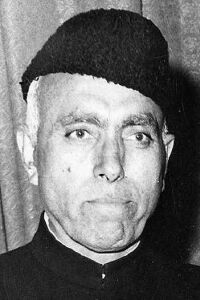
Abdullah's arrest would prove to be the founding moment of Kashmiri nationalism. After he was released, Abdullah set about creating a political movement. The All-Jammu and Kashmir Muslim Conference was founded in Srinagar in 1932. Despite the name, the AJK MC was open to Muslims and non-Muslims alike. Although the Hindus were a minority, Abdullah knew it would be stupid to offend the Pandits, upper class Brahmins whom Britain used to administrate the province.
To demonstrate his secular credentials, Abdullah invited the nationalist Indian leader Nehru to Kashmir. Nehru brought with him Abdul Ghaffar Khan, the man known as “the Frontier Gandhi”. Khan was an eloquent Muslim equivalent of Gandhi. Together, the three men formed a potent partnership. Abdullah promised liberation from the hated Dogra. Nehru preached the struggle against the British Empire and Khan spoke of the need to throw fear to the wind. “You who live in the valley”, he told his audience, “must learn to scale the highest peaks”.
The bond between the Nehru and Abdullah would prove crucial during the independence struggle. In any case, few politicians in the 1930s believed the subcontinent would be divided along religious lines. Even the most ardent Muslim separatist would have been happy with regional autonomy along federal lines. But old certainties were shattered by World War II. The British Empire including India was suddenly at war with Germany. Nehru was furious he was not consulted in the decision. His Congress party split with Nehru and Gandhi reluctantly supporting Britain while hardliners such as Subhas Chandra Bose argued for an alliance with Japan. The fall of Singapore in 1942 left Indians convinced the Japanese would take their country via Bengal. Congress threatened to switch sides.
A desperate Britain offered a carrot of a “blank cheque” to Nehru not desert the cause. Gandhi wondered aloud “what is the point of a blank cheque from a bank that is already failing?” As a result the Congress launched the Quit India movement. As a result of the civil disobedience its entire leadership including Gandhi and Nehru were thrown in jail. Meanwhile Mohammed Ali Jinnah’s Muslim League backed the war effort. Uneasy with Gandhi’s use of Hindu imagery, Jinnah left the Congress in the 1930s to set up his own Muslim organisation. Pakistan was his reward for war loyalty.
As the war ended in 1945, Nehru and Khan revisited Abdullah to find the Muslim-Hindu divide had started to stoke up in Kashmir. Just as in the divided provinces of Punjab and Bengal, violence erupted between rival factions. In the NWFP, Muslim League forces defeated Khan’s anti-partition troops. Khan lived until the 1980s but would spend most of his remaining days in a Pakistani prison. Khan’s defeat rocked Abdullah whose power in Kashmir grew as the British began to withdraw. Nonetheless the Dogra still held official power. In constitutional terms Kashmir was a “princely state” whose maharaja held the ultimate right to choose either to confederate with India or Pakistan.
Other Muslim ruled princely states such as Hyderabad and Junagadh chose India. But they both had Hindu majority populations. Kashmir was different. Jinnah negotiated directly with the Dogra maharaja to join Pakistan. Abdullah was outraged he was not involved. The maharajah baulked and Kashmir’s status remained unresolved when midnight struck on 14 August 1947 creating the new states of Pakistan and India. A line of control in Kashmir was established between the two countries. Both sides held armies commanded by British officers. Last British Viceroy Mountbatten made it clear to Jinnah that he would not tolerate a violent take-over of Kashmir.
Nevertheless Jinnah secretly plotted to take over the disputed Muslim province. Meanwhile Kashmir’s maharaja was now secretly plotting with the Congress Party. Once the British found out about Pakistan’s invasion plans they told Nehru who pressurised the maharaja to join India using the invasion as a pretext. Mountbatten ordered Indian army units to prepare to airlift to Srinagar. Once Pakistan invaded, the maharaja’s regime quickly collapsed. The undisciplined Pakistani army raped, looted and pillaged along the way assaulting Muslims and Hindus alike. Indian troops landed outside Srinagar where they waited for reinforcements. The Pakistanis invaded the city and pillaged shops and bazaars but overlooked the airport which was occupied by the Indian Army. The exiled maharaja signed the accession papers to India and demanded help to repel the invasion.
Matters were at a stand-off; it would all now depend on which side Sheik Abdullah supported. He regarded Jinnah’s Muslim League as a reactionary organisation who would prevent the needed social and political reforms in Kashmir. In 1947 he attended another rally with Nehru at his side. Abdullah publicly backed the Indian presence provided Kashmiris were allowed to determine their own future. What Abdullah wanted was an independent Kashmir but the 1947 wars ended that hope.
According to article 370 of the constitution, India recognised Kashmir’s “special status” but nothing more. In 1948 a realistic Abdullah backed “provisional accession” keeping Kashmir autonomous leaving India responsible for defence, foreign affairs and communications. Hardline Indian nationalists baulked at this special status. Eventually Nehru authorised a coup in 1953 to dismiss his old friend Abdullah. The unrest that followed made Kashmiris suspicious of Indian rule. Abdullah remained a thorn in India’s side.
After being released from prison, he flew to the Pakistani controlled side of Kashmir where a large crowd cheered him. He was arrested again after meeting with Chinese Premier Zhou En Lai. Meanwhile China launched its own assault on northern Kashmir resulting in a new administration of the region called Aksai Chin, which survives today. Encouraged by the disturbances Pakistan launched another assault on Kashmir in 1965 hoping to spark an uprising. India responded by attacking Lahore. Eventually Washington asked Moscow to put pressure on India to end the war.
Devastated by defeat in Bangladesh new Pakistani Prime Minister Ali Bhutto sued for peace with India. In 1972 he agreed to the status quo in Kashmir and got back 90,000 POWs captured after the fall of Dhaka in what had been East Pakistan. Abdullah made his peace with Delhi and was appointed Chief Minister of Kashmir by Indira Gandhi in 1977. When Bhutto was executed two years later, Pakistan’s last hope of peacefully taking Kashmir disappeared. Abdullah died in 1983, a tired and broken man resigned to Kashmir’s fate. The end of the cold war escalated the war between the two sides as the US and USSR lost interest in this Himalayan pawn.
The border and the Line of Control separating Indian and Pakistani Kashmir passes through some of the planet’s most difficult terrain. The continual low-level sniping between the two sides has led to a significant loss of human rights in Kashmir. A Medecins Sans Frontieres study in 2005 found that Kashmiri women are among the worst sufferers of sexual violence in the world. Since the violence escalated in 1989, sexual violence has been routinely perpetrated on Kashmiri women, with over one in ten respondents saying they were victims of sexual abuse.
Many people now see independence as the only way out of Kashmir’s nightmare. In 2001 the former Chief Justice of Delhi High Court Justice Rajinder Sachar said restoring pre-1953 special status to Jammu and Kashmir was the only solution to the problem. Sachar called both Indian and Pakistani governments hypocrites and said armed conflicts could not solve this complex issue and only political dialogue could reach a solution. ``When France and Germany which have a bitter history of conflicts can become good friends and work towards better future, “ he said, “then the same is possible in case of India and Pakistan."
Both Russia and Georgia have accused each other of escalating military tensions in the breakaway Caucasus republic of Abkhazia. Extra Russian troops began arriving in the republic last week taking the total number close or possibly beyond the 3,000 limit allowed under a UN-brokered ceasefire agreement signed in 1994. The Russians say their move is necessary to stop a planned Georgian military operation to regain control of the region it lost in the early 1990s. Georgia, in turn, has accused Russia of annexing the territory and plans to add to their own presence in Abkhazia. They point to a Russian defence spokesman who told Agence France Press on the weekend the number of Russian soldiers in Abkhazia is already greater than 3,000.
This was denied today by Russian Ministry of Defence (MOD) who said they remain well under the 3,000 troop limit with 2,542 “peacekeepers” in the region. They warned they would send more but would remain under the limit. The MOD released a statement overnight said the increase in troop numbers “has only one goal – to maintain peace and avoid bloodshed.” They claim the force has “an important stabilising role”. “Today Russian peacekeepers continue to fulfil their tasks, acting in accordance with the mandate of the CIS peacekeeping forces and international norms,” said the statement “They have proven the necessity of their presence in the conflict zone.”
Abkhazia has long been a complex conflict zone. While international maps place Abkhazia within Georgia’s borders, it has been a de facto independent republic since it seceded from the newly created nation of Georgia in 1992. Abkhazia had been part of the Russian Empire since 1810. Originally a separate republic within the Soviet Union, it was forced to join the Georgian Socialist Soviet Republic in 1931 under the orders of Georgian-born Iosif Vissarionovich Dzhugashvili, better known as Stalin. Georgian became the official language and the Abkhaz language and cultural rights were repressed.
When the Soviet Union collapsed in 1991, an anti-Georgian resistance movement grew in the capital Sukhumi. Tbilisi sent in troops to enforce Georgian rule. In late 1993, they were driven out amidst fierce fighting in which several thousand people died and Sukhumi bombed. Abkhazia declared independence early in 1994. No other country has recognised Abkhazian independence and major international organisations such as the UN, EU and NATO recognize Abkhazia as an integral part of Georgia. An economic embargo remains in force crippling the local economy while Russia and Georgia nibble away at the edges each hoping to advance their own cause.
In the latest squabble, the US and EU have come down firmly on the side of Georgia. Both have sharply criticised Russia for its actions in bolstering its military force in the mountainous border region with Abkhazia. EU external relations commissioner Benita Ferrero-Waldner made a deliberate point that Russia should respect “Georgia’s borders”. Meanwhile White House spokeswoman Dana Perino said that the troop increase and the Russian downing of an unmanned, unarmed Georgian spy plane in Georgian air space have “significantly and unnecessarily heightened tensions in the region.”
US National Security Advisor Steve Hadley also weighed into the debate citing his concern about Russia’s growing support for Abkhazia. He said the Bush administration expects to have good relations with newly installed Russian president Dmitri Medvedev (who remains a probable puppet of Putin) but wants Russia “to stop interfering in the internal affairs of Georgia”.
However not everyone sees Abkhazia as an internal affair of Georgia. Abkhazian President Sergei Bagapsh told Spain’s El Pais yesterday he expects his country will eventually achieve international recognition of its independence the same way that Kosovo did in February. But Bagapsh doesn’t merely want the Russians to recognise the country in revenge for US support Kosovo. “We want independence because we have a right to it. Because we have deserved it," he said. He also added that an independent Abkhazia would be a demilitarised country with no weapons or military units, but it would need security guarantees from other countries to achieve this. This was a clear warning to Georgia whom Bagapsh said was "a very aggressive country armed to the teeth by Europe.”
Abkhazia is one of two breakaway republics from Georgia, the other being South Ossetia. Neither has international recognition but both have stepped up their campaigns since Kosovo's declaration of independence. Russia has backed both claims and are particularly interested in Abkhazia 240km shoreline on the Black Sea. But Abkhazia is actually a secondary issue for Russia. What Putin and Medvedev really want is an end to NATO expansion at the expense of Russia. The Kremlin is furious over Georgia’s bid to join NATO and caused the organisation to postpone a decision on Georgia’s membership last month. The New York Times said that Russia having seen the success of their “bullying” on that score, have now decided to up the ante further. As a result, Abkhazia trembles on the poker table.
Muqtada al-Sada has ordered his Shia militia Mahdi Army off the streets of Basra after a six day battle in which 163 people were killed and about 500 injured. Al Sada’s militiamen had engaged in long running gun battles with the Iraqi Army and police and the violence has spread to other southern cities and Baghdad. Sami al-Askari, an adviser to Iraqi Prime Minister Nouri al-Maliki, claims most of the Basra area is now under government control. Prime Minister Nouri al-Maliki is now in Basra and had vowed to stay there until the militia was crushed. But now al-Askari said al-Maliki will return “soon” to Baghdad.
But even members of al-Maliki’s own government say that the Mahdi Army has withstood the US-supported Iraqi assault. Last week, Iraq’s defence minister, Abdul Kadir al-Obeidi, conceded that the government’s military efforts in Basra have met with far more resistance than was expected. Muqtada al-Sada has now demanded concessions in return for his ceasefire call. These include the government granting a general amnesty for his followers, releasing all his imprisoned members who have not been convicted of crimes and bringing back who he calls “the displaced people who have fled their homes as a result of military operations.”
The Iraqi Army started their assault on Basra on Tuesday. An eye witness account by former Iraqi captain Qais Mizher shows that the Mahdis had gained effective control of the city. He said the Iraqi Army assault initially appeared to have backfired as many neighbourhoods were deserted or overrun by the Mahdi Army despite military curfews. He saw scattered Iraqi Army and police checkpoints, but no place seemed to be truly under government control. In addition, travelling around the Shiite south of Iraq has been problematic since the Basra violence erupted.
While the Iraqi are mired in Basra, they were backed up by US fighter planes and helicopter gunships who struck the city and also the Baghdad’s Sadr City with bombs and missiles. The Sadr city slum is home to two million people and is considered Mahdi Army heartland. US helicopters fired missiles at Sadr while planes bombed Basra. Fighting has raged across much of the country with battles reported in Kut, Hilla, Amara, Kirkuk, and Baquba. Both Baghdad and Basra have been placed under a 24-hour curfew for the last three days.
The current violence has a political aim. It intends to severely weaken the Sadrists to the benefit of their political rivals, al-Maliki’s Dawa party and its principal government ally, the Islamic Supreme Council of Iraq (ISCI). The ISCI is led by Shia cleric Abdul Aziz al-Hakim, whose own militia, the Badr Brigade, is well represented in the government’s security forces. The Badr Brigade has strong links to the Iranian Government and its secret Quds Force which equips foreign Islamic revolutionary movements.
Some have questioned Prime Minister Nurik al-Maliki’s timing of the Basra assault. Kevin Drum has speculated that his actions got the green light from the Bush regime because of their liking of quick and decisive action, regardless of the consequences. He says Maliki may have calculated this would be a speedy mopping-up operation that would provide General Petraeus with good news ahead of his congressional testimony for his proposal on continued troop deployments. Alternatively it may be a chance to explain the bad news elsewhere with rising violence throughout Iraq at the moment. Lastly, the Basra operation offers another excuse not to withdraw troops.
While the Iraqi army are embarrassed on the streets of Basra, the well-trained 4,000 British army troops remain idly ensconced at Basra airport. They formally returned control of the city to the Iraqis in December but much of Basra has remained under the control of a combination of Iranian-backed militias and criminal gangs. The British retreat from Basra masterminded by Gordon Brown on his visit there in September last year is now looking short-sighted as the army sit helplessly by watching the city disintegrate into anarchic violence.
Terry Sanders’ new documentary Fighting For Life follows military doctors, nurses and medics on the front lines of the Iraq War. Mostly shot in Iraqi battlefield hospitals and American rehab centres, the film contains many harrowing images. Some of its worst images are almost 150 years old. These photos are from Mathew Brady’s studio of the Battle of Antietam during the US Civil War, the conflict that gave birth to battlefield surgery.
The Battle of Antietam on 17 September 1862 was the bloodiest day in US history. It had over twice as many casualties as 9/11 on another September day 139 years later. Almost 6,500 soldiers lost their lives between Antietam Creek and the Potomac River during the Confederate invasion of Maryland. The immediate result of the battle was indecisive but it had two major outcomes: it denied Confederate hopes of British intervention and prompted President Abraham Lincoln to deliver the Emancipation Proclamation to end slavery.
In 1861 the Confederate States broke free from the North. In the words of Confederate President Jefferson Davis it took up arms to vindicate the political rights, freedom, equality and state sovereignty “which were the heritage purchased by the blood of our revolutionary sires”. President Lincoln said the Confederacy would destroy the nation. Neither side wanted the freedom of slaves, although the South seceded from the Union in fear of the abolition threat posed by Lincoln’s election in 1860.
The first year of the war saw a succession of Northern military and naval victories that promised an early end to the war. Southern counter-offensives in the summer of 1862 tipped the balance in their favour and brought them to the brink of international recognition. In September 1862, General Robert E Lee’s Army of Northern Virginia invaded Maryland seeking to defeat General George B McClellan’s Army of the Potomac. The two great forces collided at Antietam Creek near the village of Sharpsburg (to this date, the South still refers to the day as the “Battle of Sharpsburg”).
More people died at Sharpsburg than in all the other American wars of the nineteenth century combined. In the centre of Confederate lines, a sunken farm road would become known as Bloody Lane. The carnage was greatest here. According to a Union lieutenant colonel “in the space of less than ten acres, lay the bodies of a thousand dead men and as many more wounded”. Another soldier at Bloody Lane saw “hundreds of horses too, all mangled and putrefying, scattered everywhere”.
Bodies were strewn across six square kilometres and a week afterwards a local newspaper reported the wounded and the dying were to be found in nearly every house in every neighbourhood. Two days after the battle, Northern photographers Alexander Gardner and James Gibson arrived to take pictures. It was the first time the battlefield sight of grisly corpses was captured on camera. Both men worked for Mathew Brady who exhibited Gardner and Gibson’s photos in a New York exhibition called “The Dead of Antietam” one month after the battle.
Though casualties were almost evenly split, the photos of the dead were almost entirely of Confederate soldiers. There were two reasons for this. Firstly, because the Confederates fled the field, only the Northern soldiers could bury their dead. Secondly, while Brady was anxious to show the battlefield in all its gory horror, his embedded photographers were mindful of effect of Union dead on morale in the North.
A New York Times reporter who visited the exhibition was sympathetic to the litany of Southern victims on display. He wrote Brady “has done something to bring home to us the terrible reality and earnestness of war” but also noted what else was missing from the pictures - the background of widows and orphans. “Homes have been made desolate, and the light of life in thousands of hearts has been quenched forever,” he wrote. “All of this desolation imagination must paint – broken hearts cannot be photographed”.
A New Hampshire regimental surgeon who treated victims at Sharpsburg for a month afterwards could find no rationale for the carnage. The “great victory”, he wrote, was not worth the thousands of poor, suffering dying men. His views were shared by Massachusetts captain Robert Gould Shaw who believed nothing could justify a battle like Antietam and the horrors that came from it. He wrote “every battle makes me wish more and more that the war was over”.
Antietam proved to a decisive battle. Although the war dragged on for another two years and no single battle decided the outcome, Antietam shattered Southern momentum. Just 15km from Washington, they would never again come so close to winning an independent Confederacy. Twenty years after the war, former Confederate corps commander James Longstreet (who served at Antietam) wrote “at Sharpsburg was sprung the keystone of the arch upon which the Confederate cause rested”. When the arch collapsed, the Confederacy collapsed with it.