Sunday, April 13, 2008

Cocaine: Squaring the ledger

A Los Angeles news agency is the subject of a lawsuit that alleges they supplied Heath Ledger with cocaine before secretly filming him using the drug. The suit filed on Friday accuses two paparazzi employed by the Splash News & Picture Agency of paying for cocaine so they could secretly videotape Ledger snorting the drug on the night of the Screen Actors Guild Awards. An unnamed freelancer who brought the suit has sought unspecified damages for fraud, distress and privacy violations. Victory would also mean the revenue generated by selling the videotape should be forfeited under a California state law forbidding paparazzi from profiting from illegal activity.

Worldwide media outlets paid more than a million dollars for the grainy footage. The footage shown after Ledger’s death went a long way to creating the impression, the actor was a cocaine addict. However while clips included a confession by Ledger he was a long term user of marijuana, they do not show him snorting cocaine. What scanty evidence there is, comes from untrustworthy British tabloids who reported a former personal assistant of supermodel Naomi Campbell’s claim that she saw Ledger indulge in several cocaine binges with Campbell. With cocaine the traditional favourite drug of the rich and famous, these rumours are easy to believe and grist to the media's mill.

Cocaine is made from a substance extracted from the leaves of coca plants native to Bolivia, Peru and Colombia. These three countries remain the primary source for the coca leaf and finished cocaine hydrochloride. The earliest inhabitants of the Andes chewed the coca leaves for its stimulating effects. Each leaf contains 2 percent of the active substance that makes cocaine so powerful. It was released by slowly chewing for an hour and its sensation it helped them survive the bitter cold of the high mountains. The Spanish conquistadors tried to outlaw the practice as they thought it encouraged immoral behaviour and laziness. But eventually economics won out and officials took over the production of coca leaf.

Cocaine itself was invented in 1855. German scientist Friedrich Gaedke devised a way of extracting and purifying the active substance from the leaf. His compatriot Albert Niemann improved the process a few years later. Both men were interested in the drug for its medicinal properties as a pain reliever. At the time, anaesthetics were ineffective and surgery was an agonising process for its victims. It wasn’t until 1880 that Russian doctor Vasili von Anrep discovered how to use cocaine as an anaesthetic and word quickly spread about its value.

One of cocaine’s earliest enthusiasts was Sigmund Freud. He published “On Coca” in 1884 which was the first study of its effects. He took the drug himself and prescribed it for his friend Ernst von Fleischl-Marxow to overcome his addiction to morphine. This was not a successful treatment. Fleischl-Marxow became addicted to cocaine and suffered a cocaine-induced psychosis. The results chastened Freud and thereafter he regarded the drug as dangerous.

Around the same time, processed cocaine was making its way in to many products including syrups, tonics, wines and lozenges. In 1886 a pharmacist in Atlanta, Georgia named Doctor John Pemberton concocted a new drink which he released under the name of “Coca Cola”. Pemberton marketed the drink as a tonic. The name of the drink was inspired by two ingredients in its secret recipe: cocaine-laced syrup and caffeine from kola nuts. Under the aggressive marketing by Pemberton's friend Asa Candler, Coca Cola quickly became one of most successful soft drinks in America.

By 1900, negative publicity about cocaine’s side-effects was spreading. But Candler could not totally eliminate it from the formula without threatening the trademark status of the drink’s name. So Coca Cola began to slowly remove the drug from its formula. By 1902 it was as little as 0.25 per cent of a grain of cocaine for 30 grams of syrup. Coke did not become totally cocaine free until 1929.

By then there was a worldwide consensus to illegalise narcotic drugs. In 1924 the Second International Opium Conference agreed to make laws to control drugs. Over the next few years many countries outlawed the production, sale and possession of heroin, cocaine, opium and cannabis. In 1946 the UN assumed the drug control functions formerly carried out by the League of Nations. They established a control body, the International Narcotics Control Board (INCB) which attempts to control production and distribution of narcotic and psychotropic substances worldwide.

The cocaine industry was driven underground. Due to the difficulties in importing and refining it, it became extremely expensive and the preserve of wealthy people. Cole Porter’s 1930s song “I Get a Kick out of You” refers to those who “get a kick from cocaine”. But the drug had a fairly low profile until new forms of the drug emerged in the 1970s. Crack and freebase brought cocaine to whole new socio-economic groups. These products were easy to make but highly addictive. But newspaper reports tend to overdramatise cocaine use in the wider public.

Although a 2000 Australian Institute of Health and Welfare survey (pdf) on drug usage showed that cocaine use was on the rise, it also found it was one the lesser used drugs on the Australian scene. Just 4 percent of those surveyed had ever tried cocaine and 1.4 percent had used the drug in the previous 12 months. However cocaine use had increased by 1 percent in the decade since 1991. NT and NSW had the highest percentage of cocaine users with 5.6 and 5.0 per cent respectively. The survey also found little support for the legalisation of the drug.

The UN Office on Drugs and Crime (pdf) support these findings. In the 1990s, they estimated that 180 million people (or 4 per cent of the world’s population at the time) consumed drugs of which cannabis was easily the most popular. Cocaine users made up just 14 million users worldwide (0.3 per cent of the world’s population). The majority of cocaine users are white males between the age of 16 and 24. The 28 year old Heath Ledger was probably a cocaine user. For media organisations to set him up to snort it so they could then film him using it, is outrageous hypocrisy. Instead of a war on drugs, we would be better served with a war on media exploitation.

Saturday, April 12, 2008

Springborg pilfers from the Goss playbook

Queensland Opposition leader Lawrence Springborg has taken a leaf out of former Labor Premier Wayne Goss’s book with his mid-term advertising campaign promoting him as an alternative leader. The tone of his ads is so serious as to be almost beyond parody, and conspicuously make no mention of his own party. Similarly his website Springborg.com is a National-free zone that attempts to lay out his case for “one non-Labor party” in Queensland. Despite the hoopla Springborg has little hope of emulating Goss’s success with the Queensland coalition sitting 20 per cent behind Anna Bligh’s government in the polls.

Wayne Goss
won that 1989 election with a 24 seat majority bringing an end to a tumultuous 32 year reign of the National Party. Queensland has always marched to a different tune to the rest of the county and 1989 was no different. Goss won despite a national trend against state Labor governments. His self-declared reformist government came to power with a mandate to rid the state of what he called the “diseases” it picked up from the previous administration. As he told the ABC in 2005, “The whole fabric of public administration had been infected with cancer, the cancer of corruption.”

The previous government was dominated by the 19-year tenure of Joh Bjelke-Petersen as premier. His deeply conservative administration insulated Queensland from the progressive political changes that were occurring across the rest of the country in the 1970s. His power was sustained by a biased electoral system based on zonal malapportionment (ironically introduced by Labor in the 1950s), a secretive redistribution process, inaccurate rolls (the only state which did not use the federal roll) and compromised commissioners.

The Nationals were undone by the Fitzgerald Inquiry into police corruption which exposed systematic impropriety at the highest levels of government. In 1987 Bjelke-Petersen was sacked by his own party. His replacement Mike Ahearn made the dramatic pledge to implement the Fitzgerald reforms “lock, stock and barrel”. But he did not have the support of his own party to implement these reforms and was replaced before the election by a more traditional National figure in Russell Cooper. Cooper shored up the bush vote but his appointment undermined urban faith in the Nationals' commitment to reform.

Labor won the 1989 election comfortably despite the gerrymandered ballot. As documented in Bron Stevens and John Wanna’s analysis of their first term “The Goss Government”, their election campaign was a mixture of “caution and ambition, conservatism and reform”. Labor were determined not to give the electorate any reason to fear them and copied the Nationals on a range of contentious policy issues. To counteract the claim Labor would be a high-tax government, they promised “no new taxes”. Queensland was already the lowest taxing state in the commonwealth and this promise seriously constrained their ability to institute much-needed reforms.

However the new Labor Government was more ambitious on other fronts. They promised a radical difference to the redneck patriarchal style of the Bjelke-Petersen era with Goss a modern, articulate and consultative leader of a cabinet that would adhere to traditional Westminster rules so conspicuously ignored by their predecessors. Bjelke-Petersen famously was unable to explain the doctrine of Westminster separation of powers (between the executive, legislative and judicial branches of government) at the Fitzgerald Inquiry. He bluffed his way through this nonsense answer to the question of what that doctrine was: “the separation of the doctrine that you refer to, in relation to where the Government stands, and the rest of the community stands, or where the rest of the instruments of Government stand.”

By contrast, the legally trained Goss was keen to depoliticise the public service who would implement policy in an impartial, corporate fashion (under the head of a rising star named Kevin Rudd). Both government and administration would be accountable and responsive. Labor also asked the Electoral and Administrative Review Commission (EARC) to table recommendations on the reforms of the biased electoral system. While Goss was disappointed the EARC didn’t go far enough to remove rural advantage of vote weightage, it did abolish the multi-zonal system that gave the rural-based Nationals such a strong advantage.

Goss succeeded in keeping the high economic growth he inherited from the previous government. He had some successes in implementing traditional Labor reform areas such as the establishment of the Women’s Policy Institute. He also increased the funding for Aboriginal and Islander Affairs, criminally neglected by the racist Bjelke-Petersen government. Goss also increased Queensland national parks allocation, supported the World Heritage listing of the Daintree Rainforest area and formally ended sand mining on Fraser Island.

However Goss was heavily criticised by many would-be supporters in women’s, Indigenous and environmental lobby groups for not going far enough to implement needed reforms in these areas. This was a political decision as Goss needed to shore up his base for the 1992 election and knew that his opponents on the left were unlikely to vote for the Nationals despite their protests at his reform failures. Women’s groups were disappointed he did not decriminalise prostitution or repeal laws appearing to make abortion legal. Indigenous groups were dismayed at his lack of consultation on land rights issues and his failure to implement recommendations from the Royal Commission into Aboriginal Deaths in Custody.

But Goss had to accommodate other more powerful interest groups. His emphasis on economic growth meant he needed to consult with industry leaders, mining companies, pastoralists and tourism operators. With no upper chamber in Queensland that might have elected Greens or Democrats, there was little parliamentary scrutiny of any adverse social decisions Goss made. Welfare spending remained lower than in any other state in Australia. Goss’s government walked a fine line between reform and caution and was eventually comfortably re-elected in 1992. Goss’s failures eventually cost him and his party power in a narrow defeat in 1996, though Peter Beattie won Government back for Labor 18 months later.

Lawrence Springborg is no Goss but he too is trying to walk a fine line between reform and conservatism. He promises a commitment to renewable energy, a “world class” health system, and empowering Aboriginals while appealing to the conservative base with a typical “tough on crime” stance. But despite Springborg being all dressed up, at the moment he has nowhere to go. The prospect of a united conservative party in Queensland looks as far away as ever and with it disappears any chance he has of becoming Premier. Labor have won six of the last seven Queensland elections. At this stage, Anna Bligh looks odds on to make it seven out of eight and make history by being the first ever elected female state leader in the country.

Friday, April 11, 2008

One Hundred Years of Solitude: McCain and Iraq

A statement made to an obscure meeting in New Hampshire three months ago, now has the potential to derail John McCain’s presidential campaign. On 3 January the Republican nominee spoke about a possible US presence in Iraq for a hundred years. Now Democratic National Committee chair Howard Dean said the Republicans were trying to deceive voters about what McCain really meant that night. "We honour John McCain's military service, but not every war hero ought to end up in the presidency of the United States," Dean said. "If you can't tell the difference between the Shia and the Sunnis, then America ought not to be in Iraq for 100 years."

McCain made the original comment at a town hall meeting in Derry, New Hampshire five days before that state’s primary. That night the Arizona senator told an audience of 200 people he didn’t mind if the US military stayed in Iraq for “a hundred years“. When a questioner began a question by saying “President Bush has talked about our staying in Iraq for 50 years”, McCain interrupted him by saying “make it a hundred”. He continued: We’ve been in South Korea … we’ve been in Japan for 60 years. We’ve been in South Korea 50 years or so. That would be fine with me.”

The exchange was captured in this Youtube video:


The backlash wasn’t long in coming. The two main Democrat candidates gleefully seized on the McCain remarks saying he would continue to implement President Bush’s failed policies in Iraq. Hillary Clinton said the timeframe for American troops to return home should be 60 days not 100 years. Barack Obama was similarly scathing. He said the US should be spending “billions of dollars in Baghdad” and instead spend the money on schools, hospitals, roads and bridges. "Senator McCain said the other day that we might be mired for 100 years in Iraq,” he said “Which is reason enough not to give him four years in the White House”.

In February, McCain went on Larry King’s CNN show to defend his statement. He said he was referring to a military presence similar to what the US already has in Japan, Germany and South Korea. He said the Democrats’ desire to set a date for troop withdrawal would lead to chaos and genocide and would undo “all the success we've achieved and al Qaeda tells the world they defeated the United States of America.” McCain said he wouldn’t let that happen.

Of course what McCain really meant was keeping a garrison force in Iraq, not continuing the type of war America is now fighting. He suggests it would be acceptable to "maintain a presence in a very volatile part of the world" similar to that in Japan and Korea. He argues that Obama "has been knowingly twisting” his (McCain's) words. Right-of-centre commentator Clifford May agrees with McCain and says the Arizona senator’s point was that the presence of American forces promotes stability as it does in Europe and Asia for the last fifty years. However May also warned that the US could perhaps still be fighting militant Islamists in a hundred years. “What could be worse than that?” he asked. His answer: “A hundred years from now, America and the West could have been defeated by militant Islamists.”

The Huffington Post’s Ilyse Hogue suggests that no matter what happens in Iraq, the strategy of both Bush and McCain all boils down to one phrase: “six more months”. Hogue says that when the "surge" began a year ago, the politicians and generals told America things would get better by September. When September arrived, the improvement was predicted for the Northern Spring. Now this week General Petraeus has told Congress he needs another six months. Hogue calls it “selling an endless war on the instalment plan.”

Thursday, April 10, 2008

A meeting of minds: India - AU Summit

The first ever collaborative summit between India and the African Union (AU) has ended yesterday in New Delhi with a pledge to work as partners to address economic and development challenges. Both sides identified rising oil and food prices as top concerns. Tanzanian President and current chair of the 53 nation AU, Jakaya Mrisho Kikwete said high prices will hamper efforts around economic growth and reduction of poverty. Indian Prime Minister Manmohan Singh agreed and said both India and Africa needed to increase domestic food production. He promised to help Africa with technology to increase farm productivity.

There is much mutual interest at stake at the summit. Rising food and oil prices threaten many African economies and while India is dealing with a three-year high inflation rate of 7 per cent, which poses a serious difficulty for Singh's government as it contemplates national elections next year. India sees Africa as a cheap and bountiful resource supplier and will look to offer a carrot of easy export conditions, billions of dollars in lines of credit as well as investment of money and skills in low-cost industry and services.

Both sides have also agreed to back each other to gain a bigger role in the proposed expanded UN security council. India, Japan, Germany and Brazil have long been campaigning for several years for permanent seats on a body that remains fixed to the boundaries set for at the end of World War II. Now African countries also are eager to be permanently represented on the council. On Tuesday Singh recruited African support for his country’s push saying in return that India would support any country nominated by Africa for permanent membership. "No one understands better than India and Africa the need for global institutions to reflect current realities and to build a more equitable global economy and polity," he said.

The historic summit was greeted positively in the host country with Newstrack India saying it produced “new bonds of friendship” and laid the foundation for a deepening relationship between resource-rich Africa and Asia’s fast growing economic powerhouse. The relationship is closely following the successful model laid down by China. However Prime Minister Singh claimed India was not in competition with China for African influence. “We are not in any race or competition with China or any other country,” he said. “It is up to Africa to determine the path they wish to pursue and to the extent of what lies within our capacity, we will offer whatever help is required.”

Whatever the truth of that, there is little doubt that with one third of the world’s population between them, India’s evolving partnership with Africa will become a major factor of world influence in the next couple of decades. On the Monday prior to the two day summit, foreign Ministers from key African countries including Ghana, Nigeria, Senegal, Zambia, South Africa and Tanzania attended a closed-door meeting with their Indian counterpart to set the tone for the conference to follow.

Sources close to the meeting said the Africans and Indians agreed to co-operate in widely varied key areas including economic, trade, industry and investment, agriculture, finance, regional integration, politics, science, technology, research and development, ICT (Information & Communications Technologies), water and sanitation and poverty eradication to meet their challenges. At the summit itself, Manmohan Singh talked grandly of the desire to turn the 21st century into a "century of Asia and Africa".

India’s summit website reflected its leader’s optimism and discusses the “philosophy” of the forum in flowery language. It talked about the similarities of both sides including the struggles against colonialism and apartheid and the need to “jointly accept the challenges of a globalising world.” Their vision of the partnership saw the need to develop "a new paradigm of cooperation which will take into account Africa’s own aspirations for pan-African institutions and development programmes".

Meanwhile the official African objectives of the summit were more prosaic: strengthening co-operation, setting up frameworks to reinforce that co-operation and harnessing the resources of the continent’s Diaspora populations, Africa was represented at the summit by many of its most senior leaders. Tanzania’s Kikwete was just one of a swag of presidents in attendance including Ghana’s John Agyekum Kufuor, South Africa’s Thabo Mbeki, Uganda’s Yoweri Museveni, Algeria’s Abdelaziz Bouteflika, Kenya’s Mwai Kibaki, Senegal’s Abdoulaye Wade, and the DRC’s Joseph Kabila. They will all return to their home countries emboldened by a new direction in world affairs that owes nothing to their former western colonial masters.

Wednesday, April 09, 2008

food riots escalate in Haiti

Rioters in the Haitian capital Port-au-Prince attempted to storm the presidential palace yesterday demanding the resignation of President Rene Preval. UN peacekeepers drove them off the palace grounds using rubber bullets and tear gas. The palace attack was the latest escalation in violence that has been growing across Haiti for over a week with rioters are angry over rising food prices. In Port-au-Prince, they left a trail of destruction across the city smashing windows, setting fire to buildings and blocking streets with concrete barricades and burnt out cars.

The protesters tried to break into the presidential palace by charging its chain gates with a rolling dumpster truck. They were foiled by Brazilian UN troops arriving in jeeps and assault vehicles. Preval was in the palace at the time of the attack but has made no public statement as yet. Preval is a former ally of ousted President Jean-Bertrand Aristide and took over from him as president in 1994. He was replaced by Aristide again in 2001 until the 2004 coup that brought an end to that regime. Preval was elected leader again in 20006 but has been helpless to end Haiti’s unending crisis.

As well as the removal of the Washington-backed Preval, the protesters also want to the end the 9,000 strong UN mission MINUSTAH (UN Stabilisation Mission in Haiti). The force has been in place since the 2004 rebellion that led to the downfall of Aristide. It has a mandate not only to stabilise the environment but also to assist with instituting a political process and promote human rights. The force was initially popular as it aimed to curb the power of Haiti’s armed gangs. However many Haitians want the force removed after incidents where children were caught in the crossfire.

The current series of riots started in the southern port city of Les Cayes last week where 5,000 protesters shut down the city and tried to burn down a UN compound. Five people died in the violence there. Demonstrations against the high cost of living quickly spread to other cities. Hundreds protested on 3 April in Haiti’s fourth largest city Gonaives on the northwest coast. Protests there were largely peaceful, but UN workers were evacuated to a police base, and five people were injured with rocks as protesters tired to force a school's administration to let the students join the demonstrations.

The violence finally reached the capital on Monday. UN envoy to Haiti, Hedi Annabi, said international efforts to stabilise Haiti was becoming “extremely fragile” due to the country’s soaring food prices and declining living standards. He called for urgent food aid, and said 80 percent of Haiti's 8.5 million people live on less than $2 a day. These people, he said, were seriously affected by the global increase in prices for basic food items. "I think there is a need for urgent assistance to alleviate the suffering of the population," he added. "At the same time, we need to remain vigilant and respond robustly so that we do not allow these demonstrations to be exploited by people with political motivations.”

Haiti is the Western Hemisphere's poorest nation. 80 per cent of the country’s adults are unemployed. Barely one in five Haitians over 15 can read and write. There are few paved roads, an inadequate supply of drinkable water, minimal utilities, and depleted forests. Almost all its food is imported and the price of beans, fruit, rice, and condensed milk has gone up 50 percent in the past year, while the price of pasta has doubled. Many Haitians have taken to eating cookies made of dirt, vegetable oil and salt.

In stark contrast to the country’s widespread abject poverty is Haiti’s small elite. This consists of no more than several thousand families who are extremely wealthy, including many millionaires among their number. The country's wealthy are clustered around the cooler mountainside suburb of Pétionville, where French restaurants and luxury car concessions cater to expensive tastes. Education and medical services are entirely private, and the children of the elite tend to be educated abroad, either in Paris or the US.

This is very conspicuous consumption in one of the three countries of the world with the highest daily caloric deficit per person (460 kcal/day below the daily requirement of 2100 kcal/day). To address this deficiency the World Food Programme (WFP) are appealing to the international community for urgent funds to support its operations in Haiti. Last month, WFP appealed to donors for an additional US$500 million to respond to dramatic increases in global food and fuel prices. WFP Executive Director Josette Sheeran said what is happening in Haiti is repeated across the world “Rising prices that mean less food for the hungry,” she said. “A new face of hunger is emerging: even where food is available on the shelves, there are now more and more people who simply cannot afford it.”

Tuesday, April 08, 2008

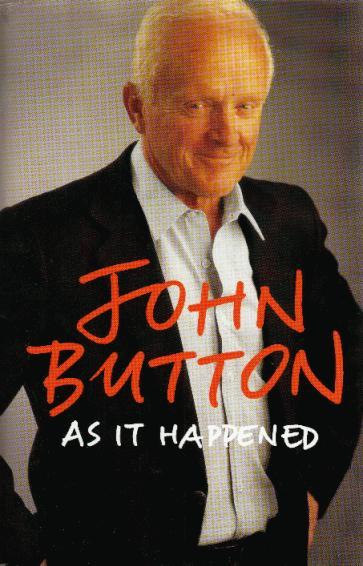
John Button dies

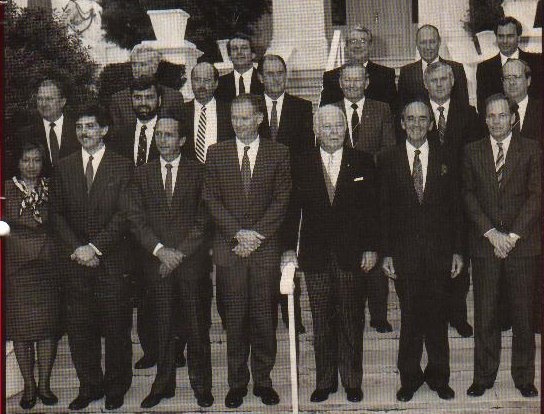
Hugely influential former Australian Labor trade minister John Button died today of pancreatic cancer. He was 74. Button was a Senator for Victoria who served in the Federal Parliament between 1974 and 1993 and was Minister for Industry, Commerce and Technology for 10 years from 1983. He was the Government leader in the senate, and a driving force behind Labor's massive changes to the finance and industry sector. His was also the longest tenure in a single ministry in the Hawke-Keating governments. Button was famous for his straight talking style and he occasionally earned the backhanded compliment of being “too honest” to be an effective politician.

It was Button, more than any other minister in that decade of Labor Government, who took up the challenge of market reform and deregulation. He removed the protection-induced inefficiencies of Australia's large-scale industries by knocking down its tariff walls. His industry plans for steel, heavy engineering, textiles, clothing and footwear, shipbuilding and motor vehicles had initially mixed but generally very positive results. "The Button touch" was a significant contributing factor to an extraordinary 17 per cent growth a year since 1986-87 in manufactured exports.

John Norman Button was born in Ballarat on 30 June 1933 and educated at Geelong College and the University of Melbourne, where he graduated in arts and law. He first ventured into politics to campaign against the Menzies government's 1951 referendum to ban the Communist Party. Button then joined that Party, not out of communist zeal but merely to get a free trip to a Moscow youth festival. In 1959, he joined leading Labor lawyers Maurice Blackburn & Co in Melbourne. He rose to become a senior partner until he was elected to the Senate in 1974.

Button was a close personal friend of party leader Bill Hayden in the early 1980s and it was he who had the unenviable task of advising Hayden it was time to stand aside and make way for Bob Hawke before the 1983 election. When Hawke won that election he gave the newly appointed Senate leader his choice of ministerial portfolios. Button chose industry because, he said, having seen some very bad factories, he thought it would be a challenge.

Button relished the challenge. He went to Sweden in 1984 where he saw a similar political environment to Australia but there the government had a better relation with industry. Sweden had no regime of tariffs but did help with research, development and industry restructuring. Button was also impressed by their future planning and took these ideas back to Australia. His Button Car Plan saw a phased withdrawal of protective tariffs combined with government export incentives, while the industry reduced the number of plants and models to gain economies of scale.

Button retired in 1993 and has remained active in Labor affairs while publishing his memoirs. He also joined trade missions, company boards and became a professorial fellow at Monash University. Button also found time to support his beloved Geelong (Australian Rules) Football Club. Button would have greatly enjoyed the double satisfaction last year of Labor regaining Government as Geelong won its first premiership in 44 years. But in between these two events he found out he had pancreatic cancer and suffered five painful months before dying earlier today.

Several Labor heavyweights have since paid tribute to Button. Acting Prime Minister Julia Gillard said she had known Button through the Victorian branch of the party and had always admired him. She called him a legend of the Labor movement. Former Prime Minister Paul Keating said his death was a loss to the country and the Labor party alike. Keating admired his independent spirit and said he “played corner politics with cunning and élan”. Another former PM, Bob Hawke said it was Button’s reforms that laid the basis for Australia's current and ongoing prosperity. Hawke was one of the last of his friends to see Button before he died. “My final memories are of this man of small stature, strong character and great courage in the face of adversity,” he said.

Monday, April 07, 2008

Torch Relay protests: The Olympics and politics

London police are still reeling after being taken unawares by the ferocity of the anti-Beijing protests during yesterday’s chaotic Olympic Torch Relay event. The flame survived a 50-km obstacle course of lurching demonstrators, people attempting to grab the torch, an unexpected protective trip on a double-decker bus and even a fire extinguisher all in wild unseasonal snowy weather. Police forced the flame carriers onto a double-decker bus in Fleet Street when about 100 protesters tried to seize it. They arrested 35 people, two of whom, Martin Wyness and Ashley Darby, tried to put out the flame with a fire extinguisher. "China has no right parading the Olympic torch through London,” said Wyness and Darby in a statement. “The relay... is nothing more than an elaborate propaganda tool to cover its appalling human rights record.”

The flame arrives in Paris today and police are gearing up for further protests. The flame will be protected by 3,000 officers variously kitted out in riot vehicles, on motorbikes, on skates and in jogging gear. Paris police aim to keep the torch in a safe “bubble” with French torchbearers encircled by several hundred officers. French torchbearers will be encircled by several hundred officers, some in riot police vehicles. Pro-Tibetan activists are refusing to reveal their plans to counteract the “bubble”. The head of Reporters Without Borders, Robert Menard promised protests would be "spectacular". Menard was arrested at the flame-lighting ceremony in Greece last month.

The official torch relay site quoted a Beijing Olympic official who strongly criticised the attempt by “pro-Tibet independence” activists to sabotage the torch relay event in London, as an obvious act of defying the Olympic spirit. The Pro-Tibetan activists were placed in quotes as if to say that Tibetan independence was not their real agenda. The unnamed official went on to say that “the act will surely arouse the resentment of the peace-loving people, and is bound to fail”.

But others are not so sure it will fail. The president of Norway’s Olympic committee and Confederation of Sports (NIF) has publicly called on the IOC to consider halting the Relay. NIF president Tove Paule says the torch relay is supposed to be a symbol for peace and joy, and finds it sad when this happens. She is in Beijing this week, attending the General Assembly of national Olympic committees, and says she saw how the Chinese TV transmissions from London were cut when the demonstrations began. She fears that demonstrations will continue as the torch relay progresses.

These fears are shared elsewhere. San Francisco is the only US leg of the relay. Last week the city passed a resolution critical of China's human rights record and encouraged city Mayor Gavin Newsom to accept the flame with "alarm and protest" when it arrives. Local Chinese community members say they are dismayed that what should be a celebration of the strong cultural, historic and economic ties between San Francisco and China will be disrupted by political demonstrations. It is really an insult to the people of China and Chinese Americans, said Ling Chi Wang, professor emeritus of ethnic studies at UC Berkeley. “None of them even thought about consulting the Chinese community."

Today Kevin Rudd announced Australia's only leg of the Olympic Torch Relay in Canberra is to be shortened due to security concerns. The ACT Government has modified the route, following requests from Federal Police, the AOC and the Chinese Embassy for greater security. ACT Chief Minister Jon Stanhope says it would be regrettable if violence became the focus of the event. "It would be an enormous regret should it be over shadowed by demonstrations, by very overt and physical expressions of security police, riot squads, helicopters in the air,” he said. "It's not exactly what we had hoped for in relation to the torch relay."

It is ironic that the Olympic torch relay is treated with such reverence as it owes its existence less to ancient Greece and more to Nazi Germany. The torch relay is an example of what Eric Hobsbawm called an “invented tradition”. While different origins are claimed in various torch races held during the eighth and fourth centuries BC it was never part of the ancient Olympiad.

The modern tradition was invented by Dr Carl Diem, a German Olympic scholar who had a similar romantic worldview to modern Olympic founder Baron Pierre de Coubertin. Diem was the planner behind the proposed 1916 games in Berlin which were cancelled due to World War I. It was Diem’s idea to institute the torch relay for the 1936 Games in Berlin commencing with a flame lighting ceremony at Olympia in Greece to reflect the burgeoning glory of Hitler’s regime. While China says the Games should not be politicised, the fact is they have always been reflections of national prestige for the hosts. As the London and Paris protesters know only too well, the Olympic Games is pure politics.

Sunday, April 06, 2008

Rudd goes the wrong way on opium

Australian PM Kevin Rudd has failed in his bid to get NATO support for a firm timetable on his Afghan opium eradication strategy. Rudd had called for benchmarking at next year’s summit for the eradication of Afghanistan’s $4 billion opium crop but NATO has not agreed to his timing. At the Bucharest summit NATO had pledged to "continue to support Afghan-led efforts to tackle the narcotics problem". Rudd wanted a more specific outcome and said Britain had backed his call for the elimination strategy to be subjected to annual performance measures analysed each year. During the debate Rudd said that if efforts to reduce opium were not to be subject to measurement, "then I will have something further to say on that".

Rudd will now have his chance to say more as the European NATO leaders rebuffed his specific timetable. The Sydney Morning Herald accuses Rudd of “opiaphobia” and says Rudd should concentrate on “bigger issues”. The SMH defines opiaphobia as the irrational fear of opiate drugs particularly favoured by US politicians, and attributes the term to John Morgan, a professor of pharmacology at the City University of New York. US efforts to reduce the crop have been ineffective and opium production has increased 30 per cent in last 12 months. Opium accounts for half of Afghanistan’s $6 billion GDP and the country produces 93 percent of the world’s opium.

The opium crop had almost eliminated under the rule of the Taliban. But corruption in the post 9/11 administration and the distraction of the continued fighting has seen it come back with a vengeance. About half of the crop is grown in Uruzgan province, where Australia has its troops. Much of Uruzgan is classified by the United Nations as “Extreme Risk / Hostile Environment.” The Taliban effectively controls four-fifths of the province. There the Taliban has now done an about-turn on poppy growing and imposes a 25 per cent tax on the estimated US$1 billion earned by farmers to finance their military campaign.

Because of the dangers on the ground, the US is advocating aerial spraying from the air using chemicals to kill the crop. Washington is now pressuring the Afghan government to agree to aerial spraying of opium crops with the weedkiller glyphosate. But this is no smart bombing exercise. Glyphosate destroys all crops and leaves two million farmers without income. Harvard professor Robert Rotberg says the US is hell-bent on eradication regardless of its disastrous consequences elsewhere. “They claim it worked in Colombia and so will work in Afghanistan,” he said “It is not clear to anyone it worked in Colombia.”

Now the London Senlis Council has promoted an alternative to eradication. It is advocating the use of poppies for medicine. It wants to converts poppies into morphine for the global south. There is a worldwide shortage of morphine. Poppy for Medicine’s strategy involves licensing the controlled cultivation of poppy to produce essential poppy-based medicines such as morphine, and unlicensed poppy cultivation remains a criminal activity. It was established in Turkey in the 1970s as a means of breaking farmers’ ties with the heroin market without resorting to forced poppy crop eradication. Within just four years, this strategy successfully brought the country’s illegal poppy crisis under control.

This could solve Afghanistan’s problem too. Its dilemma is that this crop is vital to the Afghan economy but is at the same time destroying thousands of lives elsewhere. Destroying the crop only makes the situation worse, so the solution is to buy the opium crop from them. Currently there are only four nations in the world allowed to grow opium for morphine production (France, Spain, Turkey & India). 80 percent of the world’s supply is used by just six percent of the world’s population If Afghanistan was added to the list the price of morphine would fall dramatically and end the shortage. It could also end the opiaphobic solutions preferred by Rudd and the Americans.

Saturday, April 05, 2008

Fitna for purpose: Geert Wilders stokes the fires of anti-Islamism

Australia has joined the chorus of disapproval for Geert Wilders’ film Fitna with foreign minister Stephen Smith calling the film “highly offensive” last week. He joins UN chief Ban Ki-Moon who said it was "offensively anti-Islamic.” He said there was no justification for hate speech or incitement to violence. "I acknowledge the efforts of the Dutch Government to stop the broadcast of this film and appeal for calm to those understandably offended by it,” he said. “Freedom must always be accompanied by social responsibility."

Muslim countries have been particularly outraged with Iran and Bangladesh warning the film could have “grave consequences” and Pakistan protesting to the Dutch ambassador. In Indonesia, the government sponsored a student protest in Central Java demanding authorities shut down websites that show the video. A senior Iranian cleric Ayatollah Ahmad Khatami claimed that “Zionists” were behind the video. Khatami said Wilders has made 40 trips to Israel and is close with a number of Israeli officials. He called Wilders “a Zionist puppet” who “has made this outrageous film to win favour with his masters”.

“Fitna” was released on the Internet to a storm of publicity on 27 March 2008. Wilders’ film is a superficial litany of Koranic verses that apparently condone violence against unbelievers, mixed with propaganda message from radical Islamic clerics all interspersed with images of violence and terrorism carried out in the name of Islam. The film has opened up a new faultline in Western-Islamic relations still badly scarred after the 2006 debate on the Danish cartoons about Mohammad.

As well as objecting to the violence, some Muslims have also complained that Wilders’ film implies that the Koran was torn up and burned. While apparently this was Wilders’ initial intention it was omitted from the version released last week. The film explicitly states it was a telephone book that was torn not the sacred book as the narrator says “it is not up to me, but to Muslims to tear out the hateful verses of the Koran”.

The Netherlands has long been on the frontline of the debate between Western permissiveness and Islamic sensitivities. Filmmaker Theo van Gogh was murdered after making a film critical of violence against Islamic women. Ayaan Hirsi Ali who scripted the film was forced to flee the country. Now there is a threat of a “jihad” against Wilders himself and anyone associated with his video. Liveleak.com pulled the video from its site last week following threats to its staff. Many Dutch people eager to dissociate themselves from the sentiments of the film have taken to the web to apologise for the controversial video.

“Fitna” is an Arabic word which has proven notoriously difficult to translate. It can mean schism, secession, upheaval or anarchy depending on context. The term originated as the process of refining metal to remove dirt and was first used to describe militant Arabic Wahhabism as fitna an Najdiyyah or "the trouble out of Nejd.” Geert Wilders sees today's Fitna as the trouble out of the Arab Middle East.

Wilders is a right wing parliamentarian who in the past has called the Koran a "fascist" book that "incites violence". Fitna quotes four passages from the Koran which have been quoted by radicals to justify terrorist attacks. He opens with Sura 8 Verse 60 which leads into footage of the 9/11 and Madrid attacks . The film says this verse is “prepare to destroy them with all force, terrorise Allah’s enemy and your enemy.” However the text for 8:60 at Submission.org reads “You shall prepare for them all the power you can muster, and all the equipment you can mobilise, that you may frighten the enemies of God [and] your enemies”. The emotive words “destroy” and “terrorise” are missing from Submission’s version.

The second verse quoted is Sura 4 Verse 56 “Those who are disbelievers will be burned in fire and when their skin is crispy like a turkey’s, we will replace it with another skin so they will know their punishment”. Submission.org has this one as “those who disbelieve in our revelations, we will condemn them to the hellfire. Whenever their skins are burnt, we will give them new skins. Thus, they will suffer continuously.” The vividness of the crispy turkey image is absent.

The third verse quoted is Sura 47 verse 4. Fitna says this verse reads “when you have an encounter with a disbeliever, cut their throats with a sword and spill their blood” whereas Submission says 47:4 is “If you encounter (in war) those who disbelieve, you may strike the necks. If you take them as captives you may set them free or ransom them, until the war ends”. Again the nastiness of Wilders’ image is not present in the authorised version.

The final passage quoted in Fitna is 4:89 which Wilders has as “they would like to see you become disbelievers, don’t trust these people as they don’t follow Allah, when they escape kill them wherever you find them, don’t trust them it will be your grave”. Submission has this verse as “They wish that you disbelieve as they have disbelieved, then you become equal. Do not consider them friends, unless they mobilize along with you in the cause of God. If they turn against you, you shall fight them, and you may kill them when you encounter them in war.” While the threat of violence is there, it is only invoked in the case of revenge.

Wilders concludes his film with a call to defend Western freedoms saying “it’s up to the Muslims to cut the hate sowing parts out of the Koran”. But the Koran is really not the problem. A billion people worship the book, most of whom don’t resort to violence. While there is no doubt that the Koran contains hostile anti-Muslim passages, it is no worse than the Christian Bible which has over 800 cruel or violent passages. Fitna is a simplistic text which is likely to fan hatred and does nothing to advance the debate about why violent acts occur as a result of fundamentalism. The 10 minute Youtube version of Fitna is available at Prodos.

Thursday, April 03, 2008

Bertie Ahern resigns: the end of the road for Ireland's Teflon Taoiseach

Irish Taoiseach (Prime Minister) Bertie Ahern has announced his surprise resignation overnight to take effect on 6 May. He thanked his supporters who helped him serve for over 30 years as a Fianna Fail TD and said his announcement was solely motivated by what is in the best interests of the people and nothing to do with recent developments. Ahern was Taoiseach for 11 years making him Ireland’s second longest serving leader after Eamon de Valera. He also previously held most of the important cabinet portfolios including Finance, Labour and Industry and Commerce.

Despite Ahern’s speech, there is little doubt he was brought down by those “recent developments”. This is a reference to the Tribunal of Inquiry into Certain Planning Matters and Payments (commonly called the Mahon Inquiry) which over many months brought to light revelations and accusations centring on up to a dozen mini-scandals and unsatisfactorily explained financial transactions involving Ahern. Ahern gave contradictory evidence under oath much of which was contradicted by his former secretary Grainne Carruth.

While all the revelations of the Tribunal were small, their cumulative effect undone Ahern and ended his reputation as his party’s Mister Clean. Ahern was hugely popular for most of his regime, known simply as “Bertie” to most Irish people. For many years Ahern had established himself as the Teflon Taoiseach, since none of the numerous allegations about the rampant corruption under Fianna Fail’s former leader Charles Haughey ever seemed to affect him personally. But the remorseless digging of the Mahon Tribunal (in place for over ten years) has unearthed a plethora of mysterious bank accounts and puzzling payments.

There was mixed reaction overnight to his departure. Opposition Fine Gael leader Enda Kenny said that much of Bertie Ahern's good work will be overshadowed by recent events linked to the Mahon Tribunal. He called on whoever succeeds him to call an election. Labour Party leader Eamon Gilmore also welcomed Ahern’s departure saying he knew months ago that Ahern would find it impossible to continue because of the mounting conflicts and contradictions between his statements and Mahon evidence uncovered about his financial affairs.

However Irish president Mary McAleese led the many tributes to Ahern’s long reign as leader. She said his contributions to Ireland’s thriving economy and to peace in Northern Ireland were “hugely important. He deserves every credit for the work he has done," she said. “Bertie Ahern will be remembered as one of the outstanding politicians of his generation both nationally and internationally." Tony Blair said Ahern played a crucial role in bringing about peace in Northern Ireland, transformed relations between Britain and Ireland and presided over a sustained period of economic and social advance.

Tánaiste (Deputy Leader), Finance Minister and expected successor, Brian Cowen, said Ahern had enhanced Ireland’s standing in the world. He praised his contribution to the creation of a "peaceful, successful, confident and modern Ireland" and his work on the Northern Irish peace process and his presidency of the EU in 2004 when 10 new member states were admitted to the union. Cowen said Ahern’s forthcoming address to the US joint Houses of Congress on 30 April was an "extraordinary honour rarely bestowed". However Cowen’s key comment was when he said Ahern’s resignation showed he "once again put the interests of the nation first".

This clears the way for Cowen to take over position of Taoiseach and the leadership of Fianna Fail. The party’s national executive will meet today to discuss a schedule for electing a new leader. Cowen is overwhelming favourite and the leading Irish Independent newspaper calls him a "shoo-in" for the top jonb. Although fellow ministers Dermot Ahern (no relation to Bertie) and Mary Hanafin are still considering their options, it is likely Cowan will run unopposed.

He will face increasingly difficult times ahead as Ireland's economy is heading into recession. The collapse of a housing bubble coupled with the strong euro is raising unemployment and slowing growth. Maybe Ahern was right and it wasn’t the Mahon Tribunal that brought him down (after all he did win his third election victory as recently as last year). He may simply have seen that Ireland’s good times were coming to an end and he didn’t want to be at the helm when that happens.

Wednesday, April 02, 2008

New Pakistan cabinet sworn in

Pakistan President Pervez Musharraf swore in a new 24 member cabinet on Monday under new Prime Minister Yousaf Raza Gillani. Most members of the new cabinet are deeply hostile to Musharraf including 11 who came from Benazir Bhutto’s Pakistan Peoples Party (PPP), while nine others were members of the PML-N party of Nawaz Sharif. Both the PPP and the PML-N swept to victory in general elections six weeks ago on pledges to limit presidential powers and re-instate judges that Musharraf removed.

The nine PML-N members wore black armbands in protest against Musharraf as he swore them in. The new ministers said they wore the black armbands to make it clear that while they had agreed to be sworn in by him, it did not mean they had accepted his legitimacy as President. The PML-N is pushing for the reinstatement of the deposed Chief Justice, Iftikhar Chaudhary, and 63 judges of the superior courts dismissed in Musharraf’s emergency rule pronouncement in November last year. New law minister Farooq Naek told Pakistan’s Dawn TV that the November “provisional constitutional order” was not legal as it had not been validated by Parliament.

Later that day, the Cabinet’s first meeting under Prime Minister Gillani announced it had set up two committees, one for the restoration of the judiciary and the other into the abolition of the Frontier Crimes Regulation (FCR). The FCR dates back to British Indian times is a set of draconian laws imposed by the Raj to subdue Pashtun areas. Its laws allow for collective punishment and securing easy convictions under a trial by jirga chosen by political authorities. Under the law, many women and children are serving prison sentences in the North West Frontier Province for crimes they did not commit.

The committee to reinstate the judiciary is a direct response to the six-point Murree Declaration signed between the PPP and the PML-N to finalise the formation of government between the two parties following the 18 February election. The six points are: 1. form a coalition to give practical shape to the mandate 2. restore the deposed judges sacked in November 3. support the candidature of the Prime Minister proposed by the PPP 4. the PPP to provide the speaker and deputy speaker of the national parliament and the PML-N to fill these posts in the Punjab assembly 5. Both parties would be part of the national and Punjab governments and 6. both parties were ready for the national and provincial assemblies to be summoned immediately.

The PPP’s choice of Prime Minister in point 3 above was Syed Yousaf Raza Gillani. The 55 year old Gillani was born in Karachi of Punjabi parents. He was educated at the University of the Punjab gained an MA in journalism. His family are influential in the southern Punjabi city of Multan and Gillani political career was launched there in 1985 when he was elected to the national parliament on a Muslim League ticket. After serving as a Minister under President Zia, he switched to the PPP in 1988 when he was re-elected defeated Nawaz Sharif in the process. He served as speaker of the national assembly between 1993 and 1996. Gillani was jailed in 2001 by Musharraf following a conviction over illegal government appointments. Gillani served five years for charges he said were “concocted and…fabricated”.

Given his background Gillani is unlikely to be a yes-man for Bhutto’s husband and PPP leader Asif Ali Zardari. While many in Pakistan expected Zardari to nominate Amin Fahim (who was parliamentary leader of the PPP), D Suba Chandran writing in Indiapost.com suggests that Nawaz Sharif may have vetoed Fahim’s appointment as he was perceived to be too close to Musharraf. Another factor may have been the fact that like Sharif, Gillani is Punjabi and this would shore up PPP support in the north.

Whatever the reason, Gillani has started strongly and announced that every member of his cabinet would be expected to adhere to the 100-day programme he announced in the national assembly to provide immediate relief to Pakistan’s poor. Gillani said his government’s priorities were improvement in the energy situation, availability of wheat and job opportunities. He has asked each minister to provide a report on the conditions each of them had inherited in their new ministries. He told Dawn that Pakistani people wanted to see a change in the system of governance and a qualitative change in their life. This is an ambitious task. Gillani may start by insisting on a qualitative change in the life of President Musharraf by given him the boot in the next three months.

Tuesday, April 01, 2008

Australia bids for Security Council seat

Kevin Rudd has announced Australia is bidding for one of two available seats on the UN Security Council for a two year period commencing in 2013. The Prime Minister made the announcement after a two-hour meeting with UN General Secretary Ban Ki-Moon in New York overnight. Rudd told reporters that to be an effective member of the UN, Australia also needed to be an effective member of the Security Council. He has also pledged to help the joint UN/AU mission in Darfur with nine military officers and $5 million in aid.

But it was the Security Council candidacy that gained the most attention. It will not be straight-forward task. Although five seats are changed each year, each region has a specific allocation and Australia is part of a "West European and others" group, which has two seats. Finland and Luxembourg are also candidates for the 2013-14 selection and more western nations could also emerge. Australia has not been a member for 24 years and is attempting to overcome the hostility generated by eleven years of anti-UN posturing by the former Howard Government.

Rudd’s intention is a signal to the rest of the world that Australia is returning to full participation in the multilateral system. Writing in The Age academic John Langmore says the importance of the non-permanent Security Council seats should also not be underestimated. He says this was dramatically demonstrated by the opposition of most members to the US invasion of Iraq in 2003, opposition that denied legality and legitimacy for the invasion.

The Security Council has primary responsibility for the maintenance of international peace and security. It is organised so as to function continuously, and a representative of each of its 15 members must be present at all times at UN Headquarters in New York. When a threat to peace is brought before the Council, its first action is usually to recommend the parties to reach agreement by peaceful means offering its services to investigate and mediate. If the dispute leads to violence, the Council is charged with ending it as soon as possible. It can issue ceasefire directives, send peace-keeping forces and decide on enforcement methods such as sanctions and military action.

The five permanent members of the councils are the victorious powers of World War II (US, Britain, Russia, China and France) and they joined by ten members who rotate every two years. The current non-permanent members are: Belgium, Burkina Faso, Costa Rica, Croatia, Indonesia, Italy, Libya, Panama, South Africa and Vietnam. Minor procedural matters require nine votes to carry a resolution. Major items also require nine votes with the significant difference that they must include all five permanent members. This is the famous veto power or “Great Power Unanimity” which was famously but unsuccessfully opposed by Australia on behalf of the small and middle powers.

Then Australian Labor government delegate H.V. Evatt lost that battle at the San Francisco Conference that drafted the UN Charter in 1945. However after three months of tireless effort from Evatt and others the Charter did become larger in scope, and contained provisions for the poor, the weak and the oppressed, provisions not intended by its original drafters. In 1948 Evatt was elected as the President of the UN General Assembly’s Third Session. During his year-long term, he oversaw the passage of the Universal Declaration of Human Rights.

Australia has been elected a member of the Security Council four times: in 1946 (a founder member), 1956, 1973 and 1985. Interestingly three of the four times have been under Labor governments with just one representation during Robert Menzies long reign as Prime Minister. Australia failed spectacularly in its most recent bid to join the Council. In 1996 its bid foundered due to the newly elected Howard’s government’s perceived closeness to Washington. Other factors included cuts to foreign aid and the race debate triggered by the rise of Pauline Hanson. In 2002 there was a push for Australia to challenge again in 2006 but with its sullied reputation in the Tampa and Pacific Solution affairs likely to count against it, the Howard Government did not risk the embarrassment.

Foreign Minister Stephen Smith has refused to confirm how much a new bid would cost. However former foreign minister Alexander Downer told the Sydney Morning Herald earlier this month he took a submission to cabinet in 2004 showing it would have cost $35 million to lobby for another two-year term beginning in 2008.

While Downer was keen to run, he was defeated by Howard and the Foreign Office because of the costly lobbying involved and the need to compromise foreign policy to woo votes. Opposition leader Brendan Nelson, speaking from his so-called “listening tour” of Australia, questioned the bid today for exactly the same two reasons. Smith was more circumspect saying the first step was just an expression of interest. "The things we have to do now and in the first instance can very much be done from within existing resources," he said.

Monday, March 31, 2008

Basra ceasefire leaves Mahdi Army unbowed

Muqtada al-Sada has ordered his Shia militia Mahdi Army off the streets of Basra after a six day battle in which 163 people were killed and about 500 injured. Al Sada’s militiamen had engaged in long running gun battles with the Iraqi Army and police and the violence has spread to other southern cities and Baghdad. Sami al-Askari, an adviser to Iraqi Prime Minister Nouri al-Maliki, claims most of the Basra area is now under government control. Prime Minister Nouri al-Maliki is now in Basra and had vowed to stay there until the militia was crushed. But now al-Askari said al-Maliki will return “soon” to Baghdad.

But even members of al-Maliki’s own government say that the Mahdi Army has withstood the US-supported Iraqi assault. Last week, Iraq’s defence minister, Abdul Kadir al-Obeidi, conceded that the government’s military efforts in Basra have met with far more resistance than was expected. Muqtada al-Sada has now demanded concessions in return for his ceasefire call. These include the government granting a general amnesty for his followers, releasing all his imprisoned members who have not been convicted of crimes and bringing back who he calls “the displaced people who have fled their homes as a result of military operations.”

The Iraqi Army started their assault on Basra on Tuesday. An eye witness account by former Iraqi captain Qais Mizher shows that the Mahdis had gained effective control of the city. He said the Iraqi Army assault initially appeared to have backfired as many neighbourhoods were deserted or overrun by the Mahdi Army despite military curfews. He saw scattered Iraqi Army and police checkpoints, but no place seemed to be truly under government control. In addition, travelling around the Shiite south of Iraq has been problematic since the Basra violence erupted.

While the Iraqi are mired in Basra, they were backed up by US fighter planes and helicopter gunships who struck the city and also the Baghdad’s Sadr City with bombs and missiles. The Sadr city slum is home to two million people and is considered Mahdi Army heartland. US helicopters fired missiles at Sadr while planes bombed Basra. Fighting has raged across much of the country with battles reported in Kut, Hilla, Amara, Kirkuk, and Baquba. Both Baghdad and Basra have been placed under a 24-hour curfew for the last three days.

The current violence has a political aim. It intends to severely weaken the Sadrists to the benefit of their political rivals, al-Maliki’s Dawa party and its principal government ally, the Islamic Supreme Council of Iraq (ISCI). The ISCI is led by Shia cleric Abdul Aziz al-Hakim, whose own militia, the Badr Brigade, is well represented in the government’s security forces. The Badr Brigade has strong links to the Iranian Government and its secret Quds Force which equips foreign Islamic revolutionary movements.

Some have questioned Prime Minister Nurik al-Maliki’s timing of the Basra assault. Kevin Drum has speculated that his actions got the green light from the Bush regime because of their liking of quick and decisive action, regardless of the consequences. He says Maliki may have calculated this would be a speedy mopping-up operation that would provide General Petraeus with good news ahead of his congressional testimony for his proposal on continued troop deployments. Alternatively it may be a chance to explain the bad news elsewhere with rising violence throughout Iraq at the moment. Lastly, the Basra operation offers another excuse not to withdraw troops.

While the Iraqi army are embarrassed on the streets of Basra, the well-trained 4,000 British army troops remain idly ensconced at Basra airport. They formally returned control of the city to the Iraqis in December but much of Basra has remained under the control of a combination of Iranian-backed militias and criminal gangs. The British retreat from Basra masterminded by Gordon Brown on his visit there in September last year is now looking short-sighted as the army sit helplessly by watching the city disintegrate into anarchic violence.

Sunday, March 30, 2008

Abortion and moral equivalence

The Irish Medicines Board (IMB) has warned women against buying the abortion pill RU486 online. RU486 or Mifepristone is widely available in the UK under strict medical supervision but is not authorised for use in Ireland. However Irish women have now started to illegally purchase the pill online avoiding the need to travel to Britain for an abortion. The IMB and customs officers have been monitoring packages coming into Ireland on a continuous basis.

The drug has been promoted by Rachel’s Vineyard, a group which offers weekend retreats for healing after abortion. The group’s director Bernadette Goulding said the drug is used frequently in Ireland. "I've had young women coming to me who would have taken that drug,” she said. “The women would have taken the tablets themselves and aborted at home.” The strictness of Ireland’s anti-abortion laws means that over 6,000 Irish women travel to Britain every year to terminate their pregnancies. Abortion is proscribed by article 40.3.3 of the Irish Constitution which was amended by referendum in 1983 to read “"The State acknowledges the right to life of the unborn and, with due regard to the equal right to life of the mother, guarantees in its laws to respect, and, as far as practicable, by its laws to defend and vindicate that right."

However Ireland is far from being the only country where the abortion debate rages. The UK is examining its first legal change on the subject in twenty years. The Daily Telegraph reports that “hundreds of MPs” are to vote to lower the abortion limit to 20 weeks. Abortion has been legal in Britain (but not Northern Ireland) since 1967 and has allowed abortion under 28 weeks to avoid injury to the mother or existing children. In 1990 the time limit was reduced to 24 weeks for most cases to reflect improving medical technology. Now further advances are driving the push to reduce it again to 20 weeks. Labour pro-lifer Joe Benton said, "I do think many more MPs…will vote for 20 weeks because late abortion seems less acceptable now that the viability of the foetus is much better as a result of advances in medical science."

Despite its reputation as America’s biggest hot button issue, it is pleasing to note that it is not resonating with the southern voters of Virginia despite attempts by Robert G. Marshall to make it the centrepiece of his campaign for the Republican nomination for Senate. Marshall is one of three Republican hopefuls looking to replace retiring Senator John W. Warner. Marshall has tried to exploit the pro-life community telling people they are "not conservative enough" if they support abortion in cases of rape and incest. But a party insider told the Washington Times that if the Republicans focus solely on this issue, they are “going to get our clocks cleaned”.

Here in Australia the abortion debate has been as passionate as anywhere else despite most opinion polls showing overwhelming support for the right of a woman to terminate an unwanted pregnancy. The 2006 decision for the Therapeutic Goods Administration to approve RU486 rather than the Liberal Health Minister Tony Abbott prompted a stormy and emotional parliamentary debate and conscience vote. RU486 is not an abortion drug however, it kills the foetus, though it may have adverse health effects on the mother.

Abbott, a strong Catholic, had publicly criticised the abortion rate in Australia saying in 2004 that 25 percent of all pregnancies end in abortion three quarters of which were funded by Medicare. After that year’s election he announced a desire to limit taxpayer-funded abortion. Abortion is state law in Australia so Abbott could not directly intervene to change abortion law but the federal government could have stopped the Medicare funding. In the end, however Abbott was rebuffed by his boss John Howard who was aware of the potential electoral repercussions. Abbott later said he did not support removing the Medicare safety net and supported abortion that was “safe, legal and rare”.

This is not a view shared by the leaders of Abbott’s Church. Pope John Paul II’s 1995 Evangelium Vitae declared all direct abortion to be a “grave moral disorder”. But the reality is that community views are not so clear cut. As the Jesuit Frank Brennan puts it in his book “Acting on Conscience”, the majority of citizens do not morally equate the “disposing of a beaker full of embryos” with partial-birth abortions on “near viable foetuses”. Problems emerge over the decision of where to draw this line.

Brennan argues that the pro-choice and the pro-life lobbies are actually in agreement in that they both refuse to countenance that there is a moral difference between the two extremes. For the pro-choicers, partial-birth abortion (usually over 20 weeks) is permissible no matter what the tangible and visible effects while the right-to-lifers argue that community revulsion over partial birth procedures should be translated into a blanket ban on all direct abortion. As Brennan says, it becomes a “winner take all argument” where either all is permitted or none.

Brennan also castigated the stance of the American bishops who threatened 2004 Democrat (and Catholic) presidential nominee John Kerry with excommunication for his pro-choice stance. For some US bishops, Kerry’s stance was a greater crime against conscience than non-Catholic George W. Bush’s reluctance to waive executions as governor of Texas or his decision to go to war in Iraq in 2003. These bishops urged Catholics not to vote for Kerry. Brennan pointed out that “singling out voters for Kerry from voters for Bush is so morally selective as to be political, being perceived to be partisan”.

The case against abortion in the US is undermined, says Brennan, by the numbers of Catholics having and performing abortions. Even if Roe v Wade was overturned, it is unlikely that many jurisdictions would recriminalise all abortion from the moment of conception precisely because there is no moral consensus on when a life begins. There is a big difference between the withdrawal of an embryo from the womb and what Brennan emotively calls the “dismembering and killing [of] a near viable foetus who is only days and inches from a life protected by law and respected by society”.

Saturday, March 29, 2008

Zimbabwe elections underway

Long queues have already formed outside polling stations in Zimbabwe which opened at 7am this morning. For the next 12 hours, the country goes to the polls for presidential, parliamentary, senatorial and local government elections. The presidential election is the key vote and the state of the country’s economy under longtime president Robert Mugabe is likely to the decisive issue. Food shortages have helped drive prices higher and inflation topped 100,000 percent in January. Zimbabwe’s collapse in foreign currency earnings is partially the result of Mugabe's seizure of white-owned farms to give to landless blacks.

This election represents the biggest challenge yet to the 84 year old Mugabe who has led his country since independence in 1980. Mugabe has no intention of stepping aside and many are predicting a violent outcome. Gabriel Shumba, a former political prisoner and executive director of the South Africa-based Zimbabwe Exiles Forum, says the security forces are threatening a coup if Mugabe loses the election. But Shumba also believes many people have reached breaking point. "The people are ready to say enough is enough," he said. "We have had three elections that have been blatantly stolen, so tension is very, very high."

Mugabe’s opponents this weekend are former labour leader Morgan Tsvangirai, 56, and his ex-finance minister Simba Makoni, 58. A second round will be held within three weeks if none of the candidates wins more than 50 percent. Tsvangirai is an old adversary of Mugabe having run against him in the 2002 election. He won 42 percent of the presidential vote to Mugabe's 56 percent amid violence and claims of vote-rigging as large numbers of citizens in urban areas were prevented from voting. This year’s three-way contest looks more more unpredictable to call.

Tsvangirai's Movement for Democratic Change has accused the electoral commission of printing 3 million more ballots than there are registered voters and of keeping the voters' roll in disarray. Tsvangirai relies on urban support and his MDC won 24 of the 25 seats in Harare and Bulawayo, the country's two biggest cities, in 2005’s parliamentary elections. He will benefit most from the expected split in the ZANU-PF vote between Mugabe and Makoni.

Simba Makoni is also in confident mood going into the election. A cabinet minister between 2000 and 2002; he quit the ruling ZANU-PF party to mount his challenge against Mugabe and predicted he would win over 70 per cent of the vote. He now says his chances "are very good" and said his final tally should be "more than" his initial prediction. "I feel good, I voted for the best candidate, I voted for Simba Makoni," he told reporters after he voted this morning in the capital Harare. Mugabe has been rattled by his candidacy from within the party. "He is like a frog trying to inflate itself up to the size of an ox," said Mugabe about Makoni. "It will burst."

Meanwhile Robert Mugabe's own support remains strong in the Shona-dominated rural north of the country. There, his policy of seizing white-owned farms and redistributing them to black subsistence farmers has proved popular despite it pushing the country into recession. But Mugabe’s biggest advantage is incumbency and use of the state machine. He has dominated the press and airwaves and the stench of corruption refuses to go away. The opposition has revealed more than nine million paper ballots were printed for Zimbabwe's 5.9 million voters, while another 600,000 special ballots were produced for only 20,000 diplomats and soldiers stationed abroad.

Many are convinced that this year’s result has already been rigged. Earlier this month, the government banned election observers from western countries and most foreign media from monitoring the polls. No reliable opinion polls were conducted during the campaign, although state media has predicted Mugabe would triumph with 57 percent of the vote and avoid the need for the run-off election three weeks later. This would clearly be the worst outcome for Zimbabwe. The country has the world’s highest rate of inflation at a staggering 100,580 percent and four people in every five are unemployed.

Thursday, March 27, 2008

Ten useful websites

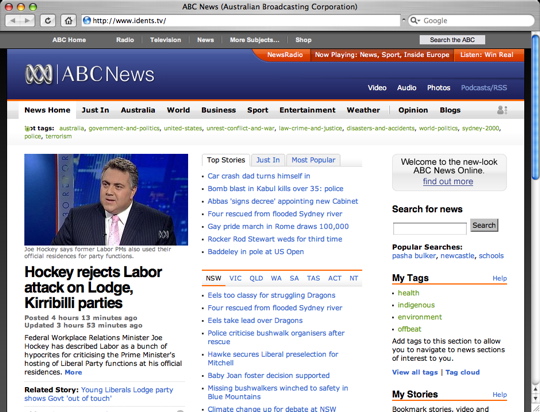
1. ABC News (Australia)
ABC News online relies on the authority provided by Australia’s national broadcasting corporation. The website uses the full capability of its broadcasting newsroom including video on demand and around the clock news updates. ABC’s Managing Director Mark Scott sees this as “the seeds of a 24 hour news channel”. The website also provides downloads and podcast feeds for radio Current Affairs programs in MP3 format. ABC News demonstrates the Internet's greatest strength with its ability to attract people during the day for short news grabs.

2. Tim Blair
“Tim Blair” is the personal weblog of the eponymous Sydney-based journalist. Blair is a prolific poster and his posts are usual pithy and humorous takes on political events from a right wing perspective. Each entry is hyperlinked to either another blog or a mainstream media report, with the intention, more often than not, to satirise. Blair is one of Australia’s most popular bloggers and gets over 14,000 visitors every day, with a large proportion of these from the US. Blair was the first blogger to make the transition to mainstream media and is now an opinion editor at the Sydney Daily Telegraph.

3. Blogocracy
Blair was followed into the Murdoch mainstream by another blogger, Tim Dunlop. Dunlop made the transition from his personal The Road to Surfdom (which he still maintains) to his News Corporation blog at Blogocracy. If Blair is the lion of the right, Dunlop is consistently the most incisive of the left wing commentators. Whereas Blair tends to brevity, Dunlop unpacks the political issues of the day in a weighty and considered manner usually backed up by either official reports or other media stories. His comment threads are usually informative and he provides a blogroll link to many of Australia’s top political blogs.

4. Hugh Atkins (Youtube)
Hugh Atkins is a young Australian satirist whose YouTube videos have achieved international stardom in last 12 months. His online video called "Clinton and Cruise — on the campaign trail", has featured on The New York Times and Guardian websites and been watched by almost 100,000 people. Atkins uses the technique of “mashup” which involve the combination of two or more disparate elements. Atkins’ mashups splice videos, texts, audio, images, and animation of unrelated events to spoof political actors in an often hilarious fashion.

5. Possums Pollytics
The people that have made the greatest impression in the Australian blogosphere are the psephologist bloggers. The likes of Bryan Palmer (Ozpolitics), William Bowe (The Poll Bludger) and Peter Brent (Mumble) are consistently providing opinion poll analysis that is as good if not better than their equivalents in the mainstream media (Bahnisch 2007). Probably the most accomplished of these, and certainly the most acerbic is the anonymous blogger called Possum Comitatus (punning on the US law “Posse Comitatus” that limit the powers of the federal government to use the military for law enforcement) who writes at the site Possums Pollytics (Possums Pollytics 2008, online). This site uses sophisticated statistical analysis such as regression modelling to observe underlying political trends and skewer political shibboleths. These have led to controversial “poll wars” particularly with The Australian newspaper. Although his authority is somewhat diminished due to his anonymity, Possum is now employed on a regular basis by Crikey to provide opinion poll analysis.

6. Crikey
Crikey is often considered the “first” or “senior” Australian blog. It takes the format of a website and a daily email sent to 16,000 addresses of which over 5,000 are paying subscribers. This lively vehicle for political, financial and media commentary and gossip was founded by Stephen Mayne and sold for $1 million in 2005. Crikey’s subtitle “telling you what they won’t” promotes the picture of a political and media outsider not beholden to big business. Crikey combines traditional media traits such as news, political analysis, business news, sport and cartoons with Internet capability such as email, YouTube videos, hyperlinks, excerpts from blogs. A 2006 poll reported that Crikey’s website gets 190,000 visitors each month making it the sixth most popular news website in Australia.

7 Larvatus Prodeo
The group blog Larvatus Prodeo is the brainchild of Brisbane academic Mark Bahnisch. The blog carries several daily updates from the members of its collective often with useful and informative links to other media outlets both inside and outside Australia. The other important feature of the site is the comments section, most of which contain very long and lively threads. Larvatus Prodeo is openly partisan discussing politics and social issues “from a left of centre perspective”. It often carries informed comment and commentary within minutes of news being announced, usually hours ahead of any the mainstream media sites.

8 The Bartlett Diaries
Andrew Bartlett is Australia’s most prominent and consistently active politician-blogger. Over the last four years, the Queensland Democrat senator has provided an insider’s view on Canberra politics in his blog The Bartlett Diaries (Bartlett 2008, online). His articles are usually balanced, thoughtful and provocative and they add to the understanding of the workings of the Australian parliamentary system. Bartlett’s blog provides particularly useful insights into Senate committee inquiries. However, the future of this blog is uncertain after Bartlett’s defeat in the 2007 election which means he leaves parliament on 1 July 2008.

9. Al Jazeera.net
Al Jazeera is an international news broadcasting organisation based in Doha, Qatar. Its English language website reflects the Al Jazeera International TV channel’s style and editorial content and provides news from all over the world as well as in-depth analysis and background. With a template similar to the BBC, it categorises its news across geographical regions and provides access to news not easily accessible elsewhere – especially about the Middle East and Africa. They also reuse video content from their TV newsroom. The station has gained a reputation for feisty independence having offended every government in the Arab region as well as upsetting Washington for what they saw as its “unbalanced and anti-American coverage”).

10 Freedom to Differ
Freedom to Differ is a blog by QUT law academic Peter Black about legal and policy issues facing the media and the Internet. Black is a passionate believer in the power of web 2.0 and his site is linked up to several social media such as Twitter, Facebook, YouTube, del.ico.us and Stumbleupon. Black’s blog is a media news aggregator. On a daily basis, Black will link to several media articles about internet technology and legal implications Black’s blog is an excellent example of the scintillation model of news coverage in that it serves as a meta-blog citing links to discussions that have “scintillated” into newsworthiness elsewhere on the Internet.