I was saddened to hear today about the death of a man I met only once but have known about for a long time. Before I was headed to Roma a couple of years ago, a friend from IBM days told me I simply had to meet his cousin. His cousin was a named John Young who my friend told me was involved in the Roma airport and later the hospital and health system.
By the time I got to Roma,his cousin had mostly retreated (retired is not the right word) to his property some 50km south of Roma where he worked the land. It was well over a year before I got to meet him and this fact was always discussed whenever I met his cousin in Brisbane. I finally got to meet John Young at a meeting of the local Health Community Council
HCCs were a sort of half way health house set up by State Labor in 1991. For 20 years, HCCs operated geographically at just-above-local council level (there were 36 in Queensland) dealing on the ground with patients and their hospitals. They were the eyes and ears of the health system becoming aware of, and fixing local problems. They talked to the patients and they talked to the staff but relied on their soft power with authorities to get things done rather than any legislation.
Last year the Queensland Government disbanded HCCs in a major revamp of Queensland Health. From 1 July 2012 they will be replaced by 17 Local Health and Hospital Networks (with the unfriendly acronym of LHHNs). These new agencies will be responsible for bigger areas and will have more powers.
The old Roma HCC represented the views of the communities of the Maranoa and Balonne regional councils. They also monitor the performance and quality of public health services in these regions. John was the chair of the Roma HCC and I finally met him at a public meeting at Wallumbilla Hospital in February 2011. Only one couple showed up from the general public, the rest were there from the general hospital but John showed no disappointment with the small turn-out. He diligently explained what their role was and what assistance he could provide. He carefully listened to the couple’s issues with the health system and gave them options on what they could do to improve their situation.
He also talked logistics with the hospital staff. He made whoever he spoke to feel important and he gave suggestions to solve issues. Everything was important and surmountable. At the end of the meeting, he and I shared a joke or two about our mutual friend/cousin before going our separate ways. I never saw him again.
The HCCs were disbanded in June 2011. By June 2012 the will be replaced by 17 Local Health and Hospital Networks (LHHNs) which will have a strong local decision-making and accountability function. There is a 12-month gap while Queensland Health rolls them out with five already established including ones in Brisbane and the Gold Coast. The Government said this was a major reform with profound implications for the quality of health care in Queensland.
The LHHNs will be statutory bodies with Governing Councils, accountable to the local community and Queensland Parliament. In August 2011, I editorialised in my paper the changes were good ones with more money, more beds, more doctors and nurses available at a local level to support an overburdened system. But I said finding the right local people to go on these volunteer boards would be tough. The board members will have the huge responsibility for managing the operation and performance of the hospitals within the network. While I didn’t mention him by name, I thought John Young would have been ideal for the local board.
It will never happen now. This morning I found out he had died of a heart attack in his paddock yesterday. I was shocked and immediately texted his cousin to offer my condolences. He rang back within minutes. I was worried he had not heard the news prior to my text but he had almost found out in real time. John’s wife had relayed the terrible news on the phone to the wider family in updates. John had a fall and it doesn’t look good, she reported. Then a few minutes later, “he’s gone”. He was just 59 years old.
John’s death was a tragedy for the family but it was also bad news for the wider community. I don’t know if he nominated to be part of the local LHHN, but they need people like him if they are going to work. I don't blame him if he didn't nominate. The LHHNs are a far bigger ask than the HCCs, they cover a wider area and have greater powers. Members need skills in business, finance, legal and human resources expertise wanted as well as the delivery of clinical services. All this in volunteer and most unpaid work. Reform is needed, but for these new LHHNs to work, we need people like John on them - people with knowledge, understanding and the ability to listen to and act on problems, in short, people with a vocation for health. Our wellbeing depends on it.
Showing posts with label obituary. Show all posts
Showing posts with label obituary. Show all posts
Friday, January 13, 2012


Saturday, December 03, 2011
Friends, Romaites and welcome to country: Vale Artie Beetson
 In an era when Aboriginal rights were just beginning to speak their name, Artie Beetson was a leader. A rugby league great, he was the first Indigenous man to captain his country in any sport. At a time when Charlie Perkins was emulating the US south freedom marches, Arthur Henry Beetson was accepted by his peers as a natural leader. He was born and raised in Roma and he died yesterday aged 66 on the Gold Coast after suffering a heart attack while riding a bike. (pic: Beetson top left in the Balmain 1966 side)
Neither of Beetson’s parents came from Roma. His mother Marie came from Buderim via Cherbourg Mission, the Aboriginal reserve settlement near Murgon in Queensland’s Lower Burnett. She was a member of the Stolen Generation. Marie fled Cherbourg and she met her husband Bill Beetson in Roma in the 1940s. Bill came north from Brewarrina, NSW where he was persona non grata with the law. This was a difficult time for Aboriginals in western Queensland.
Some of the smaller towns around Roma still had “yumbas” well after the war. “Yumba” was a Murri word for camp and has provided the name of several Australian towns such as Yamba, NSW and Yaamba, Qld. White people steered clear of these camps while the Aboriginals were barred from the pubs and shops. As a white women growing up in Mitchell remembers, the only place the two communities would meet would be on the footy field. In the late 1960s, the yumbas were razed to the ground and the Aboriginals relocated in town.
Roma was a bit different. It had a camp but it had been demolished as early as World War I. As a result Indigenous people were more common in town, though still fringe dwellers. The Beetsons lived in a small house on the Bungil Creek. Artie was born in January 1945 just as the world began to look beyond the tyrannies of Hitler and Japan. Artie got the rudiments of an education at the local state school and left aged 15 at Year 10 to join the post office.
He played first grade league in Roma for Cities until he was 19. Cities team mate John Vickery remembers Beetson didn’t much like training but he was a natural. “He was so strong; he would have three or four defenders on him and he would still get away.” But there were other qualities Vickery also recalls, qualities that made the man as much as the player. “He was down-to-earth and humorous – he loved his jokes but when he was on the field he stuck to his game.” Another Cities teammate John Ashburn (who died a few years ago) remembered him as a deserved accolade of a game Immortal in 2003. “Artie had terrific ball skills and could unload a pass to anyone.”
Ashburn said both of Beetson’s parents were well known around town and he was always proud to say he was from Roma. In 1962, aged 17 he played for Roma against Charleville and was “tickled pink” to be selected. On the way down he watched as a team mate got plastered and learned the drinking culture. He transferred to Redcliffe in 1964 aged 19 and said the training regime was not like today. “If it rained we played cards and drank a keg,” he said. “It rained a lot in Redcliffe.”
Between the showers, Beetson helped them win the Brisbane premiership. For once Beetson played in the forwards as the Dolphins beat Valleys 15-7 to take the 1965 premiership over the Hornibrook Bridge for the first time ever. They would not win again until 1994, 29 years later. Before their losing final in 1987, their general manager Don McLennon reminisced on the Beetson win. “Arthur played the majority of his football as a centre in his two seasons with us,” he said. “He was a huge manager and it was a masterstroke of Henry (Holloway, the captain-coach) to switch him to the forwards in the final.”
It was clear he was too good for Queensland and moved to Balmain Tigers in 1966 aged 21, getting to the grand final in his first season. As Beetson recalled, the season ended in bitter disappointment after a stunning start. “We won our first 10 games and beat the Englishmen – the only club side to do it.” The season fell apart after Balmain hooker Dick Wilson negotiated a bet for a friend on Newtown to beat his own side. Wilson was expelled after Newtown won, though Beetson claimed Wilson made no money out of it. When the reserve hooker broke a collar bone in the semi-final, it left them in trouble for the final against St George. St George had won the last 10 premierships and Balmain with young Artie – picked in all three Australian international games that year - were fancied by some to slay the dragons despite losing to them in the semi.
But it was a one-sided final with St George thrashing Balmain 23-4. 1967 was a disaster according to Beetson with Balmain missing out on the finals and Beetson missing out on a Kangaroo tour. In the off-season of 1968 Beetson moved to England to play for Hull Kingston Rovers. Beetson’s second game would be one he’d never forget. It was the derby against local rivals Hull to be played at 11am on Christmas Day. Fellow Australian Jim Hull and Artie slept in after a skinful the night before and when they arrived at the ground, two substitutes were ready to start. The pair dressed hurriedly and for the first time in his career Beetson didn’t strap his ankles.
“I made a break down the sideline and the winger tried to tackle me high,” he said. “I pushed him down and he wrapped his legs around mine just as two other Hull players came over the top.” Beetson went down like a sack of potatoes, crying in agony. Beetson was in pain for months and considered giving the game away. But back at Balmain for the new season he “worked his way” back.
Balmain won the premiership in 1969 but Beetson had to watch from the sidelines. He was sent off in the finals and suspended for two matches. People kept telling him he got them there and he won a premiership blazer but he said it was a terrible disappointment. In 1970 Beetson had his nose broken in the first test match against Britain and smashed again in the second. “It rearranged my face putting my nose over my left ear,” he said. Beetson also parted company with Balmain when they refused his request for $2500 sign-on fee, normal match payments and $150 a win. When Dennis Tutty won a court case in 1971 against the transfer system, Balmain hastily sold Beetson for $15,000 to avoid him walking out for nothing.
“I thought no one would pay that but then Easts stepped in,” he said. The change of club helped him tame an eating problem and trim his weight. He thrived under the coaching of Don Furner and Jack Gibson and was a regular in internationals winning the world championship in 1975 and premierships in 1974 and 1975. When Gibson left Easts in 1977, Beetson became captain coach but had only moderate success. He switched to Parramatta in 1979 where he finally got a chance to play for his beloved Queensland.
NSW had played Queensland many times in the 1970s but the more powerful Sydney league was too good for Brisbane league and Queensland lost 15 times in a row. In 1980, a new concept was tried called State of Origin and it allowed Queensland to choose seven players playing in Sydney to represent the state. Parramatta’s Beetson was the captain. 28,000 turned up to Lang Park to see Queensland upset the favourites to win 20-10. It was Beetson’s only game for the Maroons. Beetson returned to Redcliffe in 1981 and coached them to a grand final defeat. He was to be captain coach of the Maroons that year but had to withdraw with injury hours before the game. Without him Queensland won again and a new tradition was born.
It became a tri-series in 1982 with Beetson as Qld coach and they won 2-1. It was the same in 1983 and 84 before Beetson stood down. He coached Easts to a 1987 finals defeat to upcoming Canberra Raiders. He returned to State of Origin in 1988 coaching Lewis, Meninga, Belcher, Vautin and Miles and whitewashed the Blues coached by old mentor Jack Gibson. “The side that year was as near to perfect,” Beetson said. Gibson gained revenge with a 1989 win and Queensland sacked Artie. After a stint as commentator, he returned as Cronulla coach. He could not win a premiership for the Sharks and in 1993 he bowed out of coaching. His cloth cap image did not suit a game that was soon to go into the Super League era.
Beetson returned to his mother’s home town of Cherbourg after his playing days were over to offer support to the Indigenous population. Then principal Chris Sarra remembers his visit to ABC reporter John Taylor, "he gave so much back, particularly to young Aboriginal children,” Sarra said. “The kids were so excited, even though they didn't quite understand how legendary he was. I got a sense that we were in the presence of almost royalty on that occasion.” As Taylor concluded, the thing Beetson enjoyed most was being there at a country game, watching the football.
“Just a game of footy on a bush oval on an afternoon,” Taylor said.
“I think that was Arthur's idea of the best of times.” He would be the best player to emerge from Roma until Darren Lockyer followed in his footsteps in the 1990s.
Wednesday, November 30, 2011
God Speed
 Like most people who enjoy football, I was shocked to hear about the death of Gary Speed. Aged just 42, he enjoyed a successful playing career and settled into management exceedingly well as he knocked Wales into shape. He was found hanged at home on Sunday morning and while Cheshire Police say there is no suspicious circumstances, an inquest will be held into his death. Whatever the coroner finds, Speed’s death is an enormous tragedy that must be devastating and inexplicable for his wife and two teenage boys. Friends of the family say his marriage was happy and Speed was not depressed.
Just a day before he died, Speed exhibited no sign of problems when he appeared as a guest on the BBC’s Football Focus. Speed was in a “gaggle of Garys” with fellow former Leeds United player Gary McAllister. Both men won the old (and last ever) First Division with Leeds in 1992. It was the only time either would win the championship. Leeds slowly fell from grace and both Garys would move on to many other clubs. Speed started his professional football career at Leeds in 1988, aged 18. But as he said in Football Focus “If I wasn’t playing somewhere I’d had to move and go play somewhere else.” Speed would spend eight years at the club before bowing out with a League Cup final defeat in 1996.
Speed supported Everton as a boy, so they were a natural fit to follow Leeds. Everton boss Joe Royle paid £3.5 million and Speed repaid the debt by scoring 11 goals from midfield to be the club joint leading scorer. But lack of goals was Everton’s problem that year and they finished 15th. Joe Royle resigned at the start of the following season bringing club hero Howard Kendall back. Though Kendall made Speed his caption, the pair did not get on and he played his last game for the club he loved in January 1998. Famously he told a journalist “You know why I’m leaving, but I can’t explain myself publicly because it would damage the good name of Everton Football Club and I’m not prepared to do that.”
Though never a flashy player, he was hard-working, versatile and rarely injured – attributes that made him saleable. Newcastle paid £5.5m for him and he played in successive cup final defeats in 1998 and 1999. By 2004, Speed was 34 years old and a hardened veteran of the game who had broken the record for the most number of premiership games. But he still had much to give. Bolton paid £750,000 to buy him. Newcastle chairman Freddy Shepherd took the money with mixed feeling saying it was always difficult to let a player like Gary go. “He is one of the best of the best,” Shepherd said. “He is totally professional and he always gave 100%.”
Speed spent another three successful years at Bolton rising to first team coach when Sam Allardyce quit. His 20 year tenure at the top table finally ended when he accepted a move to then Championship side Sheffield United. His love of the game made him a crucial member of that side until a rare injury finally ended his playing career in November 2008. He scored 109 goals in 677 games. Fans called him the "model professional". He continued as a coach for United and was appointed manager just after the start of the 2010-2011 season. He lasted til Christmas when he landed the job of manager of his country.
Speed was a Welshman by quirk. His brothers and sisters were all born in England but his parents had Gary at Mancot, Flintshire, five miles from Chester. Speed played for Flintshire Schoolboys and cemented his Welshness with games for the youth and under 21 teams. He made his national debut in 1990 in a friendly against Costa Roca in front of just 5,000 fans at Ninian Park, Cardiff. Speed was a 76th minute substitute in a 1-0 win. He went on to take the outfield record with 85 caps scoring 7 goals. Wales never played in the finals of a major tournament in that time.
It was that poor record (just the one famous World Cup appearance in 1958) that Speed set about addressing when he was made manager in December last year. After a rocky start with defeats to Ireland and England, he slowly began to turn things round with four wins in the last five outings (narrowly losing again to England at Wembley). With Speed promoting promising young players, expectations were high when the 2014 world cup fixture list was announced last Wednesday. "This is such a well-balanced group that we knew everyone would be looking for an early advantage," Speed said on the day. "As always, there had to be some give and take, but I am very glad that we did not have to use the June qualifying dates”.
Four days later Speed was inexplicably dead sending the football world into mourning. Even the usually ultra cynical Guardian “Fiver” was shocked. His death was up there with any 'stop all the clocks' news they had ever heard, Glendenning and Ronay said. “On Saturday, we watched the Wales manager joshing along with his old mucker Gary McAllister on the Football Focus sofa,” the Fiver said. “24 hours later we were among hundreds of thousands of football fans numbed with total disbelief by the astonishing revelation that he was dead". Gary Speed was as the Fiver said, a great man gone at a preposterously young age, leaving behind a wife, Louise, and two sons, Tommy and Ed.
Monday, March 08, 2010
Michael Foot dead at 96
 The great British parliamentarian and journalist Michael Foot died last week aged 96. He was a Labour MP for ten years from 1945 and then another 32 years from 1960 and led the party to defeat in the 1983 post-Falklands poll as Margaret Thatcher won her second election. While often flayed in the media for his leadership woes and his poor dress sense (his duffel coat wearing at the 1981 Cenotaph memorial service infamously mislabelled by the right-wing press as a “donkey jacket”), Foot held the party together during one of its lowest ebbs and was a great servant to British democracy. (1982 photo of Michael Foot by Jane Bown)
Michael Mackintosh Foot was born and raised in the south-western city of Plymouth, the fifth of seven children of a Scottish mother and Isaac Foot the former mayor of Plymouth. He was schooled there and in a Quaker school in Reading before graduating from Oxford with a degree in philosophy, politics and economics. He graduated in 1934 at the height of the depression and took a job as a shipping clerk in Birkenhead on Merseyside. Foot was shocked by the scale of unemployment he found in Liverpool and it was enough to shake him out of his erstwhile Liberal views and become a socialist.
In 1935 he joined the Labour Party and contested the Welsh seat of Monmouth but lost. He worked for the New Statesman and then was one of the first journalists on the weekly magazine Tribune when it was set up in 1937. Aneurin Bevan recommended him to Lord Beaverbrook to work on the Evening Standard and he eventually became editor in 1942. Under the pseudonym of “Cato”, he also co-authored a book about Chamberlain’s appeasement policy called “Guilty Men” which became a surprise bestseller. His own chronic asthma prevented him from signing up in the war.
Although Foot would continue as a distinguished journalist throughout the 1940s and 1950s, a new career beckoned at the end of the war. He went back to his home town Plymouth and contested the 1945 election which he won as Labour under Clement Atlee ended Churchill’s rule. He held it again in 1950 and 1951 but was a shock loser in 1955 as the Tories increased their majority by 60 seats under Anthony Eden. In 1960 he returned to Wales and contested and won the Ebbw Vale by-election made vacant by his mentor Aneurin Bevan’s death.
After barely a year back in parliament then Labour leader Hugh Gaitskell expelled Foot from the parliamentary party after he led a rebellion against the leadership over defence spending. Gaitskell’s sudden death in 1963 and the ascension of Harold Wilson paved the way for Foot’s return to the party. Foot turned down a role in the Wilson ministry in 1964 preferring to offer criticism from the back bench on matters such as wage restraint, Vietnam and Rhodesia.
After Wilson’s defeat in 1970 the party moved leftwards and arrived at a rapprochement with Foot. When Labour was re-elected in 1974, Foot finally accepted a cabinet position as Secretary of State for Employment. He lost the leadership battle to James Callaghan in 1976 but was elected deputy leader and it was his job to somehow keep the Lib-Lab pact going as the government tottered towards the end of its reign. After the “winter of discontent” in 1979 Labour was put out of its misery by Thatcher, Callaghan resigned and Foot finally had the top job, aged 67.
His immediate task of uniting the badly fractured party was made more difficult by the defection of the Gang of Four to create the Social Democratic Party. With media support and favourable polling, the SDP looked as if it could overtake Labour as the alternative party of power to the Tories, who themselves were in strife as Thatcher’s early policy reforms showed no signs of bringing rewards.
The 1982 Falklands Crisis restored Thatcher’s lead in the polls, Labour’s vote fell by three million and she won the 1983 election with an increased parliamentary majority of 144 seats. Though Labour only polled two percent greater than the combined SDP/Liberal vote, Britain’s first-past-the-post system meant they still took 203 seats to the Alliance’s 23. The scale of the defeat was enough to sink Foot. Harold Wilson’s press secretary Gerald Kaufman famously described Foot’s anti-nuclear, anti-European election manifesto as "the longest suicide note in history". Foot went to the back benches and finally retired from parliament at the 1992 election.
All throughout his life, Foot remained a fervent member of the Campaign for Nuclear Disarmament, a possible relic from his Quaker education. He was also passionate about the arts and music and a lifelong fan of Plymouth Argyle FC. Neil Kinnock, who followed him as Labour leader, called him “a resolute humanist with profound faith in the ability of free men and women using free institutions to secure irreversible advances in standards of living and liberty for every country and community”.
Although some opinion polls have nominated him the worst Labour leader in history, it is likely no-one else would have done better with the poisoned chalice he was handed in 1979. As well as the Jenkins-inspired ructions on the right, the Militant Tendency was making great strides on the far left while Tony Benn remained a major destabilising influence within the party. As the Guardian said in its obituary, the ultimate judgment may well be he performed the vital service of holding his party together when it was dangerously polarised between Healey and Tony Benn.
Foot was an eloquent parliamentarian with friends across the political spectrum. Enoch Powell loved him because he spoke beautiful English. Foot was well-read, eloquent, devoted to literature and regularly quoted Swift, Disraeli, Hazlitt and Byron. As a student of history, he might have enjoyed the irony of how Labour’s current problems mirror many of his own in the late 1970s. He might also have told them not to despair despite their current problems. As Foot was only too aware, all things must pass.
Tuesday, September 15, 2009
Norman Borlaug: forgotten benefactor of humanity is dead
 The father of the green revolution, Norman Borlaug, has died in Texas. He died at his home in Dallas on Saturday due to cancer complications. He was 95. Borlaug was an agricultural scientist who won a Nobel Peace Prize for his role in combating world hunger and saving hundreds of millions of lives. Thanks to the green revolution, world food production more than doubled between 1960 and 1990 and his work was feted in a 2006 book entitled The Man Who Fed the World.
Borlaug was no great fan of the phrase Green Revolution which he described as a “miserable term” but his high-yielding crops saved many parts of the world from famine in the 1960s. Kenneth Quinn, President of the World Food Prize, said the world had lost a great hero. “Dr. Borlaug’s tireless commitment to ending hunger had an enormous impact on the course of history,” he said. “He will be remembered with love and appreciation around the globe.”
Norman Ernest Borlaug was born in Saude, Iowa in 1914 to parents of Norwegian stock. Borlaug left the family farm to study at the University of Minnesota where he obtained a Bachelor of Science degree in 1937 and gained some fame as a champion wrestler. Borlaug continued studying and got a PhD in plant pathology and genetics in 1942. During the war, Borlaug worked at a military lab where he helped develop a glue that stopped food containers rotting in saltwater.
In 1944 he went to Mexico to work for an agricultural development program run by the Mexican government with support from Washington and the Rockefeller Foundation. He would spend the next 40 years of his life on this project. Borlaug looked at the problem of cultivating wheat which was susceptible to the parasitic fungus known as rust. He experimented with double wheat seasons and dwarf plants which were disease resistant and gave higher yield. By 1963 nearly all of Mexico’s wheat came from Borlaug varieties. The harvest had grown sixfold in two decades and Mexico was now a net exporter of wheat.
Borlaug’s success attracted interest in the sub-continent. At the time India and Pakistan were at war with each other and both were close to widescale famine. India was importing huge quantities of food grains from the US. In 1965 Mexico exported a large quantity of wheat to both countries with almost immediate effect. Pakistan’s wheat yield doubled in five years and India became self-sufficient in ten. He then took those varieties, and improved strains of rice and corn, to Asia, the Middle East, South America and Africa.
For his work, his ancestral nation of Norway awarded him the Nobel Peace Prize in 1970. Accepting the honour, he said the destiny of world civilization depended upon providing a decent standard of living for all. He said "green revolution” was too broad in scope and only wheat, rice, and maize yields had increased. He compared the forgetfulness of the West and its abundance with the underprivileged billions in the Third World for whom “hunger has been a constant companion, and starvation has all too often lurked in the nearby shadows.”
With his reputation safely established, Borlaug continued to press for improvements across the developing world, especially Africa. He helped found the Sasakawa Africa Association in the early 1980s to improve African food production. With the help of local researchers he concluded that the existing products and information could greatly expand the African food production, but the improved technologies were not reaching the smallholders who produced most of Africa's food, and the extension systems were failing to link research to farmers.
But while his work was greatly respected in Africa and Asia, he remained almost unknown in his homeland. Writing in 1997 in The Atlantic Online, Gregg Easterbrook said that the US had three living Peace Prize winners of which two were household names (Elie Wiesel and Henry Kissinger) and the other was Borlaug. Easterbrook suggested that one reason for Borlaug’s anonymity was the fact that his life and work were done in developing nations far from the media spotlight. But he added a second more sinister reason: “More food sustains human population growth, which [critics] see as antithetical to the natural world.” Most of the criticism of Borlaug’s work has been around environmental concerns not humanitarian. These relate to large-scale factory farming which is biased towards agribusinesses as well as issues with inorganic fertilisers and controlled irrigation causing environmental stress. Borlaug never resiled from these arguments and said high-yield farming actually helps preserve natural habitats.
Borlaug remained active in his older years. In 2006 he was awarded America’s highest civilian honour, the Congressional Gold Medal. His long-time colleague and friend Professor M.S. Swaminathan called him one of the greatest Americans and humanists of all times. In his acceptance speech, Borlaug stressed the importance of continuing the fight against hunger. "We need better and more technology, for hunger and poverty and misery are very fertile soils into which to plant all kinds of 'isms,' including terrorism," he said.
Wednesday, July 29, 2009
Robert McNamara: strange mists
 In every decade of his long public life Robert Strange MacNamara was at the centre of whatever the world’s most intractable problems were at the time. In the forties, he dealt forensically with fascism. In the fifties he used market research to put some sense into the newly booming car culture. In the sixties he was on the front line of the Cold War and in the seventies he ran global finance at the World Bank. Towards the end of his always busy life he campaigned against nuclear arms and worked on solutions to reduce poverty.
His death at 93 earlier this month robbed the world of one of its great technocrats and fiercest thinkers. But almost every obit focussed almost exclusively on the 1960s and the flawed nature of his leadership of the war in Vietnam. His seven year role as a Kennedy-appointed Defence Secretary was also central to the documentary SBS showed in his honour tonight. The Fog of War is Errol Morris’s Oscar-winning 2003 documentary about "11 lessons from McNamara’s life".
The “fog of war” was coined by the nineteenth century Prussian military thinker Carl Von Clausewitz. In his magnum opus On War, Clausewitz warned about the uncertainty of all data. It was a peculiar difficulty, he said, because all action is “planned in a mere twilight, which in addition not unfrequently—like the effect of a fog or moonshine—gives to things exaggerated dimensions and an unnatural appearance.” McNamara could certainly identify with the chaos of war as seen by those immersed in some component of it.
Much of McNamara’s time as Defence Secretary (1961-1967) were spent immersed in a war fog of one kind or another. His recollections to Morris were an attempt to view the fog through the clarity of hindsight. But while McNamara was happy enough about the title he was not happy about the 11 lessons subtitle. Morris put these in very late in the editing process. McNamara complained bitterly to him, “these are not my lessons; these are your lessons”. But Morris would not take them out, he was making a movie and was determined to paint the story as he saw fit. “It's a Horatio Alger story, Morris told Tom Ryan, “the story of a man who comes from relatively humble origins – his parents didn't finish high school – who becomes this incredible achiever”. Morris called it a very powerful story about a man who believes in rational solutions to economic, social and political problems.
McNamara saw a lot of action in the Pentagon hot seat. He had to deal with the Cuban Missile Crisis, the assassionations of Ngo Dinh Diem and Kennedy within a month of each other, the difficulty of doing business with Johnson, the Gulf of Tonkin incident which escalated the war in Vietnam, and the authorisation of the deadly herbicide Agent Orange in that war. He attempted to rationalise his way through all of these difficult decisions. But in one of the lessons of Morris’ film he is forced to admit that “rationality will not save us”.
Yet there was little evidence from the rest of McNamara’s life that he had abandoned his belief in rationality. His 13 year reign as President of the World Bank transformed the stuffy cautious institution he inherited. The Bank began to address problems of income disparity and poverty. It diversified into sectors of activity where progress was inevitably slow and unspectacular. It was also taking more of an interest in the economic and social conditions of its borrowers. McNamara called the bank "an innovative, problem-solving mechanism…to help fashion a better life for mankind in the decades ahead."
 Though McNamara still had two decades of his own life to shape after 1981, Vietnam continued to haunt him and dominated the public discourse about his legacy. 25,000 Americans and a million or more Vietnamese died during his reign as Secretary of Defence. He claimed his role was to soften President Johnson’s hawkishness. But he told his biographer Deborah Shipley he was never sure enough of his doubts about Vietnam to act on them.
McNamara knew his was a tough reputation to defend. But defend it he did using Shipley, Morris and many other proxies to tell his story. He also wrote his own memoir, In Retrospect published in 1995. Morris probably got his “lessons” idea from this book which was subtitled “The tragedy and lessons of Vietnam”. McNamara claimed it was a book he planned never to put on the public record. He did not want to “appear self-serving, defensive, or vindictive” and found it hard to face his mistakes. “But something changed my attitude and willingness to speak,” he wrote. “I am responding not to a desire to get out my personal story but rather to a wish to put before the American people why their government and its leaders behaved as they did and what we may learn from that experience.”
Writing about the book, Noam Chomsky witheringly noted that McNamara did not have much of an idea of what was going on around him, neither then nor now. And to some degree this is true, McNamara has always been embroiled in the fog of war. But what Chomsky does not deny is that McNamara was at the centre of major decision making constantly confronted by the uncertainty of the data he was using. He may not always have been right, but he could always plausibly justify his course of action. This alone makes him worth learning from.
Saturday, July 18, 2009
And that’s the way it is: Walter Cronkite dies
 On the fortieth anniversary of humanity’s biggest feat – the first moon landing – the man who told his nation “and now we have two Americans on the moon” has died. Walter Cronkite died in New York aged 92. The man who anchored the CBS Evening News” from 1962 to 1981 died of cerebrovascular disease with complications from dementia. In July 1969, he was on air for 27 of the 30 hours of Apollo 11’s mission and his marathon live coverage brought the excitement and impact of the moon landing into the homes of millions of Americans and observers around the world. He remains the only outsider to have won NASA’s Ambassador of Exploration Award which he picked up in 2006.
That award was one of many in a lifetime of achievement. His name has become virtually synonymous with the position of news anchor worldwide. In Sweden anchors are known as Kronkiters whereas the Dutch called them Cronkiters. In America, Cronkite was not just an anchor he was also an honorary member of families he had never seen or met. “Uncle Walter” was voted the most trusted figure in American public life in surveys in 1972 and 1974. But Cronkite viewed himself as a working journalist and his title at CBS was "managing editor" of the Evening News. His way was to get the story, "fast, accurate, and unbiased".
Cronkite learned this credo during his days as a wire service reporter. Walter Leland Cronkite was the only child of a dentist father and homemaker mother who moved from Missouri to Texas when he was young. Walter attended The University of Texas at Austin in the 1930s and worked as a student reporter for The Daily Texan campus newspaper. Cronkite left university without a qualification. He worked at public relations firms, newspapers, and in small radio stations throughout the Midwest. In 1939 Cronkite joined United Press to cover World War II. He joined a unit fondly remembered as the "Writing 69th" a group of civilian journalists trained to take part in high-altitude bombing missions.
The breath of his war coverage was enormous. As well as flying many bombing mission over Germany, he went ashore in Africa and D-Day landings, he parachuted with the l0lst Airborne, he covered the Nuremburg trials, and ran the UP's first post-war Moscow bureau. His own view of his war record was characteristically modest. “Personally, I feel I was an overweening coward in the war. I was scared to death all the time,” he said. “I did everything possible to avoid getting into combat.”
True or not, Cronkite was certainly made for media combat. Fellow war veteran Edward Murrow recruited him for CBS Washington in 1950. "My first love was newspapering," Cronkite later wrote. "But as the 1940s drew to a close television was coming into its own, and it became evident that the young industry would eventually become the dominant form of entertainment and news."
His first job in front of the camera was as host of a historical recreation series You Are There. He briefly co-hosted the CBS Morning Show with the puppet named Charlemagne the Lion. Cronkite impressed with his anchoring of CBS's coverage of the l952 presidential nominating conventions. But it would take another ten years before he would finally take over the centre stage Evening News anchor role from Douglas Edwards. In October 1963 the broadcast was increased from 15 to 30 minutes and the first expanded broadcast included an exclusive interview with President Kennedy.
Barely a month later, Cronkite fought back tears when he reported to a shocked world that Kennedy had been assassinated. If that announcement was Cronkite’s apotheosis as a news anchor, it was the coverage of the Kennedy funeral that manifested the power of TV to involve an entire population in a ritual process. And Cronkite was ideally placed to benefit from that power. From 1967 through to his retirement, the CBS Evening News was the nation’s top rating television program. Americans turned to Cronkite to learn about the Moon landings, Vietnam, Watergate and the oil crisis.
Cronkite was acclaimed as an unbiased reporter but when he took sides, he was extremely influential. In 1965 he applauded the “courageous decision that Communism’s advance must be stopped in Asia”. But three years later he was not so sure. He visited Vietnam after the 1968 Tet offensive where his report advocated negotiations and the withdrawal of American troops. "We have been too often disappointed by the optimism of the American leaders, both in Vietnam and Washington, to have faith any longer in the silver linings they find in the darkest clouds," he said. "We are mired in bloody stalemate." Though Cronkite’s 30 second TV grab was inaccurate, his report shifted public opinion and was crucial in Johnson’s decision not to recontest the 1968 presidential election. After the broadcast, he reportedly told advisors, "If I've lost Cronkite, I've lost middle America."
 When Cronkite announced he was going to retire in 1981, there were signs of palpable public panic. A briefly popular T-shirt posed the half-joking question, "Oh, my God - what are we going to do without Walter Cronkite?" But he did not disappear from the public eye. His hosting of PBS's broadcast of the Vienna Philharmonic has become as much a New Years Eve tradition as the dropping of the ball in Times Square. He has also hosted PBS documentaries on health, old age and poor children. In l993 he signed a contract with the Discovery and Learning Channel to do 36 documentaries in three years.
Failing health finally crippled his output in the last few years. Tributes poured in from ordinary viewers after his death. “There is not one major (public) event in my life that Walter didn’t lead me through. Not one,“ said one. “I don’t believe Walter Cronkite has departed. Not until I hear it from him!” said another. Cronkite was at the height of his power (and powers) during an era of attributed-style journalism. There was no CNN, MSNBC, FoxNews or Al Jazeera. The Internet was still the plaything of military scientists. When he said “that’s the way it is” at end of his TV network news, America believed him, partially because of his aura and partially because there was so little choice but to believe what he reported. But the era of news that does no more than quote officials and experts is just as dead as the master broadcaster himself. And that’s the way it is.
Monday, January 05, 2009
Helen Suzman: Cricket in a Thorn Tree
 Helen Suzman was buried yesterday in a private Jewish ceremony in Johannesburg. Suzman, who died on New Year’s Day aged 91, was one of South Africa’s greatest anti-apartheid campaigners and a true independent spirit. She was a courageous parliamentarian for 36 years, a third of which she was the sole independent voice. "I used to put 200 questions a session," she told CNN last year. "They were all of course designed to expose the atrocities. I made good use of my parliamentary position."
Helen Suzman was born in the mining town of Germiston, east of Johannesburg, on 7 November 1917. Her parents were both Jewish Lithuanians who had fled anti-Semitism in Europe. In 1937 she married a doctor named Moses Meyer Suzman with whom she had two daughters. She became interested in politics after the disastrous 1948 election which brought the National Party to power and entrenched the apartheid system.
She successfully ran for the South African parliament in 1953 as the United Party Member for Houghton, a prosperous and largely-Jewish suburb near Johannesburg. Suzman quickly established herself as a thorn in the side of the new regime and former President PW Botha called her a "vicious little cat". The feeling was mutual; she called him “an obnoxious bully”. In 1959 she joined eleven other liberal MPs who formed the liberal Progressive party, which supported the rights of all citizens, regardless of race and creed, and a dismantling of the apartheid system. The party was annihilated at the ballot box in 1961 and Suzman was the only one of the dozen to retain her seat.
She remained the lone parliamentarian voice of anti-discrimination throughout the 1960s and early 1970s. In 1963 she railed against the law which gave police powers to detain suspects for 90 days without trial, which, she said, brought South Africa "further into the morass of a totalitarian state". In 1967 she visited Nelson Mandela in prison cell on Robben Island and the admiration was mutual. Suzman said she knew immediately “that this was a man of considerable courage”. In return, Nelson Mandela was equally glowing, “It was an odd and wonderful sight to see this courageous woman peering into our cells and strolling around our courtyard, he wrote. “She was the first and only woman ever to grace our cells."
In the 1980s, her greatest success was to see the abolition of the pass laws as part of the slow and uneven unravelling of apartheid legislation. She finally retired from parliament in 1989 and served on a variety of top public institutions. These included the Independent Electoral Commission that oversaw the country's first multiracial elections in 1994. She stood by Mandela's side when he signed the new constitution in 1996 as South Africa's first black president. But she never stopped being controversial. In 2001 she was declared an "Enemy of the State" of Zimbabwe after openly criticising the Robert Mugabe regime. It was a perverse honour she took great pride in.
 Today, the director of the Helen Suzman Foundation Raenette Taljaard paid tribute to Suzman in the South African newspaper The Times. Taljaard had known Suzman for the last 15 years and said she (Suzman) had a strong sense of what she liked and disliked and had “no ambiguities or shades of grey for her between right and wrong”. Equally, said Taljaard, when Suzman’s academic research led her deeper into the injustices of labour migration in South Africa, she quickly realised that she had a role to play. She was society’s “cricket in a thorn tree who would speak truth to power with a clear moral purpose in a country that had lost its moral compass.”
Suzman continued to campaign for better conditions for blacks to the end of her life. On her 90th birthday, she expressed disillusionment with the lack of progress in addressing crime, unemployment and poverty in South Africa. "Masses of black people are very disappointed with lack of delivery of housing, water and sanitation," she told AP. But no one could be disappointed with Suzman. She delivered to the end.
Saturday, December 20, 2008
Conor Cruise O’Brien dies
 The death has taken place in Dublin of Irish intellectual giant Conor Cruise O’Brien. He was 91. O’Brien’s brilliant career led to important roles in politics, diplomacy, journalism, academia and the world of literature. Leading the tributes for Cruise O’Brien was Irish Taoiseach Brian Cowen who said he was blessed with a strong intellect and strong intellect and a leading light in Irish life in many spheres. “While Dr Cruise O'Brien's political views were not always in accordance with those of my own party over the years,” said Cowen, “I never doubted his sincerity or his commitment to a better and more peaceful Ireland".
Cowen’s reference to Cruise O’Brien’s political views was his major involvement in the regeneration of the Irish Labour Party in the 1970s. His biggest fame in his native land was his stint as Minister for Post and Telegraphs during the Garret Fitzgerald-led Fine Gael and Labour coalition government between 1973 and 1977. During office, he was renowned for his strong anti-IRA stance and he enforced controversial strong media censorship before he was voted out of office in the Fianna Fail 1977 landslide election win.
Although O’Brien was subsequently elevated to the Irish Upper House (the Seanad), his main influence was in other fields. He was editor-in-chief of the London Sunday broadsheet The Observer, and a historian who wrote several critically acclaimed books. He was also appointed Pro-Vice-Chancellor of the University of Dublin. He always remained an outspoken opponent of republicanism and was for a brief period in the 1990s a member of the now defunct United Kingdom Unionist Party in Northern Ireland. However he was later forced to resign after publishing his memoir where he called on Unionists to consider the benefits of a united Ireland.
The roots of Cruise O’Brien’s political and anti-republican leanings can be found in his birthright. His father Frank Cruise O'Brien was a journalist who edited a key 19th century tract on the pervasive influence of the clergy on Irish politics. His mother Kathleen Sheehy was an Irish language teacher, grammarian and Suffragette whose father was a member of the Irish Parliamentary Party and a Land League organiser. Their son Conor was born in the Dublin suburb of Rathmines in 1917 as the Great War raged but as Irish opinion began to turn against Britain. Frank died when Conor was 10 so the strong-minded Kathleen was the major influence on her son.
She gave him a mixed education. His first school was Muckross College, a Catholic convent school. Later he went to Sandford Park, which was nominally secular but strongly imbued with a Protestant ethos. The brilliant pupil won a scholarship to study Irish and French at Trinity. He overcame the devastation of his mother’s death in 1938 and supported himself by tutoring and journalism. He married young, enrolled with the Labour Party and joined the Irish Civil Service on graduation in 1942. It did not take long for Cruise O’Brien to become a leading figure in the Foreign Ministry. He played a major role in the agenda of the UN notably in the organisation of China's admission to the assembly. He was also caught up in the Congolese Civil War in 1961 and controversially ordered UN troops into action. He was ditched after the UN deaths mounted up and he resigned from the Irish civil service.
 Despite this, he had a good reputation in Africa and became the vice-chancellor of the University of Ghana for three years. When New York University offered its Albert Schweitzer chair in the Humanities, he left Ghana and President Nkrumah saw him off, thanking him "for what you did for the university, whatever it was". During his Congolese adventure he met the poet Máire Mac An tSaoi. His marriage had failed by 1962 and he and Maire became romantically involved.
In 1969 he returned to Ireland, where he was elected to the Dail for Dublin North-East. When Labour agreed to a Coalition with Fine Gael in 1973, it was obvious Cruise O’Brien would become a cabinet minister. His most infamous act in power was Section 31 of the Broadcasting Act which banned Sinn Fein and IRA members from being interviewed on RTE. Given that the state broadcaster had a monopoly in radio and TV at the time, it was effectively a nationwide censorship. While the rule was introduced by Fianna Fail in 1971, Cruise O’Brien greatly strengthened its provisions. The act went so far as to prevent a Sinn Fein member from speaking about a trade union dispute in which he was the spokesperson. The law was eventually repealed in 1993. O'Brien believed that there was too much sympathy for Sinn Fein in RTE saying "If the Provos are successful, there will be civil war into which the south will be drawn."
His views on the North brought him into conflict with Charles Haughey. Cruise O’Brien coined the phrase GUBU ("grotesque, unbelievable, bizarre and unprecedented") which were the flowery words used by Haughey to describe the arrest of double murderer Malcolm Macarthur in the home of the attorney general, Patrick Connolly. Cruise O'Brien was a tireless critic of Haughey not only about his stance on Northern Ireland, but he also publicly questioned his integrity years before any large-scale evidence emerged that Haughey was on the take. It was Cruise O’Brien who said “man watches his history on the screen with apathy and an occasional passing flicker of horror or indignation.” His own history will be the deserved subject of more than an occasional passing flicker.
Monday, August 04, 2008
Solzhenitsyn
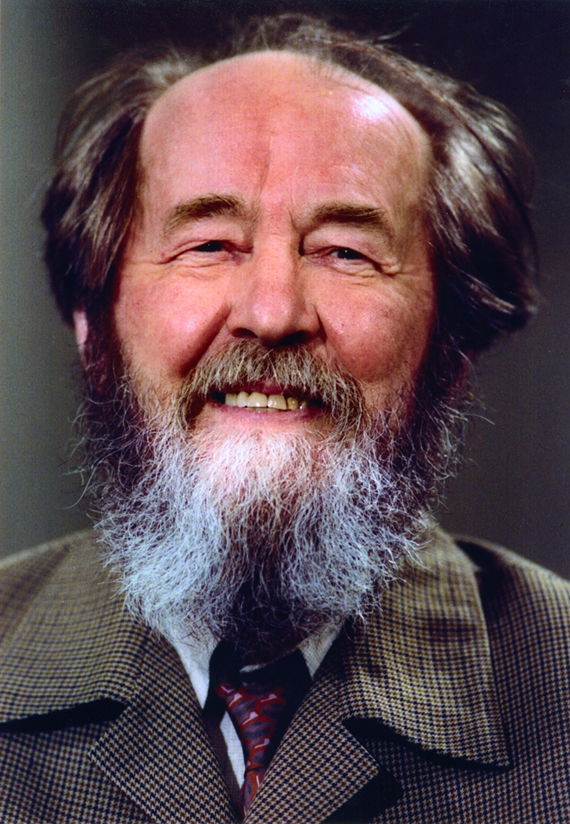 The great Russian writer Alexander Solzhenitsyn died of heart failure overnight, aged 89. The author of over 20 books, Solzhenitsyn was most famous in the West for his portrayal of the Soviet gulag system of which he had first hand experience. But he also won a Nobel Prize for Literature for both the power of his literature and his humanism. His books. translated into hundreds of languages, sold in millions; and his influence on twentieth century discourse is almost unrivalled among writers. Writing in Quadrant in 1998, Peter Coleman described Solzhenitsyn’s impact in the downfall of Soviet Communism as being on a par with Pope John Paul II and Mikhail Gorbachev. South African writer and fellow Nobel laureate J.M. Coetzee was probably more to the point when he described Solzhenitsyn “a man of immense personal courage, and, as a writer, the one indisputable heir of Tolstoy."
Indeed, Solzhenitsyn’s intellectual development followed a very similar path to the 19th century greats Tolstoy and Dostoyevsky. Living under intrusive and censorious regimes, they wanted to retain the best parts of Russian society as well as take in the best ideas of the West. But, they were eventually driven into some sort of exile and as Max Teichmann wrote in 2005 in National Observer, they became disillusioned and shocked to find that Western democracy was really a plutocracy, its intellectuals careerists and materialists. They eventually re-directed their gaze to Mother Russia to plan a new society that would combine the best of east and west.
This trajectory applies as much to the twentieth century great as his nineteenth century forebears. Alexandr Isayevich Solzhenitsyn was born into an intellectual Cossack family in 1918 in the North Caucasian city of Kislovodsk, which lies between the Black and Caspian Seas. World War I had ended disastrously for Tsarist Russia and the nation was plunged into civil war between white and red. Solzhenitsyn's family was white. But his father died in a hunting accident before he was born. His mother was the daughter of a wealthy landowner and was persecuted by the newly installed Soviet regime. She was denied permanent employment and labouring alone, her family was forced into poverty from most of the 1920s and 30s.
Solzhenitsyn harboured literary ambitions early in life, resolving before he was eighteen to write a major novel about the Bolshevik Revolution of 1918. He never realised this ambition. After earning degrees in philology, mathematics, and physics at Rostov University, Solzhenitsyn began teaching in 1941, aged 22. That same year Nazi Germany launched Operation Barbarossa and invaded the Soviet Union. Solzhenitsyn enlisted and rose to the rank of artillery captain. He was decorated twice for bravery. But it all counted for nothing when he was arrested for criticising Stalin. While serving on the German front in 1945, Solzhenitsyn wrote a letter to a friend, in which he described the Soviet leader as “the man with the moustache”. Such apparently innocuous disrespect could not be tolerated and he was sentenced to seven years in a labour camp in Kazakhstan and three more years in internal exile in Central Asia.
 After he emerged from prison he was determined to fulfil his longstanding ambition to write a novel. He published One Day in the Life of Ivan Denisovich in 1962, roughly based on his own experiences. The novella describes the daily routine from dawn to lights out at a “special” prison camp in Siberia. The protagonist is Ivan Denisovich Shukhov, a former carpenter, who has been in several of these camps for eight years, serving a ten-year term for “treason.” It was published in the literary magazine Novy Mir whose editor A.T. Tvardoovsky advised him to lie low awhile after publication. Despite the author's absence, the response was electric and Denisovich caused a sensation in the USSR and the West.
Solzhenitsyn had taken advantage of the relative freedoms allowed in the Khrushchev era to publish his first book. But in 1964, Brezhnev came to power and the censorship returned. The KGB seized his papers and Solzhenitsyn was forced to go underground. Through the samizdat literature network, he managed to publish another gulag tale “The First Circle” in 1968. He was awarded the Nobel Prize for Literature in 1970. The Nobel foundation said the award was given for “the ethical force with which he has pursued the indispensable traditions of Russian literature”. Solzhenitsyn was unable to claim the award in person for fear of being deported.
His fears were warranted. Solzhenitsyn was stripped of his citizenship and sent into exile in 1974 after the publication of first part of The Gulag Archipelago, his monumental history of the Soviet police state. After moving to West Germany and Switzerland, he settled in the US, where he would live for the next 17 years. In his 1978 Harvard Lecture he delivered a savage denunciation not of Communism but of modernity and “man’s flight from spirituality”. Instead of blasting Russia, Solzhenitsyn saw a loss of courage in the West induced by materialism. A disappointed US media decried his “cranky Puritanism” as the reason he refused to outrightly condemn Communism.
But condemn it or not, Solzhenitsyn outlasted the Soviet Union and returned to his native Russia in 1994.In a 2003 interview for the Catholic St Austin review Solzhenitsyn acknowledged the spiritual dimension was more important in his writings than the political dimension. In April this year Solzhenitsyn was still active in the political dimension; writing a short op-ed for Izvestia. In it he claimed that the 1932-33 Ukraine famine (known by the Russian phrase “holodomor” which means “murder by hunger”) was not a genocide. He said the famine was caused by corrupt Communist officials but was not a deliberate assault by Russia against the people of Ukraine. But years of his own declining health finally took its toll yesterday.
 His rehabilitation was complete when, in a rare moment of humility, Russian President Vladimir Putin paid a pilgrimage to the "conscience of Russia" in 2000. Solzhenitsyn's quotes were legion, but I will finish this article with two. In the Gulag Archipelago, he has one of his characters say “The line separating good and evil passes not through states, nor between classes, nor between political parties either – but right through every human heart”. The second quote is when he was asked how he would like to be remembered to posterity. Solzhenitsyn responded first by saying it was a complex question. But he gave a simple answer: “I would hope that all that has been said about me, slandered about me, in the course of decades, would, like mud, dry up and fall off,” he said “It is amazing how much gibberish has been talked about me, more so in the west than in the USSR.”
Tuesday, April 08, 2008
John Button dies
 Hugely influential former Australian Labor trade minister John Button died today of pancreatic cancer. He was 74. Button was a Senator for Victoria who served in the Federal Parliament between 1974 and 1993 and was Minister for Industry, Commerce and Technology for 10 years from 1983. He was the Government leader in the senate, and a driving force behind Labor's massive changes to the finance and industry sector. His was also the longest tenure in a single ministry in the Hawke-Keating governments. Button was famous for his straight talking style and he occasionally earned the backhanded compliment of being “too honest” to be an effective politician.
It was Button, more than any other minister in that decade of Labor Government, who took up the challenge of market reform and deregulation. He removed the protection-induced inefficiencies of Australia's large-scale industries by knocking down its tariff walls. His industry plans for steel, heavy engineering, textiles, clothing and footwear, shipbuilding and motor vehicles had initially mixed but generally very positive results. "The Button touch" was a significant contributing factor to an extraordinary 17 per cent growth a year since 1986-87 in manufactured exports.
John Norman Button was born in Ballarat on 30 June 1933 and educated at Geelong College and the University of Melbourne, where he graduated in arts and law. He first ventured into politics to campaign against the Menzies government's 1951 referendum to ban the Communist Party. Button then joined that Party, not out of communist zeal but merely to get a free trip to a Moscow youth festival. In 1959, he joined leading Labor lawyers Maurice Blackburn & Co in Melbourne. He rose to become a senior partner until he was elected to the Senate in 1974.
Button was a close personal friend of party leader Bill Hayden in the early 1980s and it was he who had the unenviable task of advising Hayden it was time to stand aside and make way for Bob Hawke before the 1983 election. When Hawke won that election he gave the newly appointed Senate leader his choice of ministerial portfolios. Button chose industry because, he said, having seen some very bad factories, he thought it would be a challenge.
Button relished the challenge. He went to Sweden in 1984 where he saw a similar political environment to Australia but there the government had a better relation with industry. Sweden had no regime of tariffs but did help with research, development and industry restructuring. Button was also impressed by their future planning and took these ideas back to Australia. His Button Car Plan saw a phased withdrawal of protective tariffs combined with government export incentives, while the industry reduced the number of plants and models to gain economies of scale.
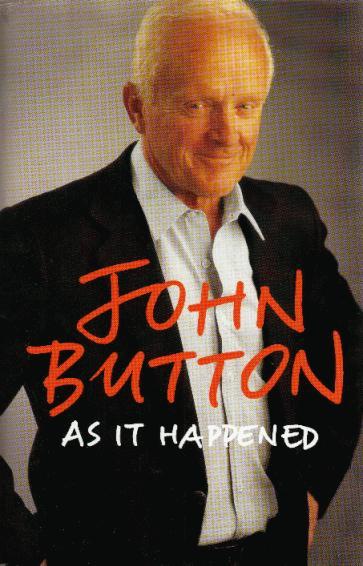 Button retired in 1993 and has remained active in Labor affairs while publishing his memoirs. He also joined trade missions, company boards and became a professorial fellow at Monash University. Button also found time to support his beloved Geelong (Australian Rules) Football Club. Button would have greatly enjoyed the double satisfaction last year of Labor regaining Government as Geelong won its first premiership in 44 years. But in between these two events he found out he had pancreatic cancer and suffered five painful months before dying earlier today.
Several Labor heavyweights have since paid tribute to Button. Acting Prime Minister Julia Gillard said she had known Button through the Victorian branch of the party and had always admired him. She called him a legend of the Labor movement. Former Prime Minister Paul Keating said his death was a loss to the country and the Labor party alike. Keating admired his independent spirit and said he “played corner politics with cunning and élan”. Another former PM, Bob Hawke said it was Button’s reforms that laid the basis for Australia's current and ongoing prosperity. Hawke was one of the last of his friends to see Button before he died. “My final memories are of this man of small stature, strong character and great courage in the face of adversity,” he said.
Sunday, January 27, 2008
Suharto dies
Suharto grew up in central Java and was trained in the military by the Japanese during their occupation of the Dutch East Indies in World War II. He then fought the Dutch at the end of the war and served in the new national army after independence in 1950. He rose though the ranks to be one of the most senior military leaders by the mid 1960s. In 1965 Suharto began the process of a brutal seizure of power from Indonesia’s first president Sukarno with the help of the CIA after the Americans believed Sukarno’s so-called “guided democracy” was leading the country down a likely Communist path. In the purges that follow, somewhere between 300,000 and million suspected Communist supporters were murdered on Suharto’s orders. Sukarno was finally stripped of power in 1967 and Suharto was elected president a year later.
Suharto ruled with in totalitarian fashion and posted soldiers in every village. On economic matters, he relied on a group of American-educated economists, nicknamed the "Berkeley Mafia," to set policy. Together they succeeded in delivering at least 7 percent annual economic growth for three decades. He initiated a successful family planning program that, unlike China, did not rely on coercion. The Indonesian economy was opened up to foreign investment, and became a darling of the World Bank and at the International Monetary Fund. Yet Suharto and his children also built up assets estimated at $30 billion in 1989.
Suharto was finally undone by the Asian financial crisis of 1997. In early 1998 he was re-elected president seventh time unopposed. This time Jakarta erupted with pro-democracy riots. 2,000 people were killed and 5,000 buildings were destroyed in Java and Sumatra. Troops secured the airport and government offices and schools were closed while 30,000 students occupied the government buildings. Suharto attempted to face down the protesters. However General Wiranto stepped in and urged him to reconsider. Finally the wave of domestic and international pressure told and Suharto reluctantly stood aside. Suharto retired to a family compound in Central Jakarta, making few public appearances.
The Indonesian military has guaranteed the safety of the Suharto family and its ill-gotten gains of tens of billions of dollars. Armed forces commander and then Minister of Defence Wiranto gave the guarantee to the family when Suharto gave up the presidency in 1998 and it has been honoured by all his successors. Despite his departure, the Suharto family continued to lead the predator class along with its corporate and banking cronies. They operated a system of “plunder by corruption” aided and abetted by senior bureaucrats, state industry executives, police, army generals and a “court mafia” of compliant judges, prosecutors and officials.
 Under the reformasi program of President Wahid, Suharto’s son Hutomo (known as Tommy) went to jail for ten years for arranging the murder of a judge who sentenced him to eighteen months for his role in a land scam in September 2000. Also in 2000, Suharto himself was placed under house arrest while authorities investigated his regime’s corruption. But Suharto was saved when court-appointed doctors announced that he could not stand trial because of his declining health. State prosecutors tried again in 2002 but then doctors cited an unspecified brain disease. The last few years have been a long slow decline interspersed with continual legal wrangling.
Monday, November 12, 2007
Mailer
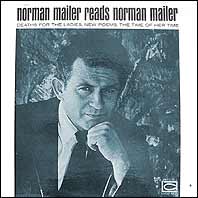 Norman Kingsley Mailer died on Saturday at Mount Sinai hospital in Manhattan. He was 84. The cause of death was acute renal failure one month after undergoing lung surgery. Mailer was one of the giants of 20th century literature and a larger-than-life figure whose lifestyle made as many headlines as his impressive body of work. Mailer married six times, fathered eight children, and ran for mayor of New York. His towering ego and keen sense of self-publicity always kept him newsworthy. Most renowned for his remarkable collection of novels, Mailer was also an accomplished journalist, a playwright and a director, producer and actor in several low budget movies.
Norman Mailer was born in Long Branch, New Jersey on 31 January 1923 and was raised in Brooklyn. His father, Isaac Barnett was a South African Jew but it was his strong mother, Fanny Schneider, who dominated family life. Norman was always Fanny’s favourite He entered Harvard aged 16 to study aeronautical engineering. His big life-changing event occurred in an English class on modern American literature. He turned to writing and quickly had his first short story published by “Story” magazine, an important outlet for aspiring writers.
In 1943, Mailer graduated with honours from his engineering science degree and began to write a novel about life in a mental hospital. The novel never saw the light of day. Instead Mailer met and married Bea Silverman. In early 1944 Mailer was drafted into the Army and sent to the Philippines. Mailer mostly avoided the front line and served out the war as a cook in occupied Japan. But it was his single experience in combat in a patrol on the island of Leyte that was to serve as the raw material for his breakthrough novel. In 1948 that novel was published as The Naked and the Dead.
The Naked and the Dead tells the story of a 13 man patrol fighting on an unnamed Pacific atoll. The grim writing explored the sexual desires of the troops and examined the tense relationships between officers and enlisted men. It won universal critical and popular approval and sold 200,000 copies in three months. Widely acclaimed as one of the greatest war novels ever, it was criticised by some as a “Kinsey report on the sexual behaviour of the GI” and “pure army Billingsgate”. However it was less pure than they made out: Mailer coined a new word “fug” which he used liberally throughout the book as a euphemism for the then still publicly unacceptable “fuck”. Mailer himself had ambivalent feelings about the book. "Part of me thought it was possibly the greatest book written since ‘War and Peace’," he said. “On the other hand I also thought, ‘I don’t know anything about writing. I’m virtually an impostor.’”
Riding on the fame of his debut success, Mailer published Barbary Shore (1951) and Deer Park (1956) both of which were almost universally derided. Mailer drifted for much of the decade and was a heavy user of alcohol and marijuana. In 1955 he put up $10,000 to found The Village Voice with Daniel Wolf and Edwin Fancher. Mailer came up with the name and wanted the paper to be "outrageous" and "give a little speed to that moral and sexual revolution which is yet to come upon us.” Mailer soon became a regular columnist who in his first effort, promised. "I will become an habitual assassin-and-lover columnist who will have something superficial or vicious or inaccurate to say about many of the things under the sun, and who knows but what some of the night.”
Mailer quit after just four months blaming typographical errors in his column. Nevertheless the stint at the Voice honed Mailer’s undoubted journalist abilities. He was at the forefront of the 1960s New Journalism movement with Truman Capote and Tom Wolfe and he won the Pulitzer Prize on two occasions. The first time he won it for "The Armies of the Night" (1968), which also received the National Book Award. “Armies” was a journalistic novel in which he was the main character in the march on the Pentagon to stop the war. He won the Pulitzer again in 1979 for "The Executioner's Song" about convicted killer Gary Gilmore who was executed by the State of Utah for a brutal double murder.
The Armies of the Night reflected his decade-long preoccupation with, and opposition to, the American military presence in Vietnam. In 1967 Mailer also wrote “Why are We in Vietnam?” which despite the title was set in Alaska as two boys go on a last hunting trip before being sent off to the war. When the US finally acknowledged defeat in 1975, Mailer wrote in the New York Review of Books that “the responsibility for the war is entirely ours.”
In 1983 Mailer turned his attention to a different era when he published Ancient Evenings. The 1,200 page book was set in pharaonic Egypt of 3,000 years ago and Mailer spent 11 years researching the massive project. The book was blasted as dull by many critics. However Anthony Burgess included it in his 1984 collection of the “Best 99 Novels in English since 1945”. The Naked and The Dead was the only other Mailer work in Burgess’s list. Mailer topped the length of his Evenings with his CIA epic Harlot’s Ghost in 1992 which ran to almost 1,400 pages. Mailer ended that book with the promise “to be continued”.
 But he was unable to keep his promise. Less than a month before he died, he published his final book called "On God: An Uncommon Conversation." The book takes the form of dialogues over three years with his friend and literary executor, Michael Lennon. Mailer remains uncompromising to the end, rejecting both organised religion and atheism. In his view there is an artistic but far from all-powerful God while humans are free to choose their own paths with a form of karmic come-uppance awaiting those who lead less than virtuous lives. But Mailer was never capable of being overly pious. "I think that piety is oppressive,” he wrote. “It takes all the air out of thought."
Thursday, January 04, 2007
James Brown’s Body
 James Brown was finally laid to rest on Saturday after a three day funeral. Brown, “the Godfather of Soul” died on Christmas Day after contracting pneumonia. He was 73 years old. After lying in state at Harlem’s Apollo Theatre for two days, his body was brought back to Atlanta for a farewell ceremony at the James Brown Arena. Michael Jackson and the Reverends Al Sharpton and Jesse Jackson led a crowd of 8,500 mourners. Michael Jackson told the crowd James Brown was his greatest inspiration and Jesse Jackson said the 25 December death “had upstaged Santa”. Brown was buried privately after the ceremony.
Brown was one of the most influential musicians of the 20th century. He was renowned for his screeched vocals, high-energy dancing and unique rhythmic style. His hits, such as "I Got You (I Feel Good)" and "Papa's Got a Brand New Bag," inspired generations of soul, funk, disco, rock and rap artists. He was a giant in the Afro-American community for his 1968 song “Say it Loud, I’m Black and I’m Proud”, and in the 1970s jazz great Miles Davis cited Brown as a major influence on his style.
James Joseph Brown was born in Barnwell, South Carolina, as an only child in 1933. When he was four, his parents separated and he grew up in the brothel of an aunt in Augusta, Georgia. Brown left school after the seventh grade and did a variety of odd-jobs such as picking cotton, shining shoes, washing cars and dishes and sweeping out stores. At 16, he took part in an armed robbery and was caught breaking into a car. He was sentenced to eight to sixteen years' hard labour. He was transferred to a juvenile work far, after serving a short period in the county jail. He then spent three years in a community home.
While in prison he met Bobby Byrd, who would later be his co-vocalist. Byrd’s family took responsibility for Brown and negotiated his early release. Brown tried his luck at boxing and baseball before turning to music. Byrd was a pianist and gospel singer and he and Brown worked together in the bars and clubs of Toccoa, Georgia. They switched their sound from gospel to rhythm & blues and set up a band called the “Famous Flames.” They became a talented black music revue in which all members had at least to play two instruments as well as sing and dance.
 The Famous Flames caught the attention of King Records and, in April 1956, they released the single Please, Please, Please which made the R&B top ten. Brown was now the leader of the band and made himself the centre of attention. The band’s big breakthrough came two years later. Try Me was released in September 1958 and it got to number 58 in the US charts and was a number one in the R&B charts. James Brown was now a star. On 24 October 1962 he made his first appearance at what was to become his signature venue, the Apollo Theatre in Haarlem. Founded in 1913, the Apollo was a burlesque theatre until the 1930s. Under the patronage of Stanley Cohen it opened its doors to New York’s black community showcasing “a coloured review” entitled Jazz a la Carte. It soon became a venue for exclusively black entertainment. This was initially done as a cost-cutting exercise but over the coming years, the Apollo launched the careers of a wealth of black talent such as Ella Fitzgerald, Sarah Vaughan, Billie Holiday and Sammy Davis, Jr. Brown recorded “Live at the Apollo” here and the album entered the pop charts in 1963.
In 1964 he had three hit singles. His "Live at the Apollo became the first LP in pop history to sell more than a million copies. 1965 saw Brown at the peak of his recording success. "Papa's Got a Brand New Bag" and "I Got You (I Feel Good)” were both top ten hits. In the same year, Brown made a successful transition to Hollywood singing I Got You (I Feel Good) in the teen beach genre film “Ski Party” and the concert film “The T.A.M.I Show”. Brown won the Grammy for Best Rhythm & Blues Recording in 1966 for “Papa’s Got a Brand New Bag”.
James Brown was now seriously rich. He quickly adapted to celebrity lifestyle and bought himself a private jet, a villa, four radio stations, a restaurant chain, a moated castle and a music publishing house. But he kept working on stage too. He legendary ability to perform 300 times a year earned him the title of "the hardest working man in showbiz". His musical influence was truly profound. His gospel-infused vocals and complex polyrhythmic beats transformed R&B into soul. Then with the 1967 recording of “Cold Sweat” he transformed soul into funk. Meanwhile Brown became a political activists and began fighting for the causes of Martin Luther King. In 1969, Look magazine called Brown "the most important black man in America."
The 1970s saw a long, slow decline in Brown’s life and music. The rot started when his accomplished accomplices saxophonists Maceo Parker and Pee Wee Ellis, trombonist Fred Wesley and bassist Bootsy Collins all left to form their own bands. The IRS demanded $4.5 million in back taxes. He was involved in a radio station bribery scandal, his marriage broke up and his son Teddy died in a car accident. Brown was forced to sell many of his assets and resume touring to pay his debts. The age of disco also affected his record sales. Brown had a mini-revival in 1980 with a role in The Blues Brothers but his sales mostly declined throughout the decade that followed despite the success of “Living in America” in 1985.
In 1988, Brown was arrested following a high-speed car chase on an Atlanta interstate highway. Police found the illegal drug phencyclidine (PCP) in his possession and Brown was also charged with threatening pedestrians with a firearm. He was sentenced to six years in prison but was released in 1991 after having only served three. For the remainder of his life, Brown was repeatedly arrested for drug possession and domestic abuse. Nonetheless he continued to record music and performed regularly. In 2004 he contracted prostate cancer but recovered. A year later, he appeared in the Live 8 concert in Edinburgh singing "Papa's Got A Brand New Bag" in a duet with British pop star Will Young. In 2006 Brown launched his exhausting "Seven Decades Of Funk” world tour.
In December, Brown was in Atlanta for a routine dental appointment when a new health problem was detected. On 24 December, he was admitted to Atlanta’s Emory Crawford Long Hospital and was treated for "severe pneumonia". On his deathbed he was still planning on playing his usual New Year's Eve show. But he died at 1:45am the following morning. His agent said, the official cause of death was heart failure. His final words were “I’m going away tonight”.
 James Brown’s influence vastly outstripped his own success. He had less then ten hit singles and none of them reached number one. But he cast a huge shadow over genres as diverse as R&B, jazz, disco, gospel, soul, rap and African music. The evolution of black music in particular owes him a massive debt. "He was not only the Godfather of Soul, but the Godfather of Funk and Rap," rapper Ice Cube said in a statement. "Music will never be the same."
Subscribe to:
Posts (Atom)