Sunday, April 23, 2006

Lev Nussimbaum: One Odd Orientalist

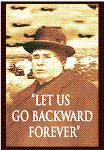
Kurban Said was a bestselling author in Nazi Germany. He also wrote successfully under the name of Essad Bey. He married an heiress who was convinced he was an exotic Eastern potentate. But Kurban was not who he Said. His real name was Lev Nussimbaim and he was a Jew from Baku, the son of German governess and a Jewish oilman.

Tom Reiss wrote a book about him called The Orientalist. The word 'bizarre' does not begin to do justice to Nussimbaim’s life. He was perhaps inspired by Walter Rathenau a German Jewish industrialist and foreign minister in the new Weimar republic who was assassinated in 1922 by two right-wing officers who protested his signed of the 1922 Treaty of Rapallo (the earlier 1920 Treaty of Rapallo authorised the independence of the state of Fiume, now Rijeka, Croatia) with the Soviet Union. He (Rathenau) was also said to be the inspiration for Arnheim in Robert Musil’s The Man Without Qualities.

Kurban Said's great work was the interreligious love story "Ali and Nino". Set in the First World War and the Russian Revolution, it is a story about an Azerbaijani Muslim boy falling in love with a Georgian Christian girl. The novel was first published in 1937 and was set in the oil city of Baku. Baku is now the capital of Azerbaijan. It was a multi-ethnic city of Muslims, Turkics, Armenians fleeing from Turkish genocide, Poles and Russians. In the book it also had something rather vaguely called “Sectarians.” The plot is a tearjerker. The hero, narrator Ali Khan Shirvanshir, a Tartar and Shi'ite Muslim, flouts social convention by marrying his childhood friend, Nino Kipiani, a fair-skinned Georgian Christian. Ali rebels against his traditional society. His father's pre-wedding advice is sound, if alarmingly open to interpretation: "Do not beat her when she is pregnant." When war erupts, Nino is sequestered in a villa in Tehran where she keeps her pregnancy secret. She flees Persia to Paris with her baby daughter. Ali is reluctant to accompany her and instead marches off to defend the short-lived Azerbaijani republic against the invading Soviets.

It is easy to see why such a plot would be popular in pre Second World War Germany, both with men and women. The supposed author Kurban Said was feted as a great student of Muslim culture and indeed the book with packed with cultural references to Islam and its legacy. The Nazi Propaganda ministry became his unofficial sales arm by including his works on their list of "excellent books for German minds".

But while the Nazis were feting this Aryan hero, the real Said was all this time a Jew in Germany. When he was eventually found out and exposed as Lev Nussimbaum, as was surely inevitable, he fled across to then neutral Italy in 1938 where he died in poverty. It must have been a huge embarrassment for Nazi Germany to have this deception uncovered. So how come this massive transformation, this gigantic and bizarre fraud from which the author seeming had so much to lose? Surely it wasn’t just to make Germany look stupid?

Lev was born in 1905 at Baku to a family of industrialists who had recently become rich due to oil. Baku is on the Caspian Sea and oil had always bubbled to the surface on the foreshore. The oil business is not new. The Chinese had drilled oil since the 4th century and by the ninth century locals were drilling oil holes in Baku for the production of naphtha which may have been used as weapons or a writing tool.

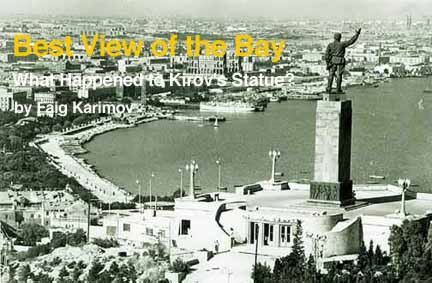
By the fifteenth century it was being harvested for oillamps. Baku was half Asian, half European and wholly precious. The Persians originally called it Bad Kube (“the city of winds”). The Persians were in hock by 1813 and ceded Baku to the Russians, lock, stock and barrels, in the Treaty of Gulistan. The first commercial drilling occurred in the 1870s and by the turn of the century the Baku fields were the largest oilfields in the world. In short, Baku was a very important place in fin-de-siecle Western civilisation. The tsars and the communists knew its worth. Sergey Kirov made Baku oil safe for the Soviets as the secretary for the Socialist Republic of Azerbaijan (aided by his wife who led a feminist charge “Down with the Chador”.) Its importance was amplified in the Second World War and Hitler and Stalin fought monumental battles in the Caucasus and at Stalingrad to secure the oil supply. Stalin had got his start in Baku. In 1905 he was the editor of the underground Bolshevik newspaper here called the Baku Proletarian where he agitated for the rights of the oil workers. He eventually had Kirov assassinated in 1934 to curb his growing power. At Stalingrad, it wasn’t nostalgia at stake but the fuel to supply tanks and armament factories. Baku is still an important place today. Although most of Baku’s onshore oil has been exhausted, there is now extensive drilling off shore.
Back in 1918, the First World War had ended, but the Reds were starting to win the Russian Revolution. Baku was no place for an oil industrialist under the Communists. Lev and his father fled Baku. Lev was 13 years old. Their trek took them through Turkestan, Persia and the Caucasus. The White Army briefly held Baku and the Nussimbaums returned. But the Reds took it back and Lev and his family fled again, this time to Constantinople. Here also was chaos as the Ottoman Empire was falling apart and Ataturk was making his play for power. They moved to Paris before settling in Weimar Germany. There was significant anti-Semitism (Hitler didn’t invent it but merely used it for his purposes)in 1920s Germany and hyperinflation increased the bad feeling that ‘Jewish industrialists’ were responsible for losing the war. Thus Lev was enrolled at Friedrich-Wilhelms-Universität under the name of “Essad Bey Nousimbaoum”.

Thanks to Lev’s travels as a refugee, he became an expert in Eastern religions. He converted to Islam in 1922. He invented a mysterious past for himself and said he was related to the Emir of Bukhara. He would also have been aware that Bukhara (in modern Uzbekistan) had a large Jewish minority and the term ‘Bukharan Jew’ was used to signify any Jew from Central Asia. In 1926 the Arabic “Nousimbaoum” was employed by the journal Die Literarische Welt. The journal formed a rallying point for the most significant authors of the time - Franz Blei, Robert Musil, Alfred Doeblin and Walter Benjamin. Lev cemented his reputation in this journal as an authority on Eastern matters. By the early 30s, he was a successful writer, his “Blood and Oil in the Orient” was a potboiler written under the name of Essad Bey and outlined his dramatic escape from Baku (but left out the fact he was Jewish). He was also an extreme right winger. He joined the League Against Bolshevism which was a breeding ground for Nazis though Lev himself preferred a return to the Hohenzollern monarchy that ruled Germany until 1918. He feted an Austrian baroness and married the daughter of an industrialist but neither of the women knew his true identity. When Hitler rose to power in 1933, it frightened the ex-Jew enough to move to New York.

The spell of Germany proved too strong and he returned two years later despite being well aware of the anti-Jewish laws that were springing up. It is in this stage that writer Tom Reiss in his engrossing portrait of Nussimbaum, claims he invented a second penname Kurban Said to write Nino and Ali. This fact not yet generally accepted in Azerbaijan where it is their national novel. They still attribute it to Azeri author and poet Yusif Vezirov Chemenzeminli who died in a concentration camp in 1940.

Nussimbaum outlived Chemenzeminli by two years. In 1938 he was eventually unmasked as a Jew. He escaped across the border to Italy. Lev was invited to be Mussolini’s official biographer–until the Fascists too discovered his true origins. Under house arrest in the Amalfi cliff town of Positano, Lev wrote his last book. He contracted Reynard’s disease, a condition that affects blood flow to extremities such as fingers and toes. He died at the age of 36 due to complications with gangrene.

Until the publication of The Orientalist, his story has been shrouded in mystery. It is about time Lev reclaimed his old heritage to go with the new one he created for himself.

References
"Kirov in Baku

Fueling the War Effort

"¿ Quien fue Kurban Said?"

"The Orientalist (book info)"

Saturday, April 22, 2006

The battle of Tannum Sands bottle shop

Passed by Goodnight Scrub near Gin Gin heading south to Hervey Bay. The largest natural hoop pine forest in Australia. The scrub is so dense it is impenetrable in places. Hence its name given by local cattlemen who wished many a stray beast goodnight when it crashed into the tangled undergrowth. Stayed my own goodnight last night at Tannum Sands. Tannum is situated just south of Gladstone on the River Boyne, no famous battles at this version of the Boyne. King Billy never made it so far south. Tannum Sands is a beach suburb of Gladstone, deadly quiet, with a pub, a pretty beach and not much else.

I knew little or nothing about this place so logged onto the Internet to do some research. In passing, I discover that a certain Mr D.B. Walker (no relation to me or Johnny Walker) appealed on 13 June 1994 against the Tannum Sands pub’s right to have a detached bottleshop (neither Johnny Walker nor I would have appealed against THAT). With time on my hands, I idly download the tribunal's ruling.

It starts with high minded waffle. “The function of the tribunal is an administrative one. It is to review the administrative decision that is under attack before it”. It tediously describes its terms of reference some more before describing the pros and cons of the case.

The appellant took a big spray approach. He claimed that the quaint seaside town had suffered vandalism related to liquor consumption. There was beer bottle debris which were a possible danger to toddlers (alcoholic toddlers?). There were home robberies possibly due to drunkenness. There was even a $2,000 reward from the Mayor, though it is not entirely clear what it was for, either to catch a crim or just to shut the appelant up. The appelant droaned on with his putative public house of horrors: There was a risk of being mugged at the bottle shop after dark. There was the threat to the sanctity of Sundays. Only the newsagent opens on a Sunday and even he only from 9 to 11am. He believes the even local heathen Chinee and restaurant shuts at 7pm on the Christian Sabbath. He believes the operation simply won't be viable. In short, all sort of biblical catastrophes will be visited on Tannum if this bottle shop gets the go-ahead.

Finally the defendent responds to the charges. Firstly, he said, if it is not economically viable, then that is only a matter for the licensee to consider – in other words its profitability was not relevant to the decision. He then waded in with community benefit. Women and senior citizens would have safety and security puchasing their tipples in a shopping centre - not in the intimidating atmosphere of a young male dominated pub, no doubt. It is separate from other businesses. No nasty contamination from a bottle shop. He dealt with the vandalism issue. He mentioned that there were 200 detached bottle shops (presumably in Qld) and there has not been one single complaint in respect to a disturbance to an amenity following commencement of trading. There is no evidence of increased vandalism. Pub staff are not aware of incidents of beerbottles left on the beach after so called “drunken weekend night parties”.

The tribunal ordered that the appeal (though not frivolous or vexatious) had little evidence to support his submissions and was therefore dismissed. The respondent applicants application for costs to be paid by the appellant was refused. The trading hours are 8:30am to midnight, Monday to Sunday. Hooray! Tannum Sands is saved from the wowsers. Thanks to A. Lidon (deputy chairperson).

Friday, April 21, 2006

Rabbiting on about Hervey

Hervey Bay was part of Captain Cook's naming frenzy during his 1770 navigation of the East Coast of Queensland. Hervey is pronounced Harvey and is an amalgam of small seaside villages. Cook named the bay for the 'English Casanova', Augustus John Hervey, the 3rd Earl of Bristol and a sailor of some note who acquired a formidable reputation as a womaniser (his successes included the deflowering of no less than a dozen Portuguese nuns.)

Cook thought Fraser Island was joined to the mainland just as he thought the same of Bribie Island when he named the Pumicestone “River” (now the Pumicestone Passage.) The 122km long Fraser Island was named for the shipwreck victim Elisa Fraser. Elisa was an English migrant who survived a lot more besides shipwreck
before she got to the Australia she was expecting. Including a time spent as a ‘houseguest’ of a local aboriginal tribe.

Nowhere nearby is the Iguacu Falls. They are on a picture on a wall in a Hervey Bay travel agent. They lie on the border between Brazil, Paraguay and Argentina on the Iguacu River before it joins up with the Parana. The falls are taller than Niagara though they have seasonal variation. The name Iguacu comes from the Guarani (a local Indian language) words for water (y) and big (guasu.) Maybe some day.

Woolly Days passes by a tennis court and ponders on the scoring system. Clockface: 15, 30, 45, 60. A nice round number to the denizens of the middle ages. 45 is elided to 40 over time to save breath. And love is precisely that, those who have no points play for the love of the game. It was originally called ‘jeu de paume’ (palm game). The server would shout out ‘tenez’ before serving. As for deuce, its from Middle French deus, accusative masculine of duo, two. What the deuce is he up to now? It doesn’t explain why there is a ‘w’ in two.

Walked onwards and passed by the dentist Dr Spike and came here to the Chinese restaurant with a buffet advertising
“All You Can Eat Children under 12 Take Away”.

I wasn’t sure if I could eat twelve children at a setting anyway. Depending on age and weight one child might be sufficient with maybe one more for take away. But hunger overcomes fear of cannibalism and I walk inside. The food is no false argument despite the kidding sentiment. I’m doing the $12.35 banquet proud….as are lots of under twelve are, The chicken and sweet corn soup, I’m sure even dental doc Spike would approve of. You see I haven’t been eating well these last few days.

You understand the world in a certain way so be that way. I am in Hervey Bay to fulfil a six year dream to visit Fraser Island (gathering dust on my doorstop for so long) wondering if I’ll be disappointed. Of course I’ll be with an attitude like that. I will have to feel its wonder take it and crown my tomatos in rows of thorns. Rouse me from my subtle slumbers. Its not for long now that I’m here so reiki kitty turkey beach!

Thursday, April 20, 2006

Japan and Korea with rocks in their heads

Today, South Korea set up an 18-ship naval blockade around a disputed group of islands, warning of a "physical clash" as two Japanese coastguard ships steam towards them.

The islands are to be found in the middle of the Sea of Japan roughly half way between the two countries. The Koreas know the islands as Dokdo and the Japanese call them Takeshima. Woolly Days’ atlas has a third name for them: Liancourt Rocks. The islands got this name from a French whaler "Le Liancourt" which visited them in 1849. The Russians named them Manalai and Olivutsa Rocks in 1854 and a year later the English got in on the act calling them the Hornet Rocks.

So why all this fuss over these multi-named but tiny islands one hundred and fifty years later? To quote a serial philanderer, it’s the economy, stupid. But that is only partially correct. The Koreans and the Japanese have a long history of political and military disputes and Dokdo/Takeshima (/Liancourt/Manalai/Hornet etc.) is, along with the recompense of the so-called ‘comfort women’, one of the most important unresolved squabbles from the Second World War.

I said the islands are roughly half way between the two countries but Korea is slightly closer being 217km away compared to the 250km distance to Japan. And though there is no fresh water on the islands, there are approximately 50 Koreans living there working as police, government officials, lighthouse keepers and one unattached couple who live off the fishing.

And it is the fact that they are rich fishing grounds that makes the islands economically important. There is also possible reserves of natural gas though none has yet been found. The Koreans have placed an Exclusive Economic Zone around the island and the Japanese are not happy.

The rocks are also important for military strategic reasons. They served many times as a military base, most notably in the Russo-Japanese War. The Japanese claimed the islands in that year of 1905 using the doctrine ‘terra nullius’ (familiar to Australians as the point of law that led to the native title legislation.) They remained a Japanese possession until the end of the Second World War. The Americans excluded the rocks from Japanese administrative authority in 1946. However the exclusion order did not clearly state who should take over the rule of the rocks. Indeed, the US maintains a policy of non-recognition for claims by either side to this day. The South Koreans claimed it in 1952 towards the end of the Korean War but the Japanese fought skirmishes in a vain effort to re-establish control in 1953. The incident ended with the sinking of a Japanese ship. In 1954, the Korean government rejected a Japanese offer to seek arbitration at the International Court of Justice. Instead the Koreans built a lighthouse and helicopter pad. Subsequently they built a radar station enabling them to track the naval forces of Russia, Japan, and North Korea winding their various ways through the Sea of Japan. The status of the island was omitted from the 1965 “Basic Relations Treaty” which normalised the relationship between the two countries.

Today, despite the fact that they are major trading partners, both sides still vigorously claim the islands. This month, the Japanese dispatched two ships to conduct a maritime survey near the islands without first formally notifying the Korean government. In response, the Koreans dispatched eighteen patrol ships and warned Japan not to go through with its plans.

Last heard (April 19, 2006), the Japanese convoy were still on course, ignoring Seoul’s calls to turn back. Japan's chief cabinet secretary, Shinzo Abe, claimed that there was "no problem" whereas South Korean Foreign Minister Ban Ki-moon said "We don't want the situation to worsen, but we will take all steps to protect the sovereignty over Dokdo.”

Another Korean spokesman warned ominously "in case of any physical clash, Japan should assume full responsibility."

The Missing Blanket

“Look out for the man’s bag, it contains all horrors” was the unknown cry from the TV. And indeed it proved an ominous warning, for as well containing all horrors, its contents might possibly also include one stolen blanket.

I was staying two nights in the backpackers at Airlie Beach in North Queensland. It was a dormitory style room with six beds. Mostly full of young Europeans. I brought a blanket with me and left it on the bed on the first morning as a symbol that this bed was claimed. I went out for the day on a boat to discover Whitsunday Island and enjoyed the beautiful white sands of Whitehaven beach until it became akin to a Normandy landing and was besieged by a flotilla of tourist boats. Sigh.

I came back to Airlie tired and slightly sunburnt. Time for a quick nap before the evening. There were two people in the room. One of them was on my bed. My blanket was gone.

Bummer, I liked that blanket and its jaunty yellow and brown sungod patterns. More to the point I paid $60 for it. The English backpacker now occupying the bed was lazily watching TV. I'm sure he would have felt uneasy by the darting startled looks I gave him when I saw him in what I had assumed to be my bed. Or by my furtive looks around the room. It did not help the situation that I never bothered explaining the nature of my search to him or his mate in the other bed.

So who stole it? I had to rule myself out as a suspect first. Maybe I only imagined I left it on the bed. I did a quick check of the likely places. Under the bed, under the table, under the pillow (a bit desperate to think that a blanket would fit under a pillow) then looked in the car and the boot without success. In the boot, my heart briefly rose when I saw a snatch of the right colours crumpled in the back of the boot. But it was only the matching pillowcase, not the blanket. I went back to the room and checked the nooks and crannies once more. No, I had to admit the sheet was gone, and the bed made vacant by that lack of propriety I had investing in it by virtue of leaving my favourite sheet on the bed.

Who, then, was responsible? Not these boys surely, they would hardly have taken a sheet and then slept on the bed they stole it from? Unless, they didn’t think they were nicking something perhaps in their minds the last tenant had left it there. There were actual two signs of my ex-ownership missing – the sheet and a half full bottle of water which was also half empty. Both were gone.

No, I don’t believe it was these guys and I didn’t want to bother them with my problem “Hey was there a blanket on this bed?” not being one of the great opening liners to begin any discussion. So, that left either the people who were here last night or the cleaners. I could easily follow up the latter and trust in the possible good motives of the former (“Hey, someone may have left this behind, could you look after it for him – Sure, just leave it at the front desk”).

And so the front desk is where I go straight away. Excuse me, I said politely, Did anyone leave a blanket for Room 18? And no, no-one did. Front desk did, however, suggest that I contact Housekeeping and take up the matter with them, a very different branch of the organisation.

Housekeeping were part of the daytime Petty France (degonfler) and by God they were gone from the premises and weren’t expected back until 7am tomorrow morning. The matter was adjourned until then. In the meantime I had plenty of space in which to draw unsuitable conclusions. Let’s take the four other houseguests from last night.

Two girls, two boys. The girls, one of which named Bethan was having a birthday today were with one of the boys. I could not tell which was Bethan, they both seemed the birthday type. The other boy was travelling solo and said nothing during the previous evenings phase.

The four went out till late. The solo boy returned first followed by the other boy followed by the two girls around 4am. There was no morning phase. I simply upped and walked away after a toilet and shower. The others were all asleep when I left. I left my blanket there to mark my territory of the bed I planned to return to in the evening and also because it was too damn convenient to leave it there rather than return it to the car.

That action initially cursed by sloth was now deified for its apparent insurance caveat. Yet it now appeared too trusting. But I cannot indefinitely pin the blame on myself. Some other culprit exists because as sure as hell I know my lack of conscience doesn’t have the sheet. The H Blanket, where are you?

I prepare myself for my 7am assault on the Housekeepers, whoever they may be, and sleep on my reserve bed with my reserve sheet, a bright yellow creation of the hostel’s creation. This is a cheap vanilla sop, a sympathy gesture from the Front Desk in lieu of something more personal and expensive.

Off to sleep I go and dream of blanket-thieves. The morning arises and with some time to spare before seven, I resume my quest at the Front Desk where I hope optimistically that a change of personnel might bring a different answer.

It doesn’t, perhaps I should try Housekeeping, they confirm. They did mention one crucial new bit of information, Housekeeping have already arrived and could be found ‘in their cage’. A fellow worker takes issue with Mr Front Desks use of the word cage to describe Housekeeping House. “Are they caged up?” she asks. “Of course” he replies.

I waste no further time on the dungeon status of Housekeepers and seek them and their cage aux folles. I find the cage ajar but the Housekeeper has not escaped. She is still inside folding towels. I say hello and discuss my dilemma. I come armed with the matching pillow case from the boot in an effort to jog her memory and make it easier for me to describe the blanket.

The colours and pattern look like this, I tell her as I point to the pillow case. The slight desperation of the appeal must have shone through as although she quickly informed that they had not seen the fabled sheet, she promised to seek out yesterday’s housekeeper of Room 18 to see if she had seen the sheet.

She told me to come back in a few minutes after which she would have the answer. I walked down the street and broke ten minutes on the back of a newspaper. When I returned I found the cage distressingly empty. Warning, warning, wild housekeepers on the loose! They will eat the contents of your bed as soon as your back is turned! Here, little housekeeper, won’t you come back to your cage?

I do a couple of fruitless loops of the compound before I spot her darting behind the swimming pool. I catch up with her and ask the question. The news is glum. No, yesterday’s housekeeper hasn’t seen it either. Bugger, must have been the boy on his own or one of the birthday cohorts or their male escort. Or someone else entirely.

I’ll never know which man's bag now has my Manchester. I kept the hotel's daggy yellow sheet as scrawny compensation and drove south, vaguely dissatisfied.

Wednesday, April 19, 2006

Fraser Island ferry musings

Urangan boat harbour. Fraser escape. To every last hole in the looniverse. You and I versus he. The last molecule squeezed out of you for dripping. From the charm of the little two is the monster where no-one rhymes. Kidneys let loose in chromium difficult to see where it leads at all. Let us follow and strutter anyway until the blargue is degonfled the hemingway.

I harbour loss inside a pan-american shriver post-panamaximexicana pepsicana pocapotecl pocket of petals and a man from Dad’s team got sent off. I should organise it next year. Deep pockets for the team. Raffle. Shake and hummingbird, mocking each other gently.

Forget Democrat v GOP, when a casual Californian voter (as opposed to the most casual informal no-vote-at-allers) sees a ballot paper that reads Schwarzenegger v Gray Davis, then the dweeb is in for it. Oh hurray for the Osterreich! Edeladvice to young and old. Ask Eliza Fraser. But I don’t know what shipwreck she was from in my halfhour of Googling today. Must ask tomorrow. Should be great. Ah, twas the Stirling Castle in 1836 that ran aground and left lovely Liza to the tender mercies of the local heathens!

Six years of dreaming. Must do something. Sometime. The present to you is the presence. The carol is sung as three. You are already past your future and merlin coming out the other side parallax half-arsed backwards in a chemical way. The font of botany is fulcrum sideways from my mirror. Snoopy makes me happy but only in a slight way. I must combust justly or for other reasons that my heart enjoins. You, as it were. Ergo, ego dripping from the wall. Slow sleek seek.

There are two schools (what, just two? Isn’t there a Jewish one around here?), one of which says “Do it, then do it right” and the other which says “Do it once and do it right”. And isn’t this what you wanted to revitalise anyway? Perfume, manure, manufactured essence. Distilled fermented gravy and gravular. Before weeding out the intellectuals.

Sunday.
Swimming backwards to the island on the Fraser Dawn (not Albion's Castle Stirling.) A badly rusted but wittily named barge cuts a swathe between the punning paths of dugongs, dolphins and detritus.

Shark bait, swamp wallabies, echidnas, termites and dingos. Please Mungo Park, Never no Niger no more. From Hervey Bay's giant rabbit to Moon Point in one hour flat. The Beagle has landed. Giant leap for mangroves. Cookie was 'ere. 1770 and all that.

Siamese Twins from the transit of Venus,
around town you might have seen us.
anatomically correct,
in every respect
except the inconvenience of only one penis

Ba-boom crash!

Tuesday, April 18, 2006

bikeride to Redcliffe

On a sunny Easter Monday afternoon, Woolly Days energetically decided it would cycle out to the Redcliffe peninsula some 30kms away to the north of Brisbane.

Going there via the bikepaths is a safer and more enjoyable option than the roads but it meant the journey was a lot further than the 30km way Joe Crow might take to get there. After cycling through the back streets of Wooloowin, I picked up the Kedron Brook bikepath among the sports fields at Shaw road.

Rugby was holding forth on one side of the road while hockey held the ascendency on the right bank. I turned right, shooted past the Toombul shopping centre and the motorcycle lessons in the back carpark. I was headed for the wide open wetlands besides the Schulz canal.

This waterway gets steadily larger as it picks up creeks along the way and becomes a surprisingly large and commanding presence as it prepares to empty into the bay just beyond the end of the bike path.

After holding my nose when passing the municipal dump on Nudgee Road, I avoided the temptations of Nudgee Beach (which should be called Nudgee Mangrove Swamp) and pick up another track through the Boondall wetlands which according to the sign was ‘saved by the ratepayers’. I admired the ratepayer-saving view beyond the creeks and the airport out to Moreton Bay from a lookout and came out the other end at the Boondall entertainment centre.

I then stealthily trundled alongside the railway path over Cabbage Tree Creek before charting a course around the edge of Bramble Bay through Shorncliffe and its Royal Queensland Cruising Yacht Club ‘home of the Brisbane to Gladstone race’. It would have been packed here a few days ago on Good Friday for the start of the race. Baxter's Jetty is home to the occasional fisherman and inquisitive pelican while a steady stream of small boats heads in and out of the bay. A couple walked their large dogs down the mudflats back towards Nudgee (Mangrove Swamp.)

The genteelness continued in Sandgate (with its gracious kilometre long pier and tempting Full Moon bayside pub) but was roughened up a portion by Brighton. Brighton does hold the key to the peninsula. Side by side with the threelane (one and half each way) highway to Clontarf (remember Good Friday 1014 and Brian Boru!) is the more elderly one lane Hornibrook highway which is exclusively for acoustic traffic: pedestrians, joggers, cyclists and rollerbladers.

Though the Hornibrook is undoubtably the safer option for cyclists, it can be dangerous especially if you get entangled with a backswinging rod from the odd over-zealous fisherman. I flew along unharmed at 30kph, wheels swishing.

Woolly Days continued unscathed to hug the pretty coast and its gleaming views to Moreton Island and the less gleaming though no less fascinating view to the Port of Brisbane at Fishermans Island. Onwards past Woody Point, Margate, Sutton's Beach and the gawdy Redcliffe foreshore. I made it to the end of the line at Scarborough and stopped at Bird O' Passage parade for a well earned coffee at Morgan's fish and chip shop.

After a short break, it was a reluctant effort to get back on the bike. It was to get worse, on my enjoyable way out I had failed to realise I had a significant tail wind and my speed dropped as I headed back the quickest way I could find away from the coast.

I had an early dodgy moment which requires radical surgery in the form of a stop for a curry pie and a limegreen sports drink. They do the trick and Woolly Days was back on the road with no time for bikepaths.

Back across the open Hornibrook I’m slowed right down to 16kph and am fighting hard against the stiffening breeze. I took the path down the sinister-named Deagon Deviation and hugged the side of the freeway until I find a trio of long straight roads to take me home.

Muller, Newman and Pfingst are the names of the roads and sound like a firm of Teutonic solicitors. I finally picked up the familiar thread of the Kedron bike path and wend the last few kilometres to the comforting bosom of home. Time for a well-earned flop on the couch.

Monday, April 17, 2006

on drugs and the Olympics

As they are so grandiose entitled, the Games of the XXIX (its gotta be Roman to count) Olympiad occur in Beijing in 2008. An obscene mix of money, communism and circuses with the whole world watching.

Two weeks of voyeurism so acceptable that it is legitimate for a politician to declare the calling of an election during the Olympics as unsporting. Too bloody difficult to concentrate on the issues of two events at the one time, eh? Nobody argues, least of a pusillanimous, poll-driven afternoon of a populist like John Winston Howard.

Who cares about the treatment of illegal immigrants and the international standing of low stocks, as long as we are in the top five in the medal count. Perhaps the standing should be higher as Australia had the third highest number of athletes in Athens behind Greece and USA.

Meanwhile the object of all this fawning attention is an occasionally intoxicating mix of brio and EPO, but mostly a tepid series of dull events in disciplines dimly understood and rarely on view. These are events transformed by the winning status of the competitor.

But lets look at the drugs.. Experts argue over whether throwing athletes out of Games shows that sport is healthy because our system works at catching cheats or that sport is unhealthy because so many are getting caught. But the real question is whether a) drugs work and b) so what if they do. Of course that’s two questions but using a) and b) gives them a certain singularity.

Woolly Days is not totally convinced that drugs work because lets face it, the majority of events have been won by non-cheats, n’est ce pas? And therefore you’d argue that drug cheats haven’t done all that well and therefore what is the point of banning them.

Or, you’d say that, in that case there have been a lot more winners in recent times who were drug users of some kind and did not get caught. In which case, it is obviously widespread and accepted so again, why ban it?

It seems only logical to conduct double-blind tests on both the efficacy of the drugs and a study of their long-term consequences. But the latter cannot rule the former as people will simply become impatient and take it if they see obvious and quick material benefit. That way, those who make that choice have only themselves to blame.

In any event, it is best to let the people decide. The brush has already tarnished the product. Just as the move away from amateurism was frought with difficulty but ultimately successful, the move to an open drug policy will be equally accepted. We chose whatever chemicals we want to give us a competitive advantage but we freely accept the end consequences of our actions.

Such a method would eventually sponsor a health related focus on drugs, their purity and their problems.

Sunday, April 16, 2006

worthless words


Messing about with thesaurus and dictionary.

Lets start with some definitions.
Herpetology – thought this was just snakes but it is the study of reptiles and amphibians
Ophiology – this one is purely about snakes from the Greek “ophis” serpent.
Conchology – Not the study of shells as the name might suggest but instead gives us the lure of molluscs.
Malacology – Just like conchology, this is the study of molluscs. Not sure if there is a boundary between the conchologists and the malacologists.
Mycology – is this the study of me, the fungi? Everything you wanted to know about mushrooms. From Greek ‘myc’ fungus.
Gallinaceous – related to the study of domestic fowl.
Ophidian – the snaky one, ask the ophiologist.
Salientine – of frogs and toads, batrachian, anuran, aquiline, passerine
Vermicular – wormy, like vermicelli – the little worm.
Cervine is dearly deer-like.
Gallimawfry – a hodge-podge or a US hash dish made from leftovers.
Galligaskies – are 16th century hose or breeches (a metathetic variation on gregesque from Italian ‘all greghesa’ in the Greek manner.
Unlike the Irish Gallowglass (‘gall’ foreigner and ‘oglach’ volunteer).
Metathesis, by the way is a transposition of letters, syllables and sounds in a word. Cupid Stunts.
Polo is a Balti (Kashmiri) word. From the fierce Pathans (patented obviously, are there any other kind of Pathans?). A pollywog is a tadpole. A poltroon is a coward from the Italian ‘poltro’ lazy. Craven A. Panda is Nepalese but Pandanus is Malay. Pandemonium is Milton’s capital of Hell. Pon Demon Lum. Zeus gave Pandora a box containing all humanity’s ills.

Partridge (pardix Gr.) is a gallinaceous gamebird. Parturient is in labour, passerine is an order of perching birds. More than half of all birds are in this category (qv Pale Fire). Latin ‘passerinus’ of a sparrow. Sparrowgrass is colloquial asparagus. The sparrow itself is pugnacious, a weaverbird, a finch, a pest. An Icelandic “sporr”.

A spat is a quarrel is an old spit is a gaiter is an oyster-spawn. A gaiter is a covering for ankle and instep worn over the shoe. Good-King-Henry is an erect perennial herb. A veronica is the “face of Christ” or a speedwell (sundarium) or a matador’s pass swinging the cape in front of the bull while immobile.

Sodarium is a handkerchief unlike a sudatorium which is a hot-air bath of inducing sweating. Turdine pertains to thrushes not shit though a ‘turd strangler’ is a plumber. A psalterium is the omasum or manyplies (because the folds of the omasum are likened to the leaves of a book). The omasum is the third stomach of a ruminant hidden between the reticulum and the abomasum (the fourth or true stomach).

The psalter is a book containing psalms for liturgical or devotional use. Maraschino is a cherry liqueur with almond flavour from 'marasca' an Italian word for the European cherry tree. Sodom was an ancient Dead Sea city destroyed by fire from heaven because of its inhabitants’ wickedness.

Ganymede is a Jovian moon (the largest moon in the solar system), and is also a young waiter or a young male homosexual – a catamite. Ganymede himself was a Trojan youth carried off by Zeus to be his lover and ‘cupbearer’. Crossruff is a bridge play in which each hand of the partnership trumps a different suit.

A cumshaw is a tip in Chinese ports. Cupboard love is inspired by considerations of material gain. The curate’s egg is good in parts. Erysipelas is an infectious disease of the mucous membranes. Erubescent is blushing. Ohmigod. Yahweh, Elohim, Tetragrammaton. Krishna. Deva. Bel Marduk. Red Tezcatlipoca. Quetzalcoatl. Huitzilopochtli.

Theriomorphic means having the form of beasts. Gentlemen can be Hidalgos (low) and Caballeros (high). Callithempians have vague religious belief. Boyars are Prussian gentry and Junkers are Russian aristocracy. Gossypol is a pigment of cottonseed oil and an experiment in male contraception.

Walpurgisnacht (Mayday eve night of German witches and the feastday of St Walpurga) is missing between walnut (foreign nut) and walrus (the horse whale). Buffleheads are ducks, duxes are leaders. Keel is a fatal disease of domestic ducks as well as a quantity of coal or a ship’s supporting beam or a ship itself or a ridge or a red ochre used to mark sheep.

Jays, joints, currawongs and cuckoo-shrikes, white-winged cloughs, corvine (crow-like) cinnabar (mercuric sulphide). Dingo ate my Babylon. The cordon bleu is a sky blue ribbon worn as a badge by the highest order French Bourbon knights, somehow transferred to cookery. Dubbo is stupid, just ask Patrick White in ‘Riders in the Chariot’. Splice the mainbrace means to issue a tot of rum to a ships crew or to invite an assembly to have a drink of quodlibet (‘what pleases’).

What pleases for a complex problem which arises in the study of philosophy or theology, or that of harridans, hags and harpies?

Thursday, April 13, 2006

Syriana

From time to time, high-ranking CIA mandarins will gather around in a bunker in deepest Langley, Virginia and play games about Middle Eastern regime change. They will choose a fictitious country and put it though its hypothetical paces in a series of political, industrial and military ‘what ifs’. The name the CIA chooses for the country in these games is “Syriana”.

Stephen Gaghan chose that name for his second film as director (his first was the little-known thriller Abandon in 2002) and indeed much of the plot of the movie Syriana centres on a change of regime in a fictitious, unnamed Middle Eastern country.

But Syriana is about a lot more than just putative Gulf politics. It is also about Big Oil, Peak Oil, Islamic fundamentalism, suicide bombers, congressional investigations, Washington lobbyists, the CIA, a shadowy “Committee to Liberate Iran”, the relationship between fathers and sons and it somehow also finds time to throw a taut thriller into the mix.

How Gaghan manages to weaves all these complex themes through five interlocking stories in 124 minutes is a work of art in itself. Gaghan won a best screenplay Oscar for Traffic and that film’s director Stephen Soderbergh chips in as executive producer of Syriana to help Gaghan work through the maze of multiple storylines and large casts. The closest thing to a lead character in the ensemble is a gritty, tubby and scruffy CIA operative Bob Barnes. He is played by the normally suave George Clooney (who piled on 35 pounds for the role in the spirit of de Niro in Raging Bull.) Barnes is fast approaching the end of his days in the field and has just one more assignment to complete before he can retire to the sinecure of a cushy desk job. That last role is to assassinate the independently minded Prince Nasir (Alexander Siddig) so that his more malleable younger brother will ascend the throne in the Gulf state and accede to American interests. These interests are represented by a newly merged oil company called Connex Killen.

The third thread follows the justice department investigation in the circumstances of the merger. It is the job of Connex Killen lawyer Bennett Holiday (Jeffrey Wright) to find out about the dirt on the deal before the Justice department does.

The fourth thread follows energy analyst Bryan Woodman (Matt Damon) who is swept up in events when hired by Prince Nasir to advise him on energy policy. The final most poignant thread follows Saleem (Shahid Ahmed) a young dirt-poor Pakistani migrant worker made redundant by the oil company who falls under the influence of a radical Muslim cleric.

Each of these threads has a father-son subplot which, although is rarely essential to the progression of the action, is thrown in to provide much needed warmth to an otherwise cynical story. The CIA operative lies about his work to his teenage son, Prince Nasir is in a Lear-like relationship with his father over the future of his kingdom. The lawyer lives with his alcoholic father. The energy analyst has a family tragedy and the migrant lives in a shantytown with his father far from the rest of his family.

It is the Pakistani migrant’s transformation that provides this film with much of its extraordinary power. He starts as a typical irreligious wise-cracking teenager more interested in football than fatwas. He becomes hardened by a gradual series of events. He loses his job and is threatened with deportation. Soldiers beat him up for no apparent reason. He falls under the influence of a charismatic cleric. The seeds are sown and he becomes a committed Islamic revolutionary. While this transformation is not inevitable, it is entirely feasible and we are not surprised by the outcome. This sympathetic humanising of a radical is likely to be displeasing to many but it shows how disturbingly easily it can happen. This is a rare and brave incursion beyond the usual hollow condemnation into the root causes of terrorism.

But the migrant is not the only pawn in this modern version of what the Victorians called The Great Game. Bob Barnes (played by Clooney who also was an executive producer) was also in this game, more powerful than a pawn perhaps, but still there to be sacrificed. He is the ultimate CIA field agent, an Arabic and Farsi speaking Middle East veteran, who unquestioningly carries out orders for his “thirty billion dollar business.” Bob is less successful as a bureaucrat who simply can’t be trusted to “stay on message”. Back in Washington to debrief on Iran, he is confronted by a forceful Condoleeza Rice-style politician and under pressure blurts out more truth about what is happening there than his bosses would like. He gets one last chance to redeem himself by assassinating Prince Nasir. Bob sets off to Lebanon to accomplish the deed and runs into hassles with Hezbollah and some torturers before his cover is blown. His bosses are anxious to avoid implication that the CIA authorised the hit and quickly proceed to “put some space” between the company and him.

The object of the assassination attempt is the elegant Oxford educated Prince Nasir, eldest son of the Emir, who is prepared to take his country on a collision course with US interests by pushing out the oil company Connex and selling oil to China. Washington powerbroker Dean Whiting (played with nicely understated menace by Christopher Plummer) meets the emir’s younger and more vapid son to plot the overthrow of his elder brother. They want to ensure the younger son becomes emir on the death of his obviously ailing father. He employs the energy analyst Woodward (Damon) to be an adviser. Their relationship is complicated by a Woodward family tragedy that occurs on the Prince’s property. The Prince buys him off and their no holds barred dialogues are riveting viewing. Matt Damon has a Boy Next Door quality that is occasionally irritating but he brings just right amount of intelligence and naivety into this role.

Back in Washington, the most complex thread of the film is battle to confirm the merger of two Oil companies Connex and Killen. Bennett Holiday is the lawyer at the centre of the maelstrom of legal (and illegal) activity. Jeffrey Wright plays the role stoically and his quiet dignity allows him to get results. The audience is drawn into the high political games. We inhale the stench of Washington politics where ‘everyone is innocent until investigated.’ Corruption is uncovered only if it used as a bargaining chip. Who really rules this internecine empire? Is this the legislative or the judicial branch of government? Is it Big Oil or is it their lobbyists? It is the military or the CIA? Who knows, maybe what the film is telling us is that it is all too complicated for any one power to rule. Syriana asks more questions than it answers but very few Hollywood films have asked as many cogent and pressing questions in two short hours.


“The Warning”

Despite their raucous name, Yahoo! are deadly serious,
And Google “does no harm” but wants to rules the earth
where system software makes Microsoft imperious
They’re breaking webs and windows from Patagonia to Perth

Gates hates killer apps from Apple’s great Job
Big Blue’s lotus position: “To be or not to DB2 isn’t tricky”
Join the dotcoms the shape Nasdaq thought a boom not a blob
Or live a hippie Linux life and share your open wiki

Watch them work like a Trojan and spread like a virus
See their spyware leap over your great walls of fire
Clash online with flamers and download movie pirates
or post a chat to bloggers with advertising links for hire

But wherever you meander through life’s tabs and shifts
Remember to be wary of geeks bearing GIFs

Haiku (a short history of the invention of detergent)

Soap flakes left wash grey
Proctor gambled coming Tide
Would turn whites to right

Wednesday, April 12, 2006

Master and Commander: the opening scenes

1. Introduction.

This analysis discusses the opening sequence of Peter Weir's film "Master and Commander: the Far Side of the World" (2003) in terms of how mise-en-scene, cinematography, sound and editing work together to create meaning for an implied viewer.

The film takes the viewer into the hermetically sealed world of an English man-of-war during the Napoleonic War (unlike the Patrick O’Brian novel which was set in the War of 1812 against the US. Clearly having the French as the enemy was always going to be less problematic and more profitable to American backers). The opening scenes are about setting tempo. Weir takes the audience into the circadian rhythms of life aboard at sea.

The opening four scenes are analysed. Each scene goes closer to the heart of the action by a progression of extreme long shots of the ship, through a tour of the deck, via an incident on board to end up with the close-up reaction to the incident which sets the tone for the film to come.

2. Mise-en-scene.

Mise-en-scene (french for 'putting in scene') is everything that appears in front of the camera. Weir wants to immerse the viewer in the reality of early 19th century sea-faring life. He provides period detail and realistic characterisations using lighting, colour, motifs, realistic costumes, and an attentive management of time and space.

The introductory sequences and titles give way to a tour of the harsh environment below deck. As the camera winds its way through the quarters, the dim lights and low roof render a sense of claustrophobia and unease. Initially the only lighting in the scene is a stark flickering keylight from the lamp of a passing sentry. The audience is drawn into the murkiness of the world below deck. Then a toplight filters from above deck to remind the audience of the world outside.

The sense of impending danger is heightened as the camera passes by two of the ship’s guns in close-up and displays their names to be “Jumping Billy” and “Sudden Death”. The latter name presages the several sudden deaths that occur later in the film.

Weir reminds the audience of the temporal component by using the motif of the hourglass. The hourglass will appear twice again in the film as an indicator of the passing of story time (and beyond this as a symbol of death.) When the hourglass is turned upside down, the bells are rung to signify the end of the shift. Sailors climb up and down the rigging in response to the bellringing. They are totally blacked out by attached shadows because it is not important that the viewer knows who they are. They suffice to be an anonymous metaphor for the rhythm of the ship.

The scene on deck when Mr Hollum is racked with indecision is played out in front of the crew. In the background plane behind the officers Mr Hollum and Mr Calumy, the ship’s crew watch impassively as Hollum prevaricates over the proper course of action in response to ‘the Phantom’. The audience’s attention is drawn to the ship’s carpenter Nagel who is framed strategically at the centre of the group of sailors watching the officers. Hollum’s indecision is exacerbated by a rear shot of the whispering officers seen from Nagel’s point of view. Nagel’s clash with Hollum will become a significant subplot.

3. Cinematography

Weir sets the scene in time and space with effective use of non-diegetic titles at the start of the film. In a sequence of three literary titles done in the exaggerated 19th century style, they give a sense of time, location and purpose. Immediately the audience knows that the story is set in the Napoleonic War. It knows the name of the ship, the HMS Surprise (and it is her modus operandi), her cargo, her location (“28 guns, 197 souls, N. coast Brazil) and most importantly her enemy, the French privateer the Acheron (named for one of the rivers of the Greek hell Hades, the 'river of woe'.) The audience gets a sense of the film’s purpose from the admiralty orders that will frame the film. Captain Aubrey must intercept the Acheron and ‘sink burn or take her a prize.’

There are two colour schemes in the opening scenes of the film. The ondeck scenes are blue signifying the closeness to the sea and the below-deck scenes are brown-filtered both suggesting the dinginess of below-deck life and also perhaps denoting the importance of the ship’s timber in keeping the crew afloat.

The film begins with birds-eye extreme longshots taken from various angles above and around the ship. The scene ends with a 360 degree tracking shot which takes us from clear water until ship is ominously about to enter a fog bank. The implied message for the audience to cultivate unease and expect danger in coming events.
That unease grows another notch when the audience shares Hollum’s fleeting experience of the Phantom ship with a point-of-view shot from the telescope. The clouds cover the scene so quickly that neither he nor the audience can be totally certain of what they saw. The shot shows effective use of off-screen space to heighten tension and uncertainty.

The on-deck scene also provides a brief close-up of young (13 years old) Midshipman Lord Blakeney. It is a small frontability cue to suggest the focal point he will play later in the piece linking the captain and the doctor in some of their more private moments. As Roger Ebert says “both men reveal their characters in teaching the boy, and that is how best grow to know them” (Ebert, 2005 online.)

The last scene of the opening section takes the viewer on a dizzying series of close-ups which derive their power from the delayed introduction of the two protagonists. Clinking surgical knives spread out on a bloodstained cloth herald the introduction of Dr Maturin. It is immediately followed by the quick motions of someone intently and swiftly twirling a map with their foot while dressing into multi-task fashion, before graphically matching a sword to represent the captain (as it also does on the Acheron) to the earlier shot of the knives which were a metaphor for the doctor. Sure enough, the action immediately switches to the putting on of a belt until the camera pans upwards to reveal the urgent face of the captain, ready to face the next crisis.

Though a steadicam is used for most scenes, the occasional shot with a handheld camera suggest the bobbing motion of a ship.

4. Editing.

Editing is the co-ordination of one shot to the next (Bordwell & Thompson 2004, p.294.) The film starts will a series of establishing shots showing the ship from different angles. After all the titles have been displayed, the audience is plunged into the narrow confines below deck. The tour below is a series of long takes until the abrupt cut to the hourglass and a hand which taps it before turning it upside down to signify the end of a shift.

Immediately following there is a graphic match between the scene of the bellringing and the men climbing the rigging to show the direct consequence of the changing of the shift. The whitish light on the right of the bell is matched by the light from the right of the rigging in the following scene. These small, almost subconscious reminders of each other further immerse the audience in the daily routine of the ship.

The rhythm of the editing changes to suit Weir’s purpose. The pace picks up during the on-deck scene when the phantom ship is spotted. Then in the final scene of the opening, the call to ‘beat to quarters’ (an all hands on deck call) shows a frantic editing pace to match the hectic action aboard ship. A brief cut advances the action to show a drummer beating the call before cutting again to show the frenetic activity below decks.

Weir uses the 180 degree system to ensure consistent eyelines (Bordwell & Thompson 2004, p.312) during the scene while Hollum and Calumy are talking and being watched by the crew. The 180 degree axis is a line between Hollum and Nagel emphasising the looming quarrel between the two. The shots are either over the shoulder from Hollum towards Nagel or a point of view shot from Nagel’s perspective.

5. Sound

All the sound in the opening five minutes is diegetic (ie can be heard by characters in the film.) The key elements are a drumroll, creaking sails, chickens clucking, gulls squawking and some human dialogue.

The drumroll is the single most urgent element on the soundtrack in the five few minutes. It acts as a bridge between the sighting of the phantom and the introduction of the captain. When the captain’s face finally appears on the screen, the drumroll immediately ends and its noise is replaced by a less panicky (but just as industrious) steady hammering. The drumroll, as it is theatre, is a thus a metaphor for the introduction of the lead character.

The wind is the accompanying sound to the initial sequences from above and outside the boat. The howling gale conspires to bring an eerie quality to the proceedings and suggest much foreboding to come.

The mournful quality of the squawking of the seabirds also serves this purpose. It is also has the ‘albatross’ motif, presaging several moments of importance that birds will play in the film such as the accidental shooting of the doctor and the sighting of the Acheron while searching for a flightless cormorant.

The chicken clucking, the first live sounds we hear in the film are a startling sound bridge between the silent tour of the boat and the first human close-up of the ship’s cook. The noise occurs a split second before the viewer can make sense of the accompanying vision thereby adding to the temporary disorientation. The cooks ease the distress both the chickens and the viewers by some gentle clucking of his own ‘come on, come on, it’s alright’.

The dialogue is the final element of the sound. It is a mixture of foreground dialogue between Hollum and Calumy and the background dialogue of orders barked out and the responses of the sailors. The naval language conveys the strong sense of realism and takes the viewer naturistically into the centre of the action.

6. Synergy between the technical codes

The ‘beating the colours’ sequence is a masterpiece of collage between sound, editing, cinematography and mise-en-scene techniques. The tempo has risen in each of the three previous scenes and is now at a crescendo. The diegetic drummer taps out an urgent beat. The drumming will frame the entire scene and gives a sense of energy and purpose to proceedings. The urgency is also enhanced by the quick editing in this sequence. This scene is in direct contrast to the slow pace of the earlier scenes.

Sound and mise-en-scene show orders barked out and quickly obeyed. This crucial scene finishes with the unveiling of the two main characters. Dr Maturin is introduced by the symbolism of a set of surgical knives being placed on a bloody tablecloth. In the audience’s first medium close-up of him, the doctor is staring upwards towards the deck off-scene, perhaps fearful of the potential casualties to come. A rapid cut then switches our attention to introduce Captain Aubrey.

The mise-en-scene combines with staccato editing to paint a swift picture of a man of action. He dresses speedily but with military precision. He deftly flicks the map around with his foot to check his bearings before picking up his symbol of office – the sword. Only after he adjusts his belt and attire does the camera pan upwards to offer the first close-up of his face. This is the cue for the drumroll and the scene to end.

The stage is now set and the captain is ready to take command.


References

Bordwell David, Thompson Kristin 2003, Film art: an introduction (7th edition), McGraw Hill, New York

Ebert, Roger 2006, Review – Master and Commander: the Far side of the world

Master and Commander: The far side of the world, 2003, motion picture, Twentieth Century Fox, Hollywood, Director Peter Weir

Tuesday, April 11, 2006

Wells and Gibson

A Comparison of HG Wells 'The Time Machine' and William Gibson's 'Hinterland'.

1. Introduction.

The novelist and sociologist H.G. Wells wrote “The Time Machine” in 1895. William Gibson wrote the short story ‘Hinterlands’ which first appeared in the 1985 collection “Burning Chrome”. The intervening ninety years saw huge advances in scientific, communications and technological fields. Einstein discovered relativity. Man landed on the Moon. The industrial age was giving way to the digital era. By the mid 1980s, computers were in everyday use and the internet was emerging from its experimental stage (WorldHistorySite.com, 2005, online.)

Wells predicted hyperspace whereas Gibson predicted cyberspace. He coined the term cyberspace in 1984 to describe the new domain "in his seminal cyberpunk novel Neuromancer" (Wertheim, 1999, p226).


2. Wells.

The turn of the 20th century was crucialin the development of modern electric media. Debate about how these new technologies would be used were ‘rooted in the group-specific beliefs about how the world could be known’ (Marvin, 1990, p6). Wells was a socialist (Wikipedia, 2005, online) and a Darwinist (Spartacus, 2005, online) and these beliefs informed his writing. In The Time Machine’, the unnamed Time Traveller is able to use non-Euclidian geometry to “controvert one or two ideas that are almost universally accepted” (Wells, 1953, p7.) He builds a time machine out of nickel, ivory and quartz (ibid. p16) and travels 800,000 years in the future. There the Earth is dominated by two races, the indolent Elois and the ‘inhuman and malign’ (ibid. p65) Morlocks. Due to their lack of interest in their environment, the Elois had ‘decayed to a mere beautiful futility’ (ibid. p66.) To Wells, this is a warning of the inevitable evolutionary process of the ‘last surgings of the now purposeless energy of mankind’ (ibid. p39). The time traveller journeys onward to the end of the Earth where only a 'great darkness' (ibid. p94) exists. The story is narrated in the past tense. This gives the fiction its potency and credibility - it 'happened'.

3. Impact of 20th Century advances

The mathematical fantasy of Well’s time machine became physical law when Einstein proved that there was indeed a correlation between space and time. In his special Theory of Relativity in 1905, Einstein asserted that ‘physical processes are independent of the uniformly moving frame of reference in which they take place (Galison, 2003, p16). Under general relativity ‘space has become not just a sea on which matter might sail, but a highly malleable substrate capable of forming complex structures’ (Wertheim, 1999 p181).

Underpinned by Heisenberg’s uncertainty principle - “the more precisely the position is determined, the less precisely the momentum is known” (American Institute of Physics, 2005, online) – the solid Newtonian laws of the Universe were replaced by the ever-shifting ground of quantum mechanics. Wormholes and black holes moved from the realm of fantasy to scientific principle.

Einstein’s mathematics were validated by Edwin Hubble who discovered that multiple galaxies exist and that the universe is expanding. Hubble empirically “discovered the cosmos” (Time, 2005, online). This vast, new universe would become the playground of late 20th century futurists like Gibson.

4. Gibson's Travels

In "Hinterlands", Gibson does not explain how the time-travelling interstellar visitors get here. His central issue is the human response to its consequences. Earth has come in contact with a superior civilisation – “something you don’t wish on your worst enemy” (Gibson, 1985, p89). Astronauts pay a heavy price of death or insanity to bring back great advances for humanity such as the ‘Rosetta Stone for Cancer” (ibid, pp88-89). It is a "cargo cult time for the human race" (ibid. p89). Cargo cults are a “form of symbolic response and expression to the experience of rapid social and cultural change through colonization.” (O’Sullivan et al 1994, p268). Thus Gibson's time travel turns us into insignificant "flies in an airport, hitching rides" (Gibson, 1985 p91). His narrative is a jumpy present tense, broken into timeshifts that disorient the reader.

5. Conclusion

Both Wells and Gibson owe a debt to Plato’s The Republic. In Book VII, the Cave serves as a metaphor for the “shadows of true existence” (Constitution Society, 2005 online) and, by inference, the existence of dimensions beyond human understanding.

Wells' time machine with its saddles and levers is a pre-digital representation of this dimensional metaphor. Gibson works with bonephone implants (1986, p76) and the broadcast frequency of the hydrogen atom (ibid, p79) to deliver a vision of the future that is filled with "swirling multimedia merging and mutating into a consensual hallucination" (Chartrand, 2005 online).

Gibson would probably agree with Wells' description of the future in "A Modern Utopia" as a "thing of the imagination that becomes more fragile with every added circumstance" (Wells. 2004, online)

References

American Institute of Physics, 2005, Werner Heisenberg (1901-1976)

Chartrand, Harry Hiller, 2005. Cultural Economics: Creators, Proprietors and Users

Constitution Society, The Republic by Plato, Book VII

Galison, Peter, 2003, Einstein’s clocks, PoincarĂ©’s maps, Hodder and Stoughton, London

Gibson, William, 1995 (1986), Burning chrome, Voyager, London

Marvin, Carolyn, 1990, When old technologies were new, Oxford University Press, New York

O’Sullivan, T, Hartley J, Saunders, D, Montgomery M, Fiske, J, 1994, Key concepts in communications and cultural studies, Routledge, London

Spartacus Educational, 2005, H.G. Wells

Time Magazine, 2005, Edwin Hubble

Wells, H.G., 1953 (1895), The time machine, Pan, London.

Wells, H.G. (Project Gutenberg), 2004 (1905), A Modern Utopia

Wertheim, Margaret, 1999, The pearly gates of cyberspace, Random House, Sydney.

Wikipedia, 2005, H.G. Wells

WorldHistorySite.Com, 2005, Some dates in the history of cultural technologies

Monday, April 10, 2006

Singularity

When McLuhan wrote that the media was the message, he meant that media tools were extensions of humans (1967 p15). Communications technology tools are extensions of understanding. The question is: can these newer media take on a life of their own independent of their users?

We have been using tools for a long time. Hominids used the earliest handtools in Oldowan, Ethiopia 2.4 million years ago. By contrast, communication tools appeared in very recent times. The first of three major revolutions in this domain was the development of speech 100,000 years ago which gave us shared experience. The second was the development of written language 6,000 years ago which gave us organisational complexity (Fidler 1997 pp 56-71).

The third is a metamorphosis in progress: the revolution from the heuristic measures of analog to the binary precision of digital. Virtual Reality is the holy grail of this numbers game. But, as Gibson and Dibbell warn in their techno-dystopias, life in the city of bits has ambiguous and corruptible ethics. The real-life person relinquishes control and plays second fiddle to the whims of AI. In 1993 Vernor Vinge described this vision of ‘The Singularity’: ‘Within thirty years, we will have the technological means to create superhuman intelligence. Shortly after, the human era will be ended.’

Crackpot theory or Moore’s Law?


Bibliography

Dibbell, Julian, 1998, A rape in cyberspace

Fidler, Roger, 1997, Mediamorphosis, Pine Forge Press, Thousand Oaks, CA.

Gibson, William, 1995, Burning chrome, Voyager, London

Handprint.com, 1999, Hominid tools

McLuhan, Marshall, 1967, Understanding media: extensions of man, Sphere Books Ltd, London

Mitchell, William, 1995, The city of bits

Vinge, Vernor, 1993, Vernor Vinge on the Singularity

Wikipedia, 2005, Moore’s Law

WorldHistorySite.com, 2003, Some dates in the history of cultural technologies

Saturday, April 08, 2006

Wikipedia: a convergent medium


Wikipedia.org is a marriage of convergence between the encyclopedia and the wiki.

How does this relationship work? Roger Fidler defines convergence as ‘the crossing of paths that results in the transformation of each entity as well as the creation of new ones’ (1997 p278). Wikipedia’s entities are a fertile blend of old and new technologies. On one hand is the encyclopedia, a venerable ‘circle of knowledge’ (Britannica Online: article 2027206) known in book form ever since Pliny compiled his Natural History in the first century AD. On the other hand a wiki, a simple, powerful web application that allows users to add content and also allows anyone to update that content.

The converged result is a multi-lingual, free and open knowledge database that has quickly established academic trust and a thriving user base. Its reputation for reliability depends on intolerance of vandalism and adherence to a netiquette of update rules. It is ‘a new kind of democratic communications environment’ (Dizard 1994 p4).

And the future? Does Wikipedia carry the seeds of its own subversion (Marvin 1988 p8)? The challenges may be its continued freedom and the uncertain legal status of digital copyright. As Barlow asks: ‘How does society pay for the distribution of ideas if not by charging for the ideas themselves?’ (1994 p3).

Time, money and law will tell.


References:

Barlow, John Perry, 1994, The economy of ideas

Dizard, Jr. Wilson, 1994, Old media, new media, Longman, New York.

Encyclopaedia Britannica Online

Fidler, Roger, 1997, Mediamorphosis, Pine Forge Press, Thousand Oaks, CA.

Marvin, Carolyn, 1988, When old technologies were new, Oxford University Press, New York

Wikipedia Front Page (English)

Friday, April 07, 2006

Bias in the ABC?


Bias is a cultural affliction and political bias is historically of two flavours, right and left. In Australia the national broadcast, the Australian Broadcasting Corporation is at the forefront of the battle of cultural and political bias in Australia. On one side stands its accusers, generally of the political right, arguing that the ABC is guilty of news filtering, poor journalism and hostage to left-wing agendas. On the other side are its defenders on the left arguing for the independence, idealism and bias-free role of the ABC.

The discussion concludes with a brief look at what bias is in terms of television, how the government acts and how the ABC reacts.

The ABC was set up in 1932 as a cultural body but found its political feet through the creation of a news service on the young medium of radio. They presented the first independent challenge to the conservative press ‘as the most powerful shaper of public consciousness and consent in Australia’ (Petersen, 1993, p 259). Ever since then, the ABC has been a major political player, one which attracts passionate supporters and critics alike. The battle lines today are drawn between those on the right who see the ABC in thrall to the left and those on the left who believe the real issue is the right’s desire to seize control of the medium.


The 18th century author and politician Edmund Burke said ‘man acts from adequate motives relative to his interest'.Most Australian right-wing individuals and organizations are convinced that the ABC is not acting relative to their interests and need some sort of ‘correction’. This is despite the official stance of the Howard Government which commissioned the Mansfield Report. That report said  an independent ABC news should remain enshrined in its charter (1997, p9). Nonetheless Howard himself, quoted in an interview with Peter Cole-Adams in July 1996, bemoaned the fact that the ABC “doesn’t have a right-wing Phillip Adams” (Henderson 2005, online).

Greg Sheridan (foreign editor for The Australian) is typical of those who accuse the ABC of systemic bias towards the interests of the left. To him, it is nothing less than a full scale assault on Western-Capitalistic values:
“The ABC’s political culture has a pervasive left-liberal bias. Sometimes the bias is unconscious, the baby-boomer staff in thrall to the tired pseudo-radicalism they acquired as undergraduates decades ago. The central contention of this radicalism is that Western societies are corrupt and oppressive and Western power is to be opposed at every turn” (Sheridan 2005).

The pro-government neo-liberalist think-tank the Institute of Public Affairs (IPA) is another vigorous critic of the ABC and its ‘pseudo radical’ news policy. The IPA's Michael Warby claims that ABC sets its own ‘virtuous’ agenda. He argues that the ‘marks of this virtue are its standpoints on republicanism, multiculturalism, pro-immigration, reconciliation, anti global warming and anti-economic rationalism” (Warby 2005)

Gerald Stone (ex-producer of 60 Minutes and SBS board member) argues from a slightly more subtle perspective. He said journalistic practices such as sarcasm in tone of voice or facial inflection are among the techniques that  impose a judgement at the ABC that is ‘large cocooned from the community’s values' (Stone 2005, online).

Defenders of ABC independence and impartiality are found within its supporter base as well as members of the Labor movement and Fairfax print media. Their argument revolves around the need for a strong, independent ABC in an age of concentrated media ownership and commercial dictates. They also state that there is no empirical proof of bias emerging from either the complaints tribunal or from viewer input.

Media academic Stuart Cunningham refutes the Warby ‘virtuous agenda’ argument by noting  “to even discuss some of the great international issues is to be unacceptably radical according to the Institute for Public Affairs” (Cunningham et al, 1994 p53).

Pru Goward (federal sex discrimination commissioner) pushes the idealistic line when she argues that ‘the ABC is a crucial vehicle for the dissemination of ideas and information that ultimately does affect the lives of all Australians (Goward online).

Errol Simper (The Australian and ex ABC journalist) attacks the motives of the right in their search for bias. He argues that their definition of “fair is an item they want to hear or see. If it’s something they don’t want aired then, by definition, it’s unfair (Simper online, 2005).

David Marr (Sydney Morning Herald journalist and ex-ABC Media Watch presenter) likens the search for bias within ABC to the ‘hunt for the Tassie Tiger’ (Marr 2005, online). Quentin Dempster, the ABC journalist are argues that looking for bias is fruitless: “The ABC Board says there is no systemic bias” (Dempster, 2005, online).

The Age columnist Ross Warneke argues that the right wants to eliminate bias against their side of politics, “the sort of bias that former communications minister Richard Alston railed against after the Iraq war but, generally, failed to prove” (Warneke 2005, online)

Walter Lippman once wrote that stereotypes were "the fortress of our traditions and behind its defenses we can continue to feel ourselves safe in the positions we occupy." (Lippman, 1922, p64). Lippman was
writing about the press in 1922 but his argument holds well for television values.

On the on hand TV is a dumbed-down medium, the “drug of a nation” where humans amuse themselves to death (Postman 1985). Yet as Herman and Chomsky note, TV is also an immensely powerful communications tool in which a propaganda model of systematic lying snd deceptioncan be fed to mass populations (1988, p31-35).

Though the government cannot influence the make-up of journalists in the organisation, it influences power in other ways – primarily through the make-up of the board. Right-wing commentator, Janet Albrechtsen is the latest poacher turned gamekeeper appointed by the Howard Government in 2005 on a five year assignment. She will have a fight on her hands if she wants to effect real culture change – ABC staff have their own elected member of the board of directors so their power is strong for now (although Communications minister Helen Coonan is acting to abolish the position).

Ramona Koval commenced serving her second two-year term in January 2004 and she is a strong voice for continued independence despite having powerful enemies. The Murdoch Sydney Daily Telegraph accused her of working to have Stock Exchange chair Maurice Newman removed from the ABC board. Officially he quit the boarding due to leaks about Newspoll monitoring ABC coverage of pre-election bias. He accused Koval of undermining his position by authorizing the leaks and said that he could no longer work with her. (Daily Telegraph 17 June 2004).

The battle for control may just be commencing in earnest. In the meantime, the Charter sets the official course. Paul Chadwick makes no apology for using an idealistic stance to state that ABC has a role independent of “propaganda, entertainment and advertising” (1996 pp 39-40).

The only certainty ahead is that the ABC news direction will continue to oscillate in the middle of the tug-of-war of political stereotypes that define our traditions.


References

ABC web site, 2005, ABC Board as at February 2005

Chadwick, Paul, 1996, Why the ABC matters to journalism in Australia, no 66 23-35

Cunningham, Stuart, Rowe, David and Miller Toby, 1994 Contemporary Australian Television, University of New South Wales Press, Sydney
http://print.google.com/print?id=rOPplGnWNaQC&pg=PA55&lpg=PA55&dq=bias&sig=zqjFpLQ6y6f_CZkk_Yl7nsaPe-o

Daily Telegraph, 17 June 2004, “Koval implicated in ABC board resignation”

Franti, Michael, 1991, Television, Drug of the Free by “Disposable Heroes of Hipocrisy” http://www.ocap.ca/songs/televisn.html

Goward, Pru 2001, IPA web site http://pandora.nla.gov.au/pan/20417/20010605/www.ipa.org.au/Speechesandsubmssns/pgowardABC.html

Henderson, Gerald, 2004, Sydney Morning Herald in http://www.smh.com.au/articles/2004/06/21/1087669912760.html?from=storylhs

Herman, Edward S and Chomsky, Noam, 1988 Manufacturing Consent: The Political Economy of the Mass Media, Pantheon Books, New York

Lippman, Walter, 1922, Public Opinion, Collier & MacMillan, Toronto

Long, Malcolm & Jane Smith, 1996, ‘ABC: Towards 2000’ Media Information Australia, extract in course readings.

Mansfield, Bob, 1997, Challenge of a better ABC: Vol 1. A review of the role and functions of the ABC, Australian Government Publishing Services, Canberra

Marr, David, 2004, Media Watch 14/05/04 quoted in http://friendsoftheabc.org/monitors

Petersen, Neville 1993 News Not Views: The ABC, the press & Politics 1932 – 1947 Hale & Iremonger Sydney

Postman, Neil, 1985, “Amusing ourselves to death: Public discourse in the age of show business”. Penguin, London.

Sheridan, Greg, 2005 “Its idiotic to mock the laws that could save us” The Australian 19/09/2005

Simper, Errol, 2005, Political prism on bias, The Australian online

Warby, Michael, 2001, Why bother with balance and accuracy when you have virtue? http://pandora.nla.gov.au/pan/20417/20010605/www.ipa.org.au/Speechesandsubmssns/mwarbyABC.pdf

Warneke, Ross, 2005, Rewind, The Age online

Thursday, April 06, 2006

Bellybutton

Omphalos is the Greek word for navel.

According to the ancient Greeks, Zeus sent out two eagles to fly across the world to meet at its center, the "navel" of the world. Omphalos stones to denote this point were erected in several areas surrounding the Mediterranean Sea, the most famous of those was at the oracle in Delphi.

The omphalos hypothesis was named after the title of an 1857 book, Omphalos by Philip Henry Gosse. In this book Gosse argued that in order for the world to be "functional", God must have created the Earth with mountains, canyons, trees with growth rings, Adam and Eve with hair, fingernails and navels, and that therefore no evidence we can see of the presumed age of the earth and universe can be taken as reliable.

The idea has seen some revival in the twentieth century by some modern creationists, who have extended the argument to light that appears to originate in far-off stars and galaxies, although many other creationists reject this explanation and also cantankerously believe that Adam and Eve had no navels.

Bertrand Russell, influenced by Gosse, discussed the ramifications of such a theory in his 1921 work, The Analysis of Mind, stating:

"There is no logical impossibility in the hypothesis that the world sprang into being five minutes ago, exactly as it then was, with a population that 'remembered' a wholly unreal past. There is no logically necessary connection between events at different times; therefore nothing that is happening now or will happen in the future can disprove the hypothesis that the world began five minutes ago."

Jorge Luis Borges, in his 1940 work, Tlön, Uqbar, Orbis Tertius, describes a fictional world in which some essentially follow as a religious belief a philosophy much like Russell's discussion on the logical extreme of Gosse's theory:

"One of the schools of Tlön goes so far as to negate time: it reasons that the present is indefinite, that the future has no reality other than as a present memory."

Last Thursdayism (sometimes Last Tuesdayism or Last Wednesdayism) is a whimsical version of omphalism. It is the idea that the world was created last Thursday, but with the appearance of age: people's memories, history books, fossils, light already on the way from distant stars, and so forth.

This parody has been taken further, with claims that the Universe was created Last Thursday by Queen Maeve the housecat, who would destroy the world Next Thursday, keeping a Heaven of sorts for those who were nice to cats and damning evildoers to the Hell of the the never-cleaned Eternal Litterbox.

Such navel gazing is probably no more illogical a belief than the complex modelling required to show that the Big Bang created time and space. Though admittedly, we are still eagerly awaiting the mathematical proofs for omphalism and its derivatives.

Wednesday, April 05, 2006

Chasing Maleny

Welcome to Maleny. Picture postcard country. Locals here say that the hills, forests and views cast a spell over the town. Indeed, the welcome signs by the roadside bid you to ‘discover the magic’. It is a beacon for alternative lifestylers, country people and tourists alike in the balmy sub-tropical air of Queensland’s Sunshine Coast hinterland. It is not a place you’d expect to see a show of force.

But the only ones discovering the magic of Maleny on the morning of 12, July, 2005 were 130 armed police. They stood cross-armed by the creek bridge at the entrance to town. Traffic was blocked in both directions. At this strategic spot, the corporate giants Woolworths had won the right to build a shopping centre. The police were there to allow the development to commence.

They were here to break up Camp Platypus, home of the sixty-strong opposition who had occupied the site for over three weeks. The protesters were outnumbered and were removed without incident. Some were arrested later for sitting down in front of construction trucks. Woolworths had won the final skirmish in a war that previously taken place in hearts and minds of citizens and corporations and in the public view of media.

Steven Lang is a local businessman, part owner of a Maleny book store and author of the novel “An Accidental Terrorist” which won the Queensland Premier’s Award for best unpublished manuscript last year. He says,“what we're objecting to is the intrusion of such a major player - that they are going to dominate the whole nature of the business of the town.”

Lang was one of the leaders of the protest that went all the way to the Land and Environment Court in 2004. But in the courts Woollies won. Though the monotreme was the symbol of the campaign, it was something more monotonous that swung the courts in the developer’s favour – water. Lang is unamused,“the law is an ass in this case. There is a moral failure of the law, because it's not looking after the people it's supposed to be looking after.”

Nevertheless, the decision is final. Ten months later, the Queensland Police Service does its job to ensure the smooth handover of the site. Camp Platypus, sandwiched neatly between the watering holes of the Obi Obi creek and the Maleny pub, was overrun. The building work started that day.

Maleny was founded on the banks of the Obi Obi Creek. The Aboriginal tribes came here for the bunya feasts once every three years. They celebrated these rare giant fruits of the massive bunya. Ubie Ubie was a Dallambara tribal leader who gave his name to the creek. His name meant ‘Evil Spirits’.

In 1844 Ludwig Leichhardt was on the first of his great journeys of exploration. He provided the first European written reference to the area with a diary entry.
“Here is a little valley, an open plain…a creek fed by the shady gullies of the brushes passes by it”.

The first European settlers were hardy timber cutters who cut through Leichhardt’s shady gullies. They serviced the Gympie Gold Rush boom in 1867. Proud faces next to mighty felled gum trees show the strain of their labours in photographs. But the gold declined and the timber trade declined with it. And so, in the early part of the twentieth century, Maleny became a solid country dairy town. It stayed that way till improved milk refrigeration practises in the sixties made it uneconomical – it was more efficient to let factories make the butter. The farms were sold off cheaply. They were bought up by the next wave of immigrants. The Age of Aquarius had arrived.

The seventies onwards saw a New Age culture descend on the town. With it, the hippies brought their self-help practises and environmental awareness. They set up small businesses. Now there is another wave of immigrants. Cashed up baby boomers attracted to Maleny’s cheaper lifestyle, glorious weather and its proximity to the beach. The growth rate is high. The new burghers do not always have the time for self-help. They want their golden eggs delivered direct from the goose. Enter Woolworths.

Woolworths studied the demographic, they saw the growth and they wanted a piece of the action. The creekside property had been rezoned in the 1990s so it was a valid business site. But they knew they would face resistance. 80% of locals interviewed by Market Facts on 19 July 2005 said they wouldn’t shop there. But none were asked would they shop there, if it was there. Woolworths are counting on the leakage due to natural causes to make a success of the business.

The main street already has a string of independent businesses and one small IGA supermarket. ‘Hometown Proud’ is the motto of this one thousand strong chain of businesses founded in depression era New England. But IGA does not have off street parking. So the grocery business goes elsewhere. Most people go to the beach and shop in Mooloolaba or Caloundra. With Woolworths in town, people will be able to do their shopping without having to miss the Divine Mother Night at the village hall.

But would Woollies want to risk so much customer unhappiness in such a small area? Francis Fukuyama explains why indeed they would. He compares corporations to the collector who is unhappier about the gaps in his collection than is satisfied by those he already owns. That obsession will drive their behaviour. And Woolworths have quite a collection. Their brands include Safeway, Dan Brown, BWS, Dick Smith Electronics, Big W and many others. Fukuyama concludes that the expectations created by economic growth demand that a society-wide rejection of development and technology is not possible. Woolworths’ annual growth for 2005 was 15%. That’s a lot of growth to aim for in a $1.28 billion revenue company.

On the other hand, Woolworths themselves claim that they are merely serving a public need. They will provide jobs and services. They are also morally obliged to their shareholders to develop share value. And Maleny is excellent share value. They were up for the fight. To keep their own hands clean and their reputation squeaky, they used anonymous intermediaries like Hutchison the builders, Uniton the project managers and Cornerstone the property developers to bear the public brunt of that fight. It was Cornerstone Property Ltd that the Caloundra City council and the State Government took to the courts.

And it was there that the water fight started. The question at stake in front of Justice Rackemann was not whether Cornerstone (or Woolies) had the right to build there – thanks to the zoning, that was already a given – but whether it would interfere with the natural flow of water from a watercourse. If they could prove that, then the council and the state government had the right to refer the matter further to the Department of Natural Resources and Mines and Energy.

But they failed to so prove. The judge preferred expert testimony evidence from two hydrologists who said there was no interference over conflicting local evidence that there was. The developers won.

With no further recourse to the law possible, the protesters took to the site. Camp Platypus was the last stand. But as Nietzsche said, that which does not kill us, makes us stronger. It may be too late for Maleny but there will be other developments in other towns. And a legal challenge based on the interference with water is a potential Achilles heel. A referral to the ministry is also an area of extreme sensitivity especially when the federal politicians and their electoral margins become involved.

Steven Lang is no Australian Jose BovĂ© but he doesn’t like what he sees “Woolworths, Coles, McDonalds, all the big corporations are turning county towns into the same sorts of places - into clone towns. And what we want are individual towns. People want to come to somewhere that's different, that’s why they come here. Our income as business people depends on it”.

And those places that don’t want to be clone towns should maybe understand the legal power of water. Maleny, perhaps under the influence of the ghost of Evil Spirits, may already have lost the magic. But the magic itself is still out there. Like the platypus, it is probably in the water.

Tuesday, April 04, 2006

Australian Sedition Law

The new 'recklessness' provision will be the main impact of the recently strengthened sedition laws,according to the Australian Press Council.

Press Council policy officer Inez Ryan said the new provision may clamp down on secondary reporting.

"The recklessness provision, with its onus of proof on defendants, may dissuade journalists from quoting potentially inflammatory comments," she said.

Ms Ryan said among the provisions of the new sedition law was the introduction of recklessness as an intermediate legal concept between negligence and intent.

"If journalists quote someone as advocating violence, then they or their publishers could be convicted of recklessness even if they do not agree with the sentiments quoted," she said.

The maximum penalty for breaking the new laws has been more than doubled from three to seven years.

Ms Ryan said she did not believe the other provisions of the law would be as damaging.

"I don't believe that journalists will be intimidated into silence as a result of these laws and any government that attempts to prosecute a media organisation for sedition will be buying trouble," she said.

Peter Martinelli, a journalist at the Cairns Post, agreed with Ms Ryan and said it was unlikely that newspapers would be prosecuted under the new terms of the law.

"Journalists will continue to test the boundaries of these laws but the real issue will be one of self-imposed censorship where journalists will toe the line of their employers," he said.

Mr Martinelli said editorial policy on metropolitan newspapers already prevented too much
dissent.

"If there is any impact from the recklessness provision, it may simply be to accelerate an already existing process towards self-censorship in news," he said.

The sedition laws were passed into law on 6 December, 2005 and will be reviewed again in 2006.

The last successful prosecution for sedition in Australia was in 1960 when Department of Native Affairs officer Brian Cooper was charged for urging Papua New Guinea to demand independence from Australia.

Monday, April 03, 2006

Stafford 2007


Stirling Hinchliffe will be the new ALP candidate for the seat of Stafford in the next Queensland state election.

Mr Hinchliffe, a policy and research manager with the Property Council of Australia,
said Labor sitting member Terry Sullivan would not defend the seat he won in the 2001 and 2004 elections.

“Terry had to declare his intention to the caucus in September 2005 and he chose not to continue. I was then nominated unopposed,” Mr Hinchliffe said.

Mr Sullivan won Stafford with a majority of 20 per cent in 2004 and Mr Hinchliffe said he expected a closer contest next time round.

“2004 was a high-water mark for Labor,” he said.

Mr Hinchliffe said his local priorities were improved public transport and taking care of the accommodation needs of Stafford’s aging population.

“Stafford is a real estate ‘hot spot’ and we need to make sure that affordable public housing is available to those who need it most,” he said.

Mr Hinchliffe said the state of the health service was the most serious issue facing Queensland.

‘We need to work closely with Canberra and look at creative schemes such as bonded scholarships to encourage doctors to work for Queensland Health,” he said.

Mr Hinchliffe has impeccable Labor credentials as a member and party staffer for 15 years.

“My grandmother in Rockhampton introduced me to the party,” he said.

The Liberal Party has yet to announce a candidate for Stafford.

Tracy Davis, the Liberal candidate for the neighbouring seat of Aspley, said Mr Hinchliffe might struggle to retain Stafford for Labor.

“Peter Beattie’s popularity is diminishing, the incumbent is standing down and there is a crisis in the health service.

“People are tired of Labor,” she said.

Mr Beattie is obliged to call the election before the end of February 2007.