Showing posts with label movies. Show all posts

Sunday, December 30, 2012

Bonds of Love and Hate: a review of Skyfall


The real James Bond was an American ornithologist and a world renowned expert on the birds of the Caribbean.  When author Ian Fleming was birdwatching in Jamaica, his guide would have been Bond’s Birds of the West Indies, the definitive textbook of avifauna in the region.  In 1953, Fleming wrote the spy novel Casino Royale and gave his hero the “brief, unromantic, Anglo-Saxon” name of the ornithologist.  James Bond, he said, was the dullest name he had ever heard and a suitable one for the “anonymous blunt instrument” of state policy.

By the time Fleming died in 1964, the Bond character had featured in 12 novels and two short stories. Perhaps more importantly he had made a successful transition to the big screen in three movies. Fleming didn’t immediately like the look of the little known Sean Connery before the filming of Dr No in 1962. “I’m looking for Commander Bond and not an overgrown stunt-man,” Fleming said.  Connery’s casting as the first Bond owed much to Dana Broccoli, wife of producer Albert “Cubby” Broccoli. Broccoli was convinced of Connery’s sex appeal and a new image was born. In the end Fleming was so impressed by Connery he added a Scottish back story in the later novels.

Fifty years on, the writers of the latest Bond film have added a further Scottish twist in Skyfall, the 32nd entry in the durable franchise. The current Bond, Daniel Craig is from Cheshire (a fact perhaps responsible for his statement in the film during the word association when he equates Country with England) but the Bond character supposedly grew up on the remote Scottish property of Skyfall. Either way the Bond series has become a classic British institution and Bond himself the embodiment of British stiff upper lip and never say die exemplified by the Queen's complicity in the Olympic opening ceremony parachute landing.

And despite the confusion over nationality, Craig is a classic Fleming Bond. Craig is a silent, often morose, blunt instrument, or as Fleming put it “Exotic things would happen to and around him, but he would be a neutral figure”.  Skyfall captures most of the Bond nuances. There is the classy, brassy theme music, the femme fatale Bond girls, the malevolent hero, the vintage cars and suits, the “before I kill you, Mr Bond" moments and the usual spats with authority. As M (an almost wistful Judi Dench in her final outing in the role) noted, “orphans make the best agents” and no challenge is too big or too dangerous for our hero, who always retains a sense of style and dignity no matter how hairy the situation.

And matters do become extremely hairy when the lead villain is finally introduced 70 minutes into the film in a memorable long-take entrance.  Spanish actor Javier Bardem has already brilliantly played one baddie. His psychopathic assassin Anton Chigurh in No Country for Old Men won him a best supporting Oscar in 2007. Bardem’s CV is impressive and he wasn’t immediately sold on the idea of becoming a Bond villain. Director Sam Mendes promised Bardem he could develop the character and said the ideas about the way he looked and the hair colour -were Bardem's own. "I thought they weren't going to work," Mendes said.  "All of them worked.”

In one of Bardem’s most famous film performances, he plays the Cuban homosexual author Reinaldo Arenas in Julian Knabel’s Before Night Falls. Bardem recreates some of the sexual tension in that film when as Skyfall villain Silva, he interrogates Bond and runs his fingers across Bond's bare chest, before parting his legs. "What's your regulation training for this?" Silva asked him. Bond’s wisecrack "What makes you think it's my first time?" does nothing to dispel the notion a gay Bond might be possible.

If such a prospect would leave Fleming turning in his grave, he would be little happier with the other major sexual relationship in the film, that of Bond and M (or “Emma” as Albert Finch's gamekeeper Kincade insisted on calling her). Dench is a convincing hard-nosed matriarch whose tears for a supposedly dead Bond she cannot shed are instead provided by the rain outside her Millbank window. If it is love, it must remain a taboo as her firm insistence he could not sleep at her house showed. The oedipal undertones are underscored by the baddie Silva’s referral to her as “mother” and “mummy”. Bond shows more ornithological reserve but the tenderness in their relationship is obvious all the same.

With car chases and spectacular action sequences, Skyfall remains a commercial product designed to sell lots of theatre tickets. And though it has succeeded in being the best selling Bond movie yet, it is not the only attraction. As the minimalist gadgets supplied by Q show, Bond is a killing machine who must do most of the legwork himself. The audience is forced to either work backwards from Silva’s taunts or fill in the gaps themselves to put a human face on the enduring anonymous blunt hero.Craig’s “unromantic Anglo-Saxon” Bond remains, like the original’s birds, an enigma we never tire of watching.

Saturday, July 21, 2012

Dark night rising


Photo: Barry Gutierrez/AP
It was impossible not to think of the Denver shootings as I attended the new Batman movie at the local cinema tonight. This latest random mass murder could have been scripted in the film itself, though it would have been the work of a cardboard-evil mastermind rather than just an unhinged student. While I'm a fan of the work of director Christopher Nolan, this latest effort was turgid twaddle. The plot was so predictable I left after an hour of tedious violence, with the hero in a bit of pickle but assured that the good guys would "win" in the end. 

I came away thinking it was folly to believe there is no connection between the film and the murders.  Guns and the power they confer are at the heart of the Batman movies – as they are at the heart of most Hollywood blockbusters. Guns are the ultimate deus ex machina plot device. Whoever is holding one, calls the shots. The drama moves towards the pivot where either the tables are turned or someone is shot. In the Dark Knight Rises, guns were everywhere and only “superhero” powers can overcome them. When the real murderer went loose in the cinema, many in the dark assumed the noise was from the film and paid no attention.  James Holmes called himself The Joker for the stock Batman villain. He painted his hair red and used tear gas before opening fire.  There was no superhero to stop him.

The film producers’ coy reaction showed they are part of the problem. Warner Bros said they took “the unprecedented step” of delaying revealing “eagerly awaited weekend box office figures for Dark Knight out of respect for the victims and their families."  How the box office news would affect grieving families is beyond immediate comprehension, though there was no sign any of the record takings would be used to compensate victims or be put to a campaign against weapons.

America’s “foremost defender of Second Amendment rights”, the National Rifle Association were as quick as I was to blame the culture.  The problem was caused, they said, by “violent imaginary movies", many of them like Batman having, perish the thought, “absolutely no patriotic value”.  As NRA’s Wayne Lapierre deadpanned when wheeled out to defend their position, "Guns don't kill -Batman kills.  Had someone in the audience been armed, this tragedy could have been averted."  Multiplexes, were according to Lapierre, death traps.  Lapierre may have preferred a good old fashioned saloon shoot out where everyone could have taken a pop at the dark knight.

Lapierre is of course right on the point of violent movies, though somewhat muddled about multiplexes and patriotism.  The culture promotes death and violence, as do the movies of many other countries  But there is one big difference about America compared to nearly every other first world country. There, guns and weapons are as easy to get as movie tickets and popcorn.  The major reason the unhinged Holmes had no difficulty in acting out his fantasy was because he was able to accumulate a formidable collection of weapons and 6,000 rounds of ammunition.  None of the journalists baying at Lapierre for answers picked him up on his glib lie: Guns do kill and the tragedy would have been averted had no one in the audience been armed.

As the New York Daily News said, Holmes did not act alone. Lapierre was at his side as were Obama and Romney both cowed into silence over gun control for fear of unleashing NRA’s mighty political wrath.  “(Also) Standing at Holmes’ side as he murdered 12 and wounded 59, were the millions of zealots who would sooner see blood flow and lives end than have to check a box on a gun registration form,” the Daily News said. It wasn’t just about the occasional newsworthy massacre but the “day-to-to-day mayhem of street-crime shootings, responsible for more deaths than all the mass carnage combined, (that only) makes it to the police blotter, the courts, the newspapers, the emergency rooms and the cemeteries.” 

The Daily Beast's Adam Winkler said mass shootings don’t lead to gun control. Colorado has some of the weakest laws in the land despite the Columbine High School massacre 13 years ago. Winkler said the radicalisation of the NRA in the 1970s stalled American gun reform. He quotes Bill Clinton as saying the Brady Bill (named for Reagan aide shot in the 1981 assassination attempt) cost the Democrats the control of the House of Reps in 1994 and neither party has mounted any gun control since, despite America having five murders for every 100,000 people. 

The NRA vigorously defends its stance at every opportunity against every perceived threat to its clout. This week they attacked Obama signing a UN Arms Treaties because they might “trample our Constitutional right to bear arms.”  The 18th century need for a well-regulated militia remains a holy cow despite bearing arms now sounding as ridiculous as arming bears.  America deserves a referendum on the “right” but in the unlikely event it happened, the majority of Batman watchers across the land would probably vote against change. Violence is endemic in the culture. Unless one of the dead in Colorado had a well-connected senior operative in the Republican Party for a relative, this latest massacre won’t change anything after all the hand-wringing is completed. Superheroes are as thin on the ground in Washington as they are in Aurora.

Sunday, April 01, 2012

Le Havre and Greg Sheridan: wonder and wormholes

I saw a movie last night where the main character is one of the most reviled archetypes in Australia: a people smuggler. The film was Aki Kaurismaki’s Le Havre and the character was Marcel Marx, a Frenchman who aides an African boy on the run from immigration authorities.

Though the tone, characters and their dress suggest the film could be set 50 years ago, the subject matter and its undertones bring us straight in to the issues of the present. There is a newspaper report that suggests the missing boy might have links to Al Qaeda, which has no foundation. He stowed away with others in a container ship from Libreville, Gabon and is trying to get to London to be with his mother. The plan goes awry at Le Havre port and he is taken by Marx, a former writer and now shoe shiner. The boy, Idrissa, is no more a terrorist than Marx is a people smuggler. They are both adapting their lot to a broken world magically realised in Kaurismaki’s fond vision.

I was reminded of this in an article I read in yesterday’s Weekend Australian by the execrable Greg Sheridan who masquerades as the paper’s foreign correspondent. Sheridan brought his right-wing culture war world view to the mass killer Mohamed Merah in his article “We must avoid fatal folly that helped create Europe’s leaderless jihad".

Sheridan sees Merah’s murders as part of a giant French Muslim conspiracy, or as he quotes from Le Figaro (he was actually quoting a selected translation from Euro Topics) “the creation of a suburban counter-culture that is alienated from our country's legal basis.” Sheridan claims Merah was a terrorist on a different scale to fellow mass murderers Norwegian Anders Behring Brevik and Afghan killer Staff Sgt. Robert Bales (whom he carefully avoids naming). The reason? Merah’s actions are “part of a huge wave of anti-Semitic violence, virtually all of it originating in France's Muslim community.”

Sheridan doesn’t offer a shred of evidence to back this bold claim up. On the contrary, he admits “the vast majority of France's six million or so Muslims do not engage in anti-Semitic violence” and are law abiding. But the minority “attracted to a jihadist interpretation is disturbingly large.” How big exactly? We don’t know, Sheridan doesn’t offer any facts to back up his disturbances. Instead he rushes on towards a fait accompli discussion of Islam as anti-western religion.

Sheridan’s “leaderless jihad” is a variation on the “faceless men” beloved of those which to show conspirators acting with great intent when there is no evidence to support the suggestion. The fault of the jihad belongs to the civil libertarians for not allowing police to work out in advance Merah’s intentions from his friends or his internet behaviour. There follows some breathtaking conclusions. Merah was a fundamentalist ergo Africans have failed to integrate in Europe as have Pakistanis in the UK.

The lesson therefore for Australia, says Sheridan chutzpah intact, that Australia’s “legal and orderly” process (mandatory detention, temporary protection visas and off-shore processing) for accepting refugees should not be changed. The fear is the dismantling of Howard’s Pacific Solution is that “16,000 people have arrived in Australia in unlawful boats, the majority of them Muslim and from countries with strong traditions of Islamic extremism.” Sheridan doesn’t name those countries, Afghanistan and Iraq, because it would inconvenience his argument to remind his readers why those 16,000 are on the run: long wars in their country which Australia has been involved in.

As Kaurismaki and his honest and engaging characters in Le Havre remind us, refugees are not fundamentalists. They are people simply trying to find a better life in a more prosperous and peaceful country. Marcel Marx has cleaned enough shoes in his time not to forget this and he never for a moment questions Idrissa’s motives. Le Havre is magical realism but more grounded in the facts of human migration than Sheridan’s ponderous and sinister diatribe. If the Weekend Australian is serious about promoting public debate in this country then they should offer its opinion pages to those open up that debate not close it down in anachronistic ideological wormholes.

Thursday, September 01, 2011

Australia's own Oranges and Sunshine victims remain forgotten

I saw the Jim Loach film Oranges and Sunshine last week. The film tells the moving story of the forced migration of UK children, a paternalistic government program from the 1940s to the 1960s that saw 130,000 children removed to Commonwealth countries, mostly to Australia. The British Government kept the program hidden for years as did the Australian Government to the Forgotten Generation – almost half a million children from the UK and Australia. The government snatched these children from their families and sent them to institutional religious environments where they were abused and treated as slave labour.

The film was especially poignant to me because I had met a member of that generation who told me his story for our newspaper. The man’s name is John Walsh who was born in Perth, WA on 27 March 1931. John was the eldest of seven children born in the 1930s who all were forcibly taken away from their parents.

When war broke out in 1939, John’s father joined the WA 2/11 battalion and he embarked for service overseas in 1940. The 2/11th arrived in the Middle East on May 18 and trained in Palestine and Egypt. They were mostly captured by the Germans in Crete and sent to Germany as prisoners of war from April 1941 to November 1945. And as John puts it, while his father and many others like him were serving their country overseas, the WA government destroyed their wives and families and sent the mothers into a life of hell and an early grave.

John said politicians in power from 1939 accused those working class and Aboriginal mothers of neglecting their children. The all powerful Child Welfare took control of the children and told the mothers they could not see their children until they turned 21. In March 1940 the Walsh family was split up. Four brothers John, Billy, Terry and George were sent to Castledare while sisters Theresa, Anne and baby brother Barry were sent to St Joseph's Subiaco. After 4 days, a Mr Young from Child Welfare came to Castledare and asked John to collect his young sister and brother who were in a bad way fretting.

“I had to look after my young sister and brother for about six months. It wasn’t easy with me being about 8 and ½ years of age,” John said. Both of them had to sleep with John on a veranda and the mattress was soaked every day so John had to put the mattress out in the sun every morning. After six months Mr Young returned to take the two youngest back to St Joseph's.

Life was tough in Castledare. John said they never got much to eat. “People would see the bruises on us but you never did say anything for there were a lot of abuses going on and no one would believe you anyway,” he said. “This Christian Brother Murphy whose nickname was Spud was bad. Of course the people wouldn’t believe you, Catholics could do no wrong. You just had to shut your mouth and hope the truth would someday come out.”

In December 1941 eldest boys John and Billy were sent to Clontarf orphanage. They had to move again in February 1942 when the Air Force took over Clontarf and 238 children (200 Australian and 38 English) were sent to Tardun St Mary’s College in three groups by train. This was in the northern wheatbelt of WA one and a half hours east of Geraldton. As John remembers “we were sent into a life of hell from 1942 to 1945.”

At Tardun there was nowhere to sleep so farm machinery was pulled out of the shed to make room for living quarters. They had to wash in horse troughs and worked from daylight to dark to put in a new wing on the old building. “The food they gave you was full of maggots and no way could we eat it,” John said. “We would steal the molasses and boil it up with wheat. We also caught a lot of galahs and other wildlife. We picked up a lot of quondongs off the trees in the bush and also ate a lot of bush fruit. I found out later they were like antibiotics and probably saved us from getting sick.”

Tardun orphanage was so far out in the sticks, the children were out of sight and out of mind. An English boy Charles Brunard,13, was killed by a truck running over him. John was one of those boys on that truck and said Brother Thomas was the driver. “The radiator was boiling over and Brunard was copping all the boiling water as he was sitting on the left-hand guard”. But a normal death certificate was issued. A boy called Kevin Glasheen also died of a fractured skull. Other boys were told to shut their mouths or they would get the same treatment.

The boys also had no warm clothes for the winter. In this life of hell, John remembers Brother Beedon, a short baldy red faced man who wore glasses, who was never happy unless he was belting someone with a strap. “It was a long strap always on the bare bum,” John said. “He was always sexually abusing someone”.

In 1945 the Air Force gave Clontarf back to the Christian Brothers and John returned there. “Those Christian Brothers were paedophiles so we found out; the life of hell was starting out all over again,” he said. No one dared speak out about what was going on. Sexual abuse, floggings, red siphon hose wrapped around your waist, a special strap made for cutting down on leg muscles. The life of hell went on until the children turned 14 and were sent to work on farms.

On 1 August 1947, John was put on a train at Perth to get off at the Serpentine railway station. He waited at Serpentine station for the farmer to pick him up but he was four hours late. When he turned up in a horse and buggy, he went into town to go to a dance. The horse took them home as the boss was drunk. John got five shillings a week with Child Welfare claiming the other two pounds a week. He worked seven days a week between 12 and 15 hours a day and stayed there for six months.

The milk truck helped get him away. John found one of his mother’s friends and her son got him a job at Plaistowes sweet factory in West Perth. “I was there for three weeks before the Child Welfare found me,” John said. “But the Plaistowes brothers and three foremen would not let them touch me. I was 17 years old at the time and still a ward of state until I turned 21.”

John never saw his father again. When the men returned home in 1946 they could not find their families and got no help from the WA Government. John spent most of the rest of his life seeking his family as well as justice. On 1 January 1975 the WA Government destroyed all the files of all the forgotten children. In the 1980s, as Oranges and Sunshine testifies, the UK children came under the spotlight and there were several Senate investigations. But the Australian born victims were ignored. After years of contacting politicians without success, the WA Government finally offered John $45,000 last year, a figure he reluctantly accepted as the best deal he would ever get. He remains bitter about the treatment the Government meted out to the families.

“If the politicians and Child Welfare had paid assistance money these abuses would never have happened,” he said.“They abandoned us and turned a blind eye. It was their responsibility to what went on in these orphanages.” John said the politicians in power at the time thought the religious institutions could do no wrong, so they never went looking for it. “The politicians who were in the Senate in the making of an apology and calling us the forgotten Australians were wrong – we were the hidden Australians."

Thursday, April 21, 2011

The King's Speech

I’ve just seen The Kings Speech, the second movie after The Queen interfering with my simple desire to loath the Windsors. I’ve never met any of the Royal Family but as an institution they embody everything that makes my Irish blood boil. They carry the baggage of immense history and are the symbol of British power and imperialism. The 19th century Pax Britannica that cemented British power was a fabrication brutally enforced across the world in Victoria’s name. The monarch’s picture on the currency reinforced the symbolism behind the success of British commerce. (picture of Lionel Logue in 1930: Wikipedia)

Britain declined after Victoria’s death though its delusions of grandeur were more difficult to shake off. The laws of the land ensure Victoria's descendants have exclusive access to the throne and through it the power of the Anglican Church. They provide pomp and circumstance to a wider international power in a way the royal houses of Netherlands, Belgium and Scandinavia do not (only the Rainiers in Monaco come close) and they remain an important projection of British soft power. Though crippled by inbreeding, they have successfully outsourced glamour to the likes of Diana Spencer and Kate Middleton. The elaborate fairytale production of “Will and Kate” is designed to reinvent the British royal brand for the 21st century with the help of a compliant media.

Comfortable with my curmudgeonly view of Will’s grandmother Elizabeth II as a hand-shaking cipher for the throne who has seemingly lived for centuries, I did not have high hopes for Stephen Frears’ film The Queen which came out a few years ago. But I came away with an admiration as Helen Mirren transformed the queen into a competent and complex human. Watching it, John Rawls’ Veil of Ignorance kicked in and I had much better understanding of the issues Elizabeth Windsor faced after the death of Diana.

The Veil is best exemplified by the metaphor “putting yourself in someone else’s shoes”. But sooner or later you put your own shoes on. Frears’s film was ultimately not about the Queen or Diana but about the monarchy and its ambiguous position at the heart of Government. What power Elizabeth wielded was fleeting and a result of compromises and invented traditions which left the royals hidebound. The commoner Tony Blair knew quicker than they did the impact of not having the flag at half mast when Di died. He grasped, as they didn't the media's position on Diana, no matter how hypocritical. The media were mourning “the people’s princess” they never admitted they helped kill in the streets of Paris.

No matter how appalled they were by this, the royals could not complain. They want publicity just as much as they want privacy. Balmoral Castle where the family saw out Diana’s death features also in Tom Hooper’s The Kings Speech. The current Queen’s father George VI (Colin), then Prince Albert but known to the family as Bertie turns up to Balmoral for a party given by his brother, the new monarch Edward VIII known to the family as David (Guy Pearce). The party is a clash of cultures represented by the kilt-wearing traditionalist Bertie and the party boy David who was scandalising the court with his twice-divorced girlfriend Wallis Simpson (Eve Best).

In those days, the media ignored the peccadilloes of the Royals’ personal life. David and Bertie didn’t have to deal with paparazzi with long lenses and phone hacking techniques but they did have to deal with the technology that was changing the relationship of the rulers to the ruled. Before radio, the Royals were seen but not heard. But that was changing quickly. The first US radio station was set up in 1920 and the BBC started two years later. In 1932 Bertie’s father, George V (Michael Gambon) used the BBC to reluctantly give the first Royal Christmas Message.

Like his son Bertie, George V had an elder brother who was expected to become king. But when Prince Albert died of the flu in 1892, George was suddenly second in line after his father Edward VII. George could see something similar happening to his sons and his advice to Bertie was to master radio, because communication was the key to retaining “the firm’s” power. The problem was, as George well knew, Bertie had a serious stammer. This rendered him completely unable to project the firm's power through the airwaves. His stuttering 1925 British Empire Exhibition speech was an embarrassment for the speaker and listener alike.

His father was an intimidating presence, but Bertie did have one big supporter in his wife Elizabeth Bowes-Lyon (Helena Bonham Carter). Elizabeth, the Queen Mother who died aged 101 in 2002, was a practical and intelligent woman who married into the firm with great reluctance in 1923 and who most unlike the current wedding, saw the newly created BBC kep away from her wedding. Elizabeth loved her husband but saw a succession of doctors fail to find a cure for Bertie's problem.

In desparation she sought out the unconventional Lionel Logue (Geoffrey Rush), a speech pathologist from Adelaide. Logue’s Irish roots and Australian lack of respect for traditions would help him deal with the prince on an equal footing, to the point where he was the only person outside the family to call him Bertie. As much psychologist as therapist, Logue delved deep into Bertie’s childhood psychoses to diagnose the archetypes that were causing his stammer: the cruel nanny, the missing mother, the harsh father and the taunting brother. Though not a doctor, Logue diagnosed poor co-ordination between the larynx and thoracic diaphragm and prescribed vocal exercises lasting an hour daily. The exercises gave Bertie the confidence to avoid tension-inducing muscle spasms that caused the stammer.

Logue more or less solved the public speaking problem by 1927, well before the time the film would suggest. Nevertheless he was retained throughout the 1930s and 1940s. The death of George V and subsequent abdication crisis of Edward VIII in 1936 brought Bertie to the throne as George VI. Logue helped him rehearse his acceptance speech and was also instrumental in the monarch’s triumphal speech on the declaration of war in 1939 and his even more influential Christmas Message that year. George mastered the communication and became an effective figurehead of an embattled community that needed real morale-boosting against the threat of Hitler.

The film gets its point over with some brilliantly cinematic tricks and the interaction between Rush, Firth and Bonham Carter is compelling. Once again I was forced to care about the king’s speech because Bertie was a living breathing person with lots of human faults. Yet I don’t think either of these films are turning me into an Australian monarchist. I was happy to take out Australian citizenship in 1994 after Keating removed the oath of allegiance to the crown. The idea the British queen or king should be head of the Australian state is an embarrassing anomaly.

Leaving Australia out of it, the royals biggest problem is to make themselves relevant outside of the redtop circus they have made a Faustian pact with. William Windsor’s great-grandfather was able to overcome this – and his own personal demons – by being the personification of leadership to a large imagined community in the time of great crisis. What, other than the supposedly mad one Charles, are the royals doing to contribute to solving today's crises?

Wednesday, November 10, 2010

The Social Network and Facebook's foreign policy

A few weeks ago, Internet law writer Tim Wu playfully asked (or his headline writers did) whether “Facebook had a foreign policy?” It’s a reasonable enough question. If Facebook were a national state, it would be the third largest in the world after China and India. Facebook is not anywhere so powerful as a nation yet but its 500 million adherents mostly recognise there is no other tool yet that manages that social network side of life nearly as well.

Wu called Facebook “an integral part of the world's social architecture”. The author of the book Who Controls the Internet understands what makes Facebook interesting: “a mutual agreement to tell others who you are, what you like, and what you are doing.” Not only has this “agreement” attracted mass audiences, it attracted a massive intensity of international and domestic scrutiny which Wu said would give us a sense of the soul of this company more so than any “recent movie” ever could.

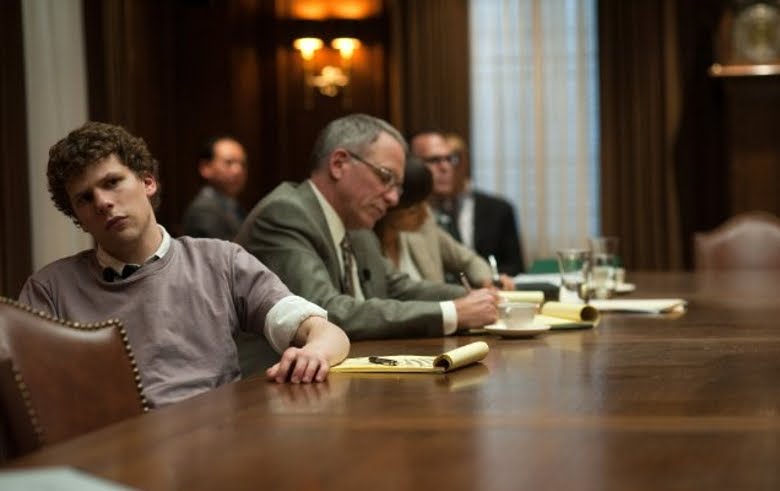
Wu was making a powerful point about Facebook but erred badly in his faint praise of the “recent movie”, the acclaimed David Fincher and Aaron Sorkin film “The Social Network”. It deserves better. Director Fincher reins in the violent storytelling ability he showed in Seven and Fight Club while Sorkin brings the intelligence of the West Wing to the script. The result is a brilliant but tight expose of how and why the biggest social network of our generation came into being.

How Facebook became “The Social Network” is indubitably the story of its chief founder Mark Zuckerberg. The 27 year-old New Yorker officially owns just under a quarter of Facebook but his mindshare in the company is a lot closer to one hundred percent. The story of the film is set in the recent past with Zuckerberg facing two law suits from those that feel they lost out while Zuckerberg made billions. “You’re not an asshole, you’re just trying really hard to be one,” one sympathetic female lawyer said in the film, yet whether he was or wasn’t became immaterial to the film's purpose.

Zuckerberg didn’t cooperate with the filmmakers yet right from the electric opening scene, we see a strange hagiography emerging. Zuckerberg harangues a soon-to-be-ex-girlfriend and paints himself as an intensely burning candle with little or no thought to what way his smoke went out. Jesse Eisenberg’s gift is to make audiences awed by his audacity and awareness of opportunity as much as they detest the way he treats people. Sorkin and Fincher are both 20 years older than their main character and it may they are trying to channel their own X-gen faults with women through the Zuckerberg they came up with. His jilting/jilted lover is “Erica Albright” who is made up for dramatic purposes (his real girlfriend is Priscilla Chan) but it isn’t difficult to believe he might be that chimeric with women.

Aided by a deft soundtrack by Trent Reznor, the plot surges along in a manner most would not associate with computer nerds. We see how Zuckerberg and his friends turned a new idea called “the Facebook” (complete with definite article, it is a pre-Internet Ivy League invention to describe a set of photographic data that defined a student) into a success story. As it gets closer to becoming a billion dollar industry, bottom feeders such as Sean Parker (played with Best Supporting Actor Oscar-winning conviction by Justin Timberlake) start to shape Zuckerberg’s vision.

Zuckerberg’s Brazilian friend Eduardo Saverin (Andrew Garfield) provides inspiration in the shape of intellectual honesty as well as a mathematical algorithm and funds to keep the server running. The film is based on the book "The Accidental Billionaires" a semi-fictional account that tells the story primarily from Saverin's point of view. But in the movie Saverin overplays his hand and is ousted by the Machiavellian Parker. The eventual feud forms one of the two dramatised court cases; the other being Zuckerberg’s fight with the Winkelvoss twins (both effortlessly played by Arnie Hammer) who claim they gave him the idea to use the Harvard .edu domain to promote the social network. Zuckerberg tells the “Winkelvi” if it was their idea then they would have done it. The filmmakers’ sympathy is with the nerdy Jew over his upper-class co-religionists.

How much he has won since that battle was shown in a new item this week on the BBC about a fight between Facebook and fellow Internet heavyweight Google. Facebook has offered users a workaround after Google Gmail blocked the export of contact material because Facebook “did not share its data reciprocally”. Mike Davis, a senior analyst with research firm Ovum, told the BBC the stand-off says a lot about the developing rivalry between the two firms. "Facebook is a significant challenge to Google's dominance of the web sphere and it has decided that it doesn't want to give Facebook any more advantage,” he said. "This is Google waking up to the fact that it was the next big thing and that now Facebook is," he said.

Because Facebook’s phenomenal reach shows little sign of slowing, there are those who worry greatly about its power. Criticism to date has focused on data mining, child safety, and the inability to terminate accounts without first manually deleting all the content. But there is a bigger hankering issue which Wu alluded to earlier. In the film Zuckerberg acknowledges Facebook’s phenomenal growth is based on its “cool” value Wu called the “mutual agreement to tell others who you are”. But when Zuckerberg himself is such a cipher, why should we treat the agreement as mutual? Without a foreign policy to guide us, Fincher and Sorkin have done us a favour by asking the question.

Sunday, May 30, 2010

Beneath Hill 60: Inside the circles of hell

There is a scene in the excellent Australian film “Beneath Hill 60” where two German soldiers are talking about the consequences after they have realised the enemy is about to blow their position sky high.
“Why don’t we just move back,” said one, reasonably. “After all Europe is a big place, one hill is not going to make any difference.”
The other is mortally offended.
“Our High Command would never consider it. The place is filled with German blood. You simply don’t understand war,” he concluded imperiously.

Understanding war is indeed a difficult task, particularly something as nasty, brutish and long as the First World War. The anonymous and unimpressive Hill 60 (deserving only of a number) was a particularly senseless battlefield in an extremely senseless war. The hill changed hands several times both before and after the events depicted in the film. The objective became meaningless over time and took millions of lives in the process. In some ways WW1 was the ultimate salute to the absurdity of modernism.

Tho events beneath Hill 60 are a little known adjunct to the 1917 Battle of Messines near Ypres in Flanders, Belgium. Based on the diaries of Captain Oliver Woodward, David Roach’s screenplay tells the stories of the 1st Australian Tunnelling Company a group of miners and engineers cobbled together for the task of digging passages under enemy lines. Woodward was a Queensland miner brought in specially for the task. The plan at Messines was to lay 21 mines with almost 500 tonnes of ammonal explosives underneath German lines deep in the blue clay 25 metres below the soggy upper-level soil.

The plan was the brainchild of Viscount and Field Marshal Herbert Charles Onslow Plumer. Despite the toffish name and the Blimp-like reputation of many fellow World War I generals, Plumer was one of the finest army commanders on the Western Front. It helped he had an infantry background not cavalry and was not addicted to the grand but futile charges so beloved of many of his peers.

The idea for tunnels (attachment is a rich text file) came from the Germans. When the trench warfare was deadlocked in 1915 German Engineers realised the possibilities of literally undermining British morale by building a system of tunnels under their lines and detonating large charges of explosives. The British retaliated and began a rapid recruitment program of English and Welsh miners. The Government and mine owners objected and the net was cast further wide to Canada and Australia.

For almost 12 months ahead of the Messines battle, Plumer organised the digging of the mines which would be detonated prior to a ground assault. The evening before the attack, he told his staff, "Gentlemen, we may not make history tomorrow, but we shall certainly change the geography.”

19 of the 21 mines laid exploded and according to the British newspapers, Londoners were startled out of their sleep at 3.10am by the sound of the huge explosion. German positions were shattered and their menacing high ground defence disappeared in an instance. The British advanced a few miles but the poor condition of the shell-torn terrain prevented them from following up the advantage.

In the end Hill 60 was just another death-ridden postscript to a vengeful war of attrition that destroyed a generation of young men across the "big place" of Europe and its imperial outposts. As ominously foreshadowed by the equally vicious American Civil War 50 years earlier, here were industrialised nations fighting with technologically advanced, mass-produced weapons which enabled killing and wounding on an unprecedented scale. 20 million people died and 20 million more were injured. The callous lack of regard for life it showed up led to the real war to end all wars 20 years later.

Jeremy Sims’ film Beneath Hill 60 gives us a window into that world. It is a below-basement level window and the claustrophobia of the Australian tunnellers it depicts is deftly handled. Though set in the months leading to June 1917, the weather is invariably cruel, wet and miserable. It is truly T.S. Eliot’s The Waste Land
April is the cruellest month, breeding
Lilacs out of the dead land, mixing
Memory and desire, stirring
Dull roots with spring rain.

Sims takes us under the dull roots of the waste land to confront a human-engineered hell. The story contrasts springtime fertility with the black and muddy stench of death. The Australian flashback scenes invert the seasons as well as tone of the film. But as the only Australian scene in the film that is not a flashback shows, there is little chance for redemption for those who have visited the circles of hell under Hill 60; the best anyone can hope for is a painful and memory-scarred survival.

No wonder so many survivors don’t like talking of their war experiences. War is the very antithesis of life. That's why so few people understand it.

Saturday, May 15, 2010

Iraq trapped inside the Hurt Locker

Iraq was reminded this week the country is still not an entirely safe place for civilians. Yesterday a bomb exploded at a football match in the northern city of Mosul killing 25 people and injuring another 120. The carnage was caused by a car bomb quickly followed by a suicide bomber. The incident came four days after a series of attacks in five cities killed 110 people in the bloodiest violence this year. Politicians have blamed Al Qaeda as the country struggled to form a government two months after an indecisive general election. The formation of a stable government is a crucial step in ensuring US combat troops leave the country by 31 August – almost seven and a half years since the Bush Administration launched its invasion.

I was reminded of all these things as I went to watch The Hurt Locker last night. The film tells the story of a US bomb disposal team in the early years after the invasion. The title of the film refers to the place where an explosion sends you to – a private world of pain. It is a fitting allegory for the film because despite the fact it was filmed on near-location (Jordan) using many Iraqi refugees in minor parts, it fails to humanise anyone other than the three American participants of the bomb squad.

This is hardly unusual in American war films. But The Hurt Locker is a particular disappointment given the positive critical reception it has received. It was based on the Iraqi accounts of embedded freelance journalist Mark Boal, who also wrote the screenplay. As a journalist Boal should have been honest enough to look at the conflict from both sides. But the film never rises above a depiction of Iraqis as “the other”.

Director Kathryn Bigelow’s stated desire was to immerse the audience into something that was “raw, immediate and visceral” and to some extent she succeeded. But ultimately her movie put us in the position of the “fourth man in the humvee” and not the women looking fearfully out the window, or the boys in the alley or the men at the mosque or the souk. The Iraqis were never humanised. Significantly one of few Iraqis to be named was the boy called “Beckham” in honour of a footballer of a country that was also at war in Iraq. The name “Beckham” was a mask, and even peeled off it was never fully resolved as the American protagonist mistakenly believes he is dead. All these native boys look alike.

The film reveals the massive problem the US faced in its invasion of Iraq and still does in its Afghan incursion. There is a local lack of empathy with the people whose lives they have interrupted. Hardly any of the invaders speak Arabic (even less so Pashto and Dari), and no one has any cultural affinity with the places they must serve in. Yes, their job was difficult and they faced hostility but nowhere in the film did anyone ask what they were doing in Iraq in the first place. There is no political context and not even a hint of the role oil played in the invasion.

The Hurt Locker does a wonderful white knuckle job of getting into the day to day stresses of a bomb disposal squad. But it offered no insight to American audiences on why the bombs were there in the first place. Saddam Hussein was a cruel and vicious tyrant but he was created in America’s image. When the Republican Guard crumbled in 2003, the US was unprepared for what might follow. A county that had suffered almost continual war or sanctions since 1980 was on the brink of collapse and many desperate people had nothing to lose by declaring jihad on the invaders. “The poor man’s air force” did much to harden opinion against the invasion in both Iraq and the US. The nasty legacy is that many will remain attracted to the violence well after Obama has withdrawn the troops. Iraq has a long way to go before it can escape the Hurt Locker.

Friday, April 02, 2010

Invictus: a Morgan Freeman Mandela masterclass

Out of the night that covers me,
Black as the pit from pole to pole,
I thank whatever gods may be
For my unconquerable soul.
In the fell clutch of circumstance
I have not winced nor cried aloud.
Under the bludgeonings of chance
My head is bloody, but unbowed.
Beyond this place of wrath and tears
Looms but the Horror of the shade,
And yet the menace of the years
Finds and shall find me unafraid.
It matters not how strait the gate,
How charged with punishments the scroll,
I am the master of my fate:
I am the captain of my soul.
(Invictus, William Ernest Henley, 1875).

This is the short poem that gave its name to Clint Eastwood’s most recent film. The poem was favourite of Nelson Mandela during his many years imprisoned in the horror of the shade at Robben Island. The story of the first year of his presidency after his 1994 election win and how it interwove with South Africa’s win in the 1995 rugby world cup makes for a superior couple of hours in entertainment in a typically thoughtful Clint Eastwood fashion. (photo:Wikipedia)

It makes for important viewing as South Africa is about to enter the world cup spotlight again, this time in the sport favoured by the black majority – football. Football would be hard enough to sell to an American audience, but promoting a movie in the US about Nelson Mandela, South Africa after apartheid and rugby is hard work even for a master filmmaker like Eastwood. Ideally it would have had an all South African cast but Hollywood backers demanded the star power of Matt Damon and Morgan Freeman (it is notable the movie poster has Damon facing the camera and Freeman with his back turned). Yet both these casting decisions are spot on. As Roger Ebert said, Eastwood is too old and too accomplished to have an interest in making a film only for money. Damon I always find the woodenest of actors but I also suspect that is all that is required to nail the character of Springbok captain Francois Pienaar.

For Freeman this is one of the great roles and one which he lives and breathes. Everyone knows what Nelson Mandela looks like, but Freeman allowed you to forget that for a couple of hours while he inhaled the spirit of the man. Unfortunately the American tendency to have all things end with cheesy triumph spoils the film somewhat as the Springbok’s world cup win was a somewhat illusory event on the road to rainbow nationhood. The nation remains deeply divided with the political power entrenched in ANC hands but most of the economic power still with the white minority. The mutual backslapping and cheering that seems to be compulsory to the ending of American films makes its way here though undoubtedly the 1995 victory was shared by nearly all South Africans (if perhaps not together).

What the film does brilliantly bring out is how Mandela used the Springboks as a political tool (though some aspects were fictionalised). The Boks were a despised key part of the apartheid establishment and a focus for world anger whenever they toured abroad. It was unsurprising that the ANC wanted to change the colours, symbols and nickname to the more benign “Proteas” (as used by the cricket team). What Mandela saw was the “bread and circuses” aspect of sport and how it could be used as a tool to unify the nation. That meant keeping the old symbols but divesting them of their original meaning.

The fairytale win of South Africa in that tournament is faithfully replicated. Rugby with its choreographed moves and often languid tempo lends itself well to cinematography (one of the reasons there has never been a great football movie is that the round ball code is too unpredictable). The characters of the players never much rise beyond predictable “black = terrorist” views so it is difficult to empathise with them. The sub-story of how Mandela’s black and white security staff deal with each other has more promise and more complex characters (the black leader’s injunction to a white guard to “smile” at a black meeting is one of the funnier moments).

But what the film really is about is Mandela, and the film really shines whenever there is a scene involving Morgan Freeman. It is easy to see how Matiba is venerated by black South Africans when the mirror of his soul is played with such rare accomplishment by Morgan Freeman. The real Nelson Mandela turns 92 this year. The UN have decided his birthday 18 July, will henceforth be known as Mandela Day. As secular saints go there are few finer, but Invictus is no hagiography. It is a noble tribute to a man whose unconquerable soul made him one of the world’s finest politicians of the 20th century.

Wednesday, September 02, 2009

Waltz with Bashir: re-examining Israel's 1982 war in Lebanon

(pic by Wolf Gang)

I watched the wonderful animated Israeli film Waltz with Bashir on TV tonight and was reminded of the first time I saw it on a rainy night in a Dublin cinema last year. It was just before Christmas and the film's bright and vivid colours were an antidote to the grey of Irish winter. The subject matter, a genocide in the 1982 Israel-Lebanon war remains shocking despite the passing of the years. My interest in the film was also piqued by a recent visit to the Middle East. I had travelled overland from Turkey to Israel a month earlier. I avoided Lebanon, perhaps a bit afraid but I was also fascinated by the region and its seemingly intractable problems. So I expected the film to say a lot about Israel and Lebanon and I wasn't disappointed. What I did not expect was that the film would also say much about the fragile and treacherous nature of memory.

I also thought of the selectiveness of my own memories of Israel. My overriding impression was of a siege society. Though I never felt particularly unsafe, every public building is a terrorist target and long queues for searches are commonplace. The only people not searched are the young men and women in uniform who carried guns into railway stations with the same insouciance as others carry guitars. They carried them in uniform and in mufti. They carried them on the streets and in the markets and the cinemas and cafes. They nestled up to them on buses and trains in Jerusalem's thriving new city. They also patrolled with them along the ancient chequered streets of the Old City. This epicentre of the Israel’s problems since the 1967 Six Day War is divided by its Jewish, Christian, Armenians and Arab quarters and also by the sensitive and doubly disputed Temple Mount, which is cordoned off behind razor wire.

But perhaps the Israelis are right to feel paranoid. In 61 years of existence, the nation has found it difficult to convince its neighbours it should exist at all. Border travel is only possible to Sinai and to Jordan where a three-hour grilling is likely from suspicious hosts that prefer their visitors to arrive and leave via the front door at Ben Gurion airport. At Allenby Bridge, the Israelis want to know where you have been and where you are going. They want to know where you are staying in Israel. They would particularly like to know if you are going to the West Bank or Gaza.

In asking these questions, Israel is attempting to cover its guilt. Because despite its first world status in a third world Arab region, Israel has never properly dealt with the people it shares Palestine with. Like the Jews, the Palestinian Arabs also have an affinity with their land and they know 1948, the year the Israeli state was founded, as Al Nakbar - “The catastrophe”. Hundreds of thousands were forced off their land and became refugees in the West Bank, Gaza, Jordan and southern Lebanon.

The Palestinians weren’t wanted anywhere, but Lebanon was particularly difficult. This small but always vibrant country has long been a strategic melting pot. It was already a patchwork of different religious groups before 100,000 mainly Sunni Islam Palestinian arrived. Most were treated with hostility. There hasn’t been a census in Lebanon since 1932 because the powerful Christian Maronites don’t want confirmation the population is shifting towards Islam. The arrival of the Palestinians was a major factor in the complex civil war that tore the country apart between 1975 and 1990. The Mediterranean metropolis Beirut was destroyed many times over, the US and Israelis were dragged in and in the end Syria established a fragile hegemony over the warring tribes.

The Lebanese Palestinians were disenfranchised and living in squalid camps. These camps were the seeds for the PLO which used the cover of the civil war to wage their own counter-insurgency across the border on Israel. In April 1982, a PLO splinter group shot an Israel diplomat in London. Although the victim survived, this was the excuse Israel needed to invade southern Lebanon. They established a buffer zone with tacit American support.

Waltz with Bashir tells the story of this chaotic invasion. The Bashir of the title is Bachir Gemayel who led the Maronite Phalangists during the Civil War. Gemayel was a hero to his people and his face was a ubiquitous presence on posters and walls across Beirut. His Christian militia supported the Israeli invasion (though not in public) as both forces saw the PLO as the enemy. For two months Israel enforced the 40km buffer zone while they negotiated with Gemayel for him to become Lebanese Prime Minister with their support. But in September 1982 a bomb detonated at his HQ killing him and 26 other senior Phalangists. Though it was a fellow Christian employed by Syria who would later be convicted, the murder gave Israeli PM Menachem Begin to perfect excuse to expand the war against the PLO. Israel invaded Beirut, breaching a guarantee Begin gave the US not to do so.

The name of the film comes from the elaborate dance-like steps taken by one Israeli soldier to avoid sniper fire while running across a Beirut street illuminated by a background of a giant poster of Gemayel. The scene is played out like a waltz but it was far from serene. The Israelis overwhelming firepower allied to the Phalangist support soon secured the city. Once in power Gemayel’s people thirsted for vengeance against their PLO enemies. With IDF permission, 1,500 of their fighters entered the Shabra and Shatila refugee camps where the last PLO militants hid out among the refugees. The Israelis assisted their operation by continually lighting flares to assist their night-time activities.

Over the next two days, they went on a reign of terror. There is no agreed list of casualties but the Red Cross counted 300 deaths and said there were many more. The Israelis went further and admitted 800 civilians died. But various Palestinian bodies, including Red Crescent say the real death toll was several thousand. Whatever it was, Israel did not call off the slaughter until a TV journalist named Ron Ben-Yishai threatened to tell the world about it. A subsequent Israeli inquiry blasted the IDF for doing nothing to stop the genocide.

Waltz with Bashir is a film of laughter and forgetting. It was made by Ari Folman who was a 19 year old infantryman at the time of the war. Folman had lost his memories of the Lebanon campaign and was attempting to piece them back together with the help of people he served with. The film received mixed reviews in Israel with some saying he was too sympathetic to the IDF and others finding the parallels between the Palestinian camps and Nazi camps distasteful. The film is banned in Lebanon but 90 people attended a private screening in Beirut in January. Folman was delighted. "I wanted to show young people what war really looks like without glam and glory, without brotherhood of man and all the stupid things you might see in big American anti-war movies,” he said at the time. “Maybe that will convince them not to attend the next war that our leaders are cooking up for us."

Monday, August 10, 2009

Balibo at Brisbane International Film Festival

At the end of August East Timor celebrates the tenth anniversary of the remarkable referendum that would lead to its independence a year later. It was a stunning achievement for a country that had been forcibly occupied by Indonesia for 24 years after being abandoned by former colonial masters Portugal. The story of the fall of East Timor in 1975 is also one of Australia’s most shameful moments in foreign affairs and one that does no credit to either the Labor or Liberal governments that straddled the invasion period.

Tonight I went to the closing night of the Brisbane International Film Festival to see an important film about the period. Balibo (which today won two of BIFF's five jury prizes) tells the story of the five Australian and New Zealand television journalists who were killed at the border town for which the film is named. Balibo also tells the story of freelance reporter Roger East who was killed in Dili when he tried to find out the fate of the original five. All six were executed by Indonesian invaders a fact not admitted by Jakarta to this day. The official line is that the Balibo five were killed in “crossfire” while there has never been a satisfactory explanation for East’s death. Movie director Robert Connolly spoke to the audience of his desire for justice for these men before the start of the film and reiterated the point that this was an unashamedly political picture.

The lead character in Balibo is the sixth man, Roger East, played by Anthony LaPaglia who also produced the film. East was a Darwin based journalist in his early 50s who had served in the navy in World War II and covered many conflicts across the world as a journalist. As the Indonesian military build-up grew in late 1975, East was paying growing attention to what was going on across the Timor Sea. In October he was contacted by Jose Ramos Horta (played with great flair by American actor Oscar Isaac) who wanted him to set up a news agency in Timor to counteract Indonesian propaganda. East was reluctant but took the job when he heard that five journalists working for Channels Seven and Nine had gone missing in Balibo.

East arrived in Dili early the following month and on 10 November he scooped AAP and Reuters when he published eyewitness accounts of the death of the five journalists. The story of the five is interspersed with East's story in grainy flashbacks. According to the film East and Ramos Horta went to Balibo together but there is no evidence this actually happened. East did intend to travel to the front line but in the end the front line came to him. He stayed at the waterfront Hotel Turismo and refused Fretelin pleas to move to the rear of the town where he could escape to the mountains. The hotel was too handy to the telephones out of the country. So East was caught out when the invasion happened.

On 6 December, US President Gerald Ford and his Secretary of State Henry Kissinger visited Jakarta where they gave Indonesia the green light for the overthrow of the “Communist” Fretelin government. The general invasion of East Timor "Operation Komodo" began a day later with parachute drops of Indonesian troops into Dili. At 7am, East left the hotel and went to the nearby Marconi communication centre. He contacted Darwin to say that troops were in the city and the airport had been taken. East also said he expected the communication centre to fall soon. As Desmond Ball and Hamish McDonald’s book “Death in Balibo, Lies in Canberra” says, this communication probably cost East his life. A Timorese misson sent to rescue him failed when it encountered heavy Indonesian resistance.

In the film Balibo, East was captured in the communication centre, but this is contradicted by Ball and McDonald’s account. They say he hid out in Dili for most of that day and night. However he was eventionally arrested either during the night or early the next morning and taken to the port. At 8am, eye-witnesses saw him with his hand tied behind his back with wire at the side of the pier. He was executed by rifle fire. His body floated in the water alongside dozens of others who were either associated with Fretelin or picked out because they were Chinese.

The newly installed Fraser Government followed the lead of Whitlam and did their bit to help Indonesia by confiscating pro-Fretelin transmitter equipment near Darwin. Over 130,000 people would die in the 24 bitter years of fighting that followed. But the Timorese never accepted their status as Indonesians and eventually wore the invaders down. Australia would eventually restore some of its reputation in Timor with its lead role in restoring peace under the UNMISET mission.

But Connolly and LaPaglia’s film is determined to get justice for the six Australians who died in the invasion. On the weekend LaPaglia said the filmmakers felt a responsibility to the families of the dead journalists. "For us to make a crap movie about their loved ones would have just been rubbing salt into the wound, so we took a great deal of care - assembling the script and cross-checking all the facts,” he said. “That's why it took seven years.” Despite it not quite being the "true story" it promises to be, the end product is well worth the wait.

Thursday, June 18, 2009

Romero Centre refugee week film festival at Yungaba

Life throws up a few unexpected pleasures from time to time. If I hadn't checked Facebook this morning, I wouldn't have known Andrew Bartlett was broadcasting live on 4ZZZ Brisbane community radio at the time. if I hadn't listened in, I wouldn't have heard the interview he did about refugees with Kathi McCulloch, the coordinator of the Romero Centre. If I hadn't heard the interview I wouldn't have known that there was a Refugee Week film festival tonight at the wonderful Kangaroo Point building known as Yungaba. So on the spur of the moment, I went along and was treated to an evening of three films, discussion, food and drink, and good company.

The Romero Centre is a faith-based ecumenical social justice organisation. The centre is named for El Salvadorian Catholic Archbishop Oscar Romero who was assassinated by his own government in 1980 for fighting human abuses. As part of the spiteful regime of the former Howard Government, the Romero Centre was ineligible for funding from the Department of Immigration because of its work with Temporary Protection Visa (TPV) holders. Now that is beginning to change and new funding possibilities are opening up along with the great ideas they can purchase.

The film festival about refugees is one such great idea and Yungaba is a perfect venue to host it. The heritage listed building was built as an immigration depot for Brisbane in 1885. For over a hundred years it became a local version of Ellis Island and was listed recently as a Queensland icon. But the building has now been sold to private developers who will probably turn it in to boutique apartments for the wealthy. In the meantime it was an honour to be among a hundred people at one of the final public gatherings in what McCulloch called this “joyous space”.

There were three films shown in the festival, all of which touched on the refugee experience. The first, and shortest, was “See Through Me” a collection of tough street experiences of ten young Somali-Australian immigrants made by the Refugee Health Research Centre of La Trobe University in Melbourne. The “fight or flight” mentality became easier to see from their perspective. As one Somali boy said when taunted by a gang, “I was outnumbered, I had to ignore them or I would have copped the damage”.

The second film was Freedom or Death. “Freedom or Death” was the slogan of the refugees held in Nauru detention centre for several shameful years during the height of John Howard’s notorious Pacific Solution. The mendicant state of Nauru was bought off by the Australian Government to house boatpeople in an environment that was excised from Australian law. The refugees became sick of living with no hope of release in an environment where phosphate got into the food and into the feet. They fought back with the only weapons they had: their bodies. Howard branded the Nauru 2003 hunger strike as “blackmail” and refused to negotiate with them. But as lawyer Julian Burnside said “they were playing the only card they had”.

Out of their midst emerged a born leader. Chaman Shah Nasiri (pictured seated next to Kathi McCulloch) was a young man whose dignity could not be repressed and it was he who got his fellow inmates to end the hunger strike before anyone died. Chaman, like most of the rest of them, is a Hazara, a Shia community which were heavily discriminated against in Sunni Taliban Afghanistan. He described the terror of trying to get to Australia in leaky, dangerous boats and pay $16,000 for the privilege. He was a natural spokesman for the group and he was in the delegation that spoke to the then-Immigration Minister Amanda Vanstone’s office in 2003. Chaman is now happy to be settled in Australia where “he can breathe the air of freedom” and reminded the audience that Australia is a signatory of the UNHCR convention/protocol on refugees.

The final film was called “Pacific Solution: from Afghanistan to Aotearoa”. It tells the story of those rescued from the MV Tampa in 2001 who were taken in by New Zealand. While Australia and New Zealand share a common colonial heritage, they treated refugees radically differently in the early 2000s. While Howard banged on stridently about “us” deciding who could stay in Australia and under what conditions, the Helen Clark government took a more compassionate approach (often against the anger of many New Zealanders worried about immigration). New Zealand immediately accepted 131 of the 438 Tampa asylum seekers (including about 40 unaccompanied boys). The film took in the touching story of how the rest of the family joined one of these boys in Auckland, and the culture and language difficulties they found on arrival. This family was also Hazara and had to leave Afghanistan. As Julian Burnside said “when your own country wants to kill you…what choice do you have?”

While TPVs and Nauru are gone, the problem has not fully gone away. There is compassion fatigue within the industry. The media is always ready to play up fears about “border protection”, despite the reality that Australia is no danger of being “swamped” by refugees. The current Australian Government is worried about being wedged on the issue – they remember only too well that Howard had a 90 percent approval rating over Tampa. Yet they could also do well from learning how the Kiwis quietly and effectively dealt with the problem. Refugees need help and by international law and the covenants that Australia has signed, we must help them. Nights like tonight at Yungaba are a useful reminder of how that help can be sustained at an individual level.

Thursday, June 11, 2009

State of Play: Will the Internet kill the newspaper movie?

I went to Stafford cinema last night to watch Russell Crowe’s journalist caper movie State of Play. It is always constructive to understand why a film gets its name and in this case it is not entirely obvious from the political thriller plot. As far as I can see, the State of Play is that of the newspaper industry itself hovering on the brink of total collapse as is its 20th century revenue model. The film is no less than an elegy for newspaper values and the movies written about them.

State of Play's Scottish filmmaker Kevin McDonald is a former journalist. He brings an attention to detail to the piece which transports a 2003 BBC miniseries across the pond and condenses six hours to two. In many ways a standard Hollywood thriller that tries too hard to please, McDonald’s movie still says something important about the parlous state of industrial journalism in the world. Set in a fictional large newsroom in Washington DC, the film has a lot to say about the challenges newsprint is facing to survive; both from the disappearing advertising imperative and the impact of the new practices of digital media.

The central character is Crowe’s Cal McAffrey, a scruffy “old-style” journalist who uses his wide-ranging connections to get to the salient facts of any case. McAffrey is sartorial challenged but is adept at working his sources and knowing what news angles to use in any given situation. His employers, the fictional Washington Globe, serves as a cipher for the Washington Post and the film’s attempt to uncover dirty political tricks is redolent of the Woodward/Bernstein story in All the Presidents’ Men. But while owners such as Katherine Graham (now dead) and Warren Buffett have respected the venerable nature of the Post, the fictional paper has been taken over by the money men who want to see quick returns on their investment. The new owners are more interested in profits than Pulitzers.

The paper’s editor is played in Graham-style by Helen Mirren. She has to juggle the demands of her new corporate bosses while still encouraging her reporters to get the story. Mirren is keen to support the paper’s online presence. In the film this is portrayed by Rachel McAdam’s character Della Frye – a silly name but a plausible nod to journalistic films of yesteryear such as The Front Page or His Girl Friday. But while Rosalind Russell happily called herself a reporter in the Billy Wilder classic, Frye calls herself a blogger. Defending her new recruit, the editor tells McAffrey why Frye is employed: "she's hungry, she's cheap, and she churns out copy every hour."

While the blogger is initially stereotyped as someone who does not do any fact checking, it quickly turns out that Ms Della Frye is a darn fine reporter who gets under McAffrey’s crusty skin. The old journo lays down the law. "This is a real story, not gossip” he warns her. However this idea that some stories are too deep for blogs is horseshit. As was this line from Frye when Crowe’s character asks her if she is going to blog about it. Her response: "When people read this story, they should have newsprint on their hands." Ah but why, Frye? Such sentimentality is touching except for the fact most people want to read the news for free and not have to wait around for the morning delivery.

But what happens when there is no more morning delivery? Roger Ebert wonders if this will be last newspaper movie with its “eerie valedictory feeling”. Perhaps optimistically Ebert answers his own question in the negative. It will survive, he says, because no matter what happens to newspapers, the newspaper movie is a durable genre. According to Ebert, shouting "stop the presses!" is ever so much more exciting than shouting "stop the upload!"

Yet it is likely the presses will stop regardless of what Hollywood wants. In some ways McDonald realises this with his elegiac closing credits showing the production process of a newspaper. Having filed the story, the credits take the viewers through set plates, whirring presses, collated broadsheets and stacks of newsprint ready for the public’s morning read. As A.O. Scott writes in the New York Times, “the images are stirring and familiar, though in a few years’ time they may look as quaint as engravings of stagecoaches and steam engines.”

The film left unanswered the question of whether either McAffrey or Frye would survive the disappearance of print. To me, it seemed that the young blogger could easily pick up McAffrey’s skills but he would have difficulty picking up hers. No longer could they say of her as the LA Times could say about the archetypal blogger Matt Drudge: “He’s a menace to honest, responsible journalism.” But what Drudge did was challenge the rules of journalism. He bypassed the hierarchies of editor and publisher. Given that these hierarchies are about to disappear, the world will belong to those that master whatever is left behind. That is the true state of play.

Friday, January 16, 2009

Indian premier league: Slumdog Millionaire

It seems difficult to believe, but a plot twist involving Rickie Ponting is the favourite to scoop this year’s Academy awards. Slumdog Millionaire is a hyper-energetic rags-to-riches tale from Danny Boyle which deserves to pick up every Oscar it can lay its hands on. This Britsh-Indian co-production that out-Hollywoods Hollywood (not to mention beating Bollywood) is already scooping awards. This week A R Rahman made history by becoming the first Indian to win a Golden Globe for his score and the film also took out Globes in the fields of best director (Boyle), best screenplay (Simon Beaufoy) and best drama. Drama is the operative word for Slumdog - its shamelessly romantic tale is an old-fashioned heartwarmer that Frank Capra would have been proud of.

Except not many Capra films featured concepts of torture, rape, murder, ethnic violence, gang culture or media exploitation. And Americans would never have filmed a story about the phenomenal growth of Mumbai, slum life and the contradictions and regeneration of India, among other things. The fact is that Slumdog is just too difficult to categorise. Yet it has universal appeal. In Danny Boyle’s capable hands it is a simple film in the best tradition of boy-meets-girl, boy-loses-girl and boy, does he pull out the stops to find her again.

The premise of the story is that the hero, Jamal (played by the British actor Dev Patel who appeared in the Bristol teen drama “Skins”) goes on to the Indian version of Who Wants to be a Millionaire in order to win his girl back. Inadvertently, he gets all the answers right. The authorities are suspicious of a “slumdog” winning the millions and interrogate him to get at the “truth”. The story of how he knows all the answers is told in a series of energetic flashbacks that explain much of Jamal’s eventful life. The plot arc sent movie reviewers scurrying back to Dickens for contrast and comparison. For Roger Ebert, Jamal was Oliver Twist; for James Berardinelli he was David Copperfield.

But this is an ancient story which is dressed up in modern clothes. There is a real life Indian version of Millionaire called “Kaun Banega Crorepati” (which translates as who wants to be a “ten millionaire” according to the inflated value of the rupee). The joke here is that the show’s host is Amitabh Bachchan, the 1970s Indian film star who is the answer to the first of the questions that lead Jamal to his magic millions. The clever script is by Simon Beaufoy (who also wrote The Full Monty) and is based on "Q&A" a novel by Vikas Swarup. Swarup is a level-headed Indian diplomat who doubles as a writer of fiction. But even he has been overwhelmed by the reception of the film treatment of his book having done 30 interviews in the last two days.

The Slumdog phenomenon has even affected the normally starchy Guardian critic Peter Bradshaw who admitted he was forced to enjoy the film. “Despite being overpraised” he said, “this is still very effective entertainment.” However in typical Guardian fashion the spoilsport Bradshaw notes out the film is co-produced by Celador Films who own the rights to the original TV show “and so it functions as a feature-length product placement for the programme.” Yet as Bradshaw himself admits, it would be churlish to deny the film’s wonderful entertainment value. Like Jamal, Slumdog Millionaire is a winner: it is written.

Wednesday, January 17, 2007

God Save the Queen

In an early signal of intent for the Oscars, Helen Mirren made off with best actress at LA's Golden Globe awards overnight. Mirren won the award for her starring role as Elizabeth II in Stephen Frears' "The Queen". The film tells the story of the days following Diana’s death in 1997 and the Queen’s awkward relationship with the newly elected Labour Prime Minister Tony Blair. Accepting the award Mirren said Elizabeth Windsor at the age of 25 walked into the role of a lifetime. "I honestly feel this award belongs to her, because I think you fell in love with her, not with me," Mirren said.

Whether you fell in love with her or not, “The Queen” is an excellent treatise on three forms of power. These are the unwritten constitutional power of the monarchy, the executive powers of the Prime Minister and the social and commercial power of the Fourth Estate; the media that set the agenda during the tumultuous week after Diana died. The Queen badly misread public opinion, the flames were fanned by the attack dogs of the media and the media-savvy Blair came to the royal rescue, saving the Windsors from themselves and gaining giddy new heights of popularity for himself.

The narrative starts three months earlier on the day Blair is elected to end 18 years of Tory rule. On his way to Buckingham Palace to accept his appointment he is coached by royal flunkeys on the correct way to address Her Majesty: “It is ma’am as in ham, not marm as in farm”. Meanwhile the Queen bemoans to her artist she not allowed to vote and enjoy the thrill of “being partial”. The Queen has the upper hand at the first meeting. She tells Blair that he is her tenth Prime Minister and the first of those, Winston Churchill, coached her well in the ways of life.

Both the Queen and Blair are woken up in the early hours of Sunday 30 August 1997 to hear the news Diana was in a car crash in Paris. The royals and the Blairs are glued to the 24 hour news stations to watch the consequences just like all their subjects. When the news comes through that Diana is dead, Blair is quickest to read the public mood. His media chief and spin doctor Alastair Campbell coined the phrase “people’s princess” for Blair’s first speech on the morning of Diana’s death. That sound byte and Blair’s interview are repeated ad nauseum on media outlets for the next few days.

Meanwhile the Windsors are holed up in their summer retreat at Balmoral Castle stalking deer. Remote from the goings-on in London, the Queen has no desire to make a public statement, return to Buckingham Palace or show any public sign of grief. Diana is no longer a member of the Royal Family and therefore there is no reason to change plans one iota. While the crowds gathered on the Mall in an astonishing outcry of public grief for an ex-Royal, the sitcom Royal/Royle family gather around a TV set watching the coverage with disbelieving eyes and expressions of ingratitude. When a commoner grumbles about the lack of a half-mast flag on the empty palace, Prince Phillip is exasperated about the media and public’s lack of knowledge of royal protocol. When Blair rings the Queen to complain about her inaction she tells him how her family prefers to grieve quietly and with dignity. "That’s how we do things in this country, and that’s what the rest of the world admires us for," Mirren's Queen says.

But even if that were true, the Queen could not grieve quietly. The royal family became caught up in the politics of global mourning. Australian academic Rosanne Kennedy perceptively noted that Diana, unlike Charles, had a remarkable ability to re-invent her image, and in that regard, was a very modern figure. According to Kennedy, Diana’s 16 years in the media spotlight saw her represented as “a naive nineteen-year-old kindergarten teacher, a fairytale princess, to a depressed, bulimic wife and mother, to an angry divorcee, to a confessional talk show interviewee, to a glamorous cover-girl with a humanitarian message and a political mission”. Diana’s use of the confessional genre enabled ordinary people to feel that they knew her and could identify with her. But it put her starkly at odds with the preferred Royal approach of “quietness and dignity”.

Eventually the pressure is overwhelming and the Windsors agree to London and a public funeral. Prince Philip rages against the decision and the fact the funeral will be full of “homosexuals and celebrities”. But they had to bow to the power of the media and public pressure. The Queen had to grin (or smile politely) and bear it as Diana’s funeral was a global event watched by billions.

The film concludes with a postscript several weeks later. Recalling the first scene, Blair goes to the Palace to visit the Queen. The dynamic of their relationship has changed drastically as a result of Diana’s death. Though the relationship remains frosty, there is a new mutual respect between sovereign and executive leader that emerges in their curious circular conversation. The Queen has a prophetic message for Blair that he too might some day become a media figure of hate. The parallels between Diana and the current fuss over Prince William's girlfriend Kate Middleton are also striking. But although the ghost of Diana haunts the film, "The Queen" remains Helen Mirren’s film. Hers is a superlative performance inking out the depths of an unfathomable enigma. Throughout the whole ordeal, her Elizabeth remains a cool, stoic figure capable of evoking sympathy from even the most ardent republican for her dedication to what she saw as her oath of duty.

Mirren fully deserves the Golden Globe for her performance. Shawn Levy of the Oregonian has perhaps the most perceptive commentary on her performance: “Through her diplomatic tussles with Blair, her rustic Highlands romps, her firm dealings with her frustrated son and opinionated husband, her quiet colloquies with her shrewd mother, and her gradual recognition that her stolid response to Diana's death has pained her subjects, Mirren plays an otherworldly woman in a fashion that's palpably real and human.”


The remarkably adaptable veteran director Stephen Frears throws in some cinematic flourishes along the way. Frears contrasts the grand pomp of the Queen’s scenes by filming them in 35mm against the informality and fish finger dinner scenes of the Blair household shot on handheld Super-16. Most scenes are handled deftly with clever, believable and often hilarious dialogue. Only the allegory of the “14-pointed” stag (for the huntress Diana) is clumsy and ill-conceived. Frears reprises his work with writer Peter Morgan and actor Michael Sheen from the 2003 British telemovie The Deal which tells of the Machiavellian shenanigans between Blair (again played by Sheen) and Gordon Brown that led to Blair’s ascent to the leadership of the Labour Party. The film “The Queen” is, in many ways, Act 2 of The Deal.