Showing posts with label medicine. Show all posts

Wednesday, June 25, 2008

Cuba announces world's first lung cancer vaccine

Yesterday Cuban scientists announced a vaccine to extend the lives of lung cancer sufferers would be made available to the Cuban Health Service. Speaking in Havana, Gisela Gonzalez said the product, called CimaVax EGF, is the first registered vaccine in the world designed to battle lung cancer. The drug could add five months to a lung cancer sufferer’s life. Gonzales, who heads the medical team that developed the compound, said the vaccine is based on proteins that trigger an immune response from the patient's body and has few side effects compared to chemotherapy because it's a modified protein that attacks only cancer cells.

The CimaVax EGF vaccine is available in Cuba, and will be commercialised in Latin America, starting in Peru. Advanced clinical tests are happening at 18 Cuban hospitals on 579 lung cancer victims. Other tests were carried out in Canada and Britain, while tests are scheduled in Malaysia, Peru, and China. The EGF in the name stands for Epidermal Growth Factor (EGF) which is a protein capable of stimulating cellular proliferation but is also a cancer risk. The vaccine links it to another protein that helps the immune system to create the desired immune response against the EGF. The effect is a decrease in tumour growth.

The vaccine has been developed by Havana’s Centre of Molecular Immunology (CIM). The centre’s mission is to produce biopharmaceuticals products to be used in cancer treatments in the Cuban Public Healthcare System. Its products include antibodies for use in organ transplant rejection, treatments for anemia, the blood disorder neutropenia, and tumour imaging as well as antibodies that recognise growth factor receptors for cancer treatment. The centre is part of Cuba's thriving state-run biotechnology sector which includes 50 research and development centres and is one of the most advanced in the developing world.

People from outside Cuba are welcome to come to the island to seek the treatment. The center’s director of clinical investigations, Tania Crombet, said "it's possible to provide this vaccine to any patient, because it's available in Cuba, it's approved by the Cuban drug agency so we can market the vaccine in Cuba and we can receive patients from outside," she said. However she said that the US would be the exception as Americans are restricted from travelling to Cuba travel by the US trade embargo against Cuba in place since 1962. "Even though there is a new therapeutic tool approved in Cuba they probably wouldn't be able to come to Cuba to receive it because of the embargo," Crombet said.

The drug has been approved for clinical trial in the US, but its possible use there is at least two to three years away. In the meantime 160,000 Americans will die of lung cancer annually. Lung cancer is a malignant tumour in the tissue of one or both lungs and is primarily a disease of older people. It is unusual in people under 40 and the risk increases substantially after the age of 50. Smoking causes 90 percent of all known cases. Currently the main treatments are surgery if detected early, or otherwise radiotherapy and chemotherapy. The new vaccine does not prevent cancer but is therapeutic and consolidates the effect of radiotherapy and chemotherapy. Doctor Elia Neninger, oncologist participating in the project, said its benefit was that it lacked any side effects and also contributes to reduce the prevailing symptoms of the ailment. That will be good news for the cancer’s million sufferers worldwide.

Sunday, April 06, 2008

Rudd goes the wrong way on opium

Australian PM Kevin Rudd has failed in his bid to get NATO support for a firm timetable on his Afghan opium eradication strategy. Rudd had called for benchmarking at next year’s summit for the eradication of Afghanistan’s $4 billion opium crop but NATO has not agreed to his timing. At the Bucharest summit NATO had pledged to "continue to support Afghan-led efforts to tackle the narcotics problem". Rudd wanted a more specific outcome and said Britain had backed his call for the elimination strategy to be subjected to annual performance measures analysed each year. During the debate Rudd said that if efforts to reduce opium were not to be subject to measurement, "then I will have something further to say on that".

Rudd will now have his chance to say more as the European NATO leaders rebuffed his specific timetable. The Sydney Morning Herald accuses Rudd of “opiaphobia” and says Rudd should concentrate on “bigger issues”. The SMH defines opiaphobia as the irrational fear of opiate drugs particularly favoured by US politicians, and attributes the term to John Morgan, a professor of pharmacology at the City University of New York. US efforts to reduce the crop have been ineffective and opium production has increased 30 per cent in last 12 months. Opium accounts for half of Afghanistan’s $6 billion GDP and the country produces 93 percent of the world’s opium.

The opium crop had almost eliminated under the rule of the Taliban. But corruption in the post 9/11 administration and the distraction of the continued fighting has seen it come back with a vengeance. About half of the crop is grown in Uruzgan province, where Australia has its troops. Much of Uruzgan is classified by the United Nations as “Extreme Risk / Hostile Environment.” The Taliban effectively controls four-fifths of the province. There the Taliban has now done an about-turn on poppy growing and imposes a 25 per cent tax on the estimated US$1 billion earned by farmers to finance their military campaign.

Because of the dangers on the ground, the US is advocating aerial spraying from the air using chemicals to kill the crop. Washington is now pressuring the Afghan government to agree to aerial spraying of opium crops with the weedkiller glyphosate. But this is no smart bombing exercise. Glyphosate destroys all crops and leaves two million farmers without income. Harvard professor Robert Rotberg says the US is hell-bent on eradication regardless of its disastrous consequences elsewhere. “They claim it worked in Colombia and so will work in Afghanistan,” he said “It is not clear to anyone it worked in Colombia.”

Now the London Senlis Council has promoted an alternative to eradication. It is advocating the use of poppies for medicine. It wants to converts poppies into morphine for the global south. There is a worldwide shortage of morphine. Poppy for Medicine’s strategy involves licensing the controlled cultivation of poppy to produce essential poppy-based medicines such as morphine, and unlicensed poppy cultivation remains a criminal activity. It was established in Turkey in the 1970s as a means of breaking farmers’ ties with the heroin market without resorting to forced poppy crop eradication. Within just four years, this strategy successfully brought the country’s illegal poppy crisis under control.

This could solve Afghanistan’s problem too. Its dilemma is that this crop is vital to the Afghan economy but is at the same time destroying thousands of lives elsewhere. Destroying the crop only makes the situation worse, so the solution is to buy the opium crop from them. Currently there are only four nations in the world allowed to grow opium for morphine production (France, Spain, Turkey & India). 80 percent of the world’s supply is used by just six percent of the world’s population If Afghanistan was added to the list the price of morphine would fall dramatically and end the shortage. It could also end the opiaphobic solutions preferred by Rudd and the Americans.

Monday, March 24, 2008

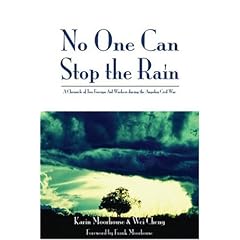
No one can stop the rain: a story of aid workers in Angola

On Saturday, Angola celebrated the 20th anniversary of one of the most important battles of the civil war. The Battle of Cuito Cuanavale on 22 March 1988 was a key episode in the conflict between the Marxist rulers of Angola supported by Cuba and the UNITA rebels supported by apartheid-era South Africa. While victory was claimed by both sides the conflict was significant as media criticism in South Africa led both sides back to the negotiation table, the departure of all foreign troops from Angola and the eventual independence of neighbouring South West Africa as Namibia.

The Angolan war itself dragged on for well over another decade. It took the death of charismatic UNITA leader Jonas Savimbi in 2002 to be the catalyst for a lasting ceasefire. One of the cities worst affected by that war was another Cuito or Kuito as it is better known. Set in the middle of Angola 600km from the capital Luanda, Kuito is the administrative capital of Bié Province and was the scene of a nine month siege by UNITA in 1994. The city was also attacked in 1998 and was left a crumbling and heavily landmined ruin. Only now is the city beginning to plan for the future with the announcement of a new thermal power station comprising four diesel ten-Megawatt generators to be built within 30 months.

The news will be greeted with delight by Karin Moorhouse and Wei Chang, an Australian-Chinese couple who were posted to Kuito in 2000-2001 as aid workers. The pair documented their experiences in the book “No One Can Stop the Rain”. The title comes from a poem by Angola’s first president Antonio Agostinho Neto written in a Portuguese colonial prison in 1960.

In 2000, Wei Cheng was a Hong Kong-based paediatric surgeon, and his wife Karin Moorhouse (her author uncle Frank Moorhouse wrote the introduction to the book) was a senior marketing executive for Nestlé. The pair decided to act out a long-term ambition to work for an overseas aid agency and they signed up for Médecins Sans Frontières. They were assigned to Kuito, Wei as a surgeon and Karin as a financial administrator at the MSF project. They would be arriving at the end of 2000, with the civil war petering to a close and Kuito in government hands, but military violence a very real presence in the nearby countryside. Kuito was a safe haven in an otherwise dangerous landscape just beyond the city limits.

Due to the desperate need to get a surgeon on the ground, Wei arrived in Kuito some eight weeks ahead of his wife. He flew into a hot, listless town that was devastated by years of war. Every house façade was peppered by mortar spray and there was no running water and heavily rationed electricity. His place of work would be the Provincial Hospital of Bié ostensibly managed by Angola’s Ministry of Health. They provided the nurses and administrative staff. But it was MSF who provided most of the drugs and equipment and all of the doctors.

Facilities were rudimentary as was hygiene. Wei was horrified to see people walk into theatre wearing street shoes while scrubbing for an operation simply meant washing hands with soap. Many of Wei’s operations were on victims who had stood on a landmine. Typically the victims had travelled large distances to get to the hospital by which time their wounds were foul smelling and ridden with maggots. More often than not, Wei was left with no option but to amputate. In his first week there, he visited the British humanitarian de-mining organisation called HALO Trust. Here he found out where it was safe to move and where it wasn’t. It was at a HALO Trust site near Kuito where Princess Diana made her famous minefield walk in 1997.

At the time, Kuito’s population of 100,000 was almost doubled by a vast amount of Internally Displaced Persons from neighbouring areas. The IDPs camped around the outskirts of the city in search of security, care and food. But because they had not crossed any international borders they could not come under the jurisdiction of the UNHCR. Despite two million IDPs in Angola, the government in Luanda consistently downplayed the problem. In 2001 Angola exported 800,000 barrels of oil a day, yet the majority of the country lived in abject poverty.

Wei had settled into a rhythm of almost endless surgery by the time Karin arrived in Kuito. Wei forewarned her of what to expect with a photomontage of the patients he had treated. It was a catalog of legs blown away by landmines, children’s arms shredded by bullets, festering wounds, shattered bones, gunshots and distorted limbs. When Karin arrived, Kuito’s dry dusty air struck her as resembling outback Australia. That impression would change quickly with the coming of the rainy season.

Wei and Karin had to deal with a constant stream of children though the hospital. UNICEF have claimed Angola is the second worst country on the planet to be a child. One in three die before the age of five. In 1999 Angola ranked 146th out of 162 nations in terms of human development, despite its oil and mineral wealth. Angola was also the sixth most corrupt country in the world and a million people had died in the 25 year civil war. The capital Luanda had only one doctor for every 50,000 people. This statistic was even worse for the country: one doctor for every 400,000 people, the equivalent of just 50 doctors for the whole of Australia.

The couple gradually got used to life in Kuito. They became “desensitised” to the lack of fresh food, the constant power blackouts and the litany of cruel injuries they had to deal with on a daily basis. Even harder to deal with were the patients they had to turn away because their wounds were not serious enough. Prioritisation was their toughest task. Most of their patients were civilians as the army treated their own. Wei and Karin survived and even thrived due to their strong love for each other, the occasional break in South Africa and Luanda, and the bonds they made with fellow staff, patients and locals. They celebrated Christmas by giving out simple presents to the children in the orthopaedic ward and enjoying a rare food order from Luanda.

Although one of their staff was killed in an ambush, Wei and Karin kept out of harm’s way during their stint in war-ravaged Kuito. The closest they came to trouble was related to Angola’s Independence Day, 4 February, when a bomb exploded at an already gutted premises near the house where they lived. They were away at the time so were not impacted. After eight eventful months, their assignment came to an end. Wei later spoke about his hopes for the book of their experiences. “One could believe that the flickering light of humanity we witness almost daily in this world of conflict and tragedy is not about to be extinguished,” he said, “but rather can be given new energy through the efforts of ordinary people.”

Tuesday, June 06, 2006

Cairns pilot for abortion pill

The controversial RU486 drug will be available in Queensland next month. The tourist town of Cairns in Far North Queensland will be the first place in Australia to trial the drug. RU486 is the so-called “morning after” abortion pill recently made available in Australia after a stormy and emotional parliamentary debate and conscience vote.

Cairns obstetrician Professor Caroline de Costa will be the first Australian doctor to prescribe the drug. She said she was expecting to issue RU486 to patients by July once the initial batch of 40 tablets is cleared by the Therapeutic Goods Administration (TGA).
Professor de Costa said the drug would be administered at a private clinic in Cairns to patients referred by locals GPs. Queensland Attorney-General Linda Lavarch said on Monday state law authorised doctors to prescribe the drug. The cost will be about $60 a tablet.

RU486 is the common name for the drug mifepristone. Mifepristone is a synthetic steroid with anti-progestagenic and anti-glucocorticoid effects. This means it can be used to induce what is known as medical abortion. During early trials, it was known as RU-486 after its designation at Roussel Uclaf, a French pharmaceutical company, which designed the drug. It is an alternative method to abortion.

RU486 is a medical procedure whereas abortion is a surgical procedure. It works by blocking the effects of the hormone progesterone, which is crucial to starting and maintaining pregnancy. Without progesterone, the lining that covers the walls of the uterus breaks down. In the absence of progesterone, the uterus cannot hold onto the fertilised egg, making it impossible for pregnancy to continue. Doctors will prescribe a specified dose of the drug to a pregnant woman. Two days later, the woman returns to the clinic to be administered another drug prostaglandin (usually misoprostol.) Misoprostol causes the uterus to contract, thereby expelling the foetus, usually within a few hours. According to the Royal Australian and New Zealand College of Obstetricians and Gynaecologists (RANZCOG), the experience for the woman ‘may be much like a spontaneous miscarriage, with some pain and bleeding to be expected.’

RU486 is approved for use in the US, the UK, much of Western Europe, Russia, China, Israel, New Zealand, Turkey and Tunisia. Despite the recent conscience vote, it was never actually banned in Australia. According to the Therapeutic Goods Act 1989, RU486 is in the category of ‘restricted goods’ which required the written permission of the Minister for Health to be registered or imported. The act specifies that only abortion drugs are in this restricted category. Medicines used for any other purpose are evaluated and regulated by the Therapeutic Goods Administration (TGA) without any requirement for approval from the Minister.

The restricted goods category was introduced in 1996 as an initiative of the independent Tasmanian Senator Brian Harradine, who had strong anti-abortion views. At the time, the Senator argued RU486 had serious side effects, and the amendment was needed to protect the health of Australian women. Liberal Government support was a trade-off for the Senator's support for a bill to allow the part sale of Telstra. And with Tony Abbott, another strong anti-abortion supporter as Health Minister, drug companies have decided it is not worth the bother of applying for the licence to import the drug.

The legislation was overturned by a private member’s bill in February 2006. The purpose of the bill was to remove the Minister’s override and return the approval to the TGA. The bill was a conscience vote and split the parties almost exactly along gender lines. The bill was passed in the Senate 45-28 and the Lower House passed it on a show of hands to avoid further political controversy.

RU486 is mainly used during the first nine weeks of pregnancy, though is also effective for second trimester termination. How safe is it? Supporters have pointed out its wide availability overseas, evidence of its safety and compared with abortion, and the fact that abortion may not be easily available to rural women and those for whom privacy is an issue for religious, ethnic or other reasons. Detractors have denied it is safe, and counter the rural argument by saying it is a high risk option for women without adequate levels of medical supervision. There have been reports of deaths in the US and Canada due to the drug. Six women in the US and one in Canada have died following medical abortions, causing some medical abortion providers to stop using the method of intra-vaginal placement of the second drug, misoprostol. However these incidents occurred due to the fact that women did not follow the FDA approved instructions for the use of the drug.

Professor of Obstetrics and Gynaecology at Monash University Medical Centre, David Healy, doesn’t share these concerns. He believes that RU486 is safe and psychologically a much better method than surgical abortion. He says that “for most women if taken early, this will be just like having a period, rather than having a miscarriage.” He points out that there are 75,000 abortions each year in Australia and anything that helps alleviate that number has to be supported by the wider community. He concludes “this medicine is safe when used under proper medical care. The rest of the world has really moved on. Surgical abortion is now something that is really becoming increasingly old fashioned and no longer the best treatment available for Australian women.”