Showing posts with label Cuba. Show all posts

Wednesday, June 25, 2008

Cuba announces world's first lung cancer vaccine

Yesterday Cuban scientists announced a vaccine to extend the lives of lung cancer sufferers would be made available to the Cuban Health Service. Speaking in Havana, Gisela Gonzalez said the product, called CimaVax EGF, is the first registered vaccine in the world designed to battle lung cancer. The drug could add five months to a lung cancer sufferer’s life. Gonzales, who heads the medical team that developed the compound, said the vaccine is based on proteins that trigger an immune response from the patient's body and has few side effects compared to chemotherapy because it's a modified protein that attacks only cancer cells.

The CimaVax EGF vaccine is available in Cuba, and will be commercialised in Latin America, starting in Peru. Advanced clinical tests are happening at 18 Cuban hospitals on 579 lung cancer victims. Other tests were carried out in Canada and Britain, while tests are scheduled in Malaysia, Peru, and China. The EGF in the name stands for Epidermal Growth Factor (EGF) which is a protein capable of stimulating cellular proliferation but is also a cancer risk. The vaccine links it to another protein that helps the immune system to create the desired immune response against the EGF. The effect is a decrease in tumour growth.

The vaccine has been developed by Havana’s Centre of Molecular Immunology (CIM). The centre’s mission is to produce biopharmaceuticals products to be used in cancer treatments in the Cuban Public Healthcare System. Its products include antibodies for use in organ transplant rejection, treatments for anemia, the blood disorder neutropenia, and tumour imaging as well as antibodies that recognise growth factor receptors for cancer treatment. The centre is part of Cuba's thriving state-run biotechnology sector which includes 50 research and development centres and is one of the most advanced in the developing world.

People from outside Cuba are welcome to come to the island to seek the treatment. The center’s director of clinical investigations, Tania Crombet, said "it's possible to provide this vaccine to any patient, because it's available in Cuba, it's approved by the Cuban drug agency so we can market the vaccine in Cuba and we can receive patients from outside," she said. However she said that the US would be the exception as Americans are restricted from travelling to Cuba travel by the US trade embargo against Cuba in place since 1962. "Even though there is a new therapeutic tool approved in Cuba they probably wouldn't be able to come to Cuba to receive it because of the embargo," Crombet said.
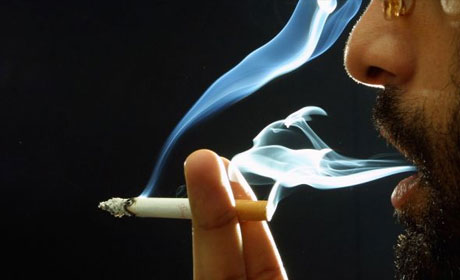
The drug has been approved for clinical trial in the US, but its possible use there is at least two to three years away. In the meantime 160,000 Americans will die of lung cancer annually. Lung cancer is a malignant tumour in the tissue of one or both lungs and is primarily a disease of older people. It is unusual in people under 40 and the risk increases substantially after the age of 50. Smoking causes 90 percent of all known cases. Currently the main treatments are surgery if detected early, or otherwise radiotherapy and chemotherapy. The new vaccine does not prevent cancer but is therapeutic and consolidates the effect of radiotherapy and chemotherapy. Doctor Elia Neninger, oncologist participating in the project, said its benefit was that it lacked any side effects and also contributes to reduce the prevailing symptoms of the ailment. That will be good news for the cancer’s million sufferers worldwide.

Friday, August 04, 2006

Castro out, Castro in

On July 31, Cuban state television issued a letter read by Fidel Castro’s secretary. It said sustained intestinal bleeding required him to undergo what was described as a complicated surgical procedure, and requires several weeks of rest. The Cuban leader said the health crisis was provoked by severe stress because of a heavy work schedule during recent trips to Argentina and eastern Cuba. Castro named his 75-year-old brother and Vice President Raúl Castro as temporary leader of the Cuban government, military and Communist Party. Raul has served as defence minister, and is second in command of the Communist Party and Council of State, Cuba's Supreme governing body.

Raúl Castro has similar views to his brother and recognises the Party as the only source of power in Cuba. But he has also promoted free-enterprise farmers' markets and suggested the communist system could be reformed. Fidel Castro, who turns 80 on August 13, has been in power in Cuba for 48 years and his illness has unsurprisingly evoked mixed reaction. Castro was born in 1926 in the Eastern province of Holguin. Christopher Columbus landed there in 1492 and declared that Holguin was "the most beautiful country human eyes had ever seen".

Fidel comes from a family of six children. As well as Raúl, there is the eldest brother Ramón. Although not active in the military like his brothers, Ramón Castro aided in the ongoing revolution as the quartermaster for the troops of Fidel and Raúl. After the revolution he studied agriculture, and is chiefly responsible for many of Cuba's agricultural initiatives. There are also three sisters Angela, Juanita and Emma. Juanita Castro Ruz is estranged from her brother and now lives in Miami. She said on Thursday she has been told the long-time dictator is recovering from surgery and "doing well." She is a pharmacy owner who fled Cuba four decades ago, would not reveal how she learned of her brother's condition, but said: "The surgery was a major surgery. He's doing OK. He's out of intensive care, and he's in his own room." Castro's daughterAlina Fernandez is also estranged from her father. CNN said Thursday it had hired her as a network contributor. She was 3 years old when Castro took power and left Cuba disguised as a Spanish tourist in 1993.

Fidel was educated in Catholic boarding schools before attending the law school at Havana University in 1945. He became immediately fascinated by the politics on campus. Gangs controlled much of what went on in the political sphere, in some cases sanctioning murder to achieve the desired outcome. Castro took part in often violent demonstrations. At the time the island's government had become totally corrupt. Despite being nominally independent since 1898, no Cuban president could come into power unless backed by the US. Fidel joined the newly formed Ortodoxos party in 1947. Founded by Eduardo Chibás, Castro remained a party member for eight years. The party wanted revolutionary change by working within the system. Chibás lost the 1948 election and Castro left Cuba to attend a Pan-American conference in Bogatá, Columbia to escape political and police pressure. The heavy-handed police response to riots he saw there changed forever his view on how to bring about political change.

Chibás committed suicide after another disastrous electoral defeat in 1952. Castro was now the leading figure in the party. That same year Fulgencio Batista overthrew the Cuban government and established himself as dictator. The US immediately recognised his regime. Castro took failed legal action against him saying Batista had broken the constitution. But the case raised his profile as the most prominent member of the Opposition. The rebellion commenced in 1953 with an attack on the Moncada Barracks. It was led by the brothers Fidel and Raúl. The attack failed and one third of the attackers were killed. Castro was captured shortly afterwards. He defended himself at his subsequent trial. He was sentenced to death but Batista had recently removed the death penalty. He was sentenced to 15 years which was commuted to two after an amnesty in 1955. Castro then went to Mexico where he met Ernesto “Che” Guevara. Guevara joined Castro’s rebel group and organised the basics of guerrilla warfare. A group of 60 rebels landed in Cuba in 1956 but were mostly killed. The few survivors escaped to the mountains. They called themselves the July 26th movement after the day of the Moncada attack.

Resistance groups started to organise in the cities. Castro got international coverage when he was tracked down by a New York Times reported and a TV crew. In May of 1958 Batista launched Operation Verano aiming to crush Castro and other anti-government groups. But Batista’s poorly trained conscripts suffered mass desertions and the operation failed. In December the rebels won a decisive victory at the Battle of Yaguajay. This caused the provincial capital of Santa Clara to fall. News of the loss of Santa Clara and other losses elsewhere panicked Batista and he fled the country the next day. At the age of 32, Castro was now in command of Cuba. In 1959, he became Prime Minister. He immediately caused friction with the US as the new government began expropriating property owned by American corporations. He also quickly moved to expropriate farmlands and forbade foreign land ownership. An oil agreement with the USSR caused the US to break off relations in 1960. The 1960s was marked by US-Cuban crises such as the Bay of Pigs and the Missile Crisis.

Castro was supported by the USSR until it broke up in 1991. Cuba was left bankrupt thanks to the US embargo. However that same embargo has served to unite the country behind him. Raul Castro is credited with persuading his older brother to implement agricultural market reforms in the early 1990s which increased the food supply after the Soviet subsidies stopped. In the late 1990s, Castro has pushed for more developed relationships with fellow Latin American countries. The Bolivarian Hugo Chavez of Venezuela is a huge admirer of Castro as is the Bolivian president Eva Morales. As his health started to fail in the last few years, Cuba watchers have look for word on the succession.

Raul was anointed and this was confirmed with the adulatory coverage of the Comrade Raul's 75th birthday last month in the state media. Behind the scenes, his grip was strengthened by the appointment of several "Raulistas" to the party's newly re-formed secretariat. The new Castro era is about to start.

Sunday, June 18, 2006

Gulag Gitmo

Guantanamo Bay nestles gracefully on the sun-kissed Caribbean South East coast of Cuba. It is America’s oldest overseas Naval Base and the only one in a country with which the U.S. does not maintain diplomatic relations. Since 2002, it is also the home of the most notorious detention centre in the world.

The Guantanamo Bay detainment camp also known as Camp X-Ray and as Gitmo has been the home to over 600 suspected terrorists, the majority of whom were captured in the Afghanistan invasion post 9/11. As the camp is outside US jurisdiction, the inmates have languished here without trial and without POW status. The US government is now coming under increasing pressure to shut down the secretive camps. The EU has stated this week that “holding suspected terrorists without trial there is a human rights violation”.

The bay has played a prominent role in Cuban history. The land adjacent to both sides of the southern end of Guantanamo Bay was leased indefinitely to the US in 1898. But the Americans were not the first foreign power to land there. Britain and Spain had long contested control of the Caribbean. In 1729 they signed the Treaty of Seville which gave the Spanish the right to search British ships. The treaty gave rise to the delightfully named “War of Jenkins' Ear". When the Spanish searched a Captain Jenkins’ ship, he claimed the Spanish had cut off his ear. He exhibited the severed organ to the House of Commons and the British declared war on Spain. The British invaded Spanish controlled Cuba and landed at a bay that the local Taino Indians called “Guantánamo”. They briefly renamed it Cumberland. But they left a year later and the war ended in the same unsatisfactory state as the ear that gave it its name. Spain continued to rule Cuba until the end of the 19th century. When a US battleship was blown up in Havana harbour in 1898, the US invaded the country and placed Cuba under a 20 year trusteeship. During that war the U.S. fleet needed shelter from the summer hurricane season and Guantanamo Bay was chosen for its excellent harbour.

In 1903 they established a perpetual lease for the Guantánamo Bay Naval Base (shortened as Gitmo). A 1934 treaty reaffirmed the lease and granted Cuba free access through the bay. It also made the lease permanent unless both governments agreed to break it or the U.S. abandoned the base property. Until the Castro revolution, many Cubans worked on the base. The revolution took over five years to oust the Fulgencio Batista regime and it wasn’t until 1958 that tide turned in Castro's favour. That year traffic was halted to the base. The new rulers continued to allow Cubans to work there and cross by bus or on foot. However, they also forbade new recruitment. As of 2006 only two elderly Cubans now make the daily trek. Castro planted a 13 km “cactus curtain” around the base to prevent Cubans seeking refuge on the base. US troops also planted 75,000 landmines in the area, the second largest landmine zone in the world after the Korea border.

The base was used to house Haitian refugees in the 1990s that fled their country after President Aristide was overthrown by the military. They were removed in 1993 after a US court found the camp unconstitutional. The camp was opened again in 2002 after the Afghanistan invasion. A report for Seton Hall Law School based on Defence Department data showed that 86% of the prisoners were handed over by bounty-hunters rather than as the result of any American investigation or intelligence action. The report alleged that because the bounty-hunters were compensated per head, they detained innocent civilians in order to make more money.

There were four camps, Delta, Echo, Iguana and X-Ray. X-Ray was a temporary facility now closed but the name Camp X-Ray still remains as a synonym for the whole facility. Over 600 people have been held there from 35 different countries. One of the inmates is Australian David Hicks. Australia has made no effort to seek his release. In July 2003, Hicks was one of six detainees first determined by President George W. Bush to be eligible for trial by a military court. As of three years later, no trial has commenced. Frustrated by lack of Australian support, Hicks has sought British citizenship through his English mother. Britain has already won the release of all of its citizens and Hicks is hoping for the same outcome. Australian Foreign Minister Alexander Downer believes that Hicks 'would be dodging justice’ if he succeeds.

Rights are granted to POWs under the Geneva Conventions. These conventions date back to 1859 after Swiss businessman Henri Dunant witnessed one of the bloodiest battles of the nineteenth century at Solferino in Italy. In 1862 his book "Un Souvenir de Solferino" proposed a plan to care for wartime wounded. His proposal was taken up by the Société genevoise d'utilité publique (Geneva Society for Public Welfare) and the first of the Geneva Conventions was born. Dunant went on to found the International Red Cross. The US has ratified all four Geneva conventions however they got round this for Gitmo by classified the detainees as “illegal combatants.”

It means prisoners are held in a legal black hole, most without access to any court, legal counsel or family visits. Many detainees allege they have been subjected to torture or other cruel, inhuman and degrading treatment. This treatment include sleep deprivation, the use of so-called truth drugs, beatings, locking in confined and cold cells, and being forced to maintain uncomfortable postures. In 2005, Amnesty international called the facility “the Gulag of our times.”

Matters came to a head this week when three detainees committed suicide. The camp commander described the suicides as “an act of asymmetric warfare waged against us". He was echoed by the US deputy assistant secretary for public diplomacy Colleen Graffy who said the suicides were “a good PR move.” Lawyers said the men who hanged themselves had been driven by despair. William Goodman from the New York-based Center for Constitutional Rights said they were "heroes for those of us who believe in basic American values of justice, fairness and democracy". The suicides have further heightened the calls to close the facility.

President Bush says he would like to close the camps but was awaiting a Supreme Court ruling on how suspects held there might be tried. The U.S. Supreme Court is expected to rule by the end of June on whether military tribunals of foreign terrorist suspects can proceed. Meanwhile the pain continues. What British judge Lord Steyn said as early as 2003 hold true just as much today, “As a lawyer brought up to admire the ideals of American democracy and justice, I would have to say that I regard this a monstrous failure of justice.”