Monday, August 20, 2007

Naked glacier

American installation artist Spencer Tunick’s latest mass nudist shoot saw 600 people strip naked in 10C temperatures on a Swiss glacier on the weekend. The photographic shoot was organised by Greenpeace as part of a publicity campaign to expose the impact of climate change. The naked 600 volunteers posed on Switzerland's shrinking Aletsch Glacier, the largest in the Alps. Alpine glaciers have lost about one-third of their length and half their volume over the past 150 years while The Aletsch has retreated by 115 metres in the last two years.

Organisers Greenpeace say that if global warming continues at its current rate, most glaciers in Switzerland will completely disappear by 2080, leaving nothing but valleys and slopes strewn with rock debris. They described the protest shoot as a cry for help against a planetary emergency and a “chilling message from wear nothing activists to do nothing politicians”.

Greenpeace also quoted the Intergovernmental Panel on Climate Change (IPCC) who say the world only has eight years remaining to take the urgent action needed to curb catastrophic climate change. The IPCC’s latest report (pdf) on climate change has presented further evidence that global greenhouse gas (GHG) emissions have increased by 70 per cent between 1970 and 2004 and will continue to grow over the next few decades.

The world’s glaciers are particularly sensitive to climate change and are therefore valuable for climate research. Scientist drill and extract ice cores from glaciers to see a long-term climate record. These cores are continuous records providing information regarding past climate. Scientists analyse core components, particularly trapped air bubbles, which reveal important information about past atmospheric composition, temperature variations, and types of vegetation. Because glaciers preserve bits of atmosphere from thousands of years ago in these air bubbles, scientists can derived when Ice Ages have taken place.

Many glaciers throughout the world are in decline. The Antarctic is particularly vulnerable. The Müller Ice Shelf at Lallemand Fjord, Antarctic Peninsula is now receding after growing over a 400-year cooling period. The nearby Larsen Ice Shelf lost a 1200 square mile section early in 2002, prompting some glaciologists to be concerned that even the giant Ross Ice Shelf could be at risk. The mile-long ice cliff of Marr Ice Piedmont, Anvers Island, has also receded about 500 meters since the mid 1960s. The regional temperature has increased 5° C in winter over the past 50 years. This reduces seasonal icepack, disrupts growth of krill and changes conditions on penguin rookeries.

More famously in recent times is the decline of the world’s largest tropical glacier. Ohio State glaciologist Lonnie Thompson and his team created headlines in February when they found evidence the Qori Kalis glacier of the Quelccaya ice cap in the Peruvian Andes could lose half its mass in 12 months and could disappear in five years. Thompson was pessimistic that nothing could be done to halt the slide. "The question is, how far down this road do we go before there's any meaningful action to reduce emissions, what does the evidence have to be?" he said. "And unfortunately as human beings…we only deal well with crises."

However Greenpeace and Tunick are determined to tackle the problem in the Alps before it becomes a crisis. It could proven a potent team. Greenpeace are masters in the PR game and Spenser Tunick is known for his provocative mass nude photographs in usually urban settings across Europe. The New York artist calls them ‘living sculptures’ or ‘body landscapes’. Earlier this year he set a new record when he got 18,000 people to pose naked for his camera in Mexico City. Because of the unique challenge of shooting on a freezing glacier, the Greenpeace call for volunteers included a message they would not 'be naked for very long'. While Greenpeace’s political message took centre stage, Tunick himself held firm to an artistic motive. 'I want my images to go more than skin-deep, “he said. “I want the viewers to feel the vulnerability of their existence and how it relates closely to the sensitivity of the world's glaciers.”

Sunday, August 19, 2007

Howard defends Australia-India nuclear deal

John Howard has defended his Government’s controversial decision to overturn the ban on Australian uranium sales to India. Howard finalised the deal by phone with Indian PM Manmohan Singh on Thursday. India was previously off-limits to Australian uranium because it has not signed the Nuclear Non-Proliferation Treaty (NNPT) and opponents of the move say it will lead to an increase in nuclear weapons. Howard says the deal is based on the condition the uranium is used for peaceful purpose and India signing safeguard agreements with Australia and the UN's nuclear watchdog. "It's a different approach and India is not signing the Nuclear Non-Proliferation Treaty,” he said. “But we believe that these arrangements will deliver effectively the same outcome."

But Opposition leader Kevin Rudd has pledged to overturn the deal if he wins the forthcoming federal election. Rudd said the safeguards were not sufficient and India's refusal to sign the NNPT should prevent the deal. "This is a significant breach from the consensus of Australian governments in the past. Now we have a government of Australia pulling the rug from under the NNPT," Rudd said. Labor said it was impossible to lock in a safeguards framework with New Delhi.

The Australian Greens labelled the Government’s decision a “seismic shift in foreign policy” with major implications for global security. Senator Christine Milne said the Government was only seeking safeguards to cover uranium from Australia and the plants that that uranium is sent to. This means the international community would have access to only select nuclear plants. According to Milne “this farce leaves a loophole you could fire a nuclear missile through”.

Australia has 40 percent of the world's known reserves of uranium and is a major exporter of the material. India has been lobbying Canberra for access to it after an India-US nuclear deal was agreed in principle two years ago. Existing Indian atomic facilities account for just three per cent of its total power output and the energy-hungry country is desperate to increase that figure.

The deal between the US and India was confirmed when Bush visited New Delhi in March 2006. India will get access to US civil nuclear technology in exchange for opening its nuclear facilities to inspection. On a visit to India, President Bush hailed the deal as historic but acknowledged it would be difficult to get US Congress to ratify it. "Congress has got to understand that it's in our economic interests that India has a civilian nuclear power industry to help take the pressure off the global demand for energy,” he said.

While Bush worried about US Congress, the ruling Indian Congress Party now has its own problems. Its Communist coalition partners have warned of "serious consequences" if New Delhi goes ahead with the landmark deal with the US. Communist Party of India-Marxist (CPM) General Secretary Prakash Karat told Prime Minister Manmohan Singh not to take the next step in the deal. That step is the approval from the 45-nation Nuclear Supply Group and the International Atomic Energy Agency (IAEA) global watchdog. "The government should not take the next step with regards to negotiating on the safeguards agreement with the IAEA, said Karat”. “It is for the Congress leadership to decide on the matter which will have serious consequences for the government and the country.”

India has never been a member of the Nuclear Non-Proliferation Treaty (NNPT). The NNPT is an international treaty whose objective is to prevent the spread of nuclear weapons and weapons technology. The Treaty’s three pillars are non-proliferation, disarmament and peaceful use. It established a safeguards system under the aegis of the International Atomic Energy Agency (IAEA). Opened for signature in 1968, the Treaty entered into force in 1970. 187 countries have joined the Treaty, including the five nuclear-weapon States. North Korea ratified the NNPT but later pulled out. Among the other handful of countries that are holding out against the treaty are known nuclear powers India and Pakistan and a likely one – Israel. Under the US deal, India has agreed to separate its civilian and military nuclear facilities, placing the civilian facilities under IAEA safeguards. But its nuclear weapons facilities are not included in the agreement.

The Indian nuclear power programme began in 1964. It was the first in the third world and still the most comprehensive. In 1972 Prime Minister Indira Gandhi authorised Indian scientists to manufacture a nuclear device they had designed and prepare it for a test. The device was ironically dubbed the "Peaceful Nuclear Explosive" or PNE, but commonly called Smiling Buddha. However obsessive secrecy meant that very few records of any kind were kept either on the development process or the decision making involved in its development and testing. This has resulted in the events being documented almost entirely by oral reports many years later. The Smiling Buddha was detonated at the remote Pokhran nuclear test site in the north-western Thar Desert.

India did not carry out any further nuclear tests until Operation Shakti in 1998. Inspired by a new Nationalist government, India had telegraphed its intentions through the 1990s to test another device. While news of the tests was greeted with unanimous disapproval internationally, it was a source of great pride in India. PM Atal Bihari Vajpayee declared India to be a Nuclear Weapon State and also imposed a self-declared moratorium on further nuclear fission by India.

Saturday, August 18, 2007

Yazidis fear annihilation

Members of the Yazidi sect fear they face annihilation after Tuesday’s attacks which killed over 400 people in Northern Iraq. The attack was the deadliest suicide bomb attack of the four-year conflict. The attacks were carried out by garbage trucks packed with explosives which flattened entire neighbourhoods in the northern Iraqi town of Kahtaniya. An Iraqi interior ministry spokesman said that the blast used 2 tons of explosives to crumbled buildings, trapping entire families beneath mud bricks and other wreckage. Rescuers dug through the rubble throughout Wednesday in scenes reminiscent of an earthquake zone.

The attacks left the community without power and water. "Their aim is to annihilate us, to create trouble and kill all the Yazidis because we are not Muslims," said Abu Saeed told visiting Iraqi Deputy Prime Minister Barham Salih that he had lost 51 members of his family in the attack. About 100 angry Yazidi men gathered as Salih met local officials. “It’s like a nuclear site, the site of a nuclear bomb,” one of the men told Reuters. Al-Qaeda wants to kill all the Yazidis,” said another villager. “Another bomb like this and there will be no more Yazidis left.”

The Yazidis, who call themselves the Dawasin, are a minority sect regarded by Sunni militants as infidels. This obscure and secretive religious sect is now the victims of the second-worst terrorist attack of modern times after 9/11. Yazidism has about 700,000 members worldwide. Yazidis are mostly ethnic Kurds who live in northern Iraq, near Mosul, but there are also small communities in Syria, Turkey, Russia, Georgia, and Armenia. Smaller Diaspora communities exist in the west, mainly in Germany and the Netherlands.

The word Yazidi or sometimes Yezidi comes from the Persian “yazdan” meaning God. Yazidis regard Mohammed as a prophet, and Jesus Christ as an angel in human form. The religion’s origins are shrouded in Middle Eastern prehistory. The Yazidis speak Kurdish but their syncretistic religion also shows strong Christian, Islam and ancient Zoroastrian and Assyrian influences. Similar to Muslims, Yazidis have five daily prayers and a three-day fast in December. The most important ritual is the annual six-day pilgrimage to the tomb of Sheikh Adi in Lalish, north of Mosul, Iraq. The principal feature of worship, is Muluk-Taus a hundred- or thousand-eyed incarnation of cosmic wisdom, pictured as a peacock.

Muluk-Taus is sometimes called “Shaytan” or Satan which has led to Muslim accusations that the Yazidis are devil worshippers. The Yazidis and Muslims have had grievances against each other for centuries. In recent times their fraught relationship has escalated into outright violence. In April video footage captured the stoning to death of a Yazidi woman who converted to Islam after marrying a Muslim. The video was seen widely and angry Muslims gunned down 23 Yazidis in reprisal.

The latest atrocity comes as the area is due to vote on whether to come under the control of the Kurdistan Regional Government later this year. The area is half Arab and half Kurdish. Neighbouring Arab villages had been threatening Yazidis, trying to stop them voting for Kurdistan in forthcoming polls. While the region is currently managed by Iraqi government security forces due to the nearness of the Syrian border, it is likely the impact of the bombing will strengthen Yazidi resolve to join the Kurdistan Regional Government.

Friday, August 17, 2007

Will Rukwanzi lead to oil war between Congo and Uganda?

An obscure tiny island is threatening to become a flashpoint between African neighbours Uganda and the Democratic Republic of Congo. The Ugandan-Congo border bisects Lake Albert, the northernmost of the Great Rift Lakes. But the 160km watery frontier it is difficult to demarcate and police. Border tensions at the lake have been exacerbated as Congo and Uganda tussle for ownership of the tiny island of Rukwanzi which lies at the southern tip of the lake. Although the island is barely three kilometres wide, Rukwanzi is seen as a strategic location for oil exploration which has been going on in the area for several years.

Rukwanzi Island is claimed by both Uganda and the Democratic Republic of Congo. Congo’s claim is based on its fishermen who live on the island. Uganda’s claim is based on a 1971 map by its Department of Lands and Surveys indicates that the island is in Uganda, three and a half kilometres away from the boundary line with the Democratic Republic of Congo. In the local language Rutoro, Rukwanzi means ‘shiny bead’. “We were told that it was named that because it hangs on the water and swings like a bead on a person’s chest. It was named at the time when our great-grand-parents were trading in beads,” said local fishmonger Mukirane. “As a child, my mother cautioned me to always take care while fishing at Rukwanzi. Fishermen would fight for fishing space around that place.”

Tensions exacerbated on 4 August when gunmen on Lake Albert attacked a barge operated by Canada's Heritage Oil Corp killing a British geologist. The Briton worked for IMC, the company doing the seismic studies for Heritage Oil. Ugandan troops blamed Congo. "Congolese soldiers crossed into Uganda and attacked the boat between 1:00am and 3:00am," western Uganda army spokesman Lt. Tabaro Kiconco told The New Vision. Our troops also came in and responded. One Congolese soldier was killed in the fire-fight and one was injured."

In the past two weeks, Uganda's western border suffered three cross-border attacks that left three others dead. Now the Ugandan army has threatened to re-enter the Congo to quieten its western border if incursions do not stop and diplomatic efforts fail. "We are using incremental reactions, softer means, talking to each other, trying to persuade [the Congolese government] to see reason," Defence Minister Crispus Kiyonga said at the weekend. "If these soft measures do not work, we will take harder options including re-entering Congo."

However not all diplomatic efforts are failing. The two countries announced last week they would re-survey their common border to establish ownership of Rukwanzi in order to end growing border tensions between the two countries. “There is no cause for alarm and the situation is under control,” said Ugandan Defence Minister Crispus Kiyonga. “We have agreed to form a joint commission involving officials from Uganda and Congo side to re-survey our borders. This was part of the agreement with DRC President [Joseph Kabila] and we are committed to it.”

Now Congo’s troops have occupied the island. Congolese troops first set up a military detachment on the island in 1993 and have recently beefed up their contingent. They now join the 1,000 residents, mainly Congolese fishermen. Fishermen on the Ugandan side claimed that Congolese armed personnel were routinely harassing them on the lake. "They are ruthless," said a Ugandan fisherman Deo Mugisa. "They will arrest you at gun point, take your boat and fishing net and sometimes fishermen completely disappear."

As well as they oil concerns, border tensions have been increased by a leaked Congolese external security report which notes that Kinshasa is worried that Congo's exiled former Vice President Jean Pierre Bemba might be plotting to resume insurgency against his country from Uganda. Bemba was the leader of the rebel Movement for the Liberation of Congo (MLC), which was supported by Uganda during the Congolese civil war of 1998-2003. Bemba went into exile in Europe when he refused to disband his security force after his defeat in the 2006 election by President Kabila. Bemba now plans to return to the Congo and some diplomats believe Uganda may continue to support him. The statement of one elder from North Kivu area of Congo after the discovery of oil in 2003 remains prophetic: "We can see war coming on the horizon".

Thursday, August 16, 2007

Tunisia's President expels Arafat’s widow

Tunisia has revoked the citizenship of the widow of the former Palestinian leader Yasser Arafat, after she fled the country last week. The 44-year-old widow Suha Arafat had moved to Malta where she is living with her Palestinian brother. She settled in Tunis after Arafat's death in November 2004 and was granted citizenship two years later. Suha had a long and so far unresolved dispute with the Palestinian authorities where she left homes in Ramallah and Gaza. According to Arab news reports Tunisian President Zine El Abidine Ben Ali withdrew Arafat's naturalized status in a special decree last week. The decree offered no reason for the withdrawal.

Suha Daoud Tawil was raised as an affluent Catholic in the West Bank. Her father was Daoud Tawil, a wealthy banker with business in the West Bank and Jordan. Suha studied at the famed Sorbonne University in Paris. She met Arafat while on assignment in Jordan for a French newspaper. Although 34 years younger that Yasser, they married secretly in 1990 after she converted to Islam. The secret was not revealed for another two years. The marriage took place in Tunisia where Arafat lived in exile. Tunis had been the PLO headquarters since the Israeli invasion of Lebanon in 1982 which forced Arafat to leave Beirut.

When Arafat finally returned to Palestine after the 1994 Oslo Accords, his wife followed him. However she moved again to Paris in July 1995 to give birth to their only daughter Zahwa. Suha stayed on in Paris with her mother and daughter. She took no further part in Palestinian politics and was believed to be estranged from her husband. She remained abroad while her husband was held under house arrest by the Israelis and she attracted much criticism from Palestinians for her supposedly unpatriotic actions.

When Arafat died Suha and Zahwa attended a memorial service in Cairo but were advised by Palestinian authorities not to attend the Ramallah funeral service on security grounds. After her husband’s death she moved back to Tunis where the couple first lived. She lived in a Tunis suburb until last week when she fled to Malta. While the Palestinian embassy in Tunis declined to comment, some reports attributed the decision to revoke her citizenship to a disagreement with some of her partners on projects in Tunisia.

It remains possible that Suha has somehow attracted the ire of long-term Tunisian leader Zine El Abidine Ben Ali. Last summer a Tunisian website reported that she secretly married the President’s brother. However Arafat has denied the reports. What is less in doubt is the autocratic regime of Ben Ali who has been in power since 1987.

In fact, Tunisia has only had two leaders in the half century since independence from France in 1956. The country’s first leader was Habib Bourguiba, known as the “Supreme Warrior” and the “Father of Tunisia”. Bourguiba was a rarity in early Arab-African politics – a consistently secular and pro-West president who made French the official language ahead of Arabic. After leading the fight for independence from France, Bourguiba ruled with an iron fist for over 30 years.

Bourguiba’s downfall was orchestrated by Muslim activist leader Rached Ghannouchi. Ghannouchi was an academic who returned from exile in France to lead the Islamic Tendency Movement’. He rejected Bourguiba’s secular approach and argued for a return to Tunisia’s indigenous Arab-Islamic heritage. Bourguiba imprisoned Ghannouchi in 1981 for three years as an “Islamic threat” and again in 1987 claiming his movement was plotting to overthrow the government. Ghannouchi was given a life sentence but Bourguiba ordered a retrial and demanded the death sentence.

Outraged by Ghannounchi’s second arrest, the Islamic movement threatened to break out into open rebellion. Bourguiba’s second in command Zine el Abedine Ben Ali took advantage of the crisis to seize power. Ben Ali moved quickly to legitimise his regime by releasing Ghannouchi and making concessions to the Islamic Movement. However all that changed with the First Gulf War when Ben Ali claimed there was a plot against him. He destroyed the power of the Islamists by a sweeping series of police actions. Ghannouchi fled overseas and was sentenced in absentia.

Since then Ben Ali has consolidated his regime with internationally neutral politics dominated by a pragmatic attitude. He gained a reputation as one of the most reliable leaders in the third world. However his troubles remain at home. Journalists and politically moderate activists have been persecuted and imprisoned for demanding democracy and freedom of speech. Ben Ali shows no sign of retiring. His presidency was rubber-stamped in 2004 for another five year term and constitutional amendments could see him stand again in 2009.

Wednesday, August 15, 2007

Sierra Leone awaits election results

Early results from Sierra Leone’s independent National Electoral Commission (NEC) of last Saturday’s presidential election show strong support for the opposition party candidate. In results released yesterday, Ernest Koroma of the opposition All Peoples’ Congress (APC) party leads incumbent Vice President Solomon Berewa of the ruling Sierra Leone People’s Party (SLPP) with Charles Margai of the People’s Movement for Democratic Change (PMDC) in third place. Koroma has almost double the ballots cast for Berewa so far. To win he needs 55 per cent of the vote in order to avoid a run-off. However with only 20 per cent of the vote counted and the NEC continuing to issue updates every day, it is too early to call victory.

Outgoing President Ahmad Tejan Kabbah ordered security forces to keep a high state of readiness as signs grow of public frustration at the slow vote count amid vote-rigging allegations and electoral intimidation. The President addressed the nation on radio and said “"I have instructed the police... to deal firmly with any threats to the peace and security," Seven candidates are vying to replace Kabbah who has been president for 10 years. Kabbah himself is unable to seek re-election after completing the two terms allowed by the country's constitution.

Kabbah was first elected in 1996 but his first term was interrupted by the civil war a year later when he was ousted by the Revolutionary United Front (RUF). The war was funded by blood diamonds and claimed 120,000 lives and left many more mutilated and traumatised. Kabbah was returned to power after a military intervention by the Nigerian led Economic Community of West African States (ECOWAS) which defeated the RUF. Kabbah won the most recent poll in 2002 which was organised by the UN, which still had peacekeepers on the ground at the time. The British-led UN Mission in Sierra Leone (UNAMSIL) finally withdrew in December 2005.

Kabbah won the 2002 election on the promise of peace. However this time around it is more likely the state of the economy that will determine the winner. Despite reintegration programmes, thousands of ex-combatants and child soldiers (many of whom never went to school) are unemployed. The UN estimates that some 65 percent of Sierra Leoneans are jobless, with unemployment as high as 80 to 90 percent in some areas. Sierra Leone remains a fragile economy dependent on donor funds. The country needs to take further steps to address the root causes of the conflict and cultivate a culture of human rights. Most of the profits from diamond mining are still being pocketed by private hands rather than the Government.

Yet there is a renewed sense of optimism among Sierra Leone 6 million population that the worst of their problems are behind them. There was much enthusiasm for democracy ahead of the weekend election. Voters hope a new government will tackle some of the vast social problems facing the country and finally leave its violent past behind. Sierra Leone's capital Freetown had a carnival atmosphere with chanting and singing on every street corner. Freetown’s traffic was brought to a standstill as young people dance away to open-air sound systems provided by the party’s to engage their support.

The election itself is being managed by the National Election Commission (NEC) which is charged with conducting all public elections in Sierra Leone. The NEC is led by a Chief Electoral Commissioner, who works with 4 other Commissioners each overseeing one area of the country. The Commissioners are appointed subject to the approval of Parliament, which has the job of ensuring that the Commission is not prejudiced towards or against any particular political party or politician. However Opposition parties have criticised the NEC for not dealing with voting irregularities in the last election.

As a result, this latest election was heavily monitored by many outside groups including the National Election Watch (NEW). NEW is a coalition of 75 local civil society organizations that has trained some 150,000 monitors. The group says its mission is to ensure "free, fair and transparent elections" One of these groups, the Mano River Union Women Parliamentary Network (MARWOPNET), fielded all female observer teams in strategic areas in seven of the country’s 13 districts to monitor the 2007 elections process in order to assess and determine its transparency and credibility. It has now lauded the peaceful election and says it will have a beneficial effort on a forthcoming poll in neighbouring Guinea.

Tuesday, August 14, 2007

The Rise of Facebook

The fast rising social networking website Facebook will break into Britain’s top 20 most popular online destinations for the first time this week. It joins fellow networking sites Myspace and Bebo in statistics to be released by Internet information provider Comscore. However advertisers are taking longer to follow suit. Average rates for online banners on social networking websites in the UK are almost 50 per cent lower than on internet portals such as Yahoo or MSN.

Nevertheless, Facebook's growth is impressive. The site was 28th in Comscore’s June figures and was one of the top three gainers in the overall figures with a 25 per cent rise from 4.8 million visitors in May to 6.0 million in June. Facebook allows users to join networks based around schools, companies and regions. Facebook offers an interactive network of photos, user profiles, email and chatrooms.

Facebook’s growth is matched worldwide and is now the sixth most visited site in the US with over 22 million registered users 60 percent of whom log in every day. Facebook’s astonishing popularity is based partly on its privacy measures. Only designated friends or people in users’ networks can see their full profile pages, in contrast to the chaotic freedom on MySpace.

Facebook’s CEO is whizzkid Mark Zuckerberg who turned 23 on 14 May. Zuckerberg was a Harvard student in 2004 when he founded “The Facebook” as a networking site with the help of three fellow students Andrew McCallum, Dustin Moscovitz and Chris Hughes. The site rapidly grew among the college elite and within a month half of Harvard’s students had signed up. By two months it had expanded to the other Ivy League colleges.

The big break came in 2005 when Zuckerberg signed a deal which secured $12.7 million in venture capital from Jim Breyer’s Accel Partners. Facebook was overhauled, dropped the “the” from their name and moved to a new domain name when they finally got the rights to facebook.com. The network was expanded to include high schools and spread to colleges in Canada and the UK.

In 2006 Facebook was linked with Viacom and turned down a $750 million offer which sparked rumours the company could be worth up to $2 billion. In the same year the company dropped its entry restrictions and made itself available to all internet users with an email address. While this move sparked criticism from its existing user base, it created an explosion of new users.

The company added free classified listing for the first time in May this year. Facebook’s rationale was that the new feature would offer another reason for users to return to its site regularly, instead of going elsewhere to conduct their Internet business. It allows users to create classified listings in four categories: housing; jobs; for sale, where users can list things like concert tickets and used bikes; and “other,” a catch-all for miscellaneous requests. Charlene Li, an analyst at Forrester Research said the advantage of having classifieds linked to a social network is that you know something about the seller

Zuckerberg and Facebook are now undergoing increased scrutiny with sometimes embarrassing results. The company was left with egg on its facebook on the weekend when its source code that powers the user interface was inadvertently exposed. The leaked code was promptly posted on a new blog called Facebook Secrets for the entire internet to see.

A Facebook spokeswoman said in a statement e-mailed to Computerworld that "a small fraction of the code that displays Facebook Web pages was exposed to a small number of users" because of a misconfigured Web server that was fixed "immediately." Pete Lindstrom, a senior security analyst at Burton Group was less sanguine. "[Facebook will] need to take some very quick short-term measures to mitigate the risk to users,” he said. “You can bet that right this minute there are hundreds of potential attackers pouring through the leaked code and probing their systems."

Monday, August 13, 2007

The Australian: media contents analysis of Islamic people and countries

Abstract:
This article is a contents analysis of the representation of Islam and Islamic people in The Australian newspaper. The analysis finds that while articles about Muslim countries and people are plentiful, the coverage is skewed both in terms of local news and the types of stories that make the news. These stories more often than not relate to terrorist activities and confirm existing simplistic stereotypes about Islam and Islamic people.

Methodology:

This media contents analysis is based on a diary of news articles about Islam and Islamic people in The Australian newspaper between 30 June 2007 and 14 July 2007. The full list of articles is included in Appendix A at the end of this essay.

The criterion used for inclusion in the analysis was any news article that either predominately featured a Muslim country or Muslim people. Therefore stories about the London / Glasgow attacks and the subsequent arrest of Mohamed Haneef were included even though the locale of these stories was mostly in Australia, the UK and Haneef’s native India. However stories about the Iraq War which were mostly about US or Australian policy or otherwise Western reaction were excluded from the analysis. Op-ed articles and stories that appeared in feature pages were likewise excluded from the analysis. As a result 142 stories were selected for media content analysis.


Literature Review:

This research relies heavily on two academic papers. Waleed Aly’s The Clash of Ignorance is an exploration of how Western culture’s division of Muslims into ‘fundamentalists’ and ‘moderates’ is a misunderstanding that strips Muslims of complex political identities. Arthur Saniotis’s Embodying Ambivalence: Muslim Australians as ‘Other’ examines the pariah status of Muslims in Australia.


Analysis:

Figure 1 below shows the list of main stories that were selected for analysis. The two major stories of the period were the London/Glasgow attacks and the related subsequent detainment of Haneef in the Gold Coast, Australia. Together these accounted for 39.4% of all Muslim related stories during the study period.

Figure 1: Analysis of contents by story type where there were 3 or more articles during the period under review
N= 142

story No of articles Percentage of Total
London/Glasgow attacks 31 21.8
Haneef 25 17.6
Red Mosque siege 11 7.7
Islamic terrorism 8 5.6
Iraq war 8 5.6
Palestine 4 2.8
Alan Johnston 4 2.8
Others 49 34.5


In nearly all of the listed stories above (65.5% of the total) there is an element that equates Islam with terrorism. As the Glasgow Media Group pointed out, news is a cultural artefact – it is a series of socially manufactured messages which carry many of the culturally dominant assumptions of society. Muslim Australians have been consistently marginalised and misrepresented for over one hundred years. The large instance (17.6%) of the Haneef story as terrorist motif (or non-story, given that he was eventually released without charge) shows that little has changed today. Saniotis argues that in the current climate of fear of terrorist attack western discourses continually render Muslims as ‘bogey’ people who must be put in their place. Edward Said believes that it is the fate of Islam to be regarded as a monolithic thing of fear and hostility. Yet away from the clamour of a highly visible extremist minority, Islam is alive is with ideas, debates and discussions on the contemporary and future significance of the religion. Very little of this lively discourse is reflected in Australian news coverage.

According to Waleed Aly, Islam in the post September 11 West has been transformed from a diverse expressed international faith to a narrow political identity. Aly’s argument is that engagements with Muslims are presented in symbolic “fundamentalist” and “moderate” binaries which, he states, becomes an exercise in “crude taxonomy”. This crude taxonomy is demonstrated in figure 2 below which showed the 24% of all headlines contained variations on the pejorative terms of “terror”, “bomber”, “militant”, “radical”, “Islamist” and “jihad”. Aly claims that the nuances and attention to detail afforded to western cultures and traditions are not matched when dealing with Muslim communities. Witness The Australian headline on 11 July “Fifth Aussie held in Lebanon over Islamist links”. It is difficult to imagine a similar headline if the “Aussie” in question had “Christianist links”.

Figure 2 analysis of headline content by keyword
N=142

Keyword No of articles Percentage of Total
Terror or terrorist 11 7.7
Bomb or bombers 10 7.0
Militant or militancy 4 2.8
Radical 3 2.1
Islam or Islamist 3 2.1
Jihad or Jihadist 3 2.1
Others 108 76.0


Figure 3 below shows that the value of proximity as a crucial news factor. 35.9% of all Muslim stories were Australian-based. Cultural bias in defining proximity is also an important factor with a further 19% of Muslim stories emanating from the UK. The proximate angle is often used to heighten fear in the newspaper’s readership and turns it into a discourse of ‘matter out of place’. The first sentence in 2 July’s lead story about “Home-grown Jihad threat” stated without attribution that “Up to 3000 young Muslims in Sydney alone are at risk of becoming radicalised by fundamentalist Islam” (The Australian, 2 July 2007, p.1). These 3,000 people, like millions of others worldwide, are being judged by the parameter of their religion.

Figure 3: Analysis of contents by lead country where there were 3 or more articles during the period under review
N=142

Country No of articles Percentage of Total
Australia 51 35.9
UK 27 19.0
Pakistan 17 12.0
Iraq 10 7.0
Palestine 9 6.3
Indonesia 7 4.9
Lebanon 6 4.2
Iran 3 2.1
Others 19 13.4


Conclusion
The sample of articles shown in the analysis reveal a tendency for simplistic reporting of Muslims and Muslim countries. Articles about terrorism outweigh political and social matters. Such misrepresentation of Muslims is a process that contributes considerably to ‘Islamophobia’ (Saniotis, 2004, p. 49). The terrorist discourse itself is simplistic and lurid and does little to unpack the complex sociology behind it (Ely, 2006, p.32). Finally the selection of articles is skewed towards an Australian and Anglo-centric bias with very few in-depth articles about Muslim nations in the period under review.

Appendix A: full list of considered articles

date lead country headline story page
30-Jun Australia riddle of sheik's contacts Lebanon arrests 1
30-Jun Australia wife says detained man
no militant Lebanon arrests 4
30-Jun Egypt Egypt moves to ban mutilation FGM 12
30-Jun Palestine mosque not for politics terrorism 12
30-Jun Pakistan teargas disperses a flood of protest cyclone 17
30-Jun UK faithfully honing the killer instinct terrorism 21
2-Jul Australia home-grown jihad threat London/Glasgow attacks 1
2-Jul Australia fifth suspect held in British terror hunt London/Glasgow attacks 1
2-Jul Australia afghan stay will be longer: Downer afghan war 5
2-Jul Australia dangerous liaisons in two countries ties by blood and radical Islam terrorism 5
2-Jul Australia Doctor defies Canberra’s demands for Habib file Habib 5
2-Jul Saudi Arabia barely veiled menace terrorism 10
2-Jul UK UK alert on Iraq-style attacks London/Glasgow attacks 11
2-Jul UK failed bomb left forensic goldmine for detectives London/Glasgow attacks 11
2-Jul UK London suspects home grown London/Glasgow attacks 11
2-Jul Afghanistan coalition assault kills 65 afghans afghan war 12
2-Jul Iran Iran in crisis after cleric's murder cleric murder 12
2-Jul Malaysia Anwar condemns malaysian police state Malaysian politics 13
3-Jul UK terrorist cell not yet neutralised London/Glasgow attacks 7
3-Jul UK London plot led police to Glasgow London/Glasgow attacks 7
3-Jul Palestine Hamas sends 'terror mouse' to martyrdom Hamas Mickey Mouse 8
3-Jul Pakistan nuclear villain 'virtually free' nuclear 8
4-Jul Australia doctors linked to terror plots Haneef 1
4-Jul Australia modern militant recruits himself Haneef 1
4-Jul Australia medic was nothing out of the ordinary Haneef 1
4-Jul Lebanon arms supply charges for Aussies in Beirut Lebanon arrests 1
4-Jul Lebanon charges laid in Beirut Lebanon arrests 1
4-Jul Lebanon boxer freed in Lebanon tells of days of torture Lebanon arrests 8
4-Jul Australia no cause for alarm says pm London/Glasgow attacks/Haneef 8
4-Jul Australia ex-Guantanamo inmate Habib still rated a risk Guantanamo 9
4-Jul Australia doctor passed background checks Haneef 9
4-Jul Australia educated mix of recruits targeted Haneef 9
4-Jul Australia gold coast Muslims in the dark over bomb suspects Haneef 9
4-Jul Australia extended detaining powers sought Haneef 9
4-Jul Australia review of APEC security plans as trade talks begin Haneef 9
4-Jul Australia making charges stick easier said than done Haneef 9
4-Jul Australia bombs aimed at the heart of a democracy London/Glasgow attacks/Haneef 14
5-Jul Australia family reels from dishonour of arrest Haneef 1
5-Jul Australia doctor member of sleeper cell' Haneef 1
5-Jul Australia PM to stand firm on Iraq Iraq war 1
5-Jul Australia Scotland yard to question Haneef Haneef 8
5-Jul Australia bomb link doctor under siege at home Haneef 8
5-Jul Australia Indian officials to meet suspect Haneef 8
5-Jul UK police probe rocks Beatles's peaceful penny lane London/Glasgow attacks 9
5-Jul UK travellers stranded by bomb scares London/Glasgow attacks 9
5-Jul UK suspect a student zealot London/Glasgow attacks 9
5-Jul UK those who cure you will kill you London/Glasgow attacks 9
5-Jul UK extremists pick professionals brains London/Glasgow attacks 9
5-Jul UK Scots Muslims rally to fend off backlash London/Glasgow attacks 9
5-Jul UK suspicious gas bottle leads to arrest London/Glasgow attacks 9
5-Jul Malaysia legal bid by Anwar rejected Malaysian politics 10
5-Jul Palestine nightmare is over for BBC hostage Johnston 11
5-Jul Palestine revived Hamas desperate to deliver Johnston 11
5-Jul Pakistan Bhutto vows to take on Pakistani militant red mosque 11
5-Jul Pakistan mosque leaders defy surrender deadline red mosque 11
5-Jul Australia religion is the root cause of terrorist threat Haneef 16
6-Jul Australia police can hold doctor for four days Haneef 7
6-Jul Australia phone calls and family ties focus of global probe Haneef 7
6-Jul Australia justice at risk in climate of fear Haneef 7
6-Jul Australia meeting on Islam no recruitment camp Haneef 7
6-Jul Australia scare unites two leaders London/Glasgow attacks 7
6-Jul UK Glasgow suspects left suicide note London/Glasgow attacks 8
6-Jul Palestine Hamas misses out on wages of peace with west Fatah-Hamas 8
6-Jul Indonesia Indonesian fights Papuans with rape and murder West Papua 9
6-Jul Pakistan red mosque leader caught in escape bid red mosque 9
7-Jul Australia six doctors questioned over terror Haneef 1
7-Jul Australia radical group faces ban London/Glasgow attacks 1
7-Jul Australia hospital staff in protest at racism Haneef 6
7-Jul Australia driver talked of confidential job Haneef 6
7-Jul Australia suspects rejected for state health jobs London/Glasgow attacks 6
7-Jul UK Cambridge trio linked to bombs London/Glasgow attacks 13
7-Jul UK cyber jihad trio get jail London/Glasgow attacks 13
7-Jul UK Glasgow airport attackers both wanted to die say police London/Glasgow attacks 13
7-Jul Palestine Hamas denies paying ransom Johnston 14
7-Jul Pakistan women and kids flee red mosque red mosque 14
7-Jul UK terrorists outmatched London/Glasgow attacks 17
7-Jul Palestine Alan Johnston's release Johnston 30
7-Jul UK shift in terror tactics London/Glasgow attacks 30
9-Jul Australia border security tightened Haneef 1
9-Jul Australia new raids target gold coast doctors Haneef 1
9-Jul Iraq Costello cleans up Nelson's oil spill oil 4
9-Jul Indonesia Indonesia travel alarm terrorism 4
9-Jul Pakistan raid on kingpins too risky Al Qa'ida 11
9-Jul Israel Israel to free 250 Abbas loyalists Fatah-Hamas 11
9-Jul Iraq truck blast one of the deadliest Iraq war 11
9-Jul UK al Qa'ida role in car bombs London/Glasgow attacks 11
9-Jul Pakistan colonel shot dead as full assault on mosque looms red mosque 12
9-Jul Indonesia new Acehnese political party divides former rebel comrades Aceh 13
9-Jul UK why healers turned hands to terror London/Glasgow attacks 15
9-Jul UK moderates need to take on jihadists London/Glasgow attacks 16
9-Jul Australia violent agenda carefully veiled hizb ut-Tahrir 18
10-Jul Australia terror evidence may be lost after police 'bungle' Haneef 1
10-Jul Australia new visa cross-checks ramp up security Haneef 4
10-Jul Indonesia Indonesia irked at fresh travel warning travel warning 4
10-Jul Indonesia Suharto sued for stolen billions Suharto 8
10-Jul UK radical stuff' found in Indian’s homes bomb plot 9
10-Jul Germany interfaith footy kicks goal for peace football match 9
10-Jul Iraq it’s a lost cause so get out now: top us paper Iraq war 9
10-Jul Pakistan cleric calls for Pakistan uprising terrorism 9
11-Jul Pakistan scores die, children flee as troops storm mosque red mosque 1
11-Jul Australia kids pay Hicks jail visit David Hicks 8
11-Jul Australia lawyer's new bid to free Haneef Haneef 8
11-Jul Lebanon fifth Aussie held in Lebanon over Islamist link Lebanon arrests 8
11-Jul USA al Qa'ida 'moving to blast American city with n-bomb' terrorism 8
11-Jul Indonesia Indonesia travel warning 'crying wolf' travel warning 8
11-Jul Palestine Abbas calls for foreign force in the Gaza strip Fatah-Hamas 11
11-Jul Iran Tehran's tunnel to 'protect nuke site' Iran nuclear 11
11-Jul Iraq Iraqi officials warn against early US troop withdrawal Iraq war 11
11-Jul UK plotter helped design air parts London/Glasgow attacks 11
11-Jul Pakistan mosque infested by hardcore militancy red mosque 11
11-Jul Pakistan Musharraf may declare state of emergencyred mosque 11
11-Jul Indonesia alarm in Jakarta at separatist symbols Aceh 12
12-Jul UK Grandma marries son of Bin Laden bin laden 3
12-Jul Australia Downer v Nelson on troops reque st Iraq war 3
12-Jul Australia Iraq-schooled jihadis a threat terrorism 3
12-Jul Australia call of duty throws lawyer in the limelightHaneef 4
12-Jul Australia Indians angry at AFP over Haneef Haneef 4
12-Jul Philippines marines killed in search for priest Abu Sayyef 9
12-Jul Palestine Hamas MPs boycott cancels parliament Fatah-Hamas 9
12-Jul Iran Iran nuclear armed in two years: Israel Iran nuclear 9
12-Jul UK Failed London bombers sentenced to life London/Glasgow attacks 9
12-Jul India car bomb designs on hard drive London/Glasgow attacks 9
12-Jul Pakistan media barred from mosque victims red mosque 9
12-Jul UK al Qa'ida 'to punish' UK over Rushdie Rushdie knighting 9
13-Jul Australia I am not a terrorist: doctor Haneef 1
13-Jul Australia Reasons to hold Haneef stretch thinner by the day Haneef 1
13-Jul Australia politics may have steered course Haneef 2
13-Jul Australia blast car driver not man who applied for health job London/Glasgow attacks 2
13-Jul Australia crunch time for doctor Haneef 2
13-Jul Iraq Iraq team hold together as their land is torn apartAsian cup 3
13-Jul Iraq Iraq bank's $350m theft Iraq 10
13-Jul Iraq Basra blames British for big,bad man-eating…badgersIraq war 10
13-Jul Pakistan Al Qa’ida regroups in Pakistan to pre-9/11 levels al Qa’ida 11
13-Jul Pakistan mosque bodies may be women, kids red mosque 11
13-Jul Libya US ends 35-year Libya freeze US-Libya relationship 11

Sunday, August 12, 2007

Beattie pushes on with Queensland council amalgamations

The Queensland Parliament has passed laws Friday cutting the number of regional councils from 156 to 72 after a night of intense debate in the House. The bill was passed into law at 4am Friday morning after a marathon 14 hour sitting when the Government used its numbers to guillotine the longest Queensland parliamentary debate in 14 years Beattie told Parliament amalgamations will provide stronger local representation. "This is an historic day to give councils greater clout than they've ever had before," he said. However Opposition spokesman Mike Horan said “it's a shameful night tonight.”

The council amalgamations issue has become embroiled in the phoney-Federal election campaign with John Howard offering to hold plebiscites on the issue. Beattie said running federally-funded referendums in affected council areas would cost Australian taxpayers more than $10 million and would be a waste of money. He has now retaliated by passing the Bill with amendments allowing the State Government to summarily sack any councils that hold merger referendums. This move has attracted the ire of the Australian Council for Civil Liberties who have described the power to sack councils as "over the top". ACCL president Terry O'Gorman says the Queensland Government should immediately scrap that amendment to the new law. "It's over the top and it's Peter Beattie at his bullying worst," he said. "The reality is if people want to have a vote to see if their councils should be abolished, they should have a right to do it.

The peak local government body Local Government Association of Queensland says is a ploy linked to electoral redistribution. LGAQ president Paul Bell said that by amalgamating local councils, the state government has found a way to skew redistribution to bring about an outcome more favourable to itself. “Clever tweaking of local government boundaries means ABS [Australian Bureau of Statistics] figures have been manipulated so that the QEC [Queensland Electoral Commission] is more likely to come up with favourable outcomes in these regions,” he said. “It’s a smart and politically-clever move from the government’s point of view. It’s lawful, but it’s an abuse of power and the state’s communities in the name of political convenience.

The amalgamations are most unpopular in small but influential high-end tourist towns such as Noosa and Port Douglas who fear they will be gobbled up by nearby larger administrations such as Sunshine Coast and Cairns. State Liberal MPs have submitted proposals to the Australian Electoral Commission to conduct ballots in the Redcliffe and Noosa council areas, where majorities of residents have signed petitions opposing the merging of their councils. A loose coalition group of high profile residents known as Friends of Noosa has pledged more than $100,000 to mount a legal challenge to fight the Queensland Government and stop Noosa from being forced to amalgamate with Caloundra and Maroochy councils. The group also organised an 8,000 strong protest march in Brisbane on 3 August against the amalgamations.

Federal Labour leader Kevin Rudd is anxious not to be caught in a wedge politics issue. Aware that the one million strong city of Brisbane is unaffected by the mergers, he has so far sidestepped the debate merely offering to “look very carefully” at the issue. Rudd said he would examine the plans and consult with the LGAQ. "I'll be looking very carefully at the recommendations for, not just the Sunshine Coast and not just Noosa, but right across this state," he said. "The best pathway forward if there is to be amalgamations, is for them to be voluntary.

The move to amalgamate was first announced by the Queensland Government in April this year. Premier Peter Beattie and local Government minister Andrew Fraser released a joint statement where they announced the establishment of a seven-member Queensland Local Government Reform Commission. The commission was to spend three months considering new boundaries for the long-term sustainability of local government across the state. Beattie said that of Queensland’s 157 councils, 88 service populations of 5,000 people or less, which he said was unsustainable.

The Commission led by Bob Longland released its report on 27 July. The two volume 455-page report followed the government lead and recommended boundary changes and amalgamations which reduce the number of Councils in the State from 156 to 73. The commission reported that the original local government boundaries were set 100 years ago largely based on the territory that could be covered in a day using transport modes prevalent at the time. It said these boundaries do not align with population shifts, community expectations, and developments in communications and transport that have occurred since.

As well as reducing the overall number of councils, the commission’s other key recommendations (pdf) were
a) reducing the number of SE Queensland councils from 17 to 10,
b) leaving 37 councils (including Brisbane) untouched
c) not amalgamating large western councils due to the inability of structural reform to lead to any significant service delivery or capacity benefits
d) forming a new Torres Strait Island Regional Council and the Northern Peninsula Area Regional Council involving Aboriginal and Torres Strait Island councils
e) not amalgamating Aboriginal councils at this time, due to their unique features
f) giving councils the ability to petition the State Government to alter the name of a new local government area
g) changing council electoral arrangements of councils to conduct their election on 15 March 2008 on an undivided basis
h) changing the electoral composition of councils to reduce the number of councillors in Queensland from 1,250 to 526
i) reviewing the financial sustainability of councils on a regular basis
j) providing State Government assistance to manage transition and early implementation of the reforms and build the capacity of councils that have existing capacity or sustainability issues.

Beattie will be hoping that the longer-term benefits will outweigh the current chorus of disapproval.

Saturday, August 11, 2007

North Pole dancing: Denmark joins the Coldest War

Danish researchers will set sail for the North Pole tomorrow to collect geological data on an underwater ridge they believe is connected to Danish claimed territory in Greenland. The Danish team will collect bathymetric, gravity and seismic data to map the seabed under the ice. The mission is an escalation of tensions around polar mineral explorations tensions in the wake of the similar Russian mission last week.

Although the seabed under the pole is not regarded as part of any single country's territory, Russian explorers planted a flag last Tuesday on the seabed 4,200m below the pole. Russia's most famous explorer, Artur Chilingarov led the expedition to plant a rustproof flag in a capsule on the ocean seabed under the pole. "The Arctic is Russian," Chilingarov said earlier. "We must prove the North Pole is an extension of the Russian coastal shelf”.

The polar zone is believed to hold vast resources of oil and natural gas that will become more accessible as climate change melts the ice cap. Russia and Denmark are two of the five countries with land borders that approach the North Pole. Norway, Canada and the US are the other three. The other countries are less than impressed with Russia’s latest polar manoeuvre. Canadian Foreign Minister Peter Mackay said Russia was behaving like a 15th century explorer. “You can't go around the world and just plant flags and say 'We're claiming this territory',” he said. US Department of State deputy spokesman Tom Casey said: “A metal flag, a rubber flag or a bed sheet on the ocean floor ... doesn't have any legal standing or effect on this claim.”

Nevertheless the US has its own plans to assert its ownership of polar regions. An American Coast Guard icebreaker, the Healy, headed to the Arctic last week to map the sea floor off Alaska. Russia claims this mission shows that the US is actively joining the competition for resources in the Arctic. Larry Mayer, director of the Centre for Coastal and Ocean Mapping at the University of New Hampshire, denies this claim and said the purpose of the Healy’s mapping work was to determine the extent of the continental shelf north of Alaska. "In that area, the country would have rights over the resources of the sea floor and subsurface that would include drilling for oil and gas," he said.

Russia’s claim to the pole is based on an underwater mountain known as the Lomonosov Ridge which it states is an extension of the Russian landmass. This gives Russia a claim to a triangular area up to the pole, allowing it rights due according to the United Nations Law of the Sea Convention. Article 76 of the convention says a state can claim a 200 nautical mile exclusive zone and beyond that up to 150 nautical miles of rights on the seabed. Of most interest to Russia is the key fact is that these distances are measured from where the continental shelf ends. Russia will aim to show that the Lomonosov Ridge, a seam that crosses the seabed from Russia to Greenland, is an extension of Russia’s continental shelf.

As a result of Chilingarov’s mission, Russia has now laid formal claim to a triangle-shaped area of the Arctic Ocean. Its base is formed by the Russian coast from the Kola Peninsula in the west to the tip of the Chukotka Peninsula in the east, across the Bering Strait from Alaska. The apex of this 1.2 million sq km triangle is the North Pole. Russia had traditionally claimed this territory but was forced to drop the claim after it ratified the UN Convention on the Law of the Sea in 1997. The mapping of the Lomosonov is the attempt to win back the territory.

The area under consideration has immense wealth and economic importance. Some estimates have the continental shelf holding about 100 billion tons of oil plus a wealth of fish species. A study by the US Geological Survey (USGS) said 25 percent of all untapped reserves in areas known to contain oil are found north of the Arctic Circle. As most of the Arctic is unexplored that figure is likely to be higher still. "It's very likely there's a great deal of oil and gas out there," said Don Gautier, a research geologist at USGS who is leading an effort to put a number on those reserves. "The real possibility exists that you could have another world class petroleum province like the North Sea."

There is also the matter of the Northern Sea Route, (NSR) the shortest way from Europe to Asia and the Pacific coast of America. The NSR is a sort of North-East passage which runs through the Arctic Ocean along Russia's northern coast and which would become a highway to transport oil and gas from Arctic deposits. The NSR has traditionally been off-limits to international shipping due to difficult ice conditions and the geo-political problems during the Cold War era. Russia officially re-opened the NSR for foreign shipping in 1991, and improved ice-breaking technology is being developed. Although the NSR is impeded by ice and Russian political instability, it avoids the draft limitations of the Suez and Panama canals, as well as the political instability in the Middle East and Panama, and piracy problems in SE Asia. There are also indications that global warming may improve the ice conditions of the NSR.

The Arctic Climate Impact Assessment team suggested in 2004 that the Arctic summer ice cap could melt completely before the end of this century because of global warming. Meanwhile another race is on to protect interests in the polar region. Canada will build up to eight new patrol ships and the US Congress is considering a proposal to build two new heavy polar ships. The US and Canada argue over rights in the North-west Passage, Norway and Russia differ over a disputed region of the Barents Sea, Canada and Denmark are competing over the tiny Hans island off Greenland, the Russian parliament is refusing to ratify a 1990 agreement with the US over the Bering Sea and Denmark is claiming the North Pole itself. A new and dangerous Cold War may be about to begin.

Friday, August 10, 2007

Laurent Nkunda: Congo’s latest nightmare

UN officials in Eastern Congo are blaming rebel leader Laurent Nkunda for forcing almost a quarter of a million people from their homes since the start of the year. Nkunda’s forces are responsible for forcing 230,000 people into refugee camps in the city of Goma which straddles the border with Rwanda. The displacement camps are full again for the first time since the end of the war in 2004 and the UN warns that Congo could be on the brink of another all-out conflict.

Nkunda is a member of Congo’s Tutsi minority and claims he is merely protecting the Tutsi population from violence of Hutu extremists who fled into Congo from Rwanda after the 1994 genocide. Yet Nkunda is also claiming a greater Rwandan kinship that sees both Tutsi and Hutus victims of violence at the hands of Congolese people. Like others from his community he alleges the country’s million strong Kinyarwandan speaking people – both Tutsis and Hutus – have long been discriminated against. Hutus have inhabited parts of North Kivu for centuries, but there were influxes of Tutsis and Hutus from Rwanda to Congo in the 1930s and 1960s, populations who today complain they are treated with contempt.

Nkunda himself was born to a Tutsi family in North Kivu in Congo in 1967. He studied psychology at university before joining the Rwandan Patriotic Front's (RPF) rebellion against the Hutu-led Rwandan government (FAR) in 1993. It was this extremist Hutu government that authorised the genocide that killed upwards of half a million Rwandan Tutsis in the first half of 1994. However, they were distracted by the slaughter and allowed the RPF to claim control of the capital Kigali by July 1994.

After the genocide, the Hutu Interihamwe militia fled into neighbouring Congo where they became known as the ex-FAR. The ex-FAR continued to harass and slaughter the native Tutsi population including both of Nkunda’s parents. The young Nkunda also came back to Congo after the end of the Rwandan war and help Joseph Kabila’s fledgling rebel army. In 1996 the Rwandan army came across the border to help Kabila’s defeat both the Interihamwe and their backer – long-term dictator Mobutu Sese Seko. Joseph Kabila finally overthrew Mobutu in 1997 but then turned on his Rwandan backers.

Nkunda meanwhile became a senior officer in the Rwandan-backed Rally for Congolese Democracy-Goma (RCD-Goma), one of the main rebel groups fighting in DRC from 1998 to 2003. In 2004 he was named general in a new national Congolese army created from troops of the dissident forces at the end of the war. He refused the post and withdrew with hundreds of his troops to the forests of Masisi in North Kivu. Nkunda controlled the former Sominki (Société Minière et Industrielle du Kivu) Rwandan export trade (pdf) in cassiterite (found in coltan ores). In August 2005 he announced a new rebellion but launched no military operations at that time.

The government and the UN issued a warrant for Nkunda’s arrest in September 2005. But Nkunda remained at large. At the start of the following year his forces attacked Congolese government soldiers and occupied several towns in North Kivu province. After a brief period of calm, they resumed combat. They attacked and raped civilians and looted their property. Tens of thousands of Congolese were forced to flee to neighbouring areas or across the border to Uganda.

In February 2006, the US based Human Rights Watch (HRW) called on the UN and the Congolese transitional government to arrest Nkunda and charge him with war crimes. HRW claimed his whereabouts were well-known to authorities since the arrest warrant was issued. “The police and army have done nothing about arresting him,” said Alison Des Forges, senior advisor to the Africa Division of Human Rights Watch. “So long as Nkunda is at large, the civilian population remains at grave risk.”

The reason that Nkunda remains at large is mainly due to the influence of Rwanda. While officially Rwanda does not condone his activities, they say they are sympathetic to his case and “can understand his argument”. Rwandan Foreign Minister Charles Murigande told the Washington Post that the root cause of eastern Congo’s instability is not Nkunda but the ex-FAR. “It's like saying, if we didn't have these Tutsis, the ex-FAR would not have people to kill,” he said. “It is an ugly way of seeing things, but, let's hope that which is just will prevail”.

Wednesday, August 08, 2007

Dublin Days: gridlock revisited

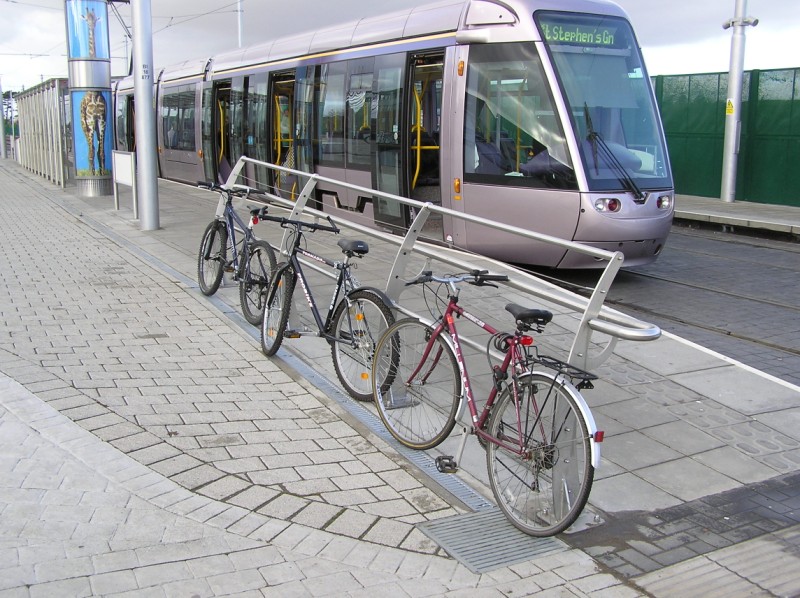
Figures released under Ireland’s Freedom of Information laws have revealed that Dublin’s proposed new underground metro line will cost more than €5bn ($US 6.86bn). If given the go-ahead, the metro north route will link the north Co Dublin satellite town of Swords to the city centre (St Stephen’s Green) via the airport.

The link will be the first of two metro routes with a second westbound line also planned to link the growing outlying towns of Tallaght, Clondalkin, Blanchardstown and Porterstown with the north metro line at the airport. The two new lines will link up with existing infrastructure including the two Luas (light rail) lines, the DART (Dublin Area Rapid Transit) and Dublin suburban rail network. The new public transport systems are badly needed to service the Irish capital’s incredible growth and deal with its attendant traffic chaos.

Despite a slight slowdown since the double digit growth of the Celtic Tiger, Ireland with its comparative youthful population is expected to have economic growth of 6 per cent annually for the next 15 years. A report by NCB stockbrokers also predicts 70,000 immigrants arriving annually meaning that by 2020 a fifth of Ireland’s population will be immigrants. Dublin will have to deal with a large percentage of this growth.

The Greater Dublin Area (GDA) dominates the Irish economic landscape. The GDA, incorporating Dublin and surrounding counties of Kildare, Meath and Wicklow contains 1.53 million inhabitants, representing almost 40 per cent of national population. Approximately 47.5 per cent of all immigrants into Ireland come to the GDA and 49 per cent of all employment growth in Ireland is located there. This growing dominance places huge pressures on urban land markets and has resulted in constraints including problems of accessibility and congestion, infrastructure constraints and affordable housing difficulties.

There have been a number of new transport initiatives in the last few years including the M50 ring road motorway and the two Luas lines. The Luas has proved successful with the system making a profit of €5.6 m in 2006 ($US 7.68 m) with more than 26 million passenger trips according to the annual report of the Railway Procurement Agency (RPA). The profits will be invested in developments on the Luas lines, including increased frequency of service and the RPA is working on the extension of the two lines. The Luas is hampered however by the inability to link the two existing lines. The metro north route will address this deficiency.

According to a speech last year by the then Transport Minister Martin Cullen, the plan is to complete the railway construction for the 15 stop 17km metro north route by 2012. The journey to Swords from the city centre will be cut to 26 minutes. Cullen claimed that over 100 million passengers would take the Luas and Metro when the project is delivered in full. He also targeted 375 million passenger journeys by all public transport in 2015 as against approximately 200 million in 2006.

But the main transport issue facing Dublin is to change the culture of car dependency. In his book “Gridlock: Dublin’s transport crisis and the future of the city” James Wickham argues Dublin's rising car usage is not an inevitable consequence of rising affluence but is the result of social and political choices. The book states that in the second half of the 20th century, Dublin's public transport system was destroyed. Even before the 1990s boom, the city was becoming more suburbanised in a way that exacerbated its inhabitants' dependency on the motor vehicle. By 1990 nearly 60 per cent of all journeys to work in Dublin were by private car. The arrival of the two metro routes will be a significant help but Dublin needs much more of the same to achieve what Cullen calls “ a 21st century infrastructure for a 21st century economy”.

Tuesday, August 07, 2007

Waterford days: Once upon a time in the South-East

Despite atrocious weather, the people of Waterford celebrated the August bank holiday weekend with the annual Spraoi festival which culminated last night with the parade which this year had a wild west theme. The persistent rain did not affect the party atmosphere which was heightened by Waterford’s win in the all-Ireland hurling quarter final over its old rivals Cork in Croke Park yesterday with the parade delayed by a half hour to allow the many people making their way back from Dublin cross the bridge into town in time for the start.

Spraoi (pronounced "spree") is an Irish word meaning a celebration or party. The three day Spraoi is Waterford’s largest festival and has been an annual August event since 1993 featuring music, street theatre and performance. The highlight is the Spraoi Parade, which can attract an audience of 50,000 people and involves several hundred costumed performers with giant props and floats, pyrotechnical wizardry, lights and special effects. Each year the theme is different and last night’s wild west theme featured a noisy and colourful convoy of stagecoaches, wagons, trains, and movable saloons.

Waterford is one of Ireland’s oldest and best preserved Hiberno-Norse towns. The name comes from “Vedrarfjord” meaning windy fjord and the town is served by a magnificent harbour. Three major Irish rivers, the Barrow, the Suir and the Nore all drain into Waterford Harbour. Though the Desii people from Co Meath are supposed to have inhabited Waterford around the 2nd century, the first recorded settlement on the south bank of the Suir was founded by Viking raiders in the ninth century. The Danes led by King Sitric founded the first longphort (shore fortress) around 853AD. By the late Viking age, the town was densely populated, well defended, Christianised and prosperous. More by neglect than by design, many of Waterford Viking and middle age walls are still extant.

The most famous building in Waterford is Reginald’s Tower. The tower is the oldest civic urban structure in Ireland and has played an important role in Irish history. The present structure dates from the 12th century and the earliest building on the site is a Viking fortification built on this site during the 10th century. The tower formed the apex of the triangular city settlement and was a port for Viking longboats. The tower gets its name from the Hiberno-Norse ruler of the city Ragnall MacGillemaire who was held prisoner there by the new Anglo-Norman invaders in the 12th century. It was here where Strongbow, the Anglo-Norman invasion force leader, married the daughter of Dermot McMurrough, King of Leinster. Their dynastic alliance would fatally intertwine British and Irish history and leave consequences still felt today.

Strongbow was the first in a line of British invaders who would turn Reginald’s Tower into a royal castle. King Henry II arrived in 1171 with an army of 500 knights and 4,000 men-at-arms. King John visited Waterford in 1210 and ordered new coins to be struck. Richard II visited the tower in 1394 and again in 1399. Returning to England from his second visit he was captured by the future Henry VI and forced to abdicate.

In 1487 the city refused to obey the direction of the Earl of Kildare to recognise Lambert Simnel as king and then eight years later defenders in Reginald's Tower successfully turned away the siege forces of Perkin Warbeck, the Yorkish pretender to the throne of Henry VII. These acts of loyalty to the English crown earned the city its motto "Urbs Intacta Manet Waterfordia" - "Waterford remains the unconquered city".

However Waterford was eventually conquered in the 17th century. The majority Catholic city had supported the confederate and Royalist cause in the Civil War. The Parliamentarian New Model Army arrived to besiege Waterford in October 1649. Cromwell had already gained a fearsome reputation in Ireland for his bloody sacking of the towns of Drogheda and Wexford. But Waterford initially withstood his siege as Cromwell’s army had to retire to winter quarters, where many of his men died of typhoid and dysentery. In 1650, parliamentary army leader Henry Ireton arrived to restore the siege and got his artillery within range of the city walls. The Mayor of Waterford pleaded with Royalist general Thomas Preston to surrender the city which he eventually did in August 1650.

Despite the ever present threat of wars and plague, Waterford was now a prosperous seafaring and trading town, third only in importance to Dublin and Cork. Trading with Newfoundland brought much wealth into the city. Much of Waterford’s finest architecture dates from the 18th century including the Catholic and Protestant cathedrals designed by locally born John Roberts. Roberts left an astonishing stamp on the city of his birth. He was born in 1712 the son of a local builder. Though he may have learned some basic skills from his father, not much is known about his formal education. It is likely he went to London to be partially trained as an architect.

In 1746 Roberts returned home where he was requested by Bishop Richard Chenevix to complete the new Bishop's Palace. This was his first major work in the city and led to further commissions in Waterford. In 1785 he built the residence of William Morris, now the Harbour Commissioners' headquarters and the Chamber of Commerce. In 1787 he was commissioned to build a new Leper Hospital on John's Hill. Roberts also built the Assembly Rooms on the Mall in 1788, which is now the Theatre Royal and City Hall.

The other major influence of the 18th century was the birth of the Waterford crystal industry. In 1783, Quaker brothers George and William Penrose founded the Penrose Glass and began to make crystal which they claimed would be "as fine a quality as any in Europe ... in the most elegant style." The brothers were able to live up to this extravagant claim. They used old secrets of mingling minerals and glass to create a crystal of beautiful and mysterious qualities. Their reputation quickly spread. King George III ordered a set of Waterford Crystal sent to his residence at a fashionable resort, where "it has been much admired" by court society. However in 1851, the then owner, George Gatchell, was forced to close the Waterford factory, largely because of crippling British excise taxes.

The tradition lay dormant until after the second world war when a new Waterford Crystal industry emerged led by a Czech immigrant businessman. Charles Bacik escaped the Communists to re-establish a glass works in the city. Bacik hired a fellow Czech the 25 year old Miroslav Havel who had been trained in glass-making at the prestigious Academy of Art and Industrial Design in Prague. After Bacik sold his interest to a group of Irish entrepreneurs, Havel stayed on to guide the rise of Waterford Crystal by adapting antique Waterford designs to modern production processes. He developed the beautiful suites of cut crystal glasses that created a brand identity now known to millions of consumers throughout the world.

Despite the world renowned crystal, Modern day Waterford has declined somewhat since its glory days as a medieval port. Once second in importance only to Dublin, it has since been overtaken by Cork, Limerick and Galway. Today the city’s population is over 50,000 and is the second fastest growing city in Ireland. Waterford has a renewed optimism with the long desired second crossing over the Suir due for completion in 2009/2010 set to give the city the much-needed bypass of through traffic from Rosslare to Cork and will add to the attractiveness of the old heart of the Viking town.

Wednesday, August 01, 2007

Galway days

Yesterday was the first day of the annual Galway racing meeting festival. Over the next seven days up to a quarter of a million paying customers will pass through the gates at Ballybrit racecourse on the outskirts of Galway city for Ireland’s largest racing carnival which has taken place each year since August 1869.

The event is now so popular Ballybrit has drafted in dedicated air traffic controllers to deal with the 84 helicopters registered to land at the track. A bevy of politicians, property developers and entrepreneurs will be avoiding the legendary traffic jams around the area by using one of the 300 landing slots a day at the racecourse. The new travel option costs €700 for a few minutes to escape the snarl and is growing in popularity.

Galway is Ireland’s most westerly city and the only city in the province of Connaght. Galway is a boomtown and is one of the fastest-growing cities in Europe. It has a population of over 70,000 and receives thousands more visitors every summer to what has been called the party capital of Ireland. The narrow streets are crammed with people in search of traditional bars and music.

Galway was first settled in 1124 when the King of Connacht Tairrdelbach mac Ruaidri Ua Conchobair built a strong castle called Dún Bhun na Gaillimhe ("Fort at the Mouth of the Gaillimh"). By the end of the 12th century, the English forces of Henry II defeated a western army and forced the King of Connaght to retreat and sue for peace. The first Galway city charters was granted to Galway over six hundred years ago, but the most comprehensive one which introduced the position of Mayor in the Borough, was granted in 1484.

The Local Government (Ireland) Act of 1898 democratised Local Government away from the prerogative of the landed gentry. In 1937, the Local Government (Galway) Act re-established the town of Galway as a Borough and incorporated the inhabitants and successors as a City Council under the name of “The Mayor, Aldermen and Burgesses of the Borough of Galway”. The city’s growth was acknowledged when the status of County Borough was granted to Galway in 1985.

However the current council are dealing with a major embarrassing headache. Over 230 people have become ill in the last three months due to an outbreak of cryptosporidium parasite that has contaminated large areas beyond the city and is threatening to spread into neighbouring counties. The city council is advising that tap water should not be used for brushing teeth, gargling, making ice or washing salads. Even the Archbishopric of Tuam has had to find an alternative source of holy water to avoid poisoning parishioners.

The use of bottled water is a daily reality in Galway because of poor environmental planning and enforcement. Dodgy environmental dealings and cowboy housing schemes have left many parts of the city and the county without waste systems connected to the main sewers. Many people have been prevented from building new homes on their family lands as a result of a decision by Galway County Council not to allow any more connections on the massive mid-Galway water scheme.

The city remains subject to a boil water order after three months. Now Galway's vintners and hoteliers are considering suing Galway City Council. Val Hanley, Chairman of Galway City Vintners and proprietor of the Hanley Oaks Hotel, told a Galway newspaper that the vintners and the Irish Hotel Federation had discussed the ongoing water crisis. The cryptosporidium outbreak has already cost both memberships in purchasing ice, water and filtration systems in order to keep customers safe. The racing festival will be provide a welcome distraction for the city and, one would assume, the vast quantities of bottled beer consumed will prove a welcome change from the bottled water.