Showing posts with label refugees. Show all posts

Tuesday, June 23, 2009

From Burma to Brisbane: A tale of Rohingya resilience

Sujauddin Karimuddin apologised unnecessarily for being late meeting me for a coffee. He was delayed next door at the Mater Hospital where a woman was having complications after the birth of her baby. The woman was a Burmese refugee and it was Sujauddin’s job to translate symptoms and orders between doctor and patient. All in a days work for a remarkable young man who himself was a refugee for many years.

Both Sujauddin and the woman in the hospital are Rohingyas, a mostly Muslim people that have been persecuted for decades by Buddhist Burmese military rulers. The notorious 1982 Citizenship Act stripped them of their right to be Burmese. At a stroke of dictator Ne Win’s pen, a people who had lived in north-west Rakhine (formerly Arakan) province for centuries were declared unpeople who had no right to jobs, land, marriage or travel papers.

Sujauddin went to High School in the early 1990s suffering under this injustice. As he admits, he was one of the lucky ones. His father was a wealthy businessman in the sugar town of Kyauktaw and could bribe his way out of most problems. But even he had been arrested on several occasions for minor misdemeanours. Sajuaddin became involved in Rohingya support groups at school and wrote complaint letters to school and government authorities. He was arrested by military intelligence and charged with raising funds for armed groups in Bangladesh. His father came to the rescue and bribed authorities to get him out. But his mother could see the writing on the wall. She advised her son to get out while he could.

Sujauddin left his home town in 1998 and has never been back. Travelling without papers, he made the dangerous journey to the capital Rangoon by boat and truck. Hundreds were arrested on this known refugee route and Sujauddin was picked up at a military checkpoint 100km from Rangoon and sent to a prison camp. Here he had a stroke of good fortune. A new commander from up north was unaware he was a Rohingya and asked him why he was travelling without papers. Sujauddin told him he was just a poor person looking for a job in Rangoon. The commander admonished him and then freed him with a note saying “this boy is respectable”.

The respectable boy’s father had business interests in the capital. The plan was for Sujauddin to stay and manage the business. But he was defeated by Rangoon’s repressive laws. Citizens must report visitors on a daily basis with a penalty of two years imprisonment for non-compliance. After six dangerous months moving from friends to friends, Sujauddin admitted defeat. He hired an "agent” (what Australians pejoratively call “people smugglers”) and took a bus to Thailand. He arrived in Bangkok and sold roti on the streets to survive.

Inevitably he was caught and sent to an Immigration Detention Centre. Here they served him rice and pork. As a Muslim, Sujauddin could not eat the pork, but as there was no other food he starved. He had no energy to walk and was eventually dragged into a truck and deposited on the Thai-Burmese border with orders not to return. He ignored the order. Instead he contacted a cousin in Malaysia and asked him to send him money to come south to Malaysia. He got back to Bangkok where he contacted another “agent” to take him south to the Malay border. After an all night walk across the jungle, Sujauddin arrived in Malaysia in November 1999.

He took the train to Kuala Lumpur where he found a factory job. Because he was illegal, the conditions were pitiless. He earned just 20 ringgits a day for 12 hours work. He worked seven days a week and hid for a year. Eventually every Sunday he managed to escape to the university where he found a Rohingyan professor who taught him English. He would study for three hours before returning to work. He got a better job in a shopping centre but lasted just two months before being arrested for a third time in a third country.

Once again he was taken to a detention centre. On arrival he was ordered to strip naked in front of two thousand inmates. Sujauddin refused. “I am a Muslim,” he said. “I have my dignity”. The prison officers beat him up but he refused to obey the order. Fellow prisoners shouted out for him to obey but despite the kicking and the bleeding, he refused obstinately. “I would rather die,” he said. He did not die, but he did not take off his clothes either. The camp foreman ordered he be dragged away.

After three months imprisonment he was put on a bus with other detainees and driven to a river on the Thai border. The prisoners were loaded onto a boat and pushed off shore with orders not to come back. On the other side they were picked up by Thai gangs who worked with police. They demanded 200 ringgits or else they would sell them for 200 ringgits to local fisherman. Those that were sold into slavery rarely made it out alive. Sujauddin promised to ring his cousin in the morning to pay the ransom. In the middle of the night he escaped his captors and led them on a scary chase through the jungle. Sujauddin could hear his pursuers following on motorbikes but eventually found a highway petrol station where a couple helped him escape back to Malaysia.

He made his way back to Kuala Lumpur where he got another job. This time he struck it lucky and got a job with a fashion designer. He used his English to good effect and gradually made himself indispensable to his employers. Finally having some fixity of tenure, he resumed his activism and helped found the National Council of Rohingyas with his former English teacher. They succeeded in getting the UN High Commission of Refugees to issue a document to allow Rohingyas to get medical treatment in Malaysia. But while doctors recognised the document, the police would not. 12,000 Rohingyan refugees in Malaysia remained vulnerable to arrest at any minute.

In August 2005 Sujauddin arrived in Sydney on a 6 month 309 spouse temporary visa. He then applied for a refugee visa which took another 9 months to process. In the meantime, Sujauddin was keeping himself busy. He joined the local Rohingya support group and became secretary of the Sydney branch. He also became involved in wider Burmese issues. He joined the Burma Campaign Australian and also worked with the Burmese Democratic Movement Association. During the Saffron Revolution he organised support rallies in Sydney.

He moved to Brisbane where he now provides new Rohingyan refugees with cultural and language support. The love for his Rakhine homeland still shines brightly in his eyes and his biggest task now is to be re-united with his family who are now in refugee camps in Bangladesh. He wants the Australian Government to do more to help his repressed people. “I want them to put pressure on the Burmese Government and raise the issue in the UN Security Council,” he said. “Enough is enough. Australia is the western country closest to Burma and should take more responsibility to solve the problem. It’s bad enough for the half million Rohingya in the camps but its worse for the several million still in Burma. It’s our job to provide awareness to the international community so that people know what’s going on”. With that, Sujauddin apologised once more and disappeared into the Brisbane rain. I cycled home, oblivious to the wet, pondering on what it meant to live in a world where freedom could not be taken for granted.

Thursday, June 18, 2009

Romero Centre refugee week film festival at Yungaba

Life throws up a few unexpected pleasures from time to time. If I hadn't checked Facebook this morning, I wouldn't have known Andrew Bartlett was broadcasting live on 4ZZZ Brisbane community radio at the time. if I hadn't listened in, I wouldn't have heard the interview he did about refugees with Kathi McCulloch, the coordinator of the Romero Centre. If I hadn't heard the interview I wouldn't have known that there was a Refugee Week film festival tonight at the wonderful Kangaroo Point building known as Yungaba. So on the spur of the moment, I went along and was treated to an evening of three films, discussion, food and drink, and good company.

The Romero Centre is a faith-based ecumenical social justice organisation. The centre is named for El Salvadorian Catholic Archbishop Oscar Romero who was assassinated by his own government in 1980 for fighting human abuses. As part of the spiteful regime of the former Howard Government, the Romero Centre was ineligible for funding from the Department of Immigration because of its work with Temporary Protection Visa (TPV) holders. Now that is beginning to change and new funding possibilities are opening up along with the great ideas they can purchase.

The film festival about refugees is one such great idea and Yungaba is a perfect venue to host it. The heritage listed building was built as an immigration depot for Brisbane in 1885. For over a hundred years it became a local version of Ellis Island and was listed recently as a Queensland icon. But the building has now been sold to private developers who will probably turn it in to boutique apartments for the wealthy. In the meantime it was an honour to be among a hundred people at one of the final public gatherings in what McCulloch called this “joyous space”.

There were three films shown in the festival, all of which touched on the refugee experience. The first, and shortest, was “See Through Me” a collection of tough street experiences of ten young Somali-Australian immigrants made by the Refugee Health Research Centre of La Trobe University in Melbourne. The “fight or flight” mentality became easier to see from their perspective. As one Somali boy said when taunted by a gang, “I was outnumbered, I had to ignore them or I would have copped the damage”.

The second film was Freedom or Death. “Freedom or Death” was the slogan of the refugees held in Nauru detention centre for several shameful years during the height of John Howard’s notorious Pacific Solution. The mendicant state of Nauru was bought off by the Australian Government to house boatpeople in an environment that was excised from Australian law. The refugees became sick of living with no hope of release in an environment where phosphate got into the food and into the feet. They fought back with the only weapons they had: their bodies. Howard branded the Nauru 2003 hunger strike as “blackmail” and refused to negotiate with them. But as lawyer Julian Burnside said “they were playing the only card they had”.

Out of their midst emerged a born leader. Chaman Shah Nasiri (pictured seated next to Kathi McCulloch) was a young man whose dignity could not be repressed and it was he who got his fellow inmates to end the hunger strike before anyone died. Chaman, like most of the rest of them, is a Hazara, a Shia community which were heavily discriminated against in Sunni Taliban Afghanistan. He described the terror of trying to get to Australia in leaky, dangerous boats and pay $16,000 for the privilege. He was a natural spokesman for the group and he was in the delegation that spoke to the then-Immigration Minister Amanda Vanstone’s office in 2003. Chaman is now happy to be settled in Australia where “he can breathe the air of freedom” and reminded the audience that Australia is a signatory of the UNHCR convention/protocol on refugees.

The final film was called “Pacific Solution: from Afghanistan to Aotearoa”. It tells the story of those rescued from the MV Tampa in 2001 who were taken in by New Zealand. While Australia and New Zealand share a common colonial heritage, they treated refugees radically differently in the early 2000s. While Howard banged on stridently about “us” deciding who could stay in Australia and under what conditions, the Helen Clark government took a more compassionate approach (often against the anger of many New Zealanders worried about immigration). New Zealand immediately accepted 131 of the 438 Tampa asylum seekers (including about 40 unaccompanied boys). The film took in the touching story of how the rest of the family joined one of these boys in Auckland, and the culture and language difficulties they found on arrival. This family was also Hazara and had to leave Afghanistan. As Julian Burnside said “when your own country wants to kill you…what choice do you have?”

While TPVs and Nauru are gone, the problem has not fully gone away. There is compassion fatigue within the industry. The media is always ready to play up fears about “border protection”, despite the reality that Australia is no danger of being “swamped” by refugees. The current Australian Government is worried about being wedged on the issue – they remember only too well that Howard had a 90 percent approval rating over Tampa. Yet they could also do well from learning how the Kiwis quietly and effectively dealt with the problem. Refugees need help and by international law and the covenants that Australia has signed, we must help them. Nights like tonight at Yungaba are a useful reminder of how that help can be sustained at an individual level.

Sunday, May 10, 2009

Pakistan's Swat province on the verge of all out war and a humanitarian crisis

Hundreds of thousands of civilians are fleeing the Swat valley as fighting intensifies between Pakistani government troops and the Taliban. On Friday, the UN Nations High Commissioner for Refugees (UNHCR) warned of a humanitarian crisis as large numbers of people arrive in already overcrowded areas of temporary accommodation. The UN agency said about half a million people have been displaced in the last few days bringing the total amount of Swat refugees arriving in safer areas of North West Frontier Province (NWFP) to a million since August 2008. "The new arrivals are going to place huge additional pressure on resources,” said UNHCR spokesman Ron Redmond.

Al Jazeera's Kamal Hyder said many of these people now fleeing Swat are stranded along the jammed highway between Swat’s largest city Mingora and Mardan. Many had to leave suddenly after a government warning on Thursday the fighting was about to intensify. “Many people who are stuck inside Swat are asking the government why there was no plan [and] why they were not given adequate warning to get out,” he said.

The longstanding curfew in the entire Malakand division had added to the misery of the displaced and a large number of people were trapped in their homes in Mingora and other areas of Swat. Today, the Swat administration announced a temporary relaxation of the curfew around Swat from 6am to 1pm to enable civilians to flee the anti-Taliban offensive. Both Prime Minister Yousuf Raza Gilani and President Asif Ali Zardari promised to minimise civilian casualties and look after those displaced by the conflict. Zardari stated from New York that a billion rupee fund would be announced for the rehabilitation of refugees.

The news came as Pakistan's army launched an offensive on Friday after a government order to eliminate militants from the Islamist stronghold. They attacked Taliban positions with warplanes and helicopter gunships. The helicopters targeted militant hideouts in the district's biggest city of Mingora and killed 15 fighters. Meanwhile mortar fire in the city also resulted in an unknown number of civilian casualties. Militants used houses as bunkers to fight back. Troops also engaged militants in a number of other locations in Swat, including Rama Kandhao ridge in Matta, and destroyed an insurgent headquarters in Loenamal. There have been several hundred casualties to date.

Until recently, the government in Islamabad was virtually oblivious to what was going on in Swat, which is just 130km from the capital Islamabad. The former tourist area has become a no-go area after the Taliban took over defacto control of the province. According to the army, Taliban groups have blown up 165 schools for girls, 80 video shops, 22 barber shops and destroyed 20 bridges. One million local children have missed out on Pakistan’s anti-polio vaccinations after the government deemed it too dangerous to implement the immunisation drive there. Haji Adeel, a senator and senior leader of the NWFP’s ruling Awami National Party, concedes the central government has lost control. “Swat is a part of Pakistan but no governor, chief minister or the prime minister can venture to go there," he said.

Swat’s current problems date back to 2007. While then Pakistani leader Pervez Musharraf was locked in a struggle to keep the presidency, popular Taliban leader and cleric Maulana Fazalullah (pictured) took advantage to launch a “holy war” to take control of the province with his 10,000 strong private army. Fazalullah collects one-tenth of agricultural income in taxes, uses FM radio to pass on his decrees to the local population, and has his own judiciary to hear cases and hands down verdicts.

Although Islamabad sent in 20,000 troops to oppose the Fazalullah, the capital Mingora was under effective Taliban control by January 2009. The Taliban set a deadline of 15 January to close all schools, especially those of girls. When some schools defied the ban, they were blown up. But with a central government and attendant media still occupied with India and the aftermath of the Mumbai bombing, it seemed that Swat would be left to its own devices.

Desperate to save face, the Islamabad government signed a peace accord with the Taliban in February which agreed to the imposition of Sharia Law in the province. While locals were mostly happy the accord would bring peace, US defence officials and NATO were not impressed by what they saw as a surrender to extremists fanning out from the Afghan border. NWFP Information Minister Mian Iftikhar Hussain defended the settlement as necessary to achieve peace. "The need of the hour is to put water on fire, not to fuel it,” he said.

But the ceasefire did not last as mistrust grew on both sides. The agreement began to unravel in April when the Taliban entered the Lower Dir and Buner districts, barely 100 kilometres from Islamabad. US Secretary of State Hillary Clinton called it an “existentialist threat” to Pakistan’s government. And after President Zardari met Obama in Washington this week there was a swift about turn in the government’s position. His position was suddenly unequivocal. He said there were 3,000 “terrorists” in the Swat and his government was going to eliminate them all. When the White House press corps asked him to clarify what "eliminate" means, Zardari said "eliminate means exactly what it means." When asked does it mean: "killing them all", Zardari replied: "That's what it means."

Saturday, April 18, 2009

An Uncertain Maritime Incident: boat explosion survivors arrive in Australia

31 casualties from yesterday's boat explosion of asylum seekers are now being treated in Australian hospitals. The boat carrying roughly 50 people exploded near Ashmore Reef after being intercepted by the Australian Navy the previous afternoon. Three people were killed and two more are missing. Another five of the injured are fighting for their lives having suffered burns to up to 70 per cent of their bodies. The incident was quickly politicised by WA Liberal Premier Colin Barnett and Federal Immigration spokeswoman Sharman Stone opening up a Pandora’s Box of anti-immigrant hysteria reminiscent of the unsavoury mood that enveloped Australia in 2001 in the wake of the Tampa crisis.

Prime Minister Kevin Rudd steered clear of the politics as he gave further information about the refugees at a doorstop in Sydney today. He said 31 passengers from the vessel were transferred from HMAS Childers and HMAS Albany by helicopter to Truscott in Western Australia. Eight refugees with serious injuries were sent to Darwin and another was sent to Broome while the rest were escorted to Perth. Another 13 passengers remain on HMAS Albury which is sailing to Darwin. However Rudd refused to speculate on the cause of the explosion. “[I]t’s still too early to confirm the cause of the explosion on the vessel in question,” he said. “In line with that advice I will not be speculating on the cause of the explosion today until that investigation is concluded.”

The government position on the cause of the blast is in stark contrast to that of WA Premier Colin Barnett. Within hours of the incident, he claimed the cause was sabotage. Barnett said refugees deliberately doused the deck with petrol before igniting it. However today he was in damage control mode saying his information was from the State's Emergency Operations Unit, which was relaying information from Northern Command. “I was asked a question on this, I had only 20 minutes earlier had a briefing on the situation and I simply conveyed in good faith the information that had been provided to me,” he said.

Opposition front bencher Sharman Stone went further than her state colleague and directly blamed the Government for the explosion saying “You can't announce a soft policy and expect people not to lose their lives through people smuggling efforts”. She told last night’s Lateline she stood by her remarks and said the Government had created a dangerous situation with its policy on asylum seekers. She said asylum seekers were coming in larger numbers by sea since the August 2008 changes which ended the so-called Pacific Solution and got rid of Temporary Protection Visas. Since then, she said, “a green light flashed in a lot of people smuggling business headquarters, and we saw these boats begin to come on down.”

Her comments set off a firestorm of radio talkback reaction mostly hostile to asylum seekers redolent of the 2001 days of the Dark Victory. But Stone’s complaint was contradictory as well as being plain wrong in many respects. Stone admitted she did not want to see a return to the Pacific Solution where detainees were held on Nauru and PNG’s Manos Island. Nor could she explain what a Liberal Government would do differently in the current situation other than telling Indonesia Australia was serious about people smuggling. Stone’s tirade was assisted by a series of articles in The Australian which sought to beat up the asylum issue.

Foreign editor Greg Sheridan agreed with Stone that it was a “softening Australian border controls” which had to “act as a magnet for illegal immigrants.” But in the next breath he also admitted there is a general rise in asylum seekers around the world. The UN High Commission for Refugees says there were 383,000 asylum applications worldwide in 2008 up 12 percent since 2007. Barely 4,700 of these came to Australia the vast majority of which arrived by air.

Perhaps surprisingly, the largest amount of these people are from China with 24 percent of the 2008 total (Sri Lanka and India are second and third respectively). However because they arrive by plane, the Chinese immigrant are not demonised by the media as Andrew Bartlett notes. A secondary reason, says Bartlett, is there are “diplomatic sensitivities in our politicians drawing too much attention to the fact, which would mainly serve to remind people of how appalling the human rights record of the Chinese government continues to be.”

But there appears to be no such sensitivities about those who take the perilous sea journey. In 2000, then PM John Howard successfully made them unpopular by calling them “queue jumpers” appealing to the Australian sense of order while waiting. The implication is that those who arrive without documentation take unfair advantage over those who have completed applications for refugee status overseas in order to enter Australia with a valid visa. However “queue jumpers” is an empty phrase. Many refugees (such as the Afghan Hazaras) come from places where there is no orderly process to asylum and risk imprisonment or death in leaving their own countries.

It is important to realise the small scale of the problem. Even with the increase in numbers, just 18 boats (including 6 this year) have been intercepted since 2005 carrying barely 300 passengers. To deal with this problem there is a new $400 million immigration detention centre at Christmas Island’s North West Cape while the government proposes to spend another $120 million on detention operations this calendar year. Refugee Council President John Gibson said it was important to learn from past mistakes before re-entering a debate on asylum seeker issues. Gibson also reminded commentators and the public that the act of seeking protection from persecution was sanctioned under Australian law. “As a mature democratic nation…we need to treat asylum seekers and handle their claims in a manner which is consistent with the ‘fair go’ ethos of which we are rightly proud”, he said.

Tuesday, February 24, 2009

ASEAN ignores Burmese Rohingya refugee crisis

There seems little likelihood that the plight of Burmese Rohingya refugees will be discussed at the ASEAN leaders Summit this week. Rohingyas are victims of racial discrimination in their own country and their plight came to international attention after Thailand admit they had towed a thousand refugees out to sea. Vitavas Srivihok, Thai director of ASEAN Affairs Department, said talks about Rohingya would at best be marginalised to the “sidelines” of the conference and even then expects little by way of concrete outcomes. The conference’s contempt for Rohingya shows yet again ASEAN’s disinterest in human rights issues.

The Rohingya are a predominantly Muslim community, with a long history, inhabiting Arakan province of Burma. Their ethnicity and religion has made them a target of oppression by Burmese military rulers. In a move reminiscent of Nazi discrimination against Jews, a Burmese 1982 law stripped them of their right to citizenship. Rohingya also endure restrictions affecting their movement, education, and freedom to marry. They are often forced into slavery, have their land confiscated and suffer arbitrary arrests, torture, and extra-judicial killings. Today the Rohingya have become increasingly landless and jobless forcing many to flee the country.

The Rohingya refugee issue is now an international problem affecting Burma, India, Bangladesh, Thailand and Indonesia. One thousand of them set off for Bangladesh in December and were detained and beaten when they landed in Thailand. But Thailand decided to export the problem. The refugees were forced back to sea in boats without engines or food. Hundreds died but hundreds more were rescued in Indian and Indonesian waters after several weeks at sea. On 7 January, 198 of them were found by Indonesian fishermen adrift at sea off Aceh, in northern Sumatra. Indonesian authorities say they have now rescued about 400 Rohingya migrants while Indian authorities at Andaman Islands have said they have also rescued hundreds of refugees. India plans to deport them back to Bangladesh.

Meanwhile, Thailand initially denied claims that its security forces abused the refugees. However in an interview with CNN last week, Thai PM Abhisit Vejjajiva admitted Thai security forces towed away the boats. Vejjajiva gave the unconvincing answer that he could not pinpoint which government official approved the practice, but claimed he was working on fixing the problem. "All the authorities say it's not their policy, but I have reason to believe some instances of this happened, said the PM. “If I can have the evidence as to who exactly did this I will certainly bring them to account."

But while the world should rightly judge Thailand harshly for its conduct in this shameful affair, Burma’s role should not be forgotten. Ye Myint Aung, the Burmese Consul-General at the Hong Kong consulate exposed what authorities really think of their minority in an extraordinary letter (pdf) addressed to the peninsula’s consular corps and media. In it, Aung denied Rohingya were Burmese. The Burmese, said Aung were good looking with “fair and soft” complexion. Rohingyas, by contrast had “dark brown” skin and were “ugly as ogres.”

Unfortunately, as New Mandala points out, the racism Ye Myint Aung shows against Rohingya is not unusual in Burma. New Mandala blames academics for stoking up “institutionalised chauvinism and historical memories built around communal conflicts from the last century”. Spurious research questioning their heritage gives people an excuse to distrust Rohingyas even though most have never met one.

But there are still groups around who are working to improve the Rohingya's lot. The Arakan Rohingya National Organisation wrote an open letter to the heads of ASEAN on the weekend which said that Burmese persecution of Rohingya people was a violation of the ASEAN Charter to respect human rights and international law. They called on the leaders to address the root cause of the Rohingya refugee problem and boatpeople crisis, pressurise Burma’s rulers to end human rights abuses and also urged Thailand to pay compensation to the families of Rohingya boatpeople who drowned.

The international peak political body for Burmese ethnic groups is also calling on the Australian government to push for the case for democracy in Burma. The Ethnic Nationalities Council represents seven ethnic Burmese groups Burma comprising 40 percent of the population. The Council's vice chair, Dr Lian Sakhong, told Foreign Affairs and Immigration officials that Australia should call for multi-party talks on Burma “to put pressure on the military regime so that we can have a dialogue.”

Sakhing said the talks should lead to a negotiated settlement to return Burma to democratic rule and also end ethnic oppression of Rohingyas and other groups affected by the 1982 citizenship laws. "We need to review the constitutions that are adopted by the military, so that we can have a compromise,” he told ABC’s Connect Asia. “If we don't do that, then the result will be another 50 years of civil war.”

Monday, March 24, 2008

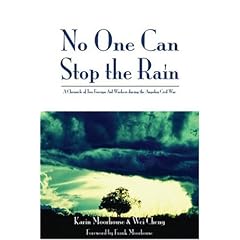
No one can stop the rain: a story of aid workers in Angola

On Saturday, Angola celebrated the 20th anniversary of one of the most important battles of the civil war. The Battle of Cuito Cuanavale on 22 March 1988 was a key episode in the conflict between the Marxist rulers of Angola supported by Cuba and the UNITA rebels supported by apartheid-era South Africa. While victory was claimed by both sides the conflict was significant as media criticism in South Africa led both sides back to the negotiation table, the departure of all foreign troops from Angola and the eventual independence of neighbouring South West Africa as Namibia.

The Angolan war itself dragged on for well over another decade. It took the death of charismatic UNITA leader Jonas Savimbi in 2002 to be the catalyst for a lasting ceasefire. One of the cities worst affected by that war was another Cuito or Kuito as it is better known. Set in the middle of Angola 600km from the capital Luanda, Kuito is the administrative capital of Bié Province and was the scene of a nine month siege by UNITA in 1994. The city was also attacked in 1998 and was left a crumbling and heavily landmined ruin. Only now is the city beginning to plan for the future with the announcement of a new thermal power station comprising four diesel ten-Megawatt generators to be built within 30 months.

The news will be greeted with delight by Karin Moorhouse and Wei Chang, an Australian-Chinese couple who were posted to Kuito in 2000-2001 as aid workers. The pair documented their experiences in the book “No One Can Stop the Rain”. The title comes from a poem by Angola’s first president Antonio Agostinho Neto written in a Portuguese colonial prison in 1960.

In 2000, Wei Cheng was a Hong Kong-based paediatric surgeon, and his wife Karin Moorhouse (her author uncle Frank Moorhouse wrote the introduction to the book) was a senior marketing executive for Nestlé. The pair decided to act out a long-term ambition to work for an overseas aid agency and they signed up for Médecins Sans Frontières. They were assigned to Kuito, Wei as a surgeon and Karin as a financial administrator at the MSF project. They would be arriving at the end of 2000, with the civil war petering to a close and Kuito in government hands, but military violence a very real presence in the nearby countryside. Kuito was a safe haven in an otherwise dangerous landscape just beyond the city limits.

Due to the desperate need to get a surgeon on the ground, Wei arrived in Kuito some eight weeks ahead of his wife. He flew into a hot, listless town that was devastated by years of war. Every house façade was peppered by mortar spray and there was no running water and heavily rationed electricity. His place of work would be the Provincial Hospital of Bié ostensibly managed by Angola’s Ministry of Health. They provided the nurses and administrative staff. But it was MSF who provided most of the drugs and equipment and all of the doctors.

Facilities were rudimentary as was hygiene. Wei was horrified to see people walk into theatre wearing street shoes while scrubbing for an operation simply meant washing hands with soap. Many of Wei’s operations were on victims who had stood on a landmine. Typically the victims had travelled large distances to get to the hospital by which time their wounds were foul smelling and ridden with maggots. More often than not, Wei was left with no option but to amputate. In his first week there, he visited the British humanitarian de-mining organisation called HALO Trust. Here he found out where it was safe to move and where it wasn’t. It was at a HALO Trust site near Kuito where Princess Diana made her famous minefield walk in 1997.

At the time, Kuito’s population of 100,000 was almost doubled by a vast amount of Internally Displaced Persons from neighbouring areas. The IDPs camped around the outskirts of the city in search of security, care and food. But because they had not crossed any international borders they could not come under the jurisdiction of the UNHCR. Despite two million IDPs in Angola, the government in Luanda consistently downplayed the problem. In 2001 Angola exported 800,000 barrels of oil a day, yet the majority of the country lived in abject poverty.

Wei had settled into a rhythm of almost endless surgery by the time Karin arrived in Kuito. Wei forewarned her of what to expect with a photomontage of the patients he had treated. It was a catalog of legs blown away by landmines, children’s arms shredded by bullets, festering wounds, shattered bones, gunshots and distorted limbs. When Karin arrived, Kuito’s dry dusty air struck her as resembling outback Australia. That impression would change quickly with the coming of the rainy season.

Wei and Karin had to deal with a constant stream of children though the hospital. UNICEF have claimed Angola is the second worst country on the planet to be a child. One in three die before the age of five. In 1999 Angola ranked 146th out of 162 nations in terms of human development, despite its oil and mineral wealth. Angola was also the sixth most corrupt country in the world and a million people had died in the 25 year civil war. The capital Luanda had only one doctor for every 50,000 people. This statistic was even worse for the country: one doctor for every 400,000 people, the equivalent of just 50 doctors for the whole of Australia.

The couple gradually got used to life in Kuito. They became “desensitised” to the lack of fresh food, the constant power blackouts and the litany of cruel injuries they had to deal with on a daily basis. Even harder to deal with were the patients they had to turn away because their wounds were not serious enough. Prioritisation was their toughest task. Most of their patients were civilians as the army treated their own. Wei and Karin survived and even thrived due to their strong love for each other, the occasional break in South Africa and Luanda, and the bonds they made with fellow staff, patients and locals. They celebrated Christmas by giving out simple presents to the children in the orthopaedic ward and enjoying a rare food order from Luanda.

Although one of their staff was killed in an ambush, Wei and Karin kept out of harm’s way during their stint in war-ravaged Kuito. The closest they came to trouble was related to Angola’s Independence Day, 4 February, when a bomb exploded at an already gutted premises near the house where they lived. They were away at the time so were not impacted. After eight eventful months, their assignment came to an end. Wei later spoke about his hopes for the book of their experiences. “One could believe that the flickering light of humanity we witness almost daily in this world of conflict and tragedy is not about to be extinguished,” he said, “but rather can be given new energy through the efforts of ordinary people.”

Monday, May 28, 2007

No end in sight for Lebanon refugee camp siege

The siege in Northern Lebanon at the Nahr el-Bared Palestinian refugee camp has now moved into its second week with no signs of a settlement. The Lebanese government have demanded the surrender of Islamic militants inside the camp but are reluctant to rush into an all-out assault. Inside the camp the leader of the Fatah Islam militants, Shaker Youssef al-Absi, vowed his fighters would not surrender. "We wish to die for the sake of God," he said in a video released to Al-Jazeera on the weekend. "Sunni people are the spearhead against the Zionist Americans."

Palestinian negotiators have put together a four point plan to end the crisis. The plan calls for a permanent cease-fire, the creation of a Palestinian security force to maintain law and order in the camp, the barring of other armed groups in the camp and the creation of "a mechanism for the departure" of Fatah Islam from the camp. But this mechanism for the departure refuses to countenance the arrest of Fatah Islam leaders and that remains the biggest stumbling block to the Government agreeing to end the siege. Lebanese Prime Minister Fouad Saniora described the assault on the army as a crime against national stability and the Lebanese military has demanded al-Absi’s fighters be handed over for prosecution for attacking government troops last week.

The trouble started last weekend after Lebanese soldiers conducted raids in the city of Tripoli. The trouble then spilled over to the nearby Nahr al-Bared refugee camp. The Lebanese Army then laid siege to the camp trapping Fatah al-Islam militants in the process. At least 22 soldiers and 17 fighters were killed in the battle in the city and the camp. The army has threatened to storm the camp if the group fails to surrender. Al Jazeera reported that the army shelled the camp for the first three days of the siege. Walid Abdullah, a nurse inside the camp, said bodies were piling up in the streets and that there was a threat of disease. "Many dead bodies are lying on the streets," he said. "They are bloated and smelling and there is a threat of epidemics."

The Lebanese Opposition group Hezbollah has warned the government of dire consequences if they launch an assault on the camp. The camp leader, Shaker Youssef al-Absi is a Palestinian who has said he is inspired by Osama bin Laden. He has also has been linked to Al Qaeda factions in Iraq. Al-Absi was born in the West Bank town of Jericho in 1955 and fled with his family to Jordan after the 1967 Six Day War. He lived in a refugee camp for five years before joining Yasser Arafat’s Fatah movement. He fled to Tunisia in 1970 due to tensions between the PLO and Jordan. From there he went to Libya where he trained in Gaddafy’s air force.

In more recent times Al-Absi fought in the campaign of Afghanistan and Iraq. He was sentenced to death in absentia in 2004 by a Jordanian military court for his involvement in an assassination plot of US American diplomat Laurence Foley in Jordan. At the time Al-Absi was in prison in Syria on terrorist charges. He was released last year and made his way to Lebanon. Al-Absi now leads several thousand Palestinian refugees at Nahr al-Bared. The camp initially held 31,000 displaced Palestinians but 25,000 of them manage to flee the camp after the army shelling. Most of the escapees are now crowded at Hoda al-Turk camp in nearby Beddawi, about 5km north of Tripoli.

Al-Absi’s organisation Fatah al-Islam is a new addition to the covoluted political landscape in Lebanon. Lebanese security officials said the organisation began in the camp and has 100 members who come from various Arab countries including Saudi Arabia and Syria. They have been joined by local sympathizers. The group has quickly expanded to the nearby city of Tripoli. Tripoli is a predominantly Sunni city but does have a contingent of Islamic fundamentalists. A Fatah spokesman told Lebanese TV it belongs to the conservative Salafi branch of Islam and its aim was to liberate the Al-Aqsa Mosque in Jerusalem. "We are a Jihadi movement, and we have hoisted the banner of Islam,” he said.

Journalists have been prevented from entering the camp since last Monday. The army barred photographs of troops, artillery and military targets. Journalists were also forced out of a nearby high-rise building that had been used as a location for reporting the crisis. The Lebanese Army has not publicly explained the restriction, although some officials initially said it was imposed for safety reasons. Some journalists suspect the more likely reason was the army was attempting to hinder coverage of the humanitarian crisis inside the camp. On Thursday three journalists from Agence France-Presse, Al-Akhbar and Al-Alam were beaten by Lebanese army members after straying too close to the camp.

With 12 camps in Lebanon containing 400,000 mostly desperate Palestinian refugees, they remain a hotbed for political agitation and a time bomb ready to explode. Abu Imad Rifai, a representative of the Palestinian militant group Islamic Jihad, told AP on the weekend, "The repercussions of a military solution are much more serious than a political solution," It was a blunt warning that a military assault on Nahr el-Bared would trigger further violence in the other 11 camps.

Saturday, May 12, 2007

Refugees from decency

Sometime between the fourth of August and the eight of December 2007, Australia will go to the polls for the next federal election. Prime Minister John Howard will again most likely turn to his tough border policy to confirm his status in the community as strong on security. But the policy is becoming discredited. Security comes at too high a price.

Under Howard’s watch, Australia is well on its way to a status of international pariah. In ten years, Howard has closed doors and smashed windows on the world stage in order to win elections at home. His stridency is a hollow echo of the Bush doctrine. He has projected a pre-emptive strike policy that has enraged neighbours. He has reneged on the international rule of the UN to take part in an illegal and ill-conceived war in Iraq. He almost single-handedly rejected a world process for climate change (Clinton’s US agreed to sign Kyoto). Above all, he threw away human decency and locked the door on the very people that most needed his help. John Howard, with the help of a vigilant and compliant Navy, freed Australian waters from the fleeced and powerless refugees of the war-torn countries of the world.

Australians, alarmed by talk of being “swamped” by another Yellow Peril, supported this action, in the main. Howard used the confluence of 9/11 and a boatload of Afghans to tap the fearful mood of the country to devise a new immigration policy on the fly. Refugees were not wanted, unless invited. And in the homeland itself, Australia frittered away hard-won freedoms in name of Anti-Terrorism and the need to protect itself from invisible enemies. But staying in a fearful mood is not healthy over a long period of time. The moral panic of terrorism will pass and Australia will have to live with the consequences.

The new immigration policy was a mallet used to crush a peanut. Bill Heffernan, a farmer and the Government’s hatchet man with a penchant for homely metaphors, described it as a “firebreak”. He told Jesuit priest and author, Frank Brennan, “You have to choose someone’s property as a firebreak. In destroying their property, you will save the neighbourhood”. His Government chose the Tampa as the firebreak. But his cute analogy doesn’t stand up. Refugees are not property, the boats are not a bushfire and the only thing destroyed in the neighbourhood and the world at large is goodwill towards Australia.

It is not entirely the fault of the current Government. Labor in power been equally unsympathetic to refugees. Mandatory detention was introduced in 1992 under the Keating Labor Government. While they have softened this stance lately, they have not entirely renounced it. Yet they and the Liberals know mandatory detention is unnecessary. It is ineffective as a deterrent and merely clogs up prisons creating prologued human agony. It remains in place merely to "send a message" that Australia is not a soft touch.

The “Pacific Solution” was one of Howard’s addition to the hard touch. It was done to keep the boats and their human cargo out of reach of interfering lawyers. Australia outsources its immigration problems to poor and compliant countries such as Nauru and Papua New Guinea at great cost and with total loss of due process. The Australian locations are remote from the big cities and the overseas locations are almost inaccessible. Yet it too is a totally unnecessary action. It not only increases the tension between the executive and judicial branches of government, it denies the refugees any appeal process. Much to the Government's annoyance, the Australian courts rule fairly on most immigration matters before them.

The third plank of the strategy was the 1999 introduction of Temporary Protection Visas. This was a Pauline Hanson idea adopted by the Government to offer a three year visa that would not apply to family. The law’s failure to protect family members caused an increase in women and children in the 2000-2001 wave of boat people and explains why there were only 65 men among the 353 who died when SIEV X sank in October 2001. It also meant that of 1,609 people held offshore since Tampa, 368 of them have been children.

While such positions seem unfair, inhuman and abhorrent (not to mention expensive and inefficient), the hard stance played to the Government strengths on security. It also played on an almost feudal fear of invasion by boats. It failed to take into account that most overstaying immigrants arrive in Australia by air. But the wider community is unconcerned by an airborne invasion. Meanwhile Labor ducked for cover while the Government came down hard.

Australia’s three year election cycle means that governments spend almost as much time campaigning as governing. Governments turn to slick public relations, making themselves look good at taxpayer expense. Advertisers paint a picture of a prosperous nation, the lucky country. The people held in Nauru, Manus Island, Christmas Island, Port Hedland, Woomera and Baxter wanted a small slice of that luck. They wanted a safe environment free from trauma; they wanted medical treatment, schools, adequate water, food, toilets and housing. But Howard’s Australia just wanted them to go home and looked the other way. Australia now needs to face up its responsibilities. Its time to start acting like a decent neighbour again.

Thursday, April 26, 2007

Human rights groups condemn Australia's refugee swap with the US

American based Human Rights Watch (HRW) has condemned the deal between the US and Australia to trade refugees housed at Guantanamo for those held in Nauru. HRW said the deal upends international refugee standards. “Refugees are human beings, not products that countries can broker and trade,” said Bill Frelick, HRW Refugee Policy director, “[it is] a deal that bargains with lives and flouts international law.”

The two countries announced the deal last week in Washington. Under its conditions, Australia will initially transfer 83 Sri Lankan and eight Burmese refugees from Nauru to the US with a view to sending up to 200 a year. In return Australia will take 200 Cuban and Haitian refugees now being held at the US Navy base (not the prison) at Guantanamo Bay. The deal is designed to frustrate refugees from joining family and community members in a nearby country. Both the US and Australia are detaining refugees offshore to avoid their legal obligations under the 1951 Refugee Convention. Of particular interest here is Article 32: expulsion which says nations “shall not expel a refugee lawfully in their territory save on grounds of national security or public order” and even then only after a “reached in accordance with due process of law”.

Immigration Minister Kevin Andrews said Australia would only accept refugees from the US for resettlement if their claims had been found to be genuine. Prime Minister John Howard has also defended the swap saying it will act as a deterrent to people smuggling. "People who want to come to Australia will be deterred by anything that sends a message that getting to the Australian mainland illegally is not going to happen,” he said.

But the Labor Party thinks that the move will send exactly the opposite message. Opposition leader Kevin Rudd says the deal will make Australia a “halfway house” to the US. "It strikes me as passing strange that we now will be playing swapsies," he said. "I am struggling with where all that goes in terms of the logic."

Meanwhile the US was also pouring cold water over the deal’s significance. State Department spokesman Sean McCormack called the deal an "informal agreement" that "does not create legal obligations." "The arrangement does not call for an exchange or a swap of individuals," he said. "And no person ... who is referred would be forced to accept resettlement." He also said no referrals have yet been made for the program.

Refugee groups also see the move as political expediency, yet another example of using asylum seekers as a scapegoat in an election year. But the quick-fix will do nothing to help overcome the world-wide flood of refugees. The move does not address the underlying reasons why people become refugees in the first place: either through war, or through the economic reasons of poverty, lack of health care, jobs, housing and water shortage.

The Asylum Seeker Resource Centre, one of Australia's leading asylum seeker aid, health and advocacy organisations also expressed their outrage over the proposal. They say it is cruel to resettle asylum seekers in countries where they had no cultural connections. Their spokeswoman Pamela Curr said "the refugees were Australia’s our responsibility and the new policy was “shredding” the UN refugee convention. “This is not a container load of washing machines that we've decided to reject,” she said “These are human beings”.

Sunday, April 15, 2007

Dark Victory: Recollections of Tampa

In November 2001, John Howard won a spectacular third federal election victory in Australia. Coming barely two months after 9/11 Howard had the advantage of incumbency, but it was still a come from behind win. Kim Beazley’s Labor Party comfortably outpolled the Liberal/National coalition for much of the 2001 calendar year. The defining moment in the campaign came three months earlier when a Norwegian vessel rescued boatpeople from the high seas.

The events of Tampa are documented in detail in a book by two Australian journalists David Marr and Marian Wilkinson. “Dark Victory” forensically takes the reader on a journey through choppy waters. It is a story where no one in Australia comes out with a good reputation. But while the Norwegians picked up boatpeople, Howard picked up electoral traction. The rescue set in chain a series of events that were thoroughly and totally manipulated by Canberra. It was an operation that moved at breathtaking speed that left the media and the opposition trailing in its wake. It eventually closed the hearts and minds of Australians to refugees. It eventually led to Howard's stunning victory with a campaign statement which said “We will decide who comes to this country and the circumstances in which they come”.

The people Howard didn’t want to come to Australia were mostly from Afghanistan and Iraq. They were either fleeing the tyranny of the Taliban or ten years of suffocating sanctions on Iraq. The people on board the Palapa were mainly Afghan with a few who said they were Pakistanis. It had an Indonesian crew. The passengers had paid thousands of US dollars to intermediaries to take a dangerous journey on an over-loaded and leaky boat. They were sailing from Pantau, a port on the south-west of Java near the surfing town of Pelabuhan Ratu. They were headed for the Australian Indian Ocean territory of Christmas Island, some thirty or forty hours away to the south. But after a day's sailing the engine went dead. The boat drifted aimlessly.

The crew reassured nervous passengers they were in Australian waters and would be rescued. But the crew was wrong. The Australian air force members of Surveillance Australia were aware of the boat. They had a Havilland Dash-8 make several overflies of what became designated as a SIEV – Suspect Illegal Entry Vessel. The crew radioed back to Coastwatch that the ship was in difficulties. Instead of issuing a distress signal, Australia attempted to palm the problem off on Indonesia.

The spot where the ship sank was in the high seas. But it was in the rescue zone that was the responsibility of the Indonesia rescue authority BASARNAS. The Australians faxed BASARNAS with details of the SIEV. There was no reply. Canberra had no idea what BASARNAS was doing about the problem and took no further action itself other than wait for another flyover the following morning. That flyover removed any ambiguity. The people on board wore orange rags and held up flags that read “SOS”. That should have been the signal for a straightforward search and rescue mission. Instead Australia redoubled efforts to reach BASARNAS by telephone, without success. In the meantime they issued a message to shipping in the area, asking vessels within 10 hours to help.

The Norwegian 44,000 tonne ship, the Tampa, was prosaically named for the Florida Gulf city. The ship was owned by the Norwegian-Swedish Wilhelmson line which had links with Australia since the 19th century. When the Tampa got the message, it had left Australia and was sailing for home in Norway via calls to China and Japan. It was just now four hours from the scene. Arne Rinnan, the ship’s master did not hesitate. He immediately reset course for the Palapa. The Tampa rescued 438 people from the dilapidated boat. They were 369 men, 26 women (two of which were pregnant) and 43 children, the youngest of which was one. Rinnan asked the Coastguard where he should land his new cargo. He himself told the refugees the boat was bound for Singapore. They pleaded to be taken to Christmas Island.

Finally BASARNAS roused and told Rinnan to take the boat to the nearest Indonesian port – Merak. When the refugees heard this, they exploded. They became aggravated and threatened Rinnan if he didn’t take them to Christmas Island. He gave in to their demands. Rinnan did not have any firearms on board. By chance the Australian coastguard rang during this tense exchange. Rinnan told them of the ultimatum he received. The coastguard confirmed it was the captain’s responsibility to decide what was best to do. Rinnan set sail for Christmas. But then the Australian Government got involved. The Department of Immigration contacted the boat and told them they could not enter Australian territorial waters. It backed up the command with a threat of their own – Rinnan would be arrested for people smuggling if he tried to take them ashore.

The decision to stop the Tampa came from the top. John Howard’s head civil servant Max Moore-Wilton was the architect of the plan and Howard himself approved it. Rinnen had no choice. The Tampa turned around and set sail for Merak. But the boatpeople became restless again. Rinnan could not guarantee the continued safety of his ship. He turned for Christmas Island once more.

Australia was not compelled to land these people. International law had a gap which made no nation responsible for rescues on the high seas. Shipping owners, bound by the maritime convention to rescue, were lobbying to change the law. In the meantime Rinnan had arrived outside the harbour at Christmas but was not allowed to land. The refugees could see the lights on the island. They were happy.

But John Howard was now about to make an issue over the Tampa. Australia was getting uncomfortable reminders how close it was to Asia. Boatpeople had been part of the vocabulary since a Vietnamese boat anchored uninvited off Darwin Harbour in 1976. As former diplomat Bruce Grant said “for Australia, history and geography had merged”. But Australia doesn’t like refugees to arrive this way; it prefers to pick its quota out of overseas camps.

The flow of boats was just a trickle through the 1990s. But now it was on the increase. The detention centres of so-called “illegals” in Port Hedland and Baxter were overflowing. Pauline Hanson was making political capital out of the “danger” of Asian immigration. Howard, anxious to win back his supporters, gave Moore-Wilton the job of staunching the flow. Australia tightened security and increased intelligence on the ground. ASIS operatives actively sabotaged boats in ports in Indonesia to prevent them from sailing.

But they were still coming in numbers. Tampa gave Howard the opportunity to turn it around. Flying Fish Cove, Christmas Islands only port, was closed indefinitely. The question on where Rinnan would land was now a matter to be resolved between the governments of Norway and Indonesia. Rinnan, and his country’s government, were appalled. After all, they had answered an Australian distress signal.

Howard knew that the only way to keep the refugees out of Australia was to keep them out of the courts. They could only access the Australian courts if they could make landfall. The Government would eventually excise Christmas Island, Ashmore Reef and others from the legal definition of Australia. But that was in future, now, they needed to keep the Tampa out of Australian waters.

So they rang around, calling on favours, to see who else would take on the responsibility. The Pacific Solution was born. New Zealand took some. The impoverished island of Nauru was persuaded to house others. Canberra also engaged its client state Papua New Guinea to build a detention centre on Manus Island. They even asked the UN to approve a transfer to newly independent Timor Leste; much to Howard's disgust, Kofi Annan refused.

Meanwhile the passengers on the Tampa went on hunger strike. The army landed an elite SAS team including a doctor to examine them. They reported the people were on good health. It remained Rinnan’s problem. He decided to ignore all further Australian warning and make an emergency landing at Flying Fish Cove. Under directions from federal cabinet, Australia ignored his MAYDAY. The boat entered the harbour where it was detained by the SAS.

HMAS Arunta was dispatched to the scene. Ostensibly its job would be to tow the Tampa out to sea. Howard tried to pass an emergency bill to make this a legal activity. Kim Beazley refused to support it. Labor was now trapped. Howard took the high moral ground and accused Labor of compromising Australian border integrity. Although the bill was defeated in the Senate without bi-partisan support, Howard had struck gold; the first opinion poll showed 95% support for his “strong action” on border policy. Howard went on talk radio with Alan Jones. Jones fully supported Howard and urged him to take stronger action.

Australia paid Nauru $16.5 million to build a camp on the island. Meanwhile a legal team in Melbourne tried to fight the case here. But they needed a client and access to the refugees was prohibited. While they tried in vain to mount a case, HMAS Arunta arrived at the Tampa. It was followed by HMAS Manoora. The SAS forced the passengers to move to the Manoora where they set sail for PNG. The Tampa was free to go. Arne Rinnan went home to a hero’s reception and government medals in Oslo. The passengers were eventually unloaded in Nauru; the first of many. Operation Relex had begun, it would last in earnest until November 2001. By then Howard had won his political victory.

Thursday, August 10, 2006

Howard gets ready to send the kids to prison

The controversial new Australian asylum seeker legislation passed its House of Representatives vote today 78 votes to 62. This was despite three Liberal MPs (Petro Georgiou, Russell Broadbent and Judi Moylan) voting against the bill and one other abstaining. The effect of the new legislation will be to automatically lock up the children of refugees who try to enter Australia illegally. The bill was gagged and guillotined through the House of Representatives will little time for debate but will receive a tougher time in the Senate next.

The new laws would mean Australia would send all boat people to islands like Nauru and Christmas Island for processing, even if they reach the Australian mainland. The laws were proposed in April to heal a diplomatic rift with Indonesia, sparked by Australia's decision to grant protection visas to a group of boat people from the troubled Indonesian province of Papua. The bill means that all people who arrived on the mainland (backdated by 13 April 2006) will be treated as if they arrived in so-called ‘excised’ places. This means that regardless of where refugees arrived, they would have no access to the Refugee Review Tribunal or Australian courts for judicial review.
43 asylum seekers left Papua in January and landed at Cape York peninsula. They alleged Indonesian human rights abuses and sought refugee status in Australia. The Indonesian government applied pressure on Australia to send them back. However the Australian did not intervene with the legal process and they were granted Temporary Protection Visas (TPVs) allowing them to stay for three years. This decision was seen as a snub by Indonesia and President Yudhoyono called it “incorrect, not realistic and unilateral”.

As well as a suspicion that Australia is being “dictated to” by Indonesia, the strongest concern over the bill domestically is about the detention of women and children in offshore centres. The community action group GetUp have conducted a media campaign against this provision. Jurists are also worried that Australia will not be fulfilling its obligations under international law. Barrister Julian Burnside QC said “There are going to legalise kidnapping….removing them from the protection of the Australian legal system and taking them to a place where they have virtually no rights at all”.

The ALP supported the original 2001 excise bill in the wake of the Tampa incident. Their position now is that if asylum seekers land in Australia, they should be assessed under Australian law. They, the Democrats and the Greens will vote against the new measure in the Senate. With National senator Barnaby yet to make up his mind, right wing Family First senator Steve Fielding becomes the crucial vote. Today, he meets the Prime Minister one-on-one to discuss the issue. Though Family First have stated they will not do a deal over the matter, it would be very tempting for Fielding to vote for the legislation if Howard makes concessions in Fielding’s key social constituencies.

Ironically, the legislation is being pushed through on the same day as the UNPFII (UN Permanent Forum on Indigenous Issues) proclaimed International Day of the World’s Indigenous People August 9 (US time). The tradition dates back to 1994 and the aim of the day is to further the "strengthening of international cooperation for the solution of problems faced by indigenous people in such areas as culture, education, health, human rights, the environment, and social and economic development, by means of action-oriented programs and specific projects, increase technical assistance, and relevant standard-setting activities".

It is unlikely that Howard’s “Pacific Solution” is quite the action-oriented program the UN had in mind. Howard is simply following his political instincts, thinking he can bring a “scared” population along with him. This is why in 2004 former UN High Commissioner on refugees Ruud Lubbers stated: “in the past few years, the politicisation of immigration, confusion between refugees and economic migrants, and fears of criminal and terrorist networks have combined to erode asylum legislation in many States. Paradoxically this has taken place against a backdrop of declining numbers of refugees and asylum seekers.”

Ultimately this bill is more about elections than immigrants.

Wednesday, February 15, 2006

Britain Takes a Lurch Towards Kafka

After a contentious parliamentary reading and much upper House debate, Britain passed the Prevention of Terrorism Bill 2005.

It is a modification of the already strong Anti-Terrorism, Crime and Security Act of 2001 which itself was knee-jerk policy in the wake of 9/11.

The problem with the new bill is that it crosses the line between the need to protect the public from the threat of terrorism and the need to protect the public from the loss of fundamental human rights.

The new bill superimposes sanctions based on traditional judicial reviews with executive branch orders. These orders can be based on ‘reasonable suspicion’ founded on secret evidence, subject to a limited and delayed judicial review.

There is also the provision of house arrest. This is a gross infringement of liberty of not only the person subject to the order but also anyone who might share the household.

Tony Blair’s government said such draconian actions were necessary as it was unable to prosecute suspects of terrorism because evidence cannot be used in court. Yet the bill has no provisions to loosen judicial procedures, say for example to remove the ban on intercept evidence.

The absence of such procedures in the bill make the government seem like they are trying to circumvent natural justice. The Bill allows for methods such as ‘control orders’ (similar to ASBOs – Anti Social Behavioural Orders). All the government requires is ‘reasonable grounds’ to impose such orders.

This falls far short of ‘beyond a reasonable doubt’ the standard required of criminal law. There is also the prospect that control orders could be carried out on the basis of secret evidence. Here is Kafka's Trial in action. Potential incarceration and no means of finding out why or for how long.

The control orders may be imposed for 12 months but can be renewed indefinitely. So why then is intercept evidence banned from criminal proceedings? The UK and Ireland are the only countries in the world with total bans on intercept evidence. Why?

It would seem foreign intercepts are admissible as evidence if obtained legally bugged communications and surveillance is also admissible even if unauthorised. The ban is in place due to a concern of disclosure of intelligence sources but a removal of the ban would make prosecution of terrorists suspects easier.

No #
I get the feeling that scripture hasn’t been written yet
Except that its all there, everything we have done to death
By the siren of the Roman candles,
Fires, passion, bedroom scandals
Rueful with our love, so fitfully dispersed
Back was turned on us, the winner gets there first
Glory in the three, babylon be burnoosed
Struck up in the Wests thirty at the sign of the truce
Hatching plans for old targets and new markets
Something big on the quiet, protected encryption
While any white coat can give you the prescription
Wake on the side of the mountain
Everything is in its place of ritual
Defensive fencing in each direction
Substantial fruit in olive complexion
Viral magnets stir in uneven keel
Suspicious in moments and leaving feel
Sepulchre handguns tabernacle ominous
From Ziggy Freud to all things Mormonous
We’re not quite ready to quit the planet
So please Mr Meteor Man don’t blow us away
Before its time to say our silly say
And then, but then, let them gainsay
A gain again against me
As Autumn falls down
And ends up around the head
Of a Winter’s talisman
Which they rip from the code
With pearls and pants round their ankles
Spank me Jennifer, through the goalposts of life
And save me from the some-one industry fishwife
Only fleeting enter the cell and the smell
Of any English speaking woman
Seek alternative in writing and
I see the power in industry but do not trust it
Glib hand of markets live in ideas
that take root in Richard Dawkins' head
spreading e-coli salami on sour bought bread
out of the splendour of what comes next
nervous in motion arrival on text
what I’d asked you to do least
not a question that is foremost established
Make me understand a queer querulous beast
Safari jackal, hysterical hyenas abolished
And dingo was his name
Earnestly important
Death and dying in either culture
So they don’t belong any more
Shut the window, open the trapfloor
Widows of warwounds of words
Collapsed ministers west in the surf
Sell copper, coal mine, accountants turf
After half a minute or a lifetime or so
95 canon Wittgenstein salute to go
Marco Polo has reached his market heaven
I’ve lost my way in hayseed tea Devon
Fillers with bootful mosque moments
Advertising space for a brain in need of work
Or a kind that leaves something in the basket
As he walks away with his balls in his hands
I’ve pumped my life with so much imaginary stuff
I doubt if I could pull the real rabbit from the hat
From the trill of the paranoid camera I keep
The idea imprisoned disappearing with a huge leap year
And an extra day for good luck
I might as well weep for spilled diary products
As I have for my unacted other
The future I did not carve
Plenty times I did not starve
Food none too far away in thought
Fish and chippaper conscience easily bought
Hills of bills dipped in vinegar
Komodo crisis marinated in goat
What is the earth but a collection of peas
Queued in a pod estimating your venal potential
‘your double-you’s ex’ why not..its boring
Rather you than me than stop