Showing posts with label genocide. Show all posts

Monday, June 07, 2010

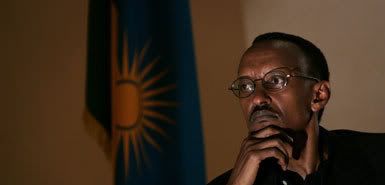
American lawyer jailed in Rwanda for giving legal counsel to Opposition leader

An American lawyer has pleaded not guilty to charges of denying Rwanda’s 1994 genocide in a court in Kigali on Friday. Peter Erlinder was also charged with publishing articles that threaten national stability in five hour hearing in the Rwandan capital. Erlinder is the lead defence lawyers at the UN's International Criminal Tribunal for Rwanda held in Arusha, Tanzania. Erlinder said he believes the charges arise as a result of some misunderstanding however he could face 25 years in prison if convicted.

It is hard to believe Peter Erlinder is serious about a "misunderstanding". He knows better than most this trial is political. Erlinder arrived in Kigali last month to help defend opposition leader Victoire Umuhoza Ingabire, who was charged with promoting genocide ideology. Ingabire is the chair of the Unified Democratic Forces. She returned to Rwanda in January after spending 16 years in exile in the Netherlands specifically to contest the presidential election against dictator Paul Kagame in August. Kagame, who has ruled Rwanda since 1995, threw Ingabire in jail on charges of “association with a terrorist group; propagating genocide ideology; negationism and ethnic divisionism”. She is now out on bail with her passport seized and has been given instructions not to talk to the media.

It was obvious this was a tactic to ensure Ingabire would not be able to contest the election. She enlisted Erlinder’s help to fight the spurious charges. The 62 year old Erlinder is a distinguished jurist and a law professor at William Mitchell College of Law in Minnesota before working for the ICTR. In his defence statements at Arusha, Erlinder disputed the standard characterisation of the genocide as Hutus deliberately slaughtering innocent Tutsis. Instead, he said, that the violence was more spontaneous and possibly the result of Tutsi rebels killing Hutu civilians. These provocative statements taken outside their courtroom context made him an ideal candidate for “propagating genocide ideology. He arrived in Kigali on 23 May and was arrested five days later. Martin Ngoga, Rwanda’s prosecutor general said it did not matter Erlinder made the offensive remarks abroad.

Erlinder requested bail to return to the US and receive treatment for injuries. He said he had not been maltreated but had also not had contact with family members or his doctor. On Wednesday, he was hospitalised after police said he had attempted suicide by taking dozens of pills. His family has denied the suicide attempt claim. On Thursday, the US State Dept called for him to be released on compassionate and humanitarian grounds. "We are pressing the Rwandan government to resolve this case quickly, and we would like to see him released on compassionate grounds," Philip Crowley, a state department spokesman, said.

The criticism of Rwanda is deliberately gentle. The country is a close American ally that has received hundreds of millions of dollars of US aid despite human rights violations in the months leading up to elections in August. No subject seems to be touchier than the genocide and the US has covered up evidence that Kagame and his Tutsi army were almost as culpable as the Hutu Power group that killed over half a million Tutsis in the period between April and June 1994. In recent years, thousands of Rwandans have been charged with the vaguely worded genocide ideology, which criminalises any non-government version of events in 1994. The difference now is, as the New York Times points out, Erlinder’s case is the first time Rwanda has leveled these charges against a Westerner.

Writing in MR Zine, American academics Edward Herman and David Peterson said Erlinder’s arrest revealed much about a regime that is routinely sanitised in Western intellectual life and media coverage. They remind readers Kagame does not like free elections and has either avoided them or rigged them. They said Kagame did the same thing before the last election in 2003. “Kagame's main rival at the time, a Hutu and former President Pasteur Bizimungu, was arrested and charged with ‘divisionism,’ a kind of Kagame-speak that means to provide political choices other than the one-party Kagame dictatorship,” wrote Herman and Peterson. “Hopefully, he has gone too far in using that Kafkaesque gimmick against Peter Erlinder, a notable fighter against both actual genocide and genocide denial.”

Saturday, November 29, 2008

A pilgrimage to Auschwitz

It felt entirely appropriate getting to Auschwitz by train. My slow rattler was taking two hours to get me just 65km from Krakow to the town of Oswiecim. The cold snowy November weather merely added to the terrible sense of identification I was channelling as the train seemed to plough through the whitened fields. But it was superficial identification. For one, I had a view – something which would have been denied the hundreds of thousands who made the fateful journey in the war years - secondly I was here voluntarily, and thirdly I had a return ticket; again a luxury denied those doomed to take this journey in the 1940s.

It seemed doubly shocking that such a place could lie in the shadow of beautiful and graceful Krakow. The former capital of Poland remained the centre of the country’s scientific, artistic and cultural life in the middle of the last century. The city also had a flourishing Jewish population. Yet as the capital of the so-called "general government" during the Nazi occupation (with governor-general Hans Frank setting up his headquarters in the city’s imposing Wawel Castle), it made perfect sense for the area to be the centre of Hitler’s plans for a Final Solution to the “Jewish problem”.

The unassuming nearby town of Oswiecim was perhaps an appropriately grisly choice to house a German death camp. Prior to the war, it had a thriving Jewish population of its own – they even formed the majority of the town. They were a largely Yiddish speaking people who called the town by its German name Auschwitz. The outskirts of the town also held an old Polish brick barracks which was expropriated by the Nazis during the invasion in 1939. Initially the Germans were just looking for a place to store political prisoners and about 700 Polish intellectuals and resistance movement members were interned there in June 1940.

But gradually the scope of Auschwitz increased. There were a small number of Jews in the initial shipment, but it didn’t take long for their numbers to increase. Then came other undesirables and enemies of the Reich - the Communists, the disabled, the homosexuals, the Jehovah’s Witnesses, and the “gypsies”. This word gypsy (Zigeuner in German, which is why they were identified by the letter "Z") was a pejorative word for a people that in central Europe were known as Sinti and in South East Europe known as Roma. Possibly half a million Sinti and Roma perished in the death camps. The Sinti and Roma exhibition in Auschwitz I is one of the harrowing highlights of the visit.

Above the entrance to the camp is the infamous sign “Arbeit Macht Frei”. In 1872 the German novelist Lorenz Diefenbach used the phrase (roughly translated as “work liberates”) as the title of a novel and it was successfully adopted by the 1920s Weimar government to promote their public works program. The Nazis knew a good thing when they saw it and continued to use the phrase in their propaganda program. The commander of Dachau ordered it to be put on the entrance gate to his concentration camp and it was repeated at Sachsenhausen, Terezin, and most notably, at Auschwitz. Here prisoners walked under the gate, accompanied by the strains of a Jewish orchestra.

But not many Jews had this experience. Auschwitz was too small to cope with the growing number of prisoners. The Wannsee Conference had authorised the Final Solution and Germany needed a bigger and more efficient camp to process the vast numbers involved. In 1941, they built Auschwitz II in the woods some three kilometres away in a place the Poles called Brzezinka and the Germans translated as Birkenau. This was a vast emporium of death. No orchestras here, nor any pretence of “Arbeit Macht Frei”. Here, a massive tower overlooked the main gate and the railway tracks led straight to the gas ovens at the far end of the camp.

Auschwitz II was a massive operation and the largest of all the Nazi death camps. Most of the killing, torture, and medical experiments took place here. Cattle cars unloaded their cargo and those lucky enough to be selected not to die immediately were sent to one of the camps to work as slave labourers. These “lucky ones” merely had their fate postponed to overwork, hunger, sickness and a slow lingering death. But the vast majority were sent straight to the gas chambers. Four crematoria fuelled by the hydrogen cyanide insecticide known as Zyklon (Cyclone) B efficiently murdered 20,000 people each day. Evidence of the vast numbers involved is retained in the museum. Behind one glass exhibit are a vast collection of 20,000 pairs of shoes, yet this barely represents one day of gassing. There are also masses of suitcases, spectacles, human hair and other poignant reminders of the daily lives of the hundreds of thousands who died here.

By January 1945, the Red Army were closing in on the camp. Himmler ordered the camp to be destroyed and sent 60,000 survivors on a mid-Winter death march back to the Reich. Only 20,000 survived. Another 7,500 too weak to march were left behind at Auschwitz and liberated by the Russians. At least 1.5 million died (other estimates are as high as 5 million) in the camps themselves, the vast majority at Auschwitz II.

The word “Auschwitz” continues to be synonymous with the Shoah as a whole. It remains newsworthy on an almost daily basis. This week for instance, The Scotsman told the story of how educational trips to Auschwitz were saved despite government cutbacks. Meanwhile Germany is pursuing the arrest of Holocaust denier Gerald Frederick Tobin who argued the Auschwitz death camp was too small for the mass murder of Jews to have been carried out there. Across the pond, the Isthmus of Madison, Wisconsin reviewed Mark Herman’s “The Boy in the Striped Pajamas” about the 8-year-old son of a German officer appointed the commandant of the camp, while the LA Times reported the death of 80 year old art dealer Jan Krugier who survived the camp and the subsequent death march. As for me, having spent several absorbing hours of tramping around these sacred grounds, I silently took the train back to Krakow thinking about the frailty of human reason.

Thursday, August 07, 2008

Rwanda’s Mucyo Commission implicates France in 1994 genocide

An 18 month Rwandan enquiry has implicated dozens of senior French political and military figures for their role in the 1994 genocide that killed up to 800,000 mainly Rwandan Tutsis. A 500 page report commissioned by Rwandan Prime Minister Paul Kagame named 33 senior French officials including the late President Francois Mitterrand and three former Prime Ministers including Dominique de Villepin. The report said French troops took direct part in the massacre and France provided political, military, diplomatic and logistic support. While Rwanda has no immediate plans to seek indictment, justice minister Tharcisse Karugarama said yesterday the report "could be the basis for potential charges against individuals or the state."

Karugarama also highlighted “the role played by France in the aftermath to protect the genocidal forces and make it very difficult for them to be apprehended and brought to justice". Karugarama was referring to Operation Turquoise (pdf), the so-called “humanitarian mission” France launched in the south of the country after most of the killing had ended, in a vain attempt to stop the Tutsi-dominated Rwandan Patriotic Front (RPF) from ousting the genocidal Hutu Power regime.

Mitterrand and de Villepin were among a dozen politicians named by the report along with twenty military officials. Mitterrand was French president at the time with very close links to President Juvenal Habyarimana whose assassination sparked the three-month genocide. De Villepin was the chief aide to then foreign minister Alain Juppé, who was also named in the report along with then-prime minister Edouard Balladur.

The report was the result of the 18 month long Mucyo Commission, named for its president and former justice minister Jean de Dieu Mucyo. Prime Minister Kagame commissioned the report as part of the tit-for-tat campaign which began in 2006 when a French judge issued a warrant for his arrest on charges related to Habyarimana’s plane crash (which also killed several French crew). Rwanda immediately cut diplomatic ties and ordered the French ambassador to leave Kigali within 24 hours. Kagame then asked Mucyo to investigate France’s role in the Habyarimana incident and expanded it to cover the whole genocide period.

The actual report is not yet readily available on the Internet, however the Rwandan New Times is serialising it, and released the first segment today. The report begins by documenting the French military operation in the immediate aftermath of Habyarimana’s death called Operation Amaryllis. While the official justification of Amaryllis was to rescue French citizens from Rwanda, the real reason was to send 464 elite soldiers to shore up the Hutu regime against the RPF (who now rule Rwanda).

France also made a deliberate decision not to interfere in the genocide itself. French senior ministers Alain Juppé and Michel Roussin explained the reasons why Amaryllis would not involve itself in the massacres. “It is not a question of intervening militarily in Rwanda,” said Roussin. “ It is clear that our mission is of a humanitarian nature whose aim is to repatriate our nationals and their families". On the same day, Juppé was more philosophical: "Can France keep order in the whole world?” he said. “Does she have the means and responsibility to stop, on the whole planet, people from killing each other?"

While the French government has not yet formally reacted to the report, Alain Juppé was quick to denounce Rwandan attempts to implicate him and France in the genocide. He called the report an unacceptable falsification and claimed that during his time as head of French diplomacy (April 1993 to May 1995), France did everything it could to help Rwanda reconciliation. "Did we, for example, systematically take the side of one camp against another, Hutu against Tutsi?” he asked. "Did we 'fail' to denounce the genocide committed by Hutu extremists starting in April 1994?” He said both questions were “untruths”. But with this report likely to have serious international repercussions, these untruths may yet be stranger than fiction.

Saturday, December 29, 2007

Darfur: Genocide by other means

While the white world frets over the fate of a few white people getting released from Chad, the killing fields next door in Darfur continues to quietly bury the victims of its casual genocide. Death by war and violence has already claimed a quarter of a million people this century and now malnutrition threatens thousands more. A new UN World Food Programme survey shows the malnutrition rate has actually increased in Darfur since the height of the fighting in 2004. But while the story of the six members of Zoe’s Ark has been reported by over 1,300 news articles, the UN report on Darfur attracted just 117.

It doesn’t help that the Darfur Emergency Food Security and Nutrition Assessment (pdf) is not very sexily named. But the basic fact is that no white people are affected by this assessment. The victims are all, depending on labelling, either “Arab” or “African” or “Darfuri” or “Sudanese”. But what ever they are called, the numbers involved are staggering. Last year, it was estimated that some 3.74 million people were affected by the situation in Darfur.

Other key findings in the report are that the food and security outlook in all three Darfur provinces remains poor for the majority of the population, over two million people. Remote West Darfur (pdf), with no direct border to non-Darfuri Sudan, remains most at risk. 3.7 million out of Darfur’s total of 6.7 million rely on some sort of “humanitarian” assistance. Food production remains scanty, livestock is rare, and markets don’t function due to insecurity and poverty. And the world at large remains, generally, disinterested.

Darfur is well used to the lack of attention. The region was almost unheard of outside Sudan before 2003. Within Sudan it has been mostly neglected since its 19th century colonisation. And even when people started dying in sufficiently large numbers to attract the attention of the media and NGOs, the Americans and their allies were too tied up in Iraq to do anything about it, the UN was hamstrung by lack of funding, and the EU conveniently bickered and contrived to look the other way, like it always does. In the end it was decided it was “African problem” that needed an “African solution” and so the new constituted African Union (AU) had responsibility to solve it.

But this conveniently overlooks history and economics and the very obvious culpability of the West in the tragedy of Darfur. Gerard Prunier entitled his book on Darfur “The Ambiguous Genocide”. By that, Prunier was not trying to claim mass killing did not exist, but rather that the labelling of who did it and who they did it to, and indeed the label of “genocide” itself, have twisted the meaning of what happened in Darfur and how it is generally understood. The west’s quest for pithy explanations of news does not suit Darfur’s complex ethnography and history.

The conventional shorthand explanation is that an “Arab” militia supported by the government in Khartoum, carried out mass atrocities on native “African” tribespeople in a land grab. This explanation overlooks deeper motives and trivialises the ethnic make-up of Central African peoples. It also gives the impression it is violence by Muslim peoples on non-Muslim peoples. However the fact is that almost all Darfuris are Muslims. Unlike the colonial war that the Khartoum government fought against the Christian and animist provinces of the south, the conflict in Darfur had no religious connotation at all. It also overlooked the role played by neighbouring Libya and Chad in the region’s destabilisation.

The population of Darfur is an ethnic mosaic but in skin colour everyone is “black”. Language is often similar too with “African” tribes speaking Arabic. The differences therefore come from Sudanese cultural racism which distinguishes between “Arab” and “zurug” (the local pejorative word for blacks) which may hinge on such factors as the shape of the nose, or the thickness of lips. Intertribal marriages and slave concubines have further muddied the racial waters. And what Sudan considers to be “Arab” would not necessarily be so accepted in the rest of the Arab world. The name Sudan itself derives from Arabic Bilad-al-sudan, "country of the blacks”.

This lack of Arab acceptance makes the Sudanese “Arabs” even more sensitive to its labelling within Sudan. Being described as Arab was a token of civilisation as opposed to African “savagery” and marked out a general change from nomad to agricultural life. This ethnic construction was very much a product of the 20th century. Prior to then, Darfur was the home of migratory peoples south of the forbidding Sahara. Between the 13th and 16th century it was the scene of three major migrations. From the north-west came Nilo-Saharans, from southern Egypt came Nubians and from the north-east came Arab groups. Later, more people arrived from Sudan itself. The last group to arrive were the most powerful. They were the awlad al-Bahar “sons of the river”. The river was the Nile and these riverine Arabs from Khartoum were the most powerful people in the land. They were traders and imams who settled in the towns of Darfur and turned it into a Sudanese province in the 19th century.

Prior to that, Darfur was an independent sultanate dating back to the 14th century, initially led by African tribes. In the 17th century we first hear of the “Fur” people. The Fur had descended from the mountains and overran the plains. Sultan Suleiman “Solungdungo” (the pale man) was the son of a Fur father and Arab mother. The Fur assimilated other tribes to maintain their hegemony and the land became Dar Fur (land of the Fur). At the start of the 19th century, Darfur was a respected political entity, while “Sudan” did not exist as such. The Arabic “land of the blacks” was an arbitrary name that covered many jurisdictions. In colonial times the French also called what is now Mali “Le Soudan”. In the 1821 the then stateless entity to the east of Darfur was invaded by Muhammad Ali, the Ottoman viceroy of Egypt. They defeated the Darfuri who had similar designs and who fled back home to their province.

The Turco-Egyptians gradually extended their colonisation of Sudan, south from Khartoum along the Nile. In 1873 they moved against the sultanate of Darfur and easily conquered it. But in 1881 a quasi-religious organisation known as the “mahdi” under the banner of a mixture of Islamist and Christian Revelatory practices rebelled against the Turkish administration. The Mahdist state then collapsed under an onslaught from the British and they lost control of Darfur back to the sultanate. The British were content to rule with the “lightest of threads” and let the sultan rule as de facto leader of Darfur until 1916.

The fate of Darfur was sealed by World War I. Britain was worried about Turkish propaganda and feared Darfur could become a tool of the Central Powers. Looking beyond the war, they also feared the French influence from Chad in the west. The British invaded Darfur. The sultan resisted and he and his sons were shot dead in an ambush as they tried to flee on horseback. The tragedy of Darfur can be dated to the British occupation. From 1916 onwards, Darfur would only be an appendage of some bigger entity, never an object of attention in itself.
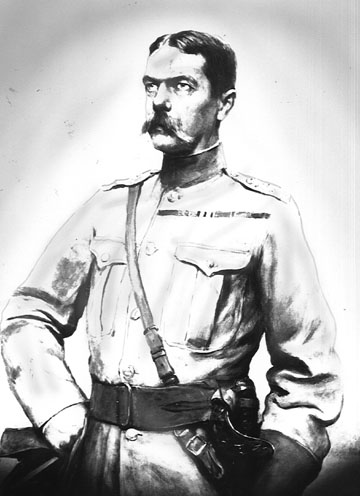
For the next 40 years Darfur was part of the grandly named Anglo-Egyptian Condominium. Although the Egyptians shared naming rights, this was just a clever move by the British to assuage Egyptian ego – the Brits were the real power. A handful of colonists ran the Sudan Political Service and its territory of 2.5 million sq kms. These men included author Wilfred Thesiger who served in Darfur in 1935. But Thesiger was the exception, what little power there was, was isolated in Khartoum. Darfur did not get any attention except when it caused trouble. Rebel Mahdists launched a rebellion from the Darfuri capital Nyala in 1921 and was brutally put down with 800 deaths. But Darfur was mostly ignored, and services including schools and hospitals were non-existent.

In the 1950s, the British were fighting a rearguard action to delay Sudanese independence. Darfur was not considered a threat because of its “backwardness”. Darfur became part of the new nation of Sudan in 1956 and participated in the first elections two years later. The “Umma” party won that election with a significant vote from Darfur. But the region got no thanks from their new political masters and continued to be ignored. The military then took over, with no change for Darfur. In 1964, the Umma won another political victory, again with help from Darfur. Once again however, this carried no clout in Khartoum.

In 1965 neighbouring Chad descended into what was to be a decades-long civil war. Darfur would become central to the conflict with the Chadian guerrilla group Frolinat based in Nyala. The war spilled across the border. In 1969, newly installed Libyan leader Muammar Gaddafy came into the war in support of Frolinat. A brief attack by Gaddafy on Khartoum caused the lasting enmity of the Sudanese government, who in retaliation supported an anti-Libyan, Hissen Habre, as new leader of Chad. Darfur was transformed into a three-way battleground between Libya, Chad and Sudan.

In 1984, famine struck the Sahel and Darfur was devastated. Almost 100,000 people died of starvation in the next 12 months. 80,000 people walked across the country to food camps in Khartoum. The Gaafar Nimeiry regime, in power since 1971, was destabilised and the army took control. The army showed little inclination to solve the food problems of the west and Libya took advantage to invade Darfur. Sudan tacitly accepted the temporary Libyan presence on “their” soil. But Chad did not and fought Darfuri and Libyan troops they accused of supporting Chadian rebel forces.

In 1988 Sudan underwent another army coup. Colonel Omar Hassan al-Bashir came to power in protest at the peace settlement with rebel Southern Sudan. The reality on the ground in Darfur continued to be bleak: the ravages of drought, war and lack of government interest left it on the brink of starvation. Slowly but surely, rebel groups began to form dedicated to the fight against Khartoum. A low intensity civil war began. As the Cold War ended, new cultural labels rose which gave a political identity to the concept of “Arabism”. It was to those that defined themselves as “native Arabs” that Khartoum would look to, to carry out the violence to come.

A hitherto unknown Islamist group known as Justice and Equality Movement (JEM) claimed credit for starting a revolt within Darfur. They issued a “Black Book” which outlined the discrimination that Darfuris encountered in their relations with Khartoum. In 2003 rebels occupied El-Fashir airport in a major victory over government forces. Sudanese hardliners opted for a strong response. The army was not deemed up to the job. Instead they recruited “Arab” militiamen known as Janjaweed (“evil horsemen”). First used in the 1980s, the Janjaweed were paid a good salary and given access to Sudanese armoury. It was to be “counter-insurgency on the cheap”.

Russian Antonov airplanes bombed Darfuri cities targeting civilians. After the air attacks finished, the Janjaweed arrived to finish the job. An orgy of killing, destroying, raping and looting followed. They hurled insults at the “Africans” and herded them into camps. The government issued propaganda that the rebels had demanded independence and a share in Sudan’s growing oil revenues. Neither accusation was true. Masses of refuges fled towards Chad or the centre. Aid was not getting through to the neediest areas.

News began to escape about how bad things were in Darfur. In 2004 the Red Cross spoke of an “agricultural collapse”. Khartoum prevaricated and found continual excuses to delay foreign intervention. The west was more interested in the fate of the peace talks between North and South Sudan. But Amnesty International and the International Crisis Group began to give Darfur the media attention it needed.

When the UN spoke of “genocide” the world’s press began its feeding frenzy. Now there was an angle to the story that would sell newspapers: the first genocide of the 21st century. Moral indignation lasted much of the next 12 months. Deaths continued and Sudan refused to admit culpability and talked of “bandits” and “rebels”. After concerted international pressure, the Janjaweed were forced to stop their killing. But peace remains elusive for Darfuris. Conflicts in Chad continue to have reverberations. Government disinterest continues. The world does not have the stomach to help. None of the "humanitarian" solutions address the political inequity at the heart of the problem. Now malnutrition is about to draw its weapons against the stomachs of an already battered people. But the world’s media have moved on elsewhere, unable to turn this grotty complex tale into a simple and compelling narrative.

Monday, June 25, 2007

Chemical Ali sentenced to death for genocide

An Iraqi court has sentenced the cousin of Saddam Hussein to death yesterday. His name is Ali Hassan al-Majid but he was better known to the world as “Chemical Ali”. The former head of the Baath Party's Northern Bureau Command was sentenced to death with two other former regime officials for their roles in a 1980s scorched-earth campaign that led to the deaths of 180,000 Kurds in Northern Iraq, known as Operation Anfal.

Judge Mohammed Oreibi al-Khalifa convicted al-Majid of genocide, crimes against humanity and war crimes. Also sentenced to death was Sultan Hashem Ahmed, former Iraqi army commander during the Iranian war and chief-in-charge of the Anfal operation. The third man is Hussein Rashid Mohammed, former deputy general commander of the Iraqi armed force, assistant chief of staff for military operations, and former Republican Guard commander. Two other men received life sentences and all five plan to appeal.

Born in 1941, Al-Majid was a warrant officer and motorcycle messenger in the army before Saddam's Baath party took power in a 1968 coup. The Kurds gave al-Majid the nickname of "Chemical Ali" for using poison gas against them in the Anfal campaign. “Surat al-Anfal” is the eight chapter of the Koran and means spoils of war. It was the culmination of years of effort by Saddam’s regime to suppress the long-running Kurdish rebellion. Launched in early 1988, the campaign lasted about seven months and involved chemical; weapon attacks, the destruction of over 2,000 villages and mass deportations.

Al-Majid served as governor of Kuwait during Iraq's seven-month occupation of the emirate in 1990-1991 and was then linked to the bloody crackdown on Shiites in southern Iraq when they rose against Saddam in 1991 in the aftermath of the first Gulf war. He was promoted to general and served as defence minister from 1991-95, as well as a regional party leader. Al-Majid was governor of Southern Iraq and number 5 on the list of the 55 most-wanted Iraqis at the time of the US-led invasion.

In the immediate aftermath of the invasion, it was mistakenly believed al-Majid was killed. A British officer said his body was found along with that of his bodyguard and the head of Iraqi intelligence services in Basra. British troops entered Basra on 7 April 2003 in the belief that al-Majid’s death would lead to the end of resistance in the city. The British believed Al-Majid was killed two days earlier when coalition aircraft used laser-guided munitions to attack his Basra home.

But by June 2003, Coalition forces were no longer so sure he was dead. The US gathered intelligence from detainees which threw doubt on the earlier British report. His status was changed from ‘confirmed dead’ to ‘unknown’. Two months later, US forces announced his capture but did not divulge details on how it happened. He was held at the same detention centre outside Baghdad as Saddam and 10 other top lieutenants of the Baath regime.

Al-Majid was brought before the Iraq Special Tribunal and charged with genocide in August 2006. He briefly stole the limelight of Saddam’s second trial when which he walked into the court using a cane and wearing a red headscarf and proudly identified himself as "Fighting comrade 1st Maj. Gen. Pilot Ali Hassan al-Majid." He refused to give a plea, and a plea of innocent was entered for him. In sentencing him yesterday, Judge al-Khalifah blew his defence away "You led the killing of Iraqi villagers [and] you restricted them in their areas, burnt their orchards, killed their animals,” he said. “You committed genocide."

Wednesday, April 11, 2007

Scorpions jailed for Srebrenica crimes

Serbia's war crimes court has sentenced four men to twenty years prison for their part in the 1995 Srebrenica massacre. The four former members of Serbia's paramilitary "Scorpions" force were found guilty after video footage showed they killed at least six people during the massacre of 8,000 Bosniak men and boys.

The former commander of the Scorpions unit, Slobodan Medic, and his chief accomplice, Branislav Medic, were each given 20 years in jail. The only defendant to have confessed to the crime, Pera Petrasevic, was given 13 years. A fourth defendant was given five years while a fifth was acquitted. Presiding judge Gordana Petrovic said “Slobodan Medic ordered the three defendants and two others to execute the prisoners, take them away from the site and make it seem as if they had been killed in conflict.” The video that implicated the men showed them taunting Bosnian youths about their virginity before shooting them in the back as they lay in a ditch. Relatives of the victims expressed disappointment that none had received the 40 year maximum sentences.

Srebrenica is Europe’s largest mass murder since World War II. In 2004 the International Criminal Tribunal for the Former Yugoslavia (ICTY) judicially recognised the massacre as genocide. Judge Theodor Meron, President of ICTY made a speech later that year at Potocari Memorial Cemetery where many of the victims were buried. In the speech Meron stated it plainly “Bosnian Serb Army harboured genocidal intent against the Bosnian Muslim people who sought safety in the enclave of Srebrenica, and that these officials acted upon that intent to carry out a deliberate and massive massacre of the Muslims in Srebrenica”

While Judge Meron called the massacre genocide, others have labelled it “gendercide”. Gendercide is gender-selective mass killing. Other examples include the 1988 Montreal massacre where 14 women students at the École Polytechnique were systematically killed by a lone gunman screaming "I hate feminists." In Srebenica, while the international community and UN peacekeepers did nothing; Serb forces separated civilian men from women and killed the menfolk in their thousands.

The conflict in Bosnia-Herzegovina began in 1992 and featured large-scale ethnic cleansing and genocidal atrocities from the outset. In April 1992 Serbian forces tortured and killed 350 Bosnian men in a gymnasium in the village of Bratunac near Srebrenica. But they were not able to take Srebrenica itself. The city was defended by Naser Oric, a Rambo-like figure whose troops (and associated squads of civilian torbari, or "bag people") inflicted a number of smaller atrocities on Serb villages around the Srebrenica pocket. Oric’s forces managed to establish an enclave around the town, but the Serbs gradually tightened the noose.

General Ratko Mladić led the Serbian army during the war. Mladić made it plain that he held a special grudge against the men of Srebrenica. He allowed women and children to be evacuated from the town before shutting off the refugee flow. Desperately, the UN Security Council declared Srebenica a “safe area” but only had 500 Dutch peacekeepers in the town to back up the declaration. Finally in July 1995, Mladić’s army entered the UN safe area. They got little resistance from the disarmed defenders and the UN.

Thousands of Srebrenica men fled the town seeking protection within the UN compound at Potočari. Serbian soldiers surrounded them and began setting houses and haystacks on fire. As the day progressed, Serb forces gathered the refugees and began systematically murdering the men. French policeman Jean-Rene Ruez told The Hague tribunal in 1996 what evidence he collected from witnesses. Serb forces killed and tortured refugees at will while Streets were littered with corpses, he said. Rivers were red with blood and many people committed suicide to avoid having their noses, lips and ears chopped off. At least 8,000 died and 25,000 were forcibly repatriated.

General Mladić remains at large with an outstanding international arrest warrant against him. While many claim he is being protected by the Serbian army, Belgrade newspaper Vecernje Novosti said he was just one step ahead of his pursuers in a "feverish manhunt" by police. In May 2006 the EU broke off membership talks with Serbia and Montenegro over Belgrade's failure to deliver Mladić to the war crimes tribunal.

Situated in the far east of Bosnia-Herzegovina, Srebrenica was founded as a mining town. The name means “silver mine” in Serbian but nowadays only salt is mined here. Srebenica is now part of an entity known as the Republika Srpska. The Republika is not a true republic but rather a Serb-governed enclave of Bosnia-Herzegovina. The boundary line between it and the Muslim controlled rest of the country runs along the military front lines as they existed at the end of the war.

But now the Muslim community now want to change the boundary. Last week Srebrenica’s municipal assembly adopted a resolution demanding partition from the Republic of Srpska. Serb members left the session ahead of the vote in protest saying the assembly had no mandate to violate the Constitutional order of the Republic of Srpska and breach the Dayton Agreement. But Rizo Tabaković from the Party of the Democratic Action that sponsored the resolution, said that "the partition request was a logical move in light of the ICJ judgment, while mirroring Srebrenica's current status."

While politicians still argue about the boundary, others mourn the massacre. Some are sufferers of the syndrome known as "Survivors' Guilt" which was first identified after the Holocaust. Emir Suljagic was a Bosniak teenager when the war began. He was a translator for the UN in Srebenica when captured by General Mladić’s men. Mladić took Suljagic's ID card during questioning. Suljagic had the courage to ask for his ID back; Mladic agreed and his life was saved. While he survived, others were not so lucky. Nura Alispahic saw her 16-year-old son being killed in the court video. "Whatever the ruling, my child is not here," she said "These people will leave jail one day, but my child will never come out of the ground."

Monday, January 08, 2007

Rwandan genocide trial starts today

An important step on the long road to justice in Rwanda takes place this week with the trial of former Kigali prefect Colonel Tharcisse Renzaho in Tanzania. The 63 year old Renzaho is charged with ordering the April 1994 slaughter of ethnic Tutsis by extremist Hutus at a church, a pastoral centre and an education centre in the capital Kigali. He has denied the charge. Renzaho is represented by two lawyers, François Cantier from France and Barnabé Nekui from Cameroon.

In 1994, Colonel Renzaho was in control of the capital's police force and local officials. The UN war crimes tribunal has alleged that when the killings broke out in April that year, he incited Hutus to kill members of the Tutsi minority. The prosecution also says Renzaho used state radio to instruct the police, army and civilians to man roadblocks so they could identify and intercept Tutsis. His instructions also applied to Hutus who had Tutsi wives. He faces life imprisonment if convicted.

The German-trained Renzaho is a lieutenant-colonel and former professor at the Rwanda Military Academy. Though a minor figure in the Rwandan armed forces, in 1990 he was nominated the Prefect of Kigali following an attack by the rebel Rwandese Patriotic Front (RPF). The RPF would eventually do him out of a job when they eventually took control of the country in the wake of the 1994 massacres. After Hutu Power government was destroyed, Renzaho fled to neighbouring Congo, where he worked for President Laurent Kabila, the father of the current president Joseph Kabila. There he collaborated with the exiled Democratic Liberation Forces of Rwanda who also fled the country in 1994. Renzaho was ranked third on the tribunal’s list of most wanted criminals. He was arrested in 2002 and it has taken over four years for him to come to trial.

The international criminal tribunal for Rwanda (ICTR), based in Arusha in neighbouring Tanzania, has often been criticised for operating too slowly. The UN Security Council resolution 955 created the ICTR in November 1994. Its avowed purpose was “to contribute to the process of national reconciliation in Rwanda and to the maintenance of peace in the region”. Its term of engagement was the prosecution of those responsible for crimes in Rwanda for the calendar year 1994.

The Tanzanian site of the tribunal is deliberate. It also where the failed Arusha Accords of 1993 took place. The US and France sponsored the accords in an effort to end the civil war between the Hutu-led Rwandan Government and the Tutsi-led rebel RPF. The accords stripped considerable power from long-term President Habyarimana and created the framework for a transitional coalition government that would include RPF representatives. Habyarimana signed the accords in October 1993 and in the same month the UN sent in a peace force (UNAMIR) to facilitate the implementation of the accords.

But the accords inflamed extremist Hutus who felt that Habyarimana had sold out his people. On the 6 April 1994, a plane carrying Habyarimana and his Burundi counterpart Cyprien Ntaryamina crashed as it was about to land in Kigali airport. It was no accident. The plane was shot down by a surface to air missile. No-one knew who shot down the plane, though many had motives. Hutu extremists laid the blame on the rebels. Paul Kagame’s RPF blamed Hutu extremists supported by the French who armed Rwanda to the tune of $25 million between 1990 and 1993.

Who ever did it, and to this day it remains an unsolved crime, the Arusha Accords were in tatters. Within hours a new hardline Hutu administration was in place. They wasted no time in seeking what they saw as revenge for a Tutsi atrocity. Colonel Renzaho quickly marshalled his subordinates to organise patrols and barriers to capture and kill Tutsi. He also maintained links with the Interahamwe militia who obeyed his instructions when he went around the city.

In the first week 20,000 Rwandans were killed, the vast majority of those Tutsi. As the month of April progressed, the killings spread. Renzaho was at the centre of the Kigali killings. He directed the Interahamwe militias to break into houses of prominent Tutsis where the occupants were killed, reportedly in his presence. He dismissed two city councillors opposed to the slaughters. For the next two months he authorised killing and distributed weapons to militias. He fled into exile in June after the RPF victory.

Tharcisse Renzaho lived in exile in several African countries and went into hiding after the tribunal identified him as a suspect. In 1997 he evaded a police trap laid by Kenyan police. But in 2002 he was eventually given up by Congolese President Kabila under pressure from the US. Congo turned him over to the ICTR. He pleaded not guilty in his immediate initial court appearance. In 2005, the prosecutors discovered new material which modified the charges against him. The long slow march to justice culminates with the start of his trial today.

Saturday, September 23, 2006

Turkey wrestles with its conscience

On Thursday Turkish prosecutors dropped charges against novelist Elif Safak (pictured), on the first day of her trial for denigrating the national identity in a case monitored by the EU as a benchmark for Turkey's human rights record. The infamous Article 301 of the Turkish penal code makes it an offence to “insult Turkishness”. The offence carries a three year penalty under Turkish law. Shafak was charged because she wrote a best-selling novel called “The Bastard of Istanbul” in which she described Turkey’s 1915 genocide of its Armenian population. In the book one of her characters is an ethnic Armenian says “Turkish butchers” massacred his ancestors.

The EU will include the case in a report on Turkey's progress toward membership that will be published on 8 November. Brussels has welcomed the ruling but an EU spokeswoman said the law used to prosecute Shafak still posed a significant threat to freedom of expression and those who express non-violent opinion. EU member Cyprus has also insisted Turkey recognises it as pre-condition for membership.

Elif Shafak is not the first Turkish novelist to break the taboo about discussing the Armenian genocide. Orhan Pamuk has also fallen foul of Article 301. His crime was one sentence in an interview with the Swiss newspaper Tagesanzeiger this month when he said 'Thirty thousand Kurds and a million Armenians were killed in Turkey. Almost no one dares speak but me, and the nationalists hate me for that.”

The exact number is disputed, but there were somewhere between one and two million mostly Christian Armenians living in what was then the Ottoman Empire at the start of World War One. The Ottomans were an ancient empire on its last legs. Turkey was the Sick Man of Europe. The Russo-Turkish War of 1877-78 resulted in the liberation of many Christian areas of the Balkans from Turkish rule. The Treaty of Berlin that ended the war promised legal protection to the Christian Armenians. This led many Armenians to believe that they too could wrest self-control from the Ottoman government. Under the rule of Sultan Hamid (1876 to 1909) Turkey brutally suppressed minor Armenian revolts. In 1896 Armenian bank robbers raided the HQ of the Ottoman Bank in Istanbul. In response the Turks massacred tens of thousands of Armenians.

As the First World War approached, the Young Turks seized power in a coup in 1913. Initially they won the support of the Armenians who saw them as a change for the better from the despotic sultanate. Turkey joined the war on the side of the Central Powers but was soundly defeated by the Russians in the 1914-15 battle of Sarikamis. Sarikamis is an Armenian region of the Caucasus. The Turkish leader Enver Pasha blamed the defeat on Armenian rebels attacking Turkish supply routes. He ordered all Armenian recruits in the Ottoman forces to be disarmed, and assigned to labour battalion units. Many were rounded up and executed and the remainder turned into manual slave labourers.

In May 1915, the increasingly hostile government issued new orders which called for the forced evacuation of hundreds of thousands Armenians from Anatolia towards concentration camps in what is now Syria and Iraq. Many were tortured and murdered and many more died on the way to the camps. The government justified the deportations on the grounds of illusory armed rebellions in Van and other cities. During the war the British navy blockaded Turkey, including the Turkish Levant. No food was allowed in by sea. The resulting famine in Lebanon and Syria would not have become as deadly as it did had not the Turks commandeered available food supplies and refused to help the starving.

By 1917 fewer than 200,000 Armenians remained in Turkey. Armenians suffered a demographic disaster that shifted the centre of their demographic from the heartland of historical Armenia to the relatively safer eastern regions held by the Russians. Tens of thousands of refugees fled to the Caucasus with the retreating Russian armies, and the cities of Baku and Tbilisi filled with Armenians from Turkey. The 1920 Treaty of Sèvres gave recognition of the Democratic Republic of Armenia but Turkey repudiated the treaty. Armenia and Turkey fought a war which the Turks won. Simultaneously the Red Army invaded Armenia from the north. Turkey and the newly fledged USSR signed the Treaty of Kars and Armenia became a Soviet federation in 1922.

Turkey emerged as the successor state to the Ottoman Empire under the strong secular leadership of Mustapha Kemal Ataturk. It absolved the state from blame of the Armenian "problem" and launched a vigorous campaign of denial of genocide that lasts to this day. The political scientist R J Rummel has estimated that the Young Turks probably murdered at least 743,000 and perhaps as many as 3,204,000 people which included some 1,883,000 Armenians, Greeks, Nestorians, and other Christians. Rummel coined the term democide to describe mass murder by governments. Modern Turkey is still struggling to deal with its democide of the early twentieth century. Writers such as Safak and Pamuk are crucial in the difficult process of exorcising these demons. Repealing Article 301 would be an important next step.