Showing posts with label assassination. Show all posts

Sunday, October 31, 2010

Israel commemorates 15th anniversary of Yitzhak Rabin's death

20,000 people gathered in Tel Aviv's Rabin Square overnight to commemorate the 15th anniversary of the assassination of Israeli Prime Minister Yitzhak Rabin. In the spot where Rabin was shot dead, President Shimon Peres told the crowd those favouring peace would prevail but preferred to blame Arabs rather than Israelis for the delays. “There are still those that wish to remove the Jews from Israel and that these people do not make the way to peace any easier,” he said. "The road to peace is long and difficult, and our neighbours are not helping us, but we will not be denied the hope for peace nor from attaining it”.

But it wasn’t a neighbour that killed Rabin, it was one of the family. Rabin was murdered after a peace rally on 4 November 1995 by an Israeli. His assassin was Yigal Amir, an ultra-nationalist Jewish extremist who opposed Rabin's policy of trading land to the Palestinians for peace. Amir was sentenced to life in prison. Amir was egged on by the hostile spirit of the time with many political hard-liners branding Rabin a traitor for pursuing the Oslo Accords and some fringe extremists calling for his death.

The first native-born Prime Minister of Israel he was born in Jerusalem in 1922 of a Ukrainian-Belarusian family. Yitzhak Rabin grew up in a spirit of activism and both his parents were avid volunteers. After completing his studies at the School for Workers' Children, Rabin spent two years at a kibbutz before enrolling in the Kadoorie Agricultural School, at the foot of Mount Tabor. The school was surrounded by Arab villages, and the daily routine included defence training and guard duty. While at Kadoorie, Rabin joined the Haganah, the Zionist military organisation.

During the war years Rabin served as a scout for Allied Forces units invading Syria and Lebanon against Vichy French Army units. But his friendship with British forces ended in 1945 when his battalion attempted to free 200 Jews from a British internment camp near Haifa. He was arrested in June 1946 and served five months in prison. In the Israeli war of independence Rabin safeguarded convoys of food, ammunition and medical supplies to the beleaguered city of Jerusalem. He also served as chief operations officer in the campaign to drive Egyptian and Jordanian forces from the Negev. At one point in the war Rabin met Nasser, then an Egyptian army officer, where they discussed the military situation and shared a bowl of fruit.

Rabin rose through the ranks to become the second ranking officer in the IDF. He was chief of staff during the Six Days War and it was his recommendation to carry out a pre-emptive strike. He left the armed forces after Israel’s total victory in 1967 and he served as Israeli Ambassador to Washington for five years. On his return he joined the Labour Party and was appointed minister of labour in Prime Minister Golda Meir's 1973 government.

Protests over the poor preparation in the Yom Kippur war forced Meir’s resignation and Rabin was elected as head of the Labour Party, and prime minister. His first term of office was dominated by negotiations with Egypt and Syria mediated by Kissinger. He authorised the attack on the hijackers at Entebbe in Uganda in 1976 but was forced to resign a year later over reports his wife had a secret US bank account.

He returned to politics in 1984 as the Defence Minister in a new unity government. He held the post for six years during which time he was engrossed in trying to disentangle the IDF from the disastrous 1982 invasion of Lebanon. After the collapse of the unity government, Rabin took over the Labour leadership once more and won the 1992 election with the help of minor parties. His government made major advances in the peace process, signing the Oslo Accords with Arafat’s PLO in 1993 and the Israel-Jordan Treaty of Peace in 1994. He was also planning to concede the Golan Heights to Syria. Rabin, Shimon Peres and Arafat were rewarded with the Nobel Peace Prize in 1994 “for their efforts to create peace in the Middle East”.

But if his efforts were lauded overseas, they were detested by many at home. His assassin, a far-right law student named Yigal Amir was one of many deeply unhappy with Rabin’s peace moves. Amir appealed to the traditional Jewish legal concept of din rodef (law of the pursuer) to justify the murder. The tradition comes from the Talmud which allows a bystander to kill someone who is pursuing someone else with the intention of murder. Amir claimed din rodef applied because Rabin was endangering Jewish lives with his peace plans.

On the night of 4 November 1995, Rabin was attending a Tel Aviv peace rally in what was then known as Kings of Israel Square. At the end of the rally, Rabin walked down the city hall steps towards the open door of his car. Amir emerged from the crowd and fired three shots with a semi-automatic weapon. Two bullets struck Rabin and a third injured a bodyguard. Rabin was pronounced dead 40 minutes later at Tel Aviv Medical Centre.

While Rabin’s death was a huge shock and embarrassment for Israel, his Labour Party did not benefit from his death. Hardliner Binyamin Netanyahu was a surprise winner of the Prime Ministerial election that followed in 1996 and he set Israel on a path of conflict with its neighbours it has yet to fully emerge from. Rabin was no saint and his “anti Israel” attitude was completely exaggerated by his political enemies. But in the 15 years since his death, no Israeli leader has come close to him in reaching out past the pain of Israel's history to confront the reality of its precarious geography.

Saturday, March 22, 2008

The death of Robert Maxwell

The recent troubles of Bear Stearns and now British mortgage lender HBOS have caused commentators to see resemblances with the empire of publishing tycoon Robert Maxwell which collapsed on his mysterious death in 1991. The Times’ Patrick Hoskins suggests the financial world could do with a few more naysayers as it did when “half the City was employed in puffing up Maxwell’s house of cards”.

That mogul’s house spectacularly collapsed during the night of 5 November 1991, when he disappeared at sea off the side of his yacht, aged 68. The official verdict was accidental drowning though family members disputed the finding. While some have called it suicide, the most overwhelming evidence for his death is murder, especially as presented in the book “The Assassination of Robert Maxwell: Israel’s Superspy” by Gordon Thomas and Martin Dillon. As the subtitle suggests, the authors say it was Maxwell’s espionage exploits on behalf of Israel that brought about his eventual death – at the hands of Mossad, the agency he gave so much service to.

There were many things to doubt about Maxwell's strange life, but there was no doubt that he was Jewish. He was born in 1923 in the village of Slatinske Doly in a remote anti-Semitic corner of what was to become Czechoslovakia. His father was given the surname Hoch (German for “tall”) by a census taker. When the Czechs took over after World War I, Hoch's name was changed to Ludvik. Born in 1923, Robert Maxwell’s earliest name was Jan Ludvik. He was a model pupil and a quick learner. But these were dangerous times to be Jewish. Encouraged by his father young Jan left Czechoslovakia before the Nazis took over.

Maxwell moved to Budapest. He claims he joined the Czech resistance there in 1939 and fought with the exiled Czech army in Eastern Europe. This is unverified but what is known is that by 1940 he was in Marseilles where he joined the Czech Legion before sailing to Liverpool. In England, he instinctively felt at home. Frustrated by the anti-Semitism of his fellow Czechs, he transferred into the British Army’s Pioneer Corps under the name of Jan Hoch. Here he perfected his English and assumed the mannerisms of a born and bred Englishman.

But it was Maxwell’s German language skills that got him his break. He was transferred to an intelligence unit in the North Staffordshire Regiment. He changed his name again, this time to Leslie du Maurier and returned to France in the second wave of the Normandy Landings. Once he was promoted into the officer class, he picked a new and very British name Ian Robert Maxwell which, with the Ian dropped, he would keep for the rest of his life. He fought with distinction in a number of battles and won the Military Cross. Stationed in liberated Paris, he attracted the eye of a young woman named Elizabeth Maynard. They married in 1945, shortly before the fall of Germany.

After the war, he served in Berlin and then into business as a distributor for scientific books. Maxwell’s fortune was linked with Pergamon Publishing, a specialist firm he set up in 1951 that launched scientific publishing in Britain. Pergamon found a niche and did well for itself. The now wealthy Maxwell was elected to parliament in 1964 as a Labour MP in Harold Wilson’s first Government. He was unseated in Wilson’s surprise defeat by Ted Heath in 1970. But his media interests prospered and in 1984 he acquired Mirror Group Newspapers which printed the Daily and Sunday Mirrors and the Sunday People. From then on, he was one of the most well-known people in the world.

His business empire’s Israeli head was the son of that country's Prime Minister Yitzhak Shamir. Maxwell and the PM were good friends, especially since Maxwell invested $100 million in Israel’s unsteady economy. One of the Israeli companies he acquired was a Tel-Aviv software house called Degem Computers. Israel’s intelligence agency Mossad used this company as cover for many of their worldwide operations. Israeli was also interested in Maxwell’s links with the USSR. Maxwell met Soviet leader Leonid Brezhnev in 1978 and since then had met every important member of the Politburo and those who ruled over the Soviet satellite states. Israel wanted Maxwell’s help to bring home USSR’s Jews.

Robert Maxwell became Mossad’s most valuable asset. As well as his Soviet bloc contacts, Maxwell was also friendly with then US President George H.W. Bush and British Prime Minister Margaret Thatcher. He also knew French President Mitterand and German Chancellor Helmut Kohl. As well, he knew most of the key players in the intelligence world through his work in the British army and the scientific world through his work in the publishing industry. Through this vast network, he could open most doors for Mossad.

Meanwhile the Israeli intelligence agency had illegally gained access to a super-spy computer software. Promis (Prosecutor’s Management Information Systems) was owned by American company Inslaw and was used by the US Justice Department to track intelligence information across the world. Incredibly, they gave a disk copy to a Mossad operative who took it back to Israel where it was reverse engineered, enhanced and given the name Promis. They added a "trapdoor" to Promis, a microchip give Israel information about the purchaser. Mossad knew potential buyers would be suspicious of Israeli software. What they needed was a trusted outsider, someone beyond reproach who would sell it on their behalf – Robert Maxwell.

His first client was Robert Mugabe. Maxwell told him Promis was better and cheaper than anything else on the market. He assured Mugabe it would enable him to track any plotters among the remaining white tobacco farmers in the country. After making the deal, Maxwell went south and sold it to the apartheid regime in Pretoria. They day after he left, black miners’ leaders planning a strike were all arrested. There was similar "success" in Guatemala where government rounded up 20,000 government opponents thanks to Promis. Maxwell persuaded Swiss banks to install it, which gave Mossad valuable information on what Israeli businessmen were illegally sequestering money out of the country.

As the 1980s drew to a close, Maxwell’s empire was in trouble. With interest rates high and the share price falling in his major companies, he secretly brought millions of his own shares through tax havens in Virgin Islands, Gibraltar and Liechtenstein. Maxwell purchased these through collateral for bank loans. He was secretly withdrawing vast sums of money from the pension funds of his 24,000 Mirror Group employees which he invested in French and Israeli companies. By 1990 repayments to his bankers had reached £415m a year while he was caught in a vicious debt spiral.

With police and journalists on his trail, an increasingly desperate Maxwell turned to Israel to bail him out. Mossad turned him down. When Israel refused to help, Maxwell threatened to spill the beans about his spying in the Daily Mirror. When the first claims of links between Mossad and Maxwell became public, the intelligence agency was seriously alarmed. Though he was a hero to many in Israel, Mossad concluded he had to be silenced before he could do serious damage. They recruited a four man “kidon" (death squad) to kill Maxwell.

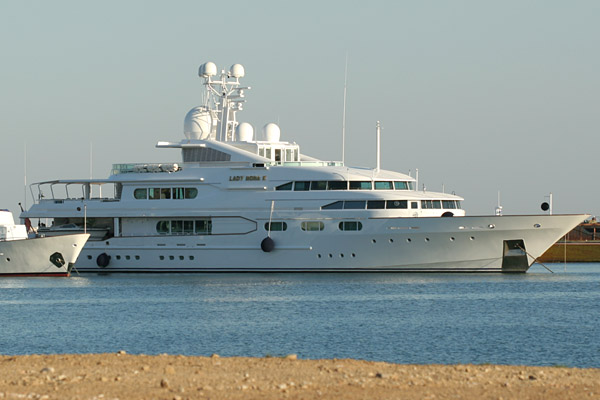
The kidon hired a small motorised yacht in the Gran Canaria port of Las Palmas. They looked like four men on a fishing trip but on board they had locked onto the frequency of Maxwell’ superyacht the Lady Ghislaine (named for his favourite daughter). They followed the Ghislaine up the coast. Mossad passed a secret message to Maxwell to expect a secret package on board in the early hours of the morning. They told him go on deck between 4 and 5 am and stand on the starboard side.

With Maxwell in place for the hit, a dinghy from the kidon’s yacht crept up under the radar, hidden by the noise of Ghislaine’s engine. Two frogmen climbed aboard and reached Maxwell in a few strides. One held a syringe which he plunged into Maxwell’s neck. It contained a lethal nerve agent developed by a biological research institute in Tel Aviv. The men gripped the body and lowered it over the side and into the sea. It would be another six hours before anyone on board realised he was missing. His body was recovered 30km south of Gran Canaria.

A botched Spanish autopsy concluded his death was due to heart failure. They ruled out suicide because Maxwell was a good swimmer. His unhappy insurers insisted on a second autopsy which occurred before his burial in Jerusalem. This one found the most likely cause was drowning but the insurers refused to pay up anyway saying it was suicide. Maxwell was buried with full state honours in Jerusalem’s Mount of Olives. Prime Minister Shamir, who probably authorised his death, eulogised “He has done more for Israel than can today be said". His death could not be spoken about either.

Friday, December 28, 2007

Benazir Bhutto: A new chapter in the tragedy of Pakistan

Former Pakistani leader Nawaz Sharif is calling for President Pervez Musharraf to resign immediately to "save Pakistan" in the immediate aftermath of the assassination of opposition leader Benazir Bhutto. Bhutto was murdered overnight in a suicide attack in Rawalpindi, near the capital Islamabad. She was shot in the neck by her attacker before he blew himself up killing 17 people. Sharif has blamed Musharraf for not protecting Bhutto. He said he will now boycott the planned 8 January elections because the president is a threat to the country’s stability. "I demand that Musharraf quit power, without delay of a single day, to save Pakistan,” he said.

As former Australian ambassador to Pakistan, Geoffrey Price, outlined in Quadrant in 1997, Bhutto had an amazing record of firsts. She was elected twice, dismissed twice, and twice defeated at the polls in the space of just eight years. She was the first female head of government in Pakistan and the first woman elected prime minister of an Islamic country. At 35, she was also the youngest elected prime minister of the 20th century. She was also the first PM to have a child (her second) in office. Price also called her the “worlds’ most glamorous head of government" when she took power in 1988.

In the view of the west, her beauty created an impression of a Pakistan that was making a metamorphosis from a military oligarchy into a vibrant democracy. But Bhutto was very much a creature of Pakistan’s elite. She hailed from a prominent political family. Bhutto adored her father, former Prime Minister, Zulfikar Ali Bhutto. He was illegally ousted from that role by President Zia ul-Haq who then tried and executed him for a specious murder charge. Benazir and her mother were interned until after the sentence was carried out. Bhutto then went into exile to Britain where she inherited her parents’ leadership of the democratic socialist Pakistan People’s Party (PPP).

In 1987 she married Asif Ali Zardari, who hailed from a minor Baluchi feudal family. A year later Zia sacked his government and scheduled an election for a date he thought would coincide with the birth of Bhutto’s first child. But Bhutto had tricked him and the baby would be born well before the vital final weeks of campaigning. Shortly before the election, Zia died in mysterious circumstances when his plane crashed and exploded after takeoff from a military base. His death proved fortuitous to Bhutto and the PPP won the largest amount of seats in the election.

She formed a coalition government with the help of minor parties. There was general optimism in the air especially after she established an apparent rapport with Indian PM Rajiv Gandhi (the pair would suffer a similar ultimate fate). Pakistan returned to the Commonwealth fold. But tensions between Pakistan and India ran to deep and the early successes were squandered. The gloss began to fade as allegations of corruption, nepotism and tax evasion arose against her and her husband. New President Ishaq Khan sacked her government in 1990. In the election that followed, the PPP was easily beaten by Nawaz Sharif’s Pakistan Muslim League.

But less than three years later Sharif too was sacked by the army. Bhutto won the election and was prime minister a second time. This time she lasted three years only to face essentially the same charges of dismissal as the first time only this time by a new president (Farooq Leghari) and with a longer list of alleged offences. Most serious was the allegation she instigated police terrorism in Karachi against political opponents resulting in hundreds of deaths. Her husband was arrested and charged with the murder of Benazir’s brother Murtaza Bhutto who was becoming a political rival. This time round, the PPP were obliterated at the election that followed.

Bhutto and her husband went into exile in Dubai. The couple wealth is believed to be in the region of $1.5 billion. Her two terms frustratingly delivered very little. She and her husband are wanted on corruption charges in several countries. Switzerland accused the couple of gaining multi-million dollar kickbacks in exchange for handing out a contract to a Swiss firm during Bhutto's second term as Prime Minister. But with Musharraf’s regime in trouble and elections due in January, the time was ripe for Bhutto to come home. She returned to a hero’s welcome in October and narrowly avoided assassination in another suicide attack. This time she was not so lucky.

Her death provides Pervez Musharraf with a new set of problems. He came to power with pro-American policies. But when he attempted to stack the Supreme Court with his appointees, he triggered a massive backlash from lawyers and judges. He is under heavy pressure from the US to end military rule. Washington concocted an “arranged marriage”: Bhutto would return to Pakistan, there would be elections, followed by a power-sharing deal. And the status quo would carry on with renewed legitimacy. But neither Musharraf nor Bhutto would not have been able to stop the rot of corruption, poverty, and underdevelopment that plagues the country.

Neither can control militant elements. Nor would they have been able to control the military. The army has often aligned itself with Islamist forces. The Zia government backed Hezb-i-Islami which is now aligned with the Taliban and Al Qaeda. Even Benazir Bhutto was forced to recognise the legitimacy of the Taliban government in Afghanistan (the only country to do so). As Sharif Shuja observed in the National Observer, a majority of Pakistanis don’t want Sharia Law but if it comes, it won’t be as a result of an election. A nuclear armed Pakistan ruled by Islamic militants could conceivably be a greater problem to world stability than Iran. The assassination of Bhutto may bring forward that outcome, albeit masked by “the necessity” of military rule.