Showing posts with label BBC. Show all posts

Thursday, March 11, 2010

BBC strategic review is useful template for the ABC


The BBC Strategy Review of March 2010 (pdf) is an important read not only for those interested in the future of Britain’s premier broadcaster but also for those who follow the fortunes of its antipodean cousin the ABC. Given the tagline “getting the best out of the BBC for licence fee payers” the 79-page document is the BBC Trust’s attempt to steer a course for the public-funded organisation in the likely event of a Conservative win in the forthcoming election and a corresponding serious reduction in government expenditure. (photo: The Guardian)

The Trust said its reference points were the audience and the market. It said its audience is proud of the BBC and willing to pay for a strong and independent voice that delivers original and high quality content. The market meanwhile is more ambiguous. It wants the BBC to fulfil its public service charter but questions where the boundaries lie with private enterprise and also its genuineness in its proposals for partnerships.

The Trust said the time was right to look at its future direction and possibilities of expansion in the framework of four key questions. These were: Is its portfolio of services still appropriate in the digital age? Has its near 24 x 7 expansion caused a dilution in quality and distinctiveness? What is the best distribution model for content? And finally how should it react to the problems of commercial media?

These questions in turn raised five lines of enquiry the Trust put to BBC management. These were: How can the BBC best maintain quality and distinctiveness? Where could it narrow focus and scale? What will a fully digital BBC look like? Can the BBC better define the public space it provides? And finally how can the BBC create the most value from its scale?

The response to all these questions from BBC management called “Putting Quality First” is in the same document. The Director-General’s vision was to create “a BBC focused on quality content and enduring values, keeping open a public space for all”. This would be achieved by five central principles: putting quality first, doing fewer things better, guaranteeing access, getting better value from the licence fee, and setting new boundaries.

The BBC mission statement is worth repeating because it has relevance also in the Australian context. It says, “[the mission] is constant and enduring: to inform, educate and entertain audiences with programmes and services of high quality, originality and value. It strives to fulfill this mission not to further any political or commercial interest, but because the British public believes that universal access to ideas and cultural experiences of merit and ambition is a good in itself. The BBC is a part of public space because the public themselves have put it there.”

The BBC is part of an independent public space that include other media, public institutions, libraries, museums, parks, universities, monuments and voluntary bodies. And while the digital age should be a “golden age” for public space, fragmentation of audiences is destroying business models causing public space to diminish. The BBC say their role is to be a main guarantor of public space and its technological underpinning and should also be a catalyst and connector within that space.

Its mantra, says management, should be putting quality first. It will have five content priorities: world-class journalism, inspiring knowledge, music and culture, ambitious local drama and comedy, outstanding children’s content, and events that bring communities and the nation together. That means changing £600m of priorities a year (a fifth of the BBC’s cost base) over the next four years and committing to 90 percent of licence fees on high quality content (though it will be interesting to see how ‘high quality’ will be defined and measured).

This also means doing more with less. Spending on the BBC’s website will decrease by a quarter each year to 2013 and its number of sections will be halved. There will also be more external links with the intention of doubling monthly ‘click-throughs’ to external sites. Other services to be closed will be Radio 6 Music, Asian Network and teen offerings BBC Switch and Blast! In order to guarantee access to all, BBC management want to make internet-connected television a reality, continue free access to news and also to open its archives and program library and work with its partners such as the British Library and BFI to bring their public archives to a wider audience.

To pay for all this, the BBC is proposing to reduce costs, reduce senior management numbers, freeze pay and suspend bonuses. They will also reduce spend on overseas content, cap sports rights spending, defer to commercial radio and other broadcasters in area in areas of popular music and serving teenagers and to not go more hyperlocal than they already are.

Opponents of public broadcasting here in Australia such as Mark Day have seized on this report as a rationale for trimming down, if not totally removing, the ABC from the media landscape. While this goes too far, the BBC Trust document does ask some very good questions and opens up a debate on public broadcasting and its platforms and contents we do need to have in Australia. Particularly as there is no licence fee, it behooves us to question the direction the ABC is headed (and also ask where SBS fits into the picture). All too often media policy here is reactive. As we stand on the cusp of the death of the analogue age, we could do worse than examine the BBC document. It is a template for honest and mature discussion into what we might want from “our ABC” in the coming years.

Monday, October 26, 2009

The BBC and Nick Griffin

When Nick Griffin and fellow British National Party candidate Andrew Brons won two seats at the recent European elections there was no rioting or storming the gates of parliament. Yet when Griffin was invited to talk on the BBC last week all hell broke loose. Television succeeded where the ballot box did not and the appearance of Britain’s fifth largest party on the BBC caused an outbreak of national soul-searching and riots that besieged the broadcaster’s London headquarters. Opponents were furious that the venerable broadcaster was legitimising a far-right wing group by giving them the “oxygen of publicity”. Anti-fascist protesters tried and failed to shut the program down. Supporters said the BNP deserved to be heard, and some free speech advocates defended Grffin’s right to appear on Question Time while expressing a Voltaire-like disagreement with every word he uttered. (photo of BBC riots by Reuters)

The entire affair seems overblown given how irrelevant the BNP are. The party won ten percent of the European election vote in heavily working class areas where the Labor Government is on the nose. Its overall vote was actually down on the 2004 election. It is likely many this year’s protest votes will swing back at the next general election. The BNP are a lunatic fringe for the disaffected with few coherent policies. Its now illegal membership criteria requires that all members be part of the "Indigenous Caucasian" racial group (purely on looks alone) and want everyone who is not so Aryan to go “home”.

Membership of the party is currently closed while apparatchiks write a new constitution to be presented to members for acceptance. The BNP’s limited appeal is based (as was the National Front of the 1970s) in the notion that Britain is being “swamped” by miscellaneous “others”. The party will never win an election or gain any sort of power. While their views might be repugnant to many, they also give voice to the frustration of many who want to blame someone else for their own inadequacies.

What the controversy really showed is the immense power of the national broadcaster. Popular media such as the BBC can amplify any subject matter. According to www.ranking.com, bbc.co.uk is one of the world’s 25 most used websites and the second most accessed news site (after CNN). Its British television stations remain hugely influential and eight million people watched Thursday’s episode of Question Time which featured Griffin and other British politicians including Labor Lord Chancellor Jack Straw.

In Britain there has been a strong tradition of public ownership of media going back to the invention of broadcasting in the 1920s. The BBC was created with a government-appointed board of governors and funded by an annual licence fee. Under John Reith the BBC established a high-minded tradition that eschewed the position of the popular tabloid newspapers in favour of high culture. Committed to the avoidance of sensationalism, it did not hire its first newspaper journalist until 1932. According to journalism academic Michael Schudson, the BBC forbade discussion of birth control in the 1930s and 1940s under its government-regulated monopoly. In the face of changing social values and competition from ITV in the 1950s it was discussed along with divorce and other controversial topics. Competition finally gave the BBC something to worry about other than their political paymasters.

The BBC rose to the new challenge with a topical political question-and-answer radio program. “Any Questions?” started on the Home Service in 1948 and runs to this day. Notably the program was stopped for ten minutes in 1976 when far-right politician Enoch Powell appeared and anti-fascist protesters threw bricks at the church where the show was recorded. Three years later, the format was tried on television as Question Time. Three panel members from each of the main parties were joined by a non-politician to face questions from the audience. In 1999, a fifth panel member was invited who was either from the minor parties or another non-politician. Over 30 years the show has become the BBC's flagship political panel show.

The BNP have been persona non grata until their recent European and council victories. When Griffin finally did appear on the show, it was almost an anti-climax. The BNP leader was sensible enough to leave his more outrageous opinions in the dressing room and he tried to steer a course of a drastic, but understandable, reaction to an immigration crisis. Like most politicians he used as many words he could to say as little as possible. He claimed was a “moderniser” who simply wanted to end immigration. He was also nervous and the target of intense questioning and jeering from the crowd.

Nearly every question was related to BNP politics and Griffin was pilloried by a multi-cultural audience. One person told him that “the vast majority of this audience finds what you stand for to be completely disgusting.” The libertarian Brendan O’Neill wrote in Spiked called the debate “surreal” and a “cultural lynching of Griffin by members of a political elite bereft of ideas and lost for words.” He saw it as an act of moral distancing that established a sense of “us and him” that made Griffin a “voodoo doll they can stick pins in to try to ward off their own political misfortunes.”

Griffin will probably feel the pain of these pinpricks is worthwhile and the BNP will undoubtedly gain traction as a result of his appearance. The party’s issues will temporarily get on the agenda. Many will sympathise with the way Griffin was torn apart on the program and others will react positively to his racist message. Nevertheless the BNP will always be a fringe party that will be handicapped by Britain’s first past-the-post electoral system. The BBC was right to allow him on Question Time and have the right to invite who ever they see fit to appear on their shows. Broadcasting asserts a right to public access. By encouraging more people to keep informed it encourages more participation in public life. More participation will likely mean more unsavoury voices in the public sphere but it is crucial they be heard. Anything less is toxic to democracy.

Friday, June 27, 2008

Foxtel goes into partnership with the BBC

On Wednesday, the BBC announced it had acquired 100 percent ownership of Foxtel’s UK TV from 1 July. The BBC already had 20 percent of the Australian pay TV channel and have now bought out the other two owners Foxtel (who owned 60 percent) and Fremantle Media (who owned the other 20). In addition BBC Worldwide has formed a strategic alliance with Foxtel to roll out three new channels in Australia. The deal is part of an ambitious new BBC strategy to bring its own and others programming to a global audience.

The three new channels are BBC HD, BBC Knowledge and the children’s station CBeebies. BBC HD rolled out this month as part of Foxtel’s HD service which kicked off with live coverage of the Australia v China world cup qualifying match on 22 June. Foxtel chief executive and managing director, Kim Williams, said 15,000 homes are capable of receiving HD broadcast, with that number set to increase now that the service is operational. Foxtel HD will also get content from Discovery, National Geographic, Fox Sports and ESPN.

However it is the new BBC deal that has created the most waves. The BBC paid an undisclosed sum for the buy out rights to UK TV. It is likely the BBC will rebrand UK TV under its existing BBC Entertainment label in the next 12 months. Darren Childs, BBC Worldwide channels' managing director said they would also look to launch other channels from its portfolio. “We felt we needed a bigger stake in the Australian pay-TV market,” he said. “Our content has a huge amount of affinity with Australian audiences, but we only had a small equity stake in UKTV.”

Yesterday Childs was in Sydney to talk up the BBC’s new deal. He told the ABC’s Media Report the new Foxtel stations would be tailored be Australian audiences even though they are using BBC product. Childs also claimed the deal would not harm the long standing relationship between it and its Australian equivalent, the ABC (with both national broadcasters even sharing the same nickname ‘Aunty’). He says that in addition to the large amount of content the ABC already purchases from the BBC there is “thousands and thousands of hours of content that actually never gets to these shores”. Childs says that “what we're actually doing now is again, giving consumers choice and actually bringing them more content.”

But there is no doubt that the BBC and the ABC will be in competition in certain fields. The move to bring in the biggest commercial-free children's channel in Britain, CBeebies, is a direct challenge to the Australian network who has planned to introduce its own children’s network in 2009. The BBC will work with Australian producers to find local hosts for its children's shows, and create an advisers' council of experts in preschool education.

The British broadcaster is increasingly active in Australia having declared it to be one of its key growth markets. In the last 18 months, their acquisitions department has been extremely busy having purchased a 25 percent stake in Australian TV production company Freehand (responsible for My Restaurant Rules, and Missing Persons Unit among others), bought out Lonely Planet, have launched two magazines “Top Gear Australia” and “BBC Australian Good Food Guide” and made a deal with SBS to produce an Australian version of the hit TV show “Top Gear”. It is all part of BBC Worldwide’s wider global strategy to focus on key territories.

While the ABC may be worried by this growth, Foxtel are not. Its CEO Kim Williams called the BBC an “iconic global brand and the world’s largest producer of quality television programming” and said he was “delighted” they had chosen Foxtel as its long-term Australian subscription TV partner. Foxtel is half owned by Telstra and the other 25 percent each by News Corp and Consolidated Media Holdings has now connected 1.5 million Australian homes through cable and satellite.

The Pay TV operator is turning a significant corner having made its first ever profit in 2006 after ten years of losses. It is becoming an increasingly significant player in the Australian television market and regularly challenges the free to air networks on a nightly basis with over 20 percent of the audience share. It is well ahead of the other channels with its conversion to digital and only the controversial anti-siphoning laws (which keep nominated sporting events on Free to Air) stands in its way of outright domination. "It basically says we don't get a seat at the table until the terrestrial networks have passed on what they don't want,” complained Williams about the law. “So, to think of compounding what is already an absurd degree of excessive regulation is disappointing."

Tuesday, March 13, 2007

BBC Journalist kidnapped in Gaza

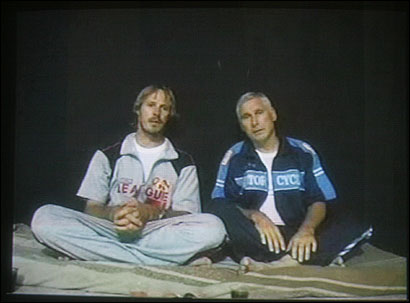
The BBC’s correspondent in Gaza was kidnapped overnight. Alan Johnston was abducted as he drove his rented car to his office in Gaza City. Johnston was returning from the Erez checkpoint at the border between Israel and Palestine when four armed men in a white Subaru stopped the car, forced him out and drove away. Johnston’s car was left abandoned at the scene. The Palestinian interior ministry has ordered all security services and police to search for the missing journalist.

The 44 year old Johnston has been the BBC correspondent in Gaza City for the last three years. He is the only foreign journalist from a major media organisation based in Gaza. Alan Johnston was born in Tanzania and educated in Scotland. He joined the BBC World Service in 1991 and has spent eight of the last 16 years as a correspondent, including periods in Uzbekistan and Afghanistan. His term in Gaza was due to expire in April.

The Gaza Strip is a dangerous place for outsiders. There have been at least 20 cases of abduction of foreigners in Gaza in the last year. Kidnappers from a plethora of small and increasingly splintered militant groups use hostages as bargaining chips to gain concessions from the Palestinian Authority and usually release them unharmed after their demands are met.

The narrow 360 square kilometre strip of Gaza is home to 1.4 million Palestinians but is not officially part of any country. Gaza was part of the British mandate of Palestine after World War I ended Ottoman rule. According to the UN’s 1947 partition plan, the territory of Gaza was slated to become part of an independent Arab state. War broke out a year later after British troops left the country. Gaza’s population tripled as Palestinian refugees fled other parts of the country. Gaza remained under Egyptian military rule until Israel captured it during the 1967 Six Day War.

Growing Israeli settlements added to the tensions which finally exploded in the first Arab Intifada (uprising) of the late 1980s. Israeli influence continued to grow in the Strip despite the signing peace accords which called for the transfer of power in Gaza to a new Palestinian authority. In 1994, the two sides signed the Gaza-Jericho agreement. Israeli troops withdrew from most of the Strip but stayed to guard the Jewish settlements and the border itself. Hamas were unhappy with the terms of the agreement and within a year, suicide bombers began to carry out attacks against Israeli forces. Moves towards peace were abandoned once more.

Direct negotiations to determine the permanent status of Gaza and the West Bank began in September 1999 after a three-year gap, but were derailed by a second intifada that broke out a year later. Finally in 2005, Israel’s Knesset voted to implement Prime Minister Sharon’s plan for unilateral disengagement. All 21 Israeli settlements in the Gaza Strip were evacuated despite violent protests by settlers unwilling to leave. But hopes of a permanent peace between the sides were dashed a few months later with the election of Hamas as the Palestinian Government.

Hamas’ charter calls for the destruction of the Israel and its replacement with a Palestinian Islamic State. In June 2006, a stray Israeli shell killed eight people on a Gaza beach. Hamas immediately declared an end to a ceasefire with Israel and launched many homemade Qassam rocket attacks across the border. They also kidnapped an Israeli soldier, Corporal Gilad Shalit. Israel launched a major offensive to recover him and bombed Government buildings, bridges, roads and Gaza’s only power station. The violence petered out after several weeks and many deaths.

But tensions remain high in Gaza. Despite the Israeli army intervention, Corporal Shalit remains in custody. In September Egyptian mediators obtained a letter in Shalit’s handwriting stating he was still alive. The shadowy Popular Resistance Committee (made up of ex-Fatah militants) claimed they had Shalit and were prepared to do a swap deal for Palestinian prisoners. But in January, another of Gaza’s militant groups, the Army of Islam said that Hamas was holding Shalit, a claim that Hamas themselves deny.

Foreigners are also in the firing line, though tend to be released more quickly. Prior to Johnston’s capture, the most recent kidnapping of a foreign journalist was that of Peruvian photographer Jaime Razuri. Razuri who works for the Agence France-Press (AFP) was snatched by armed men outside the agency's offices in Gaza City on New Years Day. Although Razuri’s case was mostly ignored by North American and European media, he became a cause celebre in his home country and elsewhere. 200 Journalists in Palestine held a sit-in to protest attacks on members on the press. Razuri was released unharmed seven days later into the custody of President Mahmoud Abbas saying “I’m fine. I’m very happy to be released. They treated me well and gave me good food."

In August last year, two journalists from Fox News also spent two weeks in captivity before being released. Steve Centanni and Olaf Wiig were captured at gunpoint and held in a garage where they were forced to convert to Islam at gunpoint. Centanni spoke to reporters on his release "I hope that this never scares a single journalist away from coming to Gaza to cover the story because the Palestinian people are very beautiful and kind hearted," he said "The world needs to know more about them. Don't be discouraged."