Sunday, September 07, 2008

Africa takes to citizen journalism

A conference of African journalists commencing tomorrow in South Africa will look at the emerging trend of citizen journalism. Held at Grahamstown’s Rhodes University in Eastern Cape Province each year, this event is the 12th Highway Africa Conference. 700 Delegates (including journalists, media educators, bloggers, publishers and students) from 40 African countries will take part in three days of talks, workshops and skills training and will hear a keynote address from technology writer and author of “We the Media”, Dan Gillmor.

The conference is an exciting event for the world’s least Internet connected continent. The theme “Citizen Journalism, Journalism for Citizens” will focus on how media professionals and citizens can improve their contributions and work better together. According to Rhodes University’s school of journalism head Guy Berger the conference will examine the extent African journalists contribute to democracy. “Much media content around Africa calls itself journalism, but is really a far cry from promoting citizens' rights,” he said. “It shamelessly promotes the rights of political rulers at the expense of broader human rights.”

Berger’s lament is not unique to Africa and is one of the common drivers for citizen journalism across the world. Queensland academics Terry Flew and Jason Wilson examine this and some of the other issues around citizen journalism in their paper “Journalism as Social Networking: The Australian youdecide project and the 2007 federal election” (pdf) which has been submitted to the journal Journalism: Theory, Practice and Criticism” for peer review.

The paper draws on the authors’ experience in the youdecide2007 project which acted as an online news and opinion site in the lead-up to last year’s federal Australian election. The site was founded with the aid of a Queensland University of Technology (QUT) research grant to invigorate public debate about Australian politics in a digital arena and worked with industry partners such as the public broadcaster SBS (who provided legal services for a site-prepared citizen journalism manual), as well as IT company Cisco, online publishers The National Forum (publishers of On Line Opinion) and The Brisbane Institute public affairs think-tank.

The book of Highway Africa’s keynote speaker, Dan Gillmor was also quoted by the Queensland authors. In “We The Media”, Gillmor pointed out the difference between big media journalism and citizen journalism as that of the evolution from “the news as a lecture” to “journalism as a conversation”. And when that happens, he said, the lines between producers and consumers will blur and the communications networks would “become a medium for everyone’s voice”.

Such was the aim of the youdecide site which deliberately set out to provide hyperlocal “bottom up” content that would act as a counterpoint to the “presidential narratives” of news-lecturing big media. But the experiences of Wilson, Flew and others at youdecide showed that new hybrid forms of media still require a significant amount of professional mediation. For starters, they needed to be technically proficient. The site managers (“produsers”) tailored an open-source content management system called Joomla! to allow the submission of multimedia content through the public areas of the site as well as editorial work in the “back end”. They also ran a weekly television show each Friday on Brisbane community television which attracted a decent audience of 12,000 viewers, about half that of the ABC’s Stateline show which appears in a similar timeslot.

Site staff also generated a significant amount of “seed content” for the site as well as editing user content for legal and quality concerns. In this they perform a similar gatekeeping function to the Korean Ohmynews! which is perhaps the most successful international template for citizen journalism. The youdecide experience was that the “pro” content was crucial in attracting visitors to the site and was generally the most-read stories (though intriguing the “am” content generated more comments!). The site’s one “gotcha” story was a staff story: the so-called “Crategate” affair when Jason Wilson’s interview of a Liberal MP was quoted in parliament by then-Opposition leader Kevin Rudd.

Another crucial learning experience from youdecide was the value of networking. In order to get attention for the site, staff members needed to draw on their connections and make alliances with the mainstream journalists. For all its faults, big media is still the best way to get in contact with a mass audience and can help citizen journalism sites thrive if site managers can cultivate relationships with professional journalists and political operatives. Content can also be networked across platforms and the Briz31 output was repurposed on Youtube.

Staff members also provided mentoring services for their amateur content providers. They provided user training in legal and licencing issues, how to post content (and make it compelling), how to register or comment, or how to use linked off-site technologies like digital editing technologies or YouTube. They provided site specific information and also mediation services to stop flame wars, respond to objections and ban repeat offender users.

Flew and Wilson’s key conclusions were fourfold. Firstly, citizen journalism remains at the margins of news production but the production values and multi-skilling at such sites as youdecide are moving to the centre. Secondly the relationship between mainstream media and independent sites is becoming increasingly inter-connected (“porous and permeable” as the authors put it). Thirdly all citizen journalism endeavours should be seen as works in progress and should seek out new areas to engage. Finally, and perhaps most importantly, networked journalism has significant repercussions to the future of journalism and will contribute, as those at Fairfax known only too well, to a further decline in the traditional newsroom environment. “Learning from citizen journalism initiatives,” conclude the authors, “will be an important part of what will define journalism as a professional practice in the 21st century.”

Friday, September 05, 2008

Why I'll be watching the senate

This article of mine was originally posted at Getup's new and sexy Project Democracy. Kudos to Jason Wilson for his terrific work on the site.

+++

When parliament resumes in the new term, the television cameras will be trained to the Lower House dispatch box to capture the ten second grabs of wisdom emerging from the mouths of Kevin Rudd and Brendan Nelson (or whoever replaces that Dead Man Walking). Yet the real drama of the next parliamentary session will be happening in the purple chamber where a changing of the guard gives the new Senate an unpredictable make-up.

As of 1 July, the Coalition finally tipped over the poisoned chalice of its majority, the Democrats lost all their seats, and Labor will now be relying on a rainbow coalition of Greens, social conservatives and single-issue independents to push through their legislation. Fraught with hazard as the need to negotiate is, even John Howard might now admit it is no bad thing.

As Harry Evans wrote, only in a non-Government controlled Senate are the classic parliamentary functions of legislation, inquiry, and accountability exercised to any great extent. But from 2004 to 2007 the Upper House was merely an echo chamber. The Liberals used their majority to throttle debate to the extent that in their final year, the Senate passed less than one percent of all non-Government amendments. Their untrammelled power brought about hubris, and eventually their own demise. Kevin Rudd will have watched and learned.

Already, he is speaking in code to the new South Australian maverick Nick Xenophon by launching an independent water audit of the Murray-Darling Basin. Rudd;s own social conservatism may also yet find a sympathetic soul mate in Family First's Steve Fielding. And the Greens, while likely to grumble about the speed of Labor's reform, won't seriously tamper with the core direction.

The minor parties may also serve the useful function of bringing down some of Labor's more fanciful election promises, such as the oversold Fuel Watch, without the accompanying problem of having to justify why it won't be implemented. It also means Labor will need to negotiate every scrap of their agenda with the independents including some unpalatable amendments along the way. Some might complain about the Senate's "unrepresentative swill" ignoring a "mandate to govern" but this is parliamentary procedure as it should be. In any case, Rudd's favourable opinion polls gives him a big stick of a double dissolution threat if too many carrots of vested interests stick in his throat.

Thursday, September 04, 2008

Tentative truce: Obama agrees to appear on Fox News

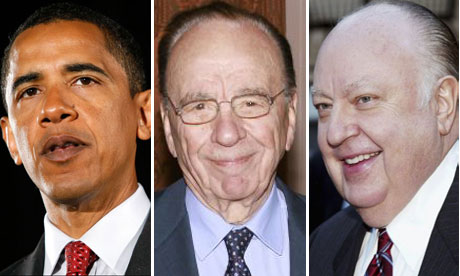
Rupert Murdoch has brokered a backroom deal that will see Barack Obama appear tomorrow on the Fox News show The O’Reilly Factor with its abrasive right-wing host Bill O’Reilly. The interview will end a long boycott of Obama appearances on the Murdoch-owned network. While many will question the wisdom of his appearance on a station that often appears to be a paid-advertorial for the Republican Party, the timing is crucial as it is designed to deflect attention from John McCain’s acceptance speech at the GOP Convention in St Paul. Fox news chief Roger Ailes confirmed the interview after a face-to-face meeting with Obama where he quoted the senator as saying "I just want to know if I'm going to get a fair shake from Fox News channel.”

Obama’s request for a "fair shake" was eminently reasonable as the station has been consistently hostile against the Democratic Presidential candidate. Fox has long been accused of conducting a campaign against him with frequent references to his middle name Hussein and their oft-repeated but incorrect allegation he was educated in an Indonesian madrassa. But with Obama still favourite to take the presidency, Murdoch was keen to broker a “tentative truce” between Obama and Ailes.

The three men met a couple of months ago at the New York Waldorf-Astoria Hotel. According to Vanity Fair’s media commentator Michael Wolff, who subsequently interviewed Murdoch, Obama was deferential to Murdoch but was highly critical of Ailes. "He said that he didn't want to waste his time talking to Ailes if Fox was just going to continue to abuse him and his wife,” said Wolff. “Fox had relentlessly portrayed him as suspicious, foreign, fearsome - just short of a terrorist.”

The question is now whether the interview means Murdoch is preparing to switch sides and support an Obama presidency. Such a move would not sit well with Roger Ailes, Bill O’Reilly or the many others that have given Fox such a Republican ideological slant over the last ten years. Fox News has been closely allied with the Bush Presidency and played a crucial role in his both his presidential victories in 2000 and 2004.

Such influence did not seem likely when Murdoch launched Fox on 7 October, 1996. At the time CNN was king of the news networks. Ted Turner set the template for 24 hours news coverage and CNN came into its own with viewers glued to its Baghdad-based reporters when the US bombed Iraq in 1991. But by 1996 Turner had sold out to Time Warner and the Republicans were complaining CNN stood for “Clinton News Network”. Even non-conservative viewers were finding its format predictable and no longer innovative. Fox News’s bright and sassy programming, modelled on the entertainment values of the Fox Network, began to slowly attract attention.

By 2000, it was regularly beating CNN in the ratings and Bill O’Reilly had overtaken CNN’s Larry King as the most popular presenter. Fox had charged ahead by changing the rules of news journalism. They were openly partisan, arrogant and pompous, sensationalistic, relied on style over substance, and openly supported the reigning government of the day and its wars. The station appealed to what the 2004 documentary Outfoxed called “the disgruntled, disillusioned and neutered male” by blaming everyone for his faults and failures except himself.

Fox also increased their popularity by vigorously attacking its critics. Bill O’Reilly became notorious for his on-air tactics. He yelled at guests whom he didn’t agree with, hectored and abused them, called them “idiots” and “boobs” and often cut off their mikes if they were becoming too “uppity”. But management never chastised O’Reilly for his heavy-handed tactics. On the contrary, Roger Ailes and his management team encouraged it. Ailes has deep roots in Republican politics (he was media advisor to three Republican presidents, Nixon, Reagan and Bush 41) and Murdoch drafted him in to run Fox News after he was sacked by rival station CNBC (now merged with MSNBC).

It was Ailes who recruited Bill O’Reilly to anchor Fox’s flagship show when the station started up. It didn’t take long for him to become the network’s biggest star. O’Reilly had been round the news traps, and was a multi-Emmy winning nomadic TV reporter and anchor of the syndicated show Inside Edition. When Inside Edition sacked him in 1995 he went back to university and got his second masters degree (to go with his earlier one in broadcast journalism) in public administration at Harvard’s Kennedy School of Government. Ailes gave O’Reilly free rein to do what he liked on his show The O’Reilly Factor. He was successful by not sounding or acting like a journalist.

O’Reilly courted controversy as a self-styled “culture warrior” and became the cornerstone of the network. He was rewarded by huge ratings, a syndicated radio show and several successful books. He quickly became loathed by the left as he cleverly conflated liberals with rapists, child molesters and murderers. Despite taking the high moral ground, O’Reilly has no manners and regularly operates outside traditional journalistic boundaries of decorum. He regularly rides roughshod over progressive voices while giving conservatives an easy ride. His audiences lapped this up.

Ahead of tomorrow’s interview with Obama, O’Reilly is conciliatory but continues to show a distinct preference for McCain. On Tuesday he called Obama “a charismatic man, he'll win among minority voters, and his entitlement message is powerful.” But, said O’Reilly, the US media are overselling him, and the voters “want their family safe and someone who will get control of the economy.” O’Reilly left his viewers in little doubt which candidate he believed would be better on those two issues.

But McCain does not fit the Bush ideological template that Fox has so assiduously nurtured over the last eight years. He is a renegade Republican. More importantly, he may not win and Murdoch does not like backing losers. According to Wolff, when Murdoch met Obama he had just one simple message to share with him. He had met every American president from Harry Truman on and believed none of them got much time to make an impression. Leadership, according to Murdoch, was about what you did in the first six months. The truce the two men subsequently declared, said Wolff, could be of “vast historical significance”. But even if this is true, can Murdoch drag his ideologically-heavy network with him towards the middle? The O’Reilly Factor will be the first test. As the Scotsman says, it could be a short truce.

Wednesday, September 03, 2008

Japan deckchair shuffle: Aso favourite to replace Fukuda.

Ruling party secretary-general Taro Aso is the odds-on favourite to become Japan’s next Prime Minister later this month. He will be the 11th prime minister in the last 15 years. The 67 year old Aso was runner up to incumbent Yasuo Fukuda in last year’s election for premier and remains a popular and congenial figure. It is possible he will now be the only candidate to replace Fukuda who resigned on Monday. The chair of the ruling LDP's general affairs committee, Takashi Sasagawa said the party would meet on Wednesday to formally set a date for the internal leadership vote. Japanese media expect the vote to occur on September 20 or 22. Aso announced his intension to run yesterday. "I think [Fukuda] felt he had work that was left undone, and he said he wanted it to be carried out," he said. "As someone who discussed these issues with him…I think I have the credentials to take that on”.

Aso is a former foreign minister and a hawkish and straight-talking right-winger. His power is based in the party’s grassroots and he is no friend of Fukuda. In a cabinet shuffle last month Yoshiro Mori, one of the LDP’s power brokers (and a former unsuccessful PM himself), foisted Aso onto a reluctant Fukuda as the party’s new secretary-general. According to The Economist, Aso has done nothing since his appointment but work behind the scenes to undermine Fukuda.

Though his resignation was not unexpected, there was no obvious trigger for its announcement. Fukuda,72, called it a day on Monday saying he had decided several days earlier to step down to avoid creating a "political vacuum". At his farewell media conference, Fukuda said a cabinet reshuffle and the recent announcement of $107 billion in spending and tax cuts had not lifted his deeply unpopular administration in the polls. Fukuda was deeply unpopular and has been hampered by a hostile Upper House where the opposition Democrats blocked government bills and appointments, including Fukuda's candidate to be governor of the Bank of Japan.

The moderate conservative only took office last September after his predecessor, Shinzo Abe, quit in similar circumstances and after a similar time period in the job. Malcolm Cook at The Interpreter believes Aso has a better chance of staying longer in the job than either Abe or Fukuda. Unlike the two previous leaders Aso is popular and charismatic and can provide a message of hope and renewal. In that respects he most resembles the country’s last successful leader Junichiro Koizumi. Cook calls Aso a “Koizumi plus” candidate who will take a very strong line on strengthening the US alliance and on viewing China as a strategic competitor and a threat to Japan.

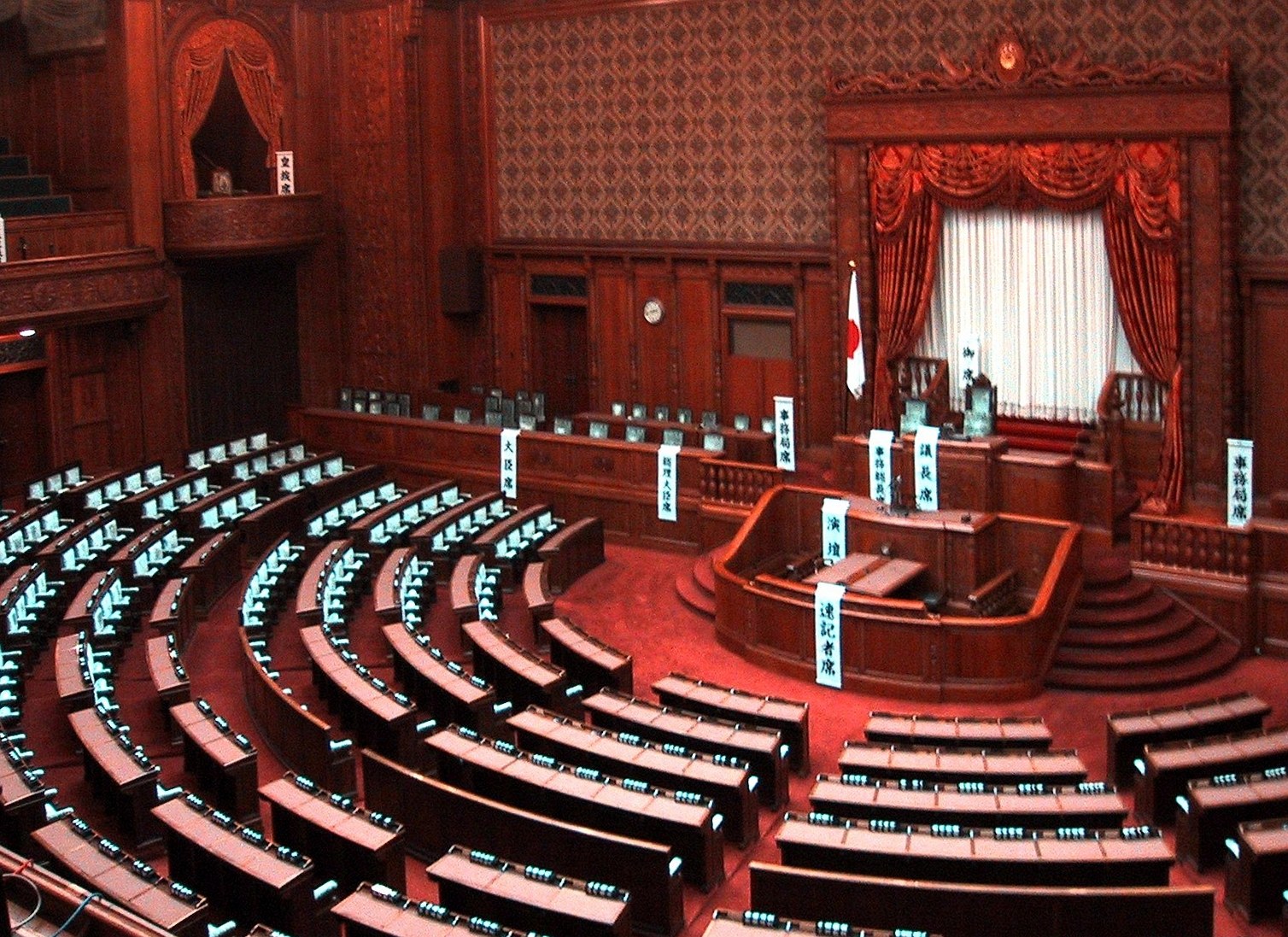
But for now the biggest threat to Japan remains Japanese politics. Fukuda struggled to cope with a divided parliament where opposition parties have the power to delay legislation. He tried and failed several times to compromise with Democrats' leader, Ichiro Ozawa (who quit the LDP in the 1990s). Important legislation could be rammed through the Diet thanks only to the two-third’s “supermajority” enjoyed by the ruling coalition in the lower house. But most notable was the failure to pass a bill to renew the Japanese navy’s refuelling mission in the Indian Ocean, an embarrassing set-back to the country’s commitment to the war in Afghanistan.

Fukuda’s sudden exit now raises questions about the LDP’s ability to cling to power or even avoid splitting up after ruling Japan for most of the past 53 years. The LDP does not have to call an election until next year but the Democrats are now pushing for an early vote. The party’s secretary-general Yukio Hatoyama said Fukuda’s sudden department showed that LDP didn’t have the ability to hold the reins of government. “I am deeply resentful towards Fukuda for not caring about people,” he said. “All we want is the calling of early elections.”

Tuesday, September 02, 2008

The Curse of Kosi: Bihar floods affects millions

Two weeks after Bihar’s flooded Kosi River washed away much of the state, hundreds of thousands of people are finally giving up hope the waters will soon recede. More than a million people have been left homeless and scores killed in Bihar, one of the poorest regions in India. The Indian government has already rescued half a million people and another million still need to get out. Half the state is now under water. The worst hit areas are Supaul, Araria, Madhepura and Saharsa districts while more areas were becoming inundated while many other embankments were in danger of being breached.

The problem began after the monsoon rains when the Kosi River which flows from Nepal into India, burst its banks two weeks ago. The river changed course and flooded surrounding areas. Flood waters began flowing into Bihar when a barrage located on the Nepali side of the Kosi burst on 18 August. An employee at the crumbling 40 year old barrage says the collapse was inevitable due to negligence and the state of disrepair of the facility. “The officials came here in February like every year,” said the employee. “We told them things are bad. They didn't do anything about it.”

The Kosi is known as Bihar's Sorrow for its frequent deadly floods. The Kosi is one of the world’s most destructive waterways on account of its heavy silt deposits caused by its mountainous course in Tibet and Nepal and simultaneous rapid average water speed. Its fury has been renowned through the centuries as the Kosi curse. The curse was believed to be finally tamed by an embankment at the border. But with recurring problems at the barrage, locals now believe that the Kosi curse has returned. Most recently, floods in 2004 claimed 700 lives.

Another thousand or so have died this time round. The rising river has crumpled embankments, swamped farmlands and destroyed homes. Some locals have cashed in on the troubles of others. There are reports of people with boats and tractors were charging flood victims large amounts of money to carry them to safety. One rescuer apparently demanded a man’s ox in payment for a boat ride to safety.

The federal government in New Delhi has also been heavily criticised for its lack of basic disaster planning. NGOs say there seems to be no overall coordination for rescue operations and for the sheltering, feeding and medical care for the hundreds of thousands of those who fled from the floods. The anti-poverty charity ActionAid said "lessons from the past disasters should be kept in mind - a long-term comprehensive response is necessary to deal with relief, recovery and disaster preparedness".

Many refugees have arrived in New Delhi telling their grim stories of death and survival. Umesh Kumar from Madhepur district escaped with his mother, wife and three small children. The family hasn't eaten for two days and arrived with only a bag of clothes. They lost everything else in the floods. Kumar said he lost everything. “My kirana shop, 8 bighas of farming land - all now submerged in water. My children and mother are sick and I could not get them medical treatment.” He said. “The makeshift refugee camps set up by the state are not enough as many people are still trapped.” Another survivor said "Thousands are still trapped in outlying villages and the government is painfully slow in getting its act together”.

The government has reacted angrily to these criticisms. They claim with some justice that hardly anyone could have imagined a cataclysm on such a scale and point to the large-scale army rescues already in progress. Last week Prime Minister Manmohan Singh undertook an aerial survey of the flood-affected areas in Bihar. He called the flood a “national calamity” and announced a $200m relief package to the state. Locals are phlegmatic about the Curse of Khosi. “We fear our locked house will be burgled,” said one Bihar resident, “but jaan hai to jahan hai (You have the world only if you have the life)”.

Monday, September 01, 2008

The truth behind Thailand's “protests”: a delicate balance of forces

What exactly is going on in Thailand? Western media reports a “political crisis” but so far seems a well organised, peaceful, and most importantly supported-by-the-military crisis. The Prime Minister’s residence has been taken over by 20,000 protesters for a week but so far the PM Samak Sundaravej has not called out the police or the army. The 73-year old Samak is a Thaksin Shinawatra surrogate whose legitimacy stems from last year's election won by the People Power Party created by loyalists from Thaksin’s old party Thai Rak Thai.

The southern airports of Phuket, Hat Yai and Krabi were barricaded off by protesters who marched on their stomachs rumoured to be supplied by the military or even members of the Royal Family. Samek has refused to call an election and has vowed to rule on with the apparent support of the king whom he met today.

Samak won power in 2007 with the support of the rural majority despite the antagonism of the coup leaders. He now hangs on as a stand-in leader for the far-away Shinawatra. A growing wealthy elite in Bangkok, loath both men and are determined to force an election. But Thaksin may be about to taxi home. Today, he sold his English Premier League football "toy" Manchester City to Abu Dhabi interests. Thaksin may be cashing up for his inevitable return to his homeland and the bribes he will need to pay to stay out of prison.

And so the west reports Thailand seems delicately poised between four forces that represent the Army, the King, the country (in the name of Thaksin), and Bangkok’s growing bourgeoisie. The army has remained in barracks so far but given their past record as recently as 2006, they could be itching for the chance to “solve” the crisis. Coup leader General Sonthi Boonyaratglin has retired but the army’s attempt to fix the 2007 election backfired spectacularly. There may be other leaders who want to take on his baton. But they will have to contend with Samak’s appointment today of General Songkitti Jaggabatara, a former classmate of Shinawatra to the role of military supreme commander.

But for now, the army is quietly working behind the scenes for the opposition umbrella group People's Alliance for Democracy (PAD). Some have claimed PAD actually stands for People Against Democracy because of what it is fighting for: a Parliament in which only 30 percent is elected and the rest are “appointed” by royal command. PAD’s paternalistic policy see them blame western-style democracy for Thailand’s ills. It was PAD who began the protests that led to Thaksin’s overthrow and who now want to strike at him again through Samak.

PAD have strongly invoked the royal family in their attempt to curry favour. Royalty remains sacrosanct in Thailand and there is intense jockeying for power in the event of the death of 80 year old King Bhumibol Adulyadej. Officially a constitutional monarchy, Bhumibol is extremely powerful. He has been instrumental in most Thai political dealings over his extraordinary 60 years on the throne and had a very direct bearing on the 2005 coup. He is the world’s longest-reigning monarch, and the wealthiest royal worth an estimated $35 billion. PAD knows that if Bhumibol withdraws his support it means the end for Samak.

While no-one knows how this drama will play out between Bhumibol, PAD, Samak and the army, it should be noted there is an fifth force of influence in the country: the Thai media. Television is contested but is mostly controlled by Samak. His forces say the state media should be a mouthpiece for the government, while opponents argue that it belongs to the people as these stations are established and operated using the taxpayers' money. The print scene is also vibrant. As of 2003, there were 150 newspapers of which about 40 were Bangkok dailies. The city also has two important English language dailies The Bangkok Post and the Nation and several Chinese language papers. Almost all of the country’s 73 provinces have local newspapers. Lurid tabloid journalism is extremely popular but there is also a significant well-educated elite who avidly read the broadsheets. These papers have one major taboo topic (criticism of the Royal Family) but otherwise report fairly on the political unrest. With a free Internet also available, Thailand is awash with vigorous, diverse, well-informed opinion that can quickly turn hostile.

It will take a monumental effort of will to end that unrest. The Guardian sees the crisis as a continuation of the events that ended Thaksin’s reign calling it a “never ending coup”. They see it as a struggle between “two deep-seated and irreconcilable forces” of a the traditional Thai alliance of the bureaucracy, military and monarchy, and “a populist nouveau riche from the rural areas whose support Thaksin has tapped into.” It sees an election as perhaps the only gamebreaker.

Sunday, August 31, 2008

New figures show Australia will fail to meet Kyoto target

New data from the US Department of Energy’s Carbon Dioxide Information Analysis Centre (CDIAC) shows Australia is likely to fail to meet its Kyoto target. Figures from CDIAC shows Australian CO2 emissions increased 8.5 percent between 2004 and 2005. In 2005 Australia produced 101 metric tonnes of carbon with coal consumption accounting for 58 percent of the total. Australia is the world's fourth largest coal producer and by far the world's largest exporter of coal. The data shows that Australian emissions have grown steadily since World War II and have gone exponential since the 1960s. Emissions grew every year until 1998 before declining slightly. However, the data shows emissions rising again as of 2005.

The data ranks Australia ranked as one of the world' top 10 polluters on per capita use of fossil fuels. The data also shows carbon emissions are growing more than four times faster than figures quoted by the Federal Government, placing Australia's Kyoto target at risk. The Federal Government claims that national fossil fuel emissions rose by only 2 per cent over the same period. Australia has committed to meeting a target of 108 per cent of its 1990 emissions levels (which were 80,000 million tonnes) annually by 2012. But the CDIAC figures of a 130 percent increase as at 2005 suggests this cannot be achieved.

University of Adelaide's Professor Barry Brook agrees with this finding and says the Government are doing nothing to stem the emissions. Brook is the head of the university’s climate change research institute and he condemned the rhetoric about Australia being on track to meet its Kyoto target as merely greenwash. "In terms of fuel use, [emissions are] spirally upwards at an alarming rate," he said. “Even a conservative projection based on the US centre's data suggested that by 2012, Australia fossil fuel emissions could be 37 per cent above 1990 levels.”

Brook also noted the “worrying discrepancy” between CDIAC’s data and Australia’s newly branded Department of Climate Change. Unlike CDIAC, the government’s data (pdf) tracks all greenhouse emissions (not just fossil fuels). Australia’s Kyoto target is based on 108 percent of the 1990 figure of 555 million tonnes. The government’s 2007 tracking document believes the 108 percent figure is possible despite huge increases in energy and industrial use due to significant savings in land use clearance. But as Brook points out, those gains may be illusory - land clearance in Queensland was phased out http://www.wwf.org.au/ourwork/land/qldlandclearing/ over the period 2003-2006.

So where does that leave Australia and its Kyoto commitment? According to Clive Hamilton, the Kyoto Protocol is not merely symbolic; it is a very substantial agreement that lays down the framework to begin to deal with global warming. He says the scale of the task should never have been underestimated especially with the Rudd government inheriting a huge greenhouse debt from the previous administration. When world met at Kyoto in 1997 to hammer out the deal, John Howard’s team negotiated a last minute clause into the protocol. The clause was Article 3.7 of the Kyoto Protocol which immediately became infamously known as the “Australia clause”.

The “Australia clause” allowed countries with net emissions from land use change and forestry in 1990 to include them in their 1990 baseline. “Land use change” is a euphemism for land clearing – the removal of vegetation for purposes other than forestry. Because of good agricultural conditions of the times, the late eighties and early nineties were bumper years for land clearing, particularly in Queensland. This artificially raised Australia’s emissions in the Kyoto base year of 1990 by around 30 per cent, masking extraordinary growth in fossil emissions and made the 108 per cent target far cheaper and easier to achieve.

But as Brook pointed out with the Queensland data, Australia has now already played its get-out-of-jail-free card. Any further cuts must now come from coal, oil and gas. These cuts are a legacy of 11 years of profligate Coalition rule. As former shadow environment minister Duncan Kerr put it, the Howard Government’s refusal to introduce abatement measures has turned the target from “a three-inch putt into a six foot one”.

The CDIAC data suggests the ball may actually be stuck in a bunker. Clive Hamilton believes drastic measures must be taken now. He says it is imperative federal Climate Change Minister Penny Wong blocks state governments from approving new coal-fired plants. Both Victoria and NSW have been in an obscene rush to get plants off the ground before the Carbon Trading regime is installed in 2010. Last month, Victorian energy minister Peter Bachelor announced the approval of a $750 million Latrobe Valley power station expected to be operational by 2012.

While Victoria seems to be locked into a huge flow of emission for another 40 years, the NSW power industry is in disarray after Premier Iemma’s failure to privatise the industry. Iemma warned the cancellation of the original sale plan won't spare the state from having to invest in upgrading and fitting coal-fired power plants with equipment to reduce pollution, with taxpayers having to meet these costs. But one of the reasons the sale plans fell through is that investors won’t commit until NSW indemnifies them against all future carbon liabilities.

It is not just the power industry that is jockeying for position ahead of the Carbon Trading Scheme. Last week, the Business Council of Australia (representing the 100 largest companies in the country) responded to the Government’s already weak climate green paper by threatening to take industries off-shore if the carbon price was high. It claimed that if the European price of $40 a tonne was brought in, it would force the closing of half the exporting plants in the cement, sugar, paper, electricity, gas and other industries. It demanded polluting industries pay as little as possible for permits, the scheme start later than 2010 and the modest targets be reduced further. As Olga Galacho points out in the Melbourne Herald Sun, the BCA came up with a laundry list of "full compensation for trade exposed, emissions intensive industries and welfare for coal generators.”

As well as pandering to business, Labor will also be sensitive to any voter backlash from the trading scheme. But Hamilton says the scheme must pass seven tests to be successful. It must 1) be illegal to emit greenhouse gases without a permit 2) it must include all fossil emissions, including petrol 3) give no incentives or loopholes to avoid obligations 4) avoid vested interests in the allocation of permits 5) be compatible with overseas schemes 6) avoid putting a price cap on the price of permits and 7) include the flexibility to set more stringent targets as the science changes. The CDIAC data would suggest the time for more stringent targets is already upon us.

Saturday, August 30, 2008

The 300 days war rumbles on: McCain chooses moose mate

When I heard it on the radio news this morning, I thought John McCain had selected Michael Palin as his running mate. When I heard the female voice it was clear I was wrong (though I think the Yorkshire man would be a useful addition to any ticket). No, it wasn’t a stiff upper lipped Limey, instead it was the little-known Governor of Alaska and “mom of five” Sarah Palin that was now a good shot for the Vice Presidency. Andy Borowitz explained best McCain’s reasoning in his imagination of the senator’s own in-no-way defamatory words. "Let's say a constituent calls you and says that a caribou has wandered onto his front lawn," he said. "My friends, Barack Obama wouldn't know what to do."

But Sarah Palin would indeed know what to do. She’d shoot it. The 44 year old cleanskin and winner of the Miss Wasilla pageant must be a very formidable woman to get to be governor of a wildcat alpha male state like Alaska. Nevertheless, Palin is a long shot; but interestingly now, the Republican package is a good mirror image of the Democrats one as this long electoral war of attrition nears its end.

The war is taking its toll on all the players. Obama has lost his near impregnable lead over the last few months and is hoping the Clinton fairie dust works its magic after the Democratic Convention. The elephants are slowly clawing their way into the contest as John McCain seems most intent on provided nothing more exciting than an error-free campaign. Perhaps the biggest error is the name at the top of the ticket. McCain is barely tolerated in the Republicans and may not even be the best candidate in his family. The UK Independent asks why isn’t Cindy McCain’s name the one on the ticket?

Of course, the rest of the media ran with glee the offering about the McCain’s inability to remember how many houses they have (ten, apparently), the donkeys hee-hawed in Denver. This was an important moment. The fourth anniversary of Obama’s coming out speech at the 2004 convention. This time round, he set a TV record as 38 million people watched what he had to say. That was more than watched the Olympics or American Idol. And well more than ten million up on either Bush or Kerry in 2004.

The four-night Democrat convention ranks as the most-watched convention of either party since ratings began watching Kennedy and Nixon in 1960. The party had rejoiced in the But while American were happy to watch the asses in action last week, the elephants outside the room were being ignored. The Grand Old Party’s convention begins Monday in Minneapolis Saint Paul (Actually its in the state capital Saint Paul, but its Minnesota twin city Minneapolis, like the elephants, must always be mentioned in dispatches).

There is talk that the start may be delayed if Hurricane Gustav strikes New Orleans. Apart from the potentially embarrassing memories of Katrina, profit-driven media units are full stretch to cover two major stories in the same timeframe. The Republicans are worried that their precious news time will be stolen by all those great pictures of heavy seas and rooves coming clean off. Hence the move to announce Palin early. The sheer novelty value alone will eat bandwidth, broadcasting spectrum and column inches for the whole weekend until the storm hits, as well as killing off the buzz created by Obama’s own convention speech.

Nonetheless it is important to consider what this black-and-white scion Barack Obama had to say. He began by reminding his audience of the speech he made four years earlier. This was the story about “the brief union between a young man from Kenya and a young woman from Kansas who weren't well-off or well-known.” The product of that union described the promise that set the US apart. Apart from what, he didn’t say. But the promise involved “individual dreams (that) still come together as one American family”.

Obama claimed we were in a defining moment – “a moment when our nation is at war, our economy is in turmoil, and the American promise has been threatened once more.” He claimed to speak for the unemployed, suffering home owners, those with credit card bills, and the poorly educated. While Obama said Bush was not to blame for all these people’s predicament, he said their lack of decency, generosity and compassion mean that America had to show it was “better than these last eight years”.

Many wonder whether Obama has the capability to match the fervour of his words. His extraordinary ratings numbers alone suggest this is a phenomenon that will be rewarded with victory in November. His voting record as a federal and an Illinois legislator shows him comfortably in the Democratic mainstream of sympathy for lower-income people. He has voted against Arctic and Gulf drilling and also against Bush’s choice for Chief Justice John Roberts. Obama was sceptical about Roberts’s deepest values and his “broader perspectives on how the world works” and his empathy. Why? “He has far more often used his formidable skills on behalf of the strong in opposition to the weak,” said Obama. Come November we will finally see who Obama’s own formidable skills will be used for.

Friday, August 29, 2008

John Mitchel

On Monday, Dave Beckerman’s wonderfully evocative “Black and White Photography blog” featured a memorial bust of John Purroy Mitchel, New York’s youngest ever mayor. Mitchel was mayor from 1914 to 1917 and was just 34 when he got the job and with it the title of “The Boy Mayor of New York”. The boy mayor died bizarrely just a year after losing office when as an World War I Army Air service cadet, he forgot to fasten his airplane seatbelt and plummeted 150 meters to the ground. Mitchel Field air base in Long Island was named in his honour adding to his family’s illustrious legend.

John Purroy Mitchel’s grandfather was John Mitchel, a complex and hugely influential Irish patriot known also for his time in Australia and the US. Mitchel was an Ulster Presbyterian, a lawyer, and a fiery and passionate journalist, who wrote about the artificial famine that was devastating Ireland in the late 1840s. Mitchel laid the blame squarely on British economic policies.

In the nationalist newspaper The Nation, Mitchel wrote that the famine was not a natural disaster but a deliberate attempt to exterminate the Irish peasantry. In his view, British politicians were using famine to clear Ireland's 'surplus population' from the land in order to use it to feed Britain's growing industrial population. Britain was, he said, obsessed by the pursuit of profit and the callous doctrines of political economy, and blind to the sufferings of the Irish people.

His radical writing caused immense debate even among Mitchel’s own fellow Young Irelanders. The Nation’s editor Charles Gavan Duffy censored his writing and Mitchel left to found his own paper “The United Irishman”. Free to write whatever he wanted, Mitchel did not mince his words. He announced the purpose of the paper was to wage “Holy War to sweep this Island clear of the English name and nation.” The violent revolutionary tone caused a sensation. The British authorities immediately saw it as seditious and Mitchel was a marked man.

Mitchel got away with producing 16 incendiary issues in a similar vein. But on 22 April 1848, Westminster passed a bill specifically with Mitchel in mind. And so barely a month later he was arrested under the newly minted Treason Felony Act (an act which remains in force today) and sent to Dublin’s Newgate prison. The authorities deliberately packed a jury against him and found him guilty. The judge sentenced him to fourteen years transportation. Mitchel's dignified bearing and the severity of the sentence won him considerable sympathy from nationalists, and contributed to the Young Irelanders' decision to mount an unsuccessful "cabbage patch" rebellion in July 1848.

But Mitchel himself had already left the cabbage patch by then. He set sail from Cobh and spent the first year of his exile on the prison hulk Dromedary off the coast of Bermuda. Mitchel noted with sardonic delight the name of the British Bermudan base: Ireland Island. But the island’s humidity was unlike Ireland's and it played havoc with Mitchel’s asthma. He was sent on to Cape Town on board the Neptune in 1849. There he enjoyed the discomfit of his British captors who were not allowed to land their convict stock on South African soil. After several months, the Neptune set sail for Tasmania.

Mitchel documented his time in Bermuda, South Africa and Australia in his most famous work, the “Jail Journal”. On 6 April 1850, the long journey across the roaring forties neared its end as a delighted Mitchel could see the “mountainous southern coast of Van Diemen’s Land. They docked at Hobart a day later. Mitchel was treated as a VIP prisoner and was allowed a “ticket of leave” to live at Bothwell with his old school friend who had also been transported a year earlier. Through Martin, he met other transported dissident Young Irelanders including Thomas Francis Meagher and William Smith O'Brien who all congregated around Lake Sorell.

Mitchel was joined by his wife and family at Nant Cottage in Bothwell. There they ran sheep and reminisced the old times in Ireland. But Mitchel had too revolutionary a mind to settle for being a Tasmanian gentleman. In 1853 he donned a series of disguises and smuggled himself on board the Emma, a passenger-brig bound for Sydney. After an agonising week in hiding in Sydney, he boarded the Orkney Lass for the trip to Honolulu. After three weeks at sea, they landed at Tahiti. There he transferred to the US ship Julia Ann where his wife and family were already aboard. Finally on board an American vessel, Mitchel was able to drop his disguise. At 7pm on the 13th September 1853, he wrote “my Jail Journal ends, and my out-of-jail Journal begins”.

He arrived in New York to a hero’s welcome and lost little time in getting back to journalism. In the weekly Citizen, he serialised his Jail Journal. He dabbled in intrigue with the Russian ambassador during the Crimean War asking him to aid the Irish independence cause. But his blind spot would prove to be his racism. Mitchel believed blacks were racially inferior and were better off as plantation slaves than living in barbarism in Africa.

As the 1850s progressed, he grew to detest the abolitionist cause. He moved to Tennessee and bought a farm while supplementing his income with lecture tours. In 1859 he set sail for France and was there when war broke out in the States. His two sons joined the Confederate Army and Mitchel returned to be with them. Mitchel himself served with an ambulance corps and became editor of the Richmond Daily Enquirer. But as the war went badly, he became increasingly disillusioned with the confederate president, Jefferson Davis.

After the war, Mitchel went back to New York and then France where he tried to rouse another army to invade Ireland. When that failed, Mitchel turned back to journalism in New York as well as writing Irish history. In 1875 he finally returned to Ireland as an old and ill man to contest a by-election in Tipperary. Although easily elected, Parliament declared him ineligible as an undischarged felon. Mitchel stood again and won convincingly. But Mitchel spared Britain a constitutional crisis. He died, aged 59, on 20 March 1875 and was buried in his parents' grave in the Unitarian cemetery in Newry, Co Down. His New York fire marshal son James fathered John Purroy Mitchel which takes us back to where we started. The Mitchel flame lived on in the boy mayor. Shame about the seatbelt, though.

Thursday, August 28, 2008

Indicting Gaddafy: Lebanon raises the stakes on Musa Sadr disappearance

Lebanon has indicted Libyan leader Muammar Gaddafy over the disappearance of a prominent Shia cleric 30 years ago. Sheik Musa Sadr disappeared in 1978 when he visited Libya though Tripoli claimed he left the country on a plane bound for Rome - a claim denied by Italy. Lebanon has charged Gaddafy and six other Libyan officials with conspiring to kidnap and false imprisonment which carry a maximum death penalty. However, Gaddafy and the others are highly unlikely to ever face trial in Lebanon.

The person assassinated, Imam Musa Sadr, was a major influence in Lebanon’s 1970s sectarian politics. He was born in Iran and got a law degree from Tehran University. His family was Lebanese and in 1960 he accepted an invitation to be the Shia religious leader in the Southern Lebanese city of Tyre. An intellectual, he spoke several languages and was equally conversant in Western thought as he was in Shia philosophy. Similar to South American liberation theologian priests, Sadr was a charismatic speaker and a tireless worker who gave his downtrodden community a voice and provided them with identity and power in Lebanese politics.

Growing tensions in the south near the Israeli border spurred a mass Shia exodus to the slums of southern Beirut. Sadr was religious head of the Shia community and he organised the fragmented slums of southern Lebanon and the western Beqaa Valley into a new political movement. Sadr called the movement Harakat al-Mahrumin (movement of the deprived) and it quickly became the voice of Lebanese Shia.

When Lebanon’s civil war began in 1975 the Harakat divided into political and military wings. The political party Amal (Hope) became an international organisation and the party of choice for diaspora Shia businessmen as far away as Freetown, Accra, Kinshasa and Detroit. These communities provided the financial muscle for the new party. Sadr used his Amal militia to run social services but his pleas for help in the Shia slums fell on deaf ears in Beirut.

Slowly but surely he began to undermine the pan-Arab unity of Sunni hegemony. Sadr was the figurehead of a growing Shia awakening. In the 1970s Amal camps trained Shia activists from Iraq, Iran, Saudi Arabia and the Gulf countries. As the civil war raged, Sadr’s Shia-centric actions and Persian accent brought about great distrust in the Lebanese Sunni community. Many accused him of treason and saw him as a threat to the Palestinian establishment and by extension to the larger Arab world.

His assassination was well-planned and well-known in advance. Before he left for Libya in 1978, the feared head of Syrian security Rifaat al-Assad (younger brother of then President Hafiz al-Assad and uncle of current leader Bashar al-Assad) summoned the Shah’s ambassador to Damascus to warn him of Libya’s plan. Sadr still held an Iranian passport and Assad did not want to damage relations with Tehran. But Sadr and two assistants left as planned to visit Gaddafy and none of them were never heard from again.

To his supporters Sadr became known as the “vanished Imam”. Despite his disappearance Amal remained a major force in Lebanese politics. He welcomed the 1982 Israeli invasion of southern Lebanon as a liberation and flexed his power in the refugee camps after Israel expelled the PLO. They remained the leading Shia group until they were overshadowed by Hezbollah backed by the new theocratic Iranian government. Hezbollah won respect in Sunni communities after it took on the IDF and forced it to retreat from southern Lebanon.

The issue of Sadr’s disappearance dragged on to become the subject of a major dispute between Libya and Lebanon. Gaddafy refused to attend an 2002 Arab summit in Beirut after Shia groups threatened him. Libya closed its Beirut embassy claiming it was insulted by Lebanese pressure to reveal Sadr’s fate. In 2004, Sadr’s son filed a suit against Gaddafy and 17 members of his government. Lebanon claimed to have new information about the disappearance and the country’s chief prosecutor said former Libyan Prime Minister Abdel Salam Jalloud and a former Libyan ambassador to Lebanon should also be summoned.

But the Libyan leader never responded to the summons. Gaddafy has not been back to Lebanon since Sadr disappeared. The arrest warrant against him allows magistrates to take such measures against suspects who fail to respond to an official summons. Lebanon knows its current arrest warrant is highly symbolic, but is unwilling to let the matter lie. Their Shia have emerged as a major political force and remain determined to get to the bottom of the fate of their “vanished imam”.

Wednesday, August 27, 2008

Blood letting at Fairfax begins: Age editor sacked

Andrew Jaspan, the editor of The Age, appears to be the first victim of the 550 job cuts announced by Fairfax yesterday. The company’s Victorian chief Don Churchill announced Jaspan’s departure to shocked staff of the Melbourne broadsheet this morning. In the staff memo, Churchill said Jaspan had “delivered great papers and has done a magnificent job in reinvigorating The Age”. However he said Fairfax had decided that for “this next critical stage of The Age we would have fresh editorial and executive leadership.” Jaspan’s departure follows that of The Age’s marketing manager Antony Catalano who Churchill also sacked yesterday.

While Jaspan didn’t endear himself to Age journalists over his decisions to allow commercial partnerships to compromise editorial independence, his departure is a concern as it does not appear to be made for journalistic or editorial reasons. Newspaper quality is certain to suffer as journalists follow Jaspan out the door. Fairfax CEO David Kirk hopes to save $50 million with the cuts and the redundancies amount to five percent of the company’s total staff. Crikey editor Jonathan Green believes the two departures confirm the impression that the future business plan for the newspaper is about controlling costs rather than going for growth.

The redundancies news was delivered by the company’s senior brass, CEO David Kirk and deputy CEO Brian McCarthy. Kirk and McCarthy painted the move as a “major restructure of corporate and group services” designed to improve productivity and performance. The job losses were spread across many areas of the business with three in ten redundancies affecting editorial staff in Australia and New Zealand. Fairfax will outsource production of the sections and special reports that are inserted into its papers. The two Sydney newspapers, the Morning Herald and The Sun-Herald, will be merged under a seven-day roster while Melbourne would suffer a “deferral of wage reviews for senior management, a review of our marketing spend, reduction of discretionary spending and a review of our distribution framework.”

Caroline Overington
at Murdoch’s The Australian quotes Sydney reporters who say Fairfax is abandoning quality journalism at its flagship newspapers. She said Sydney staff passed a motion after they heard the news saying they had "lost confidence in the Fairfax board and its ability to manage the company through these challenging financial times when its only strategy is to cut editorial staff again and again". Sydney Morning Herald journalist Gerard Noonan called management "gutless" and said they were using "the worst of the Work Choices legislation" to make deep cuts to journalism. "This is a panicked response," he said. "Management is clearly struggling to deal with how to handle the complex demands of high-end, quality journalism."

Another Murdoch media analyst, Mark Day, says the announcement has deputy CEO Brian McCarthy’s fingerprints “all over it”. McCarthy was the former head of John B. Fairfax’s Rural Press, which merged with Fairfax Media 15 months ago in a $9 billion deal. McCarthy’s model at Rural Press was based on small editorial and sales teams using centralised printing facilities to produce more than 100 mastheads. He was notorious for cost-cutting and hated by journalists who claimed reporting capacity was sacrificed for profits. But Day says the model won’t work for the city broadsheets. “The Sydney Morning Herald and The Age need to be agenda-setting and relevant to consumer interests to have an influential role in modern societies,” he said. “This cannot be achieved by filling the gap between the ads with the kind of cheap-as-chips copy-sharing and PR-supplied bumf that McCarthy’s regional weeklies have been able to get away with."

Chris Warren from the Journalists’ union MEAA (Media Entertainment & Arts Alliance) believes the sackings show the newspaper industry is in crisis. He was unimpressed by Kirk and McCarthy’s mantra that "media companies fit for the modern media world need to be lean and agile". Warren told the ABC PM program yesterday he had “absolutely no idea” what the company actually meant by that statement. “You can't produce this sort of quality product that are so essential in this day and age by cutting costs,” he said. Professor of Journalism Wendy Bacon agrees with Warren and she told the same program that quality impact was inevitable. “Now, I know of no research that's accurately measured this, but certainly anecdotally, already errors have been cropping up where you wouldn't have previously seen them,” she said.

These errors are sure to increase given that 120 journalists are among the jobs slashed. More worrying is the likelihood that the cuts will see further erosion in the commitment to quality journalism. While quality is a difficult characteristic to determine, journalism academics such as David Conley have used the measure of at least one journalist per one thousand circulation. The Fairfax broadsheets fall well short on this measure. And with salaries and expenses frozen and no new cadets to be taken on this year, it is unlikely we will be seeing too many investigative scoops or damning exposes of dubious doings of those in high office. A further “dumbing down” of news is the most likely outcome.

Only the markets were happy with Fairfax’s slash and burn exercise. The share price closed last night at $2.98 up 14c and a rise of five percent for the day. ABN Amro media analyst Fraser McLeish saw the cuts as positive because “they’re aligning the costs with the revenues, which is what you want to see.” While McLeish sympathised with those working for Fairfax, he said it was in line what was happening to the newspaper business elsewhere. “You just have to look overseas to what's happening there,” he said. “Five per cent of the workforce is a lot less than what some of the big US newspapers are announcing."

Tuesday, August 26, 2008

ICANN loosens the strings of Internet control

The online world is slowly digesting the consequences of the Internet naming agency’s new plan to sell domain names to the highest bidder. The California-based International Corporation for Assigned Names and Numbers (ICANN) appears to have sanctioned a free-for-all online auctioning of disputed internet domain addresses that could cost companies millions. Andrew Watson, managing director of Scottish-based network firm Quorum said the scheme would be a nightmare for brand owners. "It raises a whole host of issues around brands and trademarks and if a company can actually legitimately own a name,” he said.

The news comes hot on the heels of another contentious ICANN decision. After years of careful rationing out top level domain names, ICANN announced in June there would be an effective free-for-all in naming standards. Previously there were only a handful such as dot-com, dot-edu and dot-net. Some are now claiming this freeing up of domain names reduces the need for an authority such as ICANN at all. But as the Irish Times points out, the new freedom doesn’t mean ICANN has forgone the power to meddle with naming conventions whenever they or the US government wants. “It just means that ICANN has fewer critics among the domain name registrars,” said the Times.

The root authority is the closest thing to a global authority on the Internet. Ownership of this asset is therefore greatly prized. In the early days of the Internet it was ad admin task for a young Stanford computer scientist named Jon Postel. It was Postel’s idea to propose the top-level domain system. While he wasn’t busy sorting this out, he co-wrote an application called “Simple Mail Transfer Protocol” which became better known as e-mail.

Postel had assumed the nickname of “Protocol Czar” by the time the modern accepted domain name system was fully operational in the 1980s. His authority in this area was uncontested. But in 1990 Stanford lost the defence contract to administer the root to a small unknown company called Network Solutions Inc (NSI). A system of power sharing began, where NSI registered new domain names but Postel retained policy authority to determine the number and content of top-level domains.

This partnership worked reasonably well until money reared its ugly head. In 1995. NSI won the right to charge applicants for domain names. At $50 a year per domain, it wasn’t long before NSI was making mega-bucks as the Internet exploded. By 1999 they were collecting $200m a year. Some of the Internet’s early gurus took exception to the way this system was being monetised. Co-designer of the TCP/IP network protocol, Vinton Cerf, was a close friend of Postel and shared his vision about Internet governance. In 1991 Cerf founded the Internet Society (ISOC) in attempt to provide a source of governance funding independent of the US Defence Department.

The goal of ISOC was complete its authority over the internet by taking on NSI’s domain-naming contract when it expired in 1998. They created a new panel called the International Ad Hoc Committee (IAHC) with trademark owners that would set up a structure for the future of naming and numbering authority. The plan called for the elimination of NSI and independence from the US government. In 1997 they signed an agreement in Geneva with major telecommunications and computer firms in anticipation of gaining full authority.

But the US government was not about to give up with a fight. Bill Clinton assigned his friend and Internet policy Czar Ira Magaziner to ensure the US retained ultimate authority over Net security and structure. Magaziner cultivated opposition to the IAHC. He met Cerf and Postel and delivered a clear message that only the US would decide the future of Internet naming and numbering. When an angry Postel went ahead and changed root authority in 1998, Magaziner confronted him. Postel claimed they were merely “conducting a test”. Magaziner threatened Postel’s job and Stamford with bankruptcy and Postel relented. The day after, the US released a Green Paper making it clear that tampering with root authority was a criminal offence. The incident took its toll on Postel who died nine months later.

But having exerted control, the US government was loath to use it. Magaziner created a new organisation called the Internet Corporation for Assigned Names and Numbers (ICANN). It was based on a frame devised by Postel but remained under contract to the US Commerce Department. US control angered the EU but they were mollified when it gave the primary role in resolving domain name trademark disputes to the European-based World Intellectual Property Organisation (WIPO).

Despite occasional criticism for lack of transparency, ICANN has successfully decentralised the sale and distribution of domain names. This resulted in a dramatic drop in the price of registration. It established an effective mechanism for resolving trademark disputes and diminished the problem of “cybersquatting” (a problem, many say will now return with the 'highest bidder' changes). Most importantly it has retained confidence in its ability provide a stable naming and numbering system. Cerf became the quintessential poacher-turned-gamekeeper and assumed the chair of ICANN. But even with the idealists at the helm, the US government has always retained rigid control over root naming rights, and with it, Internet governance.

Monday, August 25, 2008

Malcolm in the middle: Liberal sprinklings of Turnbull

With the Australian parliament set to resume tomorrow, ABC’s Four Corners set the scene nicely with an enjoyable review of the “brilliant career” of Opposition Treasury Spokesman Malcolm Turnbull. The review is timely. With Liberal leader Brendan Nelson about to fall on his own sword and Peter Costello too busy selling his book, Turnbull is about to complete a meteoric rise to party leadership after just four years in parliament. And apart from serving up the occasional doozy such as the “the winter in Malcolm’s tent”, the ABC provided an enlightening coverage of most of the Turnbull bases in their unauthorised review. Turnbull refused to co-operate with the ABC despite initial agreement. But several key Liberal powerbrokers were prepared to go on camera. Tony Abbott, himself with longer-term leadership aspirations, said “Malcolm is one of those people who is destined for great things” and called him a determined and focussed human being.

As Abbott well knew with the question ABC asked him, these features are conspicuously absent in Peter Costello. But like Costello, the biggest prize of all may yet elude him. Turnbull is the richest man in parliament but money can’t buy him what he most wants: the Prime Ministership. Even as Liberal leader, he is likely to lose the next election. Will he hang around until 2013 to find out if he can get the top job? Or is it time for another audacious move and suggest a national government with Labor? After all, his views on climate change and the economy are not substantially different from Rudd’s. It seems even left-wing Phillip Adams thinks the “Bollinger Bolshevik” is the best man for the job.

Turnbull, as Adams says, has always been a winner. Malcolm Turnbull was a Rhodes Scholar who paid for his law and arts degree by working as a political journalist. After being appointed to the bar, Kerry Packer appointed him legal counsel when he was just 28 years old. He defended Packer in the 1984 Costigan royal commission. Confidential case summaries were leaked to the National Times which revealed a prominent businessman codenamed “Goanna” was accused of allegations of drug trafficking and maybe murder. It was Turnbull’s strategy for Packer to identify himself as the “Goanna” and turn public sympathy in his favour.

But it was the Spycatcher trial which made him a star. Fellow legal eagle and party front bencher Julie Bishop told Four Corners “we marvelled at a young Australian barrister taking on the British Government". Turnbull revelled in the “larrikin” role, brash and more aggressive than anything ever seen in an Australian court. Margaret Thatcher dispatched top civil servant Sir Robert Armstrong to give evidence. Turnbull tied him in knots and made him admit the British government were “economical with the truth”. The subsequent victory won Turnbull notoriety and professional esteem in equal measure.

Flush with success, Turnbull left the law and moved to high finance. He established investment banking firm Whitlam Turnbull and co with Nick Whitlam (Labor giant Gough’s son) and long-term NSW Premier Neville Wran. The company was funded with $25m from Packer and another $25m from fixer Larry Adler. It was hugely successful and involved in most of the major media deals in the 1990s. The company was heavily associated with Packer’s bid to take over Fairfax in 1991 in an attempt to gain access to their “rivers of gold” - the Melbourne and Sydney classified ads. But the bid proved extremely acrimonious. Turnbull fell out with Packer and fellow consortium member Conrad Black. Turnbull then became an active player in the bid by representing US bond holders who held $450m of potential worthless junk bonds in Fairfax. When MPs from all parties signed petitions criticising the bid, the Hawke Government was forced to hold a parliamentary enquiry. Packer was called to give evidence and was not happy. “I appear here this afternoon reluctantly” he said. He called the enquiry’s bluff. “You’re either going to have to believe me or call me a liar". The enquiry backed off. But Packer was lying; there was “an arrangement” for him to take over. Packer had lined up his offsider Trevor Kennedy to become Fairfax CEO.

Turnbull got revenge for Packer freezing him out of the bid by snitching on him. Turnbull secretly gave Trevor Kennedy’s private notes of his Packer dealings to the Australian Broadcasting Tribunal enquiry chairman Peter Westaway. Sydney University media academic Rod Tiffen says Turnbull feared for his life if anyone found out. But no one made the connection, and the ammunition killed Packer. Two days later Packer withdrew from the Fairfax bid. The leaked notes had showed Packer was lying to parliament. Tiffen said what Turnbull did helped Australian democracy though “whether he did it for that reason we’ll never know”. He certainly helped his bond holders who got their money back and also helped Conrad Black, who briefly won Fairfax. Black is now in jail after his financial shady dealings were exposed. He wrote to Four Corners from his prison in Florida. “I remember Four Corners with some amusement,” he began, “I knew (Turnbull) as an aggressive and opportunity lawyer. Kerry though he was talented and energetic but impetuous and unpredictable… Fifteen years ago there may be have been some questions about his judgement but that may not be the case any more”.

Black may be being disingenuous. Because Turnbull’s judgement does remain in question. Tony Abbott called him “determined and focussed, at best remarkably genial and charming companion” but at worst “a bit of a volcano”. Those who worked with Turnbull in the Australian Republican campaign saw all these sides of his character. Tim Costello, who wanted a different republican model, says Turnbull “bought the franchise.” And Turnbull had put a lot of his money and time into the exercise - $2m of his own money. But despite the idea of an Australian Republic have overwhelming support in 1998, it failed in a referendum a year later. Another pro-Republic opponent Phil Cleary said Turnbull “pranced around like a character of an Oscar Wilde play.” The divisions played into the hands of the monarchist Prime Minister John Howard and the public voted Turnbull’s model down. Greg Barns says Turnbull was misjudged and called him the “intellectual powerhouse” of the campaign.

But the powerhouse was deeply embittered and called Howard “the PM who broke people’s hearts”. Yet when he launched his own political career four years later, John Howard helped him do it. Howard supported Turnbull for a branch stack preselection in his home exclusive Sydney seat of Wentworth. According to Alexander Downer (who like Tony Abbott, did not support the move) “we felt sorry for his predecessor (Peter King) but he hadn’t made impact, [and] wasn’t a strong performer.” Howard forgave Turnbull the republican tongue-lashing and overruled his lieutenants to elect a star recruit, and a man who was most definitely, a strong performer.

But since winning election in 2004 Turnbull has had to learn the basic skills of politics, including the art of humility. For his maiden speech he bussed hundreds of supporters in to listen to him re-invent his image. "I grew up living in flats—mostly rented—and, in the style of the times, with small rooms running off a long, dark corridor,” he said. “I did not feel deprived of anything—apart, perhaps, from a dog. I was rarely inside. The best things in Wentworth—the waves at Bondi, the ducks at Centennial Park or even the brisk nor'easter whipping down the harbour on a summer's day—take no account of your bank balance.”

But others were taking account of his bank balance. While the HIH royal commission had no adverse finding against Turnbull, allegations persist he played a role in Australia’s biggest corporate collapse. The HIH liquidator is now suing Turnbull and Goldman Sachs Australia (GSA) for part of $529m lost in HIH collapse. The case against him rests on whether he knew FAI was worth less than the books showed and whether he endorsed his friend Rodney Adler’s takeover of the company. Adler had hired Turnbull and GSA on the proposed takeover of FAI for a $1.5m success fee. The liquidators now argue in the NSW Supreme Court that the parties knew the company was overvalued. Turnbull says the claim is defective and has no basis in fact. But if there is no settlement, it is possible he could appear as a defendant in court in the run-up to the next major election.

What position Turnbull will be in that next election is likely to be decided in the next month. Nelson’s bad hair days will end soon. But who will succeed him? As the ABC says, Turnbull is currently crisscrossing the country in a virtual campaign while Costello continues spruiking his book in his Hamlet “to be or not to be” moment. The born-to-rule Fortinbras of Wentworth is waiting in the wings for the nor'easter whipping down the harbour in the next act.

Sunday, August 24, 2008

Doing Obama’s Biden: Delaware Senator is VP choice

Barack Obama formally announced Delaware Senator Joe Biden as his running mate at a rally in Springfield, Illinois yesterday. The news had first been released in the form of emails and text messages sent to millions of supporters earlier in the day with Obama hailing Biden as a “distinguished leader”. The 65 year old six-term senator offers an obvious differentiating factor to Obama with Democrats calling out his vast political experience especially in the field of foreign affairs.

The McCain campaign immediately went on the offensive calling the choice of Biden an admission that Obama was not ready to be president. While John McCain called Biden “a wise selection”, his spokesman Ben Porritt was less conciliatory saying Biden was a harsh critic of Obama. "Biden has denounced Barack Obama's poor foreign policy judgment and has strongly argued in his own words what Americans are quickly realising - that Barack Obama is not ready to be president,” he said. The McCain camp followed this up with an attack ad of footage of Biden criticising Obama.

Nevertheless, Biden is a carefully considered choice. With just three electoral college seats in a north-east state that were likely to go to the Democrats anyway, Delaware was not an obvious match for the Illinois presidential candidate. However Biden’s has three crucial aces in his pack that made him the stand-out choice to support Obama. Firstly his tenure as chair of the Foreign Affairs Select Committee gives him international gravitas sorely lacking in the younger man. Secondly his appeal to working-class Americans may see him pick up votes for the team that went to Hillary Clinton in the primary campaign. Thirdly is the fact that Biden is a native of Pennsylvania, one of the crucial swing states in the election.

Biden himself has run for President twice, firstly in 1988 and again this year. In 1988 his campaign was sensationally cut short when it was discovered one of his speeches was plagiarising British Labour leader Neil Kinnock. Just days later the New York Times reported Biden had also plagiarised a law review article in his first year university law course. When Biden compounded the problem by claiming his degree was better than it was, he was forced to withdraw from the campaign blaming “the exaggerated shadow” of his mistakes.

Biden came out of the shadows twenty years later and announced he would run again for president in early 2007. This brought him directly into contention against Barack Obama who, like Biden, was then seen as an outside chance compared to Hillary Clinton. Biden had just spearheaded the Democratic pushback against President Bush’s plan to increase troop levels in Iraq and was keen to establish his credentials in this area against the other candidates. In February 2007 he told the New York Observer that Obama was “articulate and bright and clean and a nice-looking guy” but doubted whether American voters are going to elect “a one-term, a guy who has served for four years in the Senate.”

But Biden’s own presidential campaign never got off the ground. Biden was a solid enough performer and avoided the mistakes of 1988. He probably had the best quip of the campaign when he said of Rudy Giuliani “there’s only three things he mentions in a sentence: a noun, a verb and 9-11.” He was also contemptuous of the neo-con agenda and called Bush “brain dead”. However he was forced to withdraw from the race after picking up just one percent of the Iowa caucus delegates.

Now it will be Biden’s job to sell Obama despite the inexperience problem he himself had diagnosed a year earlier. Plenty has changed since then including Biden’s own views. In June he told NBC’s Meet the Press he was interested in the Vice Presidential position. "If the presidential nominee thought I could help him win — am I going to say to the first African-American candidate about to make history in the world that, 'No, I will not help you out like you want me to'?” he said. “Of course...I'll say yes."

It will be Biden’s job now to heal the faultlines the primary campaign exposed in the Democrats. Obama drew on overwhelming support from blacks and his strengths are among well-educated and middle class voters. Primary exit polls also showed mass support among the under 30 year old voters. Biden can help with the white, ageing underclass that Hillary Clinton won and that might be otherwise tempted to sway to McCain. He will be an effective attack dog without being “all that exciting”. With the media parsing every utterance from the candidates from here to November, a safe and steady run-in is precisely what the Obama campaign needs now.