Showing posts with label billionaires. Show all posts

Wednesday, May 21, 2008

Andrew Forrest: Australia’s new iron man

Last week, Australia’s richest man Andrew Forrest realised a five year dream when he shipped his first load of iron ore to China, breaking the stranglehold of rival mining giants BHP Billiton and Rio Tinto in the process. While BHP and Rio circle each other in a round of hostile bids, Forrest’s Fortescue Mining Group goes from strength to strength. They are now shipping ore in a lucrative and lengthy contract with China’s largest steel company and are doing it on their own infrastructure: the project integrates several Pilbara mines, a 250km railway line and port facilities at Port Hedland.

On 15 May, Fortescue commenced loading its first shipment of iron ore from Western Australia to China. The 180,000 tonne loading occurred at “Herb Elliot Port” which is named for the Australian Olympian who also happens to be Fortescue’s non-executive chairman. In a press release (pdf) to ASX, Fortescue CEO Forrest described the event as historic bringing an end to three and a half years of planning since his company first found iron ore in the Pilbara region. “It has been a testament to Australian ingenuity, persistence and hard work that Fortescue has managed to achieve this feat in such a short time,” he said.

This persistence is now being felt on the balance sheet. Fortescue Metals Group will make its maiden profit this year and had its 2009 profit estimate doubled by JP Morgan Chase & Co. because of higher forecast iron prices and production. Iron ore prices are set to gain 10 percent to a new record high in 2009 continuing six straight years of rises. The share price has tripled in the past 12 months and was at $9.24 at close of business today.

According to Forbes, Forrest jumped 600 places in the world’s richest list adding five billion to his personal wealth. Forrest went from the 745th wealthiest person in the world in 2007 with $1.3 billion to 145th in 2008 with a net worth of $6.5 billion. Forbes puts his rise down to Chinese demand for steel and to “red-hot speculative interest in iron ore mining companies in general.”

The 46 year old Forrest is a Western Australian blueblood. He is a descendant of the first premier of the state, Sir John Forrest (presumably indirectly, as he died childless). Sir John commissioned the world's longest water pipeline into the Kalgoorlie desert goldfields, borrowing six times his State's budget to do it. Andrew Forrest has inherited many of his great-great-great-uncle’s visionary tendencies. He was born in 1961 graduated from Perth’s Hale school and after university embarked on a career in stockbroking and mining. He founded his first mining company Anaconda Nickel (now called Minara) in 1994.

Anaconda borrowed heavily to invest 60 percent in the world’s fifth largest nickel mine at Murrin Murrin in WA. But after operating delays and shortfalls in production targets, Forrest was forced to step down as CEO in 2001. After Anglo-American bought a major share of Anaconda, they expressed their lack of confidence in Forrest’s leadership. Forrest bounced back and in 2003 acquired Allied Mining & Processing who owned tenement sites at Mt Nicholas in the Pilbara. His new plan was to ship iron ore from the Chichester Ranges to China.

Forrester’s first act was to rebadge the company as Fortescue Metals Group. His second act was to acquire Iron Ore Pty Ltd. He was quickly building the infrastructure for both the mining of iron ore and its transportation to port. Forrester's timing was perfect as the Chinese boom was about to explode. Within 12 months he had signed sales agreements with two Chinese iron ore companies. In 2005 they raised $70 million through a convertible note issue. This allowed them to build their port at Port Hedland and the railway to serve it.

As Forrest’s plans to ship the ore to China came closer to fruition, Fortescue’s share price went through the roof. At the end of December last year, the price soared eight per cent in one day alone, pushing his personal wealth close to $7 billion. By March 2008, The Age crowned him “Australia’s wealthiest man” overtaking James Packer with Forrest's personal wealth now in excess of $8 billion.

March was a good month for Forrest. His ship came home when he signed a deal with Shanghai-based Baosteel Group Corp, China's biggest steelmaker. The state owned Baosteel will take between 20 and 30 million tonnes of ore this year alone before increasing their order to 55 million tonnes. Founded in 1998, it is now one of the most profitable steel enterprises in the world. Baosteel are desperate to get steel from any source (including World Trade Center debris) for use in the supercharged Chinese economy.

Their relationship with Fortescue is likely only to become more cosy as Forrest announced last week they were "most welcome" to buy shares in the company. “We are in talks with Baosteel all the time because they are a major customer,” he said. “I'm not here to say they have a particular interest in buying shares but they are most welcome to.”

Sunday, October 07, 2007

The House of Packer

Publicity-shy media magnate James Packer celebrated his 40th birthday last month in private with his new wife ex-model Erica Baxter. Packer inherited the fortune of his father Kerry who died in December 2005 and is the head of the privately run Publishing and Broadcasting Limited (PBL) which has interests in Australia’s Channel Nine, Australian Consolidated Press, Sky News, Ticketek, and Crown Casino. Reputedly worth about $5 billion, Packer has divested much of his family’s long-standing interest in Channel Nine by selling half of the media business to British private equity company CVC.

That move reversed 80 years of dabbling in Australian media by the Packer family. The early path of the family is authoritatively traced in Bridget Griffen-Foley’s “The House of Packer: The Making of a Media Empire”. The Packer family came from Reading in Berkshire, UK. Frederick Packer migrated to Hobart in 1852 where he became organist at St David’s Anglican Cathedral. His youngest son Robert Clyde (known as RC) was born in 1879. In 1900, RC Packer joined the Tasmanian news as a cadet journalist. After two years he was drawn to the mainland where he joined the Dubbo Liberal and later went further north to the Townsville Daily Bulletin.

Finally he got a job in Sydney with the Sunday Times where he worked his way up to editor before joining the Sunday Sun. He formed a partnership with Sydney mayor James Joynton Smith and journalist Claude McKay to found the successful “Smith’s Weekly”. With the money they made, they launched the Daily Guardian in 1923 where RC’s eldest son Douglas Frank Hewson Packer (known as Frank) got his first job in the industry. Frank Packer slowly made his way up his father's organisation working in various facets of the business. His business acumen was recognised early and he was appointed advertising director in 1924.

In 1924 RC brought journalist George Warnecke back from London. Packer made him chief sub-editor of the Guardian and the two men struck up a strong bond based on similar ideas about journalism. Importantly, both had aspirations of ownership. They struck up a partnership with a third man Edward Granville “Red Ted” Theodore. A former miner, Red Ted was involved in union politics before winning a seat for Labor in the Queensland state parliament in 1909. He worked his way up to state premier in 1919. He resigned in 1925 and entered federal politics in the NSW seat of Herbert.

Theodore was looking for a newspaper sympathetic to his interests. In 1930 Hugh Denison bought out the Guardian group and the Packers acquired a significant shareholding in the new entity. RC Packer was appointed managing editor of the new group, called Associated Newspapers. Through Warnecke’s friendship with Theodore, they negotiated to take over the Australian Workers' Union's daily, the World. Instead of publishing it, they closed it down and began a new venture in a radically different direction: Australia’s first women’s newspaper.

Theodore immediate hit it off with RC’s son Frank. Theodore became a father figure to Frank Packer and saw something of his own dynamism in the younger man. Theodore was now an influential figure at the Guardian (renamed in 1931 to the Daily Telegraph). In 1933 Theodore, Frank Packer, and Warnecke began developing a proposal for a new publication called Australian Women’s Weekly. Warnecke had knowledge of English women’s magazines and all three men believed the women’s market was under-serviced in Australia.

Printed on newsprint in a newspaper format, the magazine cost twopence (a penny less than its competitors) and touted itself as “the biggest value in the world.” Packer hired high-profile contributors to the magazine including socialite Jessie Tait as fashion editor, novelist Louise Mack as social diarist and several other celebrities. It was an instant success and the first issue sold out a massive 120,000 copies, twice as big as they told advertisers. Packer, Warnecke and Theodore founded Australian Consolidated Press (ACP) and the Weekly was its crown jewel.

RC Packer died a year later and Frank Packer took his place on the board and inherited his father’s share portfolio. That same year he married Sydney socialite Gretel Joyce Bullmore who gave birth to their two sons within three years, Robert Clyde (known as Clyde) and Kerry Francis Bullmore. Packer’s wealth grew on the back of the phenomenal success of Australian Women’s Weekly. He now set about reviving the dormant Daily Telegraph.

In 1936 it was relaunched as a bright sassy broadsheet newspaper selling for 1 ½ d. It unashamedly had news of the growing film industry and a full six pages of sport. Its lively style would prove to be a major challenge to its rival, Fairfax paper Sydney Morning Herald. Fairfax general manager Rupert Henderson was forced to increase advertising rates, acquire a new plant and discontinued the evening edition in the face of the new challenge by Packer's upstart newspaper.

The Telegraph became a leading advocate of progress and modernity. It called for the introduction of outdoor cafes and beer gardens, more theatre, a lifting of censorship and an end to the six o’clock swill. It serialised HG Wells “Things to Come” and heralded the beginning of flights from London to Sydney. Under editor Sid Deamer the paper’s political stance was mild and did not follow a party line. Its sales rose from 110,000 in 1935 to 186,000 three years later.

In the World War II years, it campaigned for a national government and reacted strongly against government war censorship. Despite the shortage of newsprint, they launched the Sunday Telegraph in 1939. Australia had one of the worst reputations of allied countries for the stringency of wartime press restrictions and much of the war years were spent in a constant battle with the Department of Information. In 1944, the Telegraph was so frustrated with the censors that they printed articles with blank spaces. By doing this they had breached National Security Regulations and the police were ordered to stop distribution of these editions.

Frank Packer began to put his political stamp over his publications after the war. He had the Weekly denounce a 1949 miner’s strike as “a national disaster” and the Telegraph claimed that Australians would think hard before they would “give the socialists the power to create a socialistic State”. That year Menzies was elected and the Liberals would stay in power for the next 23 years. The Telegraph was in favour of Menzies' plan to outlaw the Communist Party saying it was a menace which “would not yield to any namby-pamby treatment”.

Packer then began preparing for the advent of television. In 1954 a parliamentary report recommended that ABC should run the national system and at least two commercial licences should be established in Sydney and Melbourne. Packer applied for a Sydney licence. He appeared before the committee to say television was ‘going to be a very important factor in building up the character of the nation’. They won one licence for Channel Nine and a Fairfax-Macquarie consortium won the other, Channel Seven. Packer constructed his TCN-9 headquarters at Willoughby and used his newspapers to launch an advertising frenzy for the new medium.

Station manager Bruce Gyngell (father of Nine’s current boss David) spoke the first words on Australian TV - "Good evening and welcome to television". Packer went on to acquire GTV-9 in Melbourne in 1960 for $3.8 million, giving Australia its first TV network - the Nine Network. Packer had little respect for the nature of the new medium. In the early days he twice had his Sydney staff interrupt normal programming so he could show the finish of a Sydney horserace to his dinner party guests.

In 1958, ACP launched the Observer, a fortnightly newspaper of ideas. In 1960, Packer purchased one of Australia’s oldest publications - the Bulletin, founded in 1880 by JF Archibald and John Haynes. This larrikin weekly appealed to rural workers and was known for its strident xenophobia. But it had lost significant circulation by 1959. Packer appointed Donald Horne to edit the magazine and merged it with the Observer in 1961. Horne modernised the layout and removed ‘Australia for the White Man’ from its masthead.

It was assumed Packer’s eldest son Clyde would inherit the business. Younger son Kerry suffered from polio as a youth and performed poorly at school. He began his working life at the bottom of the corporate ladder unloading newsprint, cleaning machines, filling ink drums and stacking newspapers. He was viewed as lazy and a gambler and his father decreed he was to be shown no favouritism. Kerry later quipped that he was fired so many times he lost count.

In 1972 Packer allowed his sons to negotiate the sale of the Telegraphs to Rupert Murdoch.They sold "the plant and plantation" for $15 million. Packer would now rely on his TV interests. His intervention to insist that Mike Willesee’s interview with then trade union boss Bob Hawke should not go to air, caused his son Clyde to quit in protest. Clyde resigned all his positions with Consolidated Press and the mantle passed to younger son Kerry.

Frank Packer died of a massive heart attack in 1974 leaving an estate valued at $1.34 million. Kerry Packer took over the reins. In 1976 Clyde sold his interests to Kerry for $4 million. One year later Kerry Packer started world series cricket. It was the beginning of a new empire and one that led to new heights undreamed of by his father. James Packer has inherited the billions of Kerry not the millions of Frank.

Wednesday, July 04, 2007

Carlos Slim: world’s first trillionaire?

Carlos Slim has replaced Bill Gates as the world’s richest man, according to a Mexican financial journal. Online financial publication "Sentido Comun" (Common Sense) claims that businessman Slim is now worth an estimated $US67.8 billion. In 2006 Forbes rated Slim, who controls most of Mexico’s telecommunications industry, as the world’s third richest man however Sentido Comun now says that a 27 per cent surge in the share price of his telecommunications company America Movil has pushed him ahead of both Gates and Warren Buffett. At his current rate of financial expansion, Slim could be the world's first trillionaire as early as next year.

Slim has had a stellar year so far increasing his wealth by a staggering $3.5 billion each month. As well as seeing success with America Movil which is the predominant wireless operator in Latin America, his other main company Telmex (which has cornered the Mexican market in fixed line telephones) is up 34 per cent this year. His bank Inbursa also saw its stock jump by 20 per cent.

Carlos Slim Helu is a 67 year old native of Mexico City. His father Julián Slim Haddad Aglamaz was a Lebanese Maronite refugee who fled to Mexico in 1902. Julián established a dry goods store and prospered in real estate. When he died, he left a large inheritance to his six children. Carlos was born in 1940, the youngest of the six. He used his share of his father’s money to enter business after graduating from the Universidad Nacional Autónoma de México in 1961 with a degree in engineering. Slim dabbled in a number of different companies across many industries including telecommunications, retail, banking and insurance, technology, and auto parts manufacturing.

Slim had the happy knack of finding undervalued companies and making them profitable. This ability earned him the tag of "Warren Buffett of Latin America." When he bought Telmex he was criticised for immediately raising phone costs. However he also improved phone services by offering local and long distance calls, mobile phone services, internet services, and a telephone directory. His empire now includes telephones, cigarettes and parts for crude oil platforms.

It is difficult to live a day in Mexico without buying one of his products. Mexicans use electricity carried by his Condumex brand cables, drive on roads paved by his CILSA construction company firm and burn fuels pumped from his Swecomex drilling platforms. They communicate through Telmex phone lines, smoke Slim's tobacco sold under the Marlboro brand, and shop at Sears Roebuck of Mexico, a subsidiary of his Carso Group.

Slim’s wealth is now worth 6.3 percent of Mexico's annual economic output. This in a nation where per capita income is less than $6,800 a year and half the population lives in poverty. His critics describe him as rapacious monopolist who built his empire on suspicious ties to Mexican presidents and other politicians. He owns 90 percent of the landline phone business, and 73 per cent of the mobile market. Although often portrayed by Mexican media as a gluttonous, insatiable tyrant, his supporters counter these claims by pointing out he has never been investigated or charged of bribery, peddling influence or any other scandal.

Nonetheless Slim has faced increasing criticism from many quarters in Mexican society In Mexico’s 2006 federal election, the leftwing candidate Andrés Manuel López Obrador claimed he would remove unfair privileges of elites such as Slim. Some doubted Obrador’s claim given that he had worked closely with Slim to re-generate Mexico City’s central district when he (Obrador) was mayor. In any case, Obrador lost the election. Of perhaps more concern to Slim was the criticism by Mexico's Central Bank chief Guillermo Ortiz. Ortiz complained that despite ten years of deregulation, Slim’s monopolistic telephone company cramped the nation's competitiveness by charging some of the world's highest rates.

Like fellow multi-billionaires Gates and Buffett, Slim will now face even greater pressure to give away more of his wealth. Slim has responded with a PR campaign centred around $4 billion in charitable donations and scholarships. Slim is also developing a plan for propelling Mexico out of economic stagnation called the Chapultepec Accord. His idea is to push "the development of Latin America through the development of human capital and structural investment." Damien Fraser, chief Latin America equity strategist at UBS Warburg, says the move is half altruistic and half self serving. “Mexico has become a much more democratic country, so it's no longer sufficient to have a good relationship with the president and the finance minister to make things work the way you want,” he said. “You need to have many more levers of power."

Thursday, June 07, 2007

Kirk Kerkorian turns 90

Kirk Kerkorian, the father of the Las Vegas mega-resort, turned 90 yesterday. The Armenian-American billionaire Kerkorian is president of MGM and most intimately associated with the growth of Las Vegas. He was also responsible for building some of the biggest hotels on and off the strip. The Los Angeles based Kerkorian is the world’s 31st richest man and made his billions in shares in US auto manufacturers as well as Vegas's hotels. He is also one of the most secretive of the super-rich, never giving interviews, making speeches, or accepting awards.

Kerkorian is the original self-made American starting from nothing and now the holder of a $15 billion fortune. He owns five percent of General Motors worth $870 million and his company MGM Mirage owns half of the hotel rooms on the Las Vegas strip. He bought Steve Wynn's Mirage Resorts in $6.4 billion buyout in 2000, then snapped up Mandalay Bay Resorts for $7.9 billion in 2004.

He was born Kerkor Kerkorian on 6 June 1917 in Fresno, California. He dropped out of school and became a professional boxer. He became the Pacific amateur welterweight champion fighting under the name of "Rifle Right Kerkorian". At the start of World War II, Kerkorian took flying lessons and gained a commercial pilot’s licence six months later. He signed up with the Royal Air Force and flew Canadian built de Havilland Mosquitos combat aircraft across the dangerous Arctic Circle route for use in the European theatre of war.

As the war came to an end, he spent his $5,000 savings on a Cessna plane and became a general aviation pilot. He regularly flew into a dusty railroad town called Las Vegas where he became familiar with the small gambling operations that sprung out of the desert. In 1947, he paid $60,000 for a small airline called Los Angeles Air Service which ran chartered flights to take gamblers to Las Vegas from Los Angeles. Cashed-up Californians were just starting to discover the allure of Las Vegas and Kerkorian’s renamed Transinternational Airlines shuttled celebrities, high rollers, elopers, and the occasional mobster to the 24-hour wedding chapels and casinos. Kerkorian was on the way up and so was Las Vegas.

The name Las Vegas means ‘the meadows’ in Spanish. Its artesian wells were first used as a watering hole on the 1,200km Old Spanish Trail between Santa Fe and Los Angeles. A small Mormons contingent settled the area in 1855 to convert the local Paiute Indians. It became established as a railroad town in 1905 but it was two events in the 1930s that changed the town forever. Nevada legalised gambling in 1931 and the Hoover Dam was opened in 1936. The dam attracted tourists to the desert area and it was the closest town in Nevada to Los Angeles.

Mobster Benjamin “Bugsy” Siegel had fled New York to Los Angeles in 1937 and was attempting expand mob influence in Southern California. He was quick to understand the attraction between casinos and organised crime and saw his opportunity in Las Vegas. With the financial aid of fellow Murder Inc accomplice Meyer Lansky, he built his first casino, the Flamingo, which opened in 1946. It would be the first casino on what is now the 7.2km long Las Vegas Strip lined with mammoth casinos. The now wealthy Kerkorian bought his way on to the Strip by buying the Flamingo from the mob in 1967.

By now Kerkorian had been in the airline business for twenty years and had built up a lot of capital. He was also a property player. His major break came in 1962 when he bought a 320,000 sq m property across the Strip from the Flamingo for $960,000. The property was actually separated from the Strip however by a narrow band of land belonging to another owner. "It was landlocked," says Kerkorian, "We traded the owners four or five acres for all of this thin strip that they could never build on." Caesars Palace contacted Kerkorian and rented it for $4 million. He would eventually sell the land to Caesars Palace for another $5 million in 1969.

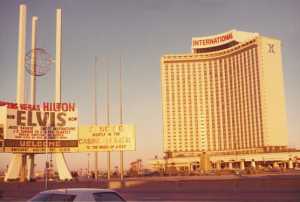
The Flamingo was just the start of his move into the hotel business. The same year he bought the Flamingo, he bought 33 hectares of land for $5 million and built the International, the largest hotel in the world. Barbra Streisand was Kerkorian's first headliner, but the hotel remains synonymous with another superstar. Elvis Presley was seen to be in decline and had been in exile from the stage for nine years. He flopped in Las Vegas back in 1956 but was now ready to return in triumph. He opened at the International on 31 July 1969. Over the next seven years, Presley gave 837 sold-out performances, playing Vegas for one month in the summer and another in midwinter while staying at a 30th floor suite at the hotel.

Kerkorian bought the then unprofitable Metro Goldwyn Mayer (MGM) for the first time in 1969. Kerkorian wasn’t interested in the studio; what attracted him was twofold, the MGM trademark and its Culver City real estate which was where MGM made movies since the silent film days of Hal Roach. Kerkorian proceeded to strip the assets and run down the studio. In 1979, he declared that MGM was now primarily a hotel company. In 1985 he sold the movie business to Ted Turner but bought most of it back 74 days later when Turner’s backers got cold feet (Turner retained the MGM film library which he used as the basis for his Turner Classic Movies channel).

In 1990 Kerkorian sold MGM again to an Italian financier Giancarlo Parretti. But Parretti was unable to turn the movie studio around and was forced to sell up five years later. There was only one bidder: Kirk Kerkorian. But despite a new business plan the movie side of MGM continues to flounder. The endlessly lucrative James Bond franchise remains its only continued success.

Meanwhile Kerkorian was also turning his attention and Midas touch to the automotive industry. Already a holder of 22 million shares, he paid $868 million in 2005 for 28 million GM shares. The deal netted him 9 per cent of the company and made his investment arm Tracinda Corporation (named for his daughters Tracy and Linda) the third largest shareholder of GM. Kerkorian is CEO, president, director and sole shareholder of Tracinda.

Despite his advanced age, Kerkorian shows no sign of slowing down. In April this year, Tracinda made a $4.5 billion cash offer to buy the struggling Chrysler Group from Daimler. Kerkorian also reaches back into his Armenian heritage with his Lincy Foundation. It helped rebuild Armenia after the earthquake of 1988, with millions of dollars in housing grants. They are still active today helping to fund the school and road systems.

Kerkorian remains as optimistic about the health of the Las Vegas resort industry as he was when he arrived in his Cessna in 1945. "Personally, I wouldn't say it's headed for a fall," says Kerkorian, "except that there will be a leveling-out time, and the best hotels and the best operators are going to suffer less than the others." Those who know him describe him not as a hermit in the Howard Hughes fashion, but a gracious normal person. Kerkorian himself claims he is not reclusive. "I have 30- or 40-year friendships that I prefer to meeting new people” he said. “I go to an occasional party, but just because I don't go to a lot of events, and I'm not out in public all the time doesn't mean I'm anti-social or a recluse”. It is not known how he celebrated his 90th birthday.

Thursday, June 29, 2006

Rupert bare

Rupert Murdoch, 75, dropped a heavy hint today that he might throw his significant weight behind David Cameron’s Tories in the next UK election. He told his own Australian newspaper "We would like to see...a stand-off between Brown and Cameron so we can decide which of those most coincides with our views." The move has implications; Murdoch's The Sun has backed every British election winner since 1979.

News Corporation is one of the three largest international media groups, operating across most sectors in every continent. Its total assets as of March 31, 2006 was US$55 billion and has total annual revenues of approximately US$25 billion. Murdoch has massive influence in the British electoral system controlling the broadsheets The Times and the Sunday Times and the tabloids The Sun and the News of the World and the cable television station BSkyB with its 24 hour Sky News service.

Murdoch publishes 175 newspapers, including the New York Post. Other American properties he owns are Twentieth Century Fox, Fox Network (including Fox News), and 35 TV stations that reach more than 40% of the country. In a 2006 poll conducted by Reuters and the BBC, Fox News was named as the most trusted news source in the US with 11% of the vote. Which is a scary statistic if Robert Greenwald’s film “Outfoxed: Rupert Murdoch’s War on Journalism” is to be believed. Fox News has been heavily criticised for its right-wing bias with one voice on Outfoxed saying it was “a 24 by 7 paid commercial for the Republican Party”. It was the first station to call the 2000 presidential election in George W Bush’s favour and wore its pro-American stance proudly during the Iraq campaign.

Rupert Murdoch was born in Melbourne in 1931. His father Keith was one of the legendary figures in Australian journalism. Keith Murdoch got permission to travel to Anzac Cove in August 1915. His report on the mismanagement of the campaign convinced British Prime Minister Herbert Asquith that Gallipoli was a failure. Back in Australia, Keith became a powerhouse when he managed the Herald and Weekly Times Limited newspaper stablein Melbourne. He gained a reputation as a kingmaker whose imprimatur could decide elections. He used this power to stop the newly fledged ABC radio from forming an effective news desk until after World War II. Keith died suddenly in 1952. At the time young Rupert was studying in Oxford. He returned to Melbourne, aged 21, to step into his father’s massive shoes.

His first real job was control of the Adelaide News. He quickly established himself as a dynamic media proprietor and added a string of publications to his stable. His most significant early success was the purchase of the Daily Mirror which gave him a toehold in Sydney, the largest market. In 1964, he created Australia’s first national newspaper, The Australian. This broadsheet gave Murdoch a new respectability.

Murdoch was never just a newspaper man. He bought Festival Records as early as 1961 and he made money from it. It is now merged with Mushroom records under Murdoch ownership. His efforts to get into Australian TV were stymied by cross-media ownership laws. In Paul Keating’s words, Murdoch’s Australian empire would always see him be a Prince of Print rather than a Queen of the Screen.

By the late 1960s, Murdoch was starting to look abroad to further his ambitions. His family moved to Britain and in 1969 he made his first Fleet St purchase. He bought the Sunday newspaper The News of the World beating Robert Maxwell in an acrimonious year-long struggle. That same year he bought an ailing daily paper from the Mirror Group called The Sun. Murdoch immediately relaunched the newspaper as a tabloid, and ran The Sun and the News of the World as sister papers. They used the same printing presses and were managed by the same senior executive team. In 1970 The Sun introduced the concept of the Page Three girl. By 1978 it had replaced the Daily Mirror as Britain’s biggest selling paper. In 1986 Murdoch moved the entire London operation to Wapping where he defeated a journalists strike after a bitter one year struggle. From the papers’ profits, he moved into TV with the Sky satellite channel.

In the early 1970s, he made his first foray into the US market. He bought the Texan San Antonio news in 1973 and the 12th largest circulation paper in the US, the New York Post, in 1976. In 1985, Murdoch became a naturalised citizen to satisfy the legal requirement that only United States citizens could own American television stations. That same year he paid $250 million to buy 20th Century Fox movie studio. His company News Corp then agreed to pay $1.55 billion to acquire independent television stations in six major media markets. These first six stations, broadcasting to 22 percent of the US, became known as the Fox Television Stations Group. Fox was launched in 1986, using the combined resources of the movie studio and new stations. It was broadcast to 96 stations reaching more than 80 percent of the nation's households.

The scale of his empire grew exponential in the nineties. In Asia he is pinning his hopes on Star TV. In 2003, Rupert Murdoch told a congressional panel that his use of "political influence in our newspapers or television" is "nonsense." But critics have suggested that a close look at the record shows Murdoch has imprinted his neoconservative agenda throughout his media empire.

Forbes Magazine currently list Murdoch as the 28th richest person in the world with a personal fortune of $5 billion. Unlike Warren Buffett, Murdoch has no plans to give it all away. A report in today’s Australian says he would prefer to "make a difference" through the social and political influence afforded by his international media empire. "Our assets are not there for the money, our assets are there to try and make a difference as a media company," he said.

In other words, his voracious appetite for acquiring shiny new things is showing no signs of slowing down. The only question now is who will inherit the empire. Second son James Murdoch is now favourite after eldest son Lachlan surprisingly resigned from his executive positions at News Corporation in 2005. James is a director at BSkyB and is likely to lead the drive further into internet and other new media.

For now, Rupert remains healthy and at the reins of control. His entry on MySpace, the online community he bought for $580 million in 2005, describes him as the "Dirty Digger". Thus he reclaims the insult that Auberon Waugh called him in Private Eye.

Lets leave the most pertinent details of Rupert to his myspace entry:
Gender: Male
Status: Married
Age: 74
Sign: Virgo

Virgo: The Mutable Earth sign associated with precision and detail--reading the fine print. Ah, now it makes sense why Murdoch is not a man to mess with when it comes to contracts!

Tuesday, May 09, 2006

The Rabbi Warren?

Yesterday, the Israeli shekel hit an 11-month high against the US dollar after Warren Buffett said he was buying a controlling stake in Israel’s Iscar Metalworking Companies for about $4bn.

Ehud Olmert, Israeli prime minister said of Buffett, “He is not Jewish, nor is he a Zionist. The Israeli economy is such that he believes in it and supports it.” Israel’s economy is on the rebound from the dotcom crash and the impact of the intifada and is expected to record gross domestic product growth of about 5 per cent this year.

Warren Buffett deserves to be better known than he is. Buffett is the second wealthiest man in the world with a fortune that Forbes magazine estimated at $44 billion in 2005. Only his friend Bill Gates has more money and he also has an infinitely higher profile. So who is Buffett and how come he so successfully avoids media glare?

Warren Edward Buffett
is a 76 year old American businessman, investor and industrialist. He is an extraordinarily successful player of the world’s stock markets and has earned the nickname the Oracle of Omaha for his ability to unerringly spot trends ahead of the pack. His runs his business from Berkshire Hathaway a holding company that owns subsidiaries engaged in diverse activities, mainly in property, insurance and manufacturing. Buffett has a 40% stake in the company.

His father Howard was a stockbroker who later became a Republican congressman for Nebraska. Warren was a middle child, the only boy of three siblings. He showed an astonishing aptitude for money and business from an early age. He had a freakish ability to calculate columns of numbers unaided - a feat he still impresses business colleagues with today. At age 11, he bought his first shares. He made money on them but learnt the lesson in patience that he would have made vastly more money had he held on to them for longer. He attended business school where he complained he knew more than his teachers. His lifechanging experience came at Columbia University where he was taught by Ben Graham who is now acknowledged to be the “father of modern security analysis” (It never ceases to amaze Woolly Days how many things have fathers these days.) Graham’s 1934 book “Security Analysis” is considered the classic text on the stock market.

After graduating from Columbia, Warren and his family partners created Buffett Associates, Ltd. In 1956, he was managing around $300,000 in capital. In the next five years his partnerships made a 250% profit while the Dow Jones was up only 75% in the same period. By 1962 he was a millionaire with 90 limited partnerships across America. In 1969 he liquidated all his partnerships but kept Berkshire Holdings, a declining textile company, of which he made himself the chairman. Buffett diversified the company purchasing cheap insurance companies using them to buy equities. He chose managers to run the company that had excellent underwriting and cost cutting skills. Throughout the seventies and eighties his empire continued to grow. He lost one quarter of his paper value in the 1987 stock market crash. In 1988 he started investing in Coca-Cola. Within a few months, Berkshire owned 7% of the company, a billion dollars worth of stock. Within three years, Buffett's Coca-Cola stock would be worth more than the entire value of Berkshire when he made the investment. During the remainder of the 1990s, the stock catapulted as high as $80,000 per share. Buffett ignored the dotcom boom causing many to predict the demise of the Oracle. He was proved right when the technology bubble burst in 2000. Berkshire's stock recovered to its previous levels after falling to around $45,000 per share, and the man from Omaha was once again seen as an investment icon. A billion dollar profit on silver bought in 1997 didn’t hurt either.

Politically, Buffett is a liberal. He was involved in abortion rights issues in the sixties and worked to integrate Omaha's segregated country clubs. But he is no philanthropist, the Buffett Foundation dishes out a paltry $12 million a year, mostly to family-planning clinics. It has also helped to finance trials of the abortion pill RU-486. Buffett has said that 99% of his money will eventually go to his foundation. The vast bulk of this wealth is his personal holding in Berkshire Hathaway. Because this business consists of stock insurance companies, many state insurance regulators may have serious qualms about allowing for-profit insurance companies to be controlled by non-profit entities.

Buffett is still hard at work as his Israeli deal shows. But whether this deal fits into his usual risk averse scenarios is very difficult to see from here.