Showing posts with label Saudi Arabia. Show all posts

Wednesday, March 02, 2011

House of Saud on the verge of a nervous breakdown

Sooner or later the protests that have racked the Middle East and North Africa will finally affect the most undemocratic regime of them all, Saudi Arabia. Arguably that has already happened. Absolute monarch King Abdullah is now 86. Well aware of his own vulnerability, he gave away over $36 billion in benefits to lower and middle income Saudis last week. He also granted thousands of civil servants job security and said he would reshuffle the cabinet. Abdullah rushed back to the country after months of hospitalisation and recuperation in the US and Morocco to make these announcements. No one is under any illusion he wasn’t panicked into action by the wave of protests across the region that threatened to roll across his equally undemocratic border.

Abdullah’s bribery will likely keep the protesters at home for now and the illegality of political parties and public protest are a deterrent. Yet resistance to the power of the Sauds is growing slowly. The Saudiwoman blog says the country is “still on the train heading to revolution town.” The young are unhappy with large-scale unemployment and the conservative grip of the religious police, she said. Older generations are fed up with the corruption, nepotism and the disappearance of the middle class.

Activists are calling for protests on 11 and 20 March but may well be frustrated by police. They stymied two attempts to stage protests in Jeddah last month after they arrested 30 to 50 people. Saudi blogger Ahmed al-Omran said authorities were watching closely what people were saying on Facebook and Twitter. “They are anxious as they are surrounded with unrest and want to make sure we don't catch the bug,” al-Omran said.

Western leaders are also keen the Saudis don’t catch the bug. In 2007 then British foreign office minister Kim Howells infamously talked about Britain and Saudi Arabia’s “shared values”. Meanwhile in October 2010, the US Obama Administration kept the Carter Doctrine alive with the sale of $60.5 billion worth of arms to the KSA which was the biggest arms sale in American history. According to an Israeli study of the sale, the package was totally offensive in nature, with its attack planes, helicopters, and "bunker-buster" bombs, and designed to show the US would stand strongly by its allies. ‘US officials have also begun to refer to the "Persian Gulf" as the "Arabian Gulf," a hot-button issue for the Iranians,’ the study said.

The financial world is also less interested in the democratic desires of ordinary Saudis than they are in the fate of light sweet crude oil futures. Crude was trading at $97.25 a barrel in electronic trading on the New York Mercantile Exchange yesterday having spiked since the start of the year. This has more to do with Libya and issues in Oman and Bahrain but Saudi Arabia remains pivotal to production with the world’s largest reserves. Saudi Aramco have stepped up production since the Libyan revolution started but as the Financial Times points out, oil-dominated economies create few jobs, “especially if they support a bloated royal family that affects not to understand where a privy purse ends and a public budget begins”.

Abdullah’s successor in the agnatic seniority preferred by that 7000-strong royal family is his half-brother Crown Prince Sultan. Sultan, 82 or possibly 86 is just as old, just as unhealthy and just as corrupt as Abdullah. Behind them comes the conservative autocrat Prince Nayef who abhors the idea of reform. The monarchy survived the 20th century thanks to the black gold they controlled and their alliance with the Wahhabists that control religious affairs. The end of the carbon economy would have killed them anyway but with everyday Saudis unwilling to wait, the days of authority of both these ancient institutions are likely to be numbered.

Tuesday, September 08, 2009

Yemen continues its war with Houthi minority

A ceasefire between government forces and rebels in Yemen has been interrupted by sporadic clashes barely a day after it was called to allow humanitarian aid to reach stranded civilians. Fighting between Yemeni government forces and the rebel Houthi group in the north of the country has caused a growing humanitarian situation as civilians become increasingly caught up in military activities. There has been no water or electricity in Saada City since mid August and food reserves are running low. According to the UN, over 100,000 people have become refugees in the Saada region which borders Saudi Arabia (pic of Yemeni capital Saana by Ahron de Leeuw).

The Saudis are particularly worried the conflict between the mainly Sunni Yemenis and the Shia Houthis will spill across the border and inflame that country’s own Shia minority. Houthis in the guise of a shadowy group called “The Believing Youth” have been fighting since 2004 are seeking independence from a corrupt government which is too reliant on Saudi Arabia. Yemen claims they are supported by Iran and says its leader Husayn al-Huthi sought refuge in Iran in 2004 during the initial stages of the conflict. Though the two sides signed a peace deal in Qatar in 2007, there have been repeated violations. Unverifiable estimates of casualties vary widely but likely run into a thousand or more dead.

While the government gained control of Saada City, the rebels continued to operate with impunity from the nearby rugged mountains. In the latest action, the government had waged a "Scorched Earth" operation for three weeks. The campaign targeted mountain rebel hide outs and they also subjected major cities such as Dhayan to repeated and intense bombing. With food, water and medicine at critical levels, the government agreed to observe a ceasefire on Friday in response to requests from aid agencies. But fighting broke out again just hours later.

The humanitarian community organised a Flash Appeal which was due to be launched last Wednesday. The UN refugee agency UNHCR planned to address humanitarian needs of approximately 150,000 refugees and tens of thousands of others indirectly affected by the conflict. The plan involves moving camps out of the direct line of fire, ensuring all refugees are unarmed when they arrive at camps, and providing shelter, food and non-food items to displaced people. But the precarious ceasefire has left UNHCR unable to mobilise and its top priority now is to open humanitarian corridors to allow civilians to leave the conflict zone and humanitarian workers to deliver aid.

The ongoing Sadaa war is not the nation’s only challenge. Yemen is one of the poorest countries in the Arab world. Disappearing oil reserves, refugees flooding in from nearby Somalia and a weak government give it the potential to be a failed state. Its most pressing challenges are high unemployment, high population growth, and an uneasy security environment with four troublesome regions (including Sadaa). But the country has plenty of opportunities for growth: Yemen has a complex culture befitting its 3,000 year history and was known as "Felix (Happy) Arabia" to the Romans for the fertility of its lands. It is mineral-rich, there is great potential for tourism development and its strategically placed ports connect the Red Sea, the Gulf of Aden, and the Indian Ocean.

Yemen’s sub-governor for foreign banking operations, Ibrahim al-Nahari told Reuters that gas exports is their big hope. Liquefied natural gas (LNG) shipments from the $5 billion Yemen LNG project should come online later this month which will make up for oil revenues which are declining due to lower prices and declining production. "Hopefully the price of oil will increase so that we don't have to spend more or sacrifice more reserves," he said, adding that current reserves covered 8 or 9 months of imports. "Whether we like it or not, we depend too much on oil." A genuine willingness to talk peace with Huthis would help too, whether they like it or not.

Wednesday, April 01, 2009

Arab League Summit ends in Gaddafy chaos

The troubled Arab League Summit has ended in disarray after Libyan leader Muamar Gaddafy launched a blistering attack on the Saudi King Abdullah over his links to the US and Britain. Although his mike was eventually switched off by Qatari television, Libyan state television reported that Gaddafy was incensed Abdullah had not visited him in six years. After making his impassioned speech, Gaddafy then got up and walked out of the summit hall while Arab League head Amr Moussa was speaking.

The speech displayed an extraordinary sensitivity to Gaddafy’s role in history. Libyan official JANA news agency was there to publish the full text of his words "I am the leader of the Arab leaders, the dean of Arab rulers, the king of kings of Africa and the imam of the Muslims," proclaimed Gaddafy to Abdullah. "I am ready to visit you and for you to visit me..I tell my brother Abdullah, that you have avoided me for six years and you are afraid to confront me.” But Gaddafy didn’t stop there and criticised Abdullah over his links to the West. "You are a product of Great Britain and protected by the United States," he said. "Out of respect for the (Arab) nation, I consider the personal problem between us over and I am ready to visit you and to welcome you to Libya."

Gaddafy then stormed out of the meeting with aides saying he was off to visit a museum. Host Qatar held a reconciliatory summit between the Libyan leader and King Abdullah. Gaddafy’s personal envoy said the meeting was “friendly and frank” and said there were no differences between Libya and Saudi Arabia. “There was misunderstanding and it’s over now,” claimed the envoy.

These weren’t the only differences at the conference. Major regional power Egypt did not attend because of the League’s perceived drift towards outright anti-American attitudes. However President Mubarak did send a message to the Summit that claimed Egypt was keen to achieve a genuine Arab reconciliation. The message claimed Egypt was keen to achieve the Palestinian unity and to rebuild Gaza. In a possibly very dodgy cooking metaphor, Mubarak claimed Egypt was also interested in “marinating” Sudan's unity and territorial integrity. He said Egypt supports the Sudan in its crisis with the International Criminal Court (ICC) arrest warrant against Sudanese President Omar Al-Bashir.

Beside’s Gaddafy’s strop, this year’s hot issue is the appearance of Sudanese leader Omar al-Bashir who has an arrest warrant out for him from the International Criminal Court (ICC). Bashir was treated with respect by Qatar which is not a signatory to the ICC (but is in good company; neither are the US, Russia, China and India). The final communiqué of the meeting rejected the warrant and wanted continuation of talks between the Sudanese government and anti-government groups on Darfur under the mediation of Qatar. "We emphasis our solidarity with Sudan and our dismissal and rejection of the decision handed down by the International Criminal Court,” read the communiqué. “The decision to arrest Bashir was aimed at undermining the unity and stability of Sudan".

The league’s solidarity behind Sudan is testament to its bonds. This is the 21st summit since the Arab League was founded in 1945 and after a slow start has been an annual event since 2000. Egypt’s absence at this year’s summit is particularly poignant as it was their suggestion to decide to form the League and adopt its Charter. There are 22 member states and the Summit is the League's highest organ of power, as well as being the Arab world's top-level forum devoted to the discussion of major regional issues. Where better for a grandstanding Gaddafy to strut his stuff.

Saturday, June 07, 2008

Sayyid Qutb: the father of Islamism

The name Sayyid Qutb is little known outside the Muslim world but he is a significant voice of the 20th century. Although dead for over 40 years, he and his movement the Muslim Brotherhood remain a giant influence on Islamic politics and a guiding light for radical Islamists. In the last month, Qutb's name has been all over the news. The International Herald Tribune's HDS Greenway said Al Qaeda drew their inspiration from him. The Pakistan Christian Post gives an interpretation of Sufism drawn from Qutb’s writings. The American Family Security Matters said Islamic youths were rebelling “in the footsteps of Qutb". Indian Muslims calls him a pioneer of contemporary Muslimism and British theological think-tank Ekklesia calls him “the father of modern Islamism”.

Born in Egypt in 1906, Sayyid Qutb is now also considered the guide of the modern jihadi movement. Hia book Milestones (written in an Egyptian prison) is now a standard in Islamic education and is an honoured text of jihadi groups. Yet in many respects, Qutb was quite ordinary. He worked for the Egyptian ministry of education as an inspector of schools where he gained a reputation as an intellectual. In 1948 he did a scholarship at Colorado State College of Education to study the US educational system. He didn't like what he saw in America. A conservative Egyptian, he loathed the licentiousness he saw around him. He opposed Western imperialism and materialism and was appalled by the immorality and corruption of the Christian West.

Qutb was influenced by the ideas of Maududi, the man who founded Jamaat-e-Islami in British India (now Pakistan) in 1940. Maududi in turn, was inspired by Ibn Wahhib whose 18th century conquest of the Arabian peninsula was based on the idea of a purer Islam. Maududi was translated into Arabic and his ideas spread across the Muslim world. Qutb acknowledged his influence saying the freedoms of Western women were an illusion. In his view a woman is better protected by the paternal Islamic state rather than be a sex object for by any random passer-by. Qutb's ideas spread through the Brotherhood.

The Muslim Brotherhood (Jamiat al-Ikhwan Muslimum) began after the collapse of the Istanbul caliphate in 1924. In Egypt, Hasan al-Banna was upset by his country’s new secular constitution. Al-Banna was a schoolteacher who hated the evils of modernity. Like Maududi in India, he wanted his new state to become Wahhabist. Al-Banna found the Brotherhood in 1928 with a manifesto which read: “God is our purpose, the Prophet our leader, the Koran our constitution, Jihad our way and dying for God our supreme objective”.

But the short-term objective was to survive. In its first 10 years, the Brotherhood was preoccupied with recruitment and propaganda against modernisers and communists. Critically Al-Banna kept his organisation aloof from the growing Egyptian pro-Nazi movement. Under the front of a social movement, he developed the Brotherhood’s political credentials. After World War II, he collaborated with the British against the Communist Party by unleashing a terror campaign against left wing leaders. They also bombed theatres and attacked Jewish interests.

In 1948 the Brotherhood killed the head of police, which was one step too far in their extra-judicial campaign. The Farouk Government responded by banning them. In retaliation, they assassinated Prime Minister Nuqrashi Pasha. In a tit for tat,a government agent killed al-Banna. His loyal deputy Sayyid Qutb was appointed Supreme Guide. Qutb was highly respected for his resistance to compromise, his honesty, integrity and his austere lifestyle.

By then, the movement had grown to 250,000 members and was a significant threat to state power. In 1952, the Free Officers led by Gamal Abdul Nasser launched a coup against British interests and forced Farouk to abdicate. Four of the 18 Free officers were Brotherhood members. Nasser turned on the Communists and took over in a de facto alliance with Qutb who had one third of the power.

But when the Brotherhood demanded Shari’a Law in Egypt, Nasser turned on them. They were banned again in 1954 and Qutb and others were arrested. In prison he wrote Ma'alim fi'l-tareeq ('Sign-posts on the Road'), usually translated as Milestones). It became an international bestseller and an inspiration for global jihad after his death in 1966. Some scholars called the book turgid, repetitive and uninspiring, but it had massive impact on later generations of Muslims.

The core of Qutb’s ideas is a return to ths supposed purity of the earliest Muslims. This is jihad in the name of Allah and his prophet Muhammad and social justice according to the laws of God. Qutb said Islam abandoned its purity in the generation that followed Muhammad and only a return to the “true faith” could save it. A two-phase jihad was needed. Preaching and persuasion would be followed by physical power to abolish an oppressive state apparatus. His bleak message was a direct challenge to Nasser’s secular regime.

The Brotherhood remained active despite Qutb’s arrest and launched several attempts on Nasser’s life. Three attempts in 1964 were the last straw. Mass arrests followed. Already in jail, Qutb was charged with treason and plotting a Marxist coup. After a show trial he was executed in 1966.

His legacy was preserved by his brother Muhammad who fled to Saudi Arabia where he became an influential professor of Islamic studies. Among those to study under Muhammad Qutb was Osama Bin Laden. Bin Laden’s al-Qaeda network borrowed directly from Sayyid Qutb’s ideas of jihad. More importantly, Qutb shows the US and Israel are not Al-Qaeda’s targets. What they want is the abolition of the corrupt Saudi regime and the liberation of the holy cities of Mecca and Medina in the name of a purer Islam.

Saturday, February 16, 2008

Saudi Arabia and Wahhabism: a toxic combination

The Kingdom of Saudi Arabia is in the news for yet another of its barbaric practices. This time it is the story of a woman about to be executed on a charge of witchcraft. The court convicted her on the evidence of a man’s claim she had made him impotent and also that of a divorced woman who reportedly returned to her ex-husband during the month the accused woman predicted. The woman, Fawza Falih, also made a forced confession which she later retracted. She told the court she was illiterate and did not understand the document she was forced to fingerprint.

Human Rights Watch said the charges were absurd and had no basis in Saudi law. Saudi Arabia does not have a written penal code, and “witchcraft” is not a defined crime. HRW have called on King Abdullah to halt the execution. They said judges never investigated whether her confession was voluntary or reliable nor did they investigate her allegations of torture. They also did not enquire whether she could have been responsible for the supernatural occurrences she supposedly did. Instead, the court judges sentenced her to death for the benefit of “public interest” and to “protect the creed, souls and property of this country.”

Of one thing there is no doubt and that is the creed, souls and property of Saudi Arabia need protection; but the danger does not come from witchcraft. The real problem with the oil-rich kingdom is the nefarious alliance between the ruling House of Saud and its venomous court of Wahhabi scholars, the “uluma” that is a key part in Saudi decision making. Not only do the uluma rule on the law, they are also responsible for spreading a toxic brand of intolerant Islam that is spreading across the world. Funded by the world’s largest oil reserves, it is an alliance that has directly led to the rise of Al Qaeda and 9/11 and is responsible for sponsoring an education of hatred in Saudi-funded madrassas in the Third World and beyond.

The story of this alliance and its terrible consequences for the world is brilliantly told in Dore Gold’s “Hatred’s Kingdom: How Saudi Arabia supports the new global terrorism” (2003). Gold is a partisan: He is an Israeli and the president of the Jerusalem Centre for Public Affairs who served as Israel’s ambassador to the UN between 1997 and 1999. But he is also superbly knowledgeable about Greater Middle East affairs. He was a diplomatic envoy to the leaders of Egypt, Jordan, the Gulf States and the Palestinian Authority. He also has a PhD in International relations and Middle Eastern studies and is a world-renowned expert on Saudi Arabia.

Gold's thesis in Hatred’s Kingdom is America has grossly overlooked Saudi Arabia’s role in the promotion of international terrorism. In fact, says Gold, Saudi is responsible for Middle-Eastern inspired terror. The cause is its dominant religious creed: Wahhabism, which regards all non Wahhabists (not just non-Muslims) as “mushrikun” (polytheists), or idolaters. According to Saudi religious textbooks, mushrikun have no rights to live and it is permissible to “demolish, burn or destroy” the bastions of these infidels. Gold says the Wahhabists who preach this dangerous nonsense are not extremist “Saudi versions of the Ku Klux Klan”, but are instead the product of Saudi mainstream society and culture and are sponsored by the government.

The founder of Wahhabism was Muhammad ibn Abdul Wahhab who was born around the start of the 18th century in a village in east central Arabia. His father was a qadi (a religious judge) and he instilled a love of learning of Islamic law in his son. Wahhab travelled to Medina where he learned the Hanbali Islamic tradition and later moved to Baghdad and Damascus where he learned the ways of the Shiites and the Sufi. He became an exponent of mystical Sufism but later abandoned it. On his return to his homeland, he announced that Islam had been corrupted by foreign influences. In his Book of Tawhid, he expounded on his view of Islam which was a rejected of all Gods except Allah. He also denounced the veneration of tombs as a Christian influence. In the name of strict monotheism, he launched a jihad against the mushrikun (polytheists).

Wahhab antagonised the local uluma (religious leadership) with his extremist ideas and was expelled from his home town. He sought refuge from the ruler of Riyadh Muhammad ibn Saud. Wahhab married Saud’s daughter and the two men launched an alliance that survives to this day. Saud would provide military protection for Wahhab while the latter would legitimise Saudi rule over local Bedouin tribes subjugated by jihad.

The Wahhabists were brutal to their enemies. If captured, they were offered the choice of conversion to Wahhabism or death. Unlike most Muslims, they gave no respite to the “people of the book” (Jews and Christians). Wahhab himself advocated an anti-Christian and Jewish agenda describing believers as “sorcerers who believed in devil worship”. Wahhabi writings elevated jihad to the “ultimate manifestation of Islam”. When ibn Saud died in 1765, the cause was taken up with relish by his son Abdul Aziz. Wahhab himself died in 1791 but the Saudi empire expanded in his memory. In 1802 an army of Wahhabists attacked the southern Iraqi city of Kerbala. There they massacred 4,000 Shiites and sacked the shrine of the tomb of Hussein, the martyred grandson of the prophet Muhammad.

The Saudis stormed Mecca in 1803 where again they attacked shrines including the chapel on Jebel Nur mountain where Muslim traditions says the angel Gabriel brought the Koran to Muhammad. Controlling the entire Arab peninsula they were now a serious threat to the Ottoman Empire. The empire fought back led by the Albanian born governor of Cairo Muhammad Ali who launched a series of raids across the Red Sea. French trained Egyptian forces retook the cities of Mecca and Medina and captured King Abdullah in 1818 to end the first Saudi reign.

But the Saudi-Wahhabi alliance was to survive this setback. After the Egyptian army was forced to withdraw to bases in the 1840, the Saudis retook Riyadh with Wahhabism firmly seated at the centre of power. This second Saudi state was terminated in the late 1860s by an Ottoman Empire revived by the newly built Suez Canal. But this was a temporary respite for the Sick Man of Europe. Britain was starting to assert its influence on the region. They struck an alliance with a new Saudi leader. Abdul ibn Saud returned to power in Riyadh in 1903 with help from Lord Curzon’s naval flotilla in the Persian Gulf.
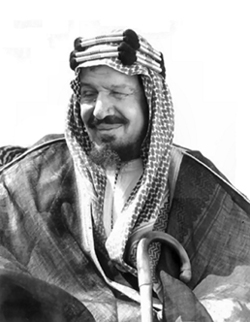
Ibn Saud co-opted his old family allies the Wahhabists and provided them with funds and religious instructors. In World War I, Britain took control of all of the old Ottoman Arab territories and established a relationship with Sharif Hussein, the Hashemite ruler of Mecca since 1908. The end of the war meant that the map would need to be redrawn to establish the border between Hussein’s and Saud’s kingdoms. Wahhabi armies terrorised its neighbours but were hemmed in by the airpower of the RAF.

When the new Turkish republic abolished the Ottoman caliphate, King Hussein proclaimed himself caliph. An enraged Saud declared a jihad against the Hashemites. The war was enthusiastically pursued by the Wahhabists who wanted to “purify” the holy cities of Mecca and Medina. Hussein abdicated and his son Ali fled to Iraq in 1925. Seeing the changed landscape, Britain transferred the northern cities of Maan and Aqaba to Hashemite Transjordan. Saud returned in triumph to Mecca.

The greater Muslim world was appalled by the Saudi government of the Holy Cities. Indian Muslims called for an internationalisation of the Hijaz area and the Egyptians also voiced their disapproval. Ibn Saud succeeded in calm Muslim fears by declaring they had nothing to fear from Wahhabism. But quietly the movement was building up a new head of steam. In 1928 Muhammad Rida set up a new militant movement in Cairo called the Muslim Brotherhood. Rida espoused Wahhabi doctrines and was now about to export them overseas.

Back in Arabia, ibn Saud was suffering from the world’s Great Depression. With his country on the verge of bankruptcy he signed a deal in 1933 with Standard Oil of California (SOCAL) to grant them a huge oil concession in Eastern Arabia. They struck oil five years later and Saudi royalties grew fast as war demand grew. Saudi royalties went from $3 million in 1938 to $10 million in 1946. By 1952 that had increased to $212 million. The Wahhabi uluma were not happy about the “infidels” in their country but bought ibn Saud’s argument they were helping to extract the material resources “placed by Allah” underneath the land.

In return for their support, ibn Saud allowed the Wahhabis a monopoly over education and religious policies. After ibn Saud died in 1953, his weak second son, Saud became king. Saud terminated the US airbase in Dhahran and plunged his country’s finances into disarray. The uluma deposed him in 1964 in favour of his younger brother Faisal. Faisal’s mother was a direct descendent of the original Muhammad Wahhab and her father was a major Wahhabi scholar.

As a counterweight to the secular Arabism espoused by Egypt’s Nasser, Faisal turned to Islam. Arabia established the Muslim World League dedicated to the spread of the religion. The League became a mouthpiece for Saudi Arabia, run by Saudi government employees and was an effective promoter of Wahhabi Islam. At home, Faisal created new government ministries in 1970 and the Wahhabists won control of justice and education, including universities. The entire generation of Saudis born in the 1960s grew up on Wahhabi doctrines.

Faisal gave renewed powers to the mutawain (religious police). They scrutinised public behaviour, ensured men and women did not mingle, checked for suitable attire, and made sure people attended public prayers. Thanks to Faisal they were given back powers of arrest, which they had lost in the 1930s under ibn Saud. Meanwhile Saudi oil revenue was skyrocketing. They earned $22.6 billion in 1974 and funds were becoming available for the export of Wahhabism.

Riza’s Muslim Brotherhood had suffered under Nasser in Egypt and many members had fled to Saudi Arabia. There they became prominent scholars and were influential in the creation of the Islamic University of Medina. The Brothers had a great deal of affinity with the Wahhabists. The university was directly controlled by Wahhabi clerics and it quickly became a hotbed of Islamic militancy. Later 85 percent of the university’s students would be foreigners, making it a crucial tool for the export of Wahhabi ideas.

The university also imported Muslim brotherhood ideas especially from the hugely influential Egyptian writer Sayyid Qutb. Qutb spend some time in the US where he became extremely anti-American. He predicted a clash of civilisations between Islam and the West which Islam would win. Although executed by Nasser, Qutb’s call for a militant jihad was taken to Arabia by his brother Muhammad who taught Islamic studies in Jeddah. In the 1980s Saudi Arabia welcomed another Egyptian radical Ayman al-Zawahiri who had been jailed for a part in Sadat’s assassination. Later he would leave for Afghanistan where he became Al Qaeda’s second-in-command and chief ideologue.

A lesser known but equally important import was the Palestinian scholar Abdullah Azzam. Azzam was also a member of the Muslim Brotherhood and he joined Muhammad Qutb at Jeddah University. There Azzam and Qutb were both teachers of a young Saudi student named Osama Bin Laden. Azzam was instrumental in the resurgence of jihad as a central facet of Islamic fundamentalism and said it was “obligatory on all Muslims”. The Russian invasion of Afghanistan was the trigger Azzam needed to preach jihad. He went to Pakistan where he ran the Muslim World League office as a terrorist front. This office would become a feeder for Bin Laden’s later network. Although successful in removing the Russians, he was killed in 1989 by a car bomb, probably planted by Afghanistan’s pro-Soviet intelligence services.

Azzam’s effective successor was his Saudi student Osama Bin Laden. Bin Laden was heavily influenced by his Wahhabi upbringing. He was immersed in officially sanctioned Saudi religious texts that labelled Christians as “polytheists” which effectively removed the protection they were owed as “people of the book”. This teaching also influenced Juhaiman al-Utaibi who attacked Mecca’s grand mosque in 1979 taking hundreds of hostages. He declared himself to be the “mahdi” (guided one). Al-Utaibi held a particularly pure strain of Wahhabism believing Muslims should not have any contact with the kufar (infidels) and called the Saudi regime corrupt. After two weeks, Saudi troops stormed the mosque and killed and executed the kidnappers.

However the rattled government began to take on al-Utaibi’s ideologies. Women were banned from appearing on television. Music disappeared from the media. Stores closed during daily prayers and the religious police were granted further prohibitive powers. Wahhabists were angered by the US build up in the region in response to the Iranian revolution and the Carter Doctrine. The Saudis supported the Iraqi Sunni Saddam Hussein in his war against the hated Shiite Iranian leadership. Meanwhile they poured $4 billion towards the Afghan mujahideen via Azzam’s Peshawar office. After Azzam was killed, Bin Laden evolved the movement into Al Qaeda. Bin Laden was dedicated to the task of spreading Wahhabism in Afghanistan. Saudi Arabia supported the Taliban militia who had similar radical ideas about Islam. The Saudis were one of just three countries (Pakistan and UAE were the others) to recognise the Taliban rule of Afghanistan.

But the biggest impact to the homeland was the Iraqi invasion of Kuwait in 1990. Overnight, Saudi Arabia’s 1980s ally was now its primary enemy. King Fahd (who inherited the throne after Faisal’s assassination by his nephew in 1975) consulted the uluma and reluctantly allowed an American force into the country. After the 1991 Gulf War thousands of US troops roamed the country even setting up their own radio station which could be picked up across the kingdom. Their presence fed a huge sense of anti-Americanism. The uluma began to tell Fahd the real enemy was not Iraq – but the west. In 1994 Fahd denied Bill Clinton’s request to agree to host a US armoured brigade.

Bin Laden meanwhile had moved to Sudan on the invite of local Islamic leader Hassan al-Turabi. There he established contacts with Zawahiri’s Islamic Jihad, Hezbollah, Hamas and Algeria’s Front Islamique du Salut (FIS). Bin Laden sent forces to oppose the US in Somalia and an affiliated group bombed the World Trade Center in 1993. He also attacked King Fahd as not sufficiently Wahhabi. But he was not in favour of the overthrow of the Saudi monarchy. He supported Crown Prince Abdullah who succeeded Fahd in 1995. Abdullah was noticeably less pro-Western. In 1998 Bin Laden called for a jihad “against Jews and Crusaders” and lambasted the American “occupation” of the lands of Islam’s holiest places. He was supported within Saudi Arabia by mosque sermons which were full of anti-Jewish themes. The Clinton administration put pressure on Sudan to extradite Bin Laden but Saudi Arabia refused to take him. He was expelled to Afghanistan instead in 1996.

In 1998 Al Qaeda struck the US embassies in Kenya and Tanzania killing 240 people. Two years later they bombed the USS Cole in port in Yemen. Saudi citizens and money were responsible for all three attacks. On 11 September 2001, 15 Saudi citizens and four others hijacked four airplanes attacking the Pentagon and destroying the World Trade Center at the second attempt. Saudi Arabia denied all involvement. Yet within days of the attack, Saudi Sheik Hamud al-Shuaibi issued a fatwa announcing “whoever supports the infidel against Muslims is considered an infidel”.

The Saudis had a deep PR problem and they paid US advertising company Burston-Marsteller $2.7 million to place ads in American media depicting Saudi Arabia as a staunch ally. They paid retainers to Congress insiders and paid Patton Boggs to educate congressmen and their staff on issues of concern to the kingdom. Back home however, a confidential poll of Saudi men found 95 percent approval of Bin Laden’s cause. Meanwhile, the religious police showed their contempt for human values when in 2002 they prevented Saudi firemen from rescuing 15 girls caught in a school fire in Mecca because they were not wearing their headscarves.

Though Abdullah took responsibility for girl’s education away from the Wahhabists in response to the Mecca fire, he cannot afford to unduly rock the boat. The uluma’s power remains strong. Wahhabi hatred remains at the core of Saudi society. Through the Muslim World League and the sponsorship of madrassas and Islamic universities they have taken this peculiarly Arabic version of Islam across the globe. Oil money has spread what Bernard Lewis called “this fanatical, destructive form of Islam” all over the Muslim world and among Muslims in the west. Without oil, they would have remained a lunatic fringe. Instead they are a serious world power dedicated to hatred. And a poor illiterate witch pays the same price for this hatred as the Western mushrikun.

Monday, January 07, 2008

Saudi blogger Fouad al-Farhan imprisoned without charge

The father-in-law of detained Saudi Arabian blogger Fouad al-Farhan has visited him in a Jeddah prison where he has been held for 27 days without charge. It was the first time Saudi authorities had allowed access to al-Farhan who runs a blog that discusses local political and social issues. The National Society for Human Rights (NSHR) has cited Saudi law saying he should now be given access to a lawyer. While authorities have not outlined the reason for his detention, the Saudi interior ministry said al-Farhan was being held for "interrogation for violating non-security regulations".

The Committee to Protect Journalists (CPJ) wrote a letter on 2 January to King Abdullah protesting against al-Farhan’s month-long detention without charges. The CPJ found it “deplorable that Saudi authorities would continue to hold our colleague in near secrecy after nearly a month” saying it violated the most basic norms for free expression. They also said the detention ran counter to official Saudi statements in support of reform and a more open press. They urged the king to “use all his influence” to ensure al-Farhan’s release.

Fouad al-Farhan took the dangerous step of refusing to hide behind a pseudonym. The 32 year old al-Farhan blogs in Arabic at “AlFarhan” and has also posted in the English-language group blog Good Morning Jeddah (though not since 2006). He describes his mission as "searching for freedom, dignity, justice, equality, public participation and other lost Islamic values.” The site has now been transformed into a campaign for his release. AlFarhan is one of the most widely read blogs in Saudi Arabia.

Fouad al-Farhan is one of the pioneers of Saudi blogging. He was born in 1975 in Taif, in western Saudi Arabia, and received his higher education in the US. Al-Farhan has been a reader of blogs since the beginning of the blogging revolution. With his own blog he wanted to express his “freedom, ideas, and hopes, publicly”. But he did it too publicly for authorities’ liking. On 10 December al-Farhan was detained by Saudi security agents at the Jeddah office of the IT company he owns. Security agents later visited al-Farhan’s home and confiscated his laptop. It is not known where he is being held and police have provided no reason for his arrest.

Al-Farhan was expecting to be arrested. He sent an email to friends in the week prior to his arrest where he said he received a phone call from the Saudi interior ministry. The call said to prepare himself “to be picked up in the coming two weeks” for an investigation by a high-ranking official. Al-Farhan wrote in the email why he thought he was about to be arrested: “The issue that caused all of this is because I wrote about the political prisoners here in Saudi Arabia and they think I’m running an online campaign promoting their issue.” The e-mail is now posted on his blog.

Al-Farhan is the first Saudi blogger to be arrested. There are an estimated 600 bloggers in Saudi Arabia writing in English and Arabic. They are male and female, conservative and liberal and mostly blog anonymously. The biggest problem writers in Saudi Arabia face is the country’s conservative religious establishment. They act as a powerful lobbying force against progressive coverage of social, cultural, and religious matters. Actors in this field include official clerics, religious scholars, the religious police, radical revivalist preachers, and their followers. Government officials will appease this religious constituency by dismissing editors, blacklisting dissident writers, ordering news blackouts, and admonishing independent columnists to deter undesirable criticism especially over religious issues. This is price Saudis pay for the long-term alliance between the ruling Al-Saud family and followers of the 18th-century cleric Muhammad Ibn Abdel Wahab, whose strict teachings form the basis of the country’s official Wahhabi doctrine. The Al-Sauds wield political power while the Wahhabi clergy provide spiritual authority in return for bestowing legitimacy to the Al-Sauds rule.

The result is that Saudis are free only to speak about religion and politics in non-Saudi publications or other venues. Because public gatherings and political parties are banned, Saudis need to be creative in order to speak candidly about the administration or the religious authorities. Therefore they discuss issues in venues such as private homes, in salons or discussion groups known as “diwaniyas”, in coffee shops, on satellite television, or increasingly, on blogs.

With its population of 23 million, Saudi Arabia has one of the highest internet penetration rates in the Arab world. Blogging provided a platform for women to criticise their male-dominated society. Meanwhile the now defunct Religious Policeman written by an anonymous Saudi living in Britain, exposed the hypocrisy of the kingdom's Commission for the Promotion of Virtue and Prevention of Vice, (religious police) who enforce the country's strict Islamic moral code. Unsurprisingly his blog was banned in his homeland. Appearing on Reporters Without Borders “internet enemies” list, Saudi Arabia’s censorship is rife and targets pornographic content, Israeli publications and homosexuality as well as opposition websites.

Saudi political censorship is in direct contravention of Article 19 of the UN's Universal Declaration of Human Rights which that all people have the right to freedom of opinion and expression including the right "to seek, receive, and impart information and ideas through any media and regardless of frontiers." Unsurprisingly the autocratic Saudi regime prefers the out clause that Islamic nations put into the 1990 “Cairo Declaration on Human Rights in Islam” which states that “everyone shall have the right to express his opinion freely in such manner as would not be contrary to the principles of the Shari’ah”. As Fouad al-Farhan has found out, there but for the grace of god goes free speech in Saudi Arabia.

Tuesday, September 04, 2007

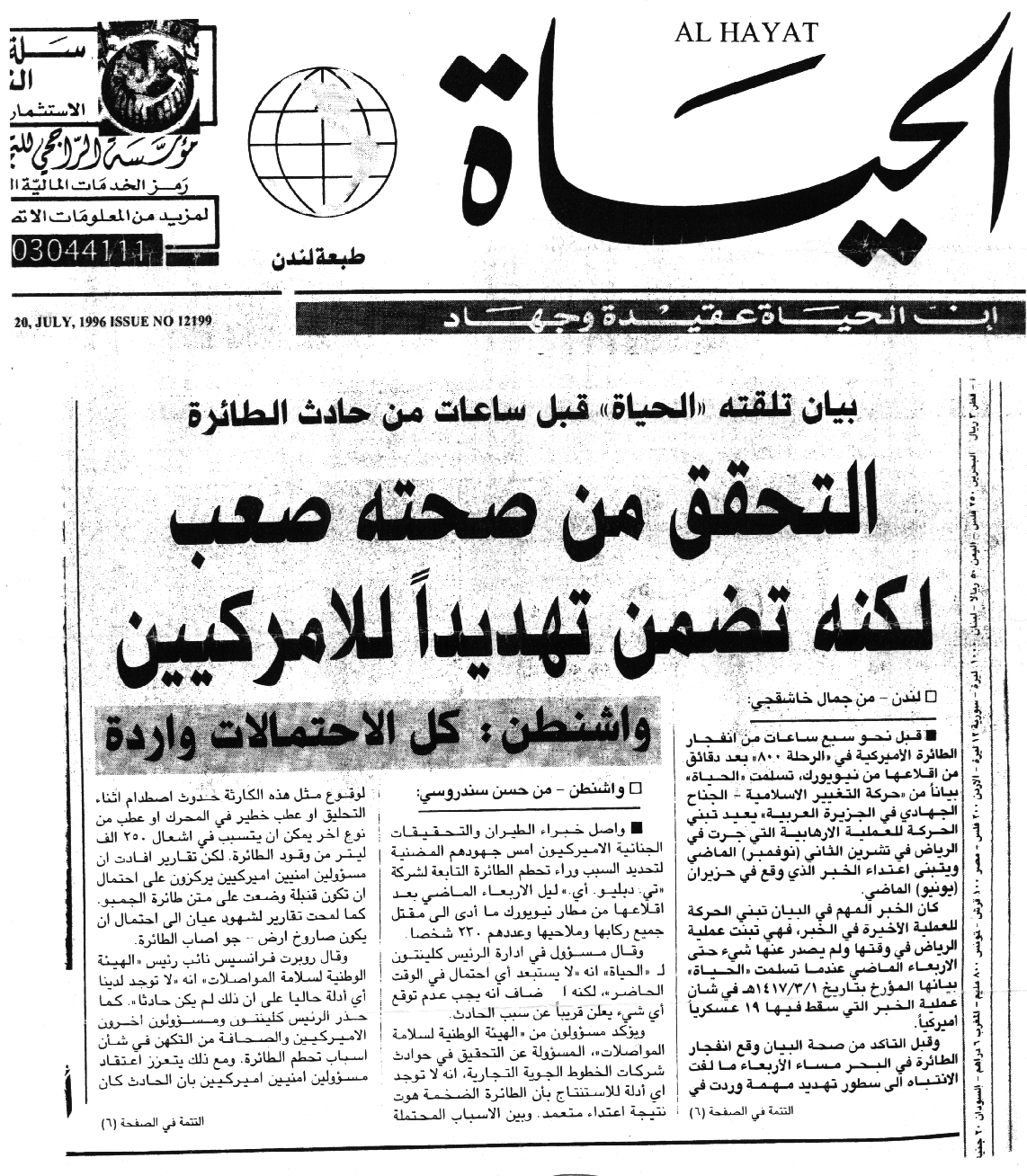
Saudi Arabia lifts ban on Al-Hayat

Saudi Arabia has lifted its four day ban on pan-Arab daily Al-Hayat. The internationally published influential newspaper, had been banned by Riyadh who tried to unsuccessfully pressure the paper into firing columnist Abdelaziz Al-Suwaid. Al-Suwaid had recently published articles critical of the Saudi administration. He castigated the agricultural ministry’s handling of the mysterious death of some 2,000 camels and also blamed the health ministry for the death of a young girl from a medical operation. A Saudi government spokesman would only say “There was a misunderstanding with the Ministry of Information which has now been cleared up”.

Al-Hayat has a circulation of 300,000 across the Arab world. Printed simultaneously in London, Frankfurt, Cairo, Bahrain, Beirut and New York, it describes itself as the “foremost international daily newspaper for the Arab-speaking market”. It speaks out to a large disaffected and mainly liberal Arab diaspora. The newspaper was founded in Beirut in 1946 and quickly became one of the most respected publications in the Arab world. Its founder-editor, Kamel Mrowa, was assassinated in his office in 1966, and it ceased publication ten years later during the Lebanese civil war. Al-Hayat was relaunched in London in 1988.

The paper’s Saudi edition is believed to have the second-largest circulation of any newspaper in the kingdom at 200,000 copies per day. Access to information is rigorous controlled in the Saudi kingdom and this is not the first time Al-Hayat has been banned. In 2002, Saudi censors banned a single edition of the paper for printing an open letter from 67 American intellectuals defending the US campaign against terrorism and calling on Saudi intellectuals to denounce extremism.

The Saudis also actively monitor and censor internet use. The Riyadh-based "King Abdel Aziz City for Science and Technology" (KACST) is the only legal ISP and uses British-developed filtering software to exclude websites the government does not approve of. By 2004, it had banned 400,000 sites on the pretext of protecting Islamic values. As well as banning religious, political and sex sites, it has also banned sites for commercial purposes. The government banned the websites of phone line companies in its attempt to grant the Saudi Communications Company a monopoly over telephone connections in the country.

Internet cafes are also strictly monitored. Saudi security forces require net cafes to record the names of their customers, the number of their IDs, the time they arrived, and the time they left. This information must remain with the cafe for a period of more than six months and must be delivered to state security upon request. Additional regulations forbid a person under the age of 18 from entering the premises unless accompanied by a guardian.

Blogs are a major problem for the censors. In 2005 they tried to completely bar access to Google’s blogger.com. However they gave up after a few days and now just censure blogs they object to, including Saudi Eve, the diary of a young woman who discusses her love life and criticises government censorship. Despite the drawbacks, Saudi Arabia continues to maintain a high number of active bloggers with an estimated 500 to 600 bloggers. They use pseudonyms to express themselves freely and hide their identity so that the authorities will not be able to punish them for expressing their views.

Not surprisingly, Reporters Without Borders rank Saudi Arabia as one of world’s biggest enemies of press freedom. The Saudi regime maintains total control of all news and self-censorship is pervasive. Enterprising journalists pay dearly for the slightest criticism of the authorities and two were sacked last year for going beyond the limits set by the dominant ultra-conservative religious authorities. Most locals get their news from outside sources however Qatar-based satellite station Al-Jazeera has been banned in Saudi Arabia for the last four years.

Nonetheless there has been some progress in recent years. Prompted by post-9/11 criticism that the country’s closed society bred violent religious extremism, the government eased restrictions on the domestic press, and local journalists have seized the initiative to produce more daring reports on such issues as crime, drug trafficking, unemployment, and religious extremism. However the Interior Ministry often acts under pressure from religious authorities to rein in criticism by banning newspapers, blacklisting writers, ordering news blackouts, and pressuring journalists behind the scenes. Al-Hayat’s own Khaled al-Dakhil is a Saudi liberal academic whose articles were banned by the government after he questioned official reform efforts. He says progress has been uneven and limited. “The margin of freedom is one that is given and taken away," he said.

Tuesday, March 06, 2007

CAAT gets BAE’s tongue

The High Court in London has ordered BAE Systems, Britain’s largest arms company, to produce a sworn affidavit divulging how it obtained a confidential and legally privileged document belonging to pressure group Campaign Against the Arms Trade (CAAT). CAAT successfully argued judicial review proceedings could be severely prejudiced if BAE had access to their confidential legal advice. CAAT are seeking to uncover the truth of the bribes BAE paid to Saudi Arabia to underwrite its arms dealing. The British Government shut down a fraud squad investigation into the dealings last year. The landmark ruling is a major victory for freedom of information and a body-blow to the highly secretive arms industry as well as an embarrassment to the British Government over its clandestine dealings with the Saudi Royal Family.

BAE Systems was formed in 1999 as the merger of British Aerospace and Marconi Electronic Systems. The merged company is very big business. They manufacture warplanes, avionics, submarines, surface ships, radar, electronics, and guided weapons systems. According to their own website, BAE is the fourth largest defence company in the world. It has 88,000 employees, annual sales exceeding $22 billion and is ranked as the number 1 European defence company and number 7 in the US.

George Monbiot described BAE last month as a “small but untouchable domain that appears to be subject to a different set of laws.” BAE have been the intermediary in Britain’s lucrative arms dealing with Saudi Arabia that dates back to Margaret Thatcher’s leadership. In 2003 the Sunday Times revealed how BAE paid a company to carry out an elaborate spying operation on its critics and infiltrate CAAT.

CAAT were investigating BAE since the British Government closed down a police investigation into BAE activities in Saudi Arabia. These activities go back to the 1980s. Oil rich Saudi Arabia was looking to expand its military and Prime Minister Margaret Thatcher successfully lobbied the Saudi Royal Family to buy British weapons. The British manufacture was contracted out to BAE, then known as British Aerospace.

The oil-for-arms deal known as Al Yamamah was born. Al Yamamah means ‘doves of peace’ in Arabic but this sale was all about war. In 1986 British Aerospace delivered the first weapons of Al Yamamah to the Saudis: 72 Tornado and 30 Hawk advanced fighter-bombers along with other tranches of military hardware. According to the terms of the sale, the Saudis were to purchase the armaments in payments of oil, over an unspecified period of time. The Saudis transferred the oil to BP and Shell, who paid the value of the oil into an escrow account where BAE received the money. 20 years later, the deals are still ongoing. And since the initial 1986 order, Saudi Arabia has purchased a staggering $33 billion worth of British arms. These massive deals (equivalent to the GDP of Cuba) have been fraught with bribery.

Much of the BAE profits from Al-Yamamah was recycled as kickbacks to members of the Saudi royal family and other intermediaries such as Wafic Said, the billionaire financier and benefactor of Oxford University’s business school. According to former CIA operative Robert Baer the deal was “a huge commission-generating machine”. He said British Aerospace overcharged for its hardware and spare parts and the difference went into the pockets of the Saudis.

But not all of the kickbacks stayed in Saudi Arabia. In 1994 MP Tam Dalyell produced a US intelligence report and an internal British Aircraft Corporation memo which revealed Margaret Thatcher’s son, Mark, had received a £12 million commission from Al-Yamamah. The then Tory government declined to investigate the charges. Less well protected was British Defence Procurement Minister Jonathan Aiken who played a key role in setting up Al-Yamamah II. He was jailed for 18 months in 1993 for letting the Saudis pay his bill at the Paris Ritz.

Aiken’s imprisonment didn’t stop the illegal flow of money and the Sunday Times began to report the allegations in 2003. The Serious Fraud Office (SFO) was finally forced to investigate a year later. The SFO were making slow but steady progress until late last year when they tried to gain access to Swiss bank accounts with Saudi links. The Saudis were aghast and threatened to withdraw co-operation on security and cancel a supply contract for new aircraft. Under instruction from Tony Blair, Attorney-General Lord Goldsmith immediately told the SFO to drop the investigation on the grounds that it “lacked evidence and threatened national security”.

The Government decision was attacked by City fund managers who said it could compromise London’s standing as a financial centre due to lack of corporate governance. Top fund manager Hermes wrote an open letter to the Prime Minister saying “lack of credibility in the regulation of one company can spread to the rest of the stock market, creating higher-risk premiums and cost of capital.”

CAAT were also unhappy with the decision. They instructed their lawyers, Leigh Day & Co, to seek a judicial review of the government’s decision to drop the corruption case against BAE. Leigh Day sent CAAT an email containing advice on costs and tactics. However that email ended up in the hands of BAE. The arms company argued it was an unwitting recipient but refused to reveal how they got it. Now the court has decided they must tell CAAT how they obtained the information.

CAAT are understandably delighted about the High Court’s ruling. Spokesman Symon Hill said “This is a victory not only for Campaign Against Arms Trade but for all who care about democracy. When Tony Blair ended the Saudi corruption inquiry, he implied that BAE Systems were above the law. But today BAE have been prevented from behaving as they like. We are a step closer to the day when BAE can no longer get away with calling the shots."

Saturday, June 17, 2006

Blood and Oil

“Blood and Oil: How America’s Thirst for Petrol is Killing Us” is a 2004 publication by Michael T. Klare. Klare is a Professor of Peace and World Securities Studies at Hampshire College, Amherst, Massachusetts and is also the author of “Rogue States and Nuclear Outlaws”, “Low Intensity Warfare” and “Resource Wars”. Klare’s thesis in “Blood and Oil” is that America has an ever-growing reliance on imported petroleum which dominates its foreign policy. Klare argues that the US must undergo a paradigm shift on its energy usage and policy or face ever more disastrous and bloody consequences.

The book commences with a dissertation on post Cold War politics. He dismisses Samuel Huntington’s premise in the “Clash of Civilisations” that identity politics would fill the vacuum left by the demise of political ideologies. Huntington saw new power blocs emerging on the basis of culture: The West, China, Japan, Orthodox, Indic, Muslim, African and Latin America. Future wars would be conducted on the fault lines of these civilisations. However Klare comes to a different conclusion to Huntington. In Klare’s view, it is resources that are at the root of most contemporary conflict. Access to minerals, water and land were all important triggers. But one resource stood out clearly in its overall impact: oil. In the twentieth century, cheap oil was at the heart of American economic vigour. Oil became so important it was considered a national security matter. The US relationship with corrupt oil regimes was exposed by 9/11 while demand continues to increase worldwide. The rest of his book is a study of oil, geopolitics and American foreign policy in order to understand the roots of the importance of petroleum and its payment in blood.

The US was the first country in the world to have a petroleum industry when oil was struck in Pennsylvania in 1859. It soon contributed to rapid and reliable transportation. Private cars and cheap petrol made the suburbs possible. Oil provided the raw material for paints, plastics, pharmaceuticals and textiles. The farm and tourist industries also totally rely on it. The first jolt to this dependence was the 1973 oil crisis when OPEC flexed its muscles and caused massive increases at the pump and an economic collapse worldwide. The Iranian revolution in 1979 and the Iraqi invasion of Kuwait in 1990 caused similar irruptions. The US was self-sufficient in oil until the end of World War II. Oil imports jumped from 10% in the fifties to 50% in the nineties. US production of oil has been in decline since 1972. As the percentage of imports grew, consumption is also increasing. The US used 13.5 million barrels a day for transportation in 2001 and is estimated to jump to 20.7 million by 2025. Klare then goes on to make the point that most exporting countries are unstable, unfriendly and/or in the middle of dangerous areas. As of 2002, the top ten countries with proven reserves of petroleum (in billions of barrels) are
1 Saudi Arabia 261.8
2 Iraq 112.5
3 UAE 97.8
4 Kuwait 96.5
5 Iran 89.7
6 Venezuela 77.8
7 Russia & Caspian states 77.1
8 USA 30.4
9 Libya 29.5
10 Nigeria 24
World total 1047.4
Six Persian Gulf countries possess 64% of the world’s known reserves. There may be more oil out there but it is also possible that peak oil (ie maximum production) has already occurred.

Klare goes on to describe the history of US-Saudi relations. The US started looking for petroleum in Arabia in the 1930s. By the end of the war, exploitation of Saudi petrol was a major policy objective. As early as 1943 Roosevelt declared ‘the defence of Saudi Arabia is vital to the defence of the US’. He cemented the relationship with a five and a half hour meeting with King Ibn Saud in March, 1945. No records were kept but they formed a tacit alliance which has lasted to the present day. The US held an air base on the Eastern port of Dhahran and provided funds to build an Arabian navy. They also funded the National Guard which defended the royal family against internal revolt. The fall of the Iranian Shah in 1979 was a direct cause of the Carter doctrine which declared that access to Persian Gulf oil was a vital national interest to be protected by ‘any means necessary.’ After the stalemate of the Iran-Iraq war, Saddam saw the conquest of Kuwait as a way out of his mounting debts. The US saw this as a direct threat to Saudi oil and decided military action was essential. But by putting 250,000 troops in Arabia, reactionaries such as Bin Laden had the perfect excuse to wage war on infidels in their holy land. The path to 9/11 was laid.

New president George W Bush charged Dick Cheney to come up with an energy policy for America in 2001. The National Energy Policy (NEP) written by Cheney, with help from Enron’s Kenneth Lay, was a disappointing pandering to the status quo and vested interests. It proposed steps to increase consumption and reliance on imports with little or no attempt to harness alternative resources. The proposal to open up Arctic Wilderness areas to drilling also produced denunciation of the report. The NEP confirmed the strategic importance of Gulf oil producers. The policy outlined the importance of the US military in ensuring steady supply. The US bolstered its ability to react to crises in the crucial Straits of Hormuz, the narrowest part of the Gulf. Saddam was seen as the biggest threat to secure production. Iran was seen as the second threat. The third threat was terrorism and the US acted to shore up the Saudi regime. Bush bolstered the new leader Abdullah’s authority by inviting him to his Texan ranch.

The 9/11 attacks gave the US excuse they needed to remove Saddam. As soon as they dismantled the Taliban regime, the focus switched to propaganda battle to justify an Iraqi invasion. The Department of Defence prepared to seize the Iraqi oilfields at the start of hostilities to prevent sabotage. Cheney’s Halliburton won a multi-billion no-bid contract to repair any post-war oil damage. When they finally attacked, they occupied the Baghdad Oil Ministry while ignoring all other government buildings. The oilfields were kept under state ownership which is forced to collaborate with the likes of Halliburton and Bechtel for infrastructure modernisation. But the US dilemma remains, without stability in the country, the oil output will not increase. The goal in Iran is the same; regime change. The US is used Iranian nuclear ambitions as a stick with which to beat them. US sanctions are in place but Iran is getting support from Russia and China. US energy policy remains tied to Persian Gulf oil and Iran will remain in the spotlight while this is the case.

Elsewhere, the NEP listed eight areas of interest where petroleum exports could be increased: Mexico, Colombia, Venezuela, Russia, Azerbaijan, Kazakhstan, Nigeria and Angola. These states have their own political problems. The Caspian area is a hotbed of nationalist wars, the African countries are politically unstable, the South American countries are riven with unrest and drug problems and Mexico is consuming nearly all its own oil.

Klare is concerned that US-Russian-Chinese geopolitics will play out in the Persian Gulf and Caspian Basin. Russia has a large nuclear arsenal and a substantial network of pipelines connected to the Caspian. Russia has influence in many countries in the area with financial support and military bases. China too is looking increasingly at this part of the world as its economic boom demands more oil products. It has sold arms and military technology to Iran, Iraq and Saudi Arabia. Beijing has established links with its neighbours in an effort suppress extremist Islamic movements in its westernmost province Xinjiang. Chinese state-owned oil companies have forged linked with over a dozen oil-producing countries. In each case they have outbid Western firms by substantial amounts. The US, Russia and China are major arms suppliers to all Middle East countries and it is likely that geopolitical tensions will continue to rise as oil stocks become more depleted.

Klare concludes by seeing this as a poor strategy for America. He sees the price of Gulf dependence as too steep. The US has ‘crawled into bed’ with corrupt and despotic governments and promoted terrorism in the process. The cost of oil will be measured in blood; the blood of oil-related violence in Iraq and possibly Iran, Colombia or the Caspian. Klare proposes a paradigm shift. He advocates a fundamental shift in values; more fuel-efficient vehicles, more mass transit, more cycling. But he acknowledges that leadership is required to facilitate this. The NEP should be scrapped. Energy policy should not be a driver of overseas security commitments. Anomalies in policy should be corrected to ensure that low-efficiency vehicles such as SUVs are taxed appropriately. The search for alternative fuels such as ethanol, hydrogen-powered fuel cells and hybrids should be re-doubled. Ultimately the US should be looking at the transition to a post-petroleum economy. The world will suffer petroleum shortages sometime in the next ten to twenty years.

The time is right to abandon the allegiance to oil and in Klare’s words “select the path of autonomy, self-restraint and innovation.”