This post will examine whether revisionist Aboriginal historiography is political, and whether it therefore shows disregard for the truth. It will examine these arguments in the light of recent debates between Keith Windschuttle and writers of revisionist Aboriginal historiography. Firstly, it will show how Windschuttle’s background was a crucial factor in sparking the debate. It will also show how his philosophy informs his writing, before discussing how Aboriginal historiography became politicised. The post will then consider the motivations ascribed to revisionist writers, the debate over whether the treatment of Aboriginals amounted to genocide, and how race became the central plank of the history wars. The post will conclude with some of the outcomes of these “wars” and will place the debate in an international context.
 Keith Windschuttle has long been interested in the measure of truth, having a background in journalism. He started out as a copy boy on Sydney’s Daily Telegraph and was a journalist for many years before turning to academia. These journalism skills would serve him in good stead in the history wars that held the media in thrall in the early 2000s. Windschuttle’s sensational claims of revisionist fabrication were good copy and made him a media darling. Politically, Windschuttle called himself a “Vietnam leftist” before the murderous tendencies of Pol Pot and Louis Althusser turned him into an “ultra-conservative”. In his 1984 book The Media, Windschuttle claimed to reject the interpretations of both the political right and left, but he was noticeably more dogmatic in his opposition to the “elitist perspective of literary critics and the theoretical blindfolds that have stultified debate on the left”. Windschuttle’s media skills and strong right-wing political outlook would have a great bearing on his views of the revisionist historians.
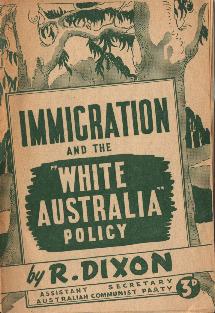
Furthermore, Windschuttle was a firm believer that history writing should serve the nation. In his book The White Australia Policy, he proposed that the policy was not racist or a cause for national shame as revisionist historians claimed. Instead, he called it a natural response to the influence of Scottish enlightenment figures such as David Hume, Adam Smith, and Adam Ferguson on Australian political thinking at the start of the twentieth century. Reviewing the book in The Age, historian Marilyn Lake (herself a victim of Windschuttle’s contempt in the book) said he set up “false dichotomies” to prove his point. Lake also pointed out how dependent he was on the scholarship of the historians he was criticising. These tactics were similar to the ones he used in the debate over Aboriginal historiography.
This debate is a relatively recent phenomenon. Traditionally, Australian historians paid little attention to Aboriginal resistance to white settlement. Reynolds’ The Other Side of the Frontier (1981) was one of the first attempts to categorise the Aboriginal response. Before then, the question of how many Indigenous people were killed in the frontier conflict was rarely posed and never properly answered. His figure of 20,000 Aboriginal deaths was based on evidence he found “voluminous, various and incontrovertible”. Lyndall Ryan documented how Tasmanian Aboriginals were dispossessed and murdered by secret search-and-destroy mission beyond the scrutiny of governments or the press. Knightley, drawing on the work of Reynolds, Ryan and others, wrote how early settlers cleared Aboriginals from their land “as casually as kangaroos”. Such claims were anathema to those who saw history’s role in defending national honour. Windschuttle attacked the evidence of Aboriginal massacre as “flimsy” and “highly suspect”. He accused the revisionists of serious errors of fact and interpretation in describing Australian attitudes to race. Crucially, he claimed their scholarly consensus was merely a “shared ideological position” and a mythology designed to create a sense of black victimhood and white guilt. As Ron Brunton wrote in the Courier-Mail, Aboriginal death counts had become propaganda weapons in a battle fought by people less interested in discovering the truth about the past than in promoting a contemporary agenda.
One important aspect of that contemporary agenda was ascribing ulterior motives to historiographers. Windschuttle raised the stakes when he called the work of Reynolds and others a “fabrication” with its connotation of deliberately tampering with evidence to fake a conclusion. He claimed revisionists had inflated accounts of violence against Aboriginals to delegitimise the Australian state. One of those he accused of fabrication, Lyndall Ryan, said Windschuttle’s so-called “forensic” approach was an inappropriate tool for understanding the frontier as it wasn’t a battlefield where the rules of war were carefully followed. Reynolds said Windschuttle’s ambition was to bring back the discredited concept of terra nullius. With political accusations flying on both sides, neither side seemed to have a monopoly on truth.
 Another key issue was whether or not the treatment of Aboriginals amounted to genocide. According to conservative British writer Theodore Dalrymple, Australia’s intelligentsia actually wanted there to be a genocide and reacted to Windschuttle’s thesis “like a child who has had a toy snatched from its hand”. While it seems absurd to suggest historians actually “wanted” genocide, some had alleged genocide had occurred. Reynolds quoted the Bringing Them Home report of 1997 saying Australian Governments continued to embody genocidal practices until the 1970s and 1980s with their preference for non-indigenous foster and adoptive parents for Aboriginal children. Reynolds also pointed out the difference between the way white Australia honours its war dead and the “forgetfulness” with which it deals with the Aboriginal conflict. This was revisionism about Australian sacred cows that was guaranteed to be politicised.
 In the wake of Reynolds’ bold pronouncements and Windschuttle’s reaction, race became the central issue of Australia’s history wars. The stark differences in interpretation were between those who saw a cheerful and triumphal story of a pioneered Australia won by sweat and the fruits of industry, and those who said the country was invaded and the prize of a bloody war. Geoffrey Blainey characterised the two approaches as “Three Cheers” and “Black Armband”. Up to the 1980s, this divergence was not a problem as the Aboriginals tended to be written out of Australian history. However, with the 1980s Labor Government extension of land rights, encouragement of self-determination, and its inquiries into deaths in custody and the Stolen Generation, the bipartisan consensus on Aboriginal history broke down. The Howard era exacerbated the differences with the Prime Minister believing in “practical reconciliation” while ruling out an apology to the “Stolen Generation”. Howard was an active player in the history wars and openly sympathetic to the views of Blainey and Windschuttle. His 1998 “10-point plan” aimed to water down the Wik High Court judgement and he sacked the National Museum of Australia director in 2003 for being “too sympathetic to the so-called black armband view of Australian history”. These responses showed that truth wasn’t just the only casualty of the history wars.
But if there were casualties, there were winners too. Windschuttle received his political reward when the Howard administration appointed him to become an ABC board member in 2006. Labor communications spokesman Stephen Conroy protested the decision calling Windschuttle “extreme right wing”. Defending the appointment, Prime Minister Howard described Windschuttle as “a beacon of free and sceptical thought against fashionable leftists". But the “fashionable leftists” did not let up in their criticism. Windschuttle’s approach of confining history to written documentary evidence was derided as being incapable of dealing with ambiguity or discontinuity, and as being unable to encompass the bleaker moments of the past. Evans described Windschuttle’s work as “historiography as fatwa” launched against “an unclean orthodoxy”. Ryan called the wars a lamentable distraction from “History’s noble proper work and no credit to Australia’s intellectual standing”. Though the history wars have diminished in importance somewhat with Howard’s federal election defeat in 2007, the wars’ academic adherents continue to be intensely political and partisan. The fatwa has not yet been lifted.
But the history wars were not a uniquely Australian experience. Other nations have seen political debates born of clashes between established orthodoxy and revisionist research. Elizabeth Malcolm wrote how new Irish historiography has challenged readings of the republican struggle against colonialism as well as other established saws of Irish culture and identity. Meanwhile, South Korean historians demonstrated last year against their Chinese counterparts over their attempts to consider tombs belonging to the Koguryo Kingdom as artefacts of Chinese culture rather than Korean. And it was the storm of criticism that greeted the Smithsonian Institution’s 1994 decision to include the Enola Gay in an exhibition to mark the 50th anniversary of the end of World War II, which provided the template for Australia’s history wars. In both countries, revisionists were put on the defensive by accusations of class guilt and the use of political correctness. It was nothing less than a cultural clash between “the obligations of the historian and the demands of patriotism”. Worldwide, revisionists were straddling uncomfortable boundaries between the need to serve truth and politics.
 In summary, Windschuttle’s views on the revisionists such as Reynolds (pictured) were informed by his journalist background and his political transformation from far left to far right. For him, history wasn’t merely a matter of presenting the facts but of nation building. When revisionist historiographers presented new claims about the massacres of Aboriginals and the possibility of genocide, Windschuttle was compelled to attack these claims head on. The personal nature of these attacks put the race debate at the centre of an intensely politicised history war. The government of the day rewarded Windschuttle for his efforts though his critics continued to question his methods and contest his findings. Despite all the heated politics, the fact remains that no-one knows the full truth of what happened when White Australians met Aboriginals on the frontier. Nevertheless, it is an important question that must continue to be posed.