Showing posts with label Central Asia. Show all posts

Wednesday, April 01, 2009

Uzbekistan’s Australian goal

Australia’s 2-0 defeat of Uzbekistan in tonight’s World Cup qualifier was not the only meeting between the countries in the last 24 hours. While the footballers did battle in Sydney, consular officials met in Canberra to further diplomatic contacts. The meeting at deputy Foreign Minister level exchanged views on the situation and prospects of bilateral cooperation in the political, commercial and economic, cultural and humanitarian spheres. Items of mutual interest included the situation in Uzbek neighbour Afghanistan, the prospects of co-operation with the Organisation for Security and Cooperation in Europe (OSCE) in combating terrorism, and also co-operation within the UN and other international organisations.

The move is consistent with a slow warming of ties between Uzbekistan and the west. There remains a long way to go in the Central Asian country where democracy has been a dirty word for the last two decades. In all that time, it has been ruled by the same autocratic ruler: Islam Karimov. The 70 year old Karimov has crushed all opposition since taking power in 1989 when it was still a Soviet state. He cemented power when Uzbekistan gained independence in 1991 and has since won a succession of fake elections.

There is little hope of change. Last month EIU Views Wire said Karimov is likely to retain his tight grip on power “with few prospects for democratisation or transparency”. The economy is also suffering badly as import demand declines in Russia, its main export market. Despite his age, Karimov is showing no signs of slowing up and continues to brutally suppress all opposition to his reign.

Karimov cracked down on the main opposition party the Sunshine Uzbekistan Coalition. Party leader Sanjar Umarov campaigned for free trade and private ownership of the agricultural industry but he was arrested in 2005 on trumped up charges of embezzlement and money laundering. In 2006 he was sentenced to prison for eight years and was conveniently out of the way for the country’s most recent election in 2007 which Karimov “won” with 88 percent of the vote.

Uzbekistan’s media is also tightly controlled. Internet sites critical of his regime get an error message and journalists who stray from the official line are jailed or killed. Press censorship was increased after events in 2005 at the eastern border town of Andijan when 800 people were killed. The massacre occurred after a mass protest against a sham trial of 23 local businesspeople accused of Islamic extremism. On the first day protesters stormed the jail but when they massed in the central square on the second day, soldiers shot indiscriminately into the crowd.

The killings prompted widespread international criticism. Karimov was so stung by the wave of complaints, he expelled many foreign companies, aid groups and media in retaliation. The EU imposed sanctions but relaxed them in October 2008. This was not because of any improvement in human rights but rather that Europe wants Uzbekistan’s industrial output. The country is the world’s second largest exporter of cotton and the world’s seventh largest exporter of gold. But the profits of these industries are kept by the ruling elites. Conditions in the state-run cotton farms amount to virtual slavery, according to the International Crisis Group.

None of this is a concern to Karimov who continues to strut the geo-political stage. He briefly aligned his nation with the US and provided an air base to help operations in Afghanistan in 2001. But in the wake of the Andijan criticism, Karimov turned to China and Russia for support and purged the defence ministry of pro-US supporters. More recently however, there have been signs of another thaw http://www.cacianalyst.org/?q=node/4820 in relations with the US with America being allowed to use the airbase in the southern city of Termez. While Australian and Uzbekistan do not have much in common, yesterday’s meeting is significant in sense it offers another small crack in Uzbekistan’s icy relationship with the west. But it will not totally melt until Karimov dies or is somehow ousted from power.

Wednesday, July 02, 2008

Riots mar Mongolian election result

Mongolia’s president has declared a four-day state of emergency after deadly riots in the capital to protest election results. Nambaryn Enkhbayar ordered the state of emergency yesterday after the ruling party headquarters of the ruling party was torched. Police used tear gas, rubber bullets and water cannon to beat back violent protesters who smashed their way into the building. Others pushed their way into the General Election Commission offices to demand that officials resign over voting irregularities. At least five people have been killed since the weekend and another 300 injured. The capital Ulan Bator was sealed off today and police have set up roadblocks to enforce a blockade.

The crowd thinned slightly this morning after the emergency declaration, though some protesters had begun looting paintings from an art gallery while others vandalised parked cars. The country’s Minister of Justice and Home Affairs Munkhorgil said Ulan Bator was now under a 10pm to 8am curfew. "Police will use necessary force to crack down on criminals who are looting private and government property," he warned.

The riot occurred when several thousand people gathered on to the streets of the capital after results emerged from Sunday’s election. Preliminary returns showed the ruling ex-Communist Mongolian People's Revolutionary Party (MPRP) has claimed victory with at least 45 seats in the 76-seat parliament (known as the State Great Khural http://www.parl.gov.mn/) but the opposition Democrats, who took 26 seat, allege fraud. Their Party leader Tsakhia Elbegdorj said his party was robbed of victory but the MPRP and international election monitors say the vote was free and fair.

This is the fifth election since Mongolia adopted wide-ranging economic and politic reform after the collapse of Communism. The MPRP ruled the country in a Soviet-style one party government for seven decades between 1921 and 1990. Their superior organisation helped them win the first two free elections in 1990 and 1992 until their 75 year was ended in 1996 when the opposition parties united to form the Democrats. They ruled until 2004 when a close vote in that year’s election forced the two major parties into an uneasy coalition which lasted just two years. The transition to democracy in the last 18 years has been remarkably peaceful until the events of this week.

Mongolia is struggling to modernise its nomadic, agriculture-based economy. Annual income averages just $1,500 a year in the sparse country of about 3 million people spread across an area three times the size of Spain. However recently, Mongolia has discovered a rich lode of copper, gold and coal and the country is hoping to tap into neighbouring China’s resources boom. In the election, the MPRP and Democrats both campaigned on how to tap these huge mineral deposits but disagreed over whether they should be managed by the government or private sector. The disagreement meant the outgoing parliament could not pass an amendment to the Minerals Law to allow the government seal investment agreements with international mining giants to develop mineral deposits in the Gobi Desert.

The current law gives the government 50 percent of the deposit and the MPRP proposed to increase that by one percent to give it outright control. But the Democrats say that control should stay in private hands. Large multinational mining companies such as Rio Tinto, Ivanhoe and Antofagasta actively awaited the result and although will be disappointed by the MPRP victory, they will hope the result will allow their deals to conclude. While the protests may add to the air of uncertainty, it is likely the simplest reason MPRP won the election is by promising a bribe of $1,300 in cash to each citizen once mining production starts.

Sunday, August 26, 2007

Nazarbayev moves closer towards dictatorship in Kazakhstan

After parliamentary elections last weekend, Kazakhstan has become a one-party state. President Nursultan Nazarbayev’s governing Nur Otan (“Ray of Light-Fatherland”) party has won all 98 seats parliament’s lower house with 88 percent of the vote. None of the other parties reached the parliamentary threshold of 7 percent. Nazarbayev called the snap election two years early to allow him to implement constitutional changes to give him unlimited terms of office.

Kazakhstan's two main opposition parties Ak Zhol (Bright Path) who took 3.27 percent and Nationwide Social-Democratic Party who polled 4.62 percent have announced they do not recognise preliminary returns of last Saturday's elections. Ualikhan Kaisarov, the Nationwide Social-Democratic Party's representative in the Central Elections Commission described the elections as "utter profanation". Ak Zhol were equally unimpressed. "They absolutely do not reflect the actual alignment of political forces or the social support they draw,” said Burikhan Nurmukhamedov, a party leader in the Kazakh capital Astana. “These elections are neither a step forward, nor even remaining at standstill.”

The result confirms the power base of 67 year old President Nursultan Nazarbayev who has ruled the country for 16 years since independence. Nazarbayev claims credit for an annual economic growth of almost 10 percent since 2001 and is credited with ensuring the country’s stability. However his critics say he has concentrated power in his family, suppressed the opposition and has failed to deliver free and fair elections.

Kazakhstan was one of the five central Asian nations along with Kyrgyzstan, Tajikistan, Turkmenistan and Uzbekistan that gained independence in 1991 after the break-up of the Soviet Union. All five countries had central planned economies and had no experience of nationhood before being incorporated into the Russian Empire in the 18th and 19th century. The Kazakh economy was based on primary products and the country suffered severe disruption in the immediate aftermath of independence. Efforts to keep the ruble as a common currency with the other four nations caused hyper-inflation. It was abandoned at the end of 1993 and replaced by the tenge (the Kazakh word for ‘set of scales’). Kazakhstan initially appeared to take a liberal western path but the president became more autocratic as the decade progressed and the economy took on the look of “crony capitalism” based on favours and influence. Privatisation transferred valuable public assets to a small group and health care declined.

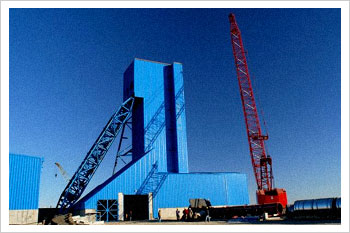
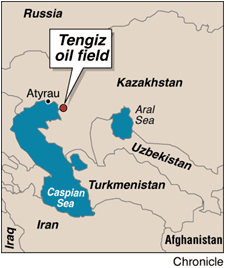
Matters have improved greatly since the turn of the century. Much of this improvement is due to the profits generated by the massive Tengiz oilfield. Formed in 1993, Tengiz is operated by TengizChevroil a joint venture between the Kazakh government oil company and Chevron. The Tengiz field is one of the largest in the world, with 6 to 9 billion barrels of reserves. The field produces 180,000 barrels a day, most of which is exported through the Russian pipeline system to Novorossiysk. Exports from Tengiz are expected to increase to 1.3 million barrels per day by 2010.

Nazarbayev is now aiming to make Kazakhstan one of the world's top 10 oil exporters in the next seven years and wants to lift his country's international profile. He is pushing for Kazakhstan to chair the Organisation for Security and Co-operation in Europe in 2009. His call has met with opposition from Paris-based Reporters Without Borders (RSF). The RSF has condemned Kazakh media's coverage of the elections as biased and heavily influenced by the authorities." The Paris-based group said there were many cases of "pressure, self-censorship, violations of electoral legislation, and bias" in favour of Nur Otan. The RSF said a country where "press freedom stops whenever the authority of the president and his party is challenged is not fit to head an organization such as the OSCE."

Tuesday, February 13, 2007

Turkmenistan's questionable poll

Turkmenistan expects to announce the result of its presidential election tomorrow. The Central Asian nation went to the polls on 11 February to elect a successor to the eccentric Sapermurat Niyazov who died in December without leaving an obvious successor. Acting President Gurbanguly Berdymukhammedov is favourite to win, however there are strong claims the election was rigged despite a 98% turnout. The high turnout is at odds with anecdotal evidence of sparse attendance at voting booths in the capital Ashgabat, and in the eastern Labap Province.

The 49-year old Berdymukhammedov is a former deputy prime minister and health minister. He has been de facto president for the last two months. As Niyazov's health minister, he was responsible for carrying out the former dictator’s decision to close all hospitals outside of the capital city. Although he has promised to honour Niyazov’s legacy (which does not bode well for the future of democracy in Turkmenistan) there is also evidence that he may be a progressive. He has also promised a series of reforms including media freedoms, education programs and most importantly opening up the key oil and gas sectors.

With a population of 5 million people, Turkmenistan has massive natural gas reserves and is strategically located in Central Asia, bordering the Caspian Sea, Afghanistan, Kazakhstan, Iran, and Uzbekistan. The countries confirmed reserves of natural gas amount to two trillion cubic meters. The country annually produces some 60 billion cubic meters of natural gas, three-quarters of which is exported, mostly to Russia, Ukraine, and Iran.

Under Niyazov, Turkmenistan was an unreliable exporter. He often cut off gas supplies to Russia during price disputes and signed a deal to supply energy-hungry China through a new pipeline due to come online in 2009 despite being currently over-committed to Russia. Whoever wins the election, will have to balance the needs of Moscow with the new contract signed with Beijing.

Khudaiberdy Orazov is a candidate in the presidential elections for the 'Vatan' opposition movement. He is a former central bank president of Turkmenistan who now lives in Sweden. He says the official turnout figure is not correct. He also claimed the elections were “unconstitutional” and accused the group of people around Berdymukhammedov as having organized a “defacto coup d'etat by conducting elections”.

Berdymukhammedov has unsurprisingly rejected these allegations. His most difficult task as president-to-be will be coming out of the shadow of Niyazov. He ruled Turkmenistan for 21 years and was the subject of a powerful personality cult. Known as “Turkmenbashi” (father of the Turkmen), he allowed only one political party, and allowed no press, TV or internet freedom. More bizarrely he shut down all the rural libraries and hospitals as well as renaming a month after himself and another for his mother. He was also accused of sequestering much of the country's wealth in a private bank account while his people starved.

It is likely his less-charismatic successor will keep a lower profile but will want to keep a tight rein on the sources of power and the media. An official announcement on the election result is due Tuesday local time with the inauguration ceremony for the new president scheduled for the following day.

Friday, November 10, 2006

Tulips tiptoe again in Kyrgyzstan

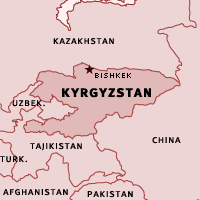
The president of Kyrgyzstan signed a new constitution on Wednesday to limit his power in a bid to defuse a political crisis. President Kurmanbek Bakiyev signed the document in the capital Bishkek in front of the parliamentary speaker, officials and journalists after a week of protests and tensions. Bakiyev is hoping that the move will prevent the ex-Soviet republic from descending into chaos less than two years after an uprising known as the Tulip Revolution drove long-time leader Askar Akayev from power. An opposition spokesman said “This is our victory, this is a step toward peace. We can avoid civil war, civil confrontation."

The Central Asian Islamic nation emerged as a distinct ethnic group in the 15th century. The Khanate of Kokand inherited the territory known as Kirgizia from the Mongols. Kirgizia was annexed into the Russian Empire in 1876 and quickly became assimilated. The Russians began large-scale housing, mining, and road construction projects and the construction of schools. But Kirgizia, like the other central Asian colonies, suffered from the negative effects of the Russian Empire's repressive policies. Kyrgyz nomads were used as slave labourers and had their lands confiscated for Russian settlers. In 1916, it joined a Central Asian revolt which was ruthlessly put down by the Tsar’s forces. Kyrgyzstan enjoyed a brief period of independence after the 1917 October Revolution but was eventually conquered by the Bolsheviks.

In 1926 the official name was changed to the Kyrgyz Autonomous Republic before the region achieved the status of a full republic of the Soviet Union in 1936. Although Stalin repressed local culture the Central Asian nationalist identities survived through the communist era. After the collapse of the Soviet Union, ethnic tensions erupted in Kyrgyzstan’s border Osh province between Uzbeks and Kirghiz. The majority ethnic Uzbek population were dissatisfied with what they saw as discrimination in official hiring policy and access to land and housing in favour of ethnic Kyrgyz. Despite this violence there was much optimism for the newly independent state. In 1991, Kyrgyz replaced Russian as the official language and the name of the capital, Frunze, was changed back to its pre-revolutionary name of Bishkek. Kyrgyzstan's relatively strong democratic credentials nosedived as corruption and nepotism took hold during President Akayev's years in office.

Askar Akayev ruled the country for 15 years between 1990 and 2005. He was trained as a scientist and a member of the old Supreme Soviet. He was elected leader as a compromise candidate to become the new country’s first president. Although initially seen as a libertarian, he quickly became autocratic and corrupt. Under his watch elections were flawed, opposition figures were arrested and newspapers were closed. His increasingly authoritarian regime was tolerated by the US when agreed to allow American forces to use Bishkek's Manas airport as a base for the attack on Afghanistan in 2001.

By 2005 he had made too many internal enemies. The trigger for his overthrow was yet another flawed election. Protests grew as it became apparent that election results would favour Akayev yet again. The Tulip Revolution grew from the violence that greeted those early protests. Activists seized government buildings throughout the country. The police eventually switched sides in favour of the demonstrators and a coalition united to unseat Akayev. He fled the country by helicopter as the protest movement gained unstoppable momentum. Imprisoned opposition leaders were freed and the Kyrgyz Supreme Court declared the election results invalid. The newly-elected parliament named the Southerner Kurmanbek Bakyiev as acting Prime Minister and President. Exiled in Moscow, Akayev agreed to resign. New presidential elections were held in July 2005 and Bakiyev won a landslide victory with 89% of the vote.

Bakiyev is an engineer who served with the Red Army in the 1970s. He became involved in local politics in 1990 and served as first secretary of the council in the small town of Kok-Yangak. He rose to provincial governor and eventually prime minister of his country in 2000. He was the right man in the right place to take advantage of Akeyev’s fall from power. After the usual hopes of his honeymoon period, many Kyrgyz have complained that they had seen no improvement in their standard of living since then. Bakiyev's term in office has been marred by the killing of several anti-corruption parliamentarians, prison riots, and widespread corruption. Wednesday’s constitutional changes strips his right to dissolve and parliament and limits his power in naming the prime minister. However it does not change his term of office which expires in 2010.

Monday, February 20, 2006

Kyrgyzstandards

Last year. Kyrgyzstan overthrew their soviet style leader Askar Akeyev. He subsequently sought asylum in Russia.

He was supposed to step down after party elections. The elections were, as these things tend to be, rigged. Opposition candidates were disqualified. Nepotism was rife, the parliament was stacked with his family and friends.

The Akeyev clan had been in power since the end of the Soviet era in 1991. Now following in the footsteps of colour-coded people power elsewhere (the Orange revolution in Ukraine and the Rose revolution in Georgia following purple reigns in Prague) the people of Kyrgyzstan were taking to the street wearing pink and yellow armbands heralding a lemon tulip revolution.

I looked in my Times Concise Atlas of the World 1990 and the weariness of the years showed – I could not find the capital city Bishkek in it. My similar vintage dictionary (Collins English c1992 talks about ‘The Kirghiz Soviet Socialist Republic – an administrative division of south central Soviet Union annexed by Russia in 1864. Capital: Frunze.)

Frunze is not on my map and appears to be where today’s newspaper places Bishkek. Another victim of post-victory renaming syndrome. Just like poor old Sankt Petersburg-Petrograd-Leningrad, it must have a real identity problem.

The current opposition leader Kurmanbek Bakayev was installed as acting president and he won the election in July 2005.

Russia, the local power (and ex-annexer) has given tacit support to the new regime (despite offering asylum to Akeyev).

The Americans with their itchy trigger fingers are keeping an equally close eye. They have brought out the hoary old chest-thumper of Al Queda. “A terrorist organisation with links to Al Queda may be planning may be planning terrorist acts against US interests”. Yawn.

But if they do plan them, then there’ll be plenty of firepower to meet them on homesoil. Both the US and Russia have military bases in Kyrgyzstan.

Turkmenbashing

All hail Turkmenbashi!

That’s Saparmurat Atayevich Niyazov when he is at home in Turkmenistan.

The delightful Turkmenbashi's name means ‘leader of the ethnic Turkmen’ an unwieldy label he picked up from the Young Turk himself, Kemal Ataturk the ‘father of the Turks’.

Turkmenbashi, the leader of the state of Turkmenistan, is, to put it mildly, a lunatic.

Among his claims to fame are the renaming of all the months following the fashion of the French Revolution. January is now Turkmenbashi, after himself of course. April is now ‘Mother’ after his own beloved Mama and there are other months called ‘The Flag’ and ‘Independence’.

In 2002 (and its still known as that, he hasn’t yet interfered with year numbering conventions), he decreed that there would be a new system for dividing up the ages of all Turkmen and Turkwomen. He was quoted as saying “our ancestors had a clearer system of the ages of man, childhood lasted to 13, adolescence to 25, youth to 37, maturity to 49, the age of the prophet to 62, the age of inspiration to 73, the white bearded elder to 85, old age to 97 and the age of Oguz Khan (an ancient Turkmen ruler) to 109.

Alas if you happen to live longer than 109, you miss out on a category completely. The great man himself moved into the age of inspiration around the time of the announcement.

Flushed with officially endorsed inspiration, he went on to carry out other sweeping moves. All the libraries outside the capital Ashgabat were closed on the belief that country bumpkins and villagers do not read books.

The rural community also suffered another blow with a threat to remote health services. He asked in Feb 2005 ‘why should we waste good medical specialists on the villages when they should be working in the capital?”

The answer could make the villagers very sick indeed.

Niyazov has been in power since Soviet times, rising through the ranks of the Communist Party.

His cult of personality stretched to the renaming of the Caspian town of Krasnovodsk to Turkmenbashi and there are monuments and photographs of him whereever you look in Turkmenistan.

His central belief is that his country is devoid of a national identity therefore he is generously providing his own to compensate.

L'etat, cest moi!

Eire go bra
Spoon age flames over nacre
Stoned by other nature’s acre
Lourdes to the scene of the crime
Seeking water miracles in time
A blip and its all gone
Even lost what its founded on
Tweaking on the muscle of the ages
Abandoned by busker bouncer pages
Hustling for gold in easy street
Hammer by side, drums at my feet
Hampered by thoughts unseen
Dangling faith fresh kerosene
Mobile out of me it jumps
Blasted seed on ground it thumps
Onan the barbarian at the gates
Fellflung to his fortunate fates
Quietly tortured in grizzly rooms
Photocopied etching of family tombs
Catacomb raiders of the lost arcane
Underbrush the murmurs of growing pain
Electric memories of the queen beholder
Giving you the thermal iceberg shoulder
Soul bandaged beyond repair
Morning bonfires for vanity fair
Along time ahead I see the ghost
Releasing me from acknowledged toast
Hosanna’s barbecue t-bone ashes
unseemly inchoate but ruly clashes
On the tiniest print of the final dots
Biled by rancour and cancerous clots
And after the trifecta is overcomewith
Brightness paints the doubt on thumb width
just phlogiston left to poke in ruins
and the torn ticket of the beaten shoo-ins