Showing posts with label Tibet. Show all posts

Tuesday, March 25, 2008

King leads Bhutan to democracy

A pro-King party has won a landslide victory in Bhutan’s first ever democratic election. The election has ended a century of royal rule and the new governing party has pledged to follow the policies of the absolute monarchy it is replacing. The Druk Phuensum Tshogpa, or Bhutan Peace and Prosperity Party has won 44 out of 47 seats with the People's Democratic Party taking the remaining three seats. Both parties say they will follow the government's latest five-year plan, known as "his majesty's vision."

His majesty’s vision includes a measure unique to Bhutan, the gross national happiness policy, an all-encompassing political philosophy that seeks to balance material progress with spiritual well-being. Proclaimed by Bhutan’s king in 1972 as a standard for the country’s well-being, Gross National Happiness (GNH) has been proposed as a model for other countries as well. According to Bhutanese Home Minister Lyonpo Jigmi Thinley the four pillars of GNH are: socioeconomic development, environmental preservation, cultural promotion, and good governance. “GNH recognizes that happiness can be realized as a societal goal,” Thinley said. “It cannot be left as an individualized goal”.

The democratic process was started by King Jigme Singye Wangchuck, who abdicated in favour of his son Jigme Khesar Namgyal Wangchuck in December 2006 with an order to end absolute monarchy. Associated Press described the election as taking place in “the first country in history where a king had to convince his people that democracy was a good idea.” With an average income of US$1,400, twice that of India's, and nearly all its people had access to schools and hospitals many have questioned whether the election was necessary at all.

Nevertheless the turnout was high with nearly 80 percent of the population voting by order of the King. The 28 year old monarch will remain head of state after the elections and he has probably staved off potential antimonarchist rumblings and helped the palace retain its credibility as well as influence. Both parties were forbidden from addressing “national security” issues, including the expulsion of tens of thousands of ethnic Nepalis in the early 1990s.

The country’s first elected Prime Minister is likely to be Peace and Prosperity Party leader Jigmi Thinley. The US educated Thinley has twice been premier under the previous royal governments and has been one of the architects of the GNH policy. With little policy difference between the two parties, some analysts believe Thinley's focus on happiness may have swung the election in his party's favour. The country's election body will certify the victory on 5 April, after which the party will form a government.

After many years of reclusiveness, Bhutan is rapidly opening up to the world. Both the Internet and television came to the remote Himalayan kingdom just nine years ago. With a population of just 600,000 the country has successfully modernised while protecting its unique culture and environment. Its economic boom is based on hydro-power and a strictly enforced tourist industry that allows in only 20,000 foreigners a year and charges them $200 a day.

Bhutan has been keeping a close eye on the problems of neighbouring Tibet. After Tibet was invaded by China in 1950, Bhutan realised that its policy of isolation could lead to the same fate. It launched a gradual process of opening up and modernisation culminated with the elections this week. Kinley Dorji, managing director of the state-owned Kuensel newspaper, said that sandwiched between India and China had left Bhutan feeling vulnerable. "Our strategy was to hide up in the mountains," he said. "That worked until 1960." That was a year after the Dalai Lama fled Tibet. Bhutan wanted to avoid Tibet’s mistake of having few diplomatic friends and saddled with a feudal society that could give China the excuse to "liberate" it. That process has reached its logical conclusion with Bhutan launching its own liberation.

Monday, March 17, 2008

Tibet braces for Chinese crackdown

In an announcement that has the sinister ring of Orwellian Newspeak, China claims it has shown “great restraint” in its attempt to crush the riots in the Tibetan capital Lhasa. But while the Chinese-appointed governor of Tibet asserted no guns were used against protesters in the capital, troops flooded into neighbouring areas to enforce control after violent protests. And Lhasa itself faces a midnight ultimatum for protesters to give themselves up or face tougher punishment.

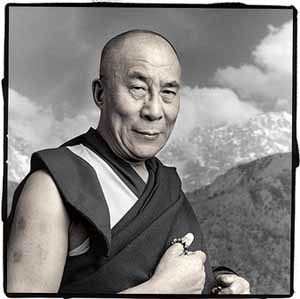
Tibet’s governor Champa Phuntsok promised leniency to those who turned themselves in before the day’s end while threatening harsh consequences for those who don't. He also claimed that the total death toll was 16 so far, a figure greatly disputed by Tibetans exile groups who say over a hundred have died. The governor blamed supporters of the Dalai Lama for the protests. Meanwhile the Dalai Lama himself has condemned what he called "cultural genocide" in his homeland and called for an international investigation.

Tibet’s Prime Minister in exile Samdhong Rinpoche said that hundreds have died since violence broke out a week ago. He told reporters in the Indian hillside home of the government in exile, Dharamshala, that they had requested the international community and the UN send a delegation to Tibet to investigate the claims. China rejects these charges, saying today that 13 "innocent civilians" were killed by “Tibetan rioters” during violent protests in Lhasa, and that it did not use lethal force to quell the rioting.

With western media banned from Tibet, it has been difficult to verify competing claims. The only outside journalist still in Lhasa is The Times’ James Miles. He says that all is quiet at the moment after two days of deadly riots and arson attacks, with the people of Lhasa lying low ahead of the midnight deadline. Rubble and burnt-out vehicles littered the streets, with just an occasional gunshot. Miles said armed troops entered the city on Saturday to quell Tibetan rioters who targeted both Han Chinese and Hui Muslims.

Today, army units drove through the streets parading dozens of Tibetan prisoners in handcuffs with their heads bowed. Soldiers stood behind each prisoner, a hand on the back of their neck to ensure their heads were bowed. Other troops stepped up their hunt for the rioters in house-to-house searches, checking all identification papers. Anyone unable to show an identity card and a household registration permitting residence in Lhasa was arrested. Loudspeakers on the trucks broadcast calls to anyone who had taken part in the violent riots on Friday to turn themselves in.

China is especially sensitive to media reports of the riots as the Beijing Olympics looms on the horizon. Steven Spielberg was the first to use the Olympics card when he resigned as the Games “artistic adviser" in protest over China not using its links with Sudan to help bring an end to violence in Darfur. Now it faces the possibility that a major crackdown in Tibet could unleash calls for a boycott of the Olympics. British Foreign Secretary David Miliband hinted at this recently when he said diplomats should no longer fear that raising human rights with China meant that economic relations would be damaged.

Despite worldwide protests, so far all leades including the Dalai Lama, have stopped short of calling for a boycott of the Games. But International Olympic Committee (IOC) chief Jacques Rogge is worried. Yesterday he said he was “concerned” about the Chinese crackdown and hoped “there can be an appeasement as soon as possible.” There is little doubt that Rogge’s real concern is the possibility that Western nations might skip his showpiece event in Beijing in August. Saying that the IOC was "in favour of the respect of human rights", Rogge rejected the idea of a boycott saying it would only penalise athletes and would not solve anything. What Rogge know is that the Games offers Tibet its best chance to squeeze compromise from Beijing.

Tuesday, June 19, 2007

China builds Everest highway

China has announced it will begin building a highway to Everest Base Camp which is expected to be ready in time for the Olympic torch relay next year. The road will replace a rough 108km track. The new road has attracted controversy due to the decision to include Tibet in the torch relay.

The new road will cost $20 million. The work will commence next week and will take four months to complete. China said the new highway would become a major route for tourists and mountaineers. The road will stretch from the foot of the mountain to a base camp at 17,000 metres. The new road will be a paved "highway fenced by undulating guardrails."

In April, China deported five American tourists after they demonstrated for a free Tibet at the base of Mount Everest. The five unfurled banners at a base camp calling for Tibet’s independence. The Chinese Foreign Ministry said the five were detained for "carrying out illegal activities aimed at splitting China" and that they had been expelled according to Chinese law. An official for their group, Students for a Free Tibet, originally said four people were detained, but later said a fifth person who was transporting videotape also had been held. The five were expelled after being held for two days.

The demonstration occurred after China announced its grand plans for the torch relay which will be a 137,000 km event taking 130 days and will cross five continents in its journey from Olympia in Greece to Beijing. The highlight of the event is the plan to scale the world’s highest peak. But in order to reach Everest, the relay must pass through Tibet.

China invaded Tibet in 1950 and the country’s spiritual leader, the Dalai Lama, lives in exile in India having fled his homeland in 1959. The Tibetan government in exile and China disagree over when Tibet became a part of China, and whether this incorporation into China is legitimate. The Chinese date their ownership of the Himalayan region from the time of Kublai Khan in the 13th century.

But Tibet was ruled by secular dynasties for three hundred years after the fall of the Yuan dynasty. The earliest Dalai Lama, Gendun Drup, lived in the 15th century and was officially the head of Tibet’s government. China remained an important presence and exacted tribute from the Lhasa government, backed up by the occasional armed incursion.

A British expeditionary force led by Francis Younghusband invaded in 1904 and fixed the border between Tibet and India. However they also recognised the suzerainty of China over Tibet. The country’s status remained ambiguous until Chairman Mao’s Red Army marched into Lhasa in 1950 and crushed the weak Tibetan Army. The last uprising occurred in 1959 which China crushed forcing the current Dalai Lama into exile.

While the Olympic road may have mostly symbolic meaning, China has a strong course of integration with Tibet encouraging mass immigration of Han Chinese to dilute the Tibetan majority. By October 2005, China had spent $26 billion on a railway linking the Tibetan capital, Lhasa, with the north-western province of Qinghai. China says the line will promote the development of impoverished Tibet.

China is now forcing nomadic Tibetan herders to settle in towns to clear land for development, leaving many unable to earn a living. Herders have been forced to slaughter herds of yaks, sheep and goats without compensation. Chinese authorities claimed the changes were a response to overgrazing by Tibetan herds that was causing erosion and soil loss. But one man affected by the settlement said "they are destroying our Tibetan (herder) communities by not letting us live in our area and thus wiping out our livelihood completely”.

Saturday, August 26, 2006

Tibet railway

In October 2005, China announced the completion of the first railway line to Tibet - one of the world's highest train routes. The pan-Himalayan line climbs 5,072m (16,640ft) above sea level and runs across Tibet's snow-covered plateau. China spent $3 billion on the challenging 1,142km (710-mile) final section, after four years in construction. The workers who built the line had to breathe bottled oxygen in order to cope with the high altitudes. The line links the Tibetan capital, Lhasa, with the north-western province of Qinghai. The total cost of the line is $26 billion.

The railway opened trial service on July 1 this year. Trains now connect Beijing and Lhasa via Chengdu, Chongqing and Xining. Tibet now receives 5,000 tourists every day, and with four trains steaming into Lhasa everyday, more than 2,500 passengers, most of them tourists, have begun arriving in the Tibetan capital creating additional pressure on civic facilities. The train’s popularity has caused ticket touting to increase. China has cracked down on illegal train ticket dealers and reported that local railway policemen in Beijing, Chengdu, Lanzhou and Qinghai had cracked down on 14 ticket brokering gangs. The normal price of a hard seat ticket from Xining to Lhasa is 226 yuan ($28 US) while hard sleepers and soft sleepers are 523 yuan and 810 yuan respectively. The brokers were selling tickets to Lhasa at 1600 yuan (US$200).

China says the line will promote the development of impoverished Tibet. But it is the influx of the Han Chinese from mainland China that is a long-term concern. More prosperous, better connected and definitely more enterprising, the Han Chinese have already begun to control major enterprises in Tibet. With time, many Tibetans fear they will be reduced to a minority in their own land, and thanks to the railway, Tibetan activists say Beijing can deploy more troops in the area with greater ease.

The government of the People's Republic of China and the Government of Tibet in Exile disagree over when Tibet became a part of China, and whether this incorporation into China is legitimate. In 1959, the 14th Dalai Lama fled Tibet and established a government in exile at Dharamsala in northern India. The Mongol Khans invaded Tibet in the 13th century and also ruled China at this time under the name of the Yuan dynasty. The Chinese therefore see their rule of Tibet as stretching back to this era. Kublai Khan appointed the Sa-skya Lama his "Imperial preceptor" or chief religious official in Tibet. The country was ruled by secular dynasties for 300 hundred years after the collapse of the Yuan. The first Dalai Lama, Gendun Drup lived in the 15th century and established a lineage to be the dominant religion among Mongols and Tibetans. Between the 17th century and 1959, the Dalai Lama was the head of the Tibetan government, administrating a large portion of the country from the capital Lhasa. The Chinese still had influence, sending “commissioners” occasionally backed by armed forces to extract tribute.

The British sent an expeditionary force into Lhasa in 1904 and signed a treaty fixing the border between the Indian province of Sikkim and Tibet. In 1907 Britain also recognized the "suzerainty of China over Thibet" and, in conformity with such admitted principle, engaged "not to enter into negotiations with Thibet except through the intermediary of the Chinese Government. Imperial China briefly occupied Tibet until the Republic of China was formed in 1912. The ensuing wars and revolution saw China temporarily lose interest in Tibet. That interest resuming in 1950 when the People’s Liberation Army re-entered the country and crushed the ill-equipped Tibetan Army.

1950 was also the year Tenzin Gyatso was appointed Dalai Lama. He ruled briefly before the Chinese invaded. He negotiated with the Chinese government for ten years. However in 1959, there was a major CIA-backed uprising in Tibet. In the tense political environment that ensued, the Dalai Lama and his entourage began to suspect that China was planning to kill him. Consequently, he fled to Dharamsala, India. The uprising was crushed and tens of thousands were killed. Representatives of the exiled government say that China has killed approximately 1.2 million Tibetans since 1950.

The Dalai Lama sees the millions of Han immigrants, attracted to Tibet by economic incentives and preferential socioeconomic policies, as presenting an urgent threat to the nation by diluting the Tibetans both culturally and through intermarriage. The new railway is also viewed as politically motivated to consolidate central control by facilitating militarisation and Han migration while benefiting few Tibetans.